New clues to how maternal antibodies can protect babies from cytomegalovirus

Antibodies that summon virus-engulfing white blood cells may play an important role in protecting infants from potentially serious congenital infection with human cytomegalovirus (HCMV), according to a study led by an investigator at Weill Cornell Medicine and NewYork-Presbyterian.
The study, which appeared June 28 in the Journal of Clinical Investigation, was the most comprehensive analysis of its kind to date in HCMV research. The researchers examined antibodies in the blood of 81 mothers infected with HCMV, comparing the properties of the antibodies in mothers who had transmitted versus hadn’t transmitted HCMV to their infants. A key finding was that women in the non-transmission group tended to show higher levels of the white blood cell-summoning mechanism, known as antibody-dependent cellular phagocytosis, against HCMV.
“These findings certainly have implications for the types of immune responses HCMV vaccines should be targeting,” said senior author Dr. Sallie Permar, the Nancy C. Paduano Professor in Pediatrics and Chair of Pediatrics at Weill Cornell Medicine and Pediatrician-in-Chief at NewYork-Presbyterian Hospital/Weill Cornell Medical Center and NewYork-Presbyterian Komansky Children’s Hospital. The first author of the study is Dr. Eleanor C. Semmes, a physician scientist doctoral candidate in the Department of Molecular Genetics and Microbiology at Duke University School of Medicine.
HCMV and related viruses in the herpesvirus family are believed to have been infecting humans and other mammals for at least tens of millions of years. During that time, these viruses have developed myriad tools and strategies to evade their hosts’ immune defenses and establish long-term infections. HCMV is thought to infect most individuals in developed countries and virtually all people in developing countries. While most infections go unnoticed, HCMV as it smolders in the body — for life, usually — is thought to subtly promote multiple human ailments, from cancers to heart disease. Moreover, a weak immune system from HIV, immunosuppressive drugs, or being very old or young, can trigger HCMV spread and potentially fatal illness.
HCMV sustains itself in the human population in part by mother-to-child transmission during pregnancy. These congenital HCMV infections can cause stillbirth, hearing loss, brain development abnormalities and other conditions in young children; and preventing them is a major public health goal. But conventional vaccine and antibody-based therapy strategies have so far proven ineffective against congenital HCMV infection — underscoring the need to understand how the immune system can fight this virus effectively.
“Currently when a mom does have acute CMV infection, or is known to have an infected fetus, we have nothing to offer in terms of vaccines or immunotherapies,” Dr. Permar said.
For the study, she and her team made use of banked maternal and infant umbilical cord blood samples in the Carolinas Blood Bank at Duke University School of Medicine — where Dr. Permar was based at the study outset. Forty-one of the HCMV-infected mothers had transmitted the virus to their newborns; the other 40 hadn’t.
One remarkable finding concerned “neutralizing antibodies.” These are antibodies that bind to vulnerable sites on the virus and thereby directly disrupt — neutralize — the virus’s ability to infect cells, reproduce and spread in standard lab dish tests. Normally, vaccines against a virus aim to elicit neutralizing antibodies; prior, unsuccessful HCMV vaccines have done this too. But Dr. Permar and colleagues found that higher levels of HCMV-neutralizing antibodies in maternal blood were not associated with a lower risk of mother-child transmission.
They did find evidence, though, that mothers who didn’t pass on the virus had higher levels of antibody-dependent cellular phagocytosis. That suggests that this indirect mode of antibody immunity, in which antibody proteins use their “tail” sections, called Fc regions, to summon virus-gobbling macrophages and other white blood cells, is one that HCMV is not as adept at escaping.
“For fighting against HCMV, which is so good at evading the immune system, we have to go beyond the simple concept of neutralizing antibodies to consider antibodies that work in other ways,” Dr. Permar said.
The results will certainly guide HCMV vaccine efforts with new-found speed in wake of the SARS-CoV-2 vaccine success. Dr. Permar and colleagues are currently applying these findings in work with the vaccine company Moderna, which is developing a candidate HCMV vaccine using the versatile mRNA platform.

Read more →

COVID-19 vaccine does not negatively affect placental health, study finds

Vaccination against COVID-19 had no impact on the health of placentas in pregnant women, according to new research by pathologists at Weill Cornell Medicine and NewYork-Presbyterian. The findings, published June 27 as a research letter in the American Journal of Obstetrics & Gynecology, further emphasize the safety of vaccination during pregnancy for babies and pregnant women, the investigators note.
Most previous studies on the impact of COVID-19 vaccination during pregnancy have focused on maternal and infant outcomes. By contrast, for this study, the investigators examined 18 indicators of placental health, such as the presence of lesions, blood clots and inflammation associated with a higher risk of adverse health issues for babies and their mothers. They also collected data from clinical records on the babies’ birth weights and the score that assesses babies’ well-being at one minute and five minutes after birth, called the Apgar score.
The researchers analyzed findings for 431 women who gave birth to single babies at NewYork-Presbyterian/Weill Cornell Medical Center between April 2020 and July 2021 and compared results for 164 women who were fully vaccinated during pregnancy, defined as having received at least two doses of an mRNA COVID-19 vaccine (Pfizer or Moderna), with 267 unvaccinated women. All women included in the study had no evidence of current or prior SARS-CoV-2 infection. The investigators found no significant differences in placental health indicators, birth weights or Apgar scores between vaccinated and unvaccinated women.
As expected from previous research, 95 percent of babies born to vaccinated mothers had detectable antibodies against SARS-CoV-2 in umbilical cord blood. Other studies have shown that vaccinating mothers during pregnancy not only protects them from severe illness from COVID-19, but also helps protect their babies for several months after birth.
Overall, the findings add to the existing body of knowledge demonstrating that COVID-19 vaccines are safe during pregnancy, the authors concluded.
Lead study authors: Marie Smithgall, Yawei (Jenny) Yang.
Story Source:
Materials provided by Weill Cornell Medicine. Note: Content may be edited for style and length.

Read more →

Finding the right memory strategy to slow cognitive decline

What’s the best way to improve your memory as you age? Turns out, it depends, a new study suggests. But your fourth-grade math teacher may have been onto something with that phrase to help you remember how to work out a complicated problem: Please Excuse My Dear Aunt Sally.
A new study led by researchers from the University of Michigan and Penn State College of Medicine compared two approaches for people with an early form of memory loss.
The two are mnemonic strategy training, which aims to connect what someone is trying to remember to something else like a word, phrase or song (such as the Dear Aunt Sally mnemonic), and spaced retrieval training, which gradually increases the amount of time between tests of remembering something.
People with mild cognitive impairment, which can but does not always lead to a later Alzheimer’s disease diagnosis, were better able to remember information when using one of these cognitive training approaches. However, the data, and brain scans that revealed which areas of the brain were more active, showed each activity works differently.
“Our research shows that we can help people with mild cognitive impairment improve the amount of information they learn and remember; however, different cognitive training approaches engage the brain in distinct ways,” said lead and corresponding author Benjamin Hampstead, Ph.D. Hampstead is a professor of psychiatry at Michigan Medicine and the VA Ann Arbor Healthcare System. He directs the Research Program on Cognition and Neuromodulation Based Interventions and leads the Clinical Core and co-leads the Neuroimaging Core at the federally funded Michigan Alzheimer’s Disease Research Center.
“Mnemonic strategy training increased activity in brain areas often affected by Alzheimer’s disease, which likely explains why this training approach helped participants remember more information and for longer,” Hampstead said “In contrast, those completing rehearsal-based training showed reduced brain activity, which suggests they were processing the information more efficiently.”
Hampstead and his team worked with Krish Sathian, MBBS, Ph.D., professor and chair of Penn State’s Department of Neurology and director of Penn State Neuroscience Institute. Sathian noted that cognitive training approaches are likely to become increasingly important in synergy with the new pharmacological treatments on the horizon for those with neurodegenerative disorders.
Moving forward, Hampstead said researchers and clinicians can use this type of information to help identify the best-fit non-pharmacologic treatments for their patients with memory impairment.
Additional authors include Anthony Y. Stringer, Ph.D. of Emory University, and U-M team members Alexandru D. Iordan, Ph.D. and Rob Ploutz-Snyder, Ph.D.
Funding for the study was provided by the National Institute on Aging (AG072262, AG025688) and the Veterans Health Administration ((IRX001534 and B6366W).
Story Source:
Materials provided by Michigan Medicine – University of Michigan. Original written by Haley Otman. Note: Content may be edited for style and length.

Read more →

Biden's doctor: President's Covid symptoms 'have improved'

Published31 minutes agoSharecloseShare pageCopy linkAbout sharingImage source, Getty ImagesUS President Joe Biden’s condition has improved since first testing positive for Covid-19, the White House has announced. The 79-year-old is experiencing mild symptoms, including a runny nose and fatigue. His doctor says he is responding well to medication. Mr Biden has kept working while in isolation, and yesterday tweeted that he was “doing great”. He is expected to resume normal duties once he tests negative. An update released on Friday by the president’s physician, Dr Kevin O’Connor, noted that a slight fever on Thursday evening responded well to Tylenol. Mr Biden still has an occasional cough, and his pulse, blood pressure and oxygen saturation levels remain “entirely normal”, Dr O’Connor added.The president is still also being treated with Paxlovid, an antiviral medicine that helps stop the Covid virus from multiplying in the body. This, in turn, allows the immune system to better combat the infection. President Biden continued working from the White House this morning, including speaking by phone with his national security team. pic.twitter.com/jdQkoDtupR— The White House (@WhiteHouse) July 22, 2022
The BBC is not responsible for the content of external sites.View original tweet on TwitterDr O’Connor added that he believes that the president – who is fully vaccinated and boosted – “will respond favourably [to the medication], as most maximally protected patients do.” “There has been nothing in the course of his illness so far which gives me cause to alter that initial expectation,” Dr O’Connor said. The president’s doctor’s assessment was echoed by his chief medical advisor, National Institute of Allergy and Infectious Diseases director Dr Anthony Fauci, who told CBS that he “fully expects” Mr Biden to “do very well”. “[Mr Biden] is generally a healthy person. He has been vaccinated and boosted twice…and is feeling well enough to perform duties from the White House,” Dr Fauci added. White House officials have confirmed that vice-president Kamala Harris, as well as the First Lady, Dr Jill Biden, have so far tested negative for the virus. Both were being considered a close contact of the president.Mr Biden is now the second US president to contract Covid-19 while in office. His predecessor, Donald Trump. was hospitalised for three days in October 2020 after falling ill with the virus.To date, there have been 89.7 million Covid cases in the US and more than one million deaths, according to the Centers for Disease Control and Prevention (CDC).Cases are again rising and have gone up by over 25% in the last month, according to CDC data.More on this storyBiden ‘doing great’ after testing positive for Covid19 hours agoJoe Biden gets Covid-19 vaccine live on TV21 December 2020Biden denies failure in Omicron testing response23 December 2021

Read more →

What to Know About the Marburg Virus Disease

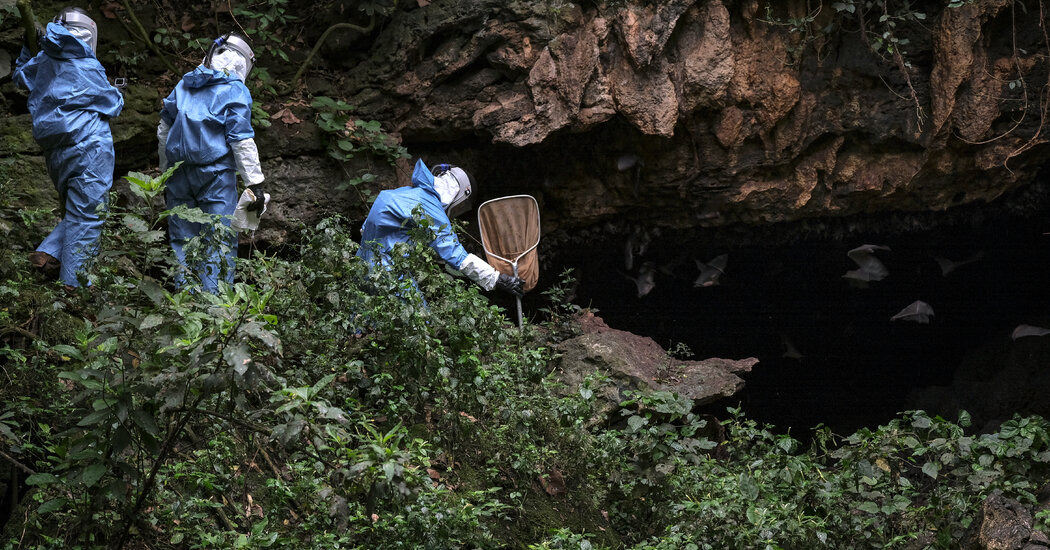
Two people infected with the virus died in Ghana last month, though no other cases were found, experts said. The disease’s fatality rate is high.Ghana announced the country’s first outbreak of Marburg virus disease after two people who were not related died on June 27 and 28. Word of a new outbreak of a lethal disease caused by viral infections added to the concerns of a public weary from battling the coronavirus pandemic, and recently alarmed by the spread of monkeypox and a new case of polio.Doctors and public health experts in the country immediately started searching for anyone who had been exposed and investigating the cause of the spread in an effort to contain infection. For now, health researchers in Ghana and in other parts of the world said that there was no indication that the virus had spread further.What is Marburg virus disease?Marburg was first detected in 1967, when outbreaks of hemorrhagic fever occurred simultaneously in laboratories in Marburg and Frankfurt in Germany, and in Belgrade, in what is now Serbia — in cases that were linked to African green monkeys imported from Uganda. Other cases have since been found in Angola, the Democratic Republic of Congo, Kenya, South Africa and Uganda, according to the World Health Organization. Last month’s cases in Ghana were the first recorded in that country.The Marburg virus is the pathogen that causes Marburg virus disease in humans, health experts said.Marburg virus particles (in blue), both budding and attached to the surface of infected cells (in yellow).Photo by: IMAGE POINT FR/NIH/NIAID/BSIP/Universal Images Group via Getty ImagesThere are no vaccines or antiviral treatments for the disease, medical experts said, but hydrating patients and treating their specific symptoms can improve their chances of survival.The disease is clinically similar to Ebola in its spread, symptoms and progression, although it is caused by a different virus, according to the W.H.O. In Marburg’s case, fruit bats are considered to be the hosts of the virus, though researchers say it does not cause them illness. Researchers believe that Ebola is likely carried by bats or by nonhuman primates, according to the Centers for Disease Control and Prevention. Even though it has not spread widely, Marburg has been deadly, with case fatality rates ranging from 24 to 88 percent, depending on which strain people contract and the management of cases, according to the W.H.O. The Ebola case fatality rates are nearly the same.The Marburg virus can spread through direct contact with blood, secretions or other bodily fluids from infected people, according to the W.H.O. It can also spread through contact with contaminated surfaces and materials like bedding or clothing.What are the symptoms of Marburg virus disease?Marburg can cause severe viral hemorrhagic fever, which interferes with the blood’s ability to clot. The incubation period ranges from two to 21 days, and symptoms begin abruptly with high fever, severe headache and severe malaise, according to the W.H.O. Other symptoms can include muscle aches, diarrhea, nausea, lethargy and bleeding through vomit, feces and from other body parts.Marburg is not contagious during the incubation period, according to the European Center for Disease Prevention and Control. Severely ill patients often die eight or nine days after the onset of symptoms, according to the W.H.O.A member of the World Health Organization taking an oral sample from a woman in Angola in 2005. She tested negative, but her grandmother, sister and ex-husband died of Marburg virus disease.Photo by Christopher Black/WHO/AFP via Getty Images“Mortality is very high,” said Dr. John Amuasi, who leads the global health and infectious disease research group at the Kumasi Center for Collaborative Research in Tropical Medicine in Kumasi, Ghana. “And there’s no asymptomatic Marburg.”A patient can confirm their condition is Marburg through antibody, antigen and polymerase chain reaction tests, health organizations said.Soldiers in biohazard suits burying two bodies during a 2005 Marburg outbreak in Uige, Angola. The dead were not known to have had the virus.Photo by Evelyn Hockstein for The New York TimesHow many cases have there been this year?There have only been two cases of Marburg virus disease this year, both reported in Ghana. The people who contracted the virus were not related and they were in different parts of the Ashanti region of Ghana, Dr. Amuasi said. They both died.Both patients were men who worked on farms, he said. One was a 26-year-old farmhand who had recently been to a different part of the country for work, and the other was a 56-year-old subsistence farmer. Contact tracing by local authorities led them to conclude that the men had not been in the same places.Fruit bats, known to be the carriers of the virus, are common in the Ashanti region.A fruit bat captured in 2018 by C.D.C. scientists in Queen Elizabeth National Park in Uganda.Photo by Bonnie Jo Mount/The Washington Post via Getty ImagesHow does the outbreak compare to previous ones?More than 200 people died in an outbreak in Angola from 2004 to 2005 and more than 100 died of the disease in the Democratic Republic of Congo from 1998 to 2000, according to the C.D.C. Other outbreaks of Marburg have not involved as many cases.In 2021, there was one case in Guinea, which resulted in that person’s death, and three of four people who had the disease in Uganda in 2017 also died, according to the C.D.C.Experts want to know how the two people contracted the virus in Ghana, said Dr. Francis Kasolo, the W.H.O. representative to the country.“The current investigation is not only focusing on contacts,” Dr. Kasolo said. “We are also going back to medical records in these areas to see if there were unusual events in terms of cases that presented with symptoms. That is why we are holding back in saying that this is just a one-off event.”Should we be worried?The C.D.C.’s office in Ghana is working with local health authorities to assist with testing and epidemiological investigations, said Dr. Jonathan Towner, who leads the Virus Host Ecology Section at the C.D.C.People in the United States are at not at high risk for exposure, Dr. Towner said.“It’s a very, very low risk probability at this point that there will be some travelers, for example, coming into the country with Marburg right now,” he said.So far, Dr. Amuasi said, the public health response has been appropriate and transparent. Contacts of the two infected people were monitored, particularly in the 21 days after the two died.

Read more →

Potential target for Type 1 diabetes treatment

A world-first study by Monash University, in Melbourne, Australia has discovered a pathway to the regeneration of insulin in pancreatic stem cells, a major breakthrough toward new therapies to treat Type 1 and Type 2 diabetes.
Using the pancreas stem cells of a type 1 diabetic donor, researchers were able to effectively reactivate them to become insulin-expressing and functionally resemble beta-like cells through the use of a drug approved by the US Food and Drug Administration but not currently licenced for diabetes treatment.
Though it requires further work, in principle the new approach would allow insulin-producing cells (beta-cells) that are destroyed in type 1 diabetics to be replaced with newborn insulin generating cells.
The study, led by diabetes experts Professor Sam El-Osta, Dr Keith Al-Hasani and Dr Ishant Khurana, from the Monash Department of Diabetes, may lead to a potential treatment option for insulin-dependent diabetes which is diagnosed in seven Australian children every day resulting in a lifetime testing of blood glucose and daily insulin injections, to replace the insulin no longer produced by a damaged pancreas.
As the number of cases of diabetes worldwide approaches 500 million, researchers are scrambling for a limited pool of treatments with unclear effectiveness.
“We consider the research novel and an important step forward towards developing new therapies,” Professor El-Osta said. To restore insulin expression in a damaged pancreas, the researchers had to overcome a series of challenges since the diabetic pancreas was often thought to be too damaged to heal.
The findings are now published in the Nature journal, Signal Transduction and Targeted Therapy
According to Professor El-Osta, by the time an individual is diagnosed with Type 1 diabetes much of their pancreatic beta cells, which produce insulin, have been totally destroyed. These studies show the “diabetic pancreas is not incapable of expressing insulin” and the proof-of-concept experiments “address unmet medical needs in type 1 diabetes.”
The advances in the genetics of diabetes have brought a “greater understanding and along with it a resurgence of interest in the development of potential therapies,” said Professor El-Osta.
“Patients rely on daily insulin injections to replace what would have been produced by the pancreas. Currently, the only other effective therapy requires pancreatic islet transplantation and while this has improved health outcomes for individuals with diabetes, transplantation relies on organ donors, so it has limited widespread use,” said Professor El-Osta.
Co-author of the study, Dr Al-Hasani says that as we face a globally ageing population and the challenges of escalating numbers of Type 2 diabetes which is strongly correlated with increases in obesity, the need for a cure for diabetes is becoming more urgent,” said Dr Al-Hasani. “Before you get to patients, there are many issues to be resolved,” Dr Al-Hasani said. ” More work is required to define the properties of these cells and establish protocols to isolate and expand them,” he added. “I would think therapy is pretty far away, however, this represents an important step along the way to devising a lasting treatment that might be applicable for all types of diabetes.”
Prof El-Osta, Drs Al-Hasani and Khurana have developed a revolutionary method to regenerate insulin cells without the ethical concerns that are commonly associated with embryonic stem cells.
Story Source:
Materials provided by Monash University. Note: Content may be edited for style and length.

Read more →

No clear medical definition of 'growing pains'

We often hear the phrase ‘growing pains’ used by the general public to describe muscle or joint pain in young people and the term is also used by health professionals. However researchers have found there is no consistent medical definition of the condition behind a diagnosis.
A broad review of medical literature by University of Sydney researchers found there is no agreement among researchers and clinicians on what growing pains really are, what they mean, how they are defined, and how they should be diagnosed.
The researchers say growing pains may be a medical misnomer. Surprisingly, more than 93 percent of studies did not refer to growth when defining the condition.
More than 80 percent of studies made no mention of age in their definition.
The findings have prompted the researchers to recommend the term growing pains not be used by clinicians and other researchers as a stand-alone diagnosis, until a clear definition backed by evidence has been established.
The study is published in Pediatrics.
Growing pains are considered to be one of the most common causes of recurring musculoskeletal pain in children and adolescents. Some studies suggest up to a third of children experience the condition at some point in their life.

Read more →

Demonstration of a potent, universal coronavirus monoclonal antibody therapy for all COVID-19 variants

The SARS-CoV-2 that causes COVID-19 has killed 6.3 million people worldwide since 2019, painfully highlighting the vulnerability of humanity to novel coronaviruses.
Researchers discovered a neutralizing monoclonal antibody that potentially acts as a potent universal coronavirus therapy against SARS-CoV-2 and all its variants of concern, including Beta, Gamma, Delta, Epsilon and Omicron. It also shows effectiveness against the deadly previous coronaviruses SARS-CoV, the Severe Acute Respiratory Syndrome that emerged in China in 2002, and MERS-CoV, the Middle East Respiratory Syndrome that appeared in Saudi Arabia in 2012. It even shows effectiveness against several common cold coronaviruses.
This universal activity against all beta-coronaviruses results from a monoclonal antibody targeting the S2 stalk region of the viral spike (S) protein that is highly conserved among beta-coronaviruses, yet is also essential for the virus to attach and enter cells, leading to infection.
In animal experiments, the monoclonal antibody protected against infections when given as an intraperitoneal injection or a nasal dose. The study is published in the journal PLOS Pathogens by co-senior authors James J. Kobie, Ph.D., and Mark R. Walter, Ph.D., of the University of Alabama at Birmingham, and Luis Martinez-Sobrido, Ph.D., of the Texas Biomedical Research Institute, San Antonio, Texas.
The monoclonal antibody, and another monoclonal antibody discovered earlier by the researchers, are being developed as a therapeutic cocktail for COVID-19 under license to Aridis Pharmaceuticals, a California biopharmaceutical company.
The overall goal of researchers at UAB, Texas Biomedical Research Institute and Aridis is to find antibodies that do not permit immune escape by mutated variants of SARS-CoV-2, the virus that causes COVID-19. This includes Omicron and any future variants of concern. It is hoped that identifying and studying such antibodies can lead to the development of vaccines that protect from all coronaviruses.

Read more →

New clinical symptoms identified in largest international study series of confirmed monkeypox cases

A case series which is the result of an international collaboration across 16 countries is published today (21 July 2022) in The New England Journal of Medicine (NEJM). The study, led by researchers at Queen Mary University of London, identifies new clinical symptoms of monkeypox infection, which will aid future diagnosis and help to slow the spread of infection. It was carried out in response to the emerging global health threat and is the largest case series to date, reporting on 528 confirmed infections at 43 sites between 27 April and 24 June 2022.
The current spread of the virus disproportionately affects gay and bisexual men, with 98% of infected persons from this group. Although sexual closeness is the most likely route of transmission in most of these cases, researchers stress that the virus can be transmitted by any close physical contact through large respiratory droplets and potentially through clothing and other surfaces.
There is a global shortage of both vaccines and treatments for human monkeypox infection. The findings of this study, including the identification of those most at risk of infection, will help to aid the global response to the virus. Public health interventions aimed at the high-risk group could help to detect and slow the spread of the virus. Recognising the disease, contact tracing and advising people to isolate will be key components of the public health response.
Many of the infected individuals reviewed in the study presented with symptoms not recognised in current medical definitions of monkeypox. These symptoms include single genital lesions and sores on the mouth or anus. The clinical symptoms are similar to those of sexually transmitted infections (STIs) and can easily lead to misdiagnosis. In some people, anal and oral symptoms have led to people being admitted to hospital for management of pain and difficulties swallowing. This is why it’s so important that these new clinical symptoms be recognised and healthcare professionals be educated on how to identify and manage the disease — misdiagnosis can slow detection and thus hinder efforts to control the spread of the virus. The study will therefore lead to increased rates of diagnosis when persons from at-risk groups present with traditional STI symptoms.
Public health measures — such as enhanced testing and education — should be developed and implemented working with at-risk groups to ensure that they are appropriate, non-stigmatising, and to avoid messaging that could drive the outbreak underground.
Chloe Orkin, Professor of HIV Medicine at Queen Mary University of London and Director of the SHARE collaborative, said:
“Viruses know no borders and monkey pox infections have now been described in 70 countries and in more than 13000 people. This truly global case series has enabled doctors from 16 countries to share their extensive clinical experience and many clinical photographs to help other doctors in places with fewer cases. We have shown that the current international case definitions need to be expanded to add symptoms that are not currently included, such as sores in the mouth, on the anal mucosa and single ulcers. These particular symptoms can be severe and have led to hospital admissions so it is important to make a diagnosis. Expanding the case definition will help doctors more easily recognise the infection and so prevent people from passing it on. Given the global constraints on vaccine and anti-viral supply for this chronically underfunded, neglected tropical infection, prevention remains a key tool in limiting the global spread of human monkeypox infection.”

Read more →

Your body remembers common cold coronaviruses from childhood. How can you get the same immunity to COVID-19?

For a glimpse into the future of SARS-CoV-2 immunity, scientists at La Jolla Institute for Immunology (LJI) are investigating how the immune system builds its defenses against common cold coronaviruses (CCCs).
According to a new LJI study, published recently in Cell Host & Microbe, adults have stable memory responses of CCC-fighting antibodies and T cells, presumably derived from multiple exposures to CCCs in childhood. Thanks to this immune cell army, CCC infections in adulthood tend to be infrequent and mild.
These findings may be a clue to how immunity can build up against SARS-CoV-2, the virus that causes COVID-19, and the leading researchers think the COVID-19 booster shots available today may be critical for long-term immunity.
What do coronaviruses have in common?
With the Omicron 5 subvariant on the loose, more and more people are suffering from breakthrough infections and reinfections.
“Everyone is wondering where this is going to go. Will we need to keep getting boosters or redesigning the vaccines?” says LJI Professor Alessandro Sette, Dr.Biol.Sci.

Read more →