Study shows link between frequent naps and high blood pressure

Napping on a regular basis is associated with higher risks for high blood pressure and stroke, according to new research published today in Hypertension, an American Heart Association journal.
Researchers in China examined whether frequent naps could be a potential causal risk factor for high blood pressure and/or stroke. This is the first study to use both observational analysis of participants over a long period of time and Mendelian randomization — a genetic risk validation to investigate whether frequent napping was associated with high blood pressure and ischemic stroke.
“These results are especially interesting since millions of people might enjoy a regular, or even daily nap,” says E Wang, Ph.D., M.D., a professor and chair of the Department of Anesthesiology at Xiangya Hospital Central South University, and the study’s corresponding author.
Researchers used information from UK Biobank, a large biomedical database and research resource containing anonymized genetic, lifestyle and health information from half a million UK participants. UK Biobank recruited more than 500,000 participants between the ages of 40 and 69 who lived in the United Kingdom between 2006 and 2010. They regularly provided blood, urine and saliva samples, as well as detailed information about their lifestyle. The daytime napping frequency survey occurred 4 times from 2006 — 2019 in a small proportion of UK Biobank participants.
Wang’s group excluded records of people who had already had a stroke or had high blood pressure before the start of the study. This left about 360,000 participants to analyze the association between napping and first-time reports of stroke or high blood pressure, with an average follow-up of about 11 years. Participants were divided into groups based on self-reported napping frequency: “never/rarely,” “sometimes,” or “usually.”
The study found: A higher percentage of usual-nappers were men, had lower education and income levels, and reported cigarette smoking, daily drinking, insomnia, snoring and being an evening person compared to never- or sometimes-nappers; When compared to people who reported never taking a nap, people who usually nap had a 12% higher likelihood of developing high blood pressure and 24% higher likelihood of having a stroke; Participants younger than age 60 who usually napped had a 20% higher risk of developing high blood pressure compared to people the same age who never napped. After age 60, usual napping was associated with 10% higher risk of high blood pressure compared to those who reported never napping; About three-fourths of participants remained in the same napping category throughout the study; The Mendelian randomization result showed that If napping frequency increased by one category (from never to sometimes or sometimes to usually) high blood pressure risk increased 40%. Higher napping frequency was related to the genetic propensity for high blood pressure risk.”This may be because, although taking a nap itself is not harmful, many people who take naps may do so because of poor sleep at night. Poor sleep at night is associated with poorer health, and naps are not enough to make up for that,” said Michael A. Grandner, Ph.D., MTR, a sleep expert and co-author of the American Heart Association’s new Life’s Essential 8 cardiovascular health score, which added sleep duration in June 2022 as the 8th metric for measuring optimal heart and brain health. “This study echoes other findings that generally show that taking more naps seems to reflect increased risk for problems with heart health and other issues.” Grander is director of the Sleep Health Research Program and the Behavioral Sleep Medicine Clinic and associate professor of psychiatry at the University of Arizona in Tucson.
The authors recommend further examination of the associations between a healthy sleep pattern, including daytime napping, and heart health.
The study has several important limitations to consider. Researchers only collected daytime napping frequency, not duration, so there is no information how or whether the length of nap affects blood pressure or stroke risks. Additionally, nap frequency was self-reported without any objective measurements, making estimates nonquantifiable. The study’s participants were mostly middle-aged and elderly with European ancestry, so the results may not be generalizable. Finally, researchers have not yet discovered the biological mechanism for the effect of daytime napping on blood pressure regulation or stroke.
Co-authors are Min-jing Yang, M.D.; Zhong Zhang, Ph.D., M.D.; Yi-jing Wang; M.D.; Jin-chen Li, Ph.D.; Qu-lian Guo, Ph.D., M.D.; Xiang Chen, Ph.D., M.D.
The National Key Research and Development Program of China financially support this research.
Story Source:
Materials provided by American Heart Association. Note: Content may be edited for style and length.


Read more →

New study finds lowest risk of death was among adults who exercised 150-600 minutes/week

An analysis of more than 100,000 participants over a 30-year follow-up period found that adults who perform two to four times the currently recommended amount of moderate or vigorous physical activity per week have a significantly reduced risk of mortality, according to new research published today in the American Heart Association’s flagship, peer-reviewed journal Circulation. The reduction was 21-23% for people who engaged in two to four times the recommended amount of vigorous physical activity, and 26-31% for people who engaged in two to four times the recommended amount of moderate physical activity each week.
It is well documented that regular physical activity is associated with reduced risk of cardiovascular disease and premature death. In 2018, the United States Department of Health and Human Services’ Physical Activity Guidelines for Americans recommended that adults engage in at least 150-300 minutes/week of moderate physical activity or 75-150 minutes/week of vigorous physical activity, or an equivalent combination of both intensities. The American Heart Association’s current recommendations, which are based on HHS’s Physical Activity Guidelines, are for at least 150 minutes per week of moderate-intensity aerobic exercise or 75 minutes per week or vigorous aerobic exercise, or a combination of both.
“The potential impact of physical activity on health is great, yet it remains unclear whether engaging in high levels of prolonged, vigorous or moderate intensity physical activity above the recommended levels provides any additional benefits or harmful effects on cardiovascular health,” said Dong Hoon Lee, Sc.D., M.S., a research associate in the department of nutrition at the Harvard T.H. Chan School of Public Health in Boston. “Our study leveraged repeated measures of self-reported physical activity over decades to examine the association between long-term physical activity during middle and late adulthood and mortality.”
Researchers analyzed mortality data and medical records for more than 100,000 adults gathered from two large prospective studies: the all-female Nurses’ Health Study and the all-male Health Professionals Follow-up Study from 1988-2018. Participants whose data were examined were 63% female, and more than 96% were white adults. They had an average age of 66 years and an average body mass index (BMI) of 26 kg/m2 over the 30-year follow-up period.
Participants self-reported their leisure-time physical activity by completing a validated questionnaire for either the Nurses’ Health Study or Health Professionals Follow-Up Study every two years. The publicly available questionnaires, which were updated and expanded every two years, included questions about health information, physician-diagnosed illnesses, family medical histories and personal habits such as cigarette and alcohol consumption and frequency of exercise. Exercise data was reported as the average time spent per week on various physical activities over the past year. Moderate activity was defined as walking, lower-intensity exercise, weightlifting and calisthenics. Vigorous activity included jogging, running, swimming, bicycling and other aerobic exercises.
The analysis found that adults who performed double the currently recommended range of either moderate or vigorous physical activity each week had the lowest long-term risk of mortality.

Read more →

Are effects of lead poisoning 'reversible' with early enrichment? Animal study

Lead exposure in early childhood can lead to severe cognitive and behavioral impairments in children that last well into adolescence and adulthood. Although researchers have looked at effects of early life lead exposure on a small number of genes involved in learning, memory, and brain development, research was lacking as to the full extent of the toxicity. New research from Thomas Jefferson University shows that over 3,500 genes in the hippocampus, a part of the brain involved in learning and memory are affected by lead poisoning. The work also shows that providing animals with stimulating environments early in life can reverse the large majority of these genetic changes, reinforcing the potentially important role of early-childhood education in combating the effects of lead poisoning.
“Children who live in housing stock built before 1978, the year in which lead was banned as an ingredient in paint, are at high risk of being exposed to lead from lead dust or chipping and peeling lead-containing paint in their homes,” says senior author Jay Schneider, PhD, professor of Pathology, Anatomy and Cell Biology at Thomas Jefferson University. “Recent estimates suggest that there are at least a half million children in the U.S. with blood lead levels at or above amounts that can adversely affect cognitive function. Our work demonstrates that by providing an enriched early life environment, the adverse effects of lead on the brain may be minimized or potentially reversed, emphasizing how important early childhood interventions may be.”
Together with lead author Garima Singh, PhD, a research assistant professor in the department of Pathology, Anatomy and Cell Biology and colleagues, the authors looked at rats that were exposed to lead from birth to the time of weaning, at 21 days of age. “Our experiments aimed to replicate conditions of human lead exposure,” says Dr. Singh. “21 days of age for rats is the equivalent to an age of about 2-3 years in humans, which is commonly when lead exposure occurs. That is because crawlers and toddlers are likely to put many things in their mouths including paint chips or toys covered in dust from deteriorating lead paint.”
From 21 days, the lead-exposed animals were separated into two different housing conditions: ones that were either enriched or ones that lacked stimulation. The so-called enriched cages had more social activity, with a total of 6 rats, together with chew toys and various things to climb on and burrow through that were changed twice every week for novelty. The non-enriched cages were smaller, only held 3 animals and did not contain any additional stimulation. “We now know that stimulating social environments are as important for rodents as they are for human children, in terms of cognitive and behavioral health and with effects on physical health as well,” says Dr. Singh.
The researchers looked at changes in expression of genes from the part of the brain involved in memory — the hippocampal region. They found that the expression levels of over 3,500 genes were affected by the lead exposure, either abnormally churning out more or less of their gene products. “These data show for the first time that at a genome-wide level, a large number of hippocampal genes involved in various biological processes and functions are affected by lead exposure and further modified by an enriched environment,” says Dr. Schneider. In rats exposed to lead, the genes affected were amongst those involved in memory and nerve signaling pathways, and also those involved in brain development.
However, approximately 80% of the gene expression changes induced by the lead exposure were reversed in the group of animals that lived in the stimulating environment until day 55, which is roughly equivalent to adolescence in humans. Additionally, the animals living in the non-enriched environment had memory deficits while the animals living in the enriched environment did not.
“We know that there is no safe level of lead exposure for children,” says Dr. Schneider. “Lead can damage the brain and derail normal brain development. However, our work suggests that it may be possible to mitigate the wide-spread adverse effects of lead on the young brain by providing adequate access to stimulating, interesting environments and activities in early childhood and perhaps longer. Unfortunately, these kinds of resources are often not available to the population most at risk for lead poisoning, that is, children who are growing up in impoverished or low socioeconomic environments.” Drs. Schneider and Singh agree that although more research needs to be done in this area, the importance of early intervention programs with environmental enrichment cannot be overstated.
This research was supported by NIH grant R01ES030742. Bioinformatics support was provided in part from the Center of Excellence in Environmental Toxicology (CEET), University of Pennsylvania, Center Grant. The authors report no competing interests.
Story Source:
Materials provided by Thomas Jefferson University. Note: Content may be edited for style and length.

Read more →

A third COVID-19 booster is crucial to identifying and fighting new variants, study finds

Twenty different COVID-19 variants were effectively identified and neutralised after a third booster, according to the new study for which the University of Surrey provided the crucial antigenic map of variants of concern.
While the study’s results suggested that immunity decreases 20 weeks after vaccination, a third booster (of the Pfizer-BioNTech vaccine, in the case of this study) helped the immune system to identify and neutralise the 20 different variants.
The antigenic map allowed the team to identify and measure how each variant impacted the immune system.
Dr Daniel Horton, co-author of the study and Reader in Veterinary Virology at the University of Surrey, said:
“The emergence of this disease and its disruptive and deadly impact on our day-to-day lives demonstrates how crucial it is for the scientific community to work together to identify and characterise infectious diseases quickly.
“The University of Surrey’s contribution to this study through the mapping of the various variants is itself part of a landmark €90 million collaborative effort to tackle zoonotic diseases in Europe, reflecting our focus on understanding the inextricable links between the health of animals, humans and, indeed, the planet we all share.”
The Pirbright Institute led this collaborative study with scientists from the University of Surrey, Imperial College in London and the UK Health Security Agency (UKHSA) to understand the immune response of individuals aged 70-89 who had received the Pfizer-BioNTech vaccine.
This vaccine works by triggering the immune system to create Y-shaped proteins, known as antibodies, that can stick to the spike proteins which are found on the surface of the coronavirus. If a person is infected with SARS-CoV-2, the antibodies bind the spike proteins preventing the virus from attaching to and entering the human cell, therefore helping to protect from severe disease. Antibodies also act as a beacon to alert the immune system to help fight the infection.
Dr Dalan Bailey, Head of the Viral Glycoproteins group at Pirbright, said:
“Understanding how the levels of neutralising antibodies relate to a well-defined immune response will be an important step in understanding how the immune system responds to SARS-CoV-2 and could also help in the management of Covid-19.
“This information could help us to understand whether the risk of breakthrough infections, hospitalisation and death is increased by waning immunity or new variants. Research comparing immune responses to different SARS-CoV-2 variants and understanding the role of different mutations is vital in the management of the Covid-19 pandemic and in predicting the outcome of new variants.”
The research was published in Nature Microbiology.
Story Source:
Materials provided by University of Surrey. Note: Content may be edited for style and length.
Read more →

Researchers identify protein connected to aging and idiopathic pulmonary fibrosis

Idiopathic pulmonary fibrosis (IPF) is an aging-associated disease caused by progressive scarring of the lungs, leading to respiratory failure and death. Therapies to treat IPF are limited, making studies on the mechanisms responsible for this crippling disease a priority. Now for the first time, researchers at the Arthritis and Autoimmune Diseases Center (AADC) at Boston University School of Medicine (BUSM) in collaboration with those at Mayo Clinic, Rochester, Minn., have discovered a new mechanism linking the aging of blood vessels to the development of pulmonary fibrosis.
More specifically, they found that ERG, a protein that normally controls the regenerative properties of endothelial cells (the inner lining of blood vessels), is implicated in the progression of IPF, an aging-associated disease that causes progressive scarring of the lungs, respiratory failure and death.
“Although the lungs of IPF patients manifest multiple vascular abnormalities, the contribution of these alterations to the progression of IPF has remained largely unexplored. “Our findings demonstrated the impact of the aged lung vasculature on the pathogenesis of IPF,” said corresponding author Giovanni Ligresti, PhD, associate professor of medicine at BUSM. “This work is also relevant to other fibrotic disorders, including lung fibrosis associated with scleroderma,” said BUSM professor of medicine Maria Trojanowska, PhD, director of the AADC and collaborator of this study.
The researchers used experimental models of pulmonary fibrosis, human lung cells and lung tissues from human patients with IPF to investigate how aging-associated dysfunction of the pulmonary vasculature contributes to the progression of IPF.
In addition, they created a new experimental model in which the gene ERG was depleted from blood vessels. “Upon lung injury, models with deleted ERG were no longer able to properly repair from the injury resulting in progressive lung scarring as observed in aged mice, as well as in patients with IPF. Furthermore, even in absence of injury, models without ERG exhibited features of advanced aging, including increased inflammation and an enhanced predisposition to develop chronic conditions, which are typically observed in elderly,” explained Ligresti.
According to the researchers, given that many chronic diseases in elderly are characterized by dysfunctional blood vessels, targeting molecular mechanisms that can promote blood vessel regeneration, such as ERG, will be beneficial in multiple organs besides lungs. “These findings may also have important implications in elderly patients with COVID-19, in which vascular abnormalities and elevated vascular inflammation are often responsible for disease exacerbation and death,” adds Ligresti.
These findings appear online in the journal Nature Communications.
Funding for this study was provided by the National Institutes of Health (NIH) grants HL142596 (G.L.), HL158733 (G.L.), HL150638 (M. T.), AR060780 (M.T.), HL092961 (D.J.T.), HL105355 (P.A.L. and D.L.J.), HL007035 (T.X.P.), the American Lung Association Dalsemer Award (N.C.) and the Boehringer Ingelheim Discovery Award IPF/ILD (N.C.).
Story Source:
Materials provided by Boston University School of Medicine. Note: Content may be edited for style and length.

Read more →

Weak handgrip strength may signal serious health issues

Muscle strength is a powerful predictor of mortality that can quickly and inexpensively be assessed by measuring handgrip strength. In a new study, researchers developed cut-off points that apply to the general population, while also considering the correlation of handgrip strength with gender, body height, and aging to be used in medical practice.
Most people do not give a second thought to doing things like opening pickle jars or carrying groceries, but handgrip strength is an effective screening tool for different health conditions. If someone’s handgrip strength is low, it might be an indication of underlying health problems — and not only in older individuals: handgrip strength has been linked to health conditions already in younger adulthood. A large number of studies have shown that low handgrip strength may be a manifestation of health conditions related to heart and lung problems. Some studies have also found that those with low handgrip strength have a lower life expectancy.
What is missing for clinical practice, are empirically meaningful cut-off points that apply to the general population, while also considering the correlation of handgrip strength with gender and body height, as well as the decline in handgrip strength as a result of normal aging.
In their study just published in the journal BMJ Open, IIASA researcher Sergei Scherbov; Sonja Spitzer, a postdoctoral researcher at the Wittgenstein Centre for Demography and Global Human Capital and the University of Vienna; and Nadia Steiber from the University of Vienna, endeavored to shed light on at what level of handgrip strength a doctor should consider sending a patient for further examination. The results of the study provide standardized thresholds that directly link handgrip strength to remaining life expectancy, thus enabling practitioners to detect patients with an increased mortality risk early on.
“In general, handgrip strength depends on gender, age, and the height of a person. Our task was to find the threshold related to handgrip strength that would signal a practitioner to do further examinations if a patient’s handgrip strength is below this threshold. It is similar to measuring blood pressure. When the level of blood pressure is outside of a particular range, the doctor can either decide to prescribe a particular medicine or to send the patient to a specialist for further examination,” explains Scherbov.
Handgrip strength is measured by squeezing a dynamometer with one hand. In the study, the patient is asked to perform two attempts with each hand, the best trial being used for measurement. There is a special protocol for this process as the values may depend on whether the test was performed in a standing or a sitting position, among other considerations.
In contrast to earlier studies, the authors compared individuals’ handgrip strength not with a healthy reference population, but with individuals who are comparable in terms of sex, age, and body height. The findings indicate an increase in mortality risk at a threshold that is more sensitive compared to that estimated in earlier studies. In fact, the results show that a handgrip strength that is only slightly below the average of a comparable population (considering a person’s sex, age, and body height) is indicative of health conditions leading to earlier death. A stronger handgrip compared to other people of the same age, sex, and body height was not found to reduce the mortality risk.
“Handgrip strength is a cheap and easy to perform test, but it may help with early diagnosis of health problems and other underlying health conditions. Monitoring the handgrip strength of the elderly (and in fact middle-aged people) may provide great benefits for the public health of aging populations. Our findings make it clear that handgrip strength is a very precise and sensitive measure of underlying health conditions. Therefore, we suggest it to be used as a screening tool in medical practice,” notes Steiber.
“It is important to point out that we are not suggesting that people should train handgrip strength in particular to decrease mortality risks. Most likely, if someone improves their handgrip strength through exercises, there will be no or very little impact on their overall health. However, low handgrip strength may serve as an indicator of disability because it reflects a low muscle strength, which is associated with a higher risk of death. A healthy lifestyle and exercise are still the best approaches to sustain good health or to improve it in the long term,” Spitzer concludes.

Read more →

Likely cause of mystery child hepatitis outbreak found

Published13 minutes agoSharecloseShare pageCopy linkAbout sharingUK experts believe they have identified the cause of the recent spate of mysterious liver problems affecting young children around the world.Investigations suggest two common viruses made a comeback after pandemic lockdowns ended – and triggered the rare but very serious hepatitis cases. More than 1,000 children – many under the age of five – in 35 countries are thought to have been affected.Some, including 12 in the UK, have needed a lifesaving liver transplant.The two teams of researchers, from London and Glasgow, say infants exposed later than normal – because of Covid restrictions – missed out on some early immunity to:adenovirus, which normally causes colds and stomach upsetsadeno-associated virus two, which normally causes no illness and requires a coinfecting “helper” virus – such as adenovirus – to replicateNoah, three, who lives in Chelmsford, Essex, needed an urgent liver transplant after becoming dangerously ill with hepatitis.His mother, Rebecca Cameron-McIntosh, says the experience has been devastating. “He’d previously had nothing wrong with him,” she says. “And for it to suddenly go so quickly. I think that’s what kind of took us by surprise. “We’ve just assumed it was one little problem that will get easily sorted out – but actually it just kept on snowballing.”Initially, Rebecca was lined up to donate part of her liver – but, after a serious reaction to drugs used, she ended up in intensive care. Noah was put on the transplant list and, soon after, received a new organ.His recovery has been good – but he will need to take immunosuppressant drugs for life, to stop his body rejecting the new liver.Rebecca says: “There is something really heartbreaking about that because you go along following the rules, do what you are supposed to do to protect people that are vulnerable and then, in some horrible roundabout way, your own child has become more vulnerable because you did what you were supposed to do.”Cases such as this are rare. Most children who catch these types of viruses quickly recover. It is unclear why some then develop liver inflammation – but genetics might play a part.Scientists have ruled out any connection with coronavirus or Covid vaccines. One of the investigators, Prof Judith Breuer, an expert in virology, at University College London, said: “During the lockdown period when children were not mixing, they were not transmitting viruses to each other. “They were not building up immunity to the common infections they would normally encounter. “When the restrictions were lifted, children began to mix, viruses began to circulate freely – and they suddenly were exposed with this lack of prior immunity to a whole battery of new infections.”Prof Emma Thomson, who led the University of Glasgow research, said there were still many unanswered questions. “Larger studies are urgently needed to investigate the role of AAV2 in paediatric hepatitis cases.”We also need to understand more about seasonal circulation of AAV2, a virus that is not routinely monitored – it may be that a peak of adenovirus infection has coincided with a peak in AAV2 exposure, leading to an unusual manifestation of hepatitis in susceptible young children.”More on this storyMore hepatitis cases confirmed in young children29 AprilVirus probable cause of mysterious child hepatitis25 AprilHepatitis in children: How many cases are there?4 May

Read more →

‘I’m Always Worrying’: How to Cope With Financial Stress

Experts share tips on how to feel empowered and manage stress as prices continue to rise.For Ellie Alvarado, a teacher and mother of three in Elgin, Ill., figuring out how to pay the bills has become a source of anxiety and tension, especially when she and her husband argue over how to cut back.“When I say, ‘OK we cannot buy anything this week or else we’ll go into overdraft’ — he says, ‘No, what are you talking about? We’re both working. That shouldn’t happen,’” Ms. Alvarado said.Soaring food costs have meant no more impromptu trips to McDonald’s. Name-brand cereal and other little luxuries are out, too. Gas prices, which recently hovered around $5 a gallon, are also eating into their budget.“Every time I fill up our van I’m flabbergasted,” said Ms. Alvarado, who sometimes sees as little as $100 in her family’s checking account. “I’m always worrying,” she added.Her husband, who works in a factory, decided to take the overnight shift because it pays more per hour. But her family still fell behind on their housing payments.“I can postpone the mortgage by two weeks,” said Ms. Alvarado, 38, who keeps track of the family’s budget. “But then it becomes two more weeks, and then all of a sudden they’re calling you.”Inflation has now reached its highest level in 40 years, forcing many families to make do with less. According to data released this month by the Bureau of Labor Statistics, the Consumer Price Index rose 9.1 percent from a year ago, with some of the biggest price increases in necessities like food, rent and gasoline. The added financial stress isn’t just tough on bank accounts, however, it can also bring feelings of depression, shame, anger or fear.A study of older adults published in 2017 found that the way someone perceives and reacts to financial strain can have implications for their mental well-being. Those who were upset by their economic circumstances were more likely to have higher depression scores than those who were also under financial strain but who were not as bothered by it — even when controlling for other factors, like health and income.Fortunately, “there is a lot we can do to manage and work through that stress and the emotions,” said the lead author of the paper, Sarah D. Asebedo, director of the School of Financial Planning at Texas Tech University in Lubbock, Texas.We spoke with financial experts about how to cope with the emotional fallout of money worries and have productive conversations about finances with family members.8 Signs That the Economy Is Losing SteamCard 1 of 9Worrying outlook.

Read more →

‘Parentese’ is Truly a Lingua Franca, Global Study Finds

In an ambitious cross-cultural study, researchers found that adults around the world speak and sing to babies in similar ways.We’ve all seen it, we’ve all cringed at it, we’ve all done it ourselves: talked to a baby like it was, you know, a baby.“Ooo, hellooooo baby!” you say, your voice lilting like a rapturously accommodating Walmart employee. Baby is utterly baffled by your unintelligible warble and your shamelessly doofus grin, but “baby so cuuuuuute!”Regardless of whether it helps to know it, researchers recently determined that this sing-songy baby talk — more technically known as “parentese” — seems to be nearly universal to humans around the world. In the most wide-ranging study of its kind, more than 40 scientists helped to gather and analyze 1,615 voice recordings from 410 parents on six continents, in 18 languages from diverse communities: rural and urban, isolated and cosmopolitan, internet savvy and off the grid, from hunter gatherers in Tanzania to urban dwellers in Beijing.The results, published recently in the journal Nature Human Behavior, showed that in every one of these cultures, the way parents spoke and sang to their infants differed from the way they communicated with adults — and that those differences were profoundly similar from group to group.TanzaniaA member of the Hadza tribe sings to his infant.ChinaA mother in Beijing sings to her baby.“We tend to speak in this higher pitch, high variability, like, ‘Ohh, heeelloo, you’re a baaybee!’” said Courtney Hilton, a psychologist at Haskins Laboratories at Yale University and a principal author of the study. Cody Moser, a graduate student studying cognitive science at the University of California, Merced, and the other principal author, added: “When people tend to produce lullabies or tend to talk to their infants, they tend to do so in the same way.”The findings suggest that baby talk and baby song serve a function independent of cultural and social forces. They lend a jumping off point for future baby research and, to some degree, tackle the lack of diverse representation in psychology. To make cross-cultural claims about human behavior requires studies from many different societies. Now, there is a big one.“I’m probably the author with the most papers on this topic until now, and this is just blowing my stuff away,” said Greg Bryant, a cognitive scientist at the University of California, Los Angeles, who was not associated with the new research. “Everywhere you go in the world, where people are talking to babies, you hear these sounds.”A Toposa woman sings while holding her baby in South Sudan in 2017.Luke GlowackiAnand Siddaiah, a researcher with the project, with a young member of the Jenu Kuruba tribe in southern India.Anand SiddaiahSound is used throughout the animal kingdom to convey emotion and signal information, including incoming danger and sexual attraction. Such sounds display similarities between species: A human listener can distinguish between happy and sad noises made by animals, from chickadees and alligators to pigs and pandas. So it might not be surprising that human noises also carry a commonly recognizable emotional valence.Scientists have long argued that the sounds humans make with their babies serve a number of important developmental and evolutionary functions. As Samuel Mehr, a psychologist and director of The Music Lab at Haskins Laboratories who conceived the new study, noted, solitary human babies are “really bad at their job of staying alive.” The strange things we do with our voices when staring at a newborn not only help us survive but teach language and communication.For instance, parentese can help some infants remember words better, and it allows them to piece together sounds with mouth shapes, which gives sense to the chaos around them. Also, lullabies can soothe a crying infant, and a higher pitched voice can hold their attention better. “You can push air through your vocal tract, create these tones and rhythms, and it’s like giving the baby an analgesic,” Dr. Mehr said.But in making these arguments, scientists, mostly in Western, developed countries, have largely assumed that parents across cultures modify their voices to talk to infants. “That was a risky assumption,” said Casey Lew-Williams, a psychologist and director of the Baby Lab at Princeton University who did not contribute to the new study. Dr. Lew-Williams noted that baby talk and song “seems to provide an on-ramp for language learning” but that “there are some cultures where adults don’t talk as often to kids — and where they talk a lot to them.” Theoretical consistency, while nice, he said, runs the risk of “washing over the richness and texture of cultures.”An increasingly popular joke among academics holds that the study of psychology is actually the study of American college undergraduates. Because white, urban-residing researchers are overrepresented in psychology, the questions they ask and the people they include in their studies are often shaped by their culture.“I think people don’t realize how much that bleeds into how we understand behavior,” said Dorsa Amir, an anthropologist at the University of California, Berkeley, who collected recordings from the Shuar in Ecuador for the new study. “But there are very different ways of being human.”Manvir Singh, an anthropologist and an author on the new study, recording speech in southern Siberut, Indonesia, in 2017.Manvir SinghIn a previous study, Dr. Mehr led a search for universal characteristics of music. Of the 315 different societies he looked at, music was present in every one. A vindicating finding and a rich data set, but one that raised more questions: How similar is the music in each culture? Do people in different cultures perceive the same music differently?In the new study, the sounds of parentese were found to differ in 11 ways from adult talk and song around the world. Some of these differences might seem obvious. For instance, baby talk is higher pitched than adult talk, and baby song is smoother than adult song. But to test whether people have an innate awareness of these differences, the researchers created a game — Who’s Listening? — that was played online by more than 50,000 people speaking 199 languages from 187 countries. Participants were asked to determine whether a song or a passage of speech was being addressed to a baby or an adult.PolandA mother in a rural town outside Krakow speaks to her infant.BoliviaA Quechua man sings a song for adults.The researchers found that listeners were able to tell with about 70 percent accuracy when the sounds were aimed at babies, even when they were totally unfamiliar with the language and culture of the person making them. “The style of the music was different, but the vibe of it, for lack of a scientific term, felt the same,” said Caitlyn Placek, an anthropologist at Ball State University who helped to collect recordings from the Jenu Kuruba, a tribe in India. “The essence is there.”The new study’s acoustic analysis also listed out these worldwide characteristics of baby and adult communication in a way that brought on new questions and realizations.For instance, people tend to try out many different vowel sounds and combinations when talking to babies, “exploring the vowel space,” as Mr. Moser put it. This happens to be quite similar to the way adults sing to each other around the world. Baby talk also closely matches the melody of song — “the ‘songification’ of speech, if you like,” Dr. Hilton said.This could potentially point to a developmental source of music — maybe “listening to music is one of those things that humans are just wired up to do,” Dr. Mehr said.But the jury is still out as to how these cross-cultural similarities fit into existing theories of development. “The field going forward will have to figure out which of the things in this laundry list are important for language-learning,” Dr. Lew-Williams said. “And that’s why this kind of work is so cool — it can spread.”Dr. Mehr concurred. “Part of being a psychologist is to step back and look at just how weird and incredible we are,” he said.

Read more →

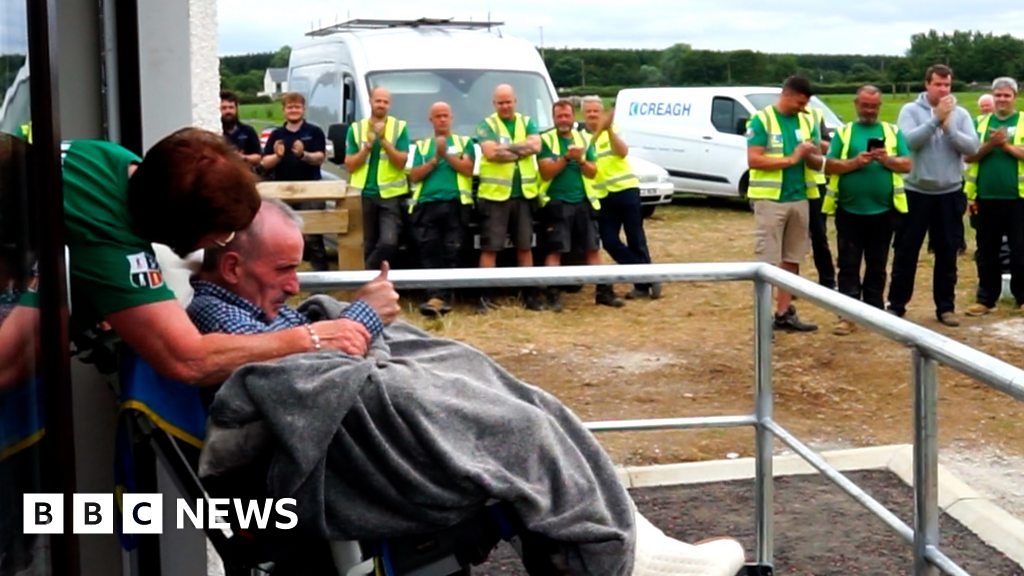
‘A group of builders changed our lives’

Kevin McGowan, a former bricklayer from County Antrim in Northern Ireland, was diagnosed with a rare neurological disorder in 2012 that left him mostly bed-bound. BBC News NI’s cameras were there to capture the moment he and his family were shown the end result of a disability-accessible addition to their home. The construction was at no cost to the family and was organised by the charity Band of Builders. Video journalist: Niall McCracken

Read more →