Monkeypox: CDC says US leads globally in most known cases

Published2 hours agoSharecloseShare pageCopy linkAbout sharingImage source, ReutersMore than 3,800 monkeypox cases have been reported in the US, the most of any country around the globe, government health data shows. The rising number of cases has reportedly prompted the Biden administration to mull declaring a national health emergency. The virus has already been classified as a global health emergency by the World Health Organization (WHO). To date, more than 18,000 cases have been reported in 75 countries. According to data published online by the US Centers for Disease Control and Prevention (CDC), as of 25 July there were 3,846 confirmed or suspected monkeypox cases in the US. The figure – which comes amid expanded testing in addition to the growing outbreak of the virus – is now ahead of that of Spain, where 3,105 cases have so far been reported. The two other countries with the highest number of infections, Germany and the UK, have reported 2,352 and 2,208 cases, respectively. What is monkeypox and how do you catch it? Monkeypox: Handing out health advice without stigmaWith cases in the US rising, the Washington Post on 25 July reported that the Biden administration was considering declaring a public health emergency. The measure would allow the government to use federal funds to combat the outbreak, raise public awareness and better collect relevant health data. Additionally, the administration is reportedly preparing to name a coordinator to oversee the government’s response to monkeypox from the White House. On July 21, 50 Democratic lawmakers sent an open letter to President Joe Biden, urging him to declare a public health emergency and send millions of vaccine doses to the US from manufacturing facilities overseas. While officials have said that gay and bisexual men – as well as healthcare workers – have so far been most at risk, fears are mounting that the virus could spread to other segments of the population. On 22 July, the US confirmed the first cases of monkeypox in children. The US response to the virus has so far been plagued by vaccine shortages and a slow start to testing, leading some to compare the situation to the beginning of the Covid-19 pandemic in early 2020. In Washington DC, for example, officials have warned that a “rapid increase in cases”, coupled with a “very limited” supply of vaccines, means that authorities must prioritise high-risk residents. The city currently has the highest per capita total of infections, with 172 cases reported in the district.Most monkeypox cases are mild, with initial symptoms including a high fever, swollen lymph nodes and a blistery, chickenpox-like rash or lesions. So far, no deaths from the virus have been reported in the US. More on this storyWhat is monkeypox and how do you catch it?7 days agoUS confirms first cases of monkeypox in children3 days agoWHO declares highest alert over monkeypox3 days ago

Read more →

Clues to age-related macular degeneration revealed

Better diagnosis and treatment of the incurable eye disease age-related macular degeneration is a step closer, thanks to the discovery of new genetic signatures of the disease.
Scientists from the Garvan Institute of Medical Research, the University of Melbourne, the Menzies Institute for Medical Research at the University of Tasmania and the Centre for Eye Research Australia, reprogrammed stem cells to create models of diseased eye cells, and then analysed DNA, RNA and proteins to pinpoint the genetic clues.
“We’ve tested the way that differences in people’s genes impact the cells involved in age-related macular degeneration. At the smallest scale we’ve narrowed down specific types of cells to pinpoint the genetic markers of this disease,” says joint lead author Professor Joseph Powell, Pillar Director of Cellular Science at Garvan. “This is the basis of precision medicine, where we can then look at what therapeutics might be most effective for a person’s genetic profile of disease.”
Age-related macular degeneration, or AMD is the progressive deterioration of the macular — a region in the centre of the retina and towards the back of the eye — leading to possible impairment or loss of central vision. Around one in seven Australians over the age of 50 is affected, and about 15 per cent of those aged over 80 have vision loss or blindness.
The underlying causes of the deterioration remain elusive, but genetic and environmental factors contribute. Risk factors include age, family history and smoking.
The research is published today in the journal Nature Communications.
The researchers took skin samples from 79 participants with and without the late stage of AMD, called geographic atrophy. Their skin cells were reprogrammed to revert to stem cells called induced pluripotent stem cells, and then guided with molecular signals to become retinal pigment epithelium cells, which are the cells affected in AMD.

Read more →

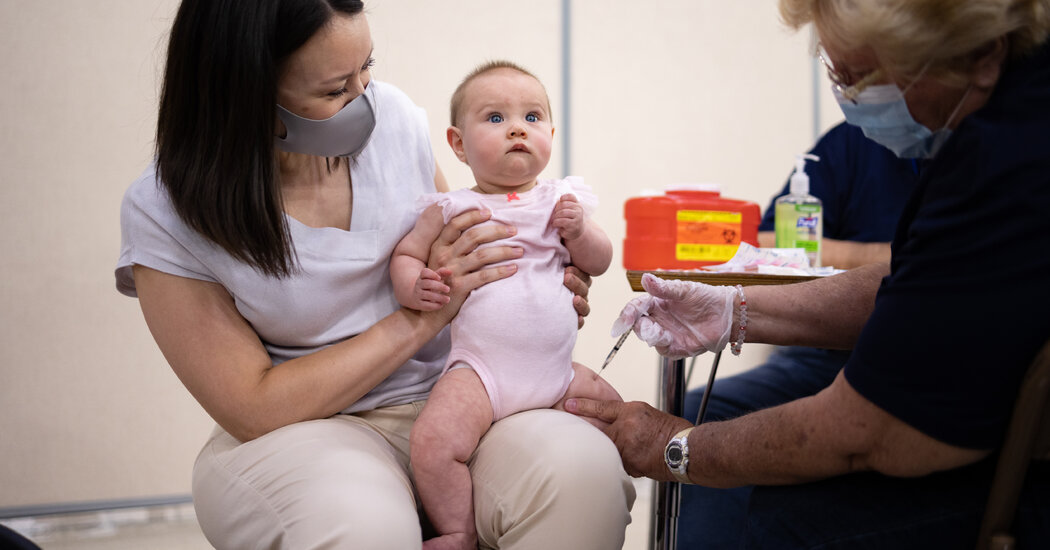
Few Parents Intend to Have Very Young Children Vaccinated Against Covid

In a new survey, 43 percent of parents of children ages 6 months through 4 years said they would refuse the shots for their kids. An additional 27 percent were uncertain.Barely a month after the Food and Drug Administration authorized Covid-19 vaccines for very young children, the prognosis that large numbers of them will actually get the shots looks bleak, according to a new survey of parents released on Tuesday by the Kaiser Family Foundation, which has monitored vaccine attitudes throughout the pandemic.A majority of parents polled said they considered the vaccine a greater risk to their children than the coronavirus itself.For children in the age group, 6 months through 4 years, parental apprehension has so far resulted in the administration of scarcely a trickle of Covid shots. Since June 18, when they became eligible, just 2.8 percent of those children had received shots, the foundation found recently in a separate analysis of federal vaccine data. By comparison, 18.5 percent of children ages 5 through 11, who have been eligible for Covid shots since October, had been vaccinated at a similar point in the rollout of their shots.The new survey found that 43 percent of parents with children under 5 said they would “definitely not” have them vaccinated. About 27 percent said they would “wait and see,” while another 13 percent said they would have their children vaccinated “only if required.” Even some parents who were themselves vaccinated against Covid said they would not give permission for their youngest children.The new analysis of parents’ views comes as vaccine uptake for older children has been slowing markedly. To date, only 40 percent of children 5 to 11 have been vaccinated. In the new survey, 37 percent of parents said they would “definitely not” get a Covid vaccine for their child in that age group.The parents’ chief concerns were about potential side effects of the vaccine, its relative newness and what they felt was a lack of sufficient research. Many parents said they were prepared to let their children take the risk of contracting Covid rather than getting a vaccine to prevent it. Experts on childhood vaccination said they viewed the parents’ hesitation with alarm, coming at a time when Covid cases are once again soaring and expected to worsen during the cold weather months, and as the possibility of new and potentially more dangerous coronavirus variants remains.Although a vast majority of children who come down with Covid get over it easily, “some kids get very, very ill from it and some die,” said Patricia A. Stinchfield, the president of the National Foundation for Infectious Diseases. She was not involved in the Kaiser study.How a child will fare with Covid is unpredictable, added Ms. Stinchfield, a nurse practitioner who coordinated vaccine administration for Children’s Minnesota, a children’s hospital system in St. Paul and Minneapolis. “We have no marker for that,” she said. “Half the kids who come down with severe Covid are healthy kids, with no underlying conditions. So the idea of saying ‘I’m going to skip this vaccine for my kid, we’re not worried about Covid’ is really to take a risk.”This latest report is based on an online and telephone survey from June 7 to June 17 of 1,847 adults, 471 of whom had a child under 5. The margin of error was plus or minus 3 percentage points for the full sample, and plus or minus 8 percentage points for parents with a child under 5.Perhaps unsurprisingly, the partisan divide was especially sharp around vaccination for children, with Republican parents three times as likely as Democratic parents to say they will “definitely not” have their child vaccinated.A majority of parents said they found information from the federal government about the vaccine for their children to be confusing. Yet 70 percent said they had not yet discussed the shots with a pediatrician. Just 27 percent of those parents who are considering the vaccine said they would make an appointment to have that conversation.Parents who might be predisposed to having their children get Covid shots said that lack of access was a significant barrier, a concern expressed by more Black and Hispanic parents than white parents. About 44 percent of Black parents worried about having to take time off from work to have their children vaccinated or to care for them if the children had side effects. Among Hispanic parents of young children, 45 percent said they were worried about finding a trustworthy location for the shots, and about a third feared they would have to pay a fee.Ms. Stinchfield said she understood their concerns: Her own daughter had to take off work to get vaccinations for Ms. Stinchfield’s grandchildren, ages 1 and 3. Ms. Stinchfield went to a clinic with them. “The message to clinics is, Make the vaccine for kids available in the evenings and on weekends,” she said.Did her grandchildren have any side effects? No, Ms. Stinchfield said with a chuckle. “They felt so good that we put them in a little kiddie pool,” she said. “And now my granddaughter’s got a tan line from the Band-Aid from the shot on her leg.”

Read more →

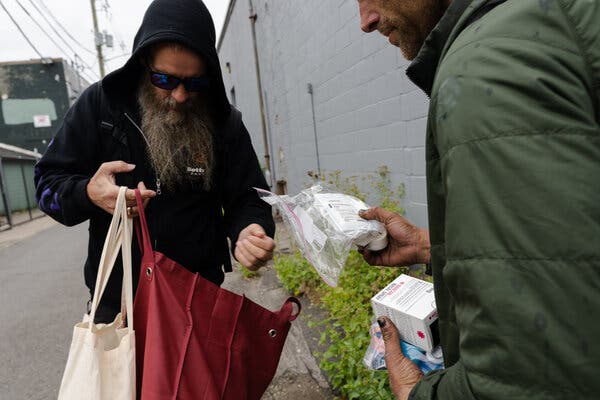
Fentanyl From the Government? A Vancouver Experiment Aims to Stop Overdoses

A city on the forefront of harm reduction has taken the concept to a new level in an effort to address the growing toxicity of street drugs.VANCOUVER, British Columbia — The place where Chris gets his fentanyl is bright and airy, all blond wood and exposed brick. The staff is friendly and knowledgeable about the potency of the pills he can crush, cook and inject.Soft pop music played, and an attendant spritzed a bit of Covid-cautious spray on his seat before he settled into a booth on a recent afternoon with a couple of red-and-yellow pills, a tourniquet, a tiny candle and a lighter. “The best thing about this is the guarantee: I can come in here four times a day and get it,” Chris said. He no longer spends all of his waking hours in a frantic scrabble of panhandling and “other stuff” to scrape up the cash to pay a dealer. He won’t get arrested — and he won’t overdose and die using a drug that is not what it is sold as.This fentanyl dispensary is legal, and Canada’s public health system finances it.It is the latest and perhaps most radical step in a city that has consistently been at the leading edge of experiments in “harm reduction,” an approach to reducing deaths and severe illness from illicit drugs by making the drugs safer for people who use them. Harm reduction, even in basic forms such as the distribution of clean needles, remains deeply controversial in the United States, although the concept has been gaining fitful support as overdoses rise, including from the Biden administration.But the breadth of Vancouver’s services and interventions are almost unimaginable in the United States, less than an hour’s drive to the south. Supervised injection sites and biometric machines that dispense prescription hydromorphone dot the city center; naloxone kits, which reverse overdoses, are available free in every pharmacy; last year, a big downtown hospital opened a safer-use site next to the cafeteria, to keep patients who are drug users from leaving in order to stave off withdrawal.And since April, Chris, a wiry, soft-spoken 30-year-old who wanted to be identified by only his first name to protect his privacy, has received pharmaceutical-grade fentanyl through the dispensary, which sells to those who can pay and provides free drugs through the program’s operational budget to those who cannot.The new program aims to provide a safer alternative to the fentanyl available on the streets, where the supply is increasingly lethal and is responsible for most of the overdose epidemic that was declared a public health emergency here six years ago.Dr. Christy Sutherland, a board-certified addiction medicine specialist who set up the program, said its goal was, first, to keep people from dying, and, second, to help bring stability to their lives so that they may think about what they might want to change.Chris started using pills recreationally in his teens, then moved to heroin. But the heroin supply in Vancouver was taken over about a decade ago by fentanyl, an opioid that is 50 to 100 times more potent and thus far more profitable for the cartels that sell it.Chris has been using illicit drugs since he was a teenager. “The best thing about this is the guarantee: I can come in here four times a day and get it,” he said.Jackie Dives for The New York TimesWistaria Burdge, right, a nurse, helped Ken Elliott apply a bandage after injecting heroin at the Crosstown Clinic. Jackie Dives for The New York TimesOverdose deaths have surged in British Columbia since the start of the Covid pandemic, as they have across the rest of North America. Some 2,200 people died of overdoses in the province last year, among the 115,000 lives lost to drugs in Canada and the United States during that time. The mounting toll has spurred communities to search for new solutions, and this city has tried more of them, faster, than anywhere else.Fentanyl Overdoses: What to KnowCard 1 of 5Devastating losses.

Read more →

Biden’s Drug Czar Is Leading the Charge for a ‘Harm Reduction’ Approach

MANCHESTER, N.H. — During a recent interview here, Dr. Rahul Gupta, President Biden’s drug czar, appeared to be on the verge of supporting a radical shift in U.S. drug control policy.Asked for his views on supervised consumption sites, where users bring their own drugs to take under the supervision of trained workers in case they overdose — a concept accepted in Canada and Europe but still technically illegal in the United States under federal law — Dr. Gupta’s eyes lit up. Then he paused, catching himself, and said he could not weigh in yet.The Justice Department is expected to soon decide whether one planned site that it blocked three years ago can operate, giving more insight into the Biden administration’s views on the concept. Many public health experts believe it could help stem a record number of overdose deaths largely caused by synthetic fentanyl.“All of us are enthusiastically waiting” for the department to weigh in, Dr. Gupta said.Support for supervised consumption from the Biden administration would be a major turning point in how the government addresses an epidemic of addiction and overdoses that has endured for decades and now claims more than 100,000 lives a year. Instead of discouraging drug use, such sites aim to keep users from dying, with trained personnel providing syringes and other sterile equipment for using drugs and working to reverse overdoses on the spot.Two supervised consumption sites opened last year in New York City, with early results that researchers say show they are saving lives; although the Trump administration sued in 2019 to stop a supervised consumption site from opening in Philadelphia, the federal government has not intervened regarding the New York sites. Rhode Island is working to open at least one as soon as this year; other states, including California, are also in the planning stages.Dr. Gupta is already overseeing what experts describe as the most progressive federal drug strategy since his office’s inception.The strategy largely rests on the concept of harm reduction, focused not on helping drug users achieve abstinence but on lowering their risk of dying or acquiring infectious diseases. A central piece is providing sterile needles to use in injecting drugs, tools to check drugs for fentanyl and other lethal substances, and naloxone, a medication that can revive people who have overdosed. Mr. Biden is the first president to support the approach.Andrew Warner, a manager at the addiction center Better Life Partners, gave out safe injection kits in Manchester, N.H.Sophie Park for The New York Times“It’s late by, I don’t know, a few decades,” Alex Kral, an epidemiologist and drug policy expert at RTI International, a nonprofit research organization, said of the White House support for the approach.Dr. Gupta’s comments in New Hampshire came days after the Centers for Disease Control and Prevention announced that overdoses rose again to record-breaking levels in 2021, nearing 108,000, a year-to-year increase of nearly 15 percent. The recent surge has hit Black and Native American communities particularly hard.The administration has said it aims to reduce overdose deaths by 13 percent by 2025. Without more harm reduction interventions, Dr. Gupta said, 165,000 people could fatally overdose each year by 2025.Dr. Gupta, in the eyes of some addiction experts, is an unlikely flag-bearer for the strategy. Just four years ago, he was blamed for the demise of harm reduction programs in Charleston, W.Va., after he signed off on a report criticizing one heavily used site, leading to its decertification.He now says the closure of the Charleston program was a significant mistake; in an interview, he emphasized that he had supported more than a dozen harm reduction programs in West Virginia when he was overseeing public health there.Dr. Gupta describes fentanyl — not the pharmaceutical kind, but a synthetic version produced in illicit laboratories, often in Mexico — as a “Pandora’s box” in the nation’s drug supply. Because it is strong and sold in varying formulations, small differences in quantity can mean the difference between a drug user’s usual dose and one that is deadly. It is often combined with stimulants like methamphetamine and cocaine, or pressed into counterfeit prescription pills offered not only to chronic drug users but to experimenting teenagers.A recent study of illicit pills seized by the drug enforcement authorities found that a substantial share of pills marketed as OxyContin, Xanax or the attention deficit hyperactivity disorder drug Adderall now contain fentanyl. Xylazine, an animal tranquilizer that can have harsh effects on humans, has also recently played a role in a greater share of overdose deaths. Naloxone, a medication invented in the 1960s that can quickly reverse opioid overdoses, took many years to come into mainstream use in the United States, with federal agencies reluctant to study and fund its use until the last decade, experts said. The F.D.A. approved the first generic naloxone nasal spray only in 2019. Syringe exchanges, now available in roughly 40 states, were also slow to gain broad acceptance.Naloxone is a cornerstone to the country’s efforts to curb overdose deaths. Sophie Park for The New York TimesNaloxone is now fundamental to the nation’s efforts to curb overdose deaths. Observing a naloxone training session at an architecture firm in New Hampshire that keeps the medication on site, Dr. Gupta observed that he had grown familiar with the dummies used for such demonstrations.The goals laid out by the drug control office show how much it has evolved since 1988, when it was created to strive for a “drug-free” America. Its early leaders had backgrounds in law enforcement, leading to more attention to drug trafficking than addiction.More recent drug czars have shied away from law-and-order atmospherics and emphasized addiction; one of Barack Obama’s picks for the job, Michael Botticelli, was himself a former drug user.Dr. Gupta is the first medical doctor to occupy the role, after serving as the health commissioner in a state — West Virginia — that has consistently had one of the highest rates of overdose deaths in recent decades.Dr. Dan Ciccarone, a professor of family and community medicine at the University of California, San Francisco, said that Dr. Gupta’s arrival at the White House was the culmination of the shift from the moralistic debate around drugs, blaming suppliers and users, to an approach treating the issue as a health crisis, with acceptance of drug use.“It became a clinical problem that should be handed over to the doctors,” he said. “This is the anti-shame approach: ‘We love you; we’re concerned about you; let’s help you be ready.’”Dr. Gupta is still trailed by accusations that by condemning the Charleston needle exchange with the audit that he and his colleagues there issued in 2018, he had undermined the progress West Virginia had made in implementing harm reduction programs. A large H.I.V. outbreak among people who inject drugs — and a scathing C.D.C. report — followed.Dr. Rahul Gupta, President Biden’s drug czar, oversees what experts describe as a progressive shift in federal drug strategy.Sophie Park for The New York TimesState legislators piggybacked on the report last year and passed a bill that severely restricted how syringe exchange programs could operate, calling for identification and the return of used needles — both deterrents to the drug users the programs are intended to help, experts said. It also threatened penalties for sites that did not comply with the new regulations.“There were a number of counties set to open programs that then didn’t,” said Joe Solomon, the founder of Solutions Oriented Addiction Response, or SOAR, which ran a syringe exchange program in Charleston. “They couldn’t afford that opposition in their communities.”Mr. Solomon said that Dr. Gupta was now benefiting from a more comfortable political environment in which to promote harm reduction, with “a resurgence of research and momentum” behind it.Dr. Ciccarone, who pushed Dr. Gupta to more vocally support harm reduction after the Charleston syringe exchange was shut down, called him “reformed.”“He sees the beauty of harm reduction, the necessity of harm reduction,” he said. “Because crisis times are calling for desperate measures, we need to put all the tools out.”Earlier in his career, Dr. Gupta practiced medicine in Alabama and at a safety net hospital in Nashville, experiences he said had illuminated the social and economic causes of addiction, especially among the poor.Dr. Gupta praised a medication treatment program for opioid addiction while visiting a prison in Maine.Sophie Park for The New York TimesEven now, Dr. Gupta said, many states and cities are only just beginning to have conversations about the benefits of harm reduction. Naloxone can be expensive and hard to find in some parts of the country, he said; in a recent analysis of overdose deaths in 2019 and 2020, the Centers for Disease Control and Prevention found that naloxone had been administered in only about 20 percent of the cases. He is now talking to Food and Drug Administration regulators about allowing naloxone to be sold over the counter, which could improve access and affordability.He has talked up harm reduction this year in Salt Lake City and in Kentucky, where local health departments across the state have taken up syringe exchange programs.There are now more than 80 such programs statewide, said Van Ingram, the director of Kentucky’s drug control policy office, pointing to it an example of bipartisanship in harm reduction policymaking. Local health officials, he added, “had to take the uncomfortable positions with the same people they stand in line with at Kroger.”During a visit to Maine’s state prison this month, Dr. Gupta praised a medication treatment program for opioid addiction, another facet of harm reduction efforts that addiction experts say is critical to stemming overdoses among the incarcerated and after release.As fentanyl continues to pummel communities, Dr. Gupta says that the Biden administration has adopted a consider-everything attitude. It has moved to loosen restrictions on prescribing buprenorphine, an anti-craving drug. Fentanyl test strips, which can now be purchased with federal grants, are one tool that should be more widely adopted, Dr. Gupta said, citing cocaine users as an example of who might benefit.“They don’t know there’s a new contaminant in this,” he said. “And then they’ll die. Is that fair? Is that right?”A Justice Department decision on supervised consumption — tied to the Philadelphia case — could allow sites to function without fear of interruption by federal authorities. The resolution could also give the White House an opening to publicly endorse the option.“The Department is evaluating supervised consumption sites, including discussions with state and local regulators about appropriate guardrails for such sites, as part of an overall approach to harm reduction and public safety,” a Justice Department spokeswoman said in a statement.The Justice Department is expected to issue an opinion as soon as this summer on whether states are free to open and operate harm reduction sites.Sophie Park for The New York TimesDr. Gupta cautioned in interviews that research on supervised consumption sites in the United States was practically nonexistent, as the first authorized sites opened just last November. A 2021 review of 22 studies from other countries found that such sites “may reduce the risk of overdose morbidity and mortality and improve access to care while not increasing crime or public nuisance to the surrounding community.”Many Republican governors and state legislatures in recent years grew more receptive to needle exchanges and naloxone as overdose deaths reached once-unthinkable levels. The Trump administration also supported them, as well as medication-assisted treatment, in which users receive less potent opioids under medical supervision to ward off withdrawal symptoms and stanch cravings. Yet some lawmakers still express discomfort with harm reduction tools, not least fentanyl strips, which are gaining acceptance even in some conservative states but remain illegal in others. A recent uproar about so-called “crack pipes” in a harm reduction grant program showed how the idea still faces deep pockets of resistance and can be weaponized politically. Supervised consumption sites remain a particular lightning rod.At a recent hearing examining the National Drug Control Strategy, which Mr. Gupta’s office oversees, Senator Charles Grassley, Republican of Iowa, said, “I’m worried that making drugs more accessible is what this administration calls drug control.”Mr. Grassley wryly noted that compared to relatively few mentions of counterfeit pills, the phrase “harm reduction” appeared 198 times in the new strategy.Advocates of harm reduction say that Dr. Gupta still needs to push for more federal grants for such programs and that lawmakers should remove a restriction on using federal money to purchase syringes for needle exchanges.The first federal grants for harm reduction groups, a $30 million program funded by the American Rescue Plan, were a far cry from what is needed to keep organizations afloat, experts said. Not receiving a grant “means we all dedicate a lot of time that could be spent on way more impactful work fund-raising for the long list of supplies we can’t use state or federal funds for,” said Lauren McGinley, the executive director of the New Hampshire Harm Reduction Coalition.Jessica Parnell, who oversees a syringe exchange program in Nashua, said her group relies on charity gaming funds to afford the number of syringes she needs to meet demand. Her group expanded the number of days on which it serves people each week and started offering glassware in safer smoking kits.Kellene Mulcahy operates a harm reduction program in Manchester, N.H.Sophie Park for The New York Times“It’s taken off,” she said. “We’re reaching populations we haven’t before and offering an alternative to injection, which is safer.”Kellene Mulcahy operates a harm reduction program out of the trunk of her car in Manchester, with an expanded arsenal she offers to members of the community: sterile water and clean cookers to dissolve illicit drugs, tourniquets and syringes to inject them, condoms, Band-Aids and fentanyl test strips, among other items, she said. The more local and flexible the operation, she said, the better the odds of people returning to it.“They want to be human beings,” she said, “regardless of the decisions they’re making.”

Read more →

High-strength cannabis linked to addiction and mental health problems

As the strength or potency of cannabis products has increased internationally over the years, so have rates of people being treated for cannabis addiction, say the authors of a new study.
Researchers from the Addiction and Mental Health Group at the University of Bath (UK) systematically analysed the relationship between the types of cannabis people use and their addiction and mental health problems. Their work draws on 20 studies involving almost 120,000 people.
After alcohol and nicotine, cannabis is the most widely used drug globally. Latest estimates from the UK suggest that over the last year around one in five 16-24 year olds had used cannabis.
Cannabis potency refers to the concentration of tetrahydrocannabinol (THC) in cannabis — the key psychoactive drug it contains. Recent studies from the same team at Bath have found that the concentration of THC in cannabis has increased significantly over time meaning that cannabis used today is typically much stronger than previously.
The new study, published in The Lancet Psychiatry, suggests that people who use high potency cannabis are more likely to experience addiction than those using low potency products. It also suggests that people using high potency cannabis are more likely to experience a psychotic disorder, such as schizophrenia.
These findings may help to explain why more people have received treatment for cannabis problems over recent years. Data from the European Monitoring Centre for Drugs and Drug Addiction show a 76% increase in people entering treatment for cannabis addiction in the past decade.

Read more →

Financial and sleeping difficulties are key mental health risk indicators in university students

A new study of student wellbeing during the pandemic by the University of Warwick has identified worsened financial situation and sleep difficulties as key indicators of individuals at higher risk of developing mental health issues.
The findings will be valuable to higher education institutions in identifying those students at higher risk of developing mental health issues, and will help to inform policies and interventions aimed at preventing these issues.
The study, published today (26 July) in the journal BJPsychOpen, is based on a survey of 895 university students and 547 young adults who were not in higher education taken between July and September 2020, with 201 of those university students also followed-up after 6 months. The research was funded by the University of Warwick’s Pro-Vice Chancellor (Research) COVID Research Programme Award and supported by the Warwick Health Global Research Priorities.
Analysis of their responses showed several consistent factors linked to high levels of poor mental health at the end of the first lockdown in the UK: age, previous mental health conditions, carer status, worse-off financial status and increased sleep irregularity and difficulty.
When they compared the responses of university students to those from non-students of a similar age, there were no significant differences between the two groups in mental health symptoms, except for a higher substance misuse risk found in non-students.
When recontacting a subset of students who responded between January — March 2021, the researchers found that increased financial difficulties and difficulty sleeping would consistently predict poorer mental health. They also found that there was a reduction in mental health symptoms over time, with the percentage of students reporting symptoms of anxiety reduced from 72.1% to 59.3% over six months, and for depression it was reduced from 69.8% to 61.4%. The researchers suggest that this could be due to students adapting to some symptoms as the pandemic evolved, though some symptoms were more ingrained.

Read more →

Cancer study: Major preventive effect from resistant starch in people with Lynch syndrome

A trial in people with high hereditary risk of a wide range of cancers has shown a major preventive effect from resistant starch, found in a wide range of foods such as oats, breakfast cereal, cooked and cooled pasta or rice, peas and beans and slightly green bananas.
An international trial — known as CAPP2 — involved almost 1000 patients with Lynch syndrome from around the world and revealed that a regular dose of resistant starch, also known as fermentable fibre, taken for an average of two years, did not affect cancers in the bowel but did reduce cancers in other parts of the body by more than half. This effect was particularly pronounced for upper gastrointestinal cancers including oesophageal, gastric, biliary tract, pancreatic and duodenum cancers.
The astonishing effect was seen to last for 10 years after stopping taking the supplement.
The study, led by experts at the Universities of Newcastle and Leeds, published today in Cancer Prevention Research, a journal of the American Association for Cancer Research, is a planned double blind 10 year follow-up, supplemented with comprehensive national cancer registry data for up to 20 years in 369 of the participants.
Previous research published as part of the same trial, revealed that aspirin reduced cancer of the large bowel by 50%.
“We found that resistant starch reduces a range of cancers by over 60%. The effect was most obvious in the upper part of the gut,” explained Professor John Mathers, professor of Human Nutrition at Newcastle University. “This is important as cancers of the upper GI tract are difficult to diagnose and often are not caught early on.

Read more →

Covid 19: 'Giving birth in 2020 was isolating and lonely'

Women have spoken about how they gave birth in “nightmare” circumstances due to the pandemic restrictions.Sophie’s baby Margot was born at 38 weeks and immediately taken to intensive care at Whipps Cross Hospital in east London because she needed to be resuscitated.Although Sophie and her partner were able to visit briefly a couple of hours later, after 24 hours they were moved off intensive care and to a ward, where there was no visiting in August 2020.Margot was on the ward for a week and Sophie was alone and exhausted trying to care for her, with nobody even to hold the newborn, and midwives unable to help because they were so busy.Whipps Cross Hospital said: “We sympathise with families over the visiting restrictions put in place during the pandemic. Unfortunately, national guidelines at the time meant that birthing partners were only allowed during labour.”

Read more →

Wood heating pollutes the air in mountain areas more than previously assumed

Around 30 million people in Europe live in mountain valleys. A large part of this population is more affected by air pollution than previously assumed. This is the conclusion of a Slovenian-German research team from measurements in the Northern Dinaric Alps. Due to temperature inversions in winter, pollutants are trapped in the valleys to such an extent that soot and fine dust could reach alarming levels even in small villages, as they otherwise occur mainly in the centres of congested metropolises, write researchers from the Universities of Ljubljana, Molise and Nova Gorica and the Leibniz Institute for Tropospheric Research (TROPOS) in the scientific journal Atmospheric Chemistry and Physics (ACP). With mobile measurements using an instrumented backpack by TROPOS, it had become possible to examine the pollutant distribution in more detail.
Wood combustion is responsible for more than half of the small particulate matter (PM2.5) in Europe, which is dangerous to health. According to the European Environment Agency (EEA), wood combustion is now the largest source of this pollutant. The promotion of wood as a “carbon dioxide-neutral” fuel, the rising costs of fossil fuels and several financial crises have led to significantly increasing use of wood as an alternative source. People are more likely to burn wood for household heating in small heating systems.
Air quality studies have so far mostly focused on cities. However, in the EU, the UK and the four EFTA countries Iceland, Liechtenstein, Norway and Switzerland, over a quarter of the population live in rural areas. To study the impact of wood burning on the air quality in such villages, the researchers took a closer look at a karst hollow in Slovenia. The hollow in the municipality of Loški Potok around the village of Retje is representative of many mountainous and hilly rural areas in Central and South-Eastern Europe with wood heating systems. The study area is located in a shallow karst depression with a topography that favors the formation of temperature inversions and cold air pools typical in many valleys and relief depressions in winter. In addition to two fixed measuring stations at the bottom of the hollow in the village and on a hill, mobile measurements with instruments aboard a backpack, in particular, provided crucial details on the distribution of air pollutants in space. With this backpack, the team walked the six-kilometre route through the valley three times a day in December 2017 and January 2018 — in the morning, at midday and in the evening. In 107 measurement tours, 642 kilometres were covered on foot.
In addition to particulate matter, the team also examined one of its components: black carbon — colloquially also simply called “soot.” . Black cabon is produced by incomplete combustion of carbon-containing materials such as fossil fuels or wood. Among other things, carcinogenic substances adhere to the tiny soot particles. Black carbon is, therefore, considered a highly problematic component of particulate matter in terms of health. While the fixed measuring stations provided hourly concentrations of black carbon (eBC) of 1 to 40 micrograms per cubic metre and particulate matter concentrations (PM10) of 10 to 205 micrograms per cubic metre, the mobile measurements provided black carbon and PM2.5, but with levels more representative of the actual concentrations many people in the hollow were exposed to. These high levels of pollutants can be attributed to one effect that frequently occurs in the mountains in winter which proved to be particularly problematic: in the morning, the sun warms the upper parts of the relief depression faster than the lower parts — due to the morning fog that forms in the relief depression sheltered from the wind and prevents warming near the ground. The resulting temperature inversion acts like a lid on a pot: the exhaust gases and particles cannot escape upwards and concentrate at the bottom. In this study, several temperature inversion events occurred, during which the pedestrian level pollutant concentrations of soot (eBC) reached an average of 4.5 micrograms per cubic metre and of fine particulate matter (PM2.5) 48 micrograms per cubic metre, which is comparable to the centres of large metropolises where there is heavy traffic. These values are much larger than the European Union’s annual limit (20 micrograms per cubic metre) and the World Health Organisation’s (WHO) recommendations for the daily limit (15 micrograms per cubic metre). As measured by the EU Air Quality Index for fine particulate matter (PM10 and PM2.5), air quality was very poor during such temperature inversions. Overall, air quality was only moderate during the entire study period (December and January).
“During temperature inversions, pollutant levels in the hollow were highest in the early evening, reaching up to 22 micrograms per cubic metre for black carbon and 560 micrograms per cubic metre for particulate matter. This is the result of domestic wood burning, which increases when people come home after work, and the stable air layer at the bottom of the hollow. However, with some wind, both black carbon and particulate matter levels in the basin dropped to less than 1 and 12 micrograms per cubic metre, respectively, which is about four times lower than during a temperature inversion and in line with European regional background levels,” reports Dr. Kristina Glojek who studied for her PhD at the University of Ljubljana. During morning and afternoon temperature inversions, in the village of Retje, people living on the lower part of the south-facing slopes were most exposed to the high concentrations of particulate matter, while in the early evening hours, when the inversion is limited to the bottom of the hollow, people there breathe in the highest levels of pollutants.
Such weather conditions are typical for hilly and mountainous regions. During the study, temperature inversions occurred on more than 70 per cent of all winter nights and mornings. “These very stable conditions prevent effective mixing of the air in the relief depression, which leads to increased pollutant levels. Therefore, during temperature inversions, particulate matter concentrations in the sink rise to levels comparable to those in larger European city centres and above the EU daily limit value (PM10 = 50 micrograms per cubic metre) as well as above the annual limit value and the WHO daily guideline values (PM2.5 = 20 and 15 micrograms per cubic metre, respectively),” emphasises Prof. Mira Pöhlker from TROPOS.

Read more →