New treatment principle for chronic hepatitis B and D infections

A new immunological treatment against hepatitis B and D viruses, both of which can cause liver cancer, shows promising results in animal models. Results from the treatment, which is being developed by researchers at Karolinska Institutet in Sweden, have been published in the journal Gut.
Chronic infections of the hepatitis B virus (HBV) and hepatitis D virus (HDV) are major causes of severe liver damage and liver cancer.
A vaccine against hepatitis B exists, but over 250 million people currently have chronic infections. The available treatment rarely leads to the complete disappearance of the infection, which means that the risk of liver damage remains. Current treatment for chronic hepatitis D infection only cures about a quarter of patients.
That is why researchers at Karolinska Institutet are developing a new type of treatment that will hopefully provide a lasting treatment response against both viruses.
The treatment consists of two components designed to affect the immune system in different ways. First, a DNA-based vaccine is administered that activates the production of neutralising antibodies and T-cells against both viruses. Then, repeated doses of a protein-based vaccine are given to reinforce the activation of the immune system.
The now published study shows that the treatment can protect cultured cells against HBV and HDV infection. When the treatment was given to mice carrying parts of the hepatitis B and D virus, which resembles a chronic HBV infection, the animals produced the desired antibodies and T-cells at high levels.
Furthermore, antibodies from treated mice were able to protect mice carrying human liver cells against simultaneous infection with HBV and HDV. In addition, these antibodies were able to protect mice with chronic HBV infection against HDV infection. This is of particular importance because patients with chronic HBV infection are at risk of serious illness if infected with HDV.
“These are promising results,” says Matti Sällberg, professor at the Department of Laboratory Medicine at Karolinska Institutet and one of the study’s two lead authors. “The study shows this is a viable route and encourages us to continue developing this treatment for use in humans. We are now optimising the protein-based part to enable large-scale production to pharmaceutical standards, and then doing the final safety studies before we can apply for our first study with human subjects.”
The treatment was developed at the Department of Laboratory Medicine at Karolinska Institutet in Sweden. The tests in cell culture were done in collaboration with Heidelberg University in Germany and the experiments in mice carrying human liver cells were done in collaboration with Ghent University in Belgium.
The research has been funded by the Swedish Cancer Society, the Swedish Research Council, Vinnova, CIMED, Horizon 2020 and ALF funds from the Stockholm Region.
Matti Sällberg and co-author Lars Frelin are founders and shareholders of Svenska Vaccinfabriken Produktion AB, which owns patent applications for the treatment. Other researchers report no potential conflicts of interest.
Story Source:
Materials provided by Karolinska Institutet. Note: Content may be edited for style and length.

Read more →

Single dose of alcohol is enough to modify the brain, study finds

A research team from the University of Cologne and the Universities of Mannheim and Heidelberg has found that even the single administration of alcohol permanently alters the morphology of neurons. In particular, the structure of the synapses as well as the dynamics of mitochondria — the powerhouses of the cell — are influenced by alcohol. Using the genetic model system of the fruit fly Drosophila melanogaster, Professor Dr Henrike Scholz and her team members Michèle Tegtmeier und Michael Berger showed that changes in the migration of mitochondria in the synapses reduce the rewarding effect of alcohol. These results suggest that even a single consumption event can lay the foundation for alcohol addiction.
The study “Single-dose ethanol intoxication causes acute and lasting neuronal changes in the brain” has appeared in PNAS (Proceedings of the National Academy of Sciences).
Which changes in the brain accompany the transition from sporadic drinking to chronic alcohol abuse? That is the question a joint research project with working groups at the University of Mannheim-Heidelberg and the University of Cologne explored. Most scientific research has examined the effects of chronic alcohol consumption on the hippocampus — the control centre of our brain. Because of this, little is known about the acute neuronal interactions of critical risk factors, such as a first alcohol intoxication at an early age, explained Henrike Scholz: ‘We set out to discover ethanol-dependent molecular changes. These, in turn, provide the basis for permanent cellular changes following a single acute ethanol intoxication. The effects of a single alcohol administration were examined at the molecular, cellular and behavioural levels.’ The working hypothesis was that, similar to the formation of memory after a single lesson, a single administration of ethanol would form a positive association with alcohol.
The team tested its hypothesis using research in fruit flies and mouse models and found ethanol-induced changes in two areas: mitochondrial dynamics and the balance between synapses in neurons. Mitochondria supply cells and especially nerve cells with energy. In order to optimally deliver the energy to the cells, the mitochondria move. The movement of the mitochondria was disturbed in the cells treated with ethanol. The chemical balance between certain synapses was also disturbed. These changes remained permanent and were confirmed by behavioural changes in the animals: Mice and fruit flies showed increased alcohol consumption and alcohol relapse later in life.
The morphological remodelling of neurons is a well-known basis for learning and memory. These so-called cellular plasticity mechanisms, which are central to learning and memory, are also thought to be at the core of the formation of associative memories for drug-related rewards. Therefore, some of the observed morphological changes may influence ethanol-related memory formation. Together with the migration of mitochondria in neurons, which are also important for synaptic transmission and plasticity, the researchers speculate that these ethanol-dependent cellular changes are critical for the development of addictive behaviours.
‘It is remarkable that the cellular processes contributing to such complex reward behaviour are conserved across species, suggesting a similar role in humans,’ said Henrike Scholz. ‘It could be a possible general cellular process essential for learning and memory.’
Both of the observed mechanisms could explain observations made in mice that a single intoxication experience can increase alcohol consumption and alcohol relapse later in life. ‘These mechanisms may even be relevant to the observation in humans that the first alcohol intoxication at an early age is a critical risk factor for later alcohol intoxication and the development of alcohol addiction,’ explained Professor Scholz. ‘This means that identifying lasting ethanol-dependent changes is an important first step in understanding how acute drinking can turn into chronic alcohol abuse.’
Story Source:
Materials provided by University of Cologne. Note: Content may be edited for style and length.

Read more →

Durable coating kills COVID virus, other germs in minutes

There may soon be a new weapon in our centuries-old battle against germs: the first durable coating that can quickly kill bacteria and viruses and keep on killing them for months at a time.
Developed by a team of University of Michigan engineers and immunologists, it proved deadly to SARS-CoV-2 (the virus that causes COVID-19), E. coli, MRSA and a variety of other pathogens. It killed 99.9% of microbes even after months of repeated cleaning, abrasion and other punishment on real-world surfaces like keyboards, cell phone screens and chicken-slathered cutting boards.
The coating could be a game changer in traditionally germ-laden public spaces like airports and hospitals, according to Anish Tuteja, a professor of material science and engineering at U-M and co-corresponding author of the paper published in Matter.
“We’ve never had a good way to keep constantly-touched surfaces like airport touch screens clean,” he said. “Disinfectant cleaners can kill germs in only a minute or two but they dissipate quickly and leave surfaces vulnerable to reinfection. We do have long-lasting antibacterial surfaces based on metals like copper and zinc, but they take hours to kill bacteria. This coating offers the best of both worlds.”
The coating, which is clear and can be brushed or sprayed on, gets its durability and germ-killing power by combining tried-and-true ingredients in a new way. It uses antimicrobial molecules derived from tea tree oil and cinnamon oil, both used for centuries as safe and effective germ killers that work in under two minutes. The coating’s durability comes from polyurethane, a tough, varnish-like sealer that’s commonly used on surfaces like floors and furniture.
“The antimicrobials we tested are classified as ‘generally regarded as safe’ by the FDA, and some have even been approved as food additives,” Tuteja said. “Polyurethane is a safe and very commonly used coating. But we did do toxicity testing just to be sure, and we found that our particular combination of ingredients is even safer than many of today’s antimicrobials.”
The results of the study’s durability tests suggest that the coating could keep killing germs for six months or longer before its oil begins to evaporate and reduce its disinfectant power. But even then, Tuteja says it can be recharged by wiping it with fresh oil; the new oil is reabsorbed by the surface, starting the cycle again.

Read more →

Illicit drugs are used by one in ten intensive cardiac care unit patients

Illicit drug use is associated with a nearly nine-fold greater risk of death or life-threatening emergencies in intensive cardiac care unit (ICCU) patients,according to research presented at ESC Congress 2022.1
Study author Dr. Theo Pezel of Hospital Lariboisiere, Paris, France said: “Our study shows that patients with acute cardiovascular conditions who take illegal drugs are more likely to die or experience cardiac arrest or cardiogenic shock while in hospital compared with non-users. Multiple drug users had an 11-fold risk of a poor in-hospital prognosis compared with those taking one drug.”
Illicit drug use has increased by 22% in the past decade to an estimated 275 million people worldwide.2 In the EU, approximately 83.4 million (29%) of 15 to 64 year-olds have ever used an illicit drug.3 Cannabis, cocaine, ecstasy (3,4-methylenedioxymethamphetamine; MDMA), amphetamines, and heroin or other opioids are the most commonly used substances. Illicit drugs have been linked with acute cardiovascular events including heart attacks and aortic dissection4,5 but the prevalence of drug use in ICCU patients, and the short-term consequences, remain unknown.
The Addiction in Intensive Cardiac Care Units (ADDICT-ICCU) study assessed the prevalence of illicit drug use and the association with in-hospital major adverse events in consecutive patients admitted for acute cardiovascular events. From 7 to 22 April 2021, all consecutive patients admitted to ICCU in 39 centres throughout France provided a urine sample which was tested for illegal drugs. The primary outcome was the prevalence of illegal drug use. The secondary outcome was in-hospital major adverse events, defined as death, resuscitated cardiac arrest or cardiogenic shock.
A total of 1,499 patients were screened, of which 70% were men. The average age was 63 years. Reasons for admission included myocardial infarction, acute heart failure, arrhythmias, myocarditis and pulmonary embolism. Some 161 patients (10.7%) had a positive test for at least one illicit drug. Regarding the types of drugs, 9.1% tested positive for cannabis, 2.1% for opioids, 1.7% for cocaine, 0.7% for amphetamines and 0.6% for MDMA.
Patients who used illicit drugs tended to be young: one-third (33%) of patients under 40 years of age were users compared with just 6% of those aged 60 years or above. Some 12% of men were users compared to 8% of women. All patients completed a questionnaire in which they were asked if they currently used illicit drugs. Of those with a positive urine drug test, just 56.5% reported current use while 43.5% claimed they did not use drugs.

Read more →

How to Get Heart Patients to Take Their Pills? Give Them Just One.

Patients given a combination “polypill” after a heart attack were more likely to stick to their regimens, researchers reported.Heart disease kills more people than any other condition, but despite advances in treatment and prevention, patients often do not stick to their medication regimens. Now researchers may have found a solution: a so-called polypill that combines three drugs needed to prevent cardiovascular trouble.In what is apparently the largest and longest randomized controlled trial of this approach, patients who were prescribed a polypill within six months of a heart attack were more likely to keep taking their drugs and had significantly fewer cardiovascular events, compared with those receiving the usual assortment of pills.The participants also experienced one-third fewer cardiovascular deaths, although their overall risk of death from all causes was not significantly changed.The study of more than two thousand heart patients, who were followed for three years, was published Friday morning in The New England Journal of Medicine, as the findings were presented at the European Society of Cardiology Congress in Barcelona.The study is the culmination of 15 years of work by researchers led by Dr. Valentin Fuster, director of Mount Sinai Heart at Mount Sinai Hospital in New York City, and general director of the National Center for Cardiovascular Research in Spain.“Combination pills are easier for the physician and for the patient, and the data are pretty clear — it translates into a benefit,” said Dr. Thomas J. Wang, chair of the department of internal medicine at UT Southwestern Medical Center, who was not involved in the research but wrote an editorial accompanying the study.“It’s easier to take one pill versus multiple pills, and it’s easier to take them once a day than multiple times a day.”The availability of a polypill also appears to nudge physicians to write prescriptions more in line with practice guidelines, Dr. Wang added: “Under ordinary circumstances, physicians often under-prescribe medications that should be given.”The polypill combines a blood-pressure medication, a cholesterol-lowering drug and aspirin, which helps prevent blood clots. The idea was first floated two decades ago in a more radical form: Advocates proposed giving a daily polypill to everyone once they turned 55, saying it would slash cardiovascular events globally by 80 percent.That notion was roundly criticized and quickly laid to rest. But the benefits of a polypill for patients at risk of heart problems have been tested in numerous studies since. Polypills are already available to treat other medical conditions, such as H.I.V. and hepatitis C, Dr. Wang noted.The polypill used in the study has not been approved by the Food and Drug Administration and is not available to patients in the United States right now. Dr. Fuster said the results of the new trial would be submitted to the agency shortly in an effort to obtain approval.He called the results of the new study “striking,” and said the benefit of the polypill for prevention rivaled that of low-dose aspirin, which is now routinely prescribed to people who have already had a heart attack or other cardiovascular event.And since participants became even more likely to keep taking the polypill over time, he said, “The potential results could be even better with more follow-up.” Several studies have shown that only about half of patients, or even less, take all their medications as instructed.The new study, a randomized controlled clinical trial, enrolled just under 2,500 patients at 113 sites in Spain, Italy, France, Germany, Poland, the Czech Republic and Hungary.All enrollees had survived a heart attack within the previous six months. They were either older than 75, or at least 65 with other health conditions like diabetes or kidney disease. Overall, about 80 percent had high blood pressure, nearly 60 percent had diabetes, and over half had a history of smoking.Almost all of the patients were white, and fewer than one-third were women. A vast majority were not high school graduates.Half of the trial participants received the polypill, while the other half received usual care. There were several types of polypills, and treatment was tailored to individual patients.All of the polypills contained 100 milligrams of aspirin, but doctors could choose between three doses of ramipril, a blood pressure drug, and between two doses of atorvastatin, a cholesterol-lowering medication.Adherence to medication was higher among the polypill users, and increased over time, the researchers found. At six months, 70.6 percent of the polypill group were sticking to their regimens, compared with 62.7 percent of those taking usual assortment of pills.At 24 months, about three-quarters of the patients were still taking a polypill, compared with 63.2 percent of the patients taking the usual pills.Over three years, 12.7 percent of the patients taking an assortment of pills experienced another heart attack or stroke, or died of a cardiac event or needed urgent treatment to open a blocked artery, compared with 9.5 percent of patients taking a polypill, for a relative reduction in risk of 24 percent.There was no difference between the two groups in overall mortality, however, as the reduction in cardiovascular deaths in the polypill group was offset by deaths from other causes.Asked why the polypill was effective, and why adherence to medication was so poor, Dr. Fuster said, “People forget when there are a number of pills to be taken, they don’t take all of them or they take none.”Although most patients stick to treatment in the immediate aftermath of a heart attack, adherence drops off after the first few months, he said.The polypill may be less expensive to produce and distribute than a series of different pills. The findings may help make cardiovascular prevention therapy more accessible, especially to individuals in low-income and middle-income countries.Although the patient cohort in the European study was very homogeneous, other studies have looked at polypill use in minority and underserved populations.Dr. Wang led a study of a polypill prescribed for primary prevention of cardiovascular disease in a low-income, mostly Black group of adults in Alabama. Adherence was very high, and the participants saw greater decreases in cholesterol and blood pressure than those receiving medications in their usual form.A review of eight studies that included over 25,000 patients, also led by Dr. Wang, found significantly improved adherence to drug regimens with a polypill and significant reductions in cardiovascular risk factors.Overall mortality declined among patients assigned to take polypills, as did serious cardiac events, particularly among those who were at low risk to begin with and had no previous heart disease.

Read more →

Moderna Sues Pfizer and BioNTech Over Covid Vaccine

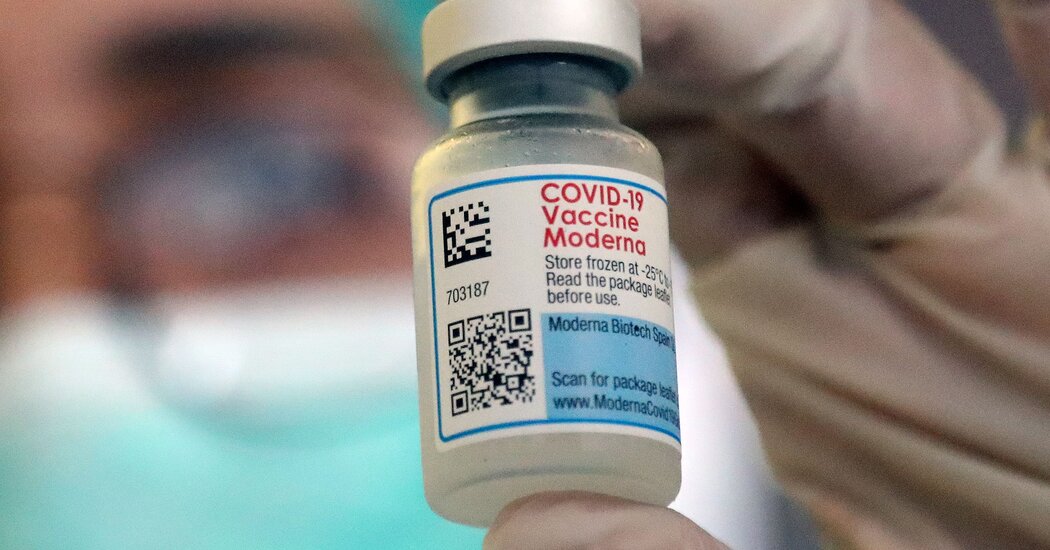
Moderna on Friday sued Pfizer and BioNTech, alleging that their Covid vaccine copied its groundbreaking technology.Moderna said in a statement that Pfizer and BioNTech infringed on patents filed between 2010 and 2016 that covered its mRNA technology. Moderna sued in U.S. District Court in Massachusetts and the Regional Court of Düsseldorf in Germany, where BioNTech is based.Messenger RNA, or mRNA, is the genetic script that carries DNA instructions to each cell’s protein-making machinery and has been used in the production of coronavirus vaccines.“We are filing these lawsuits to protect the innovative mRNA technology platform that we pioneered, invested billions of dollars in creating, and patented during the decade preceding the COVID-19 pandemic,” said Stéphane Bancel, Moderna’s chief executive. “This foundational platform, which we began building in 2010, along with our patented work on coronaviruses in 2015 and 2016, enabled us to produce a safe and highly effective Covid-19 vaccine in record time after the pandemic struck.”This is a developing story.

Read more →

Energy bills: 'Without my machine I will die' – dialysis patient

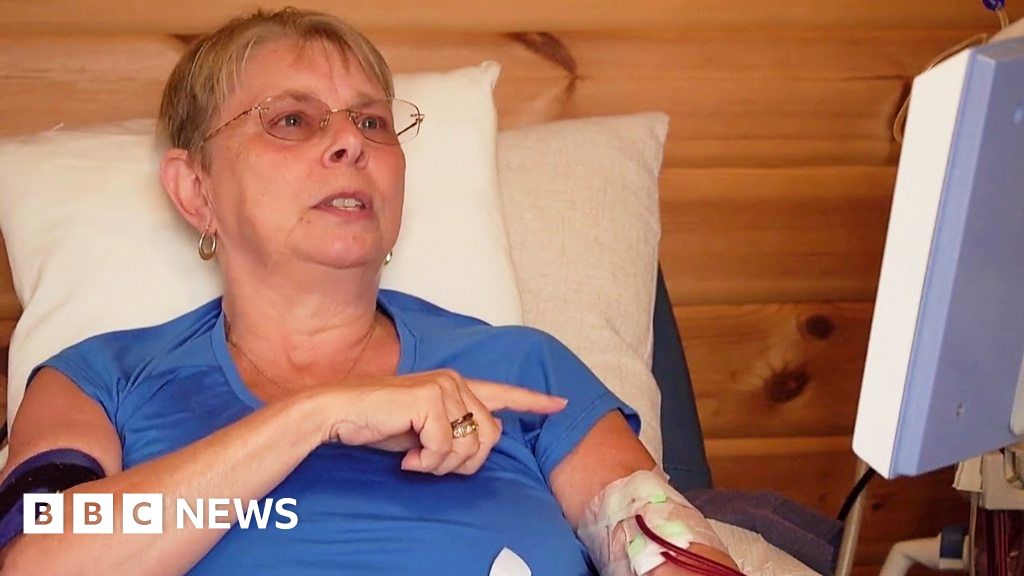
Dawn White lives with renal failure and relies on her haemodialysis machine to survive. She’s worried about the growing energy costs of running her machine, which she says is needed “five times a week, 20 hours”. Dawn says she and her husband have run out of ways to save money on energy costs around their home and are worried about the winter.

Read more →

How maternal fat metabolism very early in pregnancy and fetal abdominal growth influence toddler weight

A new study, led by researchers at the University of Oxford, UK, in collaboration with the University of California, Berkeley, USA, published today in Lancet Diabetes & Endocrinology identifies, as early as the 5th month of pregnancy, patterns of fetal abdominal growth associated with maternal lipid metabolites that track newborn growth, adiposity and development into childhood. These fetal growth patterns are also associated with blood flow and nutrient transfer by the placenta, demonstrating a complex interaction between maternal and fetal nutrition early in pregnancy that influences postnatal weight and eventually adult health.
The researchers monitored the growth inside the womb of over 3,500 babies in six countries (Brazil, Kenya, Pakistan, South Africa, Thailand, and the United Kingdom) using serial fetal ultrasound scans throughout pregnancy, and analysed blood samples taken from the women early in pregnancy and from the umbilical cord at birth. They then monitored the growth and development of the infants until 2 years of age.
José Villar, Professor of Perinatal Medicine at the University of Oxford, who co-led the study said: ‘This is the first comprehensive evidence, across geographic populations, of the complex interaction between maternal and fetal metabolism that regulates, early in pregnancy, unique fetal trajectories linked specifically to weight, adiposity and development during childhood. The study complements our previous work that identified fetal head growth trajectories associated with different developmental, behavioural, visual and growth outcomes at 2 years of age. In simple terms: the growth of babies’ bodies and brain track separately and early — while still within the womb’.
Aris Papageorghiou, Professor of Fetal Medicine at the University of Oxford, who co-led the study, said: ‘The study is unique for many reasons. Each pregnancy was accurately dated by ultrasound at less than 14 weeks’ gestation; all fetuses were scanned with the same type of ultrasound machine every 5 weeks; and ultrasound and paediatric specialists around the world were trained to measure fetal and child growth in a standardised manner using identical equipment’.
‘Much has been said about the importance of the first 1000 days of life in determining future health outcomes. This study provides evidence of distinct patterns of fetal abdominal growth and placental transfer and how they relate to longer term health. The finding of an association with maternal lipid metabolism early in pregnancy also provides unique insights into how the mother’s health and diet influence her child’s adiposity’.
Stephen Kennedy, Professor of Reproductive Medicine at the University of Oxford, who co-led the study, said: ‘This landmark study has provided valuable new insights into the biological origins of childhood obesity, which is one of the most pressing public health issues facing governments around the world. The findings could contribute to earlier identification of infants at risk of obesity. Policymakers must take notice of these findings in their efforts to prevent the oncoming epidemic of obesity with all its likely adverse social and economic consequences’.
The paper complements work published by the same groups in 2021 that identified fetal head growth trajectories that are associated with different developmental, behavioural, visual and growth outcomes at 2 years of age. Very importantly, in both studies, the same critical time period close to the 5th month of pregnancy is the starting point for accelerated or decelerated fetal growth that is sustained into early childhood.
The INTERBIO-21st Study was supported by a grant from the Bill & Melinda Gates Foundation.
Story Source:
Materials provided by University of Oxford. Note: Content may be edited for style and length.

Read more →

3D printing of starch for personalized medicine development

For the purpose of personalised therapies, the UPV/EHU’s ‘Materials+Technologies’ (GMT) Group has used 3D printing to develop tablets based on different types of starch, and has confirmed that drug release could be tailored by optimising the right starch type and tablet shape.
Traditional methods produce medicines with specific parameters, but in many cases without meeting the individual needs of patients. In fact, conventional medicines tend to be based on adult doses, so paediatric and elderly patients require doses tailored to their age. What is more, certain groups of patients also need specific dosage form alternatives to facilitate the oral administration of drugs. In this respect, rapidly disintegrating tablets are emerging as a good option as they dissolve the moment they are placed on the tongue. Another challenge pharmaceutical companies need to address is the controlled release of the drug over time, especially when the drug is of a hydrophobic type, i.e. when dissolving it in water poses problems.
In this context, “3D printing technology is an advanced technique for personalised medicine and the development of on-demand drug-release tablets,” said Kizkitza González of the UPV/EHU’s Materials+Technologies Group (GMT). “The main aim of this work was to produce 3D printed starch-based tablets for the tailored delivery of hydrophobic drugs,” said the author of the paper.
3D printing is a technology that involves the printing of products layer by layer, in which materials are deposited according to the digital model designed by computer design software. Following a fast, simple methodology and thanks to 3D printing, “we were able to prepare tablets based on three types of starch -two types of maize starch (normal and waxy) and one type of potato starch- with different geometries and loaded with a non-soluble drug,” said Kizkitza González.
Maize and potato starch
“The material produced has to be inserted into a syringe before printing. However, before that you have to make sure that the material is going to be printable and that once printed it will keep its shape. To do this, a detailed rheological analysis has to be carried out,” explained the UPV/EHU researcher. The three types of starch have displayed appropriate rheological properties, although in the case of potato starch the printing process turned out to be more laborious due to its properties.
Furthermore, “we observed the importance of the botanic origin of the starch in practically all the properties, such as porous microstructure, the formation of a stable network or the release of the drug. In the case of normal maize starch, drug release is instantaneous and the drug is fully released within 10 minutes; in the case of waxy maize starch and potato starch, release is more continuous and can take up to 6 hours for full release. We were also able to demonstrate the importance of tablet geometry in drug release,” said Kizkitza González.
Finally, “tablets combining different types of starch were also printed. In this case, release takes place in two stages. For example, in the case of an infection, in an initial stage using normal maize starch, a medicine could be released immediately to alleviate pain, and in a subsequent stage, with either of the other two types of starch, an antibiotic could be released more continuously,” said the UPV/EHU researcher.
Kizkitza González is aware that this work is only the first stage in a long process, but she maintains that “the starch-based 3D printed tablets they produced displayed promising properties for future personalised drug delivery applications.”
Story Source:
Materials provided by University of the Basque Country. Note: Content may be edited for style and length.

Read more →

Powering an 'arm' with air could be mighty handy

Everybody could use a third arm sometimes, but for some it would be particularly helpful.
Mechanical engineers at Rice University’s George R. Brown School of Engineering have built a handy extra limb able to grasp objects and go, powered only by compressed air. It’s one of several ideas they’ve implemented with a textile-based energy harvesting system.
The proof-of-principle robotic devices designed and built by Daniel Preston, an assistant professor of mechanical engineering, lead authors Rachel Shveda and Anoop Rajappan and their team are geared toward those living with disabilities and are tough enough for everyday use, they said.
How the project described in Science Advances utilizes air differs from the Preston lab’s now-famous manipulation of dead spiders as grabbers. These pneumatic devices derive their power from walking.
The prototype “arm” is a piece of fabric that hugs the body when not in use, but extends outward when activated and incorporates an elastomer lining on the surface to maintain its grip on slippery objects. For demonstrations, Rice alumna Shveda, now an officer in the U.S. Coast Guard, would operate the arm with a switch. Preston said future versions could have sensors that anticipate the wearer’s intent and complete the movement.
In addition to the curling arm that can grip a cup or other small objects while one’s hands are full, the Rice lab built a shirt with a bellows-like actuator attached at the armpit that expands, enabling the wearer to pick up a 10-pound object. Testing the apparel on a mannequin showed it could do so without an assist from human muscles.

Read more →