Three parents on the 'black hole' of child suicide

Published33 minutes agoSharecloseShare pageCopy linkAbout sharingImage source, Family photosWhen three fathers set off to walk 300 miles in memory of their daughters, they hoped to raise a few thousand pounds for charity. They ended up raising more than £800,000, and also helped many other bereaved parents. The BBC has spoken to a mother and two fathers who reached out to them. “This will pass. However bad you feel now, this will pass. You are not on your own, things will likely look different tomorrow, in fact they will likely look different in a few hours.”This is what Pete Kenny would have said to his only child, Jamie, if he had been able to read his suicide note before he died.Jamie, described as a fit, bright and funny boy by his father, was only 17 when he killed himself in July 2019. He had completed his A-levels and secured a place to study history at university. His death made no sense to his parents.”There were no signs at all,” said his father, speaking at his home in Leicester.”There’s an explanation [in the note] but it’s not adequate basically. He’s talking about problems in his relationships and feeling bad, that’s essentially it. And so that makes sense, you have problems and you feel bad, the next step [suicide] is the thing that doesn’t make sense.”He was into debate, discussion, and I think I would have said, ‘What’s the logic of this? This doesn’t hang together, does it?'”Image source, Family photoJamie was among 1,621 young people under 35 who took their own lives in 2019 in England and Wales, according to the Office for National Statistics.Suicide is the biggest killer of people under 35 in the UK, which Pete had no idea about until his own son’s death.”I think people imagine that these issues don’t affect many people, and one of the things that really strikes me is how many young people end up in that territory,” said Pete.”Because it’s a difficult subject people avoid it, or they think it doesn’t apply to them. Or they think that you get warning.”Pete had been struggling to cope with his son’s death for two years when he read a newspaper article about three other fathers going through the same thing.Known as the Three Dads, Andy Airey, Mike Palmer and Tim Owen walked 300 miles in October 2021 in memory of their three daughters. They originally aimed to raise £3,000 each for suicide prevention charity Papyrus. They eventually raised more than £800,000, with Daniel Craig and Nicole Kidman each adding £10,000 to the total.”What happened to them was what happened to us,” said Pete, who decided to support the Three Dads by joining them along some of their journey.”It felt like being engaged in something useful.”Image source, Family photoTracey Hargreaves, who also joined the Three Dads for some of their walk, said it helped her “massively”.”As soon as I saw them I just gave them a hug,” she said.”It’s like I’d always known them. And they were fantastic. They were just so open, friendly, let me talk.”It was just talking to three dads who had been through exactly the same, and they just got it straight away. They understood exactly that horrible, gut-wrenching feeling you have every morning, every time you get up in the morning knowing that they’re not there.”Men’s talking club ‘immensely helpful’Logic’s suicide prevention song led to call surge’There’s no shame in going and getting help’Tracey’s son Charlie killed himself in May 2020, near the start of the first national coronavirus lockdown. Like Jamie, he was only 17 and his parents had no idea he was feeling suicidal.”He just lit up a room. He was an amazing lad, everybody loved Charlie,” said his mother, speaking from her home in Gedney in Lincolnshire.”He wanted to go to university and do sports science. In fact he did get into two universities, which he didn’t know about, it was too late.”He had a beautiful girlfriend who he absolutely adored. He had so much to live for, and I think that’s the tough bit, the fact he had a good future.”Image source, Family photoCharlie had some counselling a couple of years before he died, and shortly before he died he told his mother he had made another appointment.”I did say to him we’ll get you all the help in the world, because that’s what we do, that’s what mums do,” she said.”All teenagers or young children go through life where they have their ups and downs, but you never expect this to be the end result. Most of the time he was so happy, he made everyone laugh.”Tracey now believes suicide prevention should be embedded in the school curriculum, which is also what the Three Dads are campaigning for. “Our schools use PSHE [Physical, Social, Health & Economic] lessons to talk about knife and gun crime, the dangers of drug misuse, radicalisation and the terror threat but nothing is said about the biggest killer of young people – suicide,” said the Three Dads, explaining the motivation for their next walk on their website.”Over 200 school-aged children take their own lives every year but we are doing nothing to equip young people with understanding and skills that could allow them to save themselves.”Image source, PapyrusAs part of their campaign, the Three Dads plan to visit all of the parliaments in the UK during a 600-mile fundraising walk, beginning on World Suicide Prevention Day on 10 September.”You get bullying, you get social media, you get everything thrown at youngsters and they just can’t deal with it all,” Tracey said.”Like my Charlie, it was like he was looking for perfection, and I think this is too much on youngsters nowadays, that they need to be that perfect person.”Well they don’t. They don’t need to be that perfect person, they need to be real, they need to be them, and I think there needs to be as much help out there as possible for them.”Image source, Family photoMartin Tomlinson, whose daughter Tilly killed herself at the age of 26, said her problems started back when she was at school, when she developed bulimia.”The schools didn’t know much about it; they did their best but it was a bit swept under the carpet,” he said.”They are under a heck of a lot of pressure these youngsters today. You don’t know what’s going on in those little minds at all. Obviously they will try and hide things as well, so it needs trained people in the right places to suss it out.”‘On the up’Tilly was taking anti-depressant medication when she died but her parents did not know she was feeling suicidal. She had moved from Catforth in Lancashire to work for Urban Splash in Manchester.”She was doing really well, things were on the up,” her father said.”Even work said she was fine, she lit the office up, they loved her coming in, she just smiled as she came through the door.”Her colleagues found her dead at her flat when they went round to check on her, after she did not log on for work one day in September 2021.”It’s made a big black hole basically and you can’t fill it in,” said her father, who met up with the Three Dads only three weeks after Tilly died.”Just to talk to those dads, in the same situation, it made a big difference, it really did,” he said.Image source, Family photoTalking, he said, is not something he has always been very good at.”Louise [his wife] used to talk to Tilly a lot but I was more of a ‘shut it up and not let it out’ sort of thing, which you learn now is completely the wrong thing to do,” he said.”I’ve learnt to talk things out and try to show your emotions sort of thing. I’m not very good at that sort of thing but just because we’re men we don’t have to be big, tough and rough.”I think talking is the key.”A government spokesperson said: “The death of any child is a tragedy and our deepest sympathies are with the families and friends of those who have died by suicide. We welcome the work 3 Dads Walking is doing to raise awareness of this important issue. “All children are taught about mental health as part of the mandatory Relationships, Sex and Health Education curriculum, which helps them recognise and manage issues to prevent suicide. This includes understanding that experiencing mental ill-health is not uncommon and how to seek support for themselves or someone else. Schools can also teach older pupils about suicide in an age-appropriate and sensitive way.”If you have been affected by any of these issues, you can visit the BBC’s Action Line, or contact the Samaritans.More on this story’Three dads’ announce UK-wide walking challenge20 July’Three dads’ meet ministers over suicide awareness8 FebruaryDad trio want suicide awareness taught in schools29 October 2021Dads’ suicide awareness walk raises £500k for charity24 October 2021Dad trio complete 300-mile suicide awareness walk23 October 2021Kidman adds £10k to suicide prevention fundraiser22 October 2021Dads joined by families on suicide awareness walk21 October 2021James Bond actor gives fundraising dads £10k boost9 October 2021The three dads united by daughters’ suicides3 October 2021The three dads united by their daughters’ suicides28 September 2021Related Internet Links3 Dads WalkingPapyrusThe BBC is not responsible for the content of external sites.

Read more →
Community transport: ‘It was a reason to get up in the morning’

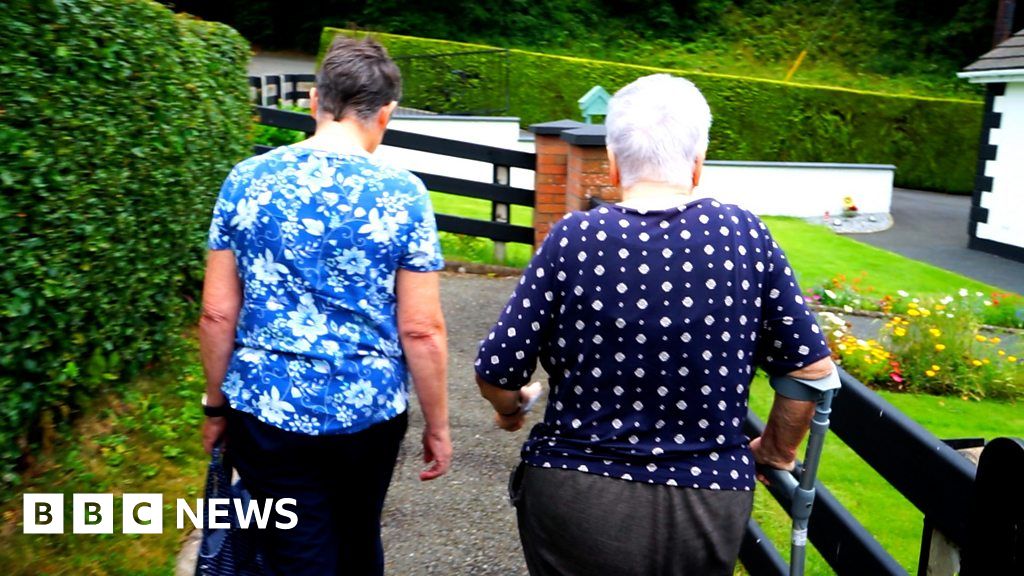
Community transport organisations in rural parts of Northern Ireland are being affected by rising fuel costs. About 40% of people in Northern Ireland live in rural areas and many rely on community transport to allow them to leave their homes. More than 100 volunteer drivers have left community transport in Northern Ireland since the beginning of this year. BBC News NI has spoken to elderly people in rural areas who have been affected as well as volunteers who have made the decision to leave because of fuel costs. Video journalist: Niall McCracken

Read more →

Cannabis legalization boosts use by double digits

Residents of states where cannabis has been legalized use marijuana 24% more frequently than those living in states where it remains illegal, according to new research published today in the journal Addiction.
The study of more than 3,400 adult twins, by researchers at University of Minnesota and University of Colorado, constitutes some of the strongest evidence yet that legalization causes increased use.
It comes at a time when cannabis use is rising nationwide, including during adulthood — a phase of life when individuals have historically tended to cut back.
“Across America, there is a trend toward using more marijuana but we found that the change is bigger in states where it is legal,” said lead author Stephanie Zellers, a recent University of Minnesota graduate who began the research while a PhD student at CU Boulder’s Institute for Behavioral Genetics (IBG).
For the study, Zellers and co-authors at CU Boulder, CU Anschutz Medical Campus and University of Minnesota analyzed data from two large longitudinal twin studies, which have tracked twins since childhood in both states: one housed at IBG and another at the Minnesota Center for Twin Family Research.
Participants were asked how frequently they used cannabis before and after 2014 when Colorado became one of the first states to commence legal sales of recreational marijuana. Recreational cannabis remains illegal in Minnesota. Before 2014, there was little difference in use between states, the study found. After 2014, across all participants, residents of states where recreational use of marijuana was legalized used cannabis 24% more frequently than those in illegal states.

Read more →

Therapeutic viruses help turbocharge the immune system against cancer

The immune system has evolved to safeguard the body from a wildly diverse range of potential threats. Among these are bacterial diseases, including plague, cholera, diphtheria and Lyme disease, and viral contagions such as influenza, Ebola virus and SARS CoV-2.
Despite the impressive power of the immune system’s complex defense network, one type of threat is especially challenging to combat. This arises when the body’s own native cells turn rogue, leading to the phenomenon of cancer. Although the immune system often engages to try to rid the body of malignant cells, its efforts are frequently thwarted as the disease progresses unchecked.The illustration shows a cancer cell (center) surrounded by immune T-cells augmented with an oncolytic (cancer-fighting) virus. A new study describes how a combination of immunotherapy and virotherapy, using myxoma virus, provides new hope for patients with treatment resistant cancers.
In new research appearing in the journal Cancer Cell, corresponding authors Grant McFadden, Masmudur Rahman and their colleagues propose a new line of attack that shows promise for treatment-resistant cancers.
The approach involves a combination of two methods that have each shown considerable success against some cancers. The study describes how oncolytic virotherapy, a technique using cancer-fighting viruses, can act in concert with existing immunotherapy techniques, boosting the immune capacity to effectively target and destroy cancer cells.
Oncolytic viruses represent an exciting new avenue of cancer therapy. Such viruses have the remarkable ability to hunt and terminate cancer cells while leaving healthy cells unharmed, as well as enhancing the immune system’s ability to recognize and terminate cancer cells.
One such virus, known as myxoma, is the focus of the current research and an area of expertise for the research group. The study shows that the use of T-cells infected with myxoma virus can induce a form of cancer cell death not previously observed.

Read more →

This Teen Was Prescribed 10 Psychiatric Drugs. She’s Not Alone.

One morning in the fall of 2017, Renae Smith, a high school freshman on Long Island, N.Y., could not get out of bed, overwhelmed at the prospect of going to school. In the following days, her anxiety mounted into despair.“I should have been happy,” she later wrote. “But I cried, screamed and begged the universe or whatever godly power to take away the pain of a thousand men that was trapped inside my head.”Intervention for her depression and anxiety came not from the divine but from the pharmaceutical industry. The following spring, a psychiatrist prescribed Prozac. The medication offered a reprieve from her suffering, but the effect dissipated, so she was prescribed an additional antidepressant, Effexor.A medication cascade had begun. During 2021, the year she graduated, she was prescribed seven drugs. These included one for seizures and migraines — she experienced neither, but the drug can be also used to stabilize mood — and another to dull the side effects of the other medications, although it is used mainly for schizophrenia. She felt better some days but deeply sad on others.Her senior yearbook photo shows her smiling broadly, “but I felt terrible that day,” said Ms. Smith, who is now 19 and attends a local community college. “I’ve gotten good at wearing a mask.”She had come to exemplify a medical practice common among her generation: the simultaneous use of multiple heavy-duty psychiatric drugs.Psychiatrists and other clinicians emphasize that psychiatric drugs, properly prescribed, can be vital in stabilizing adolescents and saving the lives of suicidal teens. But, these experts caution, such medications are too readily doled out, often as an easy alternative to therapy that families cannot afford or find, or aren’t interested in.These drugs, generally intended for short-term use, are sometimes prescribed for years, even though they can have severe side effects — including psychotic episodes, suicidal behavior, weight gain and interference with reproductive development, according to a recent study published in Frontiers in Psychiatry.Moreover, many psychiatric drugs commonly prescribed to adolescents are not approved for people under 18. And they are being prescribed in combinations that have not been studied for safety or for their long-term impact on the developing brain.A Medication CascadeRenae Smith’s psychiatric records mention varying doses of at least 10 medications, some of which are not approved for treating depression in adolescents.

Read more →

‘The Best Tool We Have’ for Self-Harming and Suicidal Teens

Studies indicate that dialectical behavior therapy offers greater benefits than more generalized therapy. But treatment is intensive, and expensive.Parents seeking therapy for teenagers who self-harm or suffer from anxiety, depression or suicidal thoughts face an imposing thicket of treatment options and acronyms: cognitive behavioral therapy (C.B.T.), parent management training (P.M.T.), collaborate assessment and management of suicidality (CAMS), acceptance and commitment therapy (ACT) and others.Each approach can benefit a particular subset of people. But for teenagers at acute risk for self-harm and suicide, health experts and researchers increasingly point to dialectical behavior therapy, or D.B.T., as an effective treatment.“As of this moment, it’s probably the best tool we have,” said Michele Berk, a child and adolescent psychiatrist at Stanford University.In a 2018 study in the Journal of the American Medical Association, Dr. Berk and her colleagues found that D.B.T. led to sharper drops in suicidal attempts and self-harm among adolescents than a more generalized therapy did. A 2014 study by researchers in Norway found a similar effect, noting that the therapy also has a relatively low dropout rate, and concluded that “it is indeed possible for adolescents to be engaged, retained, and treated” using D.B.T. The therapy is also identified as a key evidence-based treatment by the American Academy of Pediatrics. If anything, Dr. Berk said, D.B.T. “is not available enough.”How D.B.T. worksDialectical behavior therapy is a subset of cognitive behavioral therapy, which aims to reframe a person’s thoughts and behavior. D.B.T. focuses initially on behavior and raw emotion, helping the individual surmount moments of crisis and understand what prompted the behavior in the first place.D.B.T. is intensive. The fullest version of the program, which can take six months to a year to complete, has four components: individual therapy for the teenager; group therapy; training for teenagers and their parents to teach emotional regulation, and phone access to a therapist to help during a crisis.The initial step is to teach a patient to recognize the feelings in the body when dangerous impulses arise, like “a lump in the throat, racing pulse, tense shoulders,” said Jill Rathus, a psychologist practicing in Long Island. In the 1990s, Dr. Rathus was part of a team that adapted the adult version of D.B.T. for use by adolescents and their families.Patients then learn to put those feelings into words. It is vital, Dr. Rathus said, to “put language” to a physical and emotional experience; this engages parts of the brain, like the prefrontal cortex, that help regulate emotions. In young people, these brain regions are not fully developed and can easily become overwhelmed.The next step is to learn to lower the arousal state with specific, often simple techniques: splashing the face with cold water, doing brief but intense exercise, putting an ice pack on the eyes — to “tip the body chemistry,” in the language of D.B.T.Jill Rathus, a psychologist in Great Neck, N.Y. “The mistake parents make, even well-meaning and loving parents, is to minimize the feelings,” she said. Gabby Jones for The New York TimesThe overwhelmed brainThe intensive nature of D.B.T. reflects the difficulty of the challenge it confronts: regulating the emotions of teenagers who are so overwhelmed that they struggle to reason. At that age, Dr. Rathus said, the adolescent brain is often not developed enough to process the flood of incoming news and social information.“The brain just goes into overload, flooded with high emotional arousal,” Dr. Rathus said, “and you can’t learn anything new, can’t process incoming information and so suggestions of what to do or to try just bounce right off you.”This is why teenagers appear to their parents to be unable to hear suggestions for curbing their dangerous impulses, no matter how well-intended or compassionate the delivery, Dr. Rathus noted. Some adolescents are unable to start D.B.T. without a medication, like an antidepressant or anti-anxiety drug, to calm the brain enough for treatment to take hold.Tips for Parents to Help Their Struggling TeensCard 1 of 6Tips for Parents to Help Their Struggling TeensAre you concerned for your teen?

Read more →

Octopuses Don’t Have Backbones — or Rights

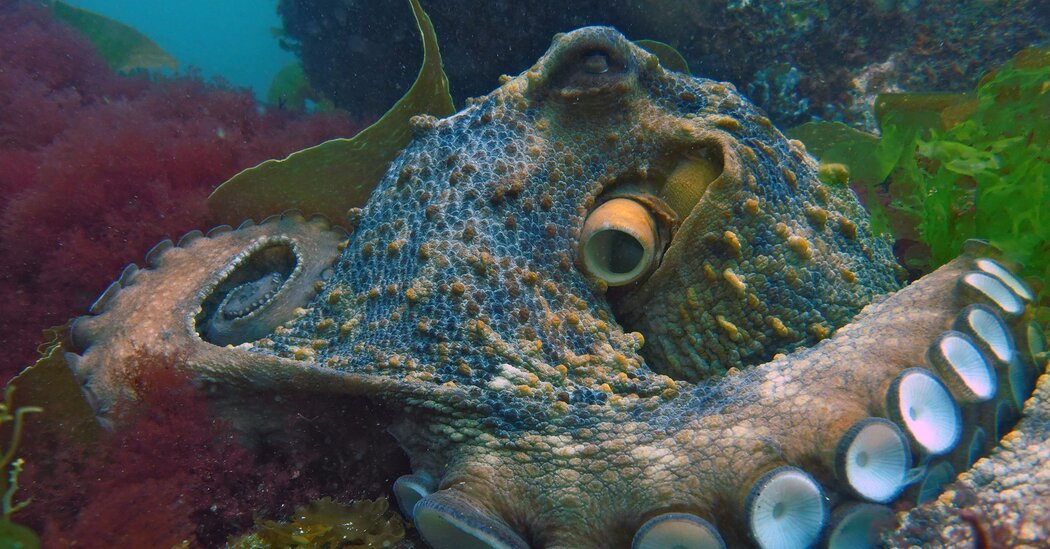
As cephalopods become more important in neuroscience and other fields, scientists and welfare advocates seek to give the smart animals the same protections as mice and monkeys.Lab rats have rights. Before researchers in the United States can experiment on the animals, they need approval from committees that ensure they follow federal regulations for housing and handling the creatures humanely. The same is true of scientists working with mice, monkeys, fish or finches.These protected animals share one thing in common: a backbone.But invertebrates in research labs, including worms and bees or cephalopods like squid and octopuses, do not receive the same protections from the federal government. As researchers are more often working with cephalopods to answer questions in neuroscience and other fields, the matter of whether they’re treating the animals humanely is becoming more pressing.Governments in Europe and Australia have written these smart, spineless animals into their laws. But in the United States, “If you were in a research setting, and you wanted to buy some octopuses and do whatever you wanted to do with them, there is no regulatory oversight to stop you,” said Robyn Crook, a neuroscientist at San Francisco State University.That’s not to say cephalopod research is the wild west. American research institutions are increasingly opting to subject their cephalopod studies to the same approval process as experiments on mice or other vertebrates. But the lack of cephalopod care standards to guide their decisions, combined with the lack of federal oversight to back them up, reflects how rules and laws are lagging behind scientific understanding of these animals’ complex inner lives.🐙🔬🥼Like a lab rat, an octopus can learn to navigate a maze. Octopuses can also perform clever feats that rats can’t, such as disguising themselves as rocks and snakes, breaking out of their tanks or hiding inside coconut shells.In 2021, Alexandra Schnell, a biologist at the University of Cambridge, and others found that cuttlefish can pass a version of the marshmallow test, a famous measure of self-control in human psychology. The cephalopods resisted eating a piece of prawn for as long as two minutes to earn an even better snack (a live shrimp).Unlike humans — whose intelligence is, as it were, all in their heads — octopuses carry the bulk of their nervous system in their arms. Their suckers don’t just grab onto things, they feel and taste them, too. “It’s like if your hands were coated with tongues,” said Christine Huffard, a biologist at the Monterey Bay Aquarium Research InstIn one experiment, octopuses were found to stroke a wound with their beaks, and avoid chambers where they were placed after receiving a painful injection.Blickwinkel/AlamyIn a paper published in July, Dr. Huffard and Peter Morse, of James Cook University in Australia showed that male blue-ringed octopuses could use touch to recognize females they’d already mated with. After bumping into a former mate, the males fled, perhaps to avoid being eaten. Such research suggests that octopuses and other cephalopods are smart and sensitive.But do they feel pain like we do? It isn’t just a hypothetical concern. Some research with cephalopods involves potentially painful surgeries, such as amputating an octopus’s arm. We can’t simply ask them whether it hurts, though.“Whether or not pain experience exists in animals outside vertebrates is quite a controversial proposition,” Dr. Crook said. In a 2021 paper, she showed that octopuses that had received an injection of acetic acid had stroked the wound with their beaks and had avoided a chamber where they’d stayed after receiving the injection. But the octopuses had liked being in a chamber where they had experienced a numbing injection after the first one.Researchers use a similar test in rodents to judge whether drugs cause them pain. “We suggest that octopuses feel, and are capable of feeling, the same thing,” Dr. Crook said.In another 2021 paper, she and co-authors studied the nerve activity of octopuses and cuttlefish that had been anesthetized — or so the scientists thought. They’d dipped the animals in magnesium chloride to anesthetize them, a common lab procedure. When an animal stopped moving and turned white, scientists had assumed it couldn’t feel anything and wouldn’t be stressed by handling. But electrode recordings showed that for several minutes after becoming unresponsive, the cephalopod could still feel experimenters touching its body.Dr. Crook said the finding immediately changed how researchers in her lab anesthetized octopuses. Now, they wait as long as 20 extra minutes to make sure the animals won’t feel anything. She hopes other labs have changed their practices, too.🐙🔬🥼Who’s responsible for the well-being of captive animals? The answer, in the United States, is complicated.The Animal Welfare Act, passed in 1966, requires humane treatment of animals such as primates and pet dogs and cats. It doesn’t apply to farm animals, racehorses, invertebrates, fish, or lab rats or mice. Another law, the Health Research Extension Act of 1985, governs the treatment of all vertebrate animals in research funded by the U.S. government.Both laws require universities and other research institutions to have an Institutional Animal Care and Use Committee, or IACUC. Committees must include at least one veterinarian and one person unaffiliated with the institution. Before starting a research project, a scientist must submit a proposal to their institution’s committee, which, in turn, must make sure the scientist’s plan meets federal guidelines.“I think it works well,” said Dr. Steve Niemi, a lab animal veterinarian and director of the Animal Science Center at Boston University. “This is both a highly contentious area and a highly scrutinized — and, I would argue, highly regulated — area” for vertebrates, Dr. Niemi said.Male blue-ringed octopuses were found to recognize females they’ve already mated with by their sense of touch, a sign of how sensitive their limbs are.Norbert Probst/AlamyDr. Niemi said critics have pointed out that animal care committees have rarely denied approval to researchers. But in his experience, this is because committees go back and forth with a scientist to revise the plan until it is acceptable. “To me, our mission is to enable responsible research,” he said.As scientists learn more about cephalopods’ intelligence and perception of pain, Dr. Niemi said, “It is incumbent upon us ethically to consider if, and how, to add them to our local oversight.”Already, many universities are voluntarily having their committees review research on cephalopods. Dr. Crook said that this trend has gained momentum in the past two years.However, she said, the job of these committees is to make sure researchers are following federal law, but when it comes to invertebrates, that law doesn’t exist. “They’re almost operating unanchored,” she said.There’s also no universal manual for cephalopod care because scientists are still learning about their biology. In the event that a researcher violated their agreement with the committee, for example, there could be no legal recourse to stop their experiment from happening.“In some ways, it’s regulation theater,” Dr. Crook said.🐙🔬🥼While universities and other research institutions try to apply a nonexistent law to their cephalopods, Katherine Meyer, who directs the Animal Law and Policy Clinic at Harvard Law School, is trying to pressure the National Institutes of Health, the main federal funder of biomedical research in the United States, into making a change.In 2020, Ms. Meyer’s clinic petitioned the institutes’ Office of Laboratory Animal Welfare to take action toward regulating cephalopod research. “I just had the idea that we should do something to protect octopuses,” she said.Ms. Meyer realized that while the 1985 Health Research Extension Act addressed the care of “animals in research,” it didn’t actually define an animal. The definition of animals as “live, vertebrate” creatures is in another N.I.H. document called the Public Health Service Policy on Humane Care and Use of Laboratory Animals.“That’s when I saw the opening,” Ms. Meyer said. She said the N.I.H.’s lab animal office could protect octopuses and their kin by simply changing the definition of “animals” in the policy to include cephalopods, rather than amending the underlying law.She received a response in July 2020 that said the agency was “aware of the standards in other countries that include cephalopods in animal welfare oversight and regulations” and was “currently considering options for providing guidance on humane care and use of invertebrates in N.I.H. funded research.”Beyond that, she said, “We have not gotten a substantive response from the agency.”“An unhealthy and overly stressed octopus isn’t going to yield useful data,” Dr. Huffard said. Terry Moore/Stocktrek Images, via AlamyIn response to a request for comment, a spokesperson for the N.I.H. Office of Extramural Research repeated the language from Ms. Meyer’s letter.Dr. Huffard said that in the absence of new federal guidance, many international scientific journals require U.S. researchers to show that they’ve passed cephalopod research through an IACUC or another institutional review process before their research can be published. An animal-welfare nonprofit called AAALAC International, which offers voluntary accreditation to research institutions, is also recommending that institutional committees approve cephalopod research.“I don’t know any cephalopod researcher that would just scoff at these rules,” Dr. Huffard said. Even if the U.S. government hasn’t determined that cephalopods deserve the same protections as other animals, scientists who study the many-armed creatures have made that determination for themselves.“An unhealthy and overly stressed octopus isn’t going to yield useful data,” Dr. Huffard said. Even aside from the data, she added, “I want the animals to be happy and healthy.”As long as we’re rethinking how our laws privilege animals with backbones, through, Dr. Huffard said it may not make sense to elevate cephalopods above the other spineless species. Octopuses “are very complex animals; nobody will doubt that,” she said. “Are they the most complex invertebrates? Depends on how you define that.”Bees, for instance, have remarkably intricate behaviors and social structures. Crabs and lobsters were recently declared sentient by the British government, and in Switzerland, it’s illegal to boil a lobster alive. “If people studied mantis shrimps the way they study octopuses, they would be really blown away at how smart they are,” Dr. Huffard said.“I feel like we should be treating all animals with that level of respect,” she said.

Read more →

This Is Not the Monkeypox That Doctors Thought They Knew

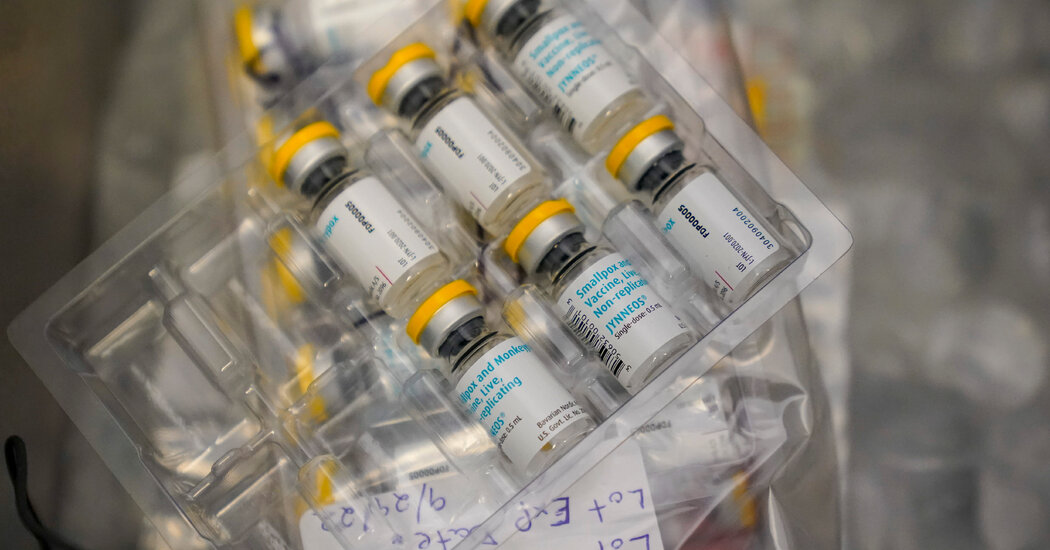
The patients turning up at clinics often have a range of symptoms that are not typical of the infection. Some of the infected seem to have no symptoms at all.Early in the monkeypox outbreak, a man in his 20s arrived at an emergency department in Northern California, tiny blisters on his lips, hands and back. Within 12 hours, doctors diagnosed him with monkeypox.That’s where their certainty ended. The patient did not have fever, aches, weakness, pain or other symptoms typical of the disease. He did not know when or how he had become infected. He had not had sexual contact with anyone for months, he said, and had not touched — as far as he knew — anyone with pox, as the lesions are called, or other symptoms.At the onset of the outbreak, scientists thought they knew when and how the monkeypox virus was spread, what the disease looked like and who was most vulnerable. The 47,000 cases identified worldwide have upended many of those expectations.Monkeypox patients have turned up with what looked like mosquito bites, pimples or ingrown hairs, not the large pustules usually associated with the infection. Some did not even have visible lesions but felt excruciating pain when swallowing, urinating or emptying their bowels.Some had headaches or depression, confusion and seizures. Others had severe eye infections or inflammation of the heart muscle. At least three of the six deaths reported so far were linked to encephalitis, an inflammation of the brain.“We really are seeing a very, very wide range of presentation,” said Dr. Boghuma Titanji, an infectious disease physician at a clinic in Atlanta that serves people living with H.I.V.Scientists now know that the monkeypox virus lurks in saliva, semen and other bodily fluids, sometimes for weeks after recovery. The virus has always been known to spread through close contact, but many researchers suspect the infection may also be transmitted through sex itself.The California patient had virus in his throat, but no respiratory symptoms, and in his rectum, but without pain or pox. The case underscores other research suggesting that the virus may be spread even by people with atypical or asymptomatic infections, said Dr. Abraar Karan, who diagnosed the patient and published a recent case report.In another study, also published this month, anal swabs of 200 men without symptoms turned up 13 who were positive for monkeypox. Only two of them later developed symptoms.A patient with monkeypox sores in a hospital in Lima, Peru.Ernesto Benavides/Agence France-Presse — Getty Images“It’s no longer correct to say it can’t be transmitted asymptomatically,” said Dr. Chloe Orkin, an infectious disease physician at Queen Mary University of London. “I think that it means that our working model of how it’s spread is incorrect.”Early in the outbreak, the C.D.C. said that “people who do not have monkeypox symptoms cannot spread the virus to others.” The agency changed that phrasing on July 29 to say that “scientists are still researching” the possibility of asymptomatic transmission.In a statement to The New York Times, an agency spokeswoman acknowledged recent evidence that asymptomatic cases were possible but said that it was still uncertain whether people without symptoms could spread the virus and that more research was needed.What to Know About the Monkeypox VirusCard 1 of 7What to Know About the Monkeypox VirusWhat is monkeypox?

Read more →

A Child Has Monkeypox in New York City, Officials Say

Federal officials are “cautiously optimistic” as monkeypox cases decline, even as health officials announced the first pediatric case in New York City.Health officials said on Thursday that a child had been infected with monkeypox in New York City, the city’s first known pediatric case.In the more than three months that monkeypox has been spreading in New York City, the virus has been diagnosed in nearly 3,000 adults, almost all men. The child is a “household contact” of an adult who had also been infected with monkeypox, the officials at the city health department said. They declined to provide more details.“There is a juvenile case of MPV (or monkeypox) in New York City,” the city’s health commissioner, Dr. Ashwin Vasan, said in a written statement. “While we understand the concerns of families, we also know that the overall risk of exposure for children in the city remains very low.”In the present outbreak, monkeypox has been spreading mainly through sexual contact between men who have sex with men, epidemiologists say.The virus spreads through direct contact with the rash or scab of someone sickened by the virus, but can also spread through respiratory droplets and through contact with objects such as bedsheets or clothing used by someone with monkeypox.What to Know About the Monkeypox VirusCard 1 of 7What to Know About the Monkeypox VirusWhat is monkeypox?

Read more →

Half of moms of kids with autism have high depressive symptoms

About 50% of all mothers of children with autism spectrum disorder (ASD) had elevated levels of depressive symptoms over 18 months, while rates were much lower (6% to 13.6%) for mothers with neurotypical children in the same period, UCSF researchers report in a new study published August 26 in Family Process.
In addition, while past studies suggest having a parent with depression increases the risk that children will have mental health and behavior problems, this study found something different.
“We found mothers’ higher symptoms of depression did NOT predict increases in children’s behavior problems over time, including among families with a child with autism who experience a lot of stress,” said Danielle Roubinov, PhD, UCSF assistant professor in the Department of Psychiatry and Behavioral Sciences, and first author of the study. “That was surprising and good news.”
“Being the parent of a child with special needs is inherently challenging every day,” noted Elissa Epel, PhD, UCSF professor in the Department of Psychiatry and Behavioral Science, and senior author of the study. “It is a prototypical example of chronic stress, which is why we have been focusing on caregiving moms in our studies that examine effects of stress on health.”
“We already know from this sample that mothers with more depression tend to have signs of faster biological aging, such as lower levels of the anti-aging hormone klotho and older immune cells, on average,” added Epel. Here, we wanted to understand the impact of their depression on their child, and vice versa.”
A One-Way Street
The researchers found that child behavior problems predicted higher levels of maternal depression down the road, regardless of ASD status. They didn’t see the inverse effect, however; prior maternal depression didn’t predict child behavior problems later.

Read more →