Canada: Why ERs are struggling to stay open nationwide

Published9 hours agoSharecloseShare pageCopy linkAbout sharingImage source, Getty ImagesOn a Thursday in mid-August, the doors of a hospital’s emergency department two hours west of Toronto were shut. A note posted on the front said the ER was closed for the day. It would reopen the following morning at 08:00, but close again for the evening. Patients who needed urgent care were asked to go to nearby hospitals – a 15- to 35-minute drive away.It was the ninth time since April that the Huron Public Healthcare Alliance – a network of four hospitals serving around 150,000 people in western Ontario – had to temporarily close or cut back hours at one of its emergency departments. And it won’t be the last, said the organisation’s CEO Andrew Williams. The reason? There aren’t enough nurses to staff the ER. “You are seeing – almost weekly – hospitals having to reduce their services,” Mr Williams told the BBC. It’s a dilemma playing out at emergency departments across Canada, particularly at smaller hospitals where reduced services have become commonplace. In the maritime province of Nova Scotia, one hospital’s ER has been closed since June 2021 due to staffing shortages.Canada is one of the richest countries in the world. Its universal publicly funded healthcare system has been touted by progressive politicians in the US, the country’s southern neighbour, who see it as a needed alternative to an American system where millions remain uninsured. But in recent months, Canada’s system has been described by workers and hospital executives as being in a state of “crisis”. That includes struggling emergency rooms. Toronto ER physician Dr Raghu Venugopal said he has seen stretchers lining the hallways, occupied by patients suffering from ailments like a broken hip or abdominal pains.On some days, those patients may wait anywhere from two to four days to be admitted to hospital, all while a team of two nurses tends to a total of 50 to 60 patients on the unit.Other patients are being examined in the waiting room because the lack of staff has forced parts of the ER to close, meaning there is limited space for doctors to see them privately.”We are in a standard-less void where anything goes, and it is shocking,” Dr Venugopal said. In the prairie province of Saskatchewan, one nurse said some paramedics have spent the entirety of their 12-hour shift waiting with a patient on a stretcher as no one was around to admit them for treatment, leaving the paramedic unavailable to respond to other calls. Patient stories have also emerged across the country. In Ontario, a woman told the CBC she spent a total of 19 hours in ER with severe backpain before she was admitted. She was later diagnosed with cancer. In New Brunswick in July, a man died while waiting for care, and the hospital has launched a review.The challenges brought on by Covid-19 bear part of the blame. Many nurses in Canada – fatigued from the pandemic –

Read more →

Updated Booster Shots Expected Within Days as C.D.C. Panel Signs Off

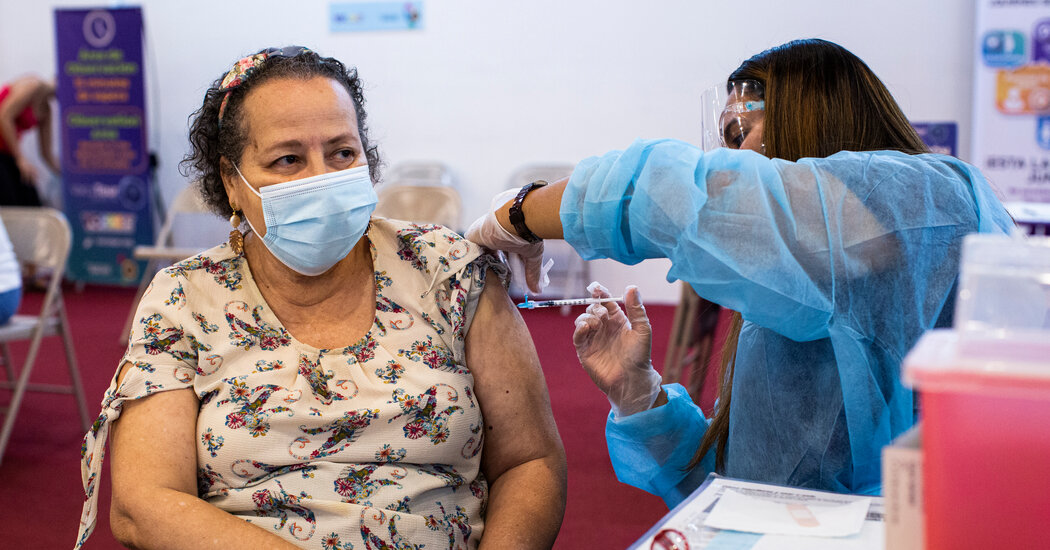
The debut of Omicron-specific vaccines raises a thorny question: How long should you wait between shots?An influential scientific panel on Thursday recommended updated coronavirus booster shots to the vast majority of Americans, adding a critical new tool to the country’s arsenal as it tries to blunt an expected wintertime surge of the virus.The decision, made by expert advisers to the Centers for Disease Control and Prevention, cleared the way for health workers to begin giving people the redesigned shots within days. And it marked a milestone in the fight against a rapidly shape-shifting pathogen: For the first time in the pandemic, manufacturers have capitalized on the potential of mRNA technology to begin distributing a Covid vaccine that perfectly matches the circulating strain of the virus, a feat that had long seemed improbable.For all their promise, the arrival of updated boosters also adds another wrinkle to what is the country’s most complicated vaccine. Vaccine recipients have already had to parse shifting eligibility rules and decide between brands. Now they face a weighty new question: how long to wait after their last vaccine dose or infection before seeking an updated booster.In authorizing the new boosters, federal regulators said on Wednesday that people needed to leave at least two months between doses. While several members of the expert panel expressed concern on Thursday that two months was too short, the C.D.C. pushed to endorse the same minimum interval.And yet immunologists said that waiting roughly four to six months after a last vaccine or infection would strengthen people’s response to an updated vaccine, even if those scientists also saw the rationale for giving Americans flexibility in choosing when to seek a new shot.The C.D.C. panel, the Advisory Committee on Immunization Practices, endorsed the updated boosters for all adults. People who have received a primary Covid vaccine series are eligible no matter how many additional doses they have gotten, part of an effort to stop counting doses and simplify guidelines, C.D.C. scientists said.The panel’s advice now goes to Dr. Rochelle Walensky, the C.D.C. director, who is expected to make a formal recommendation soon. Hundreds of thousands of updated vaccine doses were being delivered around the country on Thursday, the C.D.C. said. Providers nationwide are expected to have millions by Labor Day, the agency said, though some doctors have said they were told that initial supply would be small in their areas.The new boosters are designed to generate immune responses to the original version of the coronavirus and to BA.5, the Omicron subvariant that is now dominant. Pfizer and BioNTech’s shot was authorized for people as young as 12, and Moderna’s for those 18 and older.The C.D.C. advisory panel’s advice will now go to Dr. Rochelle Walensky, the C.D.C. director, who is expected to make a formal recommendation soon.Pool photo by Stefani ReynoldsExactly how much benefit the new boosters will offer over the existing shots is not clear. In a bid to catch up with the virus’s evolution, regulators authorized them while relying heavily on human trials of a different updated shot, one that was reformulated to defend against the BA.1 subvariant of Omicron.Moderna and Pfizer scientists on Thursday released their most detailed findings yet from studies of the latest BA.5 vaccines in mice. They found that those vaccines substantially increased immune responses to Omicron subvariants, including BA.5.Moderna also deliberately infected mice with the BA.5 virus, and found that a BA.5 booster offered significantly better protection against infection in the lungs than the original vaccine did. The company’s scientists argued that immune responses in mice had correlated with human immune responses in past studies.Immunologists said they were confident that the new shots were the best available Covid boosters, and that they would put something of a damper on the outbreak this fall and winter.Read More on the Coronavirus PandemicHeavy Toll: The average life expectancy of Americans fell precipitously in 2020 and 2021. The decline, largely driven by the pandemic, was particularly pronounced among Indigenous communities.Boosters: An influential panel of expert advisers to the Centers for Disease Control and Prevention recommended updated coronavirus booster shots to the vast majority of Americans, clearing the way for health workers to begin giving people the redesigned shots within days.Paxlovid Study: The Covid-19 medication Paxlovid reduced hospitalizations and deaths in older patients, but made no difference for patients under 65, new research from Israel found.Moderna’s Lawsuits: The vaccine manufacturer sued Pfizer and BioNTech, claiming that its rivals’ Covid-19 shot copied groundbreaking technology that Moderna had developed before the pandemic.Simply having updated vaccines by next week, rather than in mid-November, could save between roughly 7,500 and 18,000 lives by the spring, leading epidemiologists have estimated.“We’re still seeing just under 500 deaths per day, which is putting us at about four times the level of yearly deaths we’ll tolerate for influenza,” said E. John Wherry, an immunologist at the University of Pennsylvania. “That’s still an unacceptable level of death. I’m hopeful we’ll make a dent in that because of updated boosters.”The reformulated shots will deliver the biggest benefits for older and more vulnerable Americans, scientists said. While the existing shots offer more durable protection against hospital admission and death than they do against infections, their effectiveness does also wane over time against severe outcomes, scientists said. That makes updated boosters a potentially important aid in surviving an infection, they said.But it is often younger, healthier people who spread the virus to more vulnerable Americans, Dr. Wherry said. Even if those younger people are at relatively low risk of severe Covid themselves, scientists said, the updated boosters were likely to reduce their odds of getting infected in the first place and, in turn, spreading the virus to someone more vulnerable.The higher levels of immunity generated by an updated booster could also decrease the likelihood of developing long Covid, said Shane Crotty, a virologist at the La Jolla Institute for Immunology.“If people take these boosters, they’ll be better off, almost no matter what their situation is,” Dr. Crotty said. “If we can get as many people to take these boosters as possible, that will definitely reduce the number of cases this winter.”Success of the shots will depend largely how many Americans get them, as the country’s vaccine machinery has been scaled back since booster shots were last offered to all adults.Shannon Stapleton/ReutersBut other scientists have expressed concerns that not enough evidence had yet been generated showing that updated boosters were an upgrade to the existing offerings. They have also worried that updated vaccines would give recipients a false sense of security.“I understand that we need better vaccines,” Dr. Pablo Sánchez, a professor of pediatrics at The Ohio State University and member of the C.D.C. panel, said during Thursday’s meeting. But he said that he was struggling “to make a recommendation for a vaccine that has not been studied in humans,” even if those human studies were ongoing. He was the only one of the 14-member panel to vote against recommending the updated vaccines.Scientists said that serious adverse reactions had been very rare after booster doses, and that changes to the updated shots were so subtle that they would be highly unlikely to present new problems.The success of the shots will depend in large part on how many Americans get them. The country’s vaccine machinery has been scaled back since the United States last offered booster shots to all adults, a result in part of congressional resistance to more pandemic response spending.That has especially hurt efforts to give updated vaccines to marginalized and vulnerable Americans, some of the very people who face the greatest risks of being exposed to the virus and of becoming severely ill from it, epidemiologists said.Many Americans seeking an updated booster shot this fall will have passed the four-to-six-month period that immunologists recommend waiting between doses, C.D.C. data showed. Older adults were only made eligible for their last booster shots this spring, but uptake was highest five months ago, during the early period of the rollout in April. Younger people were made eligible for their most recent boosters almost a year ago, and most of them are more than six months past their last shot, the C.D.C. said.But millions of people have also recently gotten Covid. When it comes to the timing of future vaccine doses, those infections act like earlier vaccinations, scientists said, mitigating the benefits of getting a new booster shot shortly thereafter. Receiving a booster soon after an infection could also potentially raise the small risk, most prevalent in younger men, of post-vaccine heart problems, members of the C.D.C. panel said.Federal guidance indicates that people should wait at least until their Covid symptoms have resolved before getting a booster shot, and that they may want to wait a full three months after an infection.Some scientists said it was reasonable to want to give people flexibility about when to get an updated booster.People may want to strengthen their immune defenses before partaking in an unusually high-risk activity. Others may have weakened immune systems that limited their responses to an earlier shot. An approaching case surge, especially this winter, could raise the risk of waiting. And the C.D.C. has urged health providers to offer people flu and Covid vaccines at the same visit.Deepta Bhattacharya, an immunologist at the University of Arizona, said that C.D.C. recommendations could afford to space out doses of routine childhood vaccines at precisely the right intervals because children are unlikely to be exposed to those pathogens in the interim. That’s not the case for the coronavirus, which is circulating so widely that someone leaving a long gap between doses faces higher odds of getting infected in the meantime.“Honestly, that’s probably the more important factor to consider — what’s happening in the real world — rather than in an ideal world of immunological optimization,” Dr. Bhattacharya said.Still, he and other scientists said that waiting four to six months between doses would strengthen people’s response to the updated boosters. That would help people steer clear of a situation in which their antibody levels were so high when they received an updated shot that their immune systems partly cleared out the vaccine before building strong defenses against new Omicron subvariants.“You can really only boost the responses after you’ve gotten below your ceiling,” said Jenna Guthmiller, an immunologist at the University of Colorado. But, she said, “Without testing ourselves and figuring out what our ceilings are, which is very complex, the best option is honestly just to get the vaccine.”

Read more →

A near-death experience worsens some cancer cells

Scientists at St. Jude Children’s Research Hospital have identified how some cancer cells cheat treatment-induced cell death. In doing so, they persist and lead to cancer recurrence. The findings may serve as the basis for drugs that prevent relapses by inhibiting cancer cells from gaining these persistence traits. The research was published today in Cell.
After treatment, sometimes the cancer returns, called a recurrence. Researchers knew that a small population of cancer cells sometimes become drug resistant and persist after treatment. These “persister” cells can then reconstitute a more aggressive form of the same cancer. Until now it was unclear how these cells initially change to become persistent.
“When it comes to cancer cells, what doesn’t kill them makes them stronger,” said corresponding author Doug Green, Ph.D., Department of Immunology chair. “The field has begun to recognize that just because a cell engages apoptosis [a cell death pathway] doesn’t mean it will die. Our conceptual leap was that such ‘near death experiences’ could be responsible for the generation of persister cells. This was unexpected — it was like finding a piece of a treasure map that you never knew was missing — new paths to discovery have opened up.”
A near-death experience
Many drugs to treat cancer trigger apoptosis. St. Jude researchers found that a key event that leads to apoptosis, the release of the protein cytochrome c from mitochondria, occurs in persister cells. Historically, researchers believed that once cytochrome c was released into the cell, apoptosis could not be stopped. The evidence that some cells survive the process has grown, but it was unclear how, or why survival would lead to more aggressive cancer.
The St. Jude group showed in the lab that these persistor cells do start apoptosis and that this near-death experience is key to their survival.

Read more →

New approach predicts disease transmission among wildlife and humans

The rate that emerging wildlife diseases infect humans has steadily increased over the last three decades. Viruses, such as the global coronavirus pandemic and recent monkeypox outbreak, have heightened the urgent need for disease ecology tools to forecast when and where disease outbreaks are likely.
A University of South Florida assistant professor helped develop a methodology that will do just that — predict disease transmission from wildlife to humans, from one wildlife species to another and determine who is at risk of infection.
The methodology is a machine-learning approach that identifies the influence of variables, such as location and climate, on known pathogens. Using only small amounts of information, the system is able to identify community hot spots at risk of infection on both global and local scales.
“Our main goal is to develop this tool for preventive measures,” said co-principal investigator Diego Santiago-Alarcon, a USF assistant professor of integrative biology. “It’s difficult to have an all-purpose methodology that can be used to predict infections across all the diverse parasite systems, but with this research, we contribute to achieving that goal.”
With help from researchers at the Universiad Veracruzana and Instituto de Ecologia, located in Mexico, Santiago-Alarcon examined three host-pathogen systems — avian malaria, birds with West Nile virus and bats with coronavirus — to test the reliability and accuracy of the models generated by the methodology.
The team found that for the three systems, the species most frequently infected was not necessarily the most susceptible to the disease. To better pinpoint hosts with higher risk of infection, it was important to identify relevant factors, such as climate and evolutionary relationships.
By integrating geographic, environmental and evolutionary development variables, the researchers identified host species that have previously not been recorded as infected by the parasite under study, providing a way to identify susceptible species and eventually mitigate pathogen risk.
“We feel confident that the methodology is successful, and it can be applied widely to many host-pathogen systems,” Santiago-Alarcon said. “We now enter into a phase of improvement and refinement.”
The results, published in the Proceedings of the National Academy of Sciences, prove the methodology is able to provide reliable global predictions for the studied host-pathogen systems, even when using a small amount of information. This new approach will help direct infectious disease surveillance and field efforts, providing a cost-effective strategy to better determine where to invest limited disease resources.
Predicting what kind of pathogen will produce the next medical or veterinary infection is challenging, but necessary. As the rate of human impact on natural environments increases, opportunity for novel diseases will continue to rise.
“Humanity, and indeed biodiversity in general, are experiencing more and more infectious disease challenges as a result of our incursion and destruction of the natural order worldwide through things like deforestation, global trade and climate change,” said Andrés Lira-Noriega, research fellow at the Instituto de Ecologia. “This imposes the need of having tools like the one we are publishing to help us predict where new threats in terms of new pathogens and their reservoirs may occur or arise.”
The team plans to continue their research to further test the methodology on additional host-pathogen systems and extend the study of disease transmission to predict future outbreaks. The goal is to make the tool easily accessible through an app for the scientific community by the end of 2022.
Story Source:
Materials provided by University of South Florida. Note: Content may be edited for style and length.

Read more →

People generate their own oxidation field and change the indoor air chemistry around them

People typically spend 90 percent of their lives inside, at home, at work, or in transport. Within these enclosed spaces, occupants are exposed to a multitude of chemicals from various sources, including outdoor pollutants penetrating indoors, gaseous emissions from building materials and furnishings, and products of our own activities such as cooking and cleaning. In addition, we are ourselves potent mobile emission sources of chemicals that enter the indoor air from our breath and skin.
But how do the chemicals disappear again? In the atmosphere outdoors, this happens to a certain extent naturally by itself, when it rains and through chemical oxidation. Hydroxyl (OH) radicals are largely responsible for this chemical cleaning. These very reactive molecules are also called the detergents of the atmosphere and they are primarily formed when UV light from the sun interacts with ozone and water vapor.
Indoors, on the other hand, the air is of course far less affected by direct sunlight and rain. Since UV rays are largely filtered out by glass windows it has been generally assumed that the concentration of OH radicals is substantially lower indoors than outdoors and that ozone, leaking in from outdoors, is the major oxidant of indoor airborne chemical pollutants.
OH radicals are formed from ozone and skin oils
However, now it has been discovered that high levels of OH radicals can be generated indoors, simply due to the presence of people and ozone. This has been shown by a team led by the Max Planck Institute for Chemistry in cooperation with researchers from the USA and Denmark.
“The discovery that we humans are not only a source of reactive chemicals, but we are also able to transform these chemicals ourselves was very surprising to us,” says Nora Zannoni, first author of the study published in the research magazine Science, and now at the Institute of Atmospheric Sciences and Climate in Bologna, Italy. “The strength and shape of the oxidation field are determined by how much ozone is present, where it infiltrates, and how the ventilation of the indoor space is configured,” adds the scientist from Jonathan Williams’ team. The levels the scientists found were even comparable to outside daytime OH concentrations levels.

Read more →

Individual risk-factor data could help predict the next Ebola outbreak

Several years ago, a team of scientists at Lehigh University developed a predictive model to accurately forecast Ebola outbreaks based on climate-driven bat migration. Ebola is a serious and sometimes-deadly infectious disease that is zoonotic, or enters a human population via interaction with animals. It is widely believed that the source of the 2014 Ebola outbreak in West Africa, which killed more than 11,000 people, was human interaction with bats.
Now members of the team have examined how social and economic factors, such as level of education and general knowledge of Ebola, might contribute to “high-risk behaviors” that may bring individuals into contact with potentially infected animals. A focus on geographical locations with high concentrations of individuals at high-risk could help public health officials better target prevention and education resources.
“We created a survey that combined the collection of social, demographic and economic data with questions related to general knowledge of Ebola transmission and potentially high-risk behaviors,” says Paolo Bocchini, professor of civil and environmental engineering at Lehigh and one of the study’s leaders. “Our results show that it is indeed possible to calibrate a model to predict, with a reasonable level of accuracy, the propensity of an individual to engage in high-risk behaviors.”
For example, the team’s data and analyses suggested Kailahun, a town in Eastern Sierra Leone, and Kambia in the northern part of the country, as the rural districts in the country with the highest likelihood of infection spillover, based on individual risk factors accurately identifying the location, Kailahun, where the 2014 Ebola epidemic is believed to have originated.
The results are detailed in a paper “Estimation of Ebola’s spillover infection exposure in Sierra Leone based on sociodemographic and economic factors” which will soon be published in PLOS ONE. Additional authors include: Lehigh University graduate student Sena Mursel, undergraduates Nathaniel Alter, Lindsay Slavit and Anna Smith; and Javier Buceta, a faculty member at the Institute for Integrative Systems Biology in Valencia, Spain.
Among the findings: young adults (ages between 18-34) and adults (ages between 34 — 50) were most at riskin the population they studied. This group constituted 77% of the investigated sample, but 86% of the respondents were at risk. In addition, those with agricultural jobs were among the most at risk: 50% of the study respondents have an agriculture-related occupation, but represent 79% of respondents at risk
“We confirmed a relationship between social, economic and demographic factors and the propensity for individuals to engage in behaviors that expose them to Ebola spillover,” says Bocchini. “We also calibrated a preliminary model that quantifies this relationship.”

Read more →

Stem cell biologists create new human cell type for research

Professor Vincent Pasque and his team at KU Leuven have managed to generate a new type of human cell in the lab using stem cells. The new cells closely resemble their natural counterparts in early human embryos. As a result, researchers can now better study what happens just after an embryo implants in the womb. The findings were published in Cell Stem Cell.
When all goes well, a human embryo implants in the womb about seven days after fertilisation. At that point, the embryo becomes inaccessible for research due to technical and ethical limitations. That is why scientists have already developed stem cell models for various types of embryonic and extraembryonic cells to study human development in a dish.
Vincent Pasque’s team at KU Leuven has developed the first model for a specific type of human embryo cells, extraembryonic mesoderm cells. Professor Pasque: “These cells generate the first blood in an embryo, help to attach the embryo to the future placenta, and play a role in forming the primitive umbilical cord. In humans, this type of cell appears at an earlier developmental stage than in mouse embryos, and there might be other important differences between species. That makes our model especially important: research in mice may not give us answers that also apply to humans.”
The researchers made their model cells from human stem cells that can still develop into all cell types of an embryo. The new cells closely resemble their natural counterparts in human embryos and are therefore a good model for that specific cell type.
“You don’t make a new human cell type every day,” Pasque continues. “We are very excited because now we can study processes that normally remain inaccessible during development. In fact, the model has already enabled us to find out where extraembryonic mesoderm cells come from. In the longer term, our model will hopefully also shed more light on medical challenges such as fertility problems, miscarriages, and developmental disorders.”
Story Source:
Materials provided by KU Leuven. Original written by Katrien Bollen. Note: Content may be edited for style and length.

Read more →

Structure of protein RAF1 revealed: A key step in the development of new drugs against lung cancer

One of the main challenges in oncology is the development of drugs against KRAS oncogenes. These oncogenes — genes that cause cancer when mutated — are responsible for a quarter of all human cancers, including the three tumor types with the highest mortality rates: lung adenocarcinoma, colorectal carcinoma and pancreatic ductal adenocarcinoma.
Although KRAS oncogenes were already discovered by Mariano Barbacid’s group four decades ago, the first drug against them -Sotorasib, Amgen- has been approved by the FDA only a year ago. As important as this milestone is, Sotorasib acts only against tumors carrying one of the multiple mutations present in the KRAS oncogenes and its clinical impact is therefore limited. Moreover, patients treated with this drug develop resistance within a few months of treatment.
RAF1 and lung adenocarcinoma
Beyond the development of drugs against KRAS, one of the most active research areas at the moment seeks to identify inhibitors of proteins, such as RAF1, responsible for transmitting the KRAS oncogenic signals.
In this regard, Mariano Barbacid’s laboratory, using genetically modified mouse models that faithfully recapitulate human lung adenocarcinomas, demonstrated four years ago that elimination of the RAF1 protein induced regression of most tumors without significant toxic effects.
Target: degrading RAF1
These observations have generated enormous interest in finding drugs capable of degrading RAF1. The results published today in Molecular Cell open up a window of opportunity to design RAF1 degraders that, either alone or in combination with KRAS inhibitors, could generate an important therapeutic effect in patients with lung adenocarcinoma induced by KRAS oncogenes.
The determination of the three-dimensional structure of RAF1 is a key step towards this goal, because it reveals the parts of the protein to which a drug could be chemically anchored, and promote its destruction by the cellular machinery (cells have cleaning mechanisms that degrade defective or useless proteins).
The main researchers responsible for this work are Sara García-Alonso, from the CNIO, and Pablo Mesa, from the Molecular and Structural Biology group at the University of Copenhagen.
“The information provided by this study opens up a range of options for developing drugs that can degrade RAF1,” says García-Alonso. “A window of opportunity is now open to design RAF1 degraders with an important therapeutic effect in patients with lung adenocarcinoma induced by KRAS oncogenes.”
Funding
Barbacid’s group has been funded mainly by the CRIS Against Cancer Foundation, the Spanish Association Against Cancer (AECC) and the AXA Research Fund, as well as by public funds from the Spanish Ministry of Science and the European Research Council (ERC). Sara García-Alonso currently enjoys a postdoctoral contract from the AECC.
Story Source:
Materials provided by Centro Nacional de Investigaciones Oncológicas (CNIO). Note: Content may be edited for style and length.

Read more →

Three COVID-19 vaccines may provide greater protection from COVID-19 infections than two, study suggests

Two vaccine doses provide only limited and short-lived protection against SARS-CoV-2 infection with the Omicron variant. A study publishing September 1 in the open-access journal PLOS Medicine by Mie Agermose Gram at Statens Serum Institut, Copenhagen, Denmark and colleagues suggests that a third COVID-19 vaccine dose increased the level and duration of protection against Omicron infection and hospitalization.
Emergence of new SARS-CoV-2 variants may decrease long-term vaccine durability, increasing the risk of infection and hospitalization. However, evidence is limited regarding the vaccine effectiveness of three vaccines over time. In order to estimate the effectiveness of two or three vaccine doses against COVID-19 infection and hospitalization, researchers conducted a nationwide cohort study of all previously uninfected Danish residents aged 12 and older by accessing individual-level data stored in the national Danish Civil Registration System and Danish Vaccination Registry. The researchers then estimated vaccine effectiveness using vaccination status as a time-varying exposure, adjusting for age, sex, geographic location, and comorbidities, before comparing infection and hospitalization rates to unvaccinated individuals.
The researchers found that a third vaccine dose provided greater protection against infection and hospitalization from the Omicron variant than with two vaccines and also that there was less evidence of waning protection. Future studies are needed to better understand the durability of a third vaccine dose after 120 days and evaluate the need for subsequent boosters. One limitation of the study was that the data was non-randomized, so there could be unmeasured differences between the vaccinated and unvaccinated groups.
According to the authors, “Our findings indicate that a third dose is necessary to maintain protection against infection for a longer time and to ensure a high level of protection against COVID-19 hospitalization with the Omicron variant. Continued emergence of new variants and waning vaccine durability require ongoing evaluation of vaccine effectiveness against infection and hospitalization to inform future vaccination strategies.”
Gram adds, “Despite being less effective against infection with Omicron than previous variants, a third mRNA COVID-19 vaccine dose offers better protection against Omicron infection than two doses and protects well against COVID-19 hospitalization.”
Story Source:
Materials provided by PLOS. Note: Content may be edited for style and length.

Read more →