COVID-19 zaps placenta's immune response, study finds

If a woman contracts COVID-19 during her pregnancy, the infection, even if it’s mild, damages the placenta’s immune response to further infections, a UW Medicine-led study has found.
The studywas published Sept. 17 in the American Journal of Obstetrics & Gynecology.
“This is the largest study to date of placentas from women who had COVID-19 during their pregnancies,” said Dr. Kristina Adams Waldorf, senior author and professor of obstetrics and gynecology at the University of Washington School of Medicine. “We were surprised to find that women who had COVID-19 during their pregnancies had placentas with an impaired immune response to new infection.”
This finding, Adams Waldorf added, “was the tip of the iceberg” in how COVID-19 might affect fetal or placental development.
Early in the pandemic, many thought that COVID-19 did not appear to harm the developing fetus because there were so few babies born with COVID-19 infection, she noted.
“But what we’re seeing now is that the placenta is vulnerable to COVID-19, and the infection changes the way the placenta works, and that in turn is likely to impact the development of the fetus,” Adams Waldorf said.

Read more →

Why you should pay attention to fly vomit

New research from the University of Massachusetts Amherst concerning “synanthropic” flies — or the non-biting flies that live with us — argues that we need to pay far more attention to them as disease carriers. While epidemiologists have focused their attention on the biting flies that can spread diseases by transferring infected blood from host to host, it turns out that what the non-biting flies regurgitate is a far greater risk to human health.
“I’ve been working on synanthropic flies since I was a graduate student in the 1960s,” says John Stoffolano, professor of entomology at UMass Amherst’s Stockbridge School of Agriculture and the author of a new paper that appeared recently in the journal Insects. “And synanthropic flies have largely been ignored. Blood-feeding flies have taken the limelight, but we should pay attention to the ones that live among us because they get their nutrients from people and animals that shed pathogens in their tears, feces and wounds.”
To illustrate the point, consider the common house fly. In the course of its day, buzzing in and out of your house, it may feast on a variety of foods: roadkill, animal dung, rotting garbage and quick trips to the sewer buffet. Each time it feeds, it fills its crop. “The crop is like a gas tank,” says Stoffolano, “a place to store food before it makes its way into the digestive tract where it will get turned into energy for the fly.” Because the crop is a place for storage — not digestion — there are very few digestive enzymes or antimicrobial peptides, both of which would neutralize most pathogens, at work. And so, inadvertently, the crop also becomes a place to store disease-producing pathogens.
As the fly then takes off, crop filled, say, with fresh dog feces left on the sidewalk, it gets rid of excess water in its crop by “bubbling,” or regurgitating the water out, misting everything it contacts. Let’s say that same fly then comes in through your window and lands on the sandwich you’re making. Before helping itself to a bite of your grinder, it regurgitates some of what’s left in its crop right onto your bread. Along with the crop contents, up comes whatever illness-causing pathogens that fly happen to ingest earlier.
It gets worse. Because a fly’s crop is one of the cauldrons where microbes develop antibacterial resistance, what gets spewed out onto your food might not respond well to conventional treatments.
And yet, we still don’t know many of the basics about these flies, as Stoffolano points out. How robust are the immune systems of different synanthropic flies, for instance? Do the flies incubate and encourage the growth of harmful pathogens in their guts, or are they simply transporting diseases from place to place? Are female or male flies better transmitters of pathogens? How do crop volumes vary by species?
“It’s the little things that cause the problems,” Stoffolano says. “Our health depends on paying closer attention to these flies that live with us.”
Story Source:
Materials provided by University of Massachusetts Amherst. Note: Content may be edited for style and length.

Read more →

Covid-19 pandemic is over in the US – Joe Biden

Published1 day agoSharecloseShare pageCopy linkAbout sharingImage source, Getty ImagesPresident Joe Biden has declared the pandemic over in the US, even as the number of Americans who have died from Covid continues to rise. “We’re still doing a lot of work on it. But the pandemic is over,” said Mr Biden in a television interview. Statistics show that over 400 Americans on average are dying from the virus each day. The head of the World Health Organization (WHO) said last week that the end of the pandemic was “in sight”. In an interview with CBS programme 60 Minutes aired on Sunday, Mr Biden said the situation was rapidly improving, even though a lot of work was being done to control the virus. The interview – aired over the weekend – was partly filmed on the floor of the Detroit Auto Show, where the president gestured towards the crowds.”If you notice, no-one’s wearing masks,” he said. “Everybody seems to be in pretty good shape… I think it’s changing.”But administration officials told US media on Monday that the comments did not signal a change in policy and there were no plans to lift the ongoing Covid-19 public health emergency. In August, US officials extended the public health emergency, which has been in place since January 2020, through to 13 October.To date, more than one million Americans have died with Covid. Data from Johns Hopkins University shows that the seven-day average of deaths currently stands at over 400, with more than 3,000 dead in the past week alone. In January 2021, by comparison, more than 23,000 people were reported dead with the virus over a single week-long span. About 65% of the total US population is considered fully vaccinated. Certain federal vaccine mandates remain in place in the US – including on healthcare workers, military personnel and some non-US citizens entering the country by plane.Top Republicans criticised the president’s remarks, with former Secretary of State Mike Pompeo tweeting: “Biden now says ‘the pandemic is over’ as he’s kicking tens of thousands of healthy soldiers out of the military with his COVID vaccine mandate.”Public health officials have expressed cautious optimism in recent weeks that the world is edging towards a pandemic recovery, but continue to urge people to be careful.On Monday, Dr Anthony Fauci, head of the National Institute of Allergy and Infectious Diseases, acknowledged the situation had improved.But in comments made at a Washington DC think tank, he said the daily death rate remained “unacceptably high”.”We are not where we need to be if we’re going to be able to ‘live with the virus’,” Dr Fauci said.He also cautioned that new Covid-19 variants could still emerge, especially in the coming winter months.The US recently authorised new vaccines that match the version of the Omicron variant currently dominant in the country, with federal health officials asking Americans to keep their jabs up-to-date. Last week, WHO Director-General Tedros Adhanom Ghebreyesus said that the world has “never been in a better position to end the pandemic”. “We are not there yet,” he said. “But the end is in sight.”Covid-19 also continues to have a significant impact on the US economy, with the National Bureau of Economic Research reporting last week that Covid-related disease had slashed the US workforce by about 500,000 people.Mr Biden said he believes that the pandemic has had a “profound” impact on the psyche of Americans. “That has changed everything… people’s attitudes about themselves, their families, about the state of the nation, about the state of their communities,” he said. “It’s been a very difficult time. Very difficult.” More than 6.5 million people have died since the beginning of the pandemic around the world. The US has had the highest death toll, followed by India and Brazil. More on this storyDr Anthony Fauci to step down after 38 years22 AugustUK Covid infections lowest since last October12 SeptemberAfter 28 months, New York state ends Covid mask rule7 September

Read more →

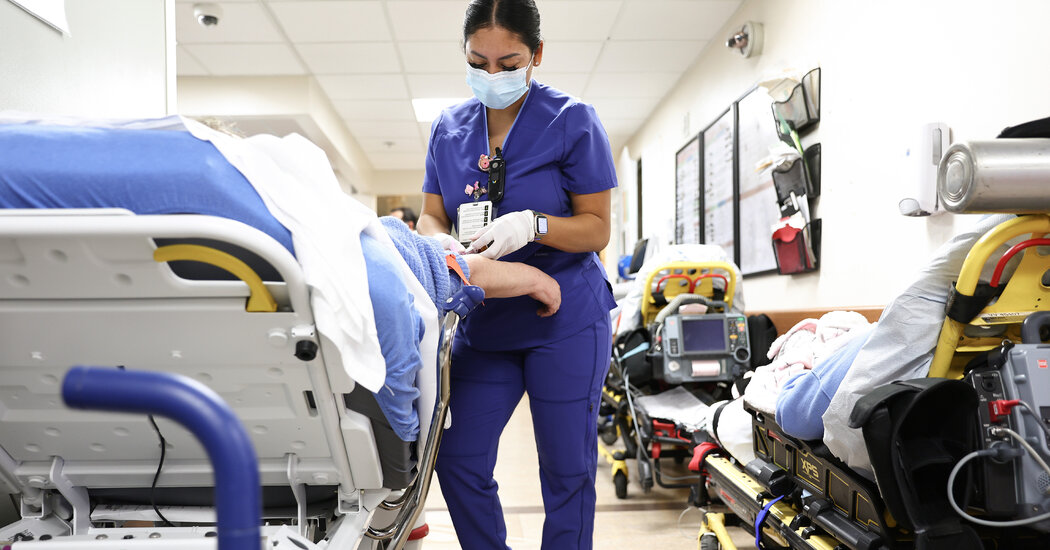
Biden Says the Pandemic Is Over. But at Least 400 People Are Dying Daily.

The president made the remark in an interview that aired on CBS’s “60 Minutes” on Sunday night. By Monday, the backlash was in full swing.WASHINGTON — With 400 to 500 Americans still dying every day of Covid-19, President Biden has declared that “the pandemic is over.”But don’t tell that to people like Debra McCoskey-Reisert, whose mother died in early August. Or Ben HsuBorger, who has chronic fatigue syndrome, a condition often brought on by viruses, including the coronavirus. Or Peter W. Goodman, whose wife died on Aug. 17.“It’s not over for me,” said a tearful Mr. Goodman, 76, who is retired after working as a journalism professor at Hofstra University on Long Island. Both he and his wife, Debbie, 70, became sick with Covid-19 last month. He recovered. She did not.The president made the remarks while speaking in an interview that aired on CBS’s “60 Minutes” on Sunday night. By Monday morning, the backlash was in full swing — as patients said the president was being insensitive at best, and some public health experts said his words were at odds with the science.“We’ve had two million cases reported over the last 28 days, and we know underreporting is substantial,” said Dr. Michael T. Osterholm, an infectious-disease specialist at the University of Minnesota. Covid-19, he said, “continues to be the No. 4 cause of death in the country.”In the “60 Minutes” interview, which was taped during the Detroit Auto Show last week, Mr. Biden did allow that “we still have a problem with Covid.” But he also gave a nod to the unmasked crowds at the show.“The pandemic is over,” he said. “If you notice, no one’s wearing masks. Everybody seems to be in pretty good shape.”A protest in front of the White House demanding action on chronic fatigue syndrome and long Covid.Zeynep Tufekci/New York Times The word from the White House on Monday was that the president was simply expressing what many Americans were already feeling and seeing and what Mr. Biden had been saying all along — that the nation has vaccines and treatments to fight the coronavirus and that for most people, it is not a death sentence.Xavier Becerra, Mr. Biden’s health secretary, echoed the sentiment while getting his booster shot at a community health clinic in New York.Read More on the Coronavirus PandemicUpdated Boosters: As masks have fallen away and quarantines have diminished, the new vaccines are one of the last remaining weapons in America’s arsenal against the coronavirus. So far, the rollout is methodical, but muted.Educational Declines: Test results show the pandemic’s effect on U.S. students: The math and reading scores of 9-year-olds dropped steeply, erasing two decades of progress.Heavy Toll: The average life expectancy of Americans fell precipitously in 2020 and 2021. The decline, largely driven by the pandemic, was particularly pronounced among Indigenous communities.Paxlovid Study: The Covid-19 medication Paxlovid reduced hospitalizations and deaths in older patients, but made no difference for patients under 65, new research from Israel found.“I think the president was reflecting what so many Americans are feeling and thinking,” Mr. Becerra said, “that Covid has disrupted our lives for so long, but we’re also finding that with these effective vaccines, with masking, with the efforts to protect our children, seniors, we are learning how to cope with this virus. But make no mistake. People are still dying.”But it’s one thing for ordinary Americans to think and feel that the pandemic is over; it is another thing for the president to say it. Presidential pronouncements carry policy implications, and the Biden administration had to answer questions on Monday about whether the president’s words would change anything.The short answer: No, they will not.Mr. Becerra’s agency, the Department of Health and Human Services, said the Covid-19 public health emergency, which gives the government flexibility to waive or modify requirements for health-related programs like Medicare and Medicaid, remained in effect.Much of Mr. Biden’s domestic agenda is entangled with the coronavirus pandemic as well. Late last month, his administration announced it was canceling $10,000 in federal student loan debt for certain borrowers to ensure that they were “not placed in a worse position financially because of the pandemic.”The White House is also pressing Congress to appropriate an additional $22 billion to fight the pandemic. The president’s comments could complicate that effort — as well as the administration’s campaign to persuade Americans to take the newly authorized “bivalent” booster shots, just as a possible fall surge is coming, said Jennifer Nuzzo, director of the Center for Pandemic Preparedness and Response at the Brown University School of Public Health.“An unfortunate sound bite,” she said of Mr. Biden’s remarks.Other experts said Mr. Biden was just plain wrong.To begin with, the president does not have the authority to announce an end to the pandemic. The World Health Organization, an arm of the United Nations, designated the coronavirus outbreak a pandemic in 2020. If anyone is responsible for declaring an end, experts say, it would be the organization and its director general, Dr. Tedros Adhanom Ghebreyesus.“We are not there yet,” Dr. Tedros said last week. “But the end is in sight.”In the United States, data show that the pandemic is in what Dr. Osterholm calls a “high plains plateau.”Debbie Goodman.Courtesy of Peter W. Goodman Gone are the peaks and valleys that came and went with the Omicron surge in late 2021 and early 2022. Hospitalizations are now declining, though roughly 32,000 Americans are still hospitalized with coronavirus infection each day, according to a New York Times database. The number of deaths today is far lower than it was a year ago, when the Delta variant was causing nearly 2,000 deaths per day.“We still have 400 to 500 people dying daily in this country,” said Dr. Carlos del Rio, an infectious disease expert at Emory University in Atlanta. “If that’s over, it’s a little too high to me.”And for many Americans who are still experiencing the fallout from the worst public health crisis in a century, Mr. Biden’s remarks — and the suggestion that the nation is moving on — were painful. Many of those who are now dying of Covid-19 are either older (Ms. McCoskey-Reisert’s mother, Roberta, was 81) or have underlying illnesses (Mr. Goodman’s wife had lupus, which made her vulnerable).“Let’s not make premature declarations,” said Ms. McCoskey-Reisert, a retired business professor from Citrus Springs, Fla., whose mother died on Aug. 6. “People are still dying.”The pandemic, she said in an interview, feels like “a hell that I am never going to get out of.” Her husband has a compromised immune system, she said, and she is still wearing masks.“President Biden said, ‘No one’s wearing masks,’ and perhaps that is true,” she said. “But is it wise?”Mr. Goodman, who worked as a music and arts reporter for Newsday before he turned to teaching, got sick shortly after he and his wife, Debbie, had returned from a cruise along the Rhine. He said he had no idea how they contracted Covid-19 — it could have been on the plane, where few people were wearing masks, or in the airport, or on the ship, where someone they ate with had a cough.He said he does not regret the trip; his wife, who also had a lung disorder, consulted with her pulmonologist, who said it was fine for her to go. He is glad, he said, that they had that time together. He said he was trying not to pay attention to statistics.“How many people are still dying a day — is it 400 people a day?” he asked. “It’s not over. It may feel over. Probably if it weren’t for my situation, I might feel that it was over, too, but I’m in a situation where it doesn’t matter whether other people think it’s over. It’s not over for me.”Others say their lives are forever changed.“For us, there is no normal that we can go back to,” said Mr. HsuBorger, seated in a wheelchair. He had just led a group of patients with myalgic encephalomyelitis, a complex disorder also known as chronic fatigue syndrome, in a protest outside the White House. Many have long Covid. Their T-shirts declared: “Still Sick. Still Fighting.”Sharon Otterman and

Read more →

New clues into how the circadian clock helps the brain recover after injury

A type of brain cell that can renew itself is regulated by circadian rhythms, providing significant insights into how the body’s internal clock may promote healing after traumatic brain injuries (TBI), according to new research from Children’s National Hospital.
Released in the latest issue of eNeuro, the findings open new avenues of investigation for future TBI therapies. These injuries are currently managed only with supportive care and rehabilitation, rather than targeted drug treatment options. The findings also underscore the importance of addressing circadian disturbances to help injured brains heal.
Many of the body’s cells follow a 24-hour rhythm driven by their genes known as the circadian clock. The Children’s National research team found that a relatively newly discovered type of brain cell – known as NG2-glia, or oligodendrocyte precursor cells – also follow a circadian rhythm. This cell type is one of the few that continually self-renews throughout adulthood and is notably proliferative in the first week after brain injuries.
“We have found evidence for the role of this well-known molecular pathway — the molecular circadian clock — in regulating the ability for these NG2-glia to proliferate, both at rest and after injury,” said Terry Dean, M.D., Ph.D., critical care specialist at Children’s National and the lead author of the paper. “This will serve as a starting point to further investigate the pathways to controlling cellular regeneration and optimize recovery after injury.”
Sometimes called “the silent epidemic,” TBI afflicts an estimated 69 million people worldwide each year, with injuries ranging from mild concussions to severe injuries that cause mortality or lifelong disability. In the United States alone, approximately 2.8 million people sustain TBI annually, including 630,000 children. TBI is the leading cause of death in people under age 45, and those who survive are often left with persistent physical, cognitive and psychological disabilities.
Yet no targeted therapies exist for TBI, creating a critical need to uncover the mechanisms that could unlock the regeneration of these NG2-glia cells, which are the most common type of brain cell known to proliferate and self-renew in adult brains.
“It is essential for researchers to know that cell renewal is coordinated with the time of day,” said Vittorio Gallo, Ph.D., interim chief academic officer and interim director of the Children’s National Research Institute. “With this knowledge, we can dig deeper into the body’s genetic healing process to understand how cells regulate and regenerate themselves.”
Story Source:
Materials provided by Children’s National Hospital. Note: Content may be edited for style and length.

Read more →

Moss repair team also works in humans

If everything is to run smoothly in living cells, the genetic information must be correct. But unfortunately, errors in the DNA accumulate over time due to mutations. Land plants have developed a peculiar correction mode: they do not directly improve the errors in the genome, but rather elaborately in each individual transcript. Researchers at the University of Bonn have transplanted this correction machinery from the moss Physcomitrium patens into human cells. Surprisingly, the corrector started working there too, but according to its own rules. The results have now been published in the journal “Nucleic Acids Research.”
In living cells, there is a lot of traffic like on a large construction site: In land plants, blueprints in the form of DNA are stored not only in the cell nucleus, but also in the cell’s power plants (mitochondria) and the photosynthesis units (chloroplasts). These blueprints contain building instructions for proteins that enable metabolic processes. But how is the blueprint information passed on in mitochondria and chloroplasts? This is done by creating transcripts (RNA) of the desired parts of the blueprint. This information is then used to produce the required proteins.
Errors accumulate over time
However, this process does not run entirely smoothly. Over time, mutations have caused errors to accumulate in the DNA that must be corrected in order to obtain perfectly functioning proteins. Otherwise, the energy supply in plants would collapse. At first glance, the correction strategy seems rather bureaucratic: instead of improving the slip-ups directly in the blueprint — the DNA — they are cleaned up in each of the many transcripts by so-called RNA editing processes.
Compared to letterpress printing, it would be like correcting each individual book by hand, rather than improving the printing plates. “Why living cells make this effort, we do not know,” says Dr. Mareike Schallenberg-Rüdinger of the Institute of Cellular and Molecular Botany (IZMB) at the University of Bonn. “Presumably, these mutations increased as plants spread from water to land during evolution.”
In 2019, the IZMB team led by Prof. Dr. Volker Knoop succeeded in transplanting RNA editing processes from the moss Physcomitrium patens into the bacterium Escherichia coli. It was shown that the repair proteins of the moss can also modify the RNA of these bacteria.
Now, researchers from the Institute of Cellular and Molecular Botany, together with the team led by Prof. Dr. Oliver J. Gruss from the Institute of Genetics at the University of Bonn, have gone one step further: They transferred the RNA editing machinery from the moss into standard human cell lines, including kidney and cancer cells, for example. “Our results showed that the land plant correction mechanism also works in human cells,” reports first author Elena Lesch. “This was previously unknown.”
But that’s not all: the RNA editing machines PPR56 and PPR65, which only act in mitochondria in the moss, also introduce nucleotide changes in RNA transcripts of the cell nucleus in human cells.
More than 900 targets
Surprisingly for the research team, PPR56 makes changes at more than 900 points of attack in human cell targets. In the moss, on the other hand, this RNA corrector is only responsible for two correction sites.” There are many more nuclear RNA transcripts in human cells than mitochondrial transcripts in the moss,” explains Dr. Mareike Schallenberg-Rüdinger. “As a result, there are also many more targets for the editors to attack.” Although the editors follow a particular code, at this stage, it is not yet possible to accurately predict where the editing machines will make changes in human cells.
However, the abundance of RNA editing targets in human cells also offers the opportunity to find out more about the basic mechanisms of the correctors in further studies. This could be the basis for methods of inducing a very specific change in RNA in human cells by means of a corrector. “If we could correct faulty sites in the genetic code with RNA editing methods, this would potentially also offer starting points for the treatment of hereditary diseases,” says Schallenberg-Rüdinger, looking to the future. “Whether that will work remains to be seen.”
Story Source:
Materials provided by University of Bonn. Note: Content may be edited for style and length.

Read more →

Undergrad publishes theory on immune dysfunction in space

It’s been known for decades that astronauts’ immune systems become suppressed in space, leaving them vulnerable to disease, but the exact mechanisms of immune dysfunction have remained a mystery — now a Cornell undergraduate has found a potential solution.
A biological and mechanical engineering double major in the College of Engineering, Rocky An ’23 published his theory, “MRTF May be the Missing Link in a Multiscale Mechanobiology Approach toward Macrophage Dysfunction in Space,” Sept. 12 in Frontiers in Cell and Developmental Biology.
An reviewed the last 20 years of literature on the behavior of macrophages — key cells in the body’s immune response — in space and recent research about how macrophages respond to forces in normal gravity, identifying a transcription factor that could prove to be the missing piece of the puzzle.
“I just kept asking questions about how the data is presented,” An said. “There are these two really important papers, in particular, one a review of how macrophages are suppressed in microgravity, and another about the mechanobiology of macrophages. I was able to connect these two papers, and that’s when the idea came to me. I was really excited, as it was kind of a eureka moment for me.”
In space, the lack of gravity changes the shape of the immune cell, and scientists have suspected that changes to the cytoskeleton, the filamented infrastructure of the cell, were involved in immune dysfunction. Recent studies in normal gravity have shown that disturbing the cytoskeleton of macrophages reduces the transport of a particular protein, a transcription factor important for immune response, to the nucleus.
By comparing the studies of cells in microgravity and analyzing the modes of study and associated timescales — whether macrophages were actually studied in space, or on a parabolic airplane, or in a simulation of microgravity in the lab — An was able to point to this protein, Myocardin-Related Transcription Factor (MRTF), as a probable culprit in immune system dysfunction.

Read more →

Nearly one in 10 in the US reports having depression

Increases in depression without commensurate increases in treatment are widespread, reports a study conducted at Columbia University Mailman School of Public Health and City University of New York. In 2020, past 12?month depression was prevalent among nearly 1 in 10 Americans and almost 1 in 5 adolescents and young adults. The findings will be published online in the American Journal of Preventive Medicine.
Data were drawn from the 2015?2020 National Survey on Drug Use and Health, a nationally representative study of U.S. individuals aged 12 years and older. Major depression is the most common mental disorder in the U.S. and is the strongest risk factor for suicide behavior. Previous findings show increases in depression in the U.S. population from 6.6 percent in 2005 to 7.3 percent in 2015.
“Our study updates the depression prevalence estimates for the U.S. population through the year 2020 and confirms escalating increases in depression from 2015 through 2019, reflecting a public health crisis that was intensifying in the U.S. even before the onset of the pandemic,” said Renee D. Goodwin, PhD, an adjunct professor in the Department of Epidemiology at Columbia Mailman School of Public Health and professor of Epidemiology at The City University of New York of New York, and lead author. “The net effect of these trends suggests an accelerating public health crisis and that parity and public-service announcement efforts have not achieved equity in depression treatment.”
In 2020, 9 percent of Americans aged 12 or older experienced a past-year major depressive episode. Depression was more common among young adults aged 18 to 25 years at slightly more than 17 percent, and adolescents aged 12 to 17 years (16.9 percent). Depression increased most rapidly among adolescents and young adults and increased among nearly all gender, racial/ethnic, income, and education groups. However, depression prevalence did not change among adults aged 35 and over. Overall, prevalence of help seeking remained consistently low.
“Our results showed most adolescents with depression neither told or talked with a healthcare professional about depression symptoms nor received pharmacologic treatment from 2015 through 2020,” noted Goodwin.
The prevalence of depression among non-Hispanic white individuals exceeded that of all other race/ethnic groups. Depression also was consistently higher among women compared to men, and among adults who were not currently or previously married. While there was an increase in depression from 2015 to 2019 among those in each income group, the highest prevalence of depression was evident among those with the lowest household income.
“The elevated level and concentration of untreated depression among adolescents and young adults are especially problematic because untreated depression early in life is predictive of an increased risk of subsequent additional mental health problems,” said Goodwin. “The short- and long-term consequences of the pandemic on depression are not yet clear, but these estimates are a requisite starting point for quantifying the mental health impact of the pandemic. Expanding evidence-based, community-based, public-facing campaigns that promote help-seeking, early intervention, prevention, and education about depression are urgently needed.”
Co-authors include Lisa Dierker, Wesleyan University; Melody Wu, Columbia Mailman School of Public Health; Sandro Galea, Boston University School of Public Health; Christina Hoven, Columbia Mailman School, New York State Psychiatric Institute, and Department of Psychiatry, College of Physicians and Surgeons, Columbia; and Andrea H. Weinberger, Yeshiva University, and Albert Einstein College of Medicine.

Read more →

Deformation fingerprints will help researchers identify, design better metallic materials

Engineers can now capture and predict the strength of metallic materials subjected to cycling loading, or fatigue strength, in a matter of hours — not the months or years it takes using current methods.
In a new study, researchers from the University of Illinois Urbana-Champaign report that automated high-resolution electron imaging can capture the nanoscale deformation events that lead to metal failure and breakage at the origin of metal failure. The new method helps scientists to rapidly predict the fatigue strength of any alloy, and design new materials for engineering systems subject to repeated loading for medical, transportation, safety, energy and environmental applications.
The findings of the study, led by materials science and engineering professors Jean-Charles Stinville and Marie Charpagne, are published in the journal Science.
Fatigue of metals and alloys — such as the repeated bending of a metal paperclip that leads to its fracture — is the root cause of failure in many engineering systems, Stinville said. Defining the relationship between fatigue strength and the microstructure is challenging because metallic materials display complex structures with features ranging from the nanometer to the centimeter scale.
“This multiscale issue is a long-standing problem because we’re trying to observe sparse, nanometer-sized events that control macroscopic properties and can be captured only by investigating large areas with fine resolution,” Charpagne said. “The current method for determining fatigue strength in metals uses traditional mechanical testing that is costly, time-consuming and does not provide a clear picture of the root cause of failure.”
In the current study, the researchers found that the statistical investigation of the nanoscale events that appear at the metal surface when deformed can inform fatigue strength of metals. The team is the first to uncover this relationship using automated high-resolution digital image correlation collected in the scanning electron micrsocope — a technique that compiles and compares a series of images recorded during deformation, Stinville said. The researchers demonstrated this relation on alloys of aluminum, cobalt, copper, iron, nickel, steel and refractory alloys used in a large variety of key engineering applications.
“What is remarkable is that the nanoscale deformation events that appear after a single deformation cycle correlate with the fatigue strength that inform the life of a metallic part under a large number of cycles,” Stinville said. “Discovering this correlation is like having access to a unique deformation fingerprint that can help us rapidly predict the fatigue life of metallic parts.”
“Designing metallic materials with higher fatigue strength means safer, more resilient and durable materials,” Charpagne said. “This work has societal, environmental and economic impacts because it sheds light on the micro and nanoscale parameters to tune to design materials with a longer life. I think this work will define a new paradigm in alloy design.”
This study was performed in collaboration with researchers from the University of California, Santa Barbara and the Universite de Poitiers, France.
The Department of Defense, the Office of Naval Research and the department of materials science and engineering at Illinois supported this research.
Story Source:
Materials provided by University of Illinois at Urbana-Champaign, News Bureau. Original written by Lois Yoksoulian. Note: Content may be edited for style and length.

Read more →

Facemask can detect viral exposure from a 10-minute conversation with an infected person

Scientists have created a face mask that can detect common respiratory viruses, including influenza and the coronavirus, in the air in droplets or aerosols. The highly sensitive mask, presented September 19 in the journal Matter, can alert the wearers via their mobile devices within 10 minutes if targeted pathogens are present in the surrounding air.
“Previous research has shown face mask wearing can reduce the risk of spreading and contracting the disease. So, we wanted to create a mask that can detect the presence of virus in the air and alert the wearer,” says Yin Fang, the study’s corresponding author and a material scientist at Shanghai Tongji University.
Respiratory pathogens that cause COVID-19 and H1N1 influenza spread through small droplets and aerosols released by infected people when they talk, cough, and sneeze. These virus-containing molecules, especially tiny aerosols, can remain suspended in the air for a long time.
Fang and his colleagues tested the mask in an enclosed chamber by spraying the viral surface protein containing trace-level liquid and aerosols on the mask. The sensor responded to as little as 0.3 microliters of liquid containing viral proteins, about 70 to 560 times less than the volume of liquid produced in one sneeze and much less than the volume produced by coughing or talking, Fang says.
The team designed a small sensor with aptamers, which are a type of synthetic molecule that can identify unique proteins of pathogens like antibodies. In their proof-of-concept design, the team modified the multi-channel sensor with three types of aptamers, which can simultaneously recognize surface proteins on SARS-CoV-2, H5N1, and H1N1.
Once the aptamers bind to the target proteins in the air, the ion-gated transistor connected will amplify the signal and alert the wearers via their phones. An ion-gated transistor is a novel type of device that is highly sensitive, and thus the mask can detect even trace levels of pathogens in the air within 10 minutes.
“Our mask would work really well in spaces with poor ventilation, such as elevators or enclosed rooms, where the risk of getting infected is high,” Fang says. In the future, if a new respiratory virus emerges, they can easily update the sensor’s design for detecting the novel pathogens, he adds.
Next, the team hopes to shorten the detection time and further increase the sensitivity of the sensor by optimizing the design of the polymers and transistors. They are also working on wearable devices for a variety of health conditions including cancers and cardiovascular diseases.
“Currently, doctors have been relying heavily on their experiences in diagnosing and treating diseases. But with richer data collected by wearable devices, disease diagnosis and treatment can become more precise,” Fang says.
The work is supported by National Key Research and Development Program, National Natural Science Foundation of China, Science and Technology Commission of Shanghai Municipality, Shanghai Municipal Science and Technology Major Project and the Fundamental Research Funds for the Central Universities.
Story Source:
Materials provided by Cell Press. Note: Content may be edited for style and length.

Read more →