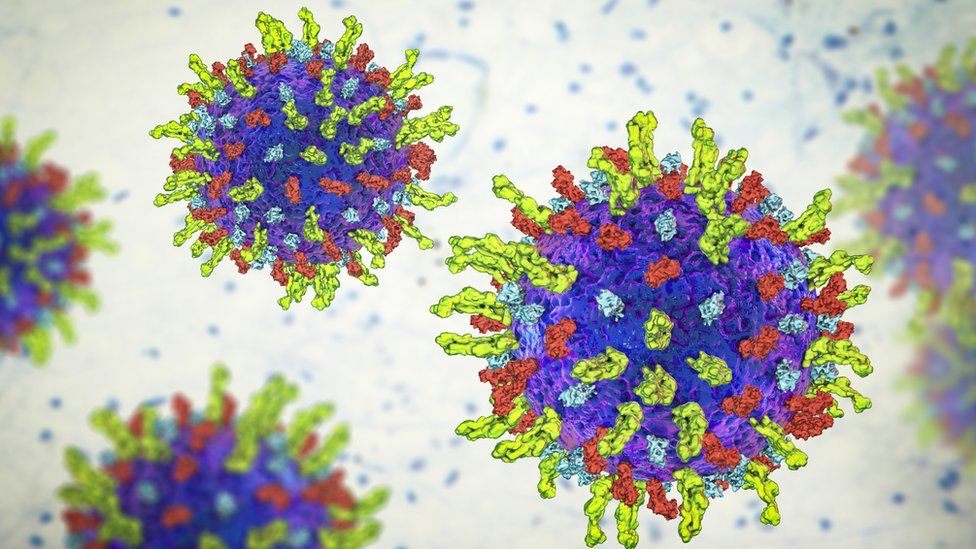
SARS-CoV-2 infects fat tissue, creates inflammatory storm cloud, study finds

A study by Stanford Medicine investigators shows that SARS-CoV-2 can infect human fat tissue. This phenomenon was seen in laboratory experiments conducted on fat tissue excised from patients undergoing bariatric and cardiac surgeries, and later infected in a laboratory dish with SARS-CoV-2. It was further confirmed in autopsy samples from deceased COVID-19 patients.
Obesity is an established, independent risk factor for SARS-CoV-2 infection as well as for the patients’ progression, once infected, to severe disease and death. Reasons offered for this increased vulnerability range from impaired breathing resulting from the pressure of extra weight, to altered immune responsiveness in obese people.
But the new study provides a more direct reason: SARS-CoV-2, the virus that causes COVID-19, can directly infect adipose tissue (which most of us refer to as just plain “fat”). That, in turn, cooks up a cycle of viral replication within resident fat cells, or adipocytes, and causes pronounced inflammation in immune cells that hang out in fat tissue. The inflammation converts even uninfected “bystander” cells within the tissue into an inflammatory state.
“With 2 of every 3 American adults overweight and more than 4 in 10 of them obese, this is a potential cause for concern,” said Tracey McLaughlin, MD, professor of endocrinology.
The findings are described in a study published online Sept. 22 in Science Translational Medicine. McLaughlin and Catherine Blish, MD, PhD, professor of infectious diseases, are the study’s senior authors. Lead authorship is shared by former postdoctoral scholar Giovanny Martínez-Colón, PhD,and graduate student Kalani Ratnasiri.

Read more →

New study reveals breakthrough infections increase immunity to COVID-19

Vaccine boosters and breakthrough infections following vaccination both provide a substantial and potentially pandemic-breaking immunity against COVID-19, according to new laboratory research from Oregon Health & Science University.
The study, published Wednesday in the journal Med, is the latest in a series of OHSU discoveries using blood samples to characterize immune response to the SARS-CoV-2 virus.
“As the number of omicron subvariant cases rise and as global vaccination and booster campaigns continue, an increasing proportion of the world’s population will acquire potent immune responses that may be protective against future SARS-CoV-2 variants,” the researchers conclude.
The research measured a powerful immune response among samples from 99 OHSU employees who had blood drawn for the research. Notably, researchers measured an equally potent immune response to the virus — with dramatic increases in magnitude, potency and breadth — among people whose blood was drawn three months after a third vaccine booster dose and another group one month after a breakthrough infection.
In addition, the study found the immune response was just as powerful among people 65 and older.
“Early in the pandemic, we had very high mortality in certain vulnerable groups, such as older adults in nursing homes, but that reality is slowly changing,” said co-senior author Marcel Curlin, M.D., associate professor of medicine (infectious diseases) in the OHSU School of Medicine and medical director of OHSU Occupational Health. “Our study bolsters the idea that vaccination is a pathway to a milder illness. Even if you’re older, your chances of having a severe illness if you’re re-infected down the line appears to be much lower than it was at the start of the pandemic.”
Co-senior author Fikadu Tafesse, Ph.D., associate professor of molecular microbiology and immunology in the OHSU School of Medicine, said he would expect an even more robust immune response among people receiving the new bivalent vaccine booster targeting the BA.4 and BA.5 variants.
“We anticipate that updated vaccine strategies with variant-specific regimens will significantly improve the breadth of the immune response and provide better protections against the SARS-CoV-2 variants,” he said.
In contrast to the onset of the pandemic, the SARS-CoV-2 virus is no longer “novel” to the human immune system. Most people in the world have now been vaccinated, infected or both — meaning the virus is running up against a much more effective immune response with each new infection.
Curlin said the new study most likely reflects the fact that the virus is evolving to become more transmissible but less harmful.
“Evolutionary pressure is driving the virus to find more ways to infect people at the cost of pathogenicity, most likely,” he said. Pathogenicity refers to the capacity to cause symptoms associated with the disease.
Funding for this study was supported by the M.J. Murdock Charitable Trust; the OHSU Foundation; the National Institutes of Health training grant T32HL083808; and a grant from the OHSU Innovates IDEA fund. The content is solely the responsibility of the authors and does not necessarily represent the official views of the NIH.
Story Source:
Materials provided by Oregon Health & Science University. Original written by Erik Robinson. Note: Content may be edited for style and length.

Read more →

How biologists are making fieldwork more equitable

Imagine being stuck in close quarters with your coworkers 24 hours a day, far away from your home, under conditions that are stressful and unfamiliar. Scientists have a name for that: fieldwork.
Doing research outside of the lab is important to career advancement in some fields of science, but it comes with a host of unique challenges. That’s why a team from the Pitt Department of Biological Sciences developed a guide for making fieldwork safer and more equitable, especially for researchers from marginalized groups.
“Fieldwork is inherently risky,” said Elizabeth Rudzki, a graduate student in the Kenneth P. Dietrich School of Arts and Sciences and lead author of the paper. “You have risks that everyone has to deal with, whether it’s bee stings or the terrain or satellite reception, but you also have other risks that become an even bigger concern for students who have a different gender expression, or are Black or a person of color. If we want to increase diversity in the sciences, we need to also make risk more equitable.”
The process at Pitt started around two years ago, when Dietrich School Professor Cori Richards-Zawacki started to assemble a group of colleagues who were having conversations about equity in fieldwork. As director of Pitt’s Pymatuning Lab of Ecology, a research station in Northwest PA, Richards-Zawacki saw the need to gather a broad range of perspectives on the kind of guidance needed for doing fieldwork.
“The field is a place where we have a long way to go,” she said. “One of the things we wanted to do is talk about that potential for negative experiences and the things that we can do to try to head those off.”
Many field stations don’t have any such field guide, Richards-Zawacki said, and those that do exist tend to focus narrowly on issues like first aid or accidents — and don’t engage with broader issues of identity and structural inequality.

Read more →

AI-based screening method could boost speed of new drug discovery

Developing life-saving medicines can take billions of dollars and decades of time, but University of Central Florida researchers are aiming to speed up this process with a new artificial intelligence-based drug screening process they’ve developed.
Using a method that models drug and target protein interactions using natural language processing techniques, the researchers achieved up to 97% accuracy in identifying promising drug candidates. The results were published recently in the journal Briefings in Bioinformatics.
The technique represents drug-protein interactions through words for each protein binding site and uses deep learning to extract the features that govern the complex interactions between the two.
“With AI becoming more available, this has become something that AI can tackle,” says study co-author Ozlem Garibay, an assistant professor in UCF’s Department of Industrial Engineering and Management Systems. “You can try out so many variations of proteins and drug interactions and find out which are more likely to bind or not.”
The model they’ve developed, known as AttentionSiteDTI, is the first to be interpretable using the language of protein binding sites.
The work is important because it will help drug designers identify critical protein binding sites along with their functional properties, which is key to determining if a drug will be effective.

Read more →

Officials Are Optimistic Monkeypox Can Be Eliminated in the US 

Cases are declining nationally, and the deputy coordinator of the White House monkeypox response team said he expected that, over time, they would drop to a trickle.WASHINGTON — With monkeypox cases on the decline nationally, federal health officials expressed optimism on Thursday that the virus could be eliminated in the United States, though they cautioned that unless it was wiped out globally, Americans would remain at risk.“Our goal is to eradicate; that’s what we’re working toward,” Dr. Demetre Daskalakis, the deputy coordinator of the White House monkeypox response team, said during a visit to a monkeypox vaccination clinic in Washington. He added, “The prediction is, we’re going to get very close.”Dr. Daskalakis was joined by President Biden’s health secretary, Xavier Becerra, and the response team’s coordinator, Robert J. Fenton Jr., who echoed his optimism. The visit to the clinic was intended to spotlight efforts by the District of Columbia to close the racial gap in vaccination against monkeypox — a major goal of the Biden administration.“The president said from the very beginning, ‘Get on top of this, and then stay ahead of it,’” Mr. Becerra told reporters. “And we can’t say we really stayed ahead of it if we’re leaving certain communities behind.”Dr. Daskalakis, an infectious disease expert who previously ran the division of H.I.V. prevention at the Centers for Disease Control and Prevention, was brought onto the monkeypox response team by Mr. Biden last month.What to Know About the Monkeypox VirusCard 1 of 7What is monkeypox?

Read more →

Cancer-killing virus shows promise in patients

Published3 days agoSharecloseShare pageCopy linkAbout sharingImage source, Getty ImagesA new type of cancer therapy that uses a common virus to infect and destroy harmful cells is showing big promise in early human trials, say UK scientists. One patient’s cancer vanished, while others saw their tumours shrink. The drug is a weakened form of the cold sore virus – herpes simplex – that has been modified to kill tumours. Larger and longer studies will be needed, but experts say the injection might ultimately offer a lifeline to more people with advanced cancers. Image source, Krzysztof WojkowskiKrzysztof Wojkowski, a 39-year-old builder from west London, is one of the patients who took part in the ongoing phase one safety trial, run by the Institute of Cancer Research and the Royal Marsden NHS Foundation Trust. He was diagnosed in 2017 with cancer of the salivary glands, near the mouth. Despite surgery and other treatments at the time, his cancer continued to grow. “I was told there was no options left for me and I was receiving end-of-life care. It was devastating, so it was incredible to be given the chance to join the trial.”A short course of the virus therapy – which is a specially modified version of the herpes virus which normally causes cold sores – appears to have cleared his cancer. “I had injections every two weeks for five weeks which completely eradicated my cancer. I’ve been cancer-free for two years now.”The injections, given directly into the tumour, attacks cancer in two ways – by invading the cancerous cells and making them burst, and by activating the immune system. About 40 patients have tried the treatment as part of the trial. Some were given the virus injection, called RP2, on its own. Others also received another cancer drug – called nivolumab – as well. The findings, presented at a medical conference in Paris, France, show: Three out of nine patients given RP2 only, which included Krzysztof, saw their tumours shrinkSeven out of 30 who had combined treatment also appeared to benefit Side effects, such as tiredness, were generally mildLead researcher Prof Kevin Harrington told the BBC the treatment responses seen were “truly impressive” across a range of advanced cancers, including cancer of the gullet (oesophagus) and a rare type of eye cancer.”It is rare to see such good response rates in early stage clinical trials, as their primary aim is to test treatment safety, and they involve patients with very advanced cancers for whom current treatments have stopped working,” he said. “I am keen to see if we continue to see benefits as we treat increased numbers of patients.”It is not the first time scientists have used a virus to fight cancer. The NHS approved a cold-virus-based therapy, called T-Vec, for advanced skin cancer a few years ago. Prof Harrington calls RP2 a souped-up version of T-Vec. “It’s had other modifications to the virus so that when it gets into cancer cells it effectively signs their death warrant.” Dr Marianne Baker, from Cancer Research UK, said the encouraging findings might change the course of cancer treatment.”Scientists discovered that viruses could help to treat cancer 100 years ago, but it’s been challenging to harness them safely and effectively.”This new viral therapy shows promise in a small-scale early trial – now we need more studies to find out how well it works.”Research suggests that combining multiple treatments is a powerful strategy, and virus therapies like this one could become a part of our toolkit for beating cancer.”More on this storyCold sore virus ‘treats skin cancer’26 May 2015Related Internet LinksEuropean Society for Medical OncologyThe BBC is not responsible for the content of external sites.

Read more →

Officials Express Optimism That Monkeypox Can Be Eliminated in the U.S.

Cases are declining nationally, and the deputy coordinator of the White House monkeypox response team said he expected that, over time, they would drop to a trickle.WASHINGTON — With monkeypox cases on the decline nationally, federal health officials expressed optimism on Thursday that the virus could be eliminated in the United States, though they cautioned that unless it was wiped out globally, Americans would remain at risk.“Our goal is to eradicate; that’s what we’re working toward,” Dr. Demetre Daskalakis, the deputy coordinator of the White House monkeypox response team, said during a visit to a monkeypox vaccination clinic in Washington. He added, “The prediction is, we’re going to get very close.”Dr. Daskalakis was joined by President Biden’s health secretary, Xavier Becerra, and the response team’s coordinator, Robert J. Fenton Jr., who echoed his optimism. The visit to the clinic was intended to spotlight efforts by the District of Columbia to close the racial gap in vaccination against monkeypox — a major goal of the Biden administration.“The president said from the very beginning, ‘Get on top of this, and then stay ahead of it,’” Mr. Becerra told reporters. “And we can’t say we really stayed ahead of it if we’re leaving certain communities behind.”Dr. Daskalakis, an infectious disease expert who previously ran the division of H.I.V. prevention at the Centers for Disease Control and Prevention, was brought onto the monkeypox response team by Mr. Biden last month.What to Know About the Monkeypox VirusCard 1 of 7What is monkeypox?

Read more →

Exposing the evolutionary weak spots of the human genome

Mutations can be good and bad. Sometimes they help an organism adapt and survive. Other times they are so harmful that an organism can’t survive or reproduce. Cold Spring Harbor Laboratory (CSHL) Professor Adam Siepel’s team has created a computer program that tracks the history of harmful mutations in the human genome throughout evolution. They discovered parts of the genome are especially vulnerable to mutations, meaning any mutations in those regions can result in severe or lethal consequences. Their findings may help guide clinicians seeking the origins of serious genetic diseases.
Siepel’s program is called ExtRaINSIGHT. It finds harmful mutations by looking for their absence. By random chance, every part of the human genome should have mutations but some have none. Siepel calls these places “ultraselected.” When they occur, the mutations there can be deadly or drastically hurt the odds of reproducing. Siepel explains:
“If we look across a panel of a hundred thousand humans and we never see a mutation at a particular gene, that suggests that any mutation that did occur was so harmful, that anyone carrying that mutation died out from the population.”
The team analyzed over 70,000 human genomes with ExtRaINSIGHT. They discovered that three parts of the genome have been extremely sensitive to mutations over generations. Of these, splice sites are the most sensitive. Splice sites help produce correct instructions for making proteins. Mutations here can have a huge impact on the odds of passing down genes, also known as fitness. They’re linked to several diseases including spinal muscular atrophy, the leading genetic cause of death in infants and toddlers. Siepel says:
“If you see a mutation in a splice site, you better take it seriously. That mutation alone would reduce your fitness by 1 or 2%. That doesn’t sound like very much, but that’s a huge fitness effect. And if you had multiple of these, pretty soon your chance of passing on your genes might be close to zero.”
Molecules called miRNA and central nervous system genes are also sensitive. “If you find a mutation in miRNA there’s a good chance it’s responsible for a genetic disease,” Siepel says. “And because the nervous system is so complex and interconnected, it seems particularly sensitive to mutation.”
The origins of many genetic diseases and conditions remain a mystery. Siepel hopes technology like ExtRaINSIGHT will help reveal their origins and guide diagnoses and future treatments. He also hopes his work will help further illustrate how mutations continue to shape the evolution of the human genome.
Story Source:
Materials provided by Cold Spring Harbor Laboratory. Original written by Nick Wurm. Note: Content may be edited for style and length.

Read more →

Researchers identify drug resistance factors for advanced prostate cancer

In a new study published in Molecular Cancer Research, Mayo Clinic researchers identified critical genomic changes in response to abiraterone acetate/prednisone, a standard treatment option for men with progressive, incurable and castration-resistant prostate cancer.
“We defined a potential strategy for both responders and nonresponders of the drug that may help men overcome resistance and prolong survival,” says Liewei Wang, M.D., Ph.D., the Bernard and Edith Waterman Director, Pharmacogenomics Program, Mayo Clinic’s Center for Individualized Medicine. Dr. Wang is the corresponding author of the study.
Dr. Wang explains that while several drug choices are available to control disease progression, many questions remain over which drugs to use in individual cases. Also, predictive biomarkers for drug resistance and sensitivity remain primarily unknown.
Abiraterone acetate is a standard treatment option for men with castration-resistant prostate cancer. However, the response rate is limited, no known biomarkers predict prognosis, and alternative therapies for those who failed treatment are unavailable.
In the Prostate Cancer Medically Optimized Genome Enhanced Therapy study, also known as PROMOTE, Mayo researchers revealed DNA sequences associated with response to abiraterone acetate to identify additional treatment options for men with advanced prostate cancer resistant to all standard therapies. They identified an 11-gene drug panel that provided a new tool to individualize treatment for abiraterone acetate. A genetic testing panel is a laboratory test that looks at a select group of genes. The 11-gene panel predicted a worse prognosis for a subset of primary or metastatic patients enrolled in the study.
In the next step of their analysis in this prospective study, the researchers analyzed whole-exome sequencing and RNA sequence data from 83 patients with metastatic biopsies before and after 12 weeks of abiraterone acetate/prednisone treatment. They identified genomic alterations associated with acquired resistance after 12 weeks of this treatment.
“We analyzed the posttreatment genomic landscape of metastatic biopsies in these patients with metastatic castration-resistant prostate cancer to identify mechanisms of acquired resistance,” says Hugues Sicotte, Ph.D., a Mayo Clinic bioinformatician and lead author of the study. “These results may assist with selecting alternative therapies in a subset of abiraterone acetate-resistant patients with the highest risk of having the poorest outcome.”
Dr. Sicotte says biomarkers based on the stage-specific landscape of genomic changes in prostate cancer are under investigation.
“Further studies will be needed to test these drug treatments to overcome abiraterone acetate/prednisone resistance and define subgroups of nonresponders,” says Dr. Sicotte. “Our goal is to incorporate these into clinical practice for physicians and patients with castration-resistant prostate cancer.”
Prostate cancer is the most commonly diagnosed solid organ malignancy in the U.S., with more than 268,490 new diagnoses annually and an estimated 34,500 deaths. It is the second leading cause of cancer deaths among men, according to the National Cancer Institute’s Surveillance Epidemiology and End Results Program.
The PROMOTE study is a collaboration of Mayo Clinic’s Center for Individualized Medicine and the Mayo Clinic Comprehensive Cancer Center.
Story Source:
Materials provided by Mayo Clinic. Original written by Colette Gallagher. Note: Content may be edited for style and length.

Read more →