‘Kind of Awkward’: Doctors Find Themselves on a First-Name Basis
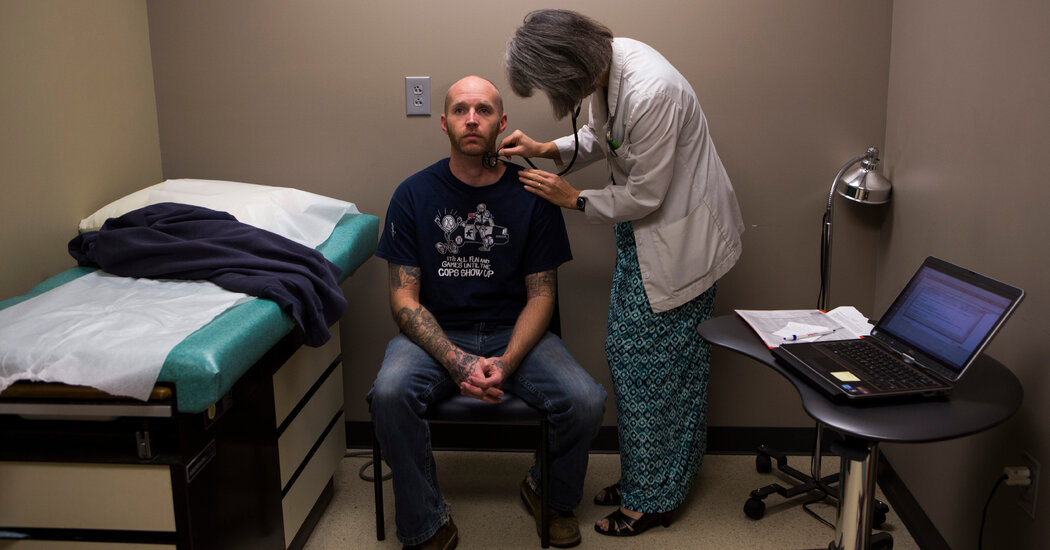
While many physicians may avoid discussing the subject, a study showed that who gets addressed with the honorific “Dr.” may depend on gender, degree and specialty.Dr. Yul Yang, a dermatologist at the Mayo Clinic in Scottsdale, Ariz., addresses all of his patients with an honorific — Mr. or Mrs. or Ms. — even if they ask him to use their first names. It is a sign of respect and a way of distinguishing his professional role as a doctor from a more personal role as a friend or confidant. But many patients do not reciprocate, calling him Yul instead of Dr. Yang.He finds that “kind of awkward,” he said, though he lets it pass. But Dr. Yang and his colleagues began to wonder: How often do patients call doctors by their first names?It wasn’t easy to answer this question, but Dr. Yang and his co-authors found a way — by studying tens of thousands of emails that patients sent to doctors at his institution. The results, published last week in the journal JAMA Network Open, appeared to illustrate a few themes about which doctors find themselves on a first-name basis with the people they care for.Female doctors were more than twice as likely as male doctors to be addressed by their first names, as were doctors of osteopathy when compared with doctors with an M.D. behind their name.Men were more likely than women to address doctors by their first name. Patients were more likely to address general practitioners by their first names than specialists.The study found no difference based on age, whether of patient or physician. And the researchers did not examine the race or ethnicity of the patients or doctors.The results, wrote Dr. Lekshmi Santhosh and Dr. Leah Witt of the University of California, San Francisco, in a commentary that accompanied the study, show “a subtle but important form of unconscious bias” against female physicians, general practitioners and doctors of osteopathy.“Use of formal titles in medicine and many other professions is a linguistic signal of respect and professionalism,” they added.Studying this issue, which they refer to as “untitling,” poses a number of challenges. At the Mayo Clinic, at least, “doctors don’t talk about it,” Dr. Yang said. And putting an observer in an exam room would create the medical version of the uncertainty principle: “Once an observer is in there everyone’s behavior will subtly change,” he said.And there is little research to address the issue head on. A previous study, published in 2000, surveyed doctors and found that three quarters of them said some patients addressed them by their first name. But little else was available in the medical literature, and looking at emails offered a novel approach. The medical center supplied Dr. Yang and his colleagues with a trove of email exchanges, allowing analysis of 29,498 messages from 14,958 patients sent from Oct. 1, 2018, to Sept. 30, 2021.The changing behavior they saw in the emails differs from even the recent past when it was all but unheard-of to call doctors by their first names, notes Jonathan Moreno, a professor of history and sociology of science at the University of Pennsylvania. He saw it in his own family, he added.“My father was a psychiatrist with his own sanitarium in Beacon, N.Y., where I grew up,” he said. “Patients, their families, staff, townspeople never addressed him as anything but Dr. or referred to him as ‘the doctor.’ I don’t remember my parents ever referring to his colleagues or their own caregivers as anything but doctor, unless they were close friends.”Popular culture of the 1960s and ’70s reflected that tradition, Dr. Moreno noted, with medical dramas like “Dr. Kildare,” which involved a young intern — Dr. Kildare — and his mentor, Dr. Gillespie. There also was the popular drama “Marcus Welby, M.D.,” starring a kindly family doctor whose patients always called him Dr. Welby but who called patients by their first names. That television tradition seems to be “one of the few that survived into the 21st century,” Dr. Moreno said.Doctors may not enjoy the real world’s tilt toward informality. The survey in 2000 showed that 61 percent were annoyed when patients addressed them by their first name.Their annoyance makes sense, said Debra Roter, an emeritus professor of health, behavior and society at Johns Hopkins’ Bloomberg School of Public Health. Using a first name can violate the boundary between doctor and patient.“Doctors might find it is undermining their authority,” Dr. Roter said. “There’s a familiarity that first names gives people.”But, she said, the consequences can be greater when a doctor addresses patients by their first names.“It could infantilize the patient or establish the paternalism of the doctor,” she said.Even worse, she said, are other ways some doctors address patients.“I had an experience with a new doctor,” Dr. Roter said. The doctor entered the exam room where she was waiting and said: “Oh hello dear. Please come up to the table.”“I was almost like, ‘Do I know you?’” Dr. Roter said. “I never went back.”

Read more →

Children commonly face new, worsening health problems months after critical illness from sepsis

Even months after critical illness for sepsis, children are at risk for new or worsening medical conditions, a study suggests.
One in five children in a national cohort either developed or experienced progressing disease within six months of leaving the intensive care unit for sepsis, according to the research in JAMA Pediatrics.
Researchers compared data from 5,150 children who received ICU care for sepsis to 96,361 who experienced critical illness from other conditions. Those with sepsis were more likely to later experience chronic respiratory failure, problems requiring nutritional dependence and chronic kidney disease. Children in both groups were also at risk of developing a seizure disorder.
“Children who survive severe sepsis are at risk of long-term health consequences that impact their quality of life and future health needs,” said lead author Erin Carlton, M.D., MSc., a pediatric intensivist at University of Michigan Health C.S. Mott Children’s Hospital.
Not all children who recover from critical illness from sepsis are impacted equally, the study suggests. Those with pre-existing illnesses were three times more likely to experience new or worsening disease.
Meanwhile, younger children — particularly those under age one — were twice as likely to require supplemental nutrition, such as needing a feeding tube, or develop a new seizure condition such as epilepsy, than older children.
Every year, 70,000 children in the U.S. are hospitalized with sepsis, a life-threatening condition that occurs when a body’s response to infection goes into overdrive, causing damage to vital organs. It is a leading cause of death among children and newborns.
“Many children who require critical care for sepsis have debilitating physical, cognitive or emotional challenges long after recovery,” Carlton said. “Our findings suggest a need for improved follow up care focused on identifying and treating new or worsening medical conditions.”
Story Source:
Materials provided by Michigan Medicine – University of Michigan. Original written by Beata Mostafavi. Note: Content may be edited for style and length.

Read more →

People in the UK have higher probabilities of dying early than predicted

Men and women in the UK have a higher probability of dying than predicted, a new report has found, which could have a big impact on the future viability of pensions schemes.
The research from Bayes Business School, which looks at death rates for people aged 50 to 95, painted a bleak picture for men and women in the UK.
Analysis of 21 high-income countries over a period of 50 years analysed the patterns of death rates between 1960 and 2010 and then explored whether what has happened since 2010 followed the predicted patterns.
The data shows that, following decades of improvement in the probability of dying and in life expectancy, since 2011 the probabilities of dying for people in the UK are higher than forecasts based on the earlier trends.
There is also a marked difference in gender. It is most starkly shown in UK women, whose average improvements in the probability of dying has fallen from 2.1 per cent a year (2000-2010) to 0.84 per cent (2011-2017). In UK men, the improvement rate is the lowest it has been in almost 40 years (1.18 per cent), since the 1980s.
The data showed a trend in death rates among women that was worse than expected in 19 of the 21 analysed countries. Of the 21 countries examined, the UK ranked 17th worst for women and 19th worst for men.

Read more →

Cough syrup deaths: India production halted after Gambia child fatalities

Published3 hours agoSharecloseShare pageCopy linkAbout sharingImage source, Getty ImagesIndian health officials have ordered a maker of cough syrups to halt production after they were linked to the deaths of children in The Gambia.Maiden Pharmaceuticals broke rules “across its manufacturing and testing activities,” Indian regulators found.The World Health Organization (WHO) issued a global alert over four of Maiden’s cough syrups linked to the deaths of almost 70 children.Investigations are currently under way in India and The Gambia.Regulators said that they had suspended all manufacturing activities at the New Delhi-based firm after finding it had broken a number of safety rules.This was “in view of the seriousness of the contraventions observed during the investigation and its potential risk to the quality, safety and efficacy of the drug being produced,” they added.How was toxic cough syrup sent to The Gambia?Mothers demand justice over cough syrup scandalMaiden did not immediately respond to a request for comment from the BBC.Last week, the company said it was “shocked to hear media reports regarding the deaths and deeply saddened by this incident”.This came after the WHO issued a global alert over four of Maiden’s cough syrups, warning that they could be linked to acute kidney injuries and the children’s deaths in July, August and September.The global health organisation also warned the products “may have been distributed, through informal markets, to other countries and regions” besides The Gambia.The medicines were identified as Promethazine Oral Solution, Kofexmalin Baby Cough Syrup, Makoff Baby Cough Syrup and Magrip N Cold Syrup.Police in The Gambia are investigating the deaths of the children, as Gambians demand justice.The President of The Gambia Adama Barrow said authorities would “leave no stone unturned” in their investigation.In a preliminary report released on Tuesday, police in The Gambia said the cough syrups were imported to the West African country by a US-based company.The report also said that the majority of the 50,000 bottles of the contaminated syrups that were imported into the country had now been seized.You may also be interested in:This video can not be playedTo play this video you need to enable JavaScript in your browser.More on this storyHow was toxic cough syrup sent to The Gambia?1 day agoGambia police probe deaths linked to Indian syrup3 days agoMothers demand justice over cough syrup scandal4 days agoIndia investigates cough syrups after Gambia deaths6 days agoGlobal alert over cough syrups after child deaths6 days ago

Read more →

Clusters of genes help mice live longer

Researchers from the National Institute on Aging (NIA)-funded Interventions Testing Program recently reported the discovery of multiple candidate genes that influence longevity. The three Interventions Testing Program sites — The University of Texas Health Science Center at San Antonio, The University of Michigan at Ann Arbor and The Jackson Laboratory at Bar Harbor, Maine — collaborated on the study with the labs of Robert W. Williams, PhD, of the University of Tennessee Health Science Center at Memphis and Johan Auwerx, MD, PhD, of the École Polytechnique Fédérale de Lausanne in Lausanne, Switzerland.
“Some candidate genes impacted female life span while others affected the male life span,” said Randy Strong, PhD, of the Sam and Ann Barshop Institute for Longevity and Aging Studies at UT Health San Antonio. “One cluster of genes increased longevity of both sexes. In a rarity for these types of studies, the findings were made in a population of mice with genetic diversity comparable to human populations.”
The high-impact journal Science published the findings Sept. 30. Strong directs the Interventions Testing Program site at the Barshop Institute, which first attracted National Institute on Aging (NIA) grant funding for the Interventions Testing Program in 2003 and is in its 19th year of the NIA funding.
Genetic smorgasbord
“The study models what happens in people,” said research coauthor James Nelson, PhD, of the Barshop Institute. “Unlike mice in many other studies, mice in this newly reported research are not all the same. Each has different genetic variants, resulting in slightly different proteins that do slightly different things, which together can impact aging.”
Even subtle differences can lead to different health outcomes as we age. Slight variations in the hemoglobin gene, for example, can cause the hemoglobin protein in red blood cells to be less effective at binding to oxygen and transferring it from the lungs to the body’s tissues, Nelson noted. Anemia is one effect.

Read more →

Scientists detect dementia signs as early as nine years ahead of diagnosis

Cambridge scientists have shown that it is possible to spot signs of brain impairment in patients as early as nine years before they receive a diagnosis for one of a number of dementia-related diseases.
In research published today in Alzheimer’s & Dementia: The Journal of the Alzheimer’s Association, the team analysed data from the UK Biobank and found impairment in several areas, such as problem solving and number recall, across a range of conditions.
The findings raise the possibility that in the future, at-risk patients could be screened to help select those who would benefit from interventions to reduce their risk of developing one of the conditions, or to help identify patients suitable for recruitment to clinical trials for new treatments.
There are currently very few effective treatments for dementia or other neurodegenerative diseases such as Parkinson’s disease. In part, this is because these conditions are often only diagnosed once symptoms appear, whereas the underlying neurodegeneration may have begun years — even decades — earlier. This means that by the time patients take part in clinical trials, it may already be too late in the disease process to alter its course.
Until now, it has been unclear whether it might be possible to detect changes in brain function before the onset of symptoms. To help answer this question, researchers at the University of Cambridge and Cambridge University Hospitals NHS Foundation Trust turned to UK Biobank, a biomedical database and research resource containing anonymised genetic, lifestyle and health information from half a million UK participants aged 40-69.
As well as collecting information on participants’ health and disease diagnoses, UK Biobank collected data from a battery of tests including problem solving, memory, reaction times and grip strength, as well as data on weight loss and gain and on the number of falls. This allowed them to look back to see whether any signs were present at baseline — that is, when measurements were first collected from participants (between five and nine years prior to diagnosis).

Read more →

Does the Mediterranean diet really decrease your risk of dementia?

A number of studies have suggested that eating a healthy diet may reduce a person’s risk of dementia, but a new study has found that two diets including the Mediterranean diet are not linked to a reduced risk of dementia. The study is published in the October 12, 2022, online issue of Neurology®, the medical journal of the American Academy of Neurology.
The Mediterranean diet includes a high intake of vegetables, legumes, fruits, fish and healthy fats such as olive oil, and a low intake of dairy products, meats and saturated fatty acids.
“Previous studies on the effects of diet on dementia risk have had mixed results,” said study author Isabelle Glans, MD, of Lund University in Sweden. “While our study does not rule out a possible association between diet and dementia, we did not find a link in our study, which had a long follow-up period, included younger participants than some other studies and did not require people to remember what foods they had eaten regularly years before.”
For the study, researchers identified 28,000 people from Sweden. Participants had an average age of 58 and did not have dementia at the start of the study. They were followed over a 20-year period. During the study, participants filled out a seven-day food diary, a detailed food frequency questionnaire and completed an interview. By the end of the study, 1,943 people, or 6.9%, were diagnosed with dementia, including Alzheimer’s disease and vascular dementia.
Researchers examined how closely participants’ diets aligned with conventional dietary recommendations and the Mediterranean diet.
After adjusting for age, gender, and education, researchers did not find a link between following either a conventional diet or the Mediterranean diet and a reduced risk of dementia.
Glans noted that further research is needed to confirm the findings.
Nils Peters, MD, of the University of Basel in Switzerland, who wrote an editorial accompanying the study, said, “Diet on its own may not have a strong enough effect on memory and thinking, but is likely one factor among others that influence the course of cognitive function. Dietary strategies will still potentially be needed along with other measures to control risk factors.”
A limitation of the study was the risk of participants misreporting their own dietary and lifestyle habits.
The study was funded by the Swedish Research Council, the Knut and Alice Wallenberg foundation, the Marianne and Marcus Wallenberg foundation, at Lund University, the Swedish Alzheimer Foundation, the Swedish Brain Foundation, and other organizations.
Story Source:
Materials provided by American Academy of Neurology. Note: Content may be edited for style and length.

Read more →

Researchers detect early deprivation continues to affect brain development well into adolescence

A new study shows that that early deprivation continues to affect brain development well into adolescence.
After the fall of communism in Romania, thousands of children were discovered in institutional orphanages across the country. Because of high child-to-caregiver ratios, these children were neglected, with overall low levels of caregiving and very regimented non-individualized care. Without a foster care program at that time in Romania, the University of North Carolina at Chapel Hill researchers Charles Zeanah, Charles Nelson and Nathan Fox set up a new grant-funded foster care intervention program. This program was well supported, with frequent visits by a dedicated team of social workers to foster families.
Children were randomly selected to participate in this foster care program providing scientists an unusual opportunity to study what happens to children’s brains when they’re deprived of attention and emotional connection. A new study by the group published on Oct. 7 in Science Advances shows that that early deprivation continues to affect brain development well into adolescence.
“We know from years of animal work that experiences early in life shape brain development but until now, this has never been shown conclusively in humans,” says Margaret Sheridan, a clinical psychologist at the University of North Carolina at Chapel Hill, and the lead author on a new study showing that deprivation in early childhood shapes the development of brain structure through adolescence.
Sheridan and a team of researchers from the Bucharest Early Intervention Project published their findings today in Science Advances. Their research shows that children who were randomly placed out of institutional care and into well-supported foster care before the age of 3 had changes in areas of the brain that support higher-order problem solving years later, when the children were 16.
In addition, children placed into high-quality foster care before 3 years old saw typical brain development from 9 to 16 years, in areas related to emotional reactivity, language, and executive function, but this pattern was altered to children who were deprived of family care.
“Here we show that that the opportunities that a child has in early life to learn and grow will impact not just their behavior but their actual brain development and brain structure for years to come,” says Sheridan. “Children need invested caregivers supporting their development from a very early age.”
The Bucharest Early Intervention Project, launched in 2001 is a landmark study of the impact of institutionalization, a severe form of neglect on child development. It is the only randomized controlled trial of foster care as an alternative to institutional rearing. Between the ages of 6 and 33 months, 68 children were removed from orphanages and placed in high-quality foster care. Families who received a foster child were frequently visited by a social work and given significant financial support, which helped families integrate and provide support.
The children have been tracked throughout their childhoods, and initial evidence of the negative impact of institutionalization on development changed the way Romania approached childcare and family leave.
“This new evidence shows what doesn’thappen to children matters just as much as what does happen for child brain development,” says Sheridan.
Story Source:
Materials provided by University of North Carolina at Chapel Hill. Note: Content may be edited for style and length.

Read more →

How do tired animals stay awake?

New research provides clues to falling fast asleep — or lying wide awake. Studying fruit flies, the researchers found that brain neurons adapt to help the flies stay awake despite tiredness in dangerous situations and help them fall asleep after an intense day. The findings, from Washington University School of Medicine in St. Louis and the University of Missouri, Kansas City, are published online in PLoS Biology, and could lead to new approaches to treating insomnia and improving sleep quality in people.
“If you’re sick or sleep deprived, or you’ve just learned something new, you sleep more,” said co-corresponding author Paul Shaw, PhD, a professor of neuroscience at Washington University. “But if something dangerous is happening, your brain says, ‘No, no, no, no. It’s not time to go to sleep. I don’t care how tired you are.’ The neurons that regulate sleep can tell the difference between sleep when it’s safe and sleep when it’s dangerous.”
The sleep habits of fruit flies are a lot like ours. The flies are active in the day, sleep at night, and like to take a little nap in the afternoon, particularly on hot days. Caffeine keeps them up, and drugs that put us to sleep work on flies, too.
There is one crucial difference, though: Their brains are a million times smaller than ours, making it possible to identify the role each neuron plays in controlling fly behavior. Shaw and co-corresponding author Stephane Dissel, PhD — an assistant professor of biological sciences at the University of Missouri who began working on this project while a postdoctoral researcher at Washington University — focused on 24 brain neurons that control whether a fly sleeps or wakes.
These neurons receive and respond to sleep signals sent by other neurons via chemical messengers known as neurotransmitters. The researchers investigated whether experiences that affect sleep behavior change how those 24 neurons respond to the neurotransmitters dopamine, which promotes wakefulness; glutamate, which promotes sleep; and allatostatin A, which also promotes wakefulness. Allatostatin A was previously known to play a role in feeding behaviors; as part of this study, the researchers showed that it also plays a role in regulating sleep.
Sleep reinforces memory and learning and fosters creativity. Both people and flies sleep more after an intellectually challenging day. As part of this study, the researchers showed that living in a crowded social environment or learning a new behavior trigger molecular changes in the flies’ sleep neurons that make them less sensitive to dopamine and therefore sleepier.
On the other hand, when the researchers alarmed the flies by periodically shaking the vials they live in during their sleeping hours, the flies’ brains produced both allatostatin A and glutamate. The combination of two opposing sleep signals kept the flies awake despite tiredness to cope with what they saw as a dangerous situation. The sleep neurons of naturally insomniac flies — insects that hatch with a tendency to sleep only half as long as typical flies — responded abnormally to sleep neurotransmitters, suggesting an inborn defect in how their brains regulate sleep.
“A lot of people don’t sleep well, and we really don’t know why,” Shaw said. “Our data suggests that there is a genetic predisposition to how neurological signals are interpreted by sleep centers in the brain. If the system goes astray, then you get these conflicting signals: You’re tired, but you can’t fall asleep. By understanding how these conflicting signals can arise, we can begin to think about how we might design therapeutics for people.”
Intriguingly, one intervention seemed to cause a lasting improvement to sleep quality: time-restricted feeding. Fruit flies normally eat all day, but for this study the researchers limited the flies’ access to food to between 8 a.m. and 5 p.m. After a week, the flies’ sleep neurons were more sensitive to dopamine, and the sensitivity persisted for days after returning to a normal feeding schedule. The flies slept less, but they didn’t show signs of tiredness, an indication that the quality of their sleep had improved, the researchers said.
“Time-restricted eating is a hot topic right now,” Shaw said. “The claim is that confining your food intake to certain hours of the day will help you sleep better and maintain a healthy weight. The evidence that this works in people is mixed. But in flies, our data suggests sleep quality improves with time-restricted feeding. It’s possible that there’s an intersection between time-restricted feeding and sleep regulation that we can take advantage of to help people sleep better.”
Story Source:
Materials provided by Washington University School of Medicine. Original written by Tamara Bhandari. Note: Content may be edited for style and length.

Read more →

Bionic pancreas improves type 1 diabetes management in kids and adults

A device known as a bionic pancreas, which uses next-generation technology to automatically deliver insulin, was more effective at maintaining blood glucose (sugar) levels within normal range than standard-of-care management among people with type 1 diabetes, a new multicenter clinical trial has found. The trial was primarily funded by the National Institute of Diabetes and Digestive and Kidney Diseases (NIDDK), part of the National Institutes of Health, and published in the New England Journal of Medicine.
Automated insulin delivery systems, also called artificial pancreas or closed-loop control systems, track a person’s blood glucose levels using a continuous glucose monitor and automatically deliver the hormone insulin when needed using an insulin pump. These systems replace reliance on testing glucose level by fingerstick, continuous glucose monitor with separate insulin delivery through multiple daily injections, or a pump without automation.
Compared to other available artificial pancreas technologies, the bionic pancreas requires less user input and provides more automation because the device’s algorithms continually adjust insulin doses automatically based on users’ needs. Users initialize the bionic pancreas by entering their body weight into the device’s dosing software at the time of first use.
Users of the bionic pancreas also do not have to count carbohydrates, nor initiate doses of insulin to correct for high blood glucose. In addition, health care providers do not need to make periodic adjustments to the settings of the device.
“Among the children, teens and parents participating in this study, youth showed statistically and clinically meaningful improvements in their time spent in target blood glucose range, even though there was no need to count carbohydrates, calculate basal insulin dosing or correct high glucose levels,” said study co-author Jill Weissberg-Benchell, PhD, CDCES, pediatric psychologist at Ann & Robert H. Lurie Children’s Hospital of Chicago and Professor of Psychiatry and Behavioral Sciences at Northwestern University Feinberg School of Medicine. “This novel insulin delivery system likely decreases both the emotional and cognitive burden of diabetes management for both youth and parents living with type 1 diabetes.”
The 13-week trial, conducted at 16 clinical sites across the United States, enrolled 326 participants ages 6 to 79 years who had type 1 diabetes and had been using insulin for at least one year. Participants were randomly assigned to either a treatment group using the bionic pancreas device or a standard-of-care control group using their personal pre-study insulin delivery method. All participants in the control group were provided with a continuous glucose monitor, and nearly one-third of the control group were using commercially available artificial pancreas technology during the study.
In participants using the bionic pancreas, glycated hemoglobin, a measure of a person’s long-term blood glucose control, improved from 7.9 percent to 7.3 percent, yet remained unchanged among the standard-of-care control group. The bionic pancreas group participants spent 11 percent more time, approximately 2.5 hours per day, within the targeted blood glucose range compared to the control group. These results were similar in youth and adult participants, and improvements in blood glucose control were greatest among participants who had higher blood glucose levels at the beginning of the study.
Hyperglycemia, or high blood glucose, caused by problems with insulin pump equipment, was the most frequently reported adverse event in the bionic pancreas group. The number of mild hypoglycemia events, or low blood glucose, was low and was not different between the groups. The frequency of severe hypoglycemia was not statistically different between the standard of care and bionic pancreas groups.
Four companion papers were also published in Diabetes Technology and Therapeutics, two of which provided more detailed results among the adult and youth participants. The third paper reported results from an extension study in which the participants from the standard-of-care control group switched to using the bionic pancreas for 13 weeks and experienced improvements in glucose control similar to the bionic pancreas group in the randomized trial. In the fourth paper, results showed that using the bionic pancreas with a faster-acting insulin in 114 adult participants improved glucose control as effectively as using the device with standard insulin.
Research at Ann & Robert H. Lurie Children’s Hospital of Chicago is conducted through Stanley Manne Children’s Research Institute. The Manne Research Institute is focused on improving child health, transforming pediatric medicine and ensuring healthier futures through the relentless pursuit of knowledge. Lurie Children’s is ranked as one of the nation’s top children’s hospitals by U.S. News & World Report. It is the pediatric training ground for Northwestern University Feinberg School of Medicine.

Read more →