‘You Don’t Look Anorexic’

Listen to This ArticleAudio Recording by AudmTo hear more audio stories from publications like The New York Times, download Audm for iPhone or Android.Sharon Maxwell spent much of her life trying to make herself small. Her family put her on her first diet when she was 10. Early on Saturday mornings, she and her mother would drive through the empty suburban streets of Hammond, Ind., to attend Weight Watchers meetings. Maxwell did her best at that age to track her meals and log her points, but the scale wasn’t going down fast enough. So she decided to barely eat anything on Fridays and take laxatives that she found in the medicine cabinet.Food had long been a fraught subject in the Maxwell household. Her parents were also bigger-bodied and dieted frequently. They belonged to a fundamentalist Baptist megachurch where gluttony was seen as a sin. To eat at home was to navigate a labyrinth of rules and restrictions. Maxwell watched one time as her mother lost 74 pounds in six months by consuming little more than carrot juice (her skin temporarily turned orange). Sometimes her father, seized with a new diet idea, abruptly ransacked shelves in the kitchen, sweeping newly forbidden foods into the trash. Maxwell was constantly worried about eating too much. She started to eat alone and in secret. She took to chewing morsels and spitting them out. She hid food behind books, in her pockets, under mattresses and between clothes folded neatly in drawers.Through Maxwell’s teenage years and early 20s, eating became even more stressful. Her thoughts constantly orbited around food: what she was eating or not eating, the calories she was burning or not burning, the size of her body and, especially, what people thought of it. Her appearance was often a topic of public interest. When she went grocery shopping for her family, other customers commented on the items in her cart. “Honey, are you sure you want to eat that?” one person said. Other shoppers offered unsolicited advice about diets. Strangers congratulated her when her cart was filled with vegetables.As she grew older, people at the gym clapped and cheered for her while she worked out. “People would say: ‘Go! You can lose the weight!’” she says. While eating in public, other diners offered feedback — and still do to this day — on her choices, a few even asking if she wanted to join their gym. Some would call her names: Pig, Fatty. Sometimes people told her she was brave for wearing shorts, while others said she should cover up. She was always aware, whether she wanted to be or not, of how others viewed her body.Maxwell tried just about every diet she could find: juice cleanses, Atkins, SlimFast, South Beach, Mediterranean, Whole30 and Ezekiel, a regimen based on biblical references. She tried being vegetarian and vegan and paleo. She tried consuming less than 500 calories a day and taking HCG, a fertility hormone rumored to suppress appetite but flagged by the F.D.A. as risky and unproven for weight loss. During periods of religious fasting at her church, she would take the practice to an extreme, consuming nothing but water for days (and on one occasion, two weeks). “I passed out a few times, but I did it,” she says. Sometimes she exercised more than three hours a day in high-intensity interval-training sessions and kickboxing classes. Eventually, she started vomiting up her food.Every day, Maxwell stepped on the scale and internalized the number as a reflection of her self-worth. Often, the number on the scale went down. But if she let up on her rigid food rules even briefly, the number shot back up like a coiled spring. “I just cycled through that,” she says, “but it became harder and harder each time to get the weight off.”During the many years of dieting and deprivation, Maxwell experienced mysterious health problems. For a decade, starting when she was 16, she almost never had her period. She was always cold. She often had dizzy spells and occasionally passed out in class. When she was in college, she fainted three times in one day and was taken to the emergency room. For an appointment with an endocrinologist one year, Maxwell took a purse full of small plastic bags. Each one contained a day’s worth of hair, clumps that accumulated in her brush or had fallen in the shower drain. Her head was pocked with bald spots. The doctor was pleased with her weight loss and, to her memory, didn’t seem too concerned about her other symptoms. “Anything that made the scale go down,” Maxwell says, “I was given a pat on the back.”Four years ago, at the age of 25, Maxwell walked into her primary-care doctor’s office near Scottsdale, Ariz., where she lived and worked as a middle school teacher. She was there for an annual physical, and she was prepared to be told to lose weight, as she had almost always been instructed. But this time, the doctor, an osteopath, started asking unusual questions. Maxwell’s blood work showed abnormally low iron and electrolyte levels. The doctor asked Maxwell what she was eating and what she was doing in relationship to food. Was she starving herself? Was she vomiting on purpose? Maxwell was surprised by this line of questioning. “These are things I had hidden my whole life from my family, my friends, doctors,” she says.The osteopath told her she thought Maxwell had an eating disorder and suggested arranging treatment right away. Maxwell would later be diagnosed with atypical anorexia nervosa, an increasingly common yet little known eating disorder that shares all the same symptoms as anorexia nervosa, except for extreme thinness. Just as many people, and possibly many more, suffer from atypical anorexia.At the physical, Maxwell stared at her doctor in disbelief. She always thought that eating disorders were for skinny people. “I laughed,” she says. “I don’t use language like this any longer, but I told her she was crazy. I told her, ‘No, I have a self-control problem.’”For centuries, the eating disorder that would become known as anorexia nervosa mystified the medical community, which struggled to understand, or even define, an illness that caused people to deliberately deprive themselves of food. As cases rose over the course of the 19th and 20th centuries, anorexia was considered a purely psychological disorder akin to hysteria. Sir William Withey Gull, an English physician who coined the term “anorexia nervosa” in the late 1800s, called it a perversion of the ego. In 1919, after an autopsy revealed an atrophied pituitary gland, anorexia was thought to be an endocrinological disease. That theory was later debunked, and in the mid-20th century, psychoanalytic explanations arose, pointing to sexual and developmental dysfunction and, later, unhealthy family dynamics. More recently, the medical field has come to believe that anorexia can be the product of a constellation of psychological, social, genetic, neurological and biological factors.Since anorexia nervosa became the first eating-related disorder listed in the Diagnostic and Statistical Manual of Mental Disorders in 1952, its criteria have shifted as well. Initially, anorexia had no weight criteria and was classified as a psychophysiological disorder. In a 1972 paper, a team led by the prominent psychiatrist John Feighner suggested using a weight loss of at least 25 percent as a standard for research purposes, and in 1980, the D.S.M. introduced that figure in its definition (along with a criterion that patients weigh well below “normal” for their age and height, although normal was not defined). Doctors who relied on that number soon found that patients who had lost at least 25 percent of their body weight were already severely sick, so in 1987, the diagnosis was revised to include those who weighed less than 85 percent of their “normal” body weight (what qualified as normal was left to physicians to decide). In the 2013 D.S.M., the criteria shifted again, characterizing those who suffer from anorexia as having a “significantly low weight,” a description that would also appear in the 2022 edition.In that 2013 edition, a new diagnosis appeared — atypical anorexia nervosa — after health care providers noticed more patients showing up for treatment with all the symptoms of anorexia nervosa except one: a significantly low weight. Those with atypical anorexia, doctors observed, suffer the same mental and physical symptoms as people with anorexia nervosa, even life-threatening heart issues and electrolyte imbalances. They restrict calories intensively; obsess about food, eating and body image; and view their weight as inextricably linked to their value. They often skip meals, eat in secret, adhere to intricate rules about what foods they allow themselves to consume and create unusual habits like chewing and spitting out food. Others exercise to the point of exhaustion, abuse laxatives or purge their meals. But unlike those diagnosed with anorexia, people with atypical anorexia can lose significant amounts of weight but still have a medium or large body size. Others, because of their body’s metabolism, hardly lose any weight at all. To the outside world, they appear “overweight.”Starting in the mid-2000s, the number of people seeking treatment for the disorder rose sharply. Whether more people are developing atypical anorexia or seeking treatment — or more doctors are recognizing it — is unknown, but this group now comprises up to half of all patients hospitalized in eating-disorder programs. Studies suggest that the same number of people, even as many as three times as many, will develop atypical anorexia as traditional anorexia in their lifetimes. One high estimate suggests that as much as 4.9 percent of the female population will have the disorder. For boys, the number is lower — one estimate was 1.2 percent. For men, it is likely even lower, though little research exists. For nonbinary people, the number jumps to as high as 7.5 percent.Across the board, the pandemic exacerbated eating disorders, including typical and atypical anorexia, through increased isolation, heightened anxiety and disrupted routines. Hospitals and outpatient clinics in the United States and abroad reported the number of consultations and admissions doubling and tripling during Covid lockdowns, and many providers are still overbooked. “Almost all of my colleagues, we’re at capacity,” says Shira Rosenbluth, an eating-disorder therapist who specializes in size- and gender-diverse clients. They are seeing clients who practice more extreme food restriction and experience more intense distress around body image and eating habits. “The demand has increased, the level of severity has increased,” Rosenbluth says. “We’ve never seen waiting lists like this for treatment centers.”Shira Rosenbluth, an eating-disorder therapist specializing in size- and gender-diverse clients, at home in West Hollywood, Calif.Ryan Pfluger for The New York TimesDespite its prevalence, atypical anorexia is still considered widely underdiagnosed and under-researched, and many primary-care doctors have never heard of it. “Some people being at a standard body weight or overweight can be perplexing to the untrained eye,” says Karlee McGlone, senior manager of admissions and outreach for U.C. San Diego Health Eating Disorders Center. “It is still a surprise for nonspecialized clinicians.”Patients, too, are in the dark about atypical anorexia. “Most people in higher-weight bodies are shocked to hear that they have anorexia,” says Rachel Millner, a psychologist based in Pennsylvania who specializes in eating disorders among people with larger bodies. “Nobody ever told them that you can be in a higher-weight body and have anorexia, and they’re convinced that their problem is their weight.”In 2020, Erin Harrop, an assistant professor of social work at the University of Denver, completed a survey of 39 people with atypical anorexia, most of whom were obese, and found that participants endured the disorder for an average of 11.6 years before seeking help. They lost an average of 64 pounds, and a quarter of the group had yet to receive treatment. (By comparison, the treatment delays for anorexia are, on average, 2.5 years; for bulimia, 4.4 years; and for binge-eating disorder, 5.6 years, according to a 2021 review.)To make it easier for people with atypical anorexia to be screened, treated and insured, there’s a growing movement in the field to collapse the categories of anorexia and atypical anorexia into one — to no longer see them as separate illnesses, to decouple anorexia from its virtually synonymous association with thinness. “For years, we have thought about anorexia nervosa in one way,” says Carolyn Costin, an eating-disorder therapist who founded an eating-disorder treatment center and is a co-author of “8 Keys to Recovery From an Eating Disorder.” “But the way people think about it and how they want to define it is changing. It would be a paradigm shift within the field.”Many, however, are fiercely resistant to letting go of the metric of weight. It would require altering the organizing principle by which the public and the greater medical field conceive of the condition. It would also require recognizing that anyone, in any body, can starve themselves into poor health — and you’d never know it by looking at them.It took Maxwell a long time to process that she had an eating disorder. She had been so steeped in the gospel of dieting that it was hard to accept that restricting her food was not unequivocally healthy. But as her doctor instructed, she began making visits to the hospital for intravenous fluids and started taking iron supplements. At night, she began attending outpatient sessions at Liberation Center, a now-shuttered facility in Phoenix, where she ate dinner with other clients and attended group therapy. The staff at Liberation told her she needed more intensive treatment and recommended attending a residential program.In the summer of 2018, after teaching through the rest of the school year, Maxwell agreed to go to a center in Monterey, Calif., that was covered by her insurance. A day after she arrived, however, her insurance rescinded approval: Because of her weight, the company didn’t believe she was sick enough to meet the criteria for residential care for eating disorders. She was at once ashamed and incensed. Her aunt drove five hours to pick her up, and she spent much of the next 10 days on the phone with the insurance company.Her insurance eventually authorized her to go to another facility, the Center for Discovery Rancho Palos Verdes, which sits on the Southern California coast. Maxwell’s three-month stay would consist of group meals, outings to restaurants to practice dining in public settings, yoga and therapy. “I went with the expectation that as soon as I walked in the door, they would be the people who would help me finally become thin once and for all,” she says. Instead, on her first day, a dietitian at the center explained that she would need to eat three balanced meals and three snacks a day to recover. Her treatment plan also required that she abstain from almost all forms of exercise so her system could recalibrate. Maxwell panicked. She had never consistently eaten that much in her entire adult life, and she still felt that her body was a problem to be fixed.Maxwell already harbored a deep mistrust of the mental-health profession. When she was growing up, she remembers a pastor at her church preaching that psychiatry was the work of the devil. The message seemed to be that anxiety was sinful, a sign of faithlessness. Maxwell had left her church two years earlier, but its lessons were still lodged deeply in her mind. She couldn’t abandon her long-held belief, one that her doctors reinforced for much of her life, that thinness was the primary measure of health.Maxwell forced herself to go along with each step of the treatment program. She tried to eat three meals and three snacks a day, even though it caused her excruciating fear. For years, her thinking had revolved tightly around food and exercise; and during twice-weekly individual therapy sessions and daily group therapy, she tried to learn how to redirect these thoughts. She started to talk about the self-judgment, shame and childhood trauma that led to rigid behaviors and an overreliance on control, both central features of restrictive eating disorders.About five or six weeks into treatment, it dawned on her just how much damage she had done to herself. Her esophagus burned from years of purging. She experienced heart palpitations and was often dizzy from orthostatic hypotension (a type of low blood pressure that leads to dizziness and fainting), and her hair and nails were thin and brittle from malnutrition. “I started to realize, holy shit, this is real,” she says. “I started to see what it had done to my body, the magnitude of it.”Over the ensuing weeks, Maxwell began eating enough food that the staff allowed her to go on walks and swim, not to burn calories but as a part of learning how to live a balanced life. Her physical symptoms started to ease. Her vital signs and blood work improved. She felt less dizzy, her heartbeat more regular. She got her period back for the first time in a decade. And perhaps most surprising, she was not gaining weight despite eating more food.To help her overcome her self-judgment, a nurse suggested that she look in the mirror and express what she liked about her body. At first, Maxwell couldn’t think of what to say. She could hardly make eye contact with her own reflection. But eventually she thought of something. “I’m grateful for my curly hair,” she said, looking at the nurse in the mirror.When a human body is starved for long enough, it undergoes a complex series of biological, metabolic and hormonal changes to ensure its own survival. Every system moves to conserve energy, and the body begins to mine muscle and fat for glucose to keep the heart running and the brain functioning. The metabolism slows, which is why some people can eat very little and hardly lose any weight. Digestion simmers down, sometimes causing gastrointestinal trouble, and body temperature plummets while blood flow decreases. Many people who chronically undereat shiver with cold, their hands and feet feeling especially icy. If malnutrition worsens, their hair becomes fragile and falls out and muscle mass dwindles, including within the heart.People with severe anorexia of any kind can have orthostatic hypotension, heart rates lower than 60 beats per minute and electrolyte imbalances that may cause arrhythmias or even lead to cardiac arrest. Eventually a malnourished body can shut down the production of sex hormones. From what little research on atypical anorexia exists, the medical complications appear to be the same as anorexia and occur in similar rates across body sizes, with the exceptions of bone density loss and low blood sugar, which are worse in those who are emaciated. Recent research has found that body size is a less relevant indicator of the severity of both eating disorders than other factors, including the percentage of body mass lost, the speed of that loss and the duration of the malnourished state.Among scientists, there is consensus that atypical anorexia and anorexia share the same medical and nutritional issues, but one of the big remaining questions is whether the psychopathology is the same (some clinicians believe that it is, but minimal research exists to confirm this). In the slim populations they have studied, psychologists have observed a grim momentum to the illness: Sufferers lose just a few pounds and then, all of the sudden, they compulsively want to lose more, as if a mental switch flips. Genetic predispositions may explain why some people lose weight and their minds tip into disordered eating while others do not. Immediate female family members of a patient with anorexia nervosa are 11 times as likely to develop it as females in the general population, according to one study.In the short term, resisting hunger pangs can make people feel powerful and even euphoric. But soon the effects of starvation on the brain set in: mental fog, difficulty concentrating, memory issues. People become secretive, irritable and inflexible in their thinking. The gray matter of the brain shrinks, and it appears that the neural pathways related to rewards can be reversed. (It’s not clear if that’s a pre-existing trait or an effect of the illness.) Food that typically results in a dopamine hit now inspires dread. The crippling fear of weight gain begins to outcompete the biological urge to eat, spiraling downward into more weight loss and distorted thinking.In a famed 1944 study known as the Starvation Experiment, Prof. Ancel Keys of the University of Minnesota and his team observed the impact of food deprivation on people’s relationship to eating. They persuaded 36 young, healthy men to undergo six months of semi-starvation and five months of resumed feeding to determine the best means for treating people who suffered famine and forced starvation in World War II. The men lost 25 percent of their body weight. And over the course of the study, these otherwise mentally fit young participants developed many of the symptoms of anorexia, bulimia and binge-eating disorder, including obsession with eating, cutting food into small pieces, bingeing and purging, excruciatingly slow eating and, even five months after they regained weight, body-image issues. More recent research suggests that losing just 5 percent of one’s body weight can be associated with a clinically significant eating disorder.Because of the complex interplay between the physical and mental symptoms of starvation, the first steps to recovery for people with malnutrition are to eat more and to gain weight, a process called refeeding or renourishment, before working on the behavioral and cognitive aspects of the disease. But for people who are acutely ill, eating too much too fast increases the risk of potentially fatal fluid and electrolyte imbalances that can develop in malnourished bodies. Specific protocols govern how people with anorexia are refed, and research is still emerging on how to renourish people with atypical anorexia.A 2019 study led by Andrea K. Garber, a professor of pediatrics and chief nutritionist for the Eating Disorder Program at U.C. San Francisco, found that when atypical anorexia patients were given the same high-calorie foods in the same portions as anorexia patients, they did not recover as well. “It might sound like a no-brainer,” Garber says. “They have a larger body size, and so we believe they need more nutrition to recover.”But clinicians, many of whom have been trained to focus on weight as a predominant health measure, have to navigate how best to advise patients who face both the perils of a potentially fatal restrictive eating disorder and the health risks associated with larger body sizes. In one case study, for example, a 15-year-old girl with atypical anorexia had stopped having her period and was hospitalized for severe malnutrition and bradycardia, a dangerously slow heart rate. Refeeding helped her recover from her eating disorder, but then she lost her period again because of polycystic ovarian syndrome, a condition that occurs in people of all sizes but is more common and often more severe in people who have higher percentages of body fat.Some psychologists report that atypical anorexia is harder to treat than anorexia nervosa because the fear of weight gain is even greater in people who have been bullied and shamed for their size. The biggest difference in the two conditions, some psychologists believe, may be how they are perceived by the outside world, biases that persist even in places where patients go to seek help.After she left the Center for Discovery Rancho Palos Verdes and moved to South Carolina, Maxwell started a partial hospitalization program at the Eating Recovery Center in Greenville. She immediately began noticing how her size was affecting the quality of her treatment. When she arrived, a staff member put her in a room and told her to wait, while the people with “normal” eating disorders gathered next door. Her words felt like a gut punch. At lunch, she was told to sit by herself at the back of the dining room, while the other clients sat together with their backs to her. “I was like, I can’t sit with them?” she says. The center had mistaken her diagnosis for binge-eating disorder and had a policy of separating those clients from the others.Sometimes staff members singled her out and had her eat less than small-bodied patients. At a group-therapy session in which she was the only large person in the room, another patient shared that she would rather die than be fat. “Her literally expressing that while I’m in that room — that to be me, to live in this body that I have to recover in, would be worse than anything — it’s just ostracizing,” Maxwell says. (The Eating Recovery Center does not comment on individual patient experiences, but since 2021, it says, it has made efforts to counteract weight stigma in its treatment centers.)Erin Harrop, the social-work professor, who uses they/them pronouns, has experienced both ends of the treatment spectrum for eating disorders. They attended treatment for anorexia in their early 20s with a small body; then, several years later, they returned for treatment for atypical anorexia. Harrop was shocked by the differences. Even though they had been diagnosed with atypical anorexia, had lost nearly 20 percent of their body weight and were experiencing orthostatic blood pressure, the therapist at the treatment center did not believe their diagnosis and even encouraged them to compare themselves to “sicker” residents — those with smaller bodies. Comments about their body from doctors, dietitians and other professionals exacerbated their disordered thinking. They were bullied by peers for their weight, and the kitchen staff limited their food intake: When their peers ate bagels, they received a bite-size one.Erin Harrop has been treated for both anorexia and atypical anorexia.Ryan Pfluger for The New York TimesIn their 2020 survey of people with atypical anorexia, Harrop discovered that every participant had also been overlooked, misdiagnosed or excluded. Almost everyone had approached medical providers with symptoms of malnutrition, like hair loss, dropped periods, fainting, vomiting blood or dry or bleeding skin. But it took years, and sometimes decades, for anyone to screen them for an eating disorder. As a teenager, one participant, Eli, believed she had an eating issue and approached her doctor about it. The physician disagreed, instead telling her that she “could actually probably lose a little bit of weight,” she said. It took eight more years before Eli began treatment for atypical anorexia. Another participant, Lexi, remembered a physician telling her: “You don’t look anorexic. You don’t look underweight.”Tori, also a participant, was diagnosed by her therapist but was then denied treatment referrals by her physician, who said she was too overweight. Layla, who consumed nothing but bone broth and lost 22 percent of their body weight, was diagnosed with “compulsive eating.” Two participants had been hospitalized for being suicidal and for their eating-disorder symptoms but were barred from joining an eating-disorder support group because, they were told, they were too large. One participant, while seeking treatment at a center for eating disorders, was given a diet book.Shira Rosenbluth, the eating-disorder therapist, has struggled with atypical anorexia and says treatment actually made her sicker. At one center, a nurse insisted that she had a food addiction and continually commented on her meals, which were dictated by the dietitian. The nurse recommended Overeaters Anonymous and the controversial GreySheet diet, a low-carb, no-sugar, no-alcohol 1,200-calorie-per-day regimen for people who compulsively overeat, even though Rosenbluth had lost significant weight. At various points, she experienced orthostatic blood pressure and abnormally low phosphorus, which can cause bone pain, irregular breathing, numbness or heart failure. Blood work showed that her pancreas wasn’t functioning properly. Still, she was given less food than smaller-bodied patients. At another center, when patients had ice cream cones, she got a kid-size one.For two years, she went from treatment center to treatment center, hoping that each one would be better than the last. Finally, she gave up altogether and stayed with a friend, a psychologist in the field, who oversaw her meals and helped her become more stable. “For the first time,” she says, “I was getting care without a stigma attached.”In recognition of the inconsistent care that people with atypical anorexia sometimes receive, a small vanguard of professionals in the field are experimenting with ways to improve treatment for people with larger bodies. Erin Harrop runs weight-stigma training sessions for treatment centers, hospitals and social-work graduate students. Lisa Brownstone, an assistant professor at the University of Denver, is piloting psychotherapy groups for eating-disorder patients who have been traumatized by weight stigma. Centers like Opal: Food and Body Wisdom in Seattle have hired body-diverse staff members, created physical spaces that accommodate a range of bodies and trained therapists on size inclusivity. But there’s only so much they can do before butting up against systemic challenges, and the biggest one is discriminatory insurance coverage.Some atypical anorexia patients are authorized for treatment for only two or three weeks before they are cut off — an almost impossibly short period of time to recover. Certain insurance companies outright deny coverage for people with larger bodies. Lexi Giblin, Opal’s executive director, has seen some patients with atypical anorexia not receive authorization for treatment even though they have the same symptoms as someone with a smaller body. “The invalidation of the insurance company can certainly contribute to the symptoms themselves,” Giblin says. “They can become part of the eating disorder. We’ve had folks who are denied authorization then come back later, and their eating disorder has escalated since the last time we saw them. That’s pretty common.”The issue stems not only from a lack of knowledge about a relatively new diagnosis; it’s also a product of how the diagnosis is named and coded. Because it is labeled “atypical” and filed under the murky “other specified feeding or eating disorder” category, it is often seen as less dangerous. “It’s an absurd diagnosis,” says Jennifer L. Gaudiani, an internist who specializes in eating disorders in Denver and the author of “Sick Enough: A Guide to the Medical Complications of Eating Disorders.” “There’s nothing atypical about it. If there’s anything atypical, it’s the people who get underweight.”To make it easier for people to secure care, some therapists, social workers and researchers have been advocating combining atypical anorexia and anorexia by removing the requirement to have a “significantly low weight” from the standard anorexia diagnosis. But the idea of merging the categories has ignited strong feelings within the field, with fierce support by people with larger bodies who have suffered from weight discrimination, and incredulous opposition (largely behind closed doors) among some researchers who have devoted their careers to the illness as it is currently described.Opponents argue that such a change would be premature; much remains unknown about atypical anorexia, including its brain biology, genetics and psychopathology, all of which could help inform treatment and the development of drugs. (To date, there are no pharmacological treatments for anorexia.) Distinguishing between the two, they say, is crucial to studying them effectively. “It is not helpful to us if we put the atypical anorexia nervosa folks in exactly the same bucket as the typical anorexia nervosa,” says Guido Frank, a psychiatry professor at U.C. San Diego who specializes in the brain biology of eating disorders. “I’m not saying they’re any less ill — that’s the last thing I want to say. To define and devise the right treatments for each of the subgroups, we’re best advised that we also study them in a way separately or along a trajectory.”But proponents of the change say that the weight requirement for anorexia causes those with medium and larger bodies to be excluded from many studies. They also point out that the line between the two diagnoses is not particularly scientific and has harmful effects on patients’ ability to secure care. “From my personal patient experience,” Harrop says, “at no point was there a magic switch where it was like, oh, now I’m atypical. I notice such a difference in my thoughts than I did when I was 10 pounds lighter. To draw this line in the sand of this is when it crosses over and becomes more important and more insurable and more lethal — that line is not a very good line. It always means there’s an out group, and it always means that there’s somebody who’s not able to get treatment. So thinking about how we draw those lines is really important in terms of health equity.”Harrop argues that the anorexia diagnosis could be structured as a spectrum, with weight as one component but not the predominant one. Physicians could look at a wider set of factors when screening, diagnosing and treating eating disorders. Eating-disorder diagnoses have overlapping symptoms anyway, Harrop says, and patients often cross over between illnesses. About 36 percent of people with anorexia develop bulimia at some point, and 27 percent of people with bulimia develop anorexia, according to one study.Diagnoses affect not only how doctors and insurance companies categorize patients but also how people understand their own illnesses. Maxwell always bristles when she thinks about her own diagnosis, her mind snagging on the term “atypical.” She sometimes flashes to a moment in junior high school when her teacher showed the class a photo of a fat man with a shirt that read, “I beat anorexia.” It was meant to be a joke, and everyone laughed. She even laughed. But after a lifetime of bullying, Maxwell didn’t want to be a punchline. Being labeled “atypical” added another layer of awkwardness and marginalization. The diagnosis seems to live in a no man’s land of categorization. Many people who suffer from eating disorders say the differentiation further perpetuates a social hierarchy. Just as living in a thin body comes with certain privileges, anorexia itself lives at the top of a kind of disordered-eating class system.Mimi Cole, a therapist and podcast host, speaks openly about her past struggles with atypical anorexia.Ryan Pfluger for The New York TimesAccording to Mimi Cole, a therapist who had atypical anorexia and hosts “The Lovely Becoming,” a mental-health podcast, “A common belief among people with atypical anorexia — and I shared this too — is: I need to lose more weight so that I have anorexia, so that I can be sicker. I can meet criteria. I can have a real eating disorder.”In late 2018, Maxwell decided to be more open about her eating disorder with friends and family and started posting about it on Instagram. Over the years, she included photographs of her younger self and shared memories of her decades-long journey. Sometimes it felt brazen and edgy, but also good. “I am fat and I have anorexia,” she wrote in a 2020 post. “And I don’t have to explain my body to you.”These days, Maxwell’s inner landscape is very different than it once was. On a sunny Saturday afternoon in May, not far from where she lives in San Diego, she did something that would have brought her waves of anxiety in past years. She went to the beach. Amid the tinny jangle of an ice cream truck, she unfurled her towel and sat down. Before she started her recovery, she would have spent her time at the beach worried about what she was wearing or not wearing, what she had eaten or would eat later and what other people were thinking or not thinking about her body. Fogged by this tangle of thoughts, she would miss the experience. Now she doesn’t give those things much thought. On that Saturday, she watched her dog zoom around the sand and laughed with a couple of friends. Her mind was not floating above her body, dissociated.Maxwell is choosing to recover as fully as she can, but it is not easy. After 19 years of going undiagnosed, she still suffers from some of the physical, mental and social costs of anorexia. Doctors are monitoring her recovery from long QT syndrome, an electrical issue with the heart that can turn into potentially fatal arrhythmias. (Long QT syndrome is a rare side effect of anorexia.) She also has an annual endoscopy to assess the slow healing of her damaged esophagus from years of vomiting. She has incurred mountains of debt from months of treatment.She checks in with a doctor and a therapist regularly and texts photos of her meals to her dietitian as proof that she’s eating three meals a day, a standard in recovery. She attends an eating-disorder support group, even though she has rarely seen another larger-bodied person there. She has also started to cook for herself. But to be a larger person in this world is to be constantly reminded of how other people view your body.Often when she posts about recovery and fat positivity on Instagram or TikTok, whether it’s theatrically smashing her scale with a baseball bat or performing slam poetry in her car, a flurry of trolls rise from the backwaters of the internet to riddle her feed with insults and death threats. “You need a sign that says ‘beware of pig,’” one commenter wrote. “Moo moo goes the cow,” wrote another who created a handle (@sharon_maxwell_hater) expressly to bully her. “Society pities you because you’re eating yourself to an early grave,” another wrote.But Maxwell has also received direct messages from people who have struggled in similar ways — they have never admitted to themselves, let alone their families or friends, how much they are suffering. “I just wanted to say that I am a fat person with an eating disorder who isn’t yet in recovery but trying,” one wrote. “Every day I have these crazy disordered thoughts and get into a spiral of how I’m not valid enough for recovery … your content has been absolutely pivotal for me and I am so happy you exist.”Many people with anorexia describe the illness as a battle between two selves. One is a maniacal superego, hellbent on control at all costs in a misguided attempt to find safety. It imposes perfectionistic rules and restrictions in Sisyphean pursuit of an unreachable ideal. Some feel it is intent on self-destruction. This self, which Maxwell calls the conceptualized self, enforces all the expectations of one’s upbringing and the culture at large and sees the world in lifeless tones of black and white, like an old TV.The second is what Maxwell calls the authentic self. For her, it’s the self that spontaneously breaks into impromptu dance moves and wears T-shirts that read, “Don’t be a butthole to yourself” and “Therapy is cool.” This self has a penchant for gold glitter and animal print and signs up for a rec basketball team on a whim, something she would never have allowed herself to do before. She can eat strawberries or a sandwich or an ice cream cone in public. This self is no longer concerned with being quiet and obedient or apologizing for her existence. And, perhaps most important, she has no interest in making herself small.Kate Siber is a freelance journalist and a correspondent for Outside magazine based in Durango, Colo. She is also the author of two children’s books. Ryan Pfluger is a photographer in Los Angeles and New York. His book, “Holding Space: Life and Love Through a Queer Lens,” will be published in November.

Read more →

Lessons From a ‘Difficult Patient’

Sal was the kind of patient that doctors strive to avoid. But for one medical student, he provided an education in compassion.Sal was 58 when I was assigned his case. Sal had been diagnosed with cystic fibrosis in the 1960s and was considered an old survivor; all his friends who had been diagnosed at the same time, including his younger brother, were dead.I was 21, a few weeks out of college and one of the youngest students in my medical school class. Our assignment, to follow patients with chronic diseases to their clinic appointments, felt like a formality to my classmates whose parents were doctors and who already knew what went on in hospitals. But for me it was eye-opening.On the day of our first appointment, I stood waiting for Sal on the freshly buffed floor of our hospital’s clinic lobby, fidgeting with my white coat and trying to hold my clipboard in a way that looked natural. The morning wave of physicians and researchers speed-walked past me to the elevators, coffee or cellphone in hand, eyebrows furrowed.After 30 minutes passed with no sign of Sal, I called his cellphone. He wouldn’t be coming for his appointment today, he said, and would have to call back; he was on a call with the clinic receptionist, giving her a piece of his mind. Before I could respond, he hung up.I looked up and saw, three cubicles away, a receptionist on the phone. She was red in the face; she kept starting to speak and then stopping, as if being interrupted. Eventually she hung up, sighed and walked over to a neighboring receptionist, gesturing back at her phone.My phone buzzed in my pocket: Sal. This week was terrible, he said, because he had caught a cold. It was no use blowing a whole afternoon by going to a routine checkup. It was a waste of time, he said — time he didn’t have.In the body shopAs we talked, I learned that colds are a major concern for people with cystic fibrosis; for many it is the cause of death. “I’m stressed out,” Sal said, adding an expletive. I asked if instead of trying to ride this out himself, he might let a doctor help him. He was reluctant but eventually agreed to come to the clinic. But when I asked to squeeze Sal into the afternoon schedule, the receptionist looked incredulous: Was I sure the doctor really wanted to see Sal?Sal, I was learning, was what medical people call a “difficult patient,” one who doctors avoid. I watched him quiz his new doctors to see if they had read his chart carefully. How many of the bacteria species that colonize the lungs of cystic fibrosis patients could they name? He rewarded correct answers with even harder questions about local antibiotic resistance patterns. If the doctor said he or she didn’t know, Sal glared quietly; if they made up an answer, he was merciless.After Sal’s appointments, I stayed behind with the doctors who were discussing his case. They set aside their medical differences of opinion and found solidarity in complaining about him: Did he have any idea that everyone else waited graciously for whoever was available, while he demanded a new doctor every other visit?Sal’s pulmonologist of 30 years had retired, and the clinic had been struggling for months to figure out who would take on Sal’s case. Since not many cystic fibrosis patients had made it to Sal’s age, Sal suspected that many adult pulmonologists, especially the older ones, saw his ailment as a pediatric problem that they wouldn’t have to deal with, and ignored its nuances. In the case of several doctors I met, he was right.Lucy JonesThe next year of medical school I went from being an observer to having patients of my own in the hospital. My job was to write medical to-do lists for each patient, covering every organ system. I learned a 21-point inspection of sorts to troubleshoot each malfunctioning part, as if my patients were machines in a body shop.My supervising doctors showed me how to set the rates at which my patients’ kidneys produced urine and their lungs expelled carbon dioxide. They made these decisions quickly, with little self-doubt. Hormones, fluids, wires, tubes, sedatives, paralytics; the bone’s ability to remodel, the heart’s strength to contract — I was responsible for all of these things and had limited time to make all these plans. Don’t worry, I was told, we’ll start you with easy patients.One such patient was a man who needed emergency surgery to remove an oxygen-starved section of his intestines. The remaining segment was brought through his skin and stitched beside his belly button, a plastic bag taped around the opening where stool now left his body.When I woke him up before dawn to examine his wound, he did not resist or chide me for my cold hands, as Sal would have. He didn’t challenge the plan or ask follow-up questions. Rounds on him never took more time than I had allotted. My colleagues were right: He was an easy assignment for a medical student, because he was a shell of a person.The nurses in the I.C.U. told me they had seen many patients like him — that critically ill patients often detach themselves from what they must endure. They asked me to imagine waking up defecating out of my abdominal wall and if it would change who I thought I was. Patients on the brink of death are not demanding and inquisitive like Sal. They are formless putty in the hospital’s hands.A year and a half on the wards and a few hundred patients later, I had become better at breaking people down into their medical machine parts. My evaluators judged this skill during medical rounds, when we distilled patients’ histories into a single sentence, a feat made easier with patients like the man with bowel surgery. These patients succinctly told me what would fill in the blanks of my medical one-liner and didn’t cloud the picture with any personal thoughts of their own.Passive patients were “easy” because we doctors could efficiently take total control. But once patients left the clinic we could promptly absolve ourselves of that responsibility. I had no idea what happened, for instance, when my patient with bowel surgery had to figure out how to do groceries and clean his bag of stool himself.A three-ring historyThat summer, I visited Sal’s house in South Philly, and he took me for a drive in his yellow Viper. “The great thing about not having kids is all the disposable income my wife and I have for fast cars,” Sal said. (Male cystic fibrosis patients lose the ducts that enable sperm to be ejaculated, rendering them infertile.) We sped along back roads to his favorite Italian restaurant.On the mantel of Sal’s home were photos of him and his younger brother. Next to these was a pile of medical binders. Sal kept daily records of his lung function, his muscle strength and his respiratory symptoms, compiling statistics monthly and yearly. He did this manually, before the advent of FitBits and Apple Watches. He also collected clinical trials and review articles on cystic fibrosis. Sal was on his third five-inch binder.Lucy JonesThe doctors made fun of Sal’s tomes and took bets on who would catch the hot potato next month and be expected to wade through his thousands of pages in 30 minutes. I thought of the meticulous attention to his disease that these binders embodied. How absurd that this asset was perceived as an albatross.It was my first lesson in recognizing patient qualities that benefited their health but not the doctor’s workflow. Doctors did not commend patients who expected to understand all their test results, or who pushed back against treatments that were only weakly supported by evidence, or who wanted to talk to a doctor on the phone instead of waiting a week and missing a half-day of work for an in-person appointment.The only patients deemed more difficult than insistent patients like Sal were his opposites: patients so overwhelmed that they stopped wanting to pay any attention to their illnesses at all. They are well known to every doctor: a dialysis patient, gray from uremia, eyes glazed over when asked why she missed her last session; a double amputee now bed-bound, refusing home visits; a boy with severe food allergies who won’t carry his EpiPen with him.Sal did not bring his binders to his next appointment. They were becoming too cumbersome, he said, so he had started to simply jot down any crucial notes. These all had the same upshot: Sal was growing sicker and weaker. During one appointment I sat in on, Sal complained that he could not lift as much as he could the previous year: Why was that? And what could he do about it?The doctor pointed to his own gray hairs — advancing age, nothing to be done about it. I expected Sal to press the doctor to back up this proclamation with numbers and parameters for lung function, or to demand a new doctor. Instead, he was quiet for the rest of the appointment and seemed to shrink into himself on the examining table.Later that week Sal wrote me an email: Prepare a speech for those moments, like the one that week, when patients come to you at the end of their rope, and you have no more solutions to offer, he said. I think I was studying for an exam, and brushed off the message.Cultivating distanceBy now I was almost done with medical school. As we neared the end of our rotations, actors were hired to play patients and give us feedback on our bedside manner. They said things like, “It made me feel better when you looked me in the eye to break bad news.” We laughed, half-insulted, half-guilty.I practiced “therapeutic distancing” to make decisions about patients coolly and unemotionally. I didn’t share much about myself or display vulnerability or uncertainty. I practiced not thinking about my patients once I got home.With Sal I maintained none of these conventions. He and I continued to email back and forth. I sent updates about medical school, vacation travels, relationships and my plans for the future; Sal updated me on his declining health. Then one day my email to Sal bounced back, because he had died.Years later in my training, on a late night home from the hospital, I reread Sal’s emails. Bathed in the blue light of my laptop screen, his advice about preparing a speech spoke to me as if from a ghost. I now had a command of anatomy, pathophysiology and pharmacology. I had impressed my supervisors and diligently maintained therapeutic distance. I was finally starting to become confident as a doctor. Why, then, did I feel so empty?At first, the speech I wrote was for him. I told Sal that he should not blame himself any longer for growing weaker. He had fought his ailment valiantly, and his brother’s photo could occupy that space on the mantel alone now, without the binders. For a while I wished I had given him this speech, but I knew why I didn’t: I wasn’t his doctor.Sal did not seem to want speeches of that sort from his actual doctors. He had become unpleasant toward members of the clinic staff, distrustful of everyone before his appointment even started. If Sal was told there were no prescriptions or procedures to fix the problem he was describing, he would condemn his team’s command of medicine and declare the appointment a waste of time.It was not just we who had mechanized Sal; he had mechanized us, too. He expected near-infinite knowledge from his doctors on technical matters but dismissed their opinions as individuals. Sal had come to expect only a machinist’s answers from doctors, and at some point that became all he would accept.Lucy JonesThe weight of knowledgeNow I am the speed-walking supervisor asking my medical students to provide a one-line simplification of a person’s suffering. My focus is on which diagnoses would be most dangerous to miss and how behind I am with my other patients. I often tune out the personal stuff.Modern medicine has trained me and my fellow doctors to pin patients down, like beetles to be examined on a bulletin board. Their free motion impairs our efficient taxonomy of them. Unsurprisingly, patients do not feel well understood while pinned on the paper roll of an exam table. But how else can we cover everything we must in an appointment lasting 30 minutes or less?To its credit, medicine has tried to shift further toward seeing patients on their terms, with telehealth visits, open notes and hospital services at home. But even with these, the titanic burden of medical knowledge to which doctors must do justice can crush opportunities for intimate conversation.I know none of my patients today as I knew Sal, and none of them know me as Sal knew me. Even if I had infinite time for them, patients treat me differently as a full-blown doctor. I carry responsibilities — to be knowledgeable, skilled, punctual — that Sal did not hold me to when he took me under his wing.Now the speech that Sal inspired is directed inward. I tell myself that patients reach the end of their ropes for medical reasons, personal reasons and often a mix of the two. Sometimes just managing the medical reasons is challenge enough for me, and that’s OK. But when I’m the “patient” at a bank or courtroom or post office, I’m reminded of what competency feels like without humanity. That helps me summon that timid young woman on the buffed lobby floor, who knew nothing about medicine but earned her first patient’s trust by being kind and sincere. She has started seeing patients again.

Read more →

Sadder but Wiser? Maybe Not.

A landmark 1979 study found that depressed people had a more realistic view of their influence over events. New research calls that into question.Forty-three years ago, two young psychologists, Lauren B. Alloy and Lyn Y. Abramson, reported the results of a simple experiment that led to a seminal idea in psychology.Their aim was to test the “helplessness theory,” that depressed people tend to underestimate their ability to influence the world around them.Dr. Alloy and Dr. Abramson categorized college student volunteers as depressed and nondepressed, based on self-reported symptoms, and provided each person with a button and a light that flashed occasionally. They then asked the volunteers to assess how much control they had over the light when they pressed the button.What they discovered was surprising. The depressed people, it turned out, had a more accurate reading of their ability to affect outcomes. Thus was born the hypothesis of “depressive realism” — the idea that at times depressed people have a more realistic view of their conditions, because they are free of the optimistic bias of their cheerful peers.This idea, summarized in the original paper as “sadder but wiser,” has been taught to decades of Intro Psych students and cited more than two thousand times by other scholars. It also percolated through our culture, introducing the idea that depression, for all its pain, may also provide its sufferers with some gifts.A study published this month in the journal Collabra: Psychology by Amelia S. Dev and others calls that conclusion into question.Recreating the original experiment, in which subjects must assess whether their button-pushing affected the light, the new research team found no association between depressive symptoms and outcome bias. In one sample, the patients with more depressive symptoms overestimated their control; in the second, depressive symptoms did not predict any particular bias.“Across two samples, we find no evidence that depressive symptoms is tied to greater realism,” the study said.Don A. Moore, one of the authors of the new study, said that the team had coalesced around the question of whether “positive illusions” can enhance performance, and that this had led them to back to the 1979 study.“Its impact has been huge, and it’s been pervasive in so many aspects of research and pop culture that it can be hard to wind it back up,” Dr. Moore, a psychological researcher and a professor at the University of California, Berkeley’s Haas School of Business, said of the original study.Under the influence of this theory, many psychologists taught that “a little bit of self-delusion is helpful for getting through life,” he said. “You have to believe in yourself a little more than reality warrants.”“What we knew,” he said, “made us wonder whether that effect would hold up.”Already, a 2012 meta-analysis of 75 studies on depressive realism had found that the overall effect of depressive realism was small, and that results were influenced by the study’s methodology. But it remained such a well-established notion that “we faced skeptical reviewers along the way,” Dr. Moore said.“If you’re trying to disprove a false positive that has made its way into the literature, that is an uphill climb,” he said.Dr. Alloy, one of the two psychologists who designed the original experiment, said in an interview that she did not believe the new work constituted a major challenge to depressive realism, because the research team failed to directly replicate the original 1979 experiment.“When they say they did a direct replication of our study, they did not,” Dr. Alloy, a professor of psychology at Temple University, said. “It’s not a major challenge. The original findings still hold.”She said differences in the design of the two experiments may account for the variance in results. The new team did not find an “illusion of control” among the nondepressed subjects, as the 1979 team did, which she said was unusual and made it difficult to interpret any results.The new team repeatedly asked subjects to assess the probability of the bulb lighting if they pushed the button throughout the experiment, rather than waiting until the end, as the original researchers did. Also, she said, the new researchers prescreened subjects for symptoms of depression, rather than screening them on the day of the experiment, so their mood may have shifted in that time.She also said the research team recreated only the second of the four experiments in the 1979 paper, which had the least robust findings.Finally, she took issue with the researchers’ characterization of depressive realism, which she said occurred only under certain conditions.“It simply isn’t true that depressed people are more accurate in their perception of the world,” she said. “That is too broad and general a statement.” Subsequent studies identified conditions under which depressive realism was present, which led to “more nuanced, sophisticated conclusions,” she said. “What’s out there in the public might not have kept up with that.”Over the four decades since Dr. Alloy and Dr. Abramson published their paper, the “sadder but wiser” idea has not guided emerging treatments. Clinicians have gravitated to cognitive behavioral therapy, which helps depressed patients identify distortions in their thoughts.“We would do a disservice to the client by accepting that what they say is a reality, rather than through a gentle Socratic process, to ask them to explore and examine their pattern of thinking,” said Allen Miller, a clinical psychologist at the Beck Institute, who was not involved in the study.Dr. Miller described the new paper as “a reasonable attempt to replicate it, which of course they were not able to do.”Brian A. Nosek, a psychology professor at the University of Virginia who coordinated the 2015 Reproducibility Project, described the Dev study as “a solid piece of work, well designed and well reported.”“Inevitably, it does confront us to revise our confidence in prior findings,” he said. “But no replication is definitive.”A decade ago, when young scientists began efforts to replicate published findings, they were often “seen as an attack” on established researchers, Dr. Nosek said. Since then, though, they have “become much more normalized” as part of an ongoing scientific dialogue. Still, he said, “we all have our egos, and our findings are like possessions.”And challenging blockbuster work like the 1979 study, which “provoke such engagement with the mysteries of human behavior and the mind,” has a ripple effect, he added.“This is a classic finding that I really want to be true, and many people do — it gives the Eeyores in all of us a little hope,” he said. “That obviously has implications. Are we pulling down the icons of the field? What is left when we pull those down?”

Read more →

Hair Straighteners May Pose a Small Risk for Uterine Cancer, Study Finds

A national study suggests a link to this particular cancer among women who reported frequent use of the chemical products.Women who use chemical hair straighteners frequently could have a higher risk of developing uterine cancer than women who have never used the products, according to new findings from a national study that has followed nearly 34,000 U.S. women for more than a decade.The study did not establish a cause-and-effect relationship between hair straighteners and cancer of the uterus, a form of reproductive cancer that has been increasing in incidence among women in recent years, especially among Black women.For women in the study who had never used hair straighteners, the risk of developing uterine cancer by the age of 70 was 1.64 percent, the research found, while the rate for frequent users of straighteners was more than doubled at 4.05 percent.While the increased risk was found among women from all racial and ethnic backgrounds, Black women might be disproportionately affected: Sixty percent of participants who reported using hair straighteners self-identified as Black women, according to the study.It defined frequent use as more than four times in the previous year, and included any personal use, whether women applied products themselves or had the straighteners applied by others.New Developments in Cancer ResearchCard 1 of 6Progress in the field.

Read more →

Targeting enzyme could alleviate muscle wasting for cancer patients

Targeting a specific enzyme in the muscle could help cancer patients preserve muscle mass and potentially prolong their survival, according to research from UTHealth Houston.
A study led by Yi-Ping Li, PhD, professor in the Department of Integrative Biology and Pharmacology with McGovern Medical School at UTHealth Houston, found that an enzyme known as UBR2 plays a critical role in cancer-induced muscle wasting, also called cancer cachexia.
The results were published today in the scientific journal PNAS.
“The findings will fill a key gap in understanding how cancer causes muscle mass and function loss,” said Li, senior author of the study and a faculty member with The University of Texas MD Anderson Cancer Center UTHealth Houston Graduate School of Biomedical Sciences.
Cancer cachexia is a complication developed in the late stages of cancer in roughly 60% of all cancer patients. Cachexia patients waste away by losing body weight, primarily due to progressive loss of muscle mass, causing respiratory and heart failure. Approximately 30% of all cancer patients die of cachexia, making the complication a major determinant of cancer survival.
Historically, there has been no treatment of cancer cachexia due to poor understanding of its origins. Therefore, a key focus of Li’s lab over the past two decades has been to decipher the molecular mechanisms through which cancer causes cachexia.
Building upon a series of discoveries in mice, his lab recently identified the role of the enzyme UBR2. This is the key enzyme in muscle that seeks out subtypes of the contractile protein myosin heavy chain, a critical component for sustaining muscle contraction, for destruction in response to cancer.
Cancer causes an increase of UBR2 in muscle, and blocking the increase of or removing UBR2 spares mice from tumor-caused muscle mass and function loss. By examining the muscle of cancer patients, researchers obtained evidence that UBR2 is increased, which is associated with loss of the specific subtype of myosin heavy chain preferentially lost in cachexia.
Li said this discovery is significant for the future of cancer cachexia therapy.
“We have learned in animal studies that muscle wasting in cancer hosts can be ameliorated by blocking UBR2 increase through repurposing some existing drugs,” he said. “Based on the findings, we plan to conduct clinical trials for the therapy of cancer cachexia.”
Song Gao, PhD, former postdoctoral research fellow with McGovern Medical School, was the first author of the study. Co-authors with the Department of Integrative Biology and Pharmacology at McGovern Medical School included Yong Zhou, PhD, assistant professor, as well as former faculty members Guohua Zhang, PhD; Zicheng Zhang, MD, PhD; James Z. Zhu; and Li Li, PhD.
Other co-authors were George G. Rodney Jr., PhD, and Reem S. Abo-Zahrah, PhD, both with Baylor College of Medicine in Houston; Lindsey Anderson, PhD, and Jose M. Garcia, MD, PhD, both with VA Puget Sound Health Care System in Seattle; and Yong Tae Kwon, PhD, with Seoul National University in South Korea.

Read more →

Metabolism, not genes, may offer more insight into risk of some diseases

Our ancestry can be detected not only in our genes, but also in our metabolism, a new Yale-led study has found.
In an analysis of the metabolic profiles of healthy American babies, researchers found surprising differences among ethnic groups which may help make screening for inherited metabolic disorders, cystic fibrosis, or hypothyroidism much more accurate than traditional genetic disease screens.
“We don’t want to miss a baby who is potentially sick, and we don’t want to put families through the burdens and concerns that can stem from a false-positive test,” said Curt Scharfe, associate professor of genetics at Yale School of Medicine and senior author of the study published in the journal Molecular Genetics and Metabolism.
For the study, Scharfe and colleagues analyzed data collected from more than 400,000 babies, representing 17 self-reported ethnic groups, who were part of California’s newborn screening program. Specifically, they wanted to know if these ethnic differences could be detected in metabolites, molecules that provide energy by breaking down food or body tissue such as fat, found in the blood of the infants.
The question was not only of academic interest but of concern to pediatricians. For instance, it is known that babies of African heritage are more likely to have elevated blood biomarkers indicating cystic fibrosis than babies born to white parents, even though babies born to white parents are far more likely to eventually develop the disease. Researchers hope that using ancestry to interpret these differences in marker levels might offer more accurate ways to assess risks than traditional genetic tests.
People of African heritage are also known to have greater genetic diversity than those from ethnic groups because they are descendants of the world’s oldest ancestral population. Modern humans emigrated from Africa to regions across the planet; other ethnic groups are descendants of these original migrants, and have enough variation in their DNA to make them genetically identifiable.
But metabolic lineages can tell a different story, the researchers found. For instance, while there is a clear delineation between genetic variants among African-Americans and Americans of European descent, researchers found that metabolically these two groups are more closely related. Conversely, while people of Japanese and Chinese descent, for instance, are closely related genetically, the researchers found larger differences in their metabolic profiles.
“This attests to the role of environment in forming our metabolism,” Scharfe said. “Where people share the same culture and food, metabolic profiles are more similar. Where people are separated by circumstances, such as language or lifestyles, then differences in metabolism are greater than genetic variations.”
Scharfe cautions that more work needs to be done before findings can be applied clinically. Researchers only analyzed 41 out of many hundreds of metabolites and relied on parents own reports of their ethnic heritage, which might not always correspond to reality.
“This is just a first snap shot, but understanding our metabolic ancestry has a promising future,” Scharfe said.
Gang Peng, an associate research scientist of biostatistics and bioinformatics in Yale’s departments of Biostatistics and Genetics, is the first author of the study.
Story Source:
Materials provided by Yale University. Original written by Bill Hathaway. Note: Content may be edited for style and length.

Read more →

Elizabeth Holmes Case Takes On More Drama Ahead of Sentencing

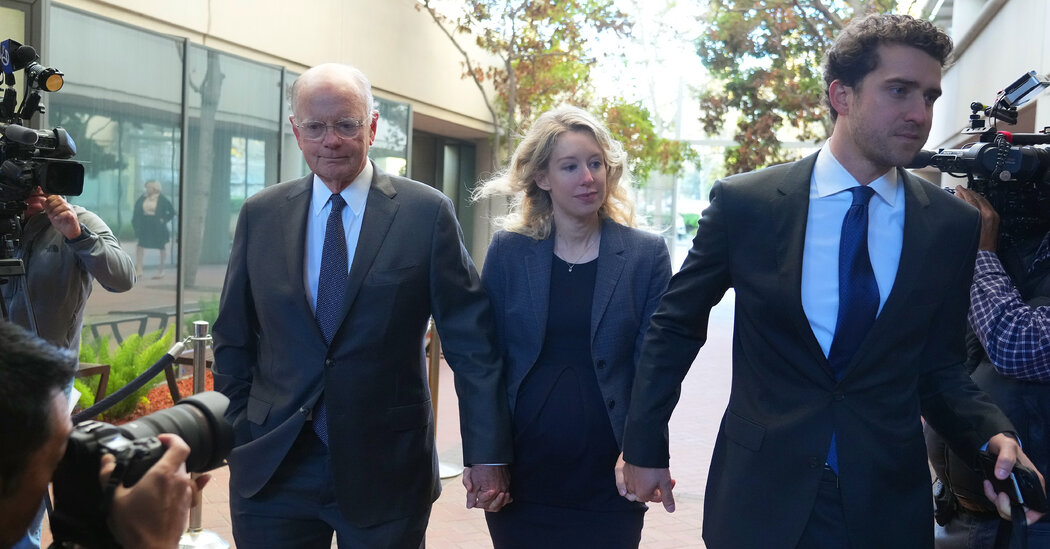
The founder of Theranos, the failed blood testing start-up, asked for a new trial after a surprise visit from a key witness to her house.SAN JOSE, Calif. — When Elizabeth Holmes, the founder of the failed blood-testing start-up Theranos, was convicted of fraud in January, the verdict represented the end of a drawn-out saga.But in the ensuing months, as Ms. Holmes awaited her sentence, the drama around her case has only escalated.First Ms. Holmes’s co-conspirator, who was the former chief operating officer of Theranos, was convicted of fraud in July. Then Ms. Holmes asked the judge to overturn her conviction based on a lack of evidence and submitted a flurry of requests for a new trial based on new evidence. At recent hearings over the case, Ms. Holmes has appeared visibly pregnant with her second child. And in August, a key witness did something highly unusual in a criminal case: He showed up at her house.That incident became the basis of Ms. Holmes’s latest attempt to reverse her fortunes. On Monday, the 38-year-old, her parents and partner, lawyers and a scrum of media gathered in a courtroom in San Jose, Calif., for a hearing that could open the door to her getting a new trial. The visit by the key witness, Ms. Holmes’s lawyers argued, raised questions about his credibility and the fairness of the trial.The move is a long shot, experts said.“It is a near-certainty that the judge will deny Elizabeth Holmes a new trial” on the basis of the witness’s visit to her house, said Amanda Kramer, a former federal prosecutor who is a partner at the law firm Covington & Burling. The judge likely allowed the hearing to prevent Ms. Holmes from using the incident in her inevitable appeal, she added.But little about Ms. Holmes’s case, which came to symbolize the pitfalls of Silicon Valley’s hype-driven start-up culture, has been typical. Ms. Holmes and her partner, Billy Evans, declined to comment on the case or whether they are expecting.Ms. Holmes and Mr. Evans declined to comment on speculation that Ms. Holmes is pregnant.Jim Wilson/The New York TimesAt issue is an Aug. 8 visit from Dr. Adam Rosendorff, who played a key role in Theranos’s rise as its lab director. He later became a whistle-blower who helped expose the company’s fraud. Theranos had told patients and investors that its revolutionary technology could accurately perform thousands of blood tests with a single drop of blood when it could not.During Ms. Holmes’s trial last year, where she faced nearly a dozen counts of misleading patients and investors, Dr. Rosendorff endured six bruising days of testimony, the longest of any witness. After, jurors said they found his testimony among the most credible in the trial.Then in August, Dr. Rosendorff visited Theranos’s former office in Palo Alto, Calif., as well as the first Walgreens store the company had worked with. Both, he found, were gone.As a result, he “suddenly felt that a conversation with the defendant was the missing piece” to moving on with his life, his lawyers said in a filing. Dr. Rosendorff drove to Ms. Holmes’s residence in nearby Woodside, Calif. Her partner, Mr. Evans, answered, and told him to leave.From there, the accounts differ. Ms. Holmes’s camp said Dr. Rosendorff expressed guilt over his role in the situation and said that government prosecutors had “made things sound worse than they were.” Ms. Holmes argued that the incident called Dr. Rosendorff’s testimony and the government’s entire case into question, which meant she deserved a new trial.On Monday, Dr. Rosendorff returned to the stand. Judge Edward Davila, who oversaw Ms. Holmes’s trial, asked whether Dr. Rosendorff’s testimony at the trial was truthful and whether the government had faithfully represented the facts. He testified affirmatively.Then Lance Wade, Ms. Holmes’s lawyer, grilled him. Why did Dr. Rosendorff want to visit Ms. Holmes? Had Dr. Rosendorff had a mental breakdown that impacted his testimony? Was the government trying to make everyone look bad? Was Dr. Rosendorff seeking to help Ms. Holmes?Dr. Rosendorff responded by accusing Ms. Holmes’s lawyers of trying to paint him as a liar. He said he felt sympathy for Theranos employees who were impacted by the scandal — but not for Mr. Holmes and her co-conspirator, Ramesh Balwani. He added that he felt bad that Ms. Holmes’s children would grow up without a mother if she went to prison.Ms. Holmes was convicted on four counts of fraud, with each carrying a maximum penalty of 20 years in prison.Dr. Rosendorff testified that his contact with Ms. Holmes was motivated by a desire for healing.“I don’t want to help Ms. Holmes,” he said. “She’s not somebody who can be helped. At this point she needs to help herself. She needs to pay her debt to society.”Ms. Holmes stared at Dr. Rosendorff throughout his testimony, occasionally taking notes. As she left, arm in arm with Mr. Evans, she flashed a smile to reporters but did not respond to questions.Outside the courtroom, Dr. Rosendorff ran away from a group of news cameras. A lawyer for Dr. Rosendorff declined to comment.Judge Davila said he had received the answers to his questions regarding the incident. He will decide whether Ms. Holmes deserves a new trial in the coming weeks.Ms. Holmes is scheduled to be sentenced on Nov. 18. She is expected to appeal.Mr. Balwani, who was convicted of a dozen counts of fraud for Theranos, is set to be sentenced on Nov. 15. He tried to piggyback on the visit from Dr. Rosendorff to Ms. Holmes as a reason for his own new trial. The motion was denied.

Read more →

High exposure to glyphosate in pregnancy could cause lower birth weights in babies

Indiana University School of Medicine researchers are learning more about the effects of herbicide exposure during pregnancy, finding glyphosate in 99 percent of the pregnant women they observed in the Midwest. In the study, published recently in Environmental Health, higher glyphosate levels were associated with lower birth weight and may also lead to higher neonatal intensive care unit admission risk.
This is the second small-scale study the researchers have conducted with significant findings. The team’s previous study, published in 2018, was the first study to confirm glyphosate in 93 percent of pregnancies which found associations with shortened pregnancies. Other recent studies have also confirmed their findings.
“Pesticide exposure in pregnancy, especially in early pregnancy, can imprint DNA and alter gene expression,” said Paul Winchester, MD, professor of clinical pediatrics and the study’s lead author. “But little is known about how these chemicals can impact fetal development in humans.”
Glyphosate is a chemical, commonly found in Roundup, used to kill weeds. It is used by farmers and homeowners across the United States, but especially in the Midwest on corn and soybeans. Previous studies have shown people can be exposed to glyphosate in all the foods they eat, even packaged or organic foods.
Over the course of several years, researchers observed a cohort of 187 pregnant women in Indiana, collecting urine samples in the first trimester of their pregnancies. All but one of the women had glyphosate detected in their urine.
Winchester said previous studies have shown a variety of negative effects of pesticide exposure in animal models, but not much is known about the impact on fetal development in humans.
“As a neonatologist, I’m seeing more and more infants with problems like low birth weight as well as mothers with issues like obesity or gestational diabetes,” Winchester said. “We need to keep studying these herbicides long term to find out how they could be causing these issues and what we can do to prevent them.”
Researchers hope to study glyphosate exposure in a larger group of pregnant women over time.
This study was a collaborative effort with Franciscan Health in Indianapolis, University of California San Francisco, University of Arkansas for Medical Sciences and King’s College London School of Medicine.
Story Source:
Materials provided by Indiana University School of Medicine. Original written by Christina Griffiths. Note: Content may be edited for style and length.

Read more →

Gene signature points to prognosis in kidney cancer

Among patients with kidney cancer, the activity of four specific genes in the cancer cells seems to be able to predict the risk of the tumour spreading and the patient’s chances of survival. This is shown by researchers from Karolinska Institutet in Sweden in a preclinical study published in Nature Communications.
“This could potentially become a tool to gain a better understanding of the course of the disease at an early stage. Patients with a cancer profile with a high probability of spreading could then be monitored more closely, to quickly detect and treat any growth of the tumour,” says Ninib Baryawno, senior researcher at the Department of Women’s and Children’s Health, Karolinska Institutet, and the study’s last author.
Clear cell kidney cancer is the most common form of kidney cancer in adults. If the tumour is confined to the kidneys, the prognosis is often favourable, but if it has spread to the skeleton, which occurs in about a third of patients, the five-year survival rate is only about ten per cent.
Immunotherapy known as checkpoint inhibitors have in recent years become an important treatment for patients with clear cell kidney cancer. But it is common for the cancer cells to develop resistance to the treatment, which may partly be attributed to factors in the environment around the cancer cells, the so-called tumour microenvironment.
In the current study, the researchers examined samples from nine patients with clear cell kidney cancer. The study is a collaboration between researchers at Karolinska Institutet, clinicians at Massachusetts General Hospital, where the patients were recruited, and computational scientists from Harvard Medical School in Boston, USA.
Both tumour tissue and nearby normal kidney tissue were collected from the same patient to be able to make matched comparisons and control for inter-individual variation. The cells were studied by single-cell analysis; a sequencing technique that makes it possible to investigate each single cell in the tissue and the gene expression, that is, which genes are active, in individual cells.

Read more →

Air pollution from factories and vehicles linked to worse outcomes for patients with lung disease

People with a disease characterized by lung scarring that has no obvious cause are more likely to die if they live in areas with higher levels of air pollution composed of chemicals associated with industrial sources and vehicular traffic, according to new research led by University of Pittsburgh scientists.
The study, published today in JAMA Internal Medicine, is the first to link the chemical composition of fine particulate air pollution to worsened fibrotic interstitial lung disease (fILD) outcomes. It is also the largest study ever done to evaluate the impact of air pollution on these patients.
“Some people with these lung diseases have an expected lifespan from diagnosis to death of only a few years, and yet it’s a mystery as to why they developed the disease, why their lungs become so scarred,” said lead author Gillian Goobie, M.D., doctoral candidate in the Pitt School of Public Health’s Department of Human Genetics. “Our study points to air pollution — specifically pollutants from factories and vehicles — as potentially driving faster disease progression and premature death in these patients.”
Goobie and her team obtained data from 6,683 patients with fILDs in the U.S. and Canada and linked their home addresses with satellite and ground-monitoring air pollution data to determine air pollutant composition to an accuracy of less than half a mile.
The team specifically looked at a pollutant known as PM2.5, which refers to particulate matter that measures less than 2.5 microns across, a size invisible to the naked eye. This type of pollution is so small that it can infiltrate deep into the lungs and even cross into the blood stream, where it can contribute to other diseases outside of the lungs, such as heart disease.
“In the past, most environmental health research has focused on the simple definition of PM2.5 as anything of that size,” said co-author James Fabisiak, Ph.D., associate professor in Pitt Public Health’s Department of Environmental and Occupational Health. “But PM2.5 is chemically diverse, with a different composition depending on whether it came from a forest fire or a tailpipe. Research has lacked in determining if the type of PM2.5 matters when it comes to health effects. Our new research is a big step toward filling in that knowledge gap.”
The team found that increasing levels of PM2.5 were linked to more severe disease at diagnosis, faster disease progression as measured by lung function decline and higher likelihood of dying sooner. Pollution high in sulfate (typically produced by factories, such as the coal and steel industries), nitrate (primarily from fossil fuel combustion) and ammonium (usually produced by industry or agriculture) were associated with worse outcomes, whereas chemical signatures from more naturally occurring particulate matter — such as sea salt or soil dust — didn’t carry as high of an association.

Read more →