Magnetic sensors track muscle length

Using a simple set of magnets, MIT researchers have come up with a sophisticated way to monitor muscle movements, which they hope will make it easier for people with amputations to control their prosthetic limbs.
In a new pair of papers, the researchers demonstrated the accuracy and safety of their magnet-based system, which can track the length of muscles during movement. The studies, performed in animals, offer hope that this strategy could be used to help people with prosthetic devices control them in a way that more closely mimics natural limb movement.
“These recent results demonstrate that this tool can be used outside the lab to track muscle movement during natural activity, and they also suggest that the magnetic implants are stable and biocompatible and that they don’t cause discomfort,” says Cameron Taylor, an MIT research scientist and co-lead author of both papers.
In one of the studies, the researchers showed that they could accurately measure the lengths of turkeys’ calf muscles as the birds ran, jumped, and performed other natural movements. In the other study, they showed that the small magnetic beads used for the measurements do not cause inflammation or other adverse effects when implanted in muscle.
“I am very excited for the clinical potential of this new technology to improve the control and efficacy of bionic limbs for persons with limb-loss,” says Hugh Herr, a professor of media arts and sciences, co-director of the K. Lisa Yang Center for Bionics at MIT, and an associate member of MIT’s McGovern Institute for Brain Research.
Herr is a senior author of both papers, which appear today in the journal Frontiers in Bioengineering and Biotechnology. Thomas Roberts, a professor of ecology, evolution, and organismal biology at Brown University, is a senior author of the measurement study.

Read more →

Do financial incentives increase adult vaccinations? A view of lessons learned

Cash incentives had only a marginal effect on increasing vaccination uptake among adults, according to a study led by researchers at Columbia University Mailman School of Public Health and the University of the Witwatersrand, Johannesburg (Wits). The impact of lottery programs was also limited, and there was no evidence that other non-cash incentives for COVID-19 or other adult vaccines improved vaccination coverage. The meta-study of research on vaccine incentives for COVID-19 is published online in the journal Vaccine X.
Incentives aimed at individuals to encourage them to get vaccinated have included direct cash transfers, lottery tickets, and non-financial incentives, such as food, appliances, and cannabis. In New York City, residents were offered a range of items — from a $100 pre-paid debit card, to free amusement park tickets, to a trip to the Statue of Liberty.
“While we found evidence of cash transfers increasing both the coverage and intention to be vaccinated, very few studies considered these effects at a population level, and the ones that did found that the improvements were limited to a few percentage points in vaccination coverage,” said Nina Schwalbe, MPH, an adjunct assistant professor in the Heilbrunn Department of Population and Family Health at Columbia Mailman School of Public Health.
The researchers conducted a review using MEDLINE, PubMed, and Cochrane databases of peer-reviewed articles published between January 1, 2012, and February 9, 2022. The initial search yielded 617 articles. After title and abstract screening, they conducted a full-text appraisal of 110 articles, excluded duplicates, and identified 26 articles that met our inclusion criteria, with a majority of studies from the U.S.
The effects of lottery programs ranged from none to a slightly over 2 percent increase in coverage, and no evidence was identified for the positive effects of other non-cash incentives for COVID-19 or other adult vaccines.
“Of note, for all vaccines, incentives were found to be more effective for the first dose than the second dose,” said Schwalbe, who is also a doctoral candidate at Wits. “Even more surprising, there was no evidence presented in any of the studies on the extent to which incentives serve to address the concerns of those who are hesitant or even increase uptake among this specific subset of the population.”
The authors note that some studies raise ethical concerns that financial incentives for vaccination could be construed as coercive, and that in politically-divided contexts, government-promoted incentives might generate a backlash among those who are already hesitant, heightening suspicion of vaccination programs. “This is an important concern to bear in mind and plan for,” observed Schwalbe. “Using financial incentives as a carrot may also create social expectations for them in the future. And backfire in the long run. Instead we need to focus on building trust.”
In 18 months, 11 COVID-19 vaccines are now authorized for use by the World Health Organization, and more than 66 percent of the world’s population has received at least one vaccine dose. “While COVID-19 vaccines are available and affordable in most countries, accessibility is an ongoing challenge in many areas of the world.” The WHO classified vaccine hesitancy as among the ten biggest global health threats in 2019.
“We found it remarkable how many governments, states, and cities offered incentives to increase vaccination coverage and did not embark on any type of implementation research to evaluate program effectiveness,” said Schwalbe. “While we found evidence that some programs work, no researchers took it further to understand why or for whom incentives resulted in positive effects.”
Co-authors are Layth Hanbali and Susanna Lehtimaki, Spark Street Advisors; Marta C. Nunes, South African Research Chair Initiative in Vaccine Preventable Diseases and South African Medical Research Council, and the University of the Witwatersrand, Johannesburg, South Africa.

Read more →

Non-white newborns with cystic fibrosis more likely to be missed in screening

Researchers call for better newborn screens across the U.S.
Cystic fibrosis is missed more often in newborn screenings for non-white than white babies, creating higher risk for irreversible lung damage and other serious outcomes in Black, Hispanic, Asian, American Indian and Alaska Native newborns, a new study finds.
The genetic panels used in newborn screening programs vary by state, but most tend to test for cystic fibrosis gene mutations that are common in white populations while excluding mutations more common in non-white populations, said Meghan McGarry, MD, associate professor of pediatrics at UC San Francisco (UCSF) Benioff Children’s Hospitals and first author of the study, publishing today in Pediatric Pulmonology.
“Newborn screenings are meant to be a public health measure that is equal across populations, but in practice, we are actually creating disparities because children of color are going undiagnosed for cystic fibrosis until an older age,” McGarry said. “That means they are treated later when symptoms occur, and their outcomes are often worse.”
Cystic fibrosis is one of the most common genetic disorders, with about 1,000 new cases diagnosed each year. The disease causes the malfunction of a protein that helps regulate mucus, which can lead to blockages and trapped germs and eventually, infections such as bronchitis and pneumonia. Early diagnosis and treatment can reduce severe symptoms, such as failure to thrive, and is associated with improved nutrition, better pulmonary outcomes, and survival.
Better Screenings Needed
To determine case detection rates, researchers analyzed the genetic mutations of 46,729 people in the 2020 Cystic Fibrosis Foundation Patient Registry, then calculated the rate of delayed diagnosis or false-negative tests by race and ethnicity. They also compared data across states.

Read more →

COVID-causing virus in air detected with high-tech bubbles

Scientists have shown that they can detect SARS-CoV-2, the virus that causes COVID-19, in the air by using a nanotechnology-packed bubble that spills its chemical contents like a broken piñata when encountering the virus.
Such a detector could be positioned on a wall or ceiling, or in an air duct, where there’s constant air movement, to alert occupants immediately when even a trace level of the virus is present.
The heart of the nanotechnology is a micelle, a molecular structure composed of oils, fats and sometimes water with inner space that can be filled with air or another substance. Micelles are often used to deliver anticancer drugs in the body and are a staple in soaps and detergents. Almost everyone has encountered a micelle in the form of soap bubbles.
A team of scientists at the Department of Energy’s Pacific Northwest National Laboratory created a new kind of micelle, one that is stamped on the surface with copies of an imprinted particle for SARS-CoV-2.
The team filled micelles with a salt capable of creating an electronic signal but that is quiescent when packed inside a micelle. When a viral particle interacts with one of the imprinted receptors on the surface, the micelle pops open, spilling the salt and sending out an electronic signal instantly.
The system acts like a signal magnifier, translating the presence of one viral particle into 10 billion molecules that together create a detectable signal. The developers say that the detector has advantages over today’s technologies; it produces a signal faster, requires a much lower level of viral particles, or produces fewer errors.

Read more →

New enzyme inhibitor shows promise for treating cancers, autoimmune diseases

Researchers at the University of Illinois Chicago have found a small molecule capable of manipulating an immune process that plays an important role in cancers and autoimmune diseases.
Their discovery is reported in an Angewandte Chemie paper titled “Discovery of the First Selective Nanomolar Inhibitors of ERAP2 by Kinetic Target-Guided Synthesis.”
They discovered the molecule — and enzyme inhibitor — after first studying how the immune system works and why some diseases can be resistant to treatments.
“Tumors have the ability to present cell-surface markers in the form of non-self peptide antigens, or neoantigens, which renders them exquisitely sensitive to recognition and elimination by T-cells, a form of immune cells that kill tumor cells upon recognition of neoantigens,” said study corresponding author Marlene Bouvier, UIC professor of microbiology and immunology at the College of Medicine. “The visibility of a tumor to T-cells is therefore a critical aspect of whether a T-cell based immunotherapy treatment will be successful. Unfortunately, most tumors have low expression levels of neoantigens on their surfaces and, consequently, are resistant to immunotherapies.”
For the study, the team looked at endoplasmic reticulum aminopeptidases 1 and 2, or ERAP1 and ERAP2, which are proteins responsible for trimming and over-trimming peptide antigens and neoantigens inside cells.
“Over-trimming of neoantigens in tumors by ERAPs represents missed opportunities to ‘illuminate’ tumors for recognition and destruction by T-cells,” Bouvier said. “As such, the modulation of ERAP1 and ERAP2 function with small molecule inhibitors offers an exciting approach to tone down their over-trimming function, increase tumor visibility, and enhance immune responses against tumors.”
In their study, the UIC team describes the discovery of the first highly potent and selective small molecule inhibitors of ERAP2.
“We used kinetic target-guided synthesis to discover such inhibitors,” Bouvier said. “We then used X-ray crystallography to reveal at the atomic level the binding mode of the small molecules, which allowed us to improve their design for greater potency and selectivity. We also showed that some optimized analogues represent lead compounds for drug discovery efforts.”
The researchers say that such small molecules of ERAP2 could be used in conjunction with other forms of cancer treatments, as well as for the treatment of other diseases that are dependent on the cell surface presentation of antigens, such as autoimmune and infectious diseases.
Collaborating on the research are UIC’s Lenong Li and University de Lille’s Rebecca Deprez-Poulain, who is also a corresponding author, along with co-authors Virgyl Camberlein, Charlotte Fléau, Pierre Sierocki, Ronan Gealageas, Damien Bosc, Valentin Guillaume, Sandrine Warenghem, Florence Leroux, Melissa Rosell, Keguang Cheng, Laura Medve, Mathilde Prigent, Myriam Decanter, Catherine Piveteau, Alexandre Biela, Maxime Eveque, Julie Dumont, Anastasia Mpakali, Petros Giastas, Adrien Herledan, Cyril Couturier, Jörg Haupenthal, Laetitia Lesire, Anna K. H. Hirsch, Benoit Deprez and Efstratios Stratikos .
The research was supported by grants (R01AI114467, R01AI108546) from the National Institutes of Health.

Read more →

Biden Receives Updated Covid Booster and Urges Americans to Follow Suit

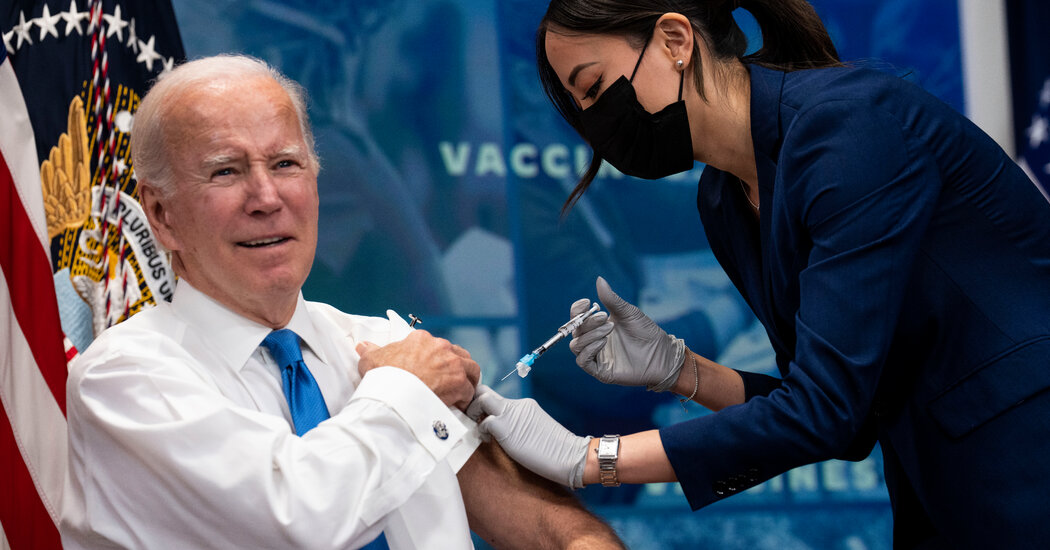
With a possible winter surge on the horizon, the president tried to draw attention to the retooled shots, which Americans have been slow to receive so far.WASHINGTON — President Biden received an updated coronavirus booster shot on Tuesday, using the opportunity to plead with Americans to bolster their protection ahead of a possible surge in virus cases in the coming months.Flanked by top federal health officials overseeing the pandemic response, Mr. Biden warned that rising cases in Europe could portend another difficult winter for Americans.“As a country, we have a choice to make,” Mr. Biden said. “Can we repeat what happened in the past winters — more infections, more hospitalizations, more loved ones getting sick, even dying from the virus? Or can we have a much better winter if we use all — all — the tools we have available to us now?”The vaccination was Mr. Biden’s fifth dose of a coronavirus vaccine and his third booster shot. He received the new shot about three months after a bout with Covid-19 this summer — timing that was aligned with guidance from the Centers for Disease Control and Prevention, which says that people recently infected with the virus may wait that amount of time before receiving another vaccine.White House officials have pitched the new boosters as akin to an annual flu shot, a routine inoculation timed for colder weather, when more people move inside and congregate in less ventilated spaces, giving viruses an easier path to infect.But only about 20 million doses of the new boosters, produced by Pfizer and Moderna, have been administered more than a month and a half into the new campaign, a small fraction of those eligible for the shot. Around one in five seniors have received a dose, according to the White House.“The truth is, not enough people are getting it,” Mr. Biden said. “We’ve got to change that.”On Tuesday, the White House announced a series of new promotional steps to try to draw more attention to the shots. The Department of Health and Human Services is rolling out new advertising aimed at Black and Latino audiences, as well as radio ads with football and country music themes that will air in rural communities. The department will continue holding pop-up vaccination clinics in areas with lower vaccination rates, White House officials said, including at an upcoming NASCAR race in Arizona.Federal regulators authorized the new booster shots at the end of August. The vaccines target the Omicron subvariants BA.4 and BA.5, the latter of which has made up a vast majority of cases in the United States in recent months. The redesign, federal scientists argued, would likely better protect Americans against more current versions of the virus and could possibly offer more durable protection than the previous vaccines.Dr. Ashish K. Jha, the White House’s Covid-19 coordinator, has emphasized October as the time when the booster campaign should pick up steam, as more people consider protecting themselves ahead of the holidays.

Read more →

Uterine Cancer: What to Know About Symptoms and Treatment

A new study raised alarms about chemical hair straighteners being linked to the disease, but doctors say there are telltale symptoms to watch for.A new national study has suggested that chemical hair straighteners could pose a small risk for uterine cancer. Rates of the disease are still relatively low, said Dr. Alexandra White, head of the environment and cancer epidemiology group of the National Institute of Environmental Health Sciences and the lead author on the study. The research also did not definitively show that hair straighteners cause cancer. But the findings are cause for concern, she said. Rates of uterine cancer have been increasing in the United States, particularly for Black and Hispanic women. The number of cases diagnosed each year rose to 65,950 this year, compared to 39,000 15 years ago. Black women are also more likely to have more aggressive cases of the cancer, Dr. White said, and the study showed they were disproportionately more likely to use hair straighteners.If you have used chemical hair straighteners, you do not need to seek out medical attention or consult your doctor unless you have symptoms for uterine cancer, said Dr. Otis Brawley, an oncologist at Johns Hopkins University. But women should regularly see a gynecologist, and be aware of the risk factors and early signs of the disease.What is uterine cancer?When we talk about uterine cancer, most of the time, we’re talking about endometrial cancer, which starts in cells that form the lining of the uterus, said Dr. Emily Hinchcliff, a gynecologic oncologist at Northwestern Medicine. The other, much rarer, type of uterine cancer is uterine sarcoma, which develops in the muscles supporting the uterus.The National Cancer Institute estimates that around 3.1 percent of women in the U.S. will be diagnosed with uterine cancer at some point in their lives. But endometrial cancer is largely treatable, especially if you catch it early, said Dr. Roberto Vargas, a gynecologic oncologist at Cleveland Clinic.New Developments in Cancer ResearchCard 1 of 6Progress in the field.

Read more →

Unilever Recalls Dry Shampoo Products in U.S. and Canada

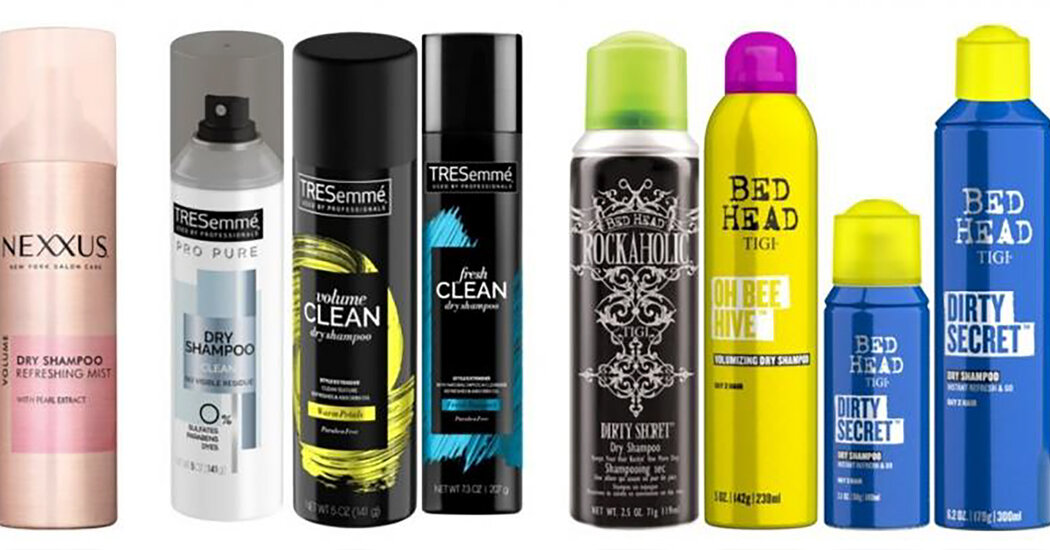
More than a dozen aerosol dry shampoo products from brands like Dove and Suave may have elevated levels of benzene, a carcinogen, the company said.Unilever has issued a voluntary recall of more than a dozen aerosol dry shampoo products sold in the United States, saying they may contain elevated levels of benzene, a carcinogen.The affected products were produced before October 2021, the conglomerate said, and are from several different brands owned by Unilever: Dove, Nexxus, Suave, TIGI and TRESemmé.The voluntary recall of select products, identified by production codes, applies to the United States and Canada. Unilever United States said in a statement that it had not yet received reports of “adverse events” from customers.“Unilever U.S. is recalling these products out of an abundance of caution,” the company said, adding that retailers had been instructed to pull the recalled products off shelves.An internal investigation resulted in the voluntary recall, Unilever said in its statement. The propellant in the spray can was the source of the benzene, it found, and the company said it was working with suppliers to address the issue.Unilever could not be immediately reached for comment.Benzene, a chemical used to create many industrial products such as nylon and plastics, is also released into the air through cigarette smoke and burning coal, oil and gasoline, according to the Centers for Disease Control and Prevention.Some exposure by inhalation is unavoidable in daily life, but prolonged contact with high levels of the chemical causes cells “not to work correctly,” diminishing a person’s red blood cell count and wreaking havoc on the immune system, the public health agency said. Benzene can also be ingested and absorbed by the skin, according to the Food and Drug Administration.Long-term exposure can cause leukemia, cancer of the blood cells, according to the Department of Health and Human Services. It can also harm reproductive organs in women, the agency said.Unilever customers should immediately halt using the affected products, and they can request to be reimbursed, the company said.This dry shampoo recall was at least the sixth recall this year involving benzene, according to the F.D.A.’s data. Past product recalls have included a themed hand sanitizer from Disney for “The Mandalorian,” Banana Boat sunscreen and Suave spray deodorant.

Read more →

Functional, nonepileptic seizures show structural abnormalities in brain scans, study shows

There are just over 3 million Americans with epilepsy who experience seizures due to abnormal electrical activity in the brain.
A smaller group of people also have seizures not caused by epilepsy — known by many names, including functional seizures, psychogenic seizures, nonepileptic seizures, or even the pejorative term pseudoseizures. Scientists have long understood these as the body’s response to mental stressors, like anxiety and post-traumatic stress disorder. But a new study finds that functional seizures are associated with structural changes in the brain that can be seen using MRI.
The team of researchers led by Michigan Medicine analyzed more than 650 clinical-grade MRIs, comparing images from patients with functional seizures to those who did not experience seizures and could have other mental health conditions, such as depression and anxiety.
Results published in Epilepsy & Behavior reveal that patients with functional seizures had thinning in the superior temporal cortex, which affects a person’s cognitive awareness and control of one’s actions, and thickness of the left occipital cortex, responsible for the processing of visual and other sensory information. These changes were not present in people who had depression, anxiety and obsessive compulsive disorder (OCD).
“If we can figure out what brain changes make people have functional seizures, we can begin to look at how we can change that back,” said first author Wesley Kerr, M.D., Ph.D., a neurologist and epileptologist at University of Michigan Health.
“Right now, the treatment for functional seizures is cognitive behavioral-informed therapy, but this therapy isn’t effective for everyone. We hope to find new ways to target treatments to help patients have fewer seizures and better quality of life.”
Epilepsy misdiagnosis

Read more →

Targeting one type of immune cell with another slows cancer growth in preclinical studies

A new approach to cancer immunotherapy that uses one type of immune cell to kill another — rather than directly attacking the cancer — provokes a robust anti-tumor immune response that shrinks ovarian, lung, and pancreatic tumors in preclinical disease models, according to researchers at the Icahn School of Medicine at Mount Sinai in New York. The findings were published October 11, 2022 in the journal Cancer Immunology Research.
The study involved a twist on a type of therapy that uses immune cells known as CAR T cells. CAR T cells in current clinical use are engineered to recognize cancer cells directly and have successfully treated several blood cancers. But there have been challenges that prevent their effective use in many solid tumors.
Most solid tumors are heavily infiltrated by a different type of immune cell called macrophages. Macrophages help tumors grow by blocking the entry of T cells into tumor tissue, which prevents CAR T cells and the patient’s own T cells from destroying the cancer cells.
To tackle this immune suppression at the source, the researchers engineered T cells to make a “chimeric antigen receptor” (CAR) that recognizes a molecule on the surface of macrophages. When these CAR T cells encountered a tumor macrophage, the CAR T cell became activated and killed the tumor macrophage.
Treatment of mice bearing ovarian, lung, and pancreatic tumors with these macrophage-targeting CAR T cells reduced the number of tumor macrophages, shrunk the tumors, and extended their survival.
The killing of tumor macrophages allowed the mouse’s own T cells to access and kill the cancer cells. The investigators further demonstrated that this anti-tumor immunity was driven by release of the cytokine interferon-gamma — a molecule involved in the regulation of inflammatory responses — from the CAR T cells.

Read more →