Resident doctors vote to strike in England

Resident doctors in England have once again voted in favour of strike action, in the latest chapter in a long-running pay dispute.The doctors, previously known as junior doctors, were awarded a 5.4% pay rise for this financial year, following a 22% increase over the previous two years.But the British Medical Association says wages are still around 20% lower in real terms than in 2008 and are demanding “pay restoration”.Ministers have previously said their door is open for talks on issues around working conditions but not on pay.Nearly 48,000 staff could now take part in new walkouts, although the union said it would seek fresh talks with the government before announcing strike days.The BMA said 90% of members had voted in favour of industrial action in the ballot on a turnout of 55%. The co-chairs of the junior doctors committee, Ross Nieuwoudt and Melissa Ryan said there was still time to avert strike action. “Our pay may have declined but our will to fight remains strong,” they said in a joint statement. “All we need is a credible pay offer and nobody need strike.”The union now has a mandate for possible industrial action for six months, up to January 2026.

Read more →

What to Know About the Collapse of the F.D.A.

The regulatory agency confronts a future determined by a health secretary hostile to its mission.Since R.F.K. Jr. was confirmed as President Trump’s health secretary in February, the Food and Drug Administration has been buffeted by staff cuts that have crippled divisions and gutted the agency. Thousands of scientists and other experts have left or been let go, putting the storied agency’s mission at risk.The F.D.A. was created to protect consumers from contaminated food and unsafe or ineffective medical products. But in recent years, American confidence in the agency has plummeted, as mis- and disinformation further undermine the agency’s authority.The agency’s many watchdogs have been pushing for years to reverse the policies that have contributed to the decline in public trust. But experts say there is a fundamental difference between what agency reformers have long been calling for and what Kennedy is trying to do. As Kennedy warned on social media, even before his appointment: “If you work for the FDA and are part of this corrupt system, I have two messages for you. 1. Preserve your records, and 2. Pack your bags.”Here are the key takeaways from the full Times Magazine story about the F.D.A.:The F.D.A. has long been underfunded and outgunned.The F.D.A.’s regulators have an enormous remit: drugs, medical devices, food, cosmetics and nicotine products. But the agency receives less money from Congress than the Centers for Disease Control and Prevention and the National Institutes of Health.It is also constrained by laws that protect the rights of corporations, often at the expense of agency authority. This dynamic forces the F.D.A. to weigh every potential regulation against the almost certain legal challenges it will face and the steep cost of defending its measures in court.Under Kennedy, the agency has lost 20 percent of its work force.Beginning in late February, the health secretary and representatives of the so-called Department of Government Efficiency initiated mass firings across H.H.S. that by their own projections would ultimately include 10,000 people, 3,500 of them from the F.D.A. Among the hardest hit was the food division, the staff members most needed for the health secretary’s stated priorities: combating chronic disease by changing the American diet, curbing dyes and other chemical additives in what we eat and highlighting the ingredients of ultraprocessed food.We are having trouble retrieving the article content.Please enable JavaScript in your browser settings.Thank you for your patience while we verify access. If you are in Reader mode please exit and log into your Times account, or subscribe for all of The Times.Thank you for your patience while we verify access.Already a subscriber? Log in.Want all of The Times? Subscribe.

Read more →

Inside the Collapse of the F.D.A.

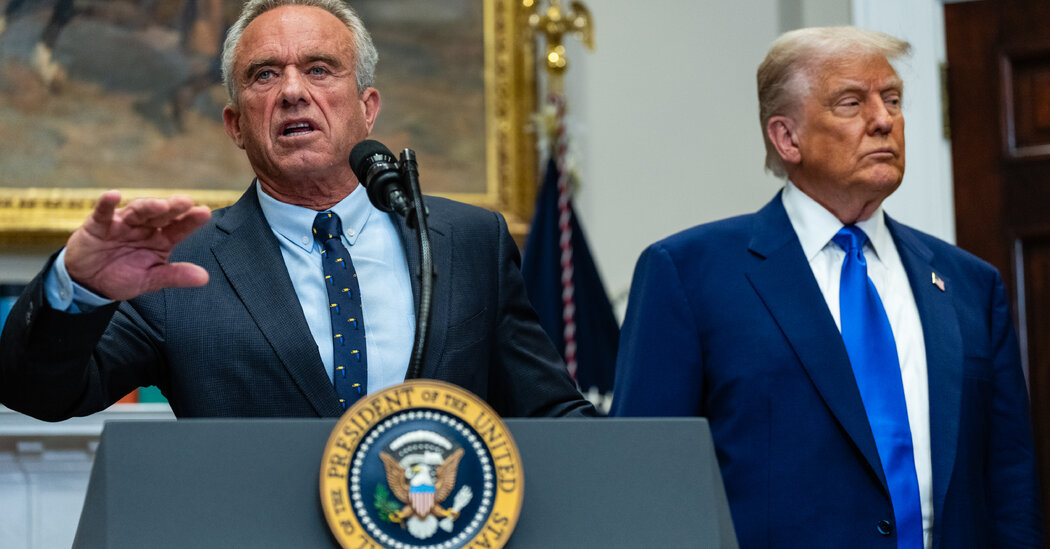
The reckoning that Robert Califf spent years warning about began, as so many things seem to these days, on social media. It was October 2024. His tenure as commissioner of the Food and Drug Administration was winding down, and he was starting to imagine a happy retirement surrounded by grandchildren when he noticed Robert F. Kennedy Jr. taking aim at his agency, and the 19,000 or so people who worked there, on X.“FDA’s war on public health is about to end,” Kennedy wrote. “This includes its aggressive suppression of psychedelics, peptides, stem cells, raw milk, hyperbaric therapies, chelating compounds, ivermectin, hydroxychloroquine, vitamins, clean foods, sunshine, exercise, nutraceuticals and anything else that advances human health and can’t be patented by Pharma. If you work for the FDA and are part of this corrupt system, I have two messages for you. 1. Preserve your records, and 2. Pack your bags.”It was a confused, almost comically pompous declaration, Califf recalls thinking, and it ought to have been the least of his concerns. Kennedy had not yet been tapped to serve as anything, let alone the highest health official in the land. Still, it struck a nerve. More and more, people seemed to clamor for things that were unproven, to question things that were and to express not only mistrust but outright hostility toward the doctors, scientists and civil servants trying to separate one from the other. That hostility was being nourished by exactly the kind of mis- and disinformation Kennedy was espousing. It was easy to paint the F.D.A. as a supervillain (an aggressive suppressor of sunlight, vitamins and exercise, to borrow Kennedy’s language), in part because the truth was so much more complex.Americans have always been ambivalent about public health in general and the American regulatory project in particular. We want protection from bad food and bad medicine and other unsafe products, but we also want to draw the line between safe and unsafe for ourselves and to redraw it whenever we see fit. The F.D.A. has always reflected this tension. On the one hand, the agency’s regulators have a truly enormous remit: Which drugs, medical devices, food, pet food, dietary supplements, tobacco products and cosmetics we can buy — one in every five dollars we spend, by official estimates — comes down to the decisions they make. On the other hand, the agency itself is profoundly under-resourced.The F.D.A. receives less money from Congress than any of its sibling institutions, including the Centers for Disease Control and Prevention and the National Institutes of Health. In fact, its federal budget is roughly the size of the budget of the local school district in Montgomery County, Md., where it is based. Its infrastructure is wildly inadequate: fax machines, clunky computer systems, warehouses full of paper records that should long since have been digitized. And its staff members are poorly paid and frequently outgunned by the companies they are charged with regulating.One perfect example of this dynamic involved the food and beverage industry, which Kennedy was so fond of calling out. Regulators had been working for years to get companies to reduce the salt content of their products and to add more and better “front of package” health warnings. Critics seemed to relish pointing out that other countries managed to implement both policies to great effect and with ease. But the United States was not like other countries. In the United States, corporations had the same rights as individuals and were likely to advance legal challenges against just about any rule with which they were confronted. To prevail in court, the F.D.A. would need its own research, which it did not have the money to conduct, or industry data, which it did not have the authority to demand.We are having trouble retrieving the article content.Please enable JavaScript in your browser settings.Thank you for your patience while we verify access. If you are in Reader mode please exit and log into your Times account, or subscribe for all of The Times.Thank you for your patience while we verify access.Already a subscriber? Log in.Want all of The Times? Subscribe.

Read more →

Lung Cancer Screening on Wheels

West Virginia’s back roads — two lanes, carved into steep mountainsides — were never meant for LUCAS, a 68,000-pound tractor-trailer that brings lung cancer screening to the most rural parts of the state.Lung cancer is the deadliest type of cancer in the United States, claiming about 125,000 lives each year — more than breast, colorectal and cervical cancers combined. Though lung cancer screening by CT scan can be lifesaving and insurers are required to cover it, the test is a little-known option. Less than 20 percent of eligible people get screened, compared with the 70 to 80 percent who get mammograms, colonoscopies and Pap smears, federal data shows.These challenges are exacerbated in West Virginia, which has the highest smoking rate in the country and a largely rural population without easy access to a hospital with lung screening. Half of its lung cancer cases are not caught until Stage 4, when treatment options are limited.LUCAS, which is run by the West Virginia University Cancer Institute, hit the road in 2021. It was the first fully mobile lung cancer screening unit in the country. “We have to be more creative about bringing health care to people,” said Dr. Hannah Hazard-Jenkins, the institute’s director. “As opposed to always forcing them to us.”

Read more →

First malaria treatment for babies approved for use

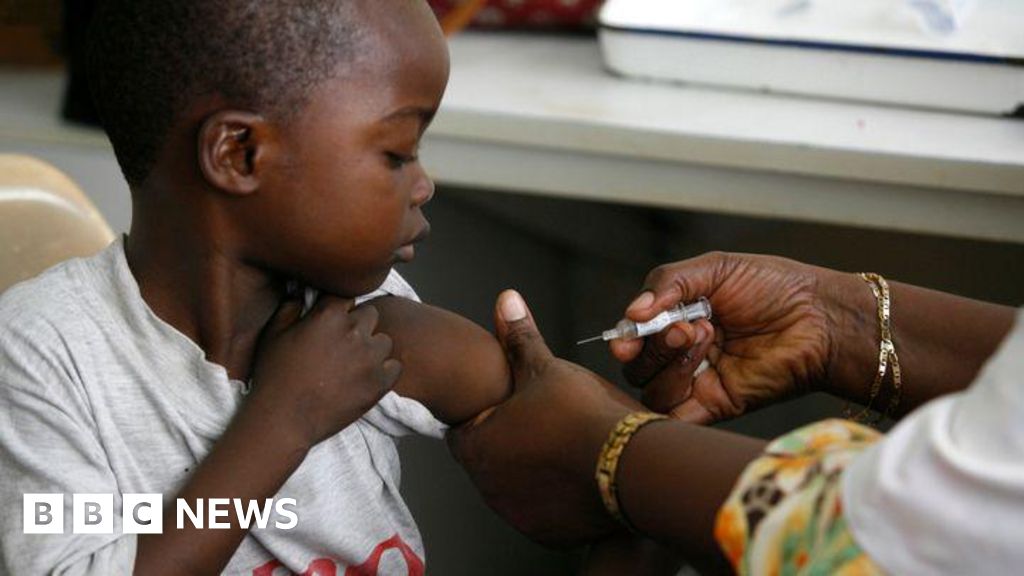
The first malaria treatment suitable for babies and very young children has been approved for use.It’s expected to be rolled out in African countries within weeks. Until now there have been no approved malaria drugs specifically for babies.Instead they have been treated with versions formulated for older children which presents a risk of overdose.In 2023 – the year for which the most recent figures are available – malaria was linked to around 597,000 deaths. Almost all of the deaths were in Africa, and around three quarters of them were children under five years old. Malaria treatments for children do exist but until now, there was none specifically for the very youngest babies and small children, who weigh less than 4.5kg or around 10lb. Instead they have been treated with drugs designed for older children. But that presents risks, as doses for these older children may not be safe for babies, whose liver functions are still developing and whose bodies process medicines differently. Experts say this has led to what is described as a “treatment gap”.Now a new medicine, developed by the drug company Novartis, has been approved by the Swiss authorities and is likely to be rolled out in regions and countries with the highest rates of malaria within weeks. Novartis is planning to introduce it on a largely not-for-profit basis.The company’s chief executive, Vas Narasimhan, says this is an important moment.”For more than three decades, we have stayed the course in the fight against malaria, working relentlessly to deliver scientific breakthroughs where they are needed most.”Together with our partners, we are proud to have gone further to develop the first clinically proven malaria treatment for newborns and young babies, ensuring even the smallest and most vulnerable can finally receive the care they deserve.”The drug, known as Coartem Baby or Riamet Baby in some countries, was developed by Novartis in collaboration with the Medicines for Malaria Venture (MMV), a Swiss-based not-for-profit organisation initially backed by the British, Swiss and Dutch Governments, as well as the World Bank and the Rockefeller Foundation.Eight African nations also took part in the assessment and trials of the drug and they are expected to be among the first to access it.Martin Fitchet, CEO of MMV, says this is another important step on the road towards ending the huge toll taken by malaria.”Malaria is one of the world’s deadliest diseases, particularly among children. But with the right resources and focus, it can be eliminated.”The approval of Coartem Baby provides a necessary medicine with an optimised dose to treat an otherwise neglected group of patients and offers a valuable addition to the antimalarial toolbox.”Dr Marvelle Brown, associate professor at the University of Hertfordshire’s School of Health, Medicine and Life Sciences, says this should be seen as a major breakthrough in saving the lives of babies and young children.”The death rate for malarial infections, particularly in sub-Saharan Africa is extremely high – over 76% of deaths occur in children under five years old.”Increase in death from malaria is further compounded in babies born with sickle cell disease, primarily due to a weak immune system.”From a public health perspective, Novartis making this not-for-profit can help with reducing inequality in access to healthcare.”

Read more →

Medical Societies Sue Kennedy and H.H.S. Over Vaccine Advice

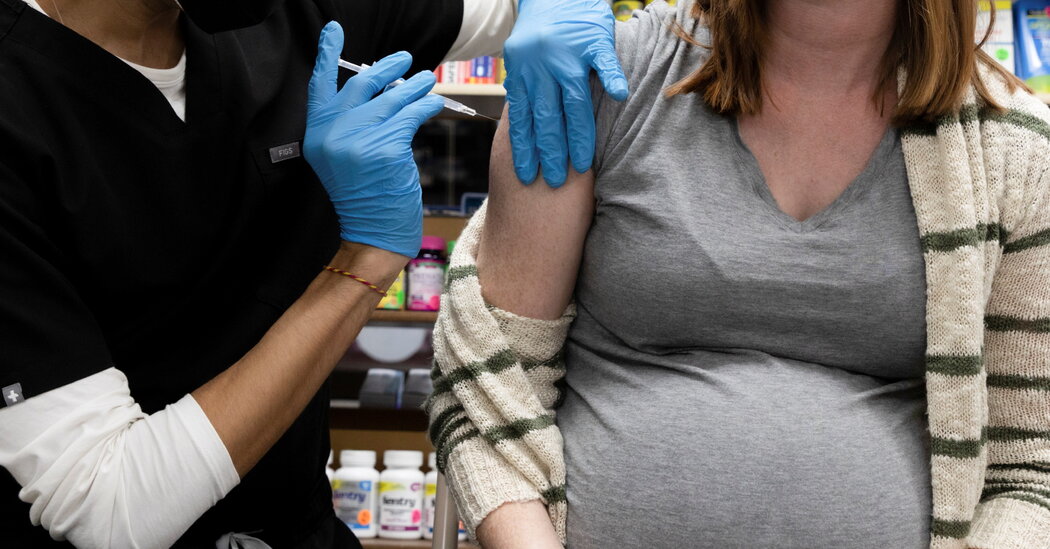
New restrictions on Covid shots run counter to scientific evidence, the groups said.Six leading medical organizations filed a lawsuit on Monday against Robert F. Kennedy Jr., the health secretary, and the federal Department of Health and Human Services, charging that recent decisions limiting access to vaccines were unscientific and harmful to the public. The suit, filed in federal court in western Massachusetts, seeks to restore Covid vaccines to the list of recommended immunizations for healthy children and pregnant women.Mr. Kennedy has been on a “decades-long mission” to undermine vaccines and to portray them as more dangerous than the illnesses they are designed to prevent, said Richard H. Hughes IV, a lawyer who teaches vaccine law at George Washington University and is leading the effort.“The secretary’s intentions are clear,” Mr. Hughes said: “He aims to destroy vaccines.”The H.H.S. did not immediately respond to a request for comment. The plaintiffs include the American Public Health Association, the American Academy of Pediatrics, the Infectious Diseases Society of America, the American College of Physicians, the Society for Maternal-Fetal Medicine and the Massachusetts Public Health Alliance.The groups are joined by a pregnant woman, identified only as Jane Doe, who said she was unable to get a Covid shot.We are having trouble retrieving the article content.Please enable JavaScript in your browser settings.Thank you for your patience while we verify access. If you are in Reader mode please exit and log into your Times account, or subscribe for all of The Times.Thank you for your patience while we verify access.Already a subscriber? Log in.Want all of The Times? Subscribe.

Read more →
Alzheimer’s doesn’t strike at random: These 4 early-warning patterns tell the story

UCLA Health researchers have identified four distinct pathways that lead to Alzheimer’s disease by analyzing electronic health records, offering new insights into how the condition develops over time rather than from isolated risk factors.
The study, published in the journal eBioMedicine, examined longitudinal health data from nearly 25,000 patients in the University of California Health Data Warehouse and validated findings in the nationally diverse All of Us Research Program. Unlike previous research that focused on individual risk factors, the UCLA analysis mapped sequential diagnostic patterns that revealed how conditions progress step-by-step toward Alzheimer’s disease.
“We found that multi-step trajectories can indicate greater risk factors for Alzheimer’s disease than single conditions,” said first author Mingzhou Fu, a medical informatics pre-doctoral student at UCLA. “Understanding these pathways could fundamentally change how we approach early detection and prevention.”
The research identified four major trajectory clusters: Mental health pathway: Psychiatric conditions leading to cognitive decline Encephalopathy pathway: Brain dysfunction conditions that escalate over time Mild cognitive impairment pathway: Gradual cognitive decline progression Vascular disease pathway: Cardiovascular conditions that contribute to dementia riskEach pathway showed distinct demographic and clinical characteristics, suggesting that different populations may be vulnerable to different progression routes.
The study found that approximately 26% of diagnostic progressions showed consistent directional ordering. For example, hypertension often preceded depressive episodes, which then increased Alzheimer’s risk.
“Recognizing these sequential patterns rather than focusing on diagnoses in isolation may help clinicians improve Alzheimer’s disease diagnosis,” said lead author Dr. Timothy Chang, assistant professor in Neurology at UCLA Health.

When validated in an independent population, these multi-step trajectories predicted Alzheimer’s disease risk more accurately than single diagnoses alone. This finding suggests that healthcare providers could use trajectory patterns for: Enhanced risk stratification: Identifying high-risk patients earlier in disease progression Targeted interventions: Interrupting harmful sequences before they advance Personalized prevention: Tailoring strategies based on individual pathway patternsThe validation in the All of Us Research Program — a diverse, nationally representative cohort — confirmed that these trajectory patterns apply across different populations and demographics.
The team analyzed 5,762 patients who contributed 6,794 unique Alzheimer’s progression trajectories. Using advanced computational methods including dynamic time warping, machine learning clustering, and network analysis, researchers mapped the temporal relationships between diagnoses leading to Alzheimer’s disease.
MF, SS, BP, KV, and TSC were supported by the National Institutes of Health (NIH) National Institute on Aging (NIA) grant R01AG085518-01A1. Additionally, MF and TSC received support from NIH/NIA grant K08AG065519-01A1, while TSC and KV were supported by NIH/NIA grant UH2AG083254. KV received further support from several NIH grants, including R01AG081768A, R01NS033310, R01AG075955, R01AG058820, R01AG068317, U01NS100608, and U24AG056270. TSC and KV were also supported by the California Department of Public Health (CDPH), Chronic Disease Control Branch, Alzheimer’s Disease Program under Contracts #22-10079 and #23-10648, with TSC receiving additional support from CDPH under Contract #24-10127. TSC was also supported by the NIH National Institute of Neurological Disorders and Stroke (NINDS) grant U54NS123746. SS received funding from the National Science Foundation (NSF) through CAREER award 1943497 and grant R35GM153406. BP was supported by NIH grants R01HG009120, R01MH115676, and R01HG006399. The authors also acknowledge support from the National Center for Advancing Translational Sciences (NCATS) of the NIH under the UCLA Clinical and Translational Science Institute grant UL1TR001881, as well as analytical and technical support from the UC Health Center for Data-driven Insights and Innovation (CDI2).

Read more →

Study finds tummy-tuck patients still shedding pounds five years later

Most patients undergoing “tummy tuck” surgery (abdominoplasty) to remove excess skin and tissue after weight loss continue to lose weight in the months and years after surgery, suggests a follow-up study in the July issue of Plastic and Reconstructive Surgery®, the official medical journal of the American Society of Plastic Surgeons (ASPS). The journal is published in the Lippincott portfolio by Wolters Kluwer.
“We found that patients not only maintained their weight loss after abdominoplasty, but also continued to lose weight over time – up to ten pounds, on average,” comments senior author John Y.S. Kim of Northwestern University Feinberg School of Medicine, Chicago. “This postoperative weight loss appears greater, and increases at later follow-up times, in patients with initially higher body mass index [BMI].”
Continued weight loss up to five years after tummy tuck
Abdominoplasty is a cosmetic surgical procedure to improve the appearance of the abdomen. In 2023, ASPS Member Surgeons performed more than 170,000 abdominoplasties, according to ASPS statistics. Many of these procedures are performed in patients with massive weight loss that leaves them with excess, sagging skin.
Plastic surgeons have observed that patients may continue to lose weight after abdominoplasty. However, there is little research evidence on this issue, including whether the abdominoplasty procedure itself contributes to long-term weight loss.
Dr. Kim and colleagues performed a study to assess changes in body weight in 188 patients who underwent abdominoplasty between 2018 and 2022. Ninety-seven percent of patients were women. The average preoperative weight was about 168 pounds with a BMI of 27.7. Most patients underwent liposuction or a further procedure to remove excess fat (lipectomy) at the same time as abdominoplasty. Trends in body weight were assessed through up to five years after surgery.
The results showed continued weight loss after abdominoplasty. At three to six months, average weight loss was between five and six pounds, with about a three percent decrease in BMI. From one to four years, weight loss was about five pounds, for a BMI reduction of about two percent. By five years (in a limited number of patients), average weight loss was nearly ten pounds, with more than a five percent decrease in BMI.

‘Near-constant negative change in body weight’ after abdominoplasty
Overall, about 60% of patients lost weight during follow-up. Further analysis showed a “near constant negative change in body weight that did not significantly change over time,” the researchers write.
After adjustment for other factors, continued weight loss was more likely for older patients, for those who underwent liposuction/lipectomy, and those who had never smoked. Weight loss was greater for patients who had higher body weight and BMI before surgery, and for a small number of patients who used the newer weight loss medication semaglutide.
The study adds new evidence that “post-abdominoplasty weight reduction is a quantifiable phenomenon and that patients undergoing abdominoplasty continue to lose a significant amount of weight for up to five years after surgery,” the researchers write. They note some key limitations of their study, including varying follow-up times and potential confounding factors.
The study cannot definitively explain why patients continue to lose weight after surgery. However, Dr. Kim and coauthors write, “We have found that patients who were able to achieve weight loss after their abdominoplasty succeeded in developing healthy habits that centered around nutrition and exercise.” They highlight the need for an “evidence-based platform” to assess weight changes after abdominoplasty and to identify factors associated with long-term weight loss.

Read more →

Jessie J reveals cancer operation success

Singer Jessie J says results from tests following surgery to remove one of her breasts after an early cancer diagnosis show no spread of the disease.In a social media post she wrote that she was crying “happy tears” after receiving the news.In June she revealed her diagnosis and underwent surgery to remove her breast.She thanked her 14 million followers for the “prayers, the love, the well wishes, the joy and all the positive energy”.Jessie J has posted openly about her experiences of undergoing a mastectomy and received comments in support of her doing so.On Monday she released a video, taken the night before her surgery, of her young son saying: “Mummy’s gonna be OK.””And… I am OK” she wrote, saying she’d received results showing no cancer spread.The post was flooded with positive comments, including from celebrities like TV presenter Rochelle Humes. Singer Paloma Faith also offered her congratulations on the news.Women who have been impacted by breast cancer also replied to the post. According to Cancer Research UK more than 56,000 women a year are diagnosed with the disease.The popstar revealed she has “lots of healing to go” and is now awaiting an operation to “make these cousins look more like sisters”, referring to reconstructive surgery on her breast.She signed off the post in good humour saying she is in the meantime changing her name to “The LopJess monster”.

Read more →

RFK Jr.’s Battle Against Food Dyes Hits a Roadblock: M&M’s

Less than three months after he declared war on synthetic food dyes, Health Secretary Robert F. Kennedy Jr. has already secured the cooperation of the makers of some of America’s most colorful culinary products. If they fulfill their promises, Jell-O snacks, Kool-Aid beverages, and Lucky Charms cereals, among a host of other foods, will be rid of synthetic dyes by the end of 2027.But the candy industry and its most colorful chocolate treat, M&M’s, are a big obstacle standing between Mr. Kennedy and the ability to claim total victory.Other than Froot Loops cereal, perhaps no food carries as much symbolism as M&M’s for Mr. Kennedy and the movement he calls “Make America Healthy Again.” Upon taking the reins at the Department of Health and Human Services, he made synthetic dyes the first target in his plan to rid the nation of ultra-processed foods.When Mr. Kennedy announced in April that he had an “understanding” with food makers to remove petroleum-based dyes by the end of 2026, citing research showing they were linked to behavioral problems in children, critics scoffed at his voluntary approach. Yet his peer-pressure campaign appears to have produced some results. Last month, Nestle and ConAgra joined Kraft Heinz, General Mills and PepsiCo in signing on to the secretary’s plan.Candy manufacturers, which lean on artificial colorings for the bright treats they market to children, are still holding out.“I think RFK and his team are learning the limits of their power to persuade,” said Scott Faber, an attorney with the Environmental Working Group, an advocacy organization.We are having trouble retrieving the article content.Please enable JavaScript in your browser settings.Thank you for your patience while we verify access. If you are in Reader mode please exit and log into your Times account, or subscribe for all of The Times.Thank you for your patience while we verify access.Already a subscriber? Log in.Want all of The Times? Subscribe.

Read more →