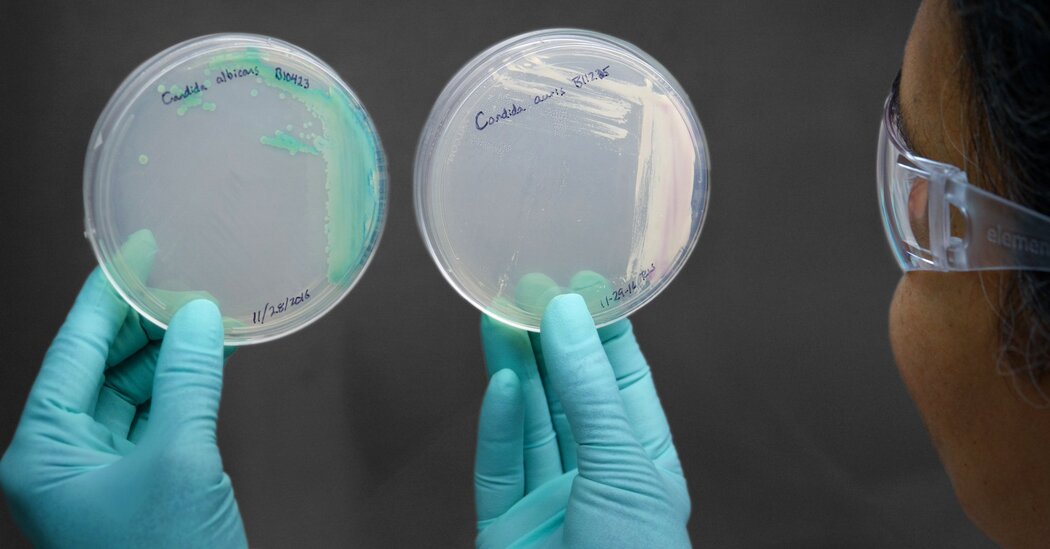
WHO Lists Top Fungi Health Threats

The pathogens cause infections that kill millions of people each year and often go undiagnosed. Even when identified, a growing number of infections is resistant to the current crop of drugs.The World Health Organization has released a ranking of fungi that threaten human health in its most ambitious effort to draw attention to a constellation of pathogens that are largely overlooked, even as they have become increasingly widespread, resistant to treatment and deadly.The health agency listed 19 invasive fungal diseases, including four it described as a “critical priority,” that collectively kill 1.3 million people and contribute to the death of five million others each year. Many of those deaths occur among people with H.I.V., cancer, tuberculosis and other underlying health conditions that leave them vulnerable to infection.Health officials say the death toll from fungal infections is likely much higher because many hospitals and clinics, especially in poorer countries, lack the diagnostic tools for detecting them.“The bottom line is that invasive fungal infections are becoming more prevalent, but frequently they are not recognized in patients and not correctly treated,” Dr. Carmem L. Pessoa-Silva, a W.H.O. official focused on disease surveillance and control, said at a news conference on Tuesday. “We do not have a real sense of the size of the problem.”The W.H.O. framed the report as a call to action, and officials said they hoped it would help lead to a greater sense of urgency among governments, drug developers, doctors and health policy experts.Climate change has helped to increase geographic range and prevalence of some infections, the W.H.O. said. The coronavirus pandemic has also led to a spike in fungal infections among Covid patients who end up in intensive care units, where stubborn pathogens like Candida auris sometimes flourish, then invade the body through breathing tubes and intravenous lines.In India, Mucormycosis, a rare but aggressive pathogen often referred to as “the black fungus,” has stalked thousands of Covid patients, some of whom have required disfiguring facial surgeries to remove the infections.Much like pernicious bacteria that evolve and become resistant to antibiotics through their overuse in people and agriculture, antifungal medications have been losing their curative punch in recent years. Scientists have said that rising rates of resistance to Aspergillus fumigatus, a common mold that can be fatal to those with weakened immunities, have been tied to the prodigious use of fungicides on cash crops like grapes, corn and cotton.Once a fungal infection enters the bloodstream, treatment becomes exponentially more difficult: Bloodstream infections with fungi in the candida family, for example, have a mortality rate of 30 percent. That figure is substantially higher among patients with Candida auris, one of the four “critical priority” fungi cited in the W.H.O. report. The fungus, a yeast first identified in Japan in 2009, has spread to four dozen countries and is often resistant to more than one drug.There are only four classes of drugs that treat fungal infections, “and very few new ones in the pipeline,” said Dr. Hatim Sati, another W.H.O. official who helped to write the report. Many of the existing drugs are so toxic, he said, that some patients cannot safely take them.Doctors and researchers said they were encouraged by the W.H.O.’s decision to turn a spotlight onto fungal infections. “This is long overdue given that fungal diseases have long been neglected even as the problem grows at an exponential rate,” said Dr. Cornelius J. Clancy, an infectious diseases doctor at the VA Pittsburgh Health Care System who did not contribute to the report.Dr. David Denning, chief executive of the advocacy group Global Action for Fungal Infections, said that in some ways, poor surveillance was the root of that neglect.The failure to diagnose fungal infections means that patients often go untreated, he said, citing research in Kenya, which found that better surveillance efforts for fungal meningitis would save 5,000 lives annually among people with H.I.V.The annual cost for widespread testing, he said, would be around $50,000.The lack of diagnosis has other unseen consequences, Dr. Denning said. He offered the hypothetical example of a leukemia patient who develops a fungal infection that proves fatal. “If that person dies from a fungal infection, their relatives might want to give money to a leukemia charity,” he said. “They aren’t going to give it to the fungal disease charity because the leukemia is the thing they knew about.”

Read more →

Does traffic-related air pollution increase risk of dementia?

Higher exposure to a certain type of traffic-related air pollution called particulate matter may be linked to an increased risk of dementia, according to a meta-analysis published in the October 26, 2022, online issue of Neurology®, the medical journal of the American Academy of Neurology. Researchers specifically looked at fine particulate matter, PM2.5, which consists of pollutant particles of less than 2.5 microns in diameter suspended in air. The meta-analysis included all available studies on air pollution and risk of dementia.
“As people continue to live longer, conditions like dementia are becoming more common, so detecting and understanding preventable risk factors is key to reducing the increase of this disease,” said study author Ehsan Abolhasani, MD, MSc, of Western University in London, Canada. “Since a report by the World Health Organization showed that more than 90% of the world population is living in areas with higher than recommended levels of air pollution, our results provide more evidence for enforcing regulations for air quality and accelerating the transition from fossil fuels to sustainable energies.”
For the meta-analysis, researchers reviewed 17 studies. Participants were over age 40. Across all the studies there were more than 91 million people. Of those, 5.5 million people, or 6%, developed dementia.
The studies adjusted for several factors that affect a person’s risk of dementia including age, sex, smoking, and education.
Researchers compared rates of air pollution exposure for people both with and without dementia and found that people who did not develop dementia had a lower average daily exposure to fine particulate matter air pollutants than people who did have dementia. The U.S. Environmental Pollution Agency (EPA) considers average yearly exposures up to 12 µg/m3 to be safe.
Researchers found that the risk of dementia increased by 3% for every one microgram per cubic meter (µg/m3) increase of fine particulate matter exposure.
“While our meta-analysis does not prove that air pollution causes dementia, it only shows an association, our hope is these findings empower people to take an active role in reducing their exposure to pollution,” Abolhasani said. “By understanding the risk of dementia through exposure to air pollution, people can take steps to reduce their exposure such as using sustainable energy, choosing to live in areas with lower levels of pollution and advocating for reduced traffic pollution in residential areas.”
They also looked at nitrogen oxides, which form smog, nitrogen dioxide, and ozone exposure, but did not find significantly increased risk when these other classes of pollutants were considered alone.
A limitation of the meta-analysis was the small number of studies available on this specific topic. Abolhasani said more studies are needed.
Story Source:
Materials provided by American Academy of Neurology. Note: Content may be edited for style and length.

Read more →

Neuroimaging study reveals functional and structural brain abnormalities in people with post-treatment Lyme disease

In a study using specialized imaging techniques, Johns Hopkins Medicine researchers report distinctive changes in the “white matter” and other brain tissue physiology of those with post-treatment Lyme disease, a condition affecting 10% to 20% of the nearly half a million Americans who contract Lyme disease annually.
The study’s findings, published October 26 in the journal PLOS ONE, substantiate and help validate that memory, and other cognitive difficulties experienced long-term by individuals with post-treatment Lyme disease, are linked to functional and structural changes in the brain.
Lyme disease, whose early symptoms may include a characteristic rash, flu-like aches and fever, joint pain, and fatigue, is treated using a rigorous course of antibiotics, which usually clears the illness.
However, in those considered long-haul patients for whom Lyme symptoms continue after completion of antibiotics, the condition is a chronic illness that can be marked by fatigue, muscular pain, insomnia, depression and cognitive difficulties, such as trouble with concentration and memory. Such individuals generally have no obvious clinical or laboratory evidence of ongoing issues.
In a bid to identify what they suspect are long-term changes in brain function that may be causing certain persistent Lyme disease symptoms, researchers from Johns Hopkins Medicine’s departments of neurology and psychiatry and behavioral sciences, in collaboration with the Lyme Disease Research Center, used functional MRI (fMRI) scans of the brain, a technology that detects changes in brain blood flow. These scans allow investigators to track changes in the brain in real time.
“Objective biologic measures of post-treatment Lyme symptoms typically can’t be identified using regular MRIs, CT scans, or blood tests,” says researcher John Aucott, M.D., director of the Johns Hopkins Lyme Disease Clinical Research Center and associate professor of medicine at the Johns Hopkins University School of Medicine. “We needed to expand our methods of evaluation,” he adds.

Read more →

What to Know About the Pine-Sol Recall

Clorox is voluntarily recalling tens of millions of bottles of scented Pine-Sol cleaning products that may be contaminated with bacteria.Clorox is voluntarily recalling about 37 million bottles of scented Pine-Sol because the cleaning products may contain bacteria that can cause serious infections in people with weakened immune systems, the Consumer Product Safety Commission said.Pine-Sol’s research and development team detected bacteria during a “routine product review,” a Clorox spokeswoman said. She said that Pseudomonas aeruginosa, bacteria broadly found in soil and water, had been identified in “certain recalled products.”There have been no reports of illness or injury from the recalled products. Clorox said in a statement that it was issuing the recall “in an abundance of caution.”Experts said that Pseudomonas aeruginosa is not a danger to most people. People who use external medical devices or have compromised immune systems are at heightened risk of infection, Clorox warned.Here’s what to know about the recall.Which products are being recalled?Several varieties of Pine-Sol cleaners produced at a Clorox plant in Forest Park, Ga., between January 2021 and September 2022 are being recalled. The affected bottles have printed codes starting with the prefix “A4,” followed by a five-digit number under 22249, Clorox said.Pine-scented Pine-Sol products are not included in the recall.The recall includes the following products: Pine-Sol Scented Multi-Surface Cleaners, in Lavender Clean, Sparkling Wave and Lemon Fresh scents; CloroxPro Pine-Sol All Purpose Cleaners, in Lavender Clean, Sparkling Wave, Lemon Fresh and Orange Energy scents; and Clorox Professional Pine-Sol Lemon Fresh Cleaners.These products were sold by major national retailers such as Walmart, Sam’s Club, Dollar General, Target, Home Depot, BJ’s, Kroger, Dollar Tree, Lowe’s and Publix, as well as by online retailers, notably Amazon.What should I do if I bought a recalled product?Stop using it immediately. Take photos of the codes on the bottle and then discard it. Do not return it to the point of purchase.Clorox has set up a website where consumers can request refunds. Retailers and distributors can also apply for reimbursement.What is Pseudomonas aeruginosa?It’s a type of bacteria that is commonly found in water or soil and can cause infections in the blood or lungs, according to the Centers for Disease Control and Prevention. It can be highly resistant to antibiotics.It can spread easily, including by contact with contaminated hands or by touching surfaces, said Dr. Martin Blaser, the director of the Center for Advanced Biotechnology and Medicine at Rutgers University. Most people are exposed to it by consuming it, perhaps by eating a piece of fruit with the bacteria on its skin or by drinking contaminated water, Dr. Blaser said.Healthy people generally don’t have to worry about Pseudomonas aeruginosa, he said, saying that the risk of infection to the average person was “negligible.”How common are these infections and what are the risks?People in hospitals are at greatest risk of infection from exposure to Pseudomonas aeruginosa, including those on ventilators or with catheters, and patients with wounds from surgery or burns, the C.D.C. said.Pseudomonas aeruginosa is a “major cause” of lung infection for people with cystic fibrosis, according to the Cystic Fibrosis Foundation. Dr. Blaser said that people undergoing chemotherapy are also particularly susceptible to infection, which he said could be lethal for them.“It can cause very severe infections in a relatively limited number of people,” he said.In 2017, there were about 32,600 Pseudomonas aeruginosa infections among hospitalized patients and an estimated 2,700 deaths in the United States, according to the C.D.C. These infections can be challenging to treat because the bacteria is resistant to nearly all antibiotics.How can I protect myself?Practice good hand hygiene and clean surfaces often.The C.D.C. advises health care facilities to follow guidelines for safe water quality. Steps can include disinfecting sinks and faucets at least daily, storing personal items away from sinks and covering toilets before flushing.

Read more →

Fighting tumors with magnetic bacteria

Scientists around the world are researching how anti-cancer drugs can most efficiently reach the tumours they target. One possibility is to use modified bacteria as “ferries” to carry the drugs through the bloodstream to the tumours. Researchers at ETH Zurich have now succeeded in controlling certain bacteria so that they can effectively cross the blood vessel wall and infiltrate tumour tissue.
Led by Simone Schürle, Professor of Responsive Biomedical Systems, the ETH Zurich researchers chose to work with bacteria that are naturally magnetic due to iron oxide particles they contain. These bacteria of the genus Magnetospirillum respond to magnetic fields and can be controlled by magnets from outside the body.
Exploiting temporary gaps
In cell cultures and in mice, Schürle and her team have now shown that a rotating magnetic field applied at the tumour improves the bacteria’s ability to cross the vascular wall near the cancerous growth. At the vascular wall, the rotating magnetic field propels the bacteria forward in a circular motion.
To better understand the mechanism to cross the vessel wall works, a detailed look is necessary: The blood vessel wall consists of a layer of cells and serves as a barrier between the bloodstream and the tumour tissue, which is permeated by many small blood vessels. Narrow spaces between these cells allow certain molecules from the to pass through the vessel wall. How large these intercellular spaces are is regulated by the cells of the vessel wall, and they can be temporarily wide enough to allow even bacteria to pass through the vessel wall.
Strong propulsion and high probability
With the help of experiments and computer simulations, the ETH Zurich researchers were able to show that propelling the bacteria using a rotating magnetic field is effective for three reasons. First, propulsion via a rotating magnetic field is ten times more powerful than propulsion via a static magnetic field. The latter merely sets the direction and the bacteria have to move under their own power.

Read more →

Conservative state policies generally associated with higher mortality, study finds

State policies in eight different policy domains, including gun safety, labor and tobacco, are associated with U.S. working-age mortality, according to a new study published this week in the open-access journal PLOS ONE by Jennifer Karas Montez of Syracuse University, US, and colleagues. They note that more conservative state policies were generally associated with higher mortality.
Americans die younger than people in most other high-income countries and within the United States life expectancy differs markedly across geographic areas. In 2019, it ranged from 74.4 years in Mississippi to 80.9 years in Hawaii.
In the new work, the researchers used data from the 1999-2019 National Vital Statistics System to calculate state-level age-adjusted mortality rates for deaths from all causes and from cardiovascular disease (CVD), alcohol, suicide and drug poisoning among adults ages 25 to 64. They merged that data with annual state-level data on eight policy domains, where each state’s policies were scored on a 0-to-1 conservative-to-liberal continuum.
The analysis revealed that more liberal policies on the environment, gun safety, labor, economic taxes and tobacco taxes were associated with lower mortality in each state. However, for marijuana, more conservative policies were associated with lower mortality. Particularly strong associations were found between gun safety policies and suicide mortality among men; between labor policies and alcohol-induced mortality; and between economic and tobacco tax policies and cardiovascular disease mortality. Simulations suggested that changing all policies in all states to a fully liberal orientation could have saved 171,030 lives in 2019, while changing them to a fully conservative orientation may have cost 217,635 lives.
The authors conclude that the emergence of more conservative state policies in several domains and shifts in the share of the population living in states with these policies provide a partial explanation for the high and rising mortality among working-age Americans and the overall mortality disadvantage of the US compared to other high-income countries.
The authors add: “U.S. state policies in recent decades may have contributed to the high and rising mortality rates of working-age adults. Changing state policies could prevent thousands of deaths every year from cardiovascular disease, suicide, alcohol, and drug poisoning.”
Story Source:
Materials provided by PLOS. Note: Content may be edited for style and length.

Read more →

Considering COVID a hoax is 'gateway' to belief in conspiracy theories, study finds

Belief that the COVID-19 pandemic was a hoax — that its severity was exaggerated or that the virus was deliberately released for sinister reasons — functions as a “gateway” to believing in conspiracy theories generally, new research has found.
In the two-survey study, people who reported greater belief in conspiracy theories about the pandemic — for which there is no evidence — were more likely to later report they believed that the 2020 presidential election had been stolen from Donald Trump through widespread voter fraud, which is also not true. Participants’ overall inclination to believe in conspiracy theories also increased more among those who reported believing COVID-19 was a hoax.
Based on the results, the Ohio State University researchers have proposed the “gateway conspiracy” hypothesis, which argues that conspiracy theory beliefs prompted by a single event lead to increases in conspiratorial thinking over time.
Preliminary evidence suggests a sense of distrust may function as one trigger.
“It’s speculative, but it appears that once people adopt one conspiracy belief, it promotes distrust in institutions more generally — it could be government, science, the media, whatever,” said senior author Russell Fazio, professor of psychology at Ohio State. “Once you start viewing events through that distrustful lens, it’s very easy to adopt additional conspiracy theories.”
The study is published today (Oct. 26, 2022) in the journal PLOS ONE.

Read more →

New Lassa fever therapy may be on the horizon

A new study from scientists at La Jolla Institute for Immunology (LJI) gives researchers a guide to neutralizing Lassa virus using a trio of rare antibodies isolated from survivors of Lassa virus infection.
Lassa virus is a deadly virus endemic to West Africa, where it is primarily spread by rodents. The virus causes Lassa fever, a disease that strikes up to 300,000 each year and typically starts with flu-like symptoms, but can lead to severe illness, death, and long-lasting symptoms, such as deafness. For pregnant women Lassa virus is especially dangerous: nearly 90% of infections during pregnancy are fatal.
LJI scientists can now show exactly how a cocktail of three human antibodies can block viral infection. These antibodies may prove valuable in upcoming clinical trials for Lassa therapies, and the LJI team plans to use their new map of the Lassa virus surface glycoprotein to design a much-needed vaccine.
“We now know where these three therapeutic antibodies act and how exactly they act,” says Kathryn Hastie, Ph.D., an LJI Instructor and the Director of the Antibody Discovery Center at LJI.
The findings were published in Science Translational Medicine as a cover story on October 26, 2022. The research was led by the Saphire Lab at LJI, including Instructor Haoyang Li, Ph.D., Hastie and Professor Erica Ollmann Saphire, Ph.D., in collaboration with Luis Branco, Ph.D., of Zalgen Labs LLC.
The power of neutralizing antibodies
In 2017, Hastie and her colleagues in the Saphire Lab (then at Scripps Research) published the first-ever structural images of the Lassa virus glycoprotein. Lassa uses glycoproteins to enter host cells and initiate infection. Hastie’s glycoprotein structure gave researchers an idea of what they were up against.

Read more →

New gene editing strategy could lead to treatments for people born with inherited diseases of the immune system

A fault in cells that form a key part of the immune system can be repaired with a pioneering gene editing technique, finds new research demonstrated in human cells and mice, led by UCL scientists.
Researchers say the study, published in Science Translational Medicine, could lead to new treatments for a rare disease of the white blood cells that normally help to control the immune system — known as regulatory T cells — and those that protect the body from repeat infections and cancer — known as effector T cells.
Patients with the condition, known as CTLA-4 insufficiency, carry mutations in a gene that cause these T cells to function abnormally. It leads them to suffer from severe autoimmunity, where their immune system attacks their own tissues and organs, including their blood cells.
The condition also hampers their immune system’s ‘memory’, meaning patients can struggle to fight off recurring infections by the same viruses and bacteria. In some cases, it can also lead to lymphomas, a type of blood cancer.
In human cells, using ‘cut’ and ‘paste’ gene editing techniques, using the CRISPR/Cas system, the researchers were able to target the faulty gene in T cells taken from patients with CTLA-4 insufficiency and repair the errors. This restored the levels of CTLA-4 in the cells to those seen in healthy T cells. They were also able to improve symptoms of the disease in mice with CTLA-4 insufficiency by giving them injections of gene edited (corrected) T cells.
Co-senior author, Professor Claire Booth, Mahboubian Professor of gene therapy and paediatric immunology at UCL Great Ormond Street Institute of Child Health, said: “It’s really exciting to think about taking this treatment forward to patients. If we can improve their symptoms and reduce their risk of getting lymphoproliferative disease this will be a major step forward. This particular paper is important because we are using the newest gene editing techniques to precisely correct these T cells, which is a new approach in inborn errors of immunity.”
CTLA-4 is a protein produced by T cells that helps to control the activity of the immune system. Most people carry two working copies of the gene responsible for producing CTLA-4, but those who have only one functional copy produce too little of the protein to sufficiently regulate the immune system.

Read more →

Gene Treatment for Rare Epilepsy Causes Brain Side Effect in 2 Children

The side effect, a buildup of fluid in the brain, led to the death of one of the children and presents a grave setback for a class of personalized medicine.Weeks after Valeria Schenkel took an experimental drug named after her, the daily seizures that had afflicted her from birth became less frequent. But the drug caused fluid to build up in her brain, and a year later, she died at age 3.The drug was given to only one other child, and she experienced the same side effect and nearly died last year.The drug contained snippets of genetic material tailor-made to turn off the mutated gene causing the extremely rare form of epilepsy that these children were born with. A handful of researchers and nonprofit organizations have raised millions of dollars to make these treatments, known as antisense drugs, for at least 19 children and adults with severe diseases that are too rare to garner interest from pharmaceutical companies. The treatments have helped some of these patients, raising hopes that the personalized approach might one day save thousands of lives.But the brain side effect, known as hydrocephalus, reported on Sunday at the American Neurological Association meeting in Chicago, is a blow for the niche medical field that has made rapid progress over the past five years. Hydrocephalus happens when too much fluid fills cavities in the brain, increasing pressure on brain tissue and risking lethal damage if untreated.“I think it’s worth saying: No question that encountering hydrocephalus has been a setback, sobering and important,” said Dr. Timothy Yu, the neurologist and genetics researcher at Boston Children’s Hospital who developed the drug, known as valeriasen.But traditional drug companies, he added, are not helping patients with thousands of rare, untreatable and rapidly progressing diseases that cause death and severe disabilities. Personalized genetic treatments may be their only hope.“We have to learn as much as we can from each and every one, because they’re just so incredibly valuable in every sense,” Dr. Yu said.Scientists first imagined creating “antisense oligonucleotide” drugs — pieces of custom-made DNA or RNA designed to correct for genetic errors in cells — in the 1960s. But it took decades to make stable and effective versions of such drugs.Unlike older gene therapies, which replace defective genes, antisense drugs can act like chemical dampers, turning off the mutated genes so they cannot be used by cells.In 2016, the Food and Drug Administration approved the first successful antisense drug, nusinersen, to treat spinal muscular atrophy, a muscle wasting disease. The next year, Dr. Yu and his team made an antisense drug for Mila Makovec, a 6-year-old who had a rare, fatal form of the neurological illness Batten disease.The researchers made the drug, called milasen, in just 10 months, far faster than the decade or more it often takes to make traditional drugs. Before milasen, no one had ever made a drug for a single person, let alone so quickly.From left: Mario Schenkel; Leonard Kaczmarek, a researcher at Yale who collaborated on the valeriasen trial; Dr. Timothy Yu holding Valeria Schenkel; and Alexandra Schenkel.Mario and Alexandra SchenkelIn 2018, Mario and Alexandra Schenkel of Lucerne, Switzerland, asked Dr. Yu to help their daughter. Valeria was born in 2018 with an error in one of her genes, KCNT1, that caused a rare and devastating form of epilepsy. She had dozens of seizures every day, and could not sit up or speak. Half of children with her condition die by age 3.The Schenkels raised more than $1 million; started a foundation, the Valeria Association; and moved to Massachusetts to support Dr. Yu’s efforts to make an antisense drug to shut down Valeria’s flawed gene. In September 2020, valeriasen was injected into the fluid around her spinal cord.At first, Valeria improved. But 11 months after she started the drug, doctors detected hydrocephalus in her brain. Her family withdrew from the valeriasen trial, and she died on Sept. 5, 2021.“She was such a fighter,” Ms. Schenkel said. “She was the one who paved the way for KCNT1 research and all the children who will hopefully get the chance for a better quality of life.”One of them, Lucy Greenblott, is the only other patient who has taken valeriasen.Lucy started taking the drug on June 17, 2021, at age 2½. Her seizures dropped drastically; for more than a month, she had no or only a handful of seizures each day.But by early August, Lucy would have episodes of whimpering and odd limb movements, as if she was in pain. By late August, every muscle in her body went rigid, her eyes rolled up above her eyelids and she was crying out in agony.Doctors discovered that she had hydrocephalus, sometimes called “water on the brain,” and implanted a shunt, a device used to drain fluid from the brain.“The scariest thing was wondering if we hurt her worse,” said Lucy’s father, Seth Greenblott, a lawyer and business consultant from Hopkinton, N.H. “Did she have to suffer more than she already does?”Lucy Greenblott in November 2021, three months after she stopped taking the drug valeriasen.Seth GreenblottDr. Yu is investigating why valeriasen caused hydrocephalus in both girls, and whether the side effect could be prevented with adjusted doses of the drug.In 2021, the pharmaceutical company Roche said that three patients who received an experimental antisense drug in a Huntington’s disease clinical trial had hydrocephalus, raising the possibility that the problem could plague many applications of such therapies. Some patients on nusinersen have also developed hydrocephalus. But the fluid buildup is not uncommon in people with neurological diseases, and it can often be difficult to determine whether the complication was caused by a drug or the underlying illness.The new reports underscore the need for researchers to share data on experimental drugs that are tested in only one or a few people, doctors said.The F.D.A. must approve each clinical trial of an antisense drug or other type of personalized medicine, even if it is used in only a single patient. But the scientists running these trials are not required to share information with one another, meaning that they may not know about safety risks seen by other investigators.“This is a new field of medicine,” said Liza-Marie Johnson, a pediatric oncologist and bioethicist at St. Jude Children’s Research Hospital who was not involved in the antisense trials. “How do we share data and monitor so that we can learn from events and make this safer and potentially benefit future patients?”Other doctors said the setback in Dr. Yu’s trial should not prevent scientists from testing customized medicines.“There are other kids out there with fatal diseases,” said Dr. Arthur Krieg, a rheumatologist at the University of Massachusetts RNA Therapeutics Institute and a consultant to biotechnology companies, one of which makes antisense drugs. “How are we going to know if the treatment can help them unless we give it to them?”Valeria’s father agreed.“Neurologists shouldn’t be scared of being bold and trying these kinds of drugs and helping patients with rare diseases,” Mr. Schenkel said.As for Lucy Greenblott, since she stopped taking valeriasen in August 2021, she has had as many as 15 seizures per day. Her parents are considering putting her back on the drug.“We know our time with her is limited, and this may be our best hope to improve the quality and length of her life,” Mr. Greenblott said. “But we also know we could shorten her life and make it harder. I don’t know how anyone makes that decision.”

Read more →