Sites in the brain where RNA is edited could help to better explain neurodevelopment and disease

Mount Sinai researchers have catalogued thousands of sites in the brain where RNA is modified throughout the human lifespan in a process known as adenosine-to-inosine (A-to-I) editing, offering important new avenues for understanding the cellular and molecular mechanisms of brain development and how they factor into both health and disease.
In a study published in Cell Reports, the team described how the rate of RNA editing in the brain increases as individuals age, with implications for dissecting the pathology of altered A-to-I editing across a range of neurodevelopmental and aging disorders.
“Our work provides more nuanced and accurate insights into the contribution of RNA modifications by A-to-I editing during human brain development,” says senior author Michael Breen, PhD, Assistant Professor of Psychiatry, and Genetics and Genomic Sciences, at the Icahn School of Medicine at Mount Sinai, and a member of the Seaver Center for Autism Research and Treatment. “The field has already identified millions A-to-I sites in the brain, which has made it particularly challenging to determine which of these are likely to be physiologically important. We narrowed this down to about 10,000 sites with potential functional roles from early fetal development through advanced aging. By providing an atlas of these sites, we’ve opened the door to further understand brain neurodevelopment through the lens of A-to-I RNA modifications.”
DNA holds the genetic blueprint for humans and other living creatures, but RNA actually carries out its instructions to create functional proteins. Modifications that accumulate on the RNA can alter the way a protein ultimately functions. A family of ADAR enzymes introduce these individual A-to-I changes. A handful of these edits are known to play essential physiological roles during early fetal development by regulating synaptic transmission and neuronal signaling in the brain. This work shows that across the human lifespan, RNA in the brain accumulates thousands of individual edits, and these changes are likely to have functional consequences as we age.
The Mount Sinai study generated and compiled brain RNA-sequence data across more than 800 individuals. This data covered all stages of prenatal and postnatal development, from the very first embryonic progenitor cells to functionally distinct brain tissue from centenarians. This broad sweep enabled researchers to develop a model depicting for the first time how A-to-I editing evolves over a lifetime, in which unedited RNAs are expressed, and possibly translated into proteins, more predominantly during fetal periods of development, while edited RNA is more abundant in the adult brain.
“This means that during older age there is generally a higher editing rate and frequency of A-to-I editing occurring, including stabilizing RNA structures and modulating the way RNAs interact with microRNAs,” notes Dr. Breen. His research team also learned that a subset of these A-to-I sites introduce new amino-acid substitutions into the protein-coding region of the brain, an event known as RNA recoding. This is a particularly important finding inasmuch as RNA recoding has direct functional and/or structural effects on proteins.
The Mount Sinai team also sought to answer the question of how genetic variability might explain some of the differences in A-to-I editing as individuals age. They learned that because editing sites are strongly regulated during early fetal development, editing levels are measurably different for thousands of sites based on unique genetic variants. This distinction evens out during postnatal development. From a basic science perspective, the dynamically regulated sites uncovered by researchers provide numerous avenues for future work to manipulate basic mechanisms of early brain development through A-to-I editing.
Previous work by Dr. Breen — whose laboratory works at the intersection of functional genomics, computational biology, and neuroscience — found that A-to-I editing is disrupted in brain tissue from individuals with neurodevelopmental disorders.
“This work provides us with immediate avenues for dissecting the pathological implications of altered A-to-I editing across a range of neurodevelopmental and aging disorders,” he says. “It’s more clear now than ever that elucidating the dynamic regulation of RNA editing can offer unique insights into their role in promoting health as well as disease.”

Read more →

How Brains Send a Signal That It’s Time to Vomit

In a study of mice, researchers worked out a neural pathway that could help researchers alleviate nausea symptoms from chemotherapy drugs.Anyone who’s had a shady oyster or a mushroom soup that didn’t sit well remembers the ominous queasiness heralding impending bad times. Bacteria release toxins that start the body’s process of speedily evacuating the contents of the stomach. It’s a protective mechanism of sorts — getting rid of the invaders en masse is probably helpful in the long term, even if it’s unpleasant in the short. But it has remained something of a mystery how the brain gets the alarm signal, then sends another one to tell the stomach to initiate a technicolor yawn.Your next bout of food poisoning isn’t the only reason to understand this particular neural pathway. Figuring out how to counter it could be helpful for people who develop nausea caused by chemotherapy medication and other drugs. As if fighting cancer isn’t painful and scary enough, patients are often so turned off by food that keeping their weight up becomes a major struggle.In a new study, researchers report that both bacteria and chemotherapy drugs appear to trigger the same molecular pathways in the gut. The findings, which were based on experiments with mice and published Tuesday in the journal Cell, showed that a bacterial toxin and a chemo medication both set in motion a cascade of similar neural messages that cause queasiness.Choosing mice for the study was unusual. Mice, it turns out, can’t puke — a little foible that typically makes it difficult to use them to study nausea. Researchers have used cats and dogs in the past, but the biology of mice in general is so much better understood, with much better tools available to scientists to do so.Cao Peng, a professor at Tsinghua University in Beijing, and his colleagues wondered whether mice might still be capable of feeling ill in the way people do after ingesting a chemo drug or a bad salad — or close enough, anyway, that researchers could use the creatures to understand the origins of the sensation.“If we want to get better medications,” Dr. Cao said, “we need to know the detailed mechanism.”The researchers gave the mice a bacterial toxin and watched them closely with high-speed cameras, and they found that the rodents started opening their mouths oddly after the treatment. More tests showed that their abdominal muscles were moving much like the way humans’ stomachs do when they are about to be sick. In effect, the scientists believe the mice were retching, or dry heaving. A chemo drug had the mice behaving similarly, so the scientists delved deeper into which cells were reacting to these triggers and how.They traced the effect to certain neurons in the brain that released neurotransmitters when the drug or the toxin reached the gut. Following those messages back, they discovered cells in the small intestine that reacted to the presence of these noxious substances. A central player in the pathway to nausea and retching was an immune system molecule called interleukin 33, or IL33. Keeping mice from making IL33 significantly reduced their symptoms.It’s possible that drugs that interfere with IL33 or other players in this pathway could help to alleviate the suffering of people having chemotherapy, Dr. Cao said. This paper — identifying behavior in mice that can stand in for vomiting and laying bare the route that signals from the gut take — is a first step in potentially improving the quality of life in chemotherapy patients, if the results hold up in humans.Still, mice given the task of mimicking food poisoning are uncomfortable for about 24 hours after receiving bacterial toxins, Dr. Cao said. After that, they’re back to their active selves. If only we could shake off a turkey sandwich that sat out too long so quickly.

Read more →

Experts pave the way for safer surgery to address global elective waiting lists

Surgical care experts have today unveiled two studies in The Lancet that will help to provide safer surgery for thousands of patients around the world — particularly in Low- and Middle-income Countries (LMIC).
Researchers found that routinely changing gloves and instruments just before closing wounds could significantly reduce Surgical Site Infection (SSI) — the world’s most common post-operative complication. Secondly, they tested a new toolkit that can make hospitals better prepared for pandemics, heatwaves, winter pressures and natural disasters that could reduce cancellations of planned procedures around the world.
Surgical infections
Patients in LMICs are disproportionately affected by wound infections, but following a trial of the procedure in Benin, Ghana, India, Mexico, Nigeria, Rwanda and South Africa, researchers found that a routine switch of gloves and instruments during abdominal wound closures could prevent as many as 1 in 8 cases of SSI.
The ChEETAh trial was funded by the UK’s National Institute for Health Research (NIHR). Publishing their findings today in The Lancet, researchers are calling for the practice to be widely implemented — particularly in LMICs.
Co-author Mr Aneel Bhangu, from the University of Birmingham, commented: “Surgical site infection is the world’s most common postoperative complication — a major burden for both patients and health systems. Our work demonstrates that routine change of gloves and instruments is not only deliverable around the world, but also reduced infections in a range of surgical settings. Taking this simple step could reduce SSIs by 13% — simply and cost-effectively.”
Patients who develop SSI experience pain, disability, poor healing with risk of wound breakdown, prolonged recovery times and psychological challenges. In health systems where patients have to pay for treatment this can be a disaster and increases the risk of patients being plunged into poverty after their treatment. The simple and low-cost practice of changing your gloves and instruments just before closing the wound is something which can be done by surgeons in any hospital around, meaning a huge potential impact.

Read more →

Monoclonal antibody prevents malaria infection in African adults

One dose of an antibody drug safely protected healthy, non-pregnant adults from malaria infection during an intense six-month malaria season in Mali, Africa, a National Institutes of Health clinical trial has found. The antibody was up to 88.2% effective at preventing infection over a 24-week period, demonstrating for the first time that a monoclonal antibody can prevent malaria infection in an endemic region. These findings were published today in The New England Journal of Medicine and presented at the American Society of Tropical Medicine & Hygiene 2022 Annual Meeting in Seattle.
“We need to expand the arsenal of available interventions to prevent malaria infection and accelerate efforts to eliminate the disease,” said Anthony S. Fauci, M.D., director of the National Institute of Allergy and Infectious Diseases (NIAID), part of NIH. “These study results suggest that a monoclonal antibody could potentially complement other measures to protect travelers and vulnerable groups such as infants, children, and pregnant women from seasonal malaria and help eliminate malaria from defined geographical areas.”
NIAID sponsored and funded the trial, which was led by Peter D. Crompton, M.D., M.P.H., and Kassoum Kayentao, M.D., M.P.H., Ph.D. Dr. Crompton is chief of the Malaria Infection Biology and Immunity Section in the NIAID Laboratory of Immunogenetics, and Dr. Kayentao is a professor at the University of Sciences, Techniques and Technologies (USTTB) of Bamako, Mali.
An estimated 241 million cases of malaria occurred worldwide in 2020, according to the World Health Organization (WHO), resulting in an estimated 627,000 deaths, mostly in children in sub-Saharan Africa. These cases included more than 11 million pregnant women in Africa, resulting in an estimated 819,000 newborns with low birthweight and thus at increased risk for illness and death.
The only malaria vaccine currently recommended by WHO, called RTS,S (Mosquirix), provides partial protection against clinical malaria during the early years of life when given to children aged 5 to 17 months in four doses over a 20-month period. Other drugs consisting of small chemical compounds that effectively prevent malaria infection are also available for infants and young children as well as travelers. The requirement for frequent dosing of these drugs can limit adherence, however, and the emergence of drug resistance may also limit their usefulness. Thus, there is an urgent need for new, fast-acting, infrequently dosed interventions that safely provide strong protection against malaria infection.
Malaria is caused by Plasmodium parasites, which are transmitted to people through the bite of an infected mosquito. The mosquito injects the parasites in a form called sporozoites into the skin and bloodstream. These travel to the liver, where they mature and multiply. Then the mature parasite spreads throughout the body via the bloodstream to cause illness. P. falciparum is the Plasmodium species most likely to result in severe malaria infections, which, if not promptly treated, may lead to death.

Read more →

'A silent killer' — COVID-19 shown to trigger inflammation in the brain

Research led by The University of Queensland has found COVID-19 activates the same inflammatory response in the brain as Parkinson’s disease.
The discovery identified a potential future risk for neurodegenerative conditions in people who’ve had COVID-19, but also a possible treatment.
The UQ team was led by Professor Trent Woodruff and Dr Eduardo Albornoz Balmaceda from UQ’s School of Biomedical Sciences, and virologists from the School of Chemistry and Molecular Biosciences.
“We studied the effect of the virus on the brain’s immune cells, ‘microglia’ which are the key cells involved in the progression of brain diseases like Parkinson’s and Alzheimer’s,” Professor Woodruff said.
“Our team grew human microglia in the laboratory and infected the cells with SARS-CoV-2, the virus that causes COVID-19.
“We found the cells effectively became ‘angry’, activating the same pathway that Parkinson’s and Alzheimer’s proteins can activate in disease, the inflammasomes.”
Dr Albornoz Balmaceda said triggering the inflammasome pathway sparked a ‘fire’ in the brain, which begins a chronic and sustained process of killing off neurons.

Read more →

Making glioblastoma more vulnerable to treatment

In the tough war against glioblastoma, scientists are taking a cue from viruses on how to make the aggressive cancer more vulnerable to treatment.
Their target is SAMHD1, a protein which can protect us from viral infections by destroying an essential building block of DNA that viruses and cancer need to replicate.
But they’ve found SAMHD1 also has the seemingly contradictory skill of helping repair double-strand breaks in the DNA that if unrepaired can be lethal to any cell, including a cancer cell, and if mended incorrectly can result in genetic mutations that produce cancer.
“When the DNA breaks, that is what actually interrupts the DNA replication and also the synthesis of proteins, so a double-strand break is lethal for cells,” says Waaqo Daddacha, PhD, cancer biologist in the Department of Biochemistry and Molecular Biology at the Medical College of Georgia.
Cancer cells, which are reproducing much more rapidly than most normal cells, are replicating even faster, so are impacted even more by these DNA breaks, which is why fundamental therapies like radiation and some chemotherapy drugs used to treat cancers make these lethal breaks.
However, the aggressive brain cancer quickly becomes treatment-resistant and the average survival remains at about 15 months, Daddacha says.

Read more →

New technique helps ID genes related to aging

Researchers from North Carolina State University have developed a new method for determining which genes are relevant to the aging process. The work was done in an animal species widely used as a model for genetic and biological research, but the finding has broader applications for research into the genetics of aging.
“There are a lot of genes out there that we still don’t know what they do, particularly in regard to aging,” says Adriana San Miguel, corresponding author of a paper on the work and an assistant professor of chemical and biomolecular engineering at NC State. “That’s because this field faces a very specific technical challenge: by the time you know whether an organism is going to live for a long time, it’s old and no longer able to reproduce. But the techniques we use to study genes require us to work with animals that are capable of reproducing, so we can study the role of specific genes in subsequent generations.
“To expedite research in this field, we wanted to find a way of identifying genes that may be relevant to aging while the organisms are still young enough to work with.”
For this work, the researchers focused on a species of roundworm called C. elegans, which is one of the most important model species for research into genetics and aging. Specifically, the researchers focused on protein aggregation in cells, which is well established as being related to aging.
Here’s how the new method for identifying genes that may be relevant to aging works.
First, the researchers expose thousands of C. elegans to a chemical that induces random genetic mutations. The researchers then use an autonomous, high-throughput system that allows them to identify which roundworms have high levels of protein aggregation in their cells without harming them, but while they’re still young enough to reproduce. The roundworms that have higher levels of protein aggregation, which are expected to live for a shorter period of time, are then separated from the others using an automated, microfluidic system and observed to see how long they live.
Once the roundworms die, researchers have established protein aggregation and lifespan data for each of the roundworms. The roundworms with the highest protein aggregation and the shortest lifespans can be prioritized for study, since there is an increased likelihood that their mutations affected their aging. Researchers can then sequence the DNA of these roundworms.
“Once we have the genomic data, we can identify the mutations in C. elegans,” San Miguel says. “And the protein aggregation and lifespan data allow us to assess which mutations may be most relevant to aging. This allows us to focus future research on those genes.”
In proof-of-concept testing, the researchers chose to do genome sequencing on the individual roundworm in their sample that had the highest level of protein aggregation. They found that it had a mutation on a gene that was not previously identified as having any relationship to aging.
“The next step is to do additional research focusing on this gene,” San Miguel says. “Is it playing a role in the aging process? And, if so, what is that role?
“More importantly, we think the technique we’ve demonstrated in this paper can be used by others in the research community to help identify genes of interest and — hopefully — expedite research into the genetics of aging. We’re very open to collaborating with other researchers who are interested in pursuing this line of work.”
The work was done with support from the U.S. National Institutes of Health, under grants R00AG046911 and R21AG059099.
Story Source:
Materials provided by North Carolina State University. Original written by Matt Shipman. Note: Content may be edited for style and length.

Read more →

Scientists Are Gaining On RSV, a Persistent Threat to Children

Vaccines and treatments are in trials, but the virus remains a leading killer of infants worldwide.Of the three respiratory viruses Americans are grappling with this winter, two — the coronavirus and the flu — are well-known threats. The third, respiratory syncytial virus, which already has sent thousands of children to hospitals, is a mystery to many.To pediatricians, however, R.S.V. is all too familiar. It is a leading cause of infant mortality around the globe, and especially dangerous to prematurely born babies.Worldwide, R.S.V. led to about 3.6 million hospital admissions in 2019, and more than 100,000 deaths in children under 5, mostly in poor countries.“It is, unfortunately, one of those large killers that nobody knows about,” said Dr. Keith Klugman, who directs the pneumonia program at the Bill & Melinda Gates Foundation.“You survive R.S.V. if you get access to care, to breathing support and to oxygen,” he added. “In the absence of those, babies will die.”The virus also poses particular risks to pregnant women, immunocompromised children and adults, and adults older than 65. No vaccines and treatments are available. But after decades of stalled progress, more than 30 preventive options are on the horizon, nine of them in advanced trials.On Tuesday, Pfizer announced that its R.S.V. vaccine showed an efficacy of 82 percent against hospitalization among infants under 90 days old, and 69 percent among those younger than six months.The vaccine did not meet the Food and Drug Administration’s threshold for preventing doctor visits, but the company plans to submit its vaccine for approval before the end of the year.In October, GSK reported that its R.S.V. vaccine had 83 percent efficacy against serious illness in adults older than 60. The vaccine is under review by regulatory agencies in Europe and Japan, and the F.D.A. is expected to begin its review by the end of the year.Pandemic restrictions held R.S.V. mostly at bay for the past two years. But this year, children severely ill with R.S.V. are filling up hospitals weeks earlier than usual. More of these young patients are sicker than those seen before the pandemic because they had built up little immunity against R.S.V.Babies that survive an R.S.V. infection can sustain damage to the lungs, making them more susceptible to pneumonia. Much of the damage is from the consequences of infection, rather than the infection itself.Most older children and adults are exposed to R.S.V. multiple times in their lifetimes, and the immunity they gain prevents severe illness, if not infection. Doctors only recently began testing for R.S.V. in adults, leading to the realization that in some years, R.S.V. infections can rival those caused by influenza.“We just don’t appreciate it as much because the diagnostics are not as available still as they are for either Covid or flu,” said Dr. William Schaffner, an infectious diseases physician at the Vanderbilt University Medical Center in Nashville.Among older adults, R.S.V. causes about 14,000 deaths per year. Recognition of the scale of the problem is partly responsible for the drive among pharmaceutical companies to develop vaccines.R.S.V. was identified in the 1950s, and attempts to develop a vaccine began in the 1960s, but researchers were stymied for decades. The field was further set back when a candidate vaccine seemed to increase risk from the virus.A technical discovery in 2013 at the National Institutes of Health revived the field, allowing scientists to design powerful vaccines. In its trial, GSK’s vaccine had an efficacy of about 94 percent against severe illness in adults 70 to 79 years old or those with underlying medical conditions.“We think we have a vaccine that really can be a very important solution to prevent serious respiratory disease associated with R.S.V. in older adults,” said Dr. Phil Dormitzer, who leads vaccine development at GSK.Several research teams are working on vaccines for young children. One group, led by Dr. Coleen Cunningham, pediatrician in chief at Children’s Hospital of Orange County and chair of the pediatrics department at the University of California, Irvine, is developing a nasal-drop vaccine containing a weakened version of the virus for children 6 to 24 months of age.“The advantage of that is, it’s not a shot, so you don’t have to worry about needles,” Dr. Cunningham said. The vaccine would rouse antibodies in the nose, where the virus enters, rather than the blood and so might more effectively prevent infection.The researchers are trying to find a balance in which the virus is too weak to cause symptoms and yet strong enough to produce a robust immune response. The results so far are promising, Dr. Cunningham said.In the youngest babies, who are most at risk, there is not enough time for vaccines to build sufficient immunity. One alternative is to give babies a monoclonal antibody — a laboratory-made version of a powerful antidote to the virus — that can prevent infection.One such antibody, Synagis, was approved in 1998 and is injected once a month into infants who were born after 32 weeks of gestation or less, or into those who have heart or lung problems that exacerbate their risks. In trials, the antibody reduced hospitalization from R.S.V. infection by 55 percent.But Synagis is rarely used because it is prohibitively expensive, Dr. Cunningham said.Newer monoclonal antibodies may last longer and cost less. A committee of the European Medicines Agency has recommended approval of a single dose of Beyfortus, made by Sanofi and AstraZeneca, to protect children against R.S.V. through an entire season.Another alternative for protecting infants is to immunize pregnant women. The mother’s antibodies can cross the placenta to the fetus, research has shown, protecting the baby for the first few months after birth.In the Pfizer trial, about 7,400 pregnant women received a single dose of the experimental R.S.V. vaccine or a placebo during the late second to third trimester. The researchers tracked the women’s health for six months after delivery and the infants for at least one year.The trial spanned 18 countries and multiple R.S.V. seasons in both the Northern and Southern Hemispheres. Dr. Klugman of the Gates Foundation said he hoped the vaccine would “roll out very, very quickly” and be available even in poor countries by 2024.Some companies are testing simultaneous administration of the R.S.V. and flu vaccines and have found so far that neither seems to interfere with the other. Others are working to prolong the duration of protection from an R.S.V. vaccine.The scale of R.S.V. cases this year underscores the urgent need for vaccines and may serve to convince parents to immunize their children once vaccines are available, the experts said.“Ironically, perhaps, if these outbreaks have a useful purpose, it will be to make R.S.V. better known,” Dr. Klugman said, “so that when the vaccines arrive, there will be enthusiastic opportunity for women to protect their babies.”

Read more →

The Fading Art of Preserving the Dead

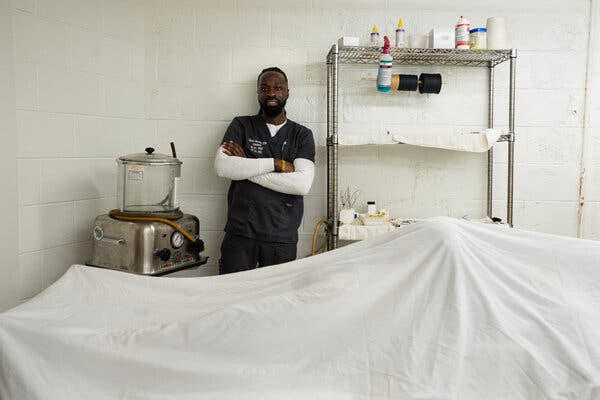
Walk down two flights of stairs, accessed through the back entrance of the James Hunt Funeral Home in Asbury Park, N.J., and you reach a white-walled, linoleum-floored, fluorescently-lit room, a liminal space that provides the beginning of an answer to one of the oldest and most confounding questions of the human experience: What happens to us when we die?On a recent Tuesday evening, Shawn’te Harvell walked down the steps and into the room, where two bodies, covered in white cloth, lay on gurneys. Mr. Harvell was wearing crisp gray scrubs and two-tone leather shoes. This was a departure from his usual attire, noted Vivian Velazquez, the funeral home manager. “Usually he’s here in his three-piece suit, his $500 shoes, and he doesn’t even wear that,” she said, pointing to the thin plastic apron that Mr. Harvell had tied around his waist.Mr. Harvell smiled and shook his head. His job, by most metrics, is a messy one. He was in the room to embalm the bodies — to drain the blood vessels and cavities filled with fluid, refill them with preservatives, scrub the skin, suture any cuts, clean the teeth, sew the mouths closed. He was there to massage the illusion of life back into cold, dead cells. But Mr. Harvell has been studying embalming and practicing as an embalmer for nearly a quarter of a century, beginning when he was 16. So, no apron necessary.Shawn’te Harvell is a professor of mortuary science, the manager of the James Hunt Funeral Home and a trade embalmer in New Jersey.James Estrin/The New York TimesNow in his 40s, Mr. Harvell is a professor of mortuary science at a local college, the manager of his own funeral home in Elizabeth and a trade embalmer who does nearly 50 embalmings a week; he is familiar with the often fraught area between life and death. “My ultimate goal is to give them their loved one back,” he said of the people who would view the bodies at the upcoming funerals. “I’ve had families come up to me and tell me, ‘Wow, they look so nice I couldn’t even cry.’”But the world he belongs to, the world of embalming, is increasingly losing its sway over the American way of death.Data gathered by the National Funeral Directors Association shows that nearly 60 percent of Americans were cremated in 2021, an increase from around 25 percent in 1999. More than 60 percent of people surveyed were interested in having so-called green burials, which are cheaper than traditional funerals and limit the chemicals allowed into the body for preservation. Embalmers are becoming more difficult to find; most funeral homes rely on contractors like Mr. Harvell, who may be the sole embalmers for a dozen funeral-home clients.According to people in the industry, things have been trending away from embalming for decades. “Absolutely there’s a shift going on,” said Tim Collison, the chief operating officer of The Dodge Company, the largest embalming fluid manufacturer in the country. “There’s less demand — it’s not an expanding market.” Dr. Basil Eldadah, a physician with the National Institute on Aging, said, “We’re just in this place in our society where we’re questioning the way that things have always been done.”The end beginsAll human life is funneled through the narrow channel of death. The heart stops beating, neurons stop firing, muscles tense and begin to decay, cells decompose. From then on, the possibilities only expand.You can be embalmed with formaldehyde and placed in a coffin underground; cremated in a furnace; left out in the open air; liquefied in an alkaline solution; composted under a pile of mulch; frozen in a cryogenic container; mummified; planted at the roots of a sapling. Ed Bixby, who owns 13 cemeteries around the country, said a new technique of treating dead bodies comes into fashion every year or so. Would you rather not have your ashes compressed into a diamond? Then how about freeze-drying your body and vibrating it into dust?But, Mr. Bixby added, nothing has managed to outlive cremation and embalming and burial: “Everyone just goes with the norm because that’s what’s normal.”The James Hunt Funeral Home. “My ultimate goal is to give them their loved one back,” Mr. Harvell said of mourners.James Estrin/The New York TimesMethods of body preservation go back thousands of years, to the 7,000-year-old Chinchorro mummies found in the Atacama Desert in Chile. But the most famous examples are from ancient Egypt. Deceased pharoahs and members of wealthy families underwent a monthslong mummification process that involved removing their internal organs, drying their bodies out with natron salt and rubbing oil on their skin. Behind this ritual was the idea that a part of the person’s spirit lived in the body, and that it would be lost if the body was destroyed. The process was so effective that some mummies could be dug up by archaeologists, with the skin and facial structure more or less intact, 4,000 years later.Egyptian mummification, aimed at eternity, bears little resemblance to modern American embalming, which began during the Civil War, when bodies of soldiers had to be transported on hot, unventilated trains. The objective was temporary preservation, maintaining an illusion of life just long enough for people to say goodbye. Abraham Lincoln was embalmed and paraded around the country after his assassination in 1865, the embalming treatment continually applied as his death tour went on for weeks. As embalming gained popularity and legitimacy through the 20th century, the viewing of the body often served as the centerpiece of the funeral ritual.Methods and intent vary widely, shaped by cultural and circumstantial forces. But the belief underlying these ancient and modern practices seems to be somewhat universal — that the body contains some part of the person, some essence, some meaning.“It’s quite profound,” said Dr. Raya Kheirbek, the chief of the Division of Geriatrics and Palliative Medicine at the University of Maryland School of Medicine. “Even after death claims the body, we’re going to beautify it in some way — like, death cannot win.”‘You’ve got to die from something’Downstairs in the James Hunt Funeral Home, Mr. Harvell moved swiftly and deftly. The two bodies he was embalming were opposites: one small and bony, almost to the point of emaciation, the other large, the legs and feet swelling with edemas.Every embalmer has a signature, Mr. Harvell said, as he pulled 16-ounce bottles of embalming fluid from the shelves of a tall wooden closet in the corner of the room. A bottle of orange fluid from The Dodge Company, 20 percent formaldehyde gas, dissolved in water — “20-index” — and mixed with plasticizers to keep the body from stiffening. A bottle of blue, 36-index fluid from Bondol Labs; designed for “frozen, refrigerated and cold bodies,” it contained salts with large ions to draw fluid out of the skin and keep it in the capillaries. A bottle of violet-red 18-index fluid from the Embalmers Supply Company for color and firmness. “We all have a certain thing we do,” Mr. Harvell said, dumping the liquid into a plastic tub atop a pressurized machine to create a frothy, turquoise mixture.Embalming fluids.James Estrin/The New York TimesShawn’te Harvell, left, does nearly 50 embalmings a week. He has been studying or doing embalming for more than 25 years.James Estrin/The New York TimesFormaldehyde sits at the heart of the embalming process. The gas fixes onto tissue proteins, stiffening them and inhibiting decomposition for roughly 24 hours. It is a vast improvement over the earliest embalming techniques, which sometimes entailed soaking a body in alcohol. But exposure to formaldehyde has been linked to cancer, and the door to Mr. Harvell’s room was plastered with biological hazard signs. He seemed unconcerned. “You’ve got to die from something,” he said with a shrug.The trick is to distribute the fluid throughout the body, starting with a two-inch cut above the clavicle, through which arterial fluid is pumped into the carotid artery. The stomach is emptied, the contents replaced with high-index cavity fluid that dries and firms up the insides. The skin is scrubbed and washed, the cut sutured shut, the lips sewed together, makeup applied.But to say that this is the extent of embalming, to embalmers, is like saying to a painter that painting consists only of long and short brushstrokes, or saying to a writer that writing consists only of subjects and clauses. Mr. Harvell, looking up from his work, said, “I can teach the fundamentals of embalming, but to do it proficiently, to do it with that …” — he twisted his fist forward and back for emphasis — “you got to have it in you.”There are products that dry out tissue, preventing liquid from leaking out of the pores of bloated bodies; powders to seal particularly large cuts; fluids with hues that counter the yellowing of jaundice. Dodge’s best-selling chemical is Introfiant, a high-index arterial fluid that some embalmers call Purple Jesus. “That’s because if they had to say a prayer to get the embalming done, they would grab the Introfiant,” Mr. Collison said.But merely knowing the embalming basics and having the right tool kit is insufficient, said Krystal Osborne, an embalmer based in Las Vegas: “You’re given a picture, and you’re creating that person all over again.”The casket showroom at Mr. Harvell’s funeral home. Nearly 60 percent of Americans were cremated in 2021, an increase from around 25 percent in 1999. James Estrin/The New York TimesTo embalm or not to embalmA few years ago, Dr. Kheirbek was invited to the funeral of one of her patients. It had been a week since the man had died, and Dr. Kheirbek and her team stood over the embalmed body, which lay in an open casket in the funeral home.“For a moment, we thought we’d gone to the wrong visitation,” she later wrote in a journal article. “He looked better than he ever looked during the months we cared for him. His face was pink and smooth, his hair nicely groomed, and he sported a quiet smile. The Mr. Thompson we knew was a skeleton, with tight-drawn skin, long curly hair, and a shaggy beard.”This incongruity triggered something in Dr. Kheirbek. It almost felt wrong to her, she wrote, like a willful blinding. The man was dead; why did he look like he was alive?Jessica Mitford, in her 1963 book about the funeral industry, “The American Way of Death,” noted pointedly that many funeral homes took financial advantage of their customers by preying on “the disorientation caused by bereavement” and “the need to make an on-the-spot decision.” Today, the average embalming and funeral costs nearly $10,000. Burial plots and headstones cost even more. Much of this can ease the grieving process for people, Dr. Kheirbek said. But, she added, why pump the body with chemicals and restore it to reflect some past self?In Japan, Nepal, Korea and Taiwan, nearly every body is cremated, while in most other countries, bodies are buried without being preserved artificially. Religion often plays an important role in these practices, but it can’t explain everything. The collection of trendy alternatives to embalming, burial and cremation that spring up each year often claim to be not just another option of body disposition, but a challenge to the social norms that shape how we treat and view the dead body.Among the more prominent movements is that of the green burial. Some experts estimate that cremation in the United States releases half a million tons of carbon dioxide into the atmosphere each year. Others note that burials introduce four million tons of embalming fluid into the ground, and 1.6 million tons of concrete.Ed Bixby owns 13 cemeteries and promotes natural burials using biodegradable coffins.James Estrin/The New York TimesMr. Bixby is the president of the Green Burial Council, a nonprofit that promotes natural burials, which consist of placing bodies in biodegradable coffins to reduce environmentally harmful waste. Dr. Eldadah, who is working to open a green-burial cemetery in Maryland, said that natural burials offered a potent philosophical alternative to what the philosopher Thomas Nagel called “the expectation of nothingness.”“It’s not this fatalistic understanding of death as unavoidable, but it is a part of the cycle of life,” Dr. Eldadah said. “We need death in order to live happy lives, making space in order for more life to emerge.”Dr. Kheirbek, who is friends with Dr. Eldadah, added: “And that’s the utmost love, I think. To just be able to let go.”Mr. Collison’s company has developed a formaldehyde-free embalming fluid as a way to cater to the growing green burial demand, but he noted that of the nearly 50 billion pounds of formaldehyde that are produced every year, only a few million pounds end up in embalmed bodies. “When you look at the funeral service from a worldview, it doesn’t make a lot of sense,” he said of embalming. “But I think there’s a basic human need to say goodbye.”A chapel built by Mr. Bixby; it is a replica of his family chapel, which was constructed in 1910.James Estrin/The New York TimesLife and everything afterAs Mr. Harvell embalmed the two bodies, massaging stiffness out of the joints and pushing the arterial fluid through the blood vessels, Ms. Velazquez and Xenia Ware, the owner of the funeral home, stood nearby and chatted about clients. One family, they said, had insisted on holding a funeral service in northern New Jersey, then leading a procession an hour south on the Garden State Parkway to the burial.Mr. Harvell seemed to register what was being said, while fragmenting his attention toward his work and the Airpod Pro that was squeezed into his right ear, through which he was carrying on a conversation with a friend. “That’s fine,” he whispered, and it was hard to tell whether he was speaking to the living or the dead.The air in the basement room was slowly filling with formaldehyde, which carried with it a cloying odor. The fluid had been emptied out of the machine, the blood drained into buckets hanging off the end of the gurneys; Mr. Harvell washed the bodies again, massaging them as he went. He put dots of oil gel on their faces to moisturize the skin, then recalled aloud how a man had once called him to arrange his own funeral.“He said, ‘I’ll be gone in about two weeks,’” Mr. Harvell said. “And I said, ‘Nah, you’ll be OK.’” The man seemed strong to Mr. Harvell; he knew him from the community, and it seemed preposterous that he could die on such a tidy schedule. Two weeks later, though, he was gone. “And that really did something to me,” Mr. Harvell said. “A person was just here, and laughing and joking, and, next thing you know, they’re not around any more.”Mr. Harvell mentioned that his own brother had died, suddenly, in 2013. Then his grandmother in 2016. Then another brother in 2018. He embalmed them all. “A lot of times, I think this is what happens to us,” he said. “The people who go on and pass away, they’ve accepted it. It’s who they leave behind, we’re not letting go.”Ms. Velazquez, in the doorway, recalled how difficult it had been when her husband died unexpectedly. People tried to talk to her, to console her. “To me, it’s just, like, just let me be,” she said. “Don’t try for nothing. It’ll go away by itself.”The room was quiet. Formaldehyde can make your eyes water and your nose run, and I was sitting in the room, burning tears on my cheeks as Mr. Harvell continued to work on the body in front of him, which had belonged to a small, slight woman. I rubbed my eyes, and Ms. Velazquez looked at me, smiling, her eyes red, too.“Aw, he’s crying for you!” she said to the body, addressing it by the woman’s name.Mr. Harvell looked up, his concentration broken for a second, and laughed. “He’s crying and he didn’t even know the lady!” he said. “See?” And he pointed to his face. “My eyes are dry.”

Read more →

Best blood thinner for minimizing bleeding risk identified

A large-scale comparison of direct oral anticoagulants (blood thinners), commonly prescribed for irregular heartbeats, has identified the drug with the lowest risk of bleeding, in a new study led by UCL researchers.
In the paper published in Annals of Internal Medicine, the researchers report that one of the two most common direct oral anticoagulants (DOACs), apixaban, has the lowest risk of gastrointestinal bleeding, with similar performance on stroke prevention and other side effects.
DOACs are used to prevent strokes for people with atrial fibrillation — slow or irregular heartbeats — a condition affecting over 33 million people worldwide. They have recently become more common than warfarin, the previous standard treatment, as they do not require as much follow-up monitoring (which was particularly valuable during the Covid-19 pandemic) and have less risk of side-effects.
For the new study, the researchers compared the efficacy and risk of side effects for the four most common DOACs. They reviewed data from more than 500,000 new DOAC users in the UK, France, Germany and the US, including 281,320 apixaban users, 61,008 dabigatran users,12,722 edoxaban users, and 172,176 rivaroxaban users.
They found that all four drugs were comparable on outcomes for ischemic stroke, brain bleeds and all-cause mortality, while they did identify a difference in risk of gastrointestinal bleeding, which is one of the most common and concerning side effects of DOACs.
The study revealed that apixaban stood out as having lower risk of gastrointestinal bleeding, with 19-28% lower risks when compared directly to each of the other three DOACs.
The researchers found that their findings held true when looking at data only from those aged over 80, and those with chronic kidney disease, two groups that are often underrepresented in clinical trials.
Co-lead author Dr Wallis Lau (UCL School of Pharmacy) said: “Direct oral anticoagulants have been prescribed with increasing frequency worldwide in recent years, but evidence comparing them directly has been limited. Our results indicate that apixaban may be preferable to other blood thinners because of the lower rate of gastrointestinal bleeding and similar rates of stroke, a finding that we hope will be supported by randomised controlled trials.
“As with all medications, potential risks and benefits can differ between people, so considering the full spectrum of outcomes and side effects will still be necessary for each individual patient.”
Story Source:
Materials provided by University College London. Note: Content may be edited for style and length.

Read more →