New biomarker could help diagnose Alzheimer's disease early

A definitive diagnosis of Alzheimer’s disease (AD) was once only possible after someone had died, but recent biomarker studies have led to the development of imaging and spinal fluid tests for those still living. However, the tests can only monitor severe disease, differentiating advanced AD from related disorders. Reporting in ACS Chemical Neuroscience, researchers have now identified a biomarker that could help physicians diagnose AD earlier, as a patient transitions into mild cognitive impairment (MCI).
When hunting for AD biomarkers, some researchers have turned to the study of subtle changes in a protein called tau. These changes, or posttranslational modifications, can make the tau protein more likely to clump, which leads to neuron loss and impaired memory. Two such modifications involve the phosphorylation of tau at specific amino acids, resulting in versions called p-tau181 and p-tau217. These biomarkers have been shown to effectively differentiate AD tissues from those of people with other neurodegenerative diseases. Because it’s helpful to have many biomarkers in the physicians’ toolbox, Bin Xu, Jerry Wang, Ling Wu and colleagues sought additional p-tau biomarkers that could be effective AD diagnostics, or that could perhaps catch AD at its early stages.
Using post-mortem brain tissue from AD patients and non-AD subjects, the researchers identified several p-tau biomarkers selectively associated with tau aggregation. Like p-tau181 and p-tau217, several of these biomarkers differentiated AD tissues from healthy controls. One in particular — p-tau198 — also discriminated AD from two other neurodegenerative diseases in which tau is known to clump. Further experiments showed that p-tau198 was as effective as p-tau181 and p-tau217 in these assays. Importantly, both p-tau 198 and p-tau217 also could differentiate brain tissue of patients with MCI — an early sign of AD — from older subjects without the impairment. According to the researchers, no well-established biomarkers that can diagnose MCI currently exist. Thus, p-tau198 and p-tau217 could help clinicians intervene early, as new treatments become available, before significant neurological damage occurs. In addition, the researchers say this method could be used to find tau biomarkers with other modifications aside from phosphorylation.
The authors acknowledge funding from the Biomarkers Across Neurodegenerative Diseases Program of the Alzheimer’s Association, Alzheimer’s Research UK, The Michael J. Fox Foundation for Parkinson’s Research, the Weston Brain Institute; Duke Clinical & Translational Science Institute; the National Institutes of Health; the Commonwealth of Virginia’s Alzheimer’s and Related Diseases Research Award Fund; Diabetes Action Research and Education Foundation; and the Duke/UNC Alzheimer’s Disease Research Center.
Story Source:
Materials provided by American Chemical Society. Note: Content may be edited for style and length.

Read more →

Surprisingly, these microRNAs boost — rather than dampen — protein expression

microRNAs can play a role in cancer development and are thought to exclusively suppress protein expression in dividing cells, such as tumor cells. But new research published in ACS Central Science shows that some of these tiny molecules can elevate the expression of a particular gene in dividing human cells and in cancer cells, challenging conventional wisdom.
Only a few nucleotides in length, microRNAs, or miRNAs for short, don’t encode proteins. Instead, they largely downregulate, or suppress, protein production by silencing the expression of certain genes. One class of cellular machinery regulated by miRNAs are the enzymes involved in mediating glycosylation, which add carbohydrates to certain proteins. In cancer cells, however, this process can be highly dysregulated, suggesting that miRNAs could be doing something unusual. So, Lara Mahal and colleagues set out to investigate exactly how miRNAs function within the glycosylation process, and whether the molecules might be functioning in a new way.
Previously, the researchers developed a fluorescence assay that can analyze how miRNAs interact with their targets, and whether they increase or decrease the amount of protein produced. They used the assay to investigate the regulation of cancer-related glycosylation enzymes ST6GAL1 and ST6GAL2, and found that for the former, the miRNAs appeared to directly upregulate the process in noncancerous human cells. This challenges the current understanding that miRNAs only downregulate protein production. They also tested for miRNA-mediated upregulation in multiple cancer cell lines and observed the same results. The researchers say that this work expands the understanding of how miRNAs work, an important consideration for using miRNA-based therapeutics in both current and future clinical trials.
The authors acknowledge funding from the Canada Excellence Research Chair Program.
Story Source:
Materials provided by American Chemical Society. Note: Content may be edited for style and length.

Read more →

Contactless screening tool could revolutionize chronic wound treatment

A thermal-imaging tool to screen for chronic wounds could enable nurses to identify these hard-to-heal sores during the first assessment at a person’s home.
Nearly half a million Australians live with chronic wounds, which greatly affect their quality of life and cost the nation’s health system around $3 billion each year.
The latest innovation by researchers at RMIT University and Bolton Clarke Research Institute builds on their team’s work published last year, which enabled the identification of chronic leg sores by the second week after the baseline assessment.
Their latest published results allow the identification of these wounds a week earlier and represents a significant leap forward, the team says.
Lead researcher Professor Dinesh Kumar said their latest clinical study, published in the Nature journal Scientific Reports, presents an AI-powered system to predict how leg ulcers will heal based on thermal images from the first assessment.
“Our new work that identifies chronic leg wounds during the first visit is a world-first achievement,” said Kumar, from RMIT’s School of Engineering.

Read more →

Kerala: India's 'Florence Nightingale' who saved soldier's life mid-air

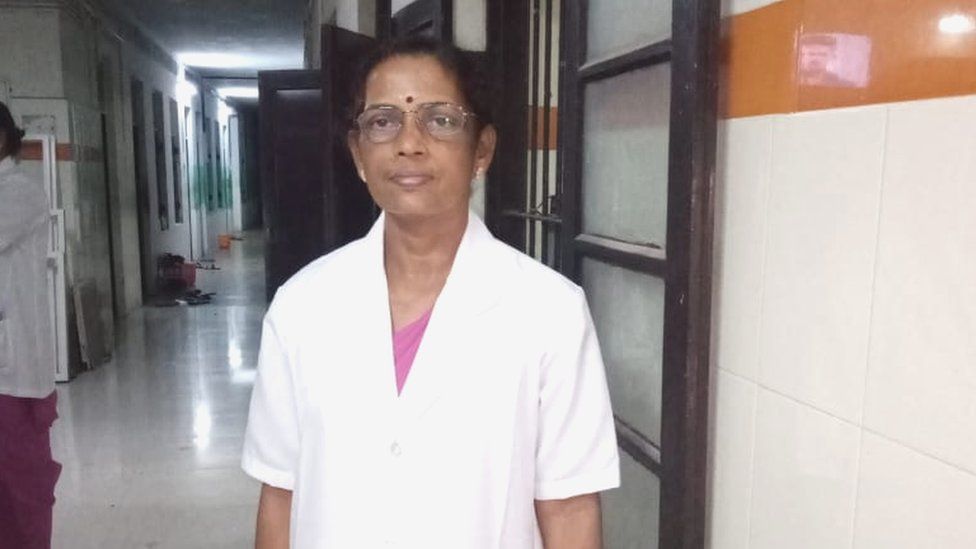
Published5 hours agoSharecloseShare pageCopy linkAbout sharingImage source, P Geetha’s familyBy Imran QureshiBBC HindiAn Indian nurse who was travelling to be honoured for her work has been praised for saving the life of her co-passenger on a flight. Geetha P was travelling from the southern state of Kerala to the national capital Delhi to attend a function to honour winners of the Florence Nightingale award for nurses.But 30 minutes after the plane took off, the cabin crew made an announcement calling for medical help.Suman, a soldier on his way to Indian-administered Kashmir, had collapsed in his seat and showed no signs of a pulse. “I started CPR [Cardiopulmonary Resuscitation] when he was on his seat,” Ms Geetha told the BBC. “One of my colleagues had collapsed like this in the hospital and I had given CPR and rushed her into the cardiac intensive care unit. There were several other cases too in the hospital. But this is the first time I had to do this on a flight,” she said.After the CPR, there were some signs of a pulse.The flight crew had two bottles of IV fluids. Another doctor on the flight, Premkumar, who had also rushed to help, quickly applied a cannula to the patient.”In about an hour or so, Suman was able to eat something, too. Throughout the flight, I sat next to him in the back of the plane,” Ms Geetha says.Once the plane landed in Delhi, a medical team rushed Suman to a hospital, where he is recovering.Image source, P Geetha’s familyDr Mohammed Asheel, a World Health Organization officer who was on the same plane, told the BBC that he first thought Ms Geeta was Suman’s relative when she and others ran to help him. “I saw a woman attending to the patient and three other doctors – one an emergency care specialist – who had already rushed to the seat,” he said. After the flight landed, Dr Asheel spoke to Ms Geetha and was surprised to learn that she had also received the “Best Nurse” award in 2019 from the Kerala government. “It is such a strange coincidence that she was going to Delhi to be felicitated by the president for receiving the Florence Nightingale award, and then she helped save the life of a patient, mid-air,” Dr Asheel says.Ms Geetha won the national award in 2020 but the ceremony had to be conducted virtually due to the Covid pandemic. She and other past winners had been invited to Delhi to be honoured by President Droupadi Murmu.Her award citation refers to her work during the deadly Nipah viral outbreak that hit Kerala in 2018.She was also involved in disaster management operations during the massive floods in the state in 2018 and 2019 as well as the battle against Covid-19.Image source, P Geetha’s familyMs Geetha started her career at the government medical college hospital in the northern district of Kozhikode and later worked across the state.She is currently working at a private hospital in Kozhikode after retiring from government service earlier this year.Tens of thousands of nurses from Kerala work in hospitals outside India, but Ms Geetha says she never regretted not going abroad.”It was God’s will that I should serve people here.”Read more India stories from the BBC:Can India really adopt a climate-friendly lifestyle?India shocked as men sentenced to death for rape freedThe Indian-American ‘helping’ Elon Musk run TwitterHow a tourist spot became a bridge of deathWhere is India’s billionth baby now?India jackpot winner’s journey from delight to dreadMore on this storyThe civilian heroes of India’s plane crash tragedy16 August 2020’Hero’ nurse who died battling Nipah22 May 2018India patient airlifted from US in 26-hour-flight22 July

Read more →

Wrist-mounted camera captures entire body in 3D

Using a miniature camera and a customized deep neural network, Cornell researchers have developed a first-of-its-kind wristband that tracks the entire body posture in 3D.
BodyTrak is the first wearable to track the full body pose with a single camera. If integrated into future smartwatches, BodyTrak could be a game-changer in monitoring user body mechanics in physical activities where precision is critical, said Cheng Zhang, assistant professor of information science and the paper’s senior author.
“Since smartwatches already have a camera, technology like BodyTrak could understand the user’s pose and give real-time feedback,” Zhang said. “That’s handy, affordable and does not limit the user’s moving area.”
A corresponding paper, “BodyTrak: Inferring Full-body Poses from Body Silhouettes Using a Miniature Camera on a Wristband,” was published in the Proceedings of the Association for Computing Machinery (ACM) on Interactive, Mobile, Wearable and Ubiquitous Technology, and presented in September at UbiComp 2022, the ACM international conference on pervasive and ubiquitous computing.
BodyTrak is the latest body-sensing system from the SciFiLab — based in the Cornell Ann S. Bowers College of Computing and Information Science — a group that has previously developed and leveraged similar deep learning models to track hand and finger movements, facial expressions and even silent-speech recognition.
The secret to BodyTrak is not only in the dime-sized camera on the wrist, but also the customized deep neural network behind it. This deep neural network — a method of AI that trains computers to learn from mistakes — reads the camera’s rudimentary images or “silhouettes” of the user’s body in motion and virtually re-creates 14 body poses in 3D and in real time.
In other words, the model accurately fills out and completes the partial images captured by the camera, said Hyunchul Lim, a doctoral student in the field of information science and the paper’s lead author.
“Our research shows that we don’t need our body frames to be fully within camera view for body sensing,” Lim said. “If we are able to capture just a part of our bodies, that is a lot of information to infer to reconstruct the full body.”
Maintaining privacy for bystanders near someone wearing such a sensing device is a legitimate concern when developing these technologies, Zhang and Lim said. They said BodyTrak mitigates privacy concerns for bystanders since the camera is pointed toward the user’s body and collects only partial body images of the user.
They also recognize that today’s smartwatches don’t yet have small or powerful enough cameras and adequate battery life to integrate full body sensing, but could in the future.
Along with Lim and Zhang, paper co-authors are Matthew Dressa ’22, Jae Hoon Kim ’23 and Ruidong Zhang, a doctoral student in the field of information science; Yaxuan Li of McGill University; and Fang Hu of Shanghai Jian Tong University.
Story Source:
Materials provided by Cornell University. Original written by Louis DiPietro. Note: Content may be edited for style and length.

Read more →

COVID testing programs may increase risky behavior, research suggests

Frequent, mandatory surveillance testing was one of the techniques deployed in some jurisdictions in an attempt to control COVID-19, but new research shows that such testing may have the unintended consequence of riskier behavior by those enrolled in the testing.
Based on a false sense of security, students who participated in frequent COVID-19 testing at two universities engaged in more behavior known to increase the risk of spreading the virus than they might have otherwise, according to results of surveys led by University of Wyoming economists.
“Recent research provides some evidence that people increase risky behavior in response to facemask wearing and vaccines, but this is the first study to examine the behavioral responses to mandatory testing,” wrote researchers Chian Jones Ritten, Linda Thunstrom and Todd Cherry, of UW, and J.D. Wulfhorst, of the University of Idaho. “Overall, (our) results suggest that students perceived that the mandatory testing policy decreased their risk of contracting COVID-19, and that this perception led to higher participation in COVID-risky events.”
The research findings were published Friday in PNAS Nexus, the open access sister journal of the Proceedings of the National Academy of Sciences.
During the fall 2020 semester, UW required all on-campus undergraduate students to be tested for COVID twice weekly, while the University of Idaho tested a small random sample of students weekly. Both universities required masks for all indoor events on campus.
The researchers surveyed students at both universities and found that, in both cases, respondents who were tested more frequently perceived that they were at a reduced risk of contracting the virus. Those individuals also more frequently attended “risky” events such as large and small indoor gatherings and frequented restaurants and bars.
From a public health standpoint, such behavior is problematic because inaccurate and delayed test results can result in people who believe they’re not infected carrying the virus and infecting others. Although perhaps unlikely, it is possible that the benefits of testing programs could be entirely offset by increased viral transmission, the researchers say.
While other research shows that, in other contexts, this type of risk compensation behavior is generally small in magnitude, small behavioral changes may lead to meaningful increases in disease spread.
“These unintended consequences may pose a particularly large threat to public health when incubation times are short, the virus is highly transmissible and the risk of false negatives is high, such as with the Omicron variant of the coronavirus,” the researchers wrote.
Interestingly, the surveys found that women, more than men, perceive that increased testing reduces the risk of contracting the virus — and are, thus, more likely to increase risky behavior than men.
Overall, the research shows that mandatory testing programs should be accompanied by mitigation measures to reduce the unintended consequence of people engaging in riskier behavior, the researchers say.
“Our findings suggest that programs with frequent testing may unintentionally increase behavior known to contribute to virus spread — the potential consequences of which are amplified by the exponential nature of viral spread,” the researchers concluded. “Thus, when implementing mandatory testing programs to manage a pathogen, it is important to communicate the programs’ limitations in protecting against infection and highlight the potential for unintended behavioral responses.”
Story Source:
Materials provided by University of Wyoming. Note: Content may be edited for style and length.

Read more →

Childhood traumas strongly impact both mental and physical health

The social environments we grow up in are critical when determining our wellbeing and health later in life. Most Americans (67%) report experiencing at least one traumatic event in childhood, and a new study shows that these experiences have significant impacts on our health risks as adults. Physical illnesses such as obesity and chronic pain are affected, but mental disorders show the most significant association, including post-traumatic stress disorder (PTSD), bipolar disorder, substance abuse, and depression.
Scientists from DRI and the University of Nevada, Reno, led the study, published on Oct. 6 in the journal Frontiers in Psychiatry. More than 16,000 people from the Reno area volunteered for the research as part of the Healthy Nevada Project, one of the most visible genomic studies in the United States powered byRenown Health. Participants answered questions about their social environments before age 18, including experiences with emotional, physical, or sexual mistreatment, neglect, and substance abuse in the household. The researchers combined this information with anonymized medical records to build on existing research about how childhood traumas affect health outcomes.
“The study provides insight as to how social determinants of health may influence adult health disorders,” said Robert Read, M.S., a researcher at the Center for Genomic Medicine at DRI and one of the study’s lead authors.
Nearly two-thirds (66%) of participants recalled at least one type of trauma, and almost one-quarter (24%) reported experiencing more than four. Women and people of African American and Latinx descent reported a higher prevalence of traumatic experiences than men and those with European ancestry, but people in low-income households were the most impacted.
Thirteen mental illnesses showed the most statistically significant associations, including mood disorders, depression, PTSD, anxiety disorders, eating disorders, schizophrenia, and substance abuse. For every reported type of abuse experienced in childhood, a participant’s risk for PTSD increased 47%. Each cumulative trauma also increased one’s risk for making a suicide attempt by 33%.
The researchers note that although the study is rooted in Nevada — which has high rates of adults with mental illness and poor access to care — it provides a window into deeply rooted public health issues across the nation.

Read more →

Tracing tomatoes' health benefits to gut microbes

Two weeks of eating a diet heavy in tomatoes increased the diversity of gut microbes and altered gut bacteria toward a more favorable profile in young pigs, researchers found.
After observing these results with a short-term intervention, the research team plans to progress to similar studies in people, looking for health-related links between tomatoes in the diet and changes to the human gut microbiome — the community of microorganisms living in the gastrointestinal tract.
“It’s possible that tomatoes impart benefits through their modulation of the gut microbiome,” said senior author Jessica Cooperstone, assistant professor of horticulture and crop science and food science and technology at The Ohio State University.
“Overall dietary patterns have been associated with differences in microbiome composition, but food-specific effects haven’t been studied very much,” Cooperstone said. “Ultimately we’d like to identify in humans what the role is of these particular microorganisms and how they might be contributing to potential health outcomes.”
The research is published in the journal Microbiology Spectrum.
The tomatoes used in the study were developed by Ohio State plant breeder, tomato geneticist and co-author David Francis, and are the type typically found in canned tomato products.

Read more →

Investigating COVID-19 deaths for children and young people

A new study conducted in England shows that the risk of death due to COVID-19 remains very low for children and young people, and most deaths occur in those with underlying health conditions. Marta Bertran of the UK Health Security Agency, London, and colleagues present these findings November 8th in the open access journal PLOS Medicine.
Pediatric deaths due to COVID-19 are rare, and because infection tends to be mild in children and young people compared to adults, it can be challenging to assess COVID-19 severity and cause of death for those with serious underlying health conditions. In addition, because death due to COVID-19 is so uncommon for children, limited data exist to examine such fatalities at the population level.
To improve our understanding of pediatric COVID-19 deaths — and which factors might be linked to an increased risk of death — Bertran and colleagues analyzed detailed data on everyone aged less than 20 years in England who died within 100 days of a confirmed COVID-19 infection between March 2020 and December 2021.
The analysis showed that, of 185 total deaths that occurred, 81 were due to COVID-19. Of those who died from COVID-19, 75 percent had underlying health conditions, primarily severe neurodisability and conditions involving a compromised immune system. Half of COVID-19 deaths occurred within seven days of infection and the majority within 30 days of infection.
These findings confirm that death due to COVID-19 remained rare in children and young people even as new variants of the SARS-Cov-2 virus emerged during the study period. They also highlight which children might be at greater risk of COVID-19 death, which could help inform parents, clinicians, and policymakers about prevention through vaccination, for example, and seeking early treatment.
The authors note that this study emphasizes the need for detailed review of individual cases in order to collaboratively monitor rare COVID-19 outcomes in children. They also note that the study period occurred prior to the rise of the Omicron variant, which now dominates cases worldwide.
Coauthor Shamez Ladhani adds, “Our national surveillance in England continues to show a very very low risk of death due to COVID-19 in children and teenagers, with most fatalities occurring in those with multiple and life-limiting underlying conditions.”
Story Source:
Materials provided by PLOS. Note: Content may be edited for style and length.

Read more →