Have I dodged Covid and what does it mean?
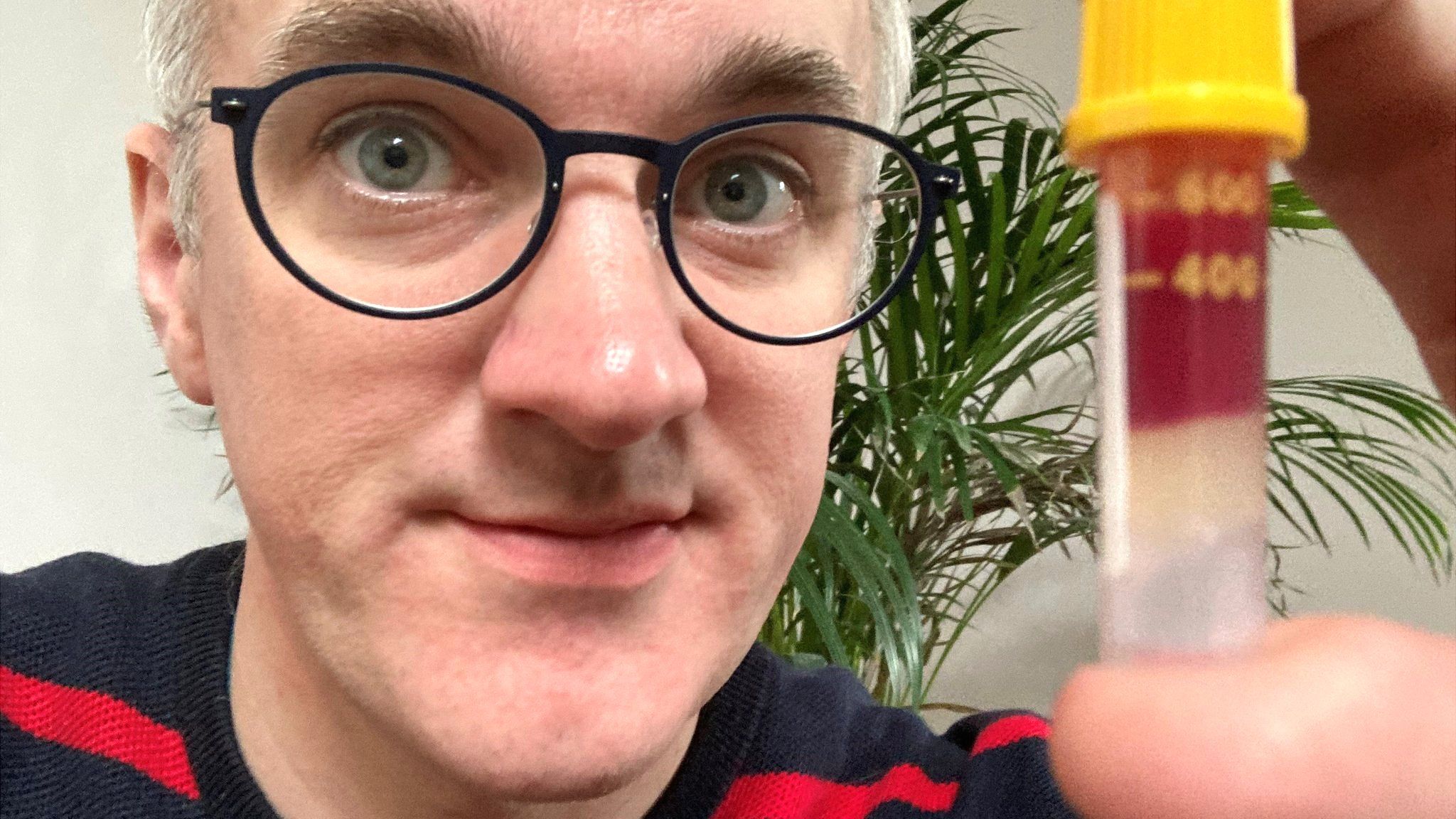
Published2 days agoSharecloseShare pageCopy linkAbout sharingImage source, James GallagherBy James GallagherInside Health presenter, BBC Radio 4I hope this vial of blood contains answers because I have a nagging question – have I managed to dodge Covid?It seems remarkable that anyone could. The virus has swept the world since it emerged in China nearly three years ago. Fresh variants have become better and better at infecting us. Even vaccines make Covid milder rather than being an impenetrable shield. Yet I worked in the office throughout, even in lockdowns, and the virus ripped through the rest of my family and I didn’t get sick. And I’m far from the only person to have gone through the pandemic without getting the walloping symptoms of Covid or to have never tested positive. One estimate in the summer suggested around one-in-10 people in the UK still hadn’t been infected. So what’s going on? And does my body – and those of other “never-Coviders” – contain some secret to tackling the disease? There are three broad possibilities if you think you’ve dodged the virus: You’re wrong – you have actually been infected, but never realised You’ve never come into contact with it Or your body has some extra defence that has repelled it”There are a lot of people saying, ‘I’ve never had ‘Covid-the-disease’. Most probably aren’t right, they may have been infected and it just didn’t result in any symptoms,” Dr Lindsay Broadbent, a virologist at the University of Surrey, tells me.”But we do know there are just some people who have never been infected, even in high risk environments such as nurses,” she adds.Listen to Inside Health: Have I dodged Covid?One study of people being regularly tested found half of those catching the Omicron variant remained blissfully unaware or put their mild symptoms down to something else. My blood – painfully milked out of my index finger – will determine whether I have been deluding myself too. I seal the blood in a vial and post it to a research laboratory for analysis of the mixture of antibodies it contains. Antibodies are a part of the immune system. They act like missiles that stick to viruses. This stops them infecting our body’s cells and tells the rest of the immune system to kill the virus. Different antibodies stick to different parts of the virus and the test focuses on two of them:Anti-S antibodies that stick to a protein on the surface of the virus called spikeAnti-N antibodies that stick to an inner layer of the virus – called the nucleocapsid – that protects the virus’s genetic codeAll the vaccines used in the UK train the body to attack only the spike protein. Even a year after my last booster, the test shows I have high levels of anti-S antibodies.Your body learns to attack the other parts of the virus only when facing the virus itself. If anti-N antibodies were in my blood that would mean I’d been infected with Covid.I test negative and the idea I have dodged Covid passes its first hurdle. Prof Mala Maini, a professor of viral immunology, invites me into her laboratory at University College London to explore the results. “It could mean that you’ve never had the infection, but it could also mean you’ve made anti-N antibodies and they’ve gone from your blood,” she tells me.Image source, James GallagherHowever, I have never tested positive despite:Testing with lateral flows twice a week for a chunk of the pandemic to come into the officeDriving to a grim car park for a PCR test or taking a lateral flow whenever I had symptoms Testing daily when family were sick with CovidProf Maini concludes: “Put together with your negative anti-N antibody test, it suggests you may be someone who has escaped a full-blown infection. “You may have had what we call an ‘abortive’ infection.”An immunological head startThe idea of an abortive infection is you are exposed to the virus, it even gets into the right places to start an infection, but the body gets on top of it before it takes off. We know this happens from studies that have tried to deliberately infect people with Covid. These human challenge trials squirted virus up the nose of healthy volunteers, but in the first 34 people to take part, only half actually developed an infection. The first line of protection is the innate immune system. This is our body’s default defence. It cannot learn or “remember” infections, so each time is like the first time. But it is so fast it can stop an infection in its tracks. Dr Broadbent demonstrated this by conducting experiments using miniature lungs grown from people’s cells – called organoids – and trying to infect them with the virus.”We found one person that we just could not infect, we were sticking bucketloads of virus on these cells and there was no infection,” she tells me.The other half of the immune system is known as the adaptive immune system, which learns and gets better with practice. This is how vaccines prepare the body for fighting Covid. “It could just be that the vaccines worked well for you and have given you very good protection,” suggests Prof Maini.But vaccines seem to give only limited and rapidly-waning protection against catching the virus. And there were no vaccines for the first year of the pandemic. However, there are other ways this part of the immune system could stop an infection.Blood and lung samples taken from hospital staff before the pandemic, showed some already had protective T-cells. These are like sentinels that inspect other cells for signs of infection. If they find a contaminated cell, they kill it. Even before the first cases arrived in the UK, some people had these anti-Covid soldiers in their bodies. They are probably the result of catching other common cold coronaviruses, which are closely related to the Covid virus. “If you have young children at school, it’s very likely that you would have been exposed to these in the preceding years,” Prof Maini tells me. “If you’ve got these pre-existing T-cells ready and waiting then they can act much more quickly and bring down the infection before it becomes positive on your test,” she adds.Covid-resistant people inspire new vaccine tacticThe hope is a new generation of vaccines can be developed that mimic this pre-existing immunity. “If you could make T-cells against the inner regions of the virus and get those responses in the nose, airways and lungs there’s a much better chance they could abort the infection before it takes off, that’s the goal,” says Prof Maini. My gut feeling is that the torrent of bugs every toddler brings home from nursery to plague their already weary parents helped me dodge Covid. Other explanations?There are two other possibilities, but they either don’t apply to me or are incredibly rare. Some people have never been exposed to the virus because they have shunned contact with other people. I’ve interviewed the super-shielders who have isolated themselves for nearly 1,000 days, often because they have weakened immune systems that leave them more vulnerable. This isn’t me after getting the train to work throughout and even sharing a bed with a sickly toddler. Podcast: 950 days of shieldingThe other idea is genetic invulnerability, which does happen with other diseases. The famous example is human immunodeficiency virus (HIV). A rare few are born with a lucky genetic mutation that completely shields them from the virus. A mutation in a section of their genetic code – called CCR5 – changes the locks on our body’s cells so HIV can’t get inside. This has been used to cure some people of HIV and similar mutations have been shown to lock coronavirus out of people’s cells.”It’s incredibly, incredibly small numbers that have some kind of genetic resistance,” says Dr Broadbent.So am I safe this winter? So for any of us that have still not caught the virus, can we go into the festive season with confidence or are we actually the most at-risk?The protection from the vaccine means that the chances of being severely ill are greatly lowered even if it cannot stop the infection. But research, including a study in Switzerland, suggests having had the virus and the vaccine – known as hybrid immunity – gives the strongest immune response. “So it may mean that you are a bit more at risk,” warns Prof Maini.Dr Broadbent agrees: “If you don’t think you’ve had it up to now, it does not mean resistance… chances are you’re lucky.”Personally, I suspect writing this piece has tempted fate therefore ensuring I catch Covid by Christmas! Follow James on Twitter, Inside Health was produced by Beth Eastwood.More from Inside HealthMultiple sclerosis: Is a virus we all have causing MS?Long Covid: ‘I’ve had long Covid for two years now’Sickle cell: ‘The revolutionary gene-editing treatment that gave me new life’Cervical cancer: Vaccines could mean only one smear test a lifetimeAnimals for organs: Are pigs the future of organ transplants?Asthma: Why switching inhaler could be better for you and the planetVegan ready meals: How healthy are they?

Read more →
Probiotic 'backpacks' show promise for treating inflammatory bowel diseases

Like elite firefighters headed into the wilderness to combat an uncontrolled blaze, probiotic bacteria do a better job quelling gut inflammation when they’re equipped with the best gear.
A new study by researchers at the University of Wisconsin-Madison demonstrates just how much promise some well-equipped gut-friendly bacteria hold for improving treatments of inflammatory bowel disease (IBD), including Crohn’s disease and ulcerative colitis.
Led by Quanyin Hu, a biomedical engineer and professor in the UW-Madison School of Pharmacy, the research builds on technology the team had previously designed. That prior technology encases beneficial bacteria within a very thin protective shell to help them survive an onslaught of stomach acids and competing microbes long enough to establish and multiply in the guts of mice.
While the technology makes orally administered probiotics more effective, IBD is a complex disease that usually involves more than gut microbial communities that are out of whack.
“IBD is a complicated disease, and you need to attack it at different angles,” says Hu.
So, Hu and his colleagues devised specialized nanoparticles to neutralize molecules implicated in IBD. They’ve also figured out a way of attaching these nanoparticle “backpacks” to beneficial bacteria after encasing them in the protective coating.

Read more →

Popular dietary supplement causes cancer risk, brain metastasis

While previous studies have linked commercial dietary supplements like nicotinamide riboside (NR), a form of vitamin B3, to benefits related to cardiovascular, metabolic and neurological health, new research from the University of Missouri has found NR could actually increase the risk of serious disease, including developing cancer.
The international team of researchers led by Elena Goun, an associate professor of chemistry at MU, discovered high levels of NR could not only increase someone’s risk of developing triple-negative breast cancer, but also could cause the cancer to metastasize or spread to the brain. Once the cancer reaches the brain, the results are deadly because no viable treatment options exist at this time, said Goun, who is the corresponding author on the study.
“Some people take them [vitamins and supplements] because they automatically assume that vitamins and supplements only have positive health benefits, but very little is known about how they actually work,” Goun said. “Because of this lack of knowledge, we were inspired to study the basic questions surrounding how vitamins and supplements work in the body.”
Following the death of her 59-year-old father only three months after being diagnosed with colon cancer, Goun was moved by her father’s passing to pursue a better scientific understanding of cancer metabolism, or the energy through which cancer spreads in the body. Since NR is a known supplement for helping increase levels of cellular energy, and cancer cells feed off of that energy with their increased metabolism, Goun wanted to investigate NR’s role in the development and spread of cancer.
“Our work is especially important given the wide commercial availability and a large number of ongoing human clinical trials where NR is used to mitigate the side effects of cancer therapy in patients,” Goun said.
The researchers used this technology to compare and examine how much NR levels were present in cancer cells, T cells and healthy tissues.
“While NR is already being widely used in people and is being investigated in so many ongoing clinical trials for additional applications, much of how NR works is a black box — it’s not understood,” Goun said. “So that inspired us to come up with this novel imaging technique based on ultrasensitive bioluminescent imaging that allows quantification of NR levels in real time in a non-invasive manner. The presence of NR is shown with light, and the brighter the light is, the more NR is present.”
Goun said the findings of the study emphasize the importance of having careful investigations of potential side effects for supplements like NR prior to their use in people who may have different types of health conditions. In the future, Goun would like to provide information that could potentially lead to the development of certain inhibitors to help make cancer therapies like chemotherapy more effective in treating cancer. The key to this approach, Goun said, is to look at it from a personalized medicine standpoint.
“Not all cancers are the same in every person, especially from the standpoint of metabolic signatures,” Goun said. “Often times cancers can even change their metabolism before or after chemotherapy.”
“A bioluminescent-based probe for in vivo non-invasive monitoring of nicotinamide riboside uptake reveals a link between metastasis and NAD+ metabolism” was published in the Journal of Biosensors and Bioelectronics. Funding was provided by grants from the European Research Council (ERC-2019-COG, 866338) and Swiss National Foundation (51NF40_185898), as well as support from NCCR Chemical Biology.
Other authors on the study are Arkadiy Bazhin, Pavlo Khodakivskyi, Ekaterina Solodnikova and Aleksey Yevtodiyenko at MU; Tamara Maric at the Swiss Federal Institute of Technology; Greta Maria Paola Giordano Attianese, George Coukos and Melita Irving at The Ludwig Institute for Cancer Research in Switzerland; and Magali Joffraud and Carles Cantó at the Nestlé Institute of Health Sciences in Switzerland. Bazhin, Khodakivskyi, Mikhaylov, Solodnikova, Yevtodiyenko and Goun are also affiliated with the Swiss Federal Institute of Technology. Mikhaylov, Yevtodiyenko and Goun are also affiliated with SwissLumix SARL in Switzerland.

Read more →

New tool predicts risk of hospital readmission for children before discharge

Readily available electronic health record (EHR) data can be used to reliably identify readmission risk for children of all ages while they are still in the hospital, according to a study from Ann & Robert H. Lurie Children’s Hospital of Chicago published in the journal JAMA Network Open. The newly developed and validated tool will be key in efforts to reduce hospitalizations within 30 days of discharge, which also should help free up scarce pediatric hospital beds.
“Although hospital readmissions are a quality metric, until now we have not had a comprehensive and easily applicable tool to predict pediatric readmission risk prior to discharge,” said lead author Denise M. Goodman, MD, MS, Critical Care physician at Lurie Children’s and Professor of Pediatrics at Northwestern University Feinberg School of Medicine. “Knowing which children are most likely to need another hospitalization soon after their initial stay allows us to be proactive and better focus discharge planning to mitigate high risk of readmission.”
Dr. Goodman and colleagues used data from three years of discharges at Lurie Children’s to derive and validate a suite of three readmission prediction models for children of all ages, including infants younger than 28 days. To calculate readmission risk, these models apply demographic and socioeconomic data from the EHR, as well as clinical variables such as ongoing length of stay, use of specific therapies and prior hospitalizations.
“A significant strength of our prediction models is that they were designed to be implemented in the EHR during the hospital stay and to change with clinical circumstances,” said Dr. Goodman. “Readmission risk can be recalculated daily, which allows us the opportunity to tailor discharge planning in real time.”
Lowering the risk of readmissions also helps hospitals to make available pediatric beds, which are becoming increasingly scarce in Chicago, across Illinois and nationally.
“Given the growing shortage of pediatric beds, it is extremely important to reduce the chance that a child would need to return to the hospital within 30 days,” added senior author Matthew M. Davis, MD, MAPP, Chair of the Department of Pediatrics at Lurie Children’s and Northwestern University Feinberg School of Medicine. “We believe that our readmission prediction tool is the most comprehensive one available for hospitals to address the anticipated needs of children and their families prior to discharge, thereby reducing the risk of rehospitalization.”
Research at Ann & Robert H. Lurie Children’s Hospital of Chicago is conducted through Stanley Manne Children’s Research Institute. The Manne Research Institute is focused on improving child health, transforming pediatric medicine and ensuring healthier futures through the relentless pursuit of knowledge. Lurie Children’s is ranked as one of the nation’s top children’s hospitals by U.S. News & World Report. It is the pediatric training ground for Northwestern University Feinberg School of Medicine.
Story Source:
Materials provided by Ann & Robert H. Lurie Children’s Hospital of Chicago. Note: Content may be edited for style and length.

Read more →

Previously unknown ability of the autonomic nervous system discovered

The autonomic nervous system is known as the control centre for involuntary bodily processes such as the beating of our hearts and our breathing. The fact that this part of the nervous system also has the ability to spontaneously restore muscle function following a nerve injury was discovered by a research group at MedUni Vienna’s Department of Plastic, Reconstructive and Aesthetic Surgery as part of their study recently published in the Journal of Neuroscience. Their findings may form the basis for improving and developing interventions to treat nerve lesions.
The research team led by Vlad Tereshenko and Oskar Aszmann from the Clinical Laboratory for Bionic Limb Reconstruction at MedUni Vienna’s Department of Plastic, Reconstructive and Aesthetic Surgery discovered this facet of the interaction between nerves and muscles — which was previously unknown to science — in the course of its preclinical research on facial nerves and muscles. After a nerve has been injured or severed, it is no longer able to control the motor function of the facial muscles, resulting in facial paralysis in the animal model.
In some cases, the scientists observed spontaneous recovery of muscle function days or weeks after the nerve lesion. Using novel, complex techniques, they were able to establish that the autonomic nervous system takes over the function of the injured nerve, as it were. “Until now, we were unaware that the autonomic nervous system can control muscle motor function with nerve impulses. As we have seen in our experiments, the parasympathetic nerve fibres form new functional neuromuscular synapses to do this. At the same time, the patterns of the muscle fibres are modified and, hence, the physiological properties of the autonomously reinnervated muscles are changed,” explains first author Vlad Tereshenko, outlining the key findings from the study.
Potential actor in nerve reconstruction
Following injuries or certain diseases, nerves can temporarily or permanently lose their ability to provide motor control to muscles. Well-established therapeutic concepts such as the relocation of nerves or nerve transplants are now available to remedy the resultant motor deficits. However, clinical outcomes may be affected by several factors, such as the slow rate of nerve regeneration or the lack of donor nerves. “By identifying this previously unknown ability of the autonomic nervous system, we have discovered a new potential actor in nerve reconstruction. The results of our study can therefore help to improve existing therapeutic measures and to develop new ones,” says Vlad Tereshenko, looking into the future. Follow-up studies are expected to deepen our knowledge of this new facet of the neuromuscular system. One of the questions to be addressed is whether and how autonomic nerve fibres can be surgically relocated in order to restore muscle function on a temporary or permanent basis.
Story Source:
Materials provided by Medical University of Vienna. Note: Content may be edited for style and length.

Read more →

What happens to our dopamine system when we experience aversive events?

A new study at the Netherlands Institute for Neuroscience has examined how the dopamine system processes aversive unpleasant events.
It is well known that the dopamine system plays a crucial role in motivation, learning and movement. One of the main functions of dopamine is to predict the occurrence of rewarding experiences and the availability of rewards in our environment. In this context, the dopamine system informs our brains about so-called ‘reward prediction errors’ — the difference between received and predicted rewards. Dopamine neurons become more active when a reward occurs unexpectedly or if it is bigger than expected, and they show depressed activity when we receive less reward than predicted. These error signals help us to learn from our mistakes and teach us how to achieve rewarding experiences.
Rewarding versus aversive stimuli
While a large number of studies has focused on the relationship between dopamine release and rewarding stimuli, few have looked at the effect of unpleasant and aversive stimuli on dopamine. Although the results of these few experiments have been inconsistent, it has become clear that aversive stimuli have an impact on the dopamine system. But there is an active debate among neuroscientists on what precise role dopamine neurons play in processing aversive stimuli: Does their activity change in response to aversive events? Do they predict aversive events? Do they encode an aversive prediction error?
New findings on the role of dopamine in aversive events
A new study at the Netherlands Institute for Neuroscience has examined how the dopamine system processes aversive events. The team around PhD student Jessica Goedhoop and group leader Ingo Willuhn exposed rats to white noise in combination with stimuli that predicted the white noise, while they measured the release of dopamine in the brain. White noise is a well-known example of an unpleasant auditory stimulus for rats.
The researchers found that the release of dopamine gradually decreased during the exposure to white noise. Furthermore, after consistent presentation, stimuli that occurred a few seconds before white-noise exposure began to have the same depressing effect on dopamine neurons. However, in contrast to how it processes rewards, dopamine did not encode a prediction error for this aversive stimulus. Overall, this new study demonstrates that the dopamine system helps the brain to anticipate the occurrence and duration of unpleasant events, but without taking prediction errors into account.
Group leader Ingo Willuhn: ‘This is a very thorough and systematic study that takes a lot of variables into account. The results give us a better understanding of the role of dopamine release in processing aversive events. There is a growing interest into the role of dopamine in aversion. We used a novel aversive stimulus that enabled to conduct a more thorough analysis of dopamine than previously possible.’
Addictive drugs hijack and amplify dopamine signals and induce exaggerated, uncontrolled dopamine effects on neuronal plasticity. This study brings us closer to understanding the underlying mechanism behind this pathological phenomenon.
Story Source:
Materials provided by Netherlands Institute for Neuroscience – KNAW. Note: Content may be edited for style and length.

Read more →

Scientists uncover potential 'electrical language' of breast cancer cells

New research has found variable voltages in the membranes of breast cancer cells, revealing clues about how they grow and spread.
The research, led by Imperial College London and The Institute of Cancer Research, London, could help us better understand how cancer cells ‘decide’ when to multiply and where to spread to.
When cells become cancerous, they undergo a series of bioelectric changes. For example, the layer surrounding cells, called the cell membrane, becomes more positively charged than healthy cell membranes.
This new research, published today in Communications Biology, found that as well as the membrane voltage being higher than in healthy cells, it also fluctuates over time — with breast cancer cells behaving much like neurons. The researchers believe this could indicate an electrical communications network between cancer cells that could in future be a target for disruption, creating possible new treatments.
Co-lead author Dr Amanda Foust, from Imperial’s Department of Bioengineering, said: “When healthy cells become cancerous, the changes they undergo can help them to grow and spread. We know, for example, that certain genes that control cell multiplication can switch off, causing uncontrolled cell growth.
“We don’t yet know why the voltage of membranes fluctuates in cancer cells — but our discovery and technology, enabled by the exciting collaboration of engineers and biologists, opens doors to further work that could help us better understand cancer signalling networks and growth.”
Testing the network

Read more →

The nose-brain pathway: Exploring the role of trigeminal nerves in delivering intranasally administered antidepressant

Intranasal (in.) administration has been garnering increasing popularity as a non-invasive approach to deliver drugs directly to the brain. This approach involves the respiratory or olfactory epithelia of the nasal mucosa through which the drugs reach the central nervous system (CNS). Transport from the respiratory epithelium via the trigeminal nerve is considerably slower than transport from the olfactory epithelium route via the olfactory bulb (OB) or cerebrospinal fluid (CSF). However, only a small portion of the nasal mucosa in humans is made up of olfactory epithelium, propelling researchers to focus on improving in. drug delivery time through the predominant respiratory epithelium.
To facilitate this, a team of researchers including Professor Chikamasa Yamashita from Tokyo University of Science, Japan, developed a novel drug to test its uptake efficacy by the CNS.
To offer more insight, Prof. Yamashita states: “In a previous study, we combined functional sequences (namely, a membrane permeability-promoting sequence [CPP] and an endosomal escape-promoting sequence [PAS]) to glucagon-like peptide-2 (GLP-2), which is effective against treatment-resistant depression, so that it can be efficiently taken up by neurons. Using this, we aimed to construct a nose-to-brain system mediated by the trigeminal nerve in the respiratory epithelium.”
While studying the uptake of this novel PAS-CPP-GLP-2 by the CNS, the team noted that its anti-depressant effects via in. administration remained on par with intracerebroventricular (icv.) administration at identical doses. Therefore, Prof. Yamashita and his colleagues elucidated a nose-to-brain transfer mechanism to explain why intranasally administered GLP-2 derivatives show drug effects at the same dose asintracerebroventricularly administered GLP-2 derivatives. The team’s findings have been documented in a study made available online on 30 September 2022 in Volume 351 of the Journal of Controlled Release.
The team performed icv. and in. administration of PAS-CPP-GLP-2 into mice. The amount of drug transferred to the whole brain was quantified by enzyme-linked immunosorbent assay (ELISA).
Surprisingly, the ELISA revealed that a much smaller amount of intranasally administered PAS-CPP-GLP-2 reached the brain than intracerebroventricularly administered PAS-CPP-GLP-2. However,both icv. and in. administration showed efficacy at the same dose. This is attributed to the fact that icv. administration introduces drugs to the place of origin of CSF (ventricle), causing them to diffuse into the CSF and spread through the brain. Since the CSF is present in the spaces outside the capillaries of the brain, the team saw that a large portion of PAS-CPP-GLP-2 was likely to stay here without being transported to its working sites of action. On the other hand, nasally administered GLP-2 derivatives were rapidly taken up by the trigeminal nerve of the respiratory epithelium, and efficiently reached the site of action while transiting neurons.
Prof. Yamashita explains: “This suggests that the peptide delivered to the site of action by icv. administration is present in large amounts in the brain but only in very small amounts, as it remains in the perivascular space. On the other hand, intranasally administered PAS-CPP-GLP-2, unlike icv. administration, may be transferred to the site of action without passing through the CSF or perivascular space.”
These results prompted the team to identify the central transfer drug delivery route following in. administration. This route involved the principal sensory trigeminal nucleus, followed by the trigeminal lemniscus of the trigeminal nerve, and led to the drug’s working sites. Finally, it was discovered that the migration of PAS-CPP-GLP-2 via nerve transit was the reason behind its pharmacological activity despite its low levels in the brain upon in. administration.
Prof. Yamashita explains, “This is the world’s first drug delivery system that allows intranasally administered peptides to be delivered to the central nervous system via nerve cells, delivering peptides to the site of action with the same efficiency as icv. administration.”
Speaking about the future applications of the team’s findings, Prof. Yamashita concludes: “Current data suggests the possibility of extending the use of this system from treating depression to delivering drugs in patients with Alzheimer’s disease. It is therefore expected to be applied to neurodegenerative diseases with high, unmet medical demand.”
Story Source:
Materials provided by Tokyo University of Science. Note: Content may be edited for style and length.

Read more →

China Covid: Beijing eases some curbs despite rising cases

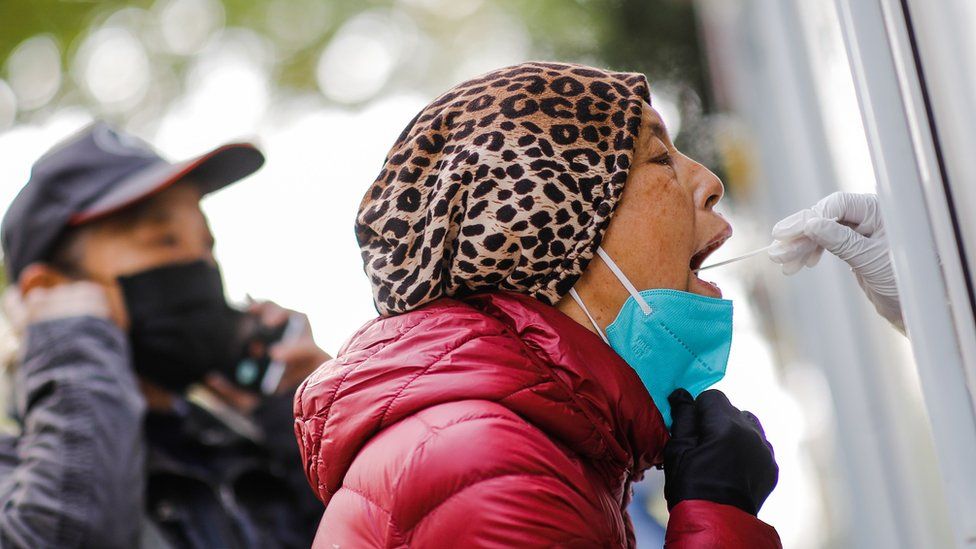
Published57 minutes agoSharecloseShare pageCopy linkAbout sharingImage source, EPABy Frances MaoBBC NewsChina has slightly relaxed some of its Covid restrictions even as case numbers rise to their highest levels in months.Quarantine for close contacts will be cut from seven days in a state facility to five days and three days at home.Officials will also stop recording secondary contacts – meaning many people will avoid having to quarantine.The slight easing comes weeks after Xi Jinping was re-instated as party leader for a historic third term.Mr Xi held his first Covid meeting with his newly elected Standing Committee on Thursday. China’s zero-Covid policy has saved lives in the country of 1.4 billion people but also dealt a punishing blow to the economy and ordinary people’s lives.There is increasing public fatigue over lockdowns and travel restrictions. Stories of suffering and desperation have also circulated on social media, fuelling many outbursts of civic anger.China’s National Health Commission (NHC) insisted the changes did not amount to “relaxing prevention and control, let alone opening up”, but were instead designed to adapt to a changing Covid situation.The NHC also said it would develop a plan to speed up vaccinations.The politics driving China’s hellish lockdownsChina outcry over death of girl sent to quarantineLockdown delayed potentially life-saving treatmentOn Friday, the changes were announced even as the country grapples with its worst wave of Covid in months.The cities of Beijing, Guangzhou and Zhengzhou are currently seeing record numbers. On Thursday, China recorded over 10,500 new Covid cases – the highest daily total since April when China shut down its largest city Shanghai to combat a wave there.People in China, and analysts watching the country, have been waiting for some indication from the government that strict Zero-Covid measures might be eased.On the one hand, Beijing is not officially backing down from its commitment to its current strategy, but it has announced a series of measures it has described as “adapting” to the situation rather than “relaxing” the policy.For Chinese people who have become exhausted by Zero-Covid it doesn’t really matter if the government finds the need to save face semantically, as long as the changes are real and that they are.The moves announced today may not seem like much if you are not living in China but, inside the country, three years into a crisis, with no indication of when or how an off ramp may appear, any steps towards re-opening are steps which are not going backwards.Ending the punishment for airlines carrying infected passengers will mean more flights, more seats, cheaper inbound tickets, and an end to abrupt Covid-induced cancellations. This is significant.A reduction of seven days in hotel quarantine plus three days at home to five days plus three is only a small alteration but the expectation is that this could continue to come down at some point in the future.Again, for a country with an economy being smashed by Zero-Covid, baby steps are better than no steps.Raising the bar for centralised quarantine inside China will also ease tensions for ordinary people, if only because it provides a glimmer of light at the end of the Covid tunnel.It is hard to explain to people in other countries just how fed up with Zero-Covid locals have become. They were living through this crisis well before the rest of the world and while other countries have now found a way to move on, they’re still stuck with it, as if China has been frozen in a massive 2020 time block.Despite the small changes however, most restrictions still remain in place. Mr Xi has insisted on sticking to a stringent zero-Covid policy involving lockdowns even as the rest of the world has moved on. That means in many cities residents have been subject to sudden restrictions on their movement and disruptions to work and schooling.For example, this week in Guangzhou – the current epicentre of the Covid wave in China – locals in one district were barred from venturing outside and only one member of each household was allowed outside to grocery shop.Public transport has been suspended while schools and workplaces are also shut down.In Zhengzhou, another Covid centre at the moment, lockdowns there prompted many workers living at a vast factory owned by Taiwanese iPhone-maker Foxconn to flee the area on foot to escape restrictions.More on this storyPanic and fear drove iPhone factory breakout3 NovemberThe politics driving China’s hellish lockdowns21 OctoberXi doubles down on zero-Covid as congress opens16 October

Read more →

Why cancers caused by BRCA mutations recur

Researchers at the University of Pennsylvania’s Basser Center for BRCA at the Abramson Cancer Center have discovered factors that may make breast and ovarian cancers associated with BRCA1/2 gene mutations more likely to recur.
These mutations strongly predispose women to breast and ovarian cancers, and these cancers have a high risk of recurrence after initial treatment. In the new study, published this week in Nature Communications, the researchers compared a large set of tumors from patients with primary and recurrent BRCA1/2 mutation-associated breast and ovarian cancers, and found multiple features associated with recurrence, including features that would be expected to improve tumors’ ability to repair treatment-caused DNA damage.
“These results suggest key biological features of therapy-resistant recurrences, which point to new possibilities for treating BRCA1/2-mutation cancers,” said the study’s senior author Katherine Nathanson, MD, the Pearl Basser Professor for BRCA-Related Research in Penn’s Perelman School of Medicine, Deputy Director of the Abramson Cancer Center, and Director of Genetics at the Basser Center for BRCA.
The BRCA1 and BRCA2 proteins are key DNA-repair proteins. Their functional loss leaves some cells highly vulnerable to DNA damage, including damage that triggers cancer. Women with inactivating mutations in the BRCA1 or BRCA2 genes have very high lifetime risks of breast cancer, as well as high risks of ovarian cancer. Some women who learn that they have BRCA1/2 mutations opt for surgery to remove their breasts and ovaries to reduce their cancer risks, while others undergo close monitoring aimed at detecting cancers at the earliest stages.
Unfortunately, many women learn that they have a BRCA1/2 mutation only after breast or ovarian cancer has developed, often when the diseases are too advanced to be cured with surgery. These BRCA1/2-mutation-associated tumors often can be put into remission with chemo drugs and radiation, which take advantage of the tumors’ lower DNA-repair capacity. But these tumors have a high risk of recurrence within a few years after patients complete first-line therapy — and scientists know relatively little about the factors that drive recurrence.
In the study, Nathanson’s team examined 67 sets of primary and recurrent breast and ovarian tumors from BRCA1/2 mutation carriers. For each set, they compared the DNA mutations, gene activity patterns, and other tumor cell features in the primary tumor to see how these features differed from the recurrent tumor.
“We hypothesized that differences between paired tumors could point to possible mechanisms of tumor evolution allowing recurrence,” Nathanson said.
One novel observation was that, especially in BRCA1-mutation recurrent cancers, the tumor cells often have switched to expressing a specific isoform of the BRCA2 protein’s messenger-RNA molecule. This isoform is slightly shorter-than-the normal length BRCA2 RNA. It is translated into the usual BRCA2 protein, but is more stable than the normal BRCA2 messenger-RNA and thus would be expected to be associated with an increased level of BRCA2 protein — plausibly as a way of boosting DNA-repair capability. In general, tumors being treated with strong DNA-damaging drugs and/or radiation may survive that treatment better, and ultimately recur, when they can increase their ability to repair DNA damage. The researchers linked the presence of the shorter form of the BRCA2 RNA not only to cancer recurrence but also to significantly decreased patient survival times.
Similarly, the researchers were surprised to find that whether the tumor had loss of the normal copy of the BRCA1 or BRCA2 gene (termed loss of heterozygosity) could vary through the tumor’s development. Loss of heterozygosity had been generally assumed to be necessary for development of breast and ovarian cancers in germline BRCA1/2 mutation carriers, but work from this team and others has shown that it is not always needed. Now, they have found that in 25 percent of cases that loss of heterozygosity can vary between primary and recurrent tumors, a novel finding only possible with matched primary and recurrent tumors. Some tumors progress to not having loss of heterozygosity from having it, as part of tumor progression. Other tumors go from having loss of heterozygosity to not having it, presumably as a mechanism of therapeutic resistance. In summary, the researchers found several novel markers of therapeutic resistance, which they say underscores the importance of profiling the tumor at the time of treatment. Nathanson and her colleagues are continuing to evaluate multiple other factors that contribute to therapeutic response and resistance in patients with BRCA1/2-related tumors.
The study’s first author is Jennifer B. Shah, who received her PhD in Cell and Molecular Biology at the Perelman School of Medicine, working in Dr. Nathanson’s lab.
The research was supported by the Basser Center for BRCA at the University of Pennsylvania, the Gray Foundation, the V Foundation for Cancer Research, the Breast Cancer Research Foundation, Miguel Servet Program, Asociación Española Contra el Cáncer, and the National Institutes of Health (T32 HG009495).

Read more →