Ebola fears see Uganda close schools early for Christmas

Published8 hours agoSharecloseShare pageCopy linkAbout sharingImage source, Getty ImagesBy Anne SoySenior Africa correspondentIt might seem like Christmas is coming early for students in Uganda as millions of them head home early for the school holidays on Friday. Yet the decision to close schools nationwide two weeks before the end of term has been taken to curb the spread of Ebola, as the country continues to battle one of its worst outbreaks.It is also at odds with the government’s official stance that everything is under control. In the past two months 55 people have died with the virus – and there were 22 probable Ebola deaths before the outbreak was officially declared on 20 September.Some experts have expressed reservations about the school shutdowns, arguing that keeping pupils contained for another two weeks would be a better way to halt the spread of the deadly disease, given the incubation period can last from two days to three weeks. Ebola is a viral infection that is spread through the bodily fluids of a patient.Many of the children who attend boarding schools will be travelling long distances across the country.”They are going to be packed in buses, minibuses and private cars providing maximum opportunity for people to mix in very close contact,” public health expert Dr Olive Kobusingye, a senior research fellow at Makerere University School and the University of South Africa, told the BBC.”It’s the last thing Uganda needs now.”But it is not a decision taken lightly – given that at the height of the Covid-19 pandemic, Uganda imposed the longest school closure globally, lasting 22 months.Parents’ visits bannedEducation Minister Janet Museveni, who is also the wife of Uganda’s President Yoweri Museveni, made the announcement earlier this month following 23 cases across five schools in Kampala – which led to the death of eight students.The infections in the capital were linked to a man who had travelled to there from the western Mubende district, the epicentre of the outbreak.Image source, Getty ImagesThe fear is schools could now act as a reservoir – something authorities want to avoid in urban areas.Schools had already put in place strict anti-Ebola measures – many already used for Covid – including temperature screening, regular handwashing and disinfecting surfaces. Visits by parents and guardians were then banned as the last term of the year drew to a close and final-year students prepared for exams.For Health Minister Jane Ruth Aceng, organising the end-of-term travel for students to and from Mubende and Kassanda, another of the worst-affected districts, has been of paramount importance.Both of these areas are still under lockdown, meaning residents cannot leave, and entry is restricted unless passing through on the main highway.Children will be dropped off at designated points from where they will then board buses provided by the government and international organisations supporting the Ebola response. These buses will take them to assigned stops in their home areas where parents can pick them up. “This is to ensure the parents don’t go into the two districts and the learners coming out of boarding schools don’t go into communities” in the outbreak epicentre, Dr Aceng told the BBC.Pupils returning to Mubende and Kassanda must first go to Kampala, where they will be put on buses and taken to a main meeting point within their home district. They will be fully briefed beforehand on how to protect themselves.Quarantine concernsUganda has dealt with multiple outbreaks of Ebola over the past 22 years, but the current one is by far the most widespread, having been reported in nine districts, mostly in the central regions.Like four previous epidemics, this one is of the Sudan strain, for which there is no approved vaccine or treatment, unlike the more common Zaire strain responsible for the largest ever Ebola outbreak in West Africa.Henry BosaIf we were hiding any data, the evidence would be out – we’d be seeing people dying en masse”Henry BosaUganda’s Ebola incident commanderThe government has said that trials for three vaccines will begin in the coming weeks, though details are scant about how and on whom they will be carried out.There has been good news from Kagadi and Bunyangabu districts, where 42 days have passed without a new infection – double the incubation period.Kyegegwa district has also gone for a couple of weeks without a new case, giving the response teams hope that the control measures are working.But the challenge continues to be people who have been identified as contacts of confirmed cases who then travel without notifying health workers.The outbreaks in Jinja and Masaka were triggered by two infected people who travelled separately out of Kampala. Critics feel this is an indication that the health ministry does not have the capacity to deal with containment – and worry about the thoroughness of the contact tracing.”I think the data that has been put out there is confirmed data, but I do not believe it’s exhaustive,” ActionAid’s Xavier Ejoyi told the BBC.In response, the health minister acknowledged that she could not say their quarantine or identification of cases was “100% watertight”, but expressed confidence that surveillance teams could quickly identify any cases that had been missed.Lt Col Dr Henry Bosa, the country’s Ebola incident commander agreed, telling the BBC: “If we were hiding any data, the evidence would be out – we’d be seeing people dying en masse.”However, he conceded that listing contacts in urban settings was complex and speed was important.Pupils are due to go back to class for the new school year in January.The health ministry estimates that the outbreak could end in February or March – though Dr Aceng had a stark warning that this would only be the case if people obeyed prevention measures.”The end of this epidemic much depends on the communities,” she said.More on this storyWhy is Uganda’s Ebola outbreak so serious?2 NovemberWhy Ebola keeps coming back14 May 2018The virus detective who discovered Ebola18 July 2014Around the BBCAfrica Today podcasts

Read more →
China Covid: Record number of cases as virus surges nationwide

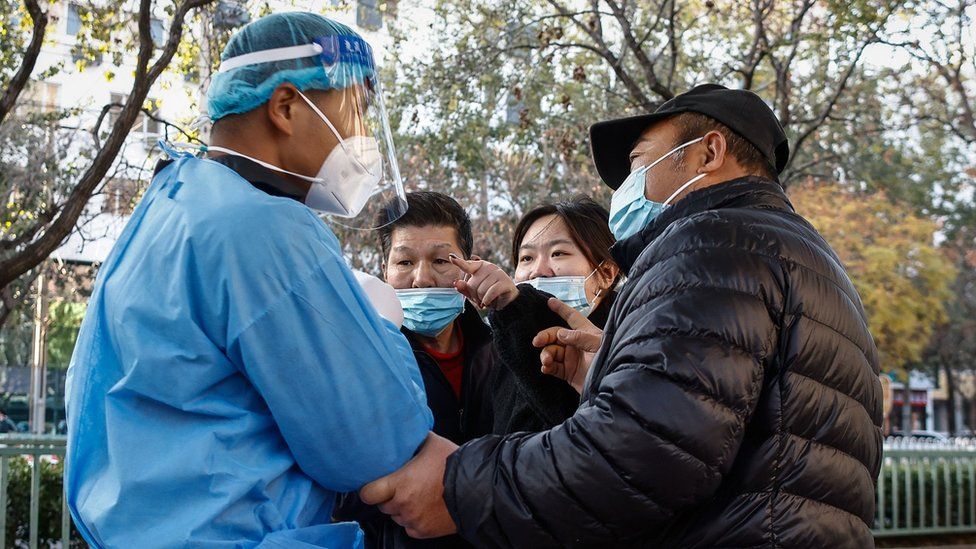
Published3 hours agoSharecloseShare pageCopy linkAbout sharingImage source, EPABy Frances MaoBBC NewsChina has recorded its highest number of daily Covid cases since the pandemic began, despite stringent measures designed to eliminate the virus.There are outbreaks in several major cities including the capital Beijing and southern trade hub Guangzhou.On Wednesday, the country recorded 31,527 cases – higher than the about 28,000 peak recorded in April, when its largest city Shanghai was locked down.It comes as strict lockdowns continue to spark episodes of unrest.China’s zero-Covid policy has saved lives in the country of 1.4 billion people but also dealt a punishing blow to the economy and ordinary people’s lives.However the rising wave of cases also comes weeks after the country slightly relaxed some of its Covid restrictions.It cut quarantine for close contacts from seven days in a state facility to five days and three days at home, and stopped recording secondary contacts which allowed many more people to avoid having to quarantine.Officials have also sought to avoid enforcing blanket lockdowns of the kind endured by Shanghai earlier this year.But faced with a renewed surge in cases in Beijing, as well as the first deaths from the virus in months, officials have already implemented some restrictions in several districts, with shops, schools and restaurants closed.The central city of Zhengzhou is also to enforce an effective lockdown for 6 million residents from Friday, officials announced.It follows violent protests at a vast industrial complex belonging to iPhone manufacturer Foxconn. The firm has apologised for a “technical error” in its payment systems.iPhone maker apologises after protests at plantThis video can not be playedTo play this video you need to enable JavaScript in your browser.Other stories of suffering and desperation have also been shared online where they’ve fuelled public resentment.Last week, reports that a baby in Zhengzhou died because her medical care was delayed by Covid restrictions prompted huge outcry.How Covid is rising again in ChinaZero-Covid China asks: Is World Cup on another planet?China is the last major economy still pursuing a Covid eradication process with mass testing and lockdown rules.However virus cases are now being recorded in 31 provinces.President Xi Jinping has said strict curbs are needed to protect the country’s large elderly population. Vaccination levels are lower than other developed nations, and only half of people aged over 80 have their primary vaccinations.While China is seeing an increase in infections now, the rate is still far lower than many other advanced economies at their pandemic peak.China’s official death toll has remained low at just over 5,200 deaths since the pandemic began.That equates to three Covid deaths in every million in China, compared with 3,000 per million in the US and 2,400 per million in the UK.More on this storyZero-Covid China asks: Is World Cup on another planet?3 hours agoHow Covid is rising again in China2 days agoChina eases some Covid curbs despite rising cases11 November

Read more →

Mumbai measles: India outbreak claims 12 children

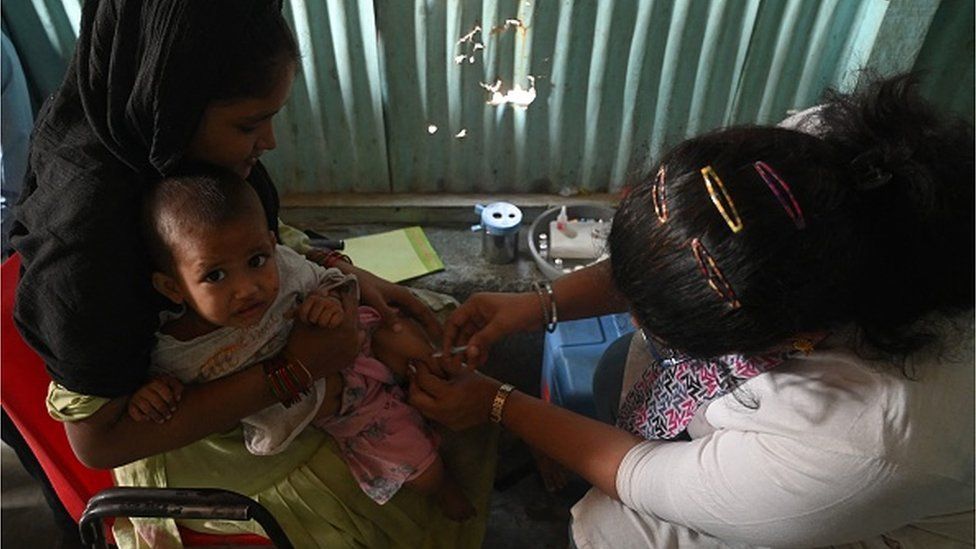
Published3 hours agoSharecloseShare pageCopy linkAbout sharingImage source, Getty ImagesMeasles has killed 12 children in the western Indian city of Mumbai and surrounding areas, authorities say.The first death was reported around 26-27 October when three children died within 48 hours.The city had 233 confirmed cases this year until Wednesday – a three-fold jump from the 92 cases and two deaths reported last year. Authorities say a sluggish vaccination drive amid the Covid pandemic has contributed to the spike in infections.The latest reported death, on Tuesday, was of an eight-month-old baby who was partially immunised, the local municipal body said in a press note.Measles is highly contagious – even more than Covid – and can cause serious complications, especially in children less than five years.The disease, which causes coughing, rashes and fever, can be prevented by two doses of the mumps, measles and rubella (MMR) vaccine.There have been several large outbreaks in countries across Europe where MMR vaccine uptake has been low.Nine in every 10 people can catch it if they are unvaccinated and exposed.The race to understand ‘immune amnesia’As well as causing a distinctive rash, measles can lead to severe complications such as pneumonia and brain inflammation, and can sometimes be fatal.Vaccination can remove almost all of these risks.Two doses of the MMR vaccine give 99% protection against measles and rubella and about 88% protection against mumps.When a high percentage of the population is protected through vaccination, it becomes harder for the disease to pass between people.But since the start of the Covid pandemic, there has been a concerning drop in the number of children receiving these vaccines on time.In 2020, 23 million children missed out on all basic childhood vaccines. That’s the highest number seen since 2009 and 3.7 million more than in 2019, according to Unicef.Authorities in Mumbai say that around 20,000 children did not get their measles vaccine on time because of the pandemic. “Now, we are tracking all these children and holding vaccination camps on priority,” Dr Mangala Gomare, Mumbai’s executive health officer, told The Indian Express newspaper. Health officials say other issues such as vaccine hesitancy are also hobbling the drive. “After vaccination, some children develop mild fever and pain in the injected area, so parents don’t let them get vaccinated,” Shreya Salvi, a health volunteer, told the newspaper. Read more India stories from the BBC:Why toxic fat shaming is so rampant in IndiaWhen Hitler purged India Nobel laureate Tagore’s artIndia app sorry over buffering World Cup livestreamTrans icon who fought pain to bring joy to KashmirIndia tech workers fight back amid mass layoffsProtests as teen footballer dies after surgeryThe Bollywood actress caught up in a ‘gifts scandal’More on this storyMeasles makes body ‘forget’ how to fight infection31 October 2019Measles returns to four European nations, WHO says29 August 2019Vaccine fears cost me my children19 June 2019

Read more →

Neuroscientists discover a new drug candidate for treating epilepsy

Temporal lobe epilepsy (TLE) is one of the most common types of epilepsy worldwide. Although symptomatic medications are available, one-third of TLE patients remain unresponsive to current treatment, so new drug targets are critically needed. A research team co-led by a City University of Hong Kong (CityU) neuroscientist recently identified and developed a new drug candidate that has potential for effectively treating TLE by suppressing neuroinflammation.
Epilepsy is one of the most prevalent chronic brain disorders and is characterised by recurrent and spontaneous seizures. Most anti-epileptic drugs that are currently available target neurons and synapses in the brain. They are effective in changing neural circuits and synapses, but this treatment overlooks another important pathology: neuroinflammation.
Neuroinflammation is caused by the abnormal functioning of reactive glial cells, such as astrocytes and microglia, causing an immune reaction in the brain. Accumulating evidence points to a key role of connexin-based gap junctions and hemichannels in brain glial cells in TLE. A hemichannel is a channel or pathway formed by the assembly of six proteins, which permits small molecules such as glutamate to be released from astrocytes and microglia to extracellular space. A gap junction is formed when the hemichannels of two adjacent cells dock with each other. But inhibiting both gap junctions and hemichannels can lead to undesirable side effects because the former coordinate physiological functions of cell assemblies. Therefore, scientists need to find a way to block only connexin hemichannels to effectively reduce neuroinflammation with fewer side effects.
A research team co-led by Dr Geoffrey Lau Chun-yue, Assistant Professor in the Department of Neuroscience, identified a new, small organic molecule called D4, which selectively blocks connexin hemichannels, but not gap junctions. The team investigated its effect in treating TLE using a mouse model. The findings suggest that D4 strongly suppresses the TLE-induced neuroinflammation, curbs TLE seizures, and increases the animal’s survival rate.
The findings were published in the international scientific journal Proceedings of the National Academy of Sciences (PNAS) under the title “Inhibition of connexin hemichannels alleviates neuroinflammation and hyperexcitability in temporal lobe epilepsy”.
New drug D4 suppresses neuroinflammation
“These are very exciting and encouraging results for translational research in epilepsy,” said Dr Lau. “We have found a very promising new drug candidate for treating epilepsy that works through a new mechanism — blocking connexin hemichannels. Our findings also highlight the important involvement of neuroinflammation in neurological disorders such as epilepsy.”
The new drug, D4, targets a new class of ion channels, the connexin hemichannels in the glial cells. Glial cells include astrocytes and microglia and are important for modulating neurotransmission. Excessive glutamate and other molecules can leak out from reactive glia via hemichannels to the extracellular environment, altering synapses, enhancing neuroinflammation and exacerbating seizures. By specifically blocking connexin hemichannels using D4, Dr Lau’s team can directly target neuroinflammation caused by astrocytes and microglia.
The research adopted the pilocarpine model of epilepsy in mice, a well-known model to produce phenotypes that resemble human TLE. Pilocarpine was injected into mice intraperitoneally to induce seizures. The administration of one dose of D4 orally before inducing seizures effectively reduced neuroinflammation and altered synaptic inhibition, which increased the animal’s survival rate. For treatment after induced seizures, a single dose of D4 had a prolonged effect on suppressing the activation of astrocytes and microglia. This suggests that D4 strongly alleviates neuroinflammation and has a long-term effect.
A single dose offers long-term benefits
Results from both pre- and post-treatment indicate that targeting connexin hemichannels by D4 is an effective and promising strategy for treating epilepsy in which neuroinflammation plays a critical role. The drug can be taken orally to effectively get into the mouse brain to reduce the harmful effects of neuroinflammation. A single dose provides strong protection against future seizures. “We hope that this will ultimately result in new and better treatment options for epileptic patients,” said Dr Lau. The team will continue to work on the astrocytic mechanisms of epilepsy and identifying more new therapeutic targets.
The first author of the paper is Dr Guo Anni, CityU PhD graduate and a postdoctoral fellow in Dr Lau’s laboratory. Corresponding co-authors include Dr Lau and Professor Juan C Saez, from the University of Valparaíso, in Chile. Dr Lau’s PhD student, Zhang Huiqi, and research assistant, Li Huanhuan, also participated in the research. The research was funded by CityU, the Hong Kong Research Grants Council, InnoHK and the Shenzhen General Basic Research Program.
Story Source:
Materials provided by City University of Hong Kong. Note: Content may be edited for style and length.

Read more →

Bloating common issue among Americans

Nearly 1 in 7 Americans experience bloating on a weekly basis, and most aren’t seeking professional care for it, according to a new study led by Cedars-Sinai investigators. The findings are published in Clinical Gastroenterology and Hepatology.
“Although bloating is a common symptom, some patients may not bring it up with their doctors,” said Janice Oh, MD, a resident physician within the Division of General Internal Medicine Division at Cedars-Sinai and first author of the study. “It’s important that people feel comfortable discussing bloating because it could be a symptom of a serious condition and there are treatments available.”
Bloating can make people feel swollen or tight in the abdomen. It may occur when a person’s gastrointestinal tract fills with air or gas and can sometimes be the result of diet or an underlying condition, such as irritable bowel syndrome, carbohydrate enzyme deficiency or chronic constipation.
To understand the scope of bloating in the U.S., the authors emailed a survey to nearly 90,000 people. Of the 88,795 people who completed the survey from May through June 2020, 12,324 (13.9%) reported bloating in the past seven days.
“To our knowledge, this is among the largest studies of bloating in the U.S.,” said Brennan Spiegel, MD, MSHS, director of Health Services Research at Cedars-Sinai and senior author of the study. “Anecdotally, we often hear about bloating in the clinic, but this study adds concrete evidence to describe how commonly it occurs and what other conditions it’s associated with.”
Of the people who reported experiencing bloating, about 58.5% said they have never sought care for their symptoms.

Read more →

Scientists reveal first close-up look at bats' immune response to live infection

Scientists at Duke-NUS Medical School and colleagues in Singapore have sequenced the response to viral infection in colony-bred cave nectar bats (Eonycteris spelaea) at single-cell resolution. Published in the journal Immunity, the findings contribute to insights into bat immunity that could be harnessed to protect human health.
Bats harbour many types of viruses. Even when they are infected with viruses deadly to humans, they show no notable signs or symptoms of disease.
“It is our hope that by understanding how bats’ immune responses protect them from infections, we may find clues that will help humans to better combat viral infections,” explained Dr Akshamal Gamage, Research Fellow with Duke-NUS’ Emerging Infectious Diseases (EID) Programme and a co-first author of the study.
“And knowing how to better fight viral infections can aid in the development of treatments that will help us to be more bat-like — by falling sick less and ageing better,” added Mr Wharton Chan, an MD-PhD candidate at Duke-NUS who is also a co-first author of the study.
In this study, the scientists investigated bat immune responses to Malacca virus, a double-stranded RNA virus that uses bats as its natural reservoir. This virus also causes mild respiratory disease in humans.
The team used single-cell transcriptome sequencing to study lung immune responses to infections at the cellular level, identifying the different types of immune cells in bats — some of which are different from those in other mammals, including humans — and uncovering what they do in response to such viral infections.
They found that a type of white blood cell, called neutrophils, showed a very high expression of a gene called IDO1, which is known to play a role in mediating immune suppression in humans. The scientists believe that IDO1 expression in cave nectar bats could play an important role in limiting inflammation following infection.
Dr Feng Zhu, Research Fellow with the EID Programme and a co-first author of the study, said, “We also found marked anti-viral gene signatures in white blood cells known as monocytes and alveolar macrophages, which — in a sense — consume viral particles and then teach T cells how to recognise the virus. This observation is interesting as it shows that bats clearly activate an immune response following infection despite showing few outward symptoms or pathology.”
The team also identified an unusual diversity and abundance of T cells and natural killer cells — named for their ability to kill tumour cells and cells infected with a virus — in the cave nectar bat, which are broadly activated to respond to the infection.
“This is the first study that details the bat immune response to in vivo infection at the single-cell transcriptome level,” said Professor Linfa Wang, senior author of the study from the EID Programme. “We believe that our work serves as a key guide to inform further investigations into uncovering the remarkable biology of bats. Moving forward, besides studies into viral disease tolerance, we also hope to uncover clues to longevity from bats as long-lived mammals and also learn how these nectarivorous bats can live on the high sugar diet in nectar without getting diabetes.”
Story Source:
Materials provided by Duke-NUS Medical School. Note: Content may be edited for style and length.

Read more →

Flu and RSV Increase Demand for Antibiotics and Antivirals

An intense early flu season, coupled with a pediatric rise in respiratory illnesses, has left families frantically searching for medicines that are in short supply.Amoxicillin, an antibiotic commonly prescribed for children with ear infections, bronchitis and strep throat, is in short supply across the country, alarming pediatricians and parents as a surge in respiratory illnesses strains hospitals, many of which are still reeling from the coronavirus pandemic.Tamiflu, an antiviral medication used to treat influenza, is also hard to find in parts of the country, stoking concern among health care providers just as flu season is getting underway.The Food and Drug Administration said the shortages would likely persist in the coming months amid fears that a triple whammy of respiratory illnesses — Covid-19, the flu and respiratory syncytial virus, or R.S.V. — could overwhelm the health care system. In recent weeks, that system has been besieged by a sharp surge in pediatric hospitalizations.Health officials have worried that holiday travel at soaring levels this year, combined with big family gatherings at Thanksgiving and into December, will further fuel a confluence of troublesome winter illnesses. It’s been a year since the Omicron variant of the coronavirus struck, causing widespread — albeit milder — waves of Covid. So far, experts are not anticipating a similar seasonal onslaught, but the lifting of mask mandates and other precautions as well as lower immunity to the routine periods of flu and other maladies have evoked notes of caution.Experts have coined the term “tripledemic” to describe the worrisome dangers of the simultaneous emergence of three different infections, but infectious disease experts have noted that other respiratory illnesses, such as rhinoviruses and adenoviruses, are also circulating. The seasonal respiratory illnesses have surfaced earlier than usual, and they have spread quickly and simultaneously across the country.“The viruses are having a convention,” said Dr. William Schaffner, professor of infectious diseases and preventive medicine at Vanderbilt University in Nashville. “Flu is four to six weeks early, and R.S.V. is usually a January-February virus.”Pre-Covid, about 170 children a day went into the emergency room at Cohen Children’s Medical Center in New York this time of year. Now, there are anywhere from 260 to 300 children arriving daily, said Dr. James Schneider, chief of pediatric intensive care. Many are breathing rapidly, using their stomachs to suck in air, a sign of respiratory distress that is associated with illnesses like R.S.V. and influenza. Some are lethargic, showing signs of dehydration.“Right now, the demand related to treatment for viral infections for children is at levels I haven’t seen in my career,” Dr. Schneider said. He added that after a two-year lull in such respiratory viruses — “the things that keep me busy in the hospital all winter” — “we’re seeing them, and in historic numbers. It’s not new disease, we’re just seeing more than the typical amount, and the surge is earlier than normal.” There has also been a slight uptick in the number of children testing positive for Covid, he said.So far, the hospital, part of the sprawling Northwell Health system, has managed to secure adequate supplies of medications and has been accommodating the extra flow of patients by beefing up staffing, opening up inpatient beds in other areas of the hospital or doubling up children in intensive care rooms.Although the shortage of amoxicillin, especially its liquid and chewable forms, has proved frustrating for pharmacists, doctors and parents whose children have grown accustomed to the bubble-gum and strawberry-flavored varieties of the drug, experts say there is no reason to panic: Supplies of effective alternatives like cephalexin and clindamycin remain plentiful, according to the F.D.A.But the process of tracking down a suitable alternative delays care and can be frustrating. “It’s already stressful to take care of a sick child, and now you’re having to find a prescription on top of it. But there are alternatives available that are appropriate for the age and the indication,” said Dr. Michael Ganio, senior director of pharmacy practice and quality at the American Society of Health-System PharmacistsWhile hundreds of drugs including chemotherapy and anesthetic agents have been in short supply for years, the current shortages of amoxicillin and antiviral drugs are unusual, Dr. Ganio said. He attributed the spike in demand to the early surge in respiratory illnesses this year.“These are not your typical drug shortages, which are associated with manufacturing or supply chain disruptions,” he said. While most drug manufacturers prepare for seasonal variations, he said, “We don’t use a lot of Tamiflu in the northern hemisphere in the summertime, and the manufacturers plan accordingly. This has hit earlier than expected.”The F.D.A., which tracks drug shortages on its website, said that there was no national shortage of Tamiflu, but that some regions of the country were experiencing temporary shortages. There are a number of alternatives to Tamiflu, which can prevent the flu and reduce the severity and duration of the illness, but many doctors are unfamiliar with those options, experts say.The shortages highlight the fragility of the nation’s drug supply chain, especially for inexpensive generics like amoxicillin that are manufactured by just a handful of companies. Experts say the low prices for such drugs discourage investment in sophisticated quality management systems, which can improve manufacturers’ agility in shortages and enable them to scale up production more quickly.One manufacturer, Sandoz, said it was ramping up production to meet the increased demand and hoped to double its output in the coming months. “We are facing challenges to meet this sudden spike in demand now that the flu season is in full swing,” the company said in a statement.Flu hospitalizations are the highest they’ve been for more than a decade, according to the Centers for Disease Control and Prevention, which noted that the hospitalization rate for the week ending Nov. 12 was the most observed for that week in any season since 2010-11.But the run on amoxicillin, some experts say, speaks volumes about another serious problem that poses a threat to human health: Overprescribing by doctors, many of whom readily, and wrongly, dole out antibiotics for viral illnesses, which do not respond to antimicrobial medications. The overuse of antibiotics can render the drugs ineffective over time as the bacteria they target mutate and find a way to survive. These “superbugs” can pose a serious threat as they spread, especially to people with underlying health conditions.A nurse delivers a flu shot to a young girl at a free clinic held in a local library in 2020 in Lakewood, Calif.Mario Tama/Getty ImagesThe C.D.C. estimates that one in three antibiotic prescriptions are unnecessary, and one recent study placed that figure at 43 percent.Dr. Amesh Adalja, a senior scholar at the Johns Hopkins Center for Health Security, said doctors are especially imprecise when it comes to treating upper respiratory tract infections, with at least half of all antibiotics wrongly prescribed for viral illnesses.“If I went down to urgent care right now with flu symptoms, I guarantee I could walk out of there with a Z-pack,” said Dr. Adalja, using the shorthand for azithromycin, a broad spectrum antibiotic. “This shortage we’re seeing is the result of poor stewardship in the face of increased demand, and the increased demand is because we’re such poor stewards of antibiotics.”Sometimes doctors will prescribe an antibiotic to patients with a viral illness to help prevent bacterial infections that might take advantage of a patient’s weakened immune system or out of concern that an undiagnosed and untreated bacterial infection could have dire consequences.But Dr. Adalja and other experts say the impulse to prescribe antibiotics in the absence of diagnostic evidence that an infection is bacterial, not viral, is often an outgrowth of an uncomfortable dynamic between doctors and patients, many of whom expect medication — any medication — when they feel sick.Dr. Daniel Rauch, chief of pediatric hospital medicine at Tufts Medicine in Boston, said prescribing an antibiotic for a screaming child with a fever and a reddish inner ear is often easier than determining whether the redness is evidence of a bacterial ear infection or something else. An inflamed ear, he said, can also be caused by a viral infection. “Unfortunately, there’s a tendency to overprescribe antibiotics, and that’s not helpful to the child or to society,” said Dr. Rauch, who chairs the hospital care committee at the American Academy of Pediatrics.During his three-decade career, Dr. Rauch has watched the effectiveness of amoxicillin wane because of widespread resistance. The drug has become ineffective for treating urinary tract infections or E. coli, he said, and the recommended dose for ear infections has doubled over the past 20 years.“Thankfully, there are always alternatives to amoxicillin, so we’ll get through this rough patch, but the bigger problem is whether these antibiotics will even work in the future,” he said. “People need to ask their doctors what they’re really treating and whether they need an antibiotic, otherwise there might come a day when some of these critical drugs no longer work.”

Read more →

Gene that guides earliest social behaviors could be key to understanding autism

Little is known about how social behavior develops in the earliest stages of life. But most animals — including humans — are born with an innate ability to interact socially or form bonds with others. And that contributes to success throughout life.
Now, a new animal study points to a gene that is important for the earliest development of basic social behaviors.
The work also suggests that exposure to certain drugs and environmental risk factors during embryonic development can cause changes to this gene, leading to alterations in social behavior that are similar to those found in individuals who have autism. Much to their surprise, the researchers also found they could reverse some of the effects using an experimental drug.
“This study helps us understand at the molecular level why sociability is disrupted during the very earliest stages of life,” says Randall T. Peterson, Ph.D., the corresponding author of the study and dean of the University of Utah College of Pharmacy. “It also gives us an opportunity to explore potential treatments that could restore sociability in these animals and, perhaps in time, eventually in humans as well.”
More broadly, their findings suggest that the gene — TOP2a — controls a large network of genes that are known to increase the risk of autism. It also may serve as a link between genetic and environmental factors that contribute to onset of disorder, Peterson adds.
The study, conducted by University of Utah Health researchers and colleagues nationwide, appears in the Nov. 23 issue of Science Advances.
Anti-social animals

Read more →

Pocket feature shared by deadly coronaviruses could lead to pan-coronavirus antiviral treatment

Scientists have discovered why some coronaviruses are more likely to cause severe disease, which has remained a mystery, until now. Researchers of the University of Bristol-led study, published in Science Advances today [23 November], say their findings could lead to the development of a pan-coronavirus treatment to defeat all coronaviruses—from the 2002 SARS-CoV outbreak to Omicron, the current variant of SARS-CoV-2, as well as dangerous variants that may emerge in future.
In this new study, an international team, led by Bristol’s Professor Christiane Schaffitzel, scrutinised the spike glycoproteins decorating all coronaviruses. They reveal that a tailor-made pocket feature in the SARS-CoV-2 spike protein, first discovered in 2020, is present in all deadly coronaviruses, including MERS and Omicron. In striking contrast, the pocket feature is not present in coronaviruses which cause mild infection with cold-like symptoms.
The team say their findings suggest that the pocket, which binds a small molecule, linoleic acid—an essential fatty acid indispensable for many cellular functions including inflammation and maintaining cell membranes in the lungs so that we can breathe properly—could now be exploited to treat all deadly coronaviruses, at the same time rendering them vulnerable to a linoleic acid-based treatment targeting this pocket.   
COVID-19, caused by SARS-CoV-2, is the third deadliest coronavirus outbreak following SARS-CoV in 2002 and MERS-CoV in 2012. The much more infectious SARS-CoV-2 continues to infect people and damage communities and economies worldwide, with new variants of concern emerging successively, and Omicron evading vaccination and immune response.
Professor Schaffitzel from Bristol’s School of Biochemistry, explained: “In our earlier work we identified the presence of a small molecule, linoleic acid, buried in a tailor-made pocket within the SARS-Cov-2 glycoprotein, known as the ‘Spike protein’, which binds to the human cell surface, allowing the virus to penetrate the cells and start replicating, causing widespread damage.
“We showed that binding linoleic acid in the pocket could stop virus infectivity, suggesting an anti-viral treatment. This was in the original Wuhan strain that started the pandemic. Since then, a whole range of dangerous SARS-CoV-2 variants have emerged, including Omicron, the currently dominating variant of concern. We scrutinised every new variant of concern and asked whether the pocket function is still present.”
Omicron has undergone many mutations, enabling it to escape immune protection offered by vaccination or antibody treatments that lag behind this rapidly evolving virus.  Intriguingly, while everything else may have changed, the researchers found that the pocket remained virtually unaltered, also in Omicron.
Christine Toelzer, Research Associate in the School of Biochemistry and lead author of the study, added: “When we realised that the pocket we had discovered remained unchanged, we looked back and asked whether SARS-CoV and MERS-CoV, two other deadly coronaviruses causing previous outbreaks years ago, also contained this linoleic acid binding pocket feature.”  
The team applied high-resolution electron cryo-microscopy, cutting-edge computational approaches and cloud computing. Their results showed that SARS-CoV and MERS-CoV also had the pocket, and could bind the ligand, linoleic acid, by a virtually identical mechanism.  
Professor Schaffitzel concluded: “In our current study, we provide evidence that the pocket remained the same in all deadly coronaviruses, from the first SARS-CoV outbreak 20 years ago to Omicron today. We have shown previously that linoleic acid binding to this pocket induces a locked spike, abrogating viral infectivity. We also show now that linoleic acid supplementation suppresses virus replication inside cells. We anticipate that future variants will also contain the pocket, which we can exploit to defeat the virus.”
Halo Therapeutics, a recent University of Bristol spin-out Professor Schaffitzel co-founded, is using these findings to develop pocket-binding pan-coronavirus antivirals.
The team included experts from the Bristol UNCOVER Group, Max Planck Bristol Centre for Minimal Biology, Bristol University spin-out Halo Therapeutics Ltd, and collaborators in Sweden and France. The studies have been supported by funds from Max Planck Gesellschaft, Wellcome Trust and European Research Council, with additional support from Oracle for Research for high-performance cloud computing resources.

Read more →

Most people with long COVID face stigma and discrimination, UK study finds

The majority of people living with Long Covid experience some form of stigma directly related to their condition, according to a new study published in the journal PLOS ONE.
An estimated 2.3 million people are living with Long Covid in the UK according to the Office for National Statistics data, and numbers are not decreasing due to limited treatment options and continued high Covid infection rates. Testimonies illustrate profound stigmas experienced by people living with Long Covid, but until now there has been no quantitative assessment of the burden.
In the study, conducted by researchers at the University of Southampton and Brighton and Sussex Medical School and co-designed by people living with Long Covid (from the charity Long Covid Support), people who took part in the 2020 Long Covid online survey were invited to complete a follow up survey in November 2021.
More than 1100 people took part, including 966 people from the UK, and were asked about their experiences of stigma in three areas: Enacted stigma where individuals were directly treated unfairly due to their health condition; internalised stigma where people felt embarrassed or ashamed of their health condition, and anticipated stigma, which is the individual’s expectation they will be treated poorly because of their condition.
Ninety-five percent of people experienced at least one type of stigma at least ‘sometimes’, and 76% experiencing it ‘often’ or ‘always’, according to the results.
Dr Marija Pantelic, Lecturer in Public Health at Brighton and Sussex Medical School, who led the development of the stigma questions in the follow up survey, said: “There have been countless anecdotal reports of the stigma, dismissal and discrimination faced by people living with Long Covid. This study was the first to empirically measure this stigma and estimate prevalence. We were shocked to see just how prevalent it is, but the findings also empower us to do something about it. With the stigma questionnaire we developed, we can measure changes over time and the effectiveness of urgently needed anti-stigma interventions.”
In the study, nearly two thirds (63%) of people reported experiences of stigma such as being treated with less respect or people they care about stopping contact with them due to their health condition, while 91% expected to experience stigma and discrimination, for example they thought many people did not consider Long Covid to be a real illness or they anticipated judgment. Eighty-six percent of respondents felt a profound sense of shame related to having Long Covid — they were embarrassed of their illness and felt ‘very different’ from people without Long Covid.
In the study, 61% of people said they were very careful who they tell about their condition, and about one third (34%) of respondents regretted having told people about it. Overall, the prevalence of experiencing stigma was higher in those who reported having a clinical diagnosis of Long Covid compared to those without or who were unsure (83% v 69%).
Nisreen Alwan, Professor of Public Health at the University of Southampton and co-lead author of the study, added: “We were surprised to find that people with a clinical diagnosis of Long Covid were more likely to report stigma than people without a formal diagnosis. We are not sure why this is — perhaps because they are more likely to share their health status with others or perhaps because they have engaged more with health services. More research is needed to unpack the potential mechanisms of how and where this stigma is manifested, and who is most likely to stigmatise and be stigmatised.”
Claire Hastie from the charity Long Covid Support who also worked on the study, said: “Sadly we see the results of stigma all too often among members of our support group. In addition to the significant health burden of Long Covid, the stigma and discrimination associated with the condition can lead to relationship breakdowns and problems at work. These cause immense additional distress, which itself can compromise healing. It is vital that people with the condition are believed and supported to help their chances of recovery.”
“The stigma attached to Long Covid is harming people living with Long Covid and is likely to leave a devastating mark on our society and health service provision,’ Dr Pantelic added. “We know from decades of research with other long-term conditions such as asthma, depression, and HIV that stigma has dire consequences for public health. Fear of stigma is also likely to drive people away from health services and other support, which over time has detrimental consequences on people’s physical and mental health.”
Story Source:
Materials provided by University of Southampton. Note: Content may be edited for style and length.

Read more →