Higher vitamin K intake linked to lower bone fracture risk late in life

Breaking bones can be life-changing events — especially as we age, when hip fractures can become particularly damaging and result in disability, compromised independence and a higher mortality risk.
But research from Edith Cowan University’s Nutrition and Health Innovation Research Institute has revealed there may be something you can do to help reduce your risk of fractures later in life.
In collaboration with the University of Western Australia, the study looked at the relationship between fracture-related hospitalisations and vitamin K1 intake in almost 1400 older Australian women over a 14.5-year period from the Perth Longitudinal Study of Aging Women.
It found women who ate more than 100 micrograms of vitamin K1 consumption — equivalent to about 125g of dark leafy vegetables, or one-to-two serves of vegetables — were 31 per cent less likely to have any fracture compared to participants who consumed less than 60 micrograms per day, which is the current vitamin K adequate intake guideline in Australia for women.
There were even more positive results regarding hip fractures, with those who ate the most vitamin K1 cutting their risk of hospitalisation almost in half (49 per cent).
Study lead Dr Marc Sim said the results were further evidence of the benefits of vitamin K1, which has also been shown to enhance cardiovascular health.
Read more →

Using math to better treat cancer

Researchers at the University of Waterloo have identified a new method for scheduling radiation therapy that could be as much as 22 percent more effective at killing cancer cells than current standard radiation treatment regimens.
While many mathematical studies have examined how to optimize the scheduling of radiation treatment for maximum effectiveness against cancer, most of these studies assume “intratumoral homogeneity” — that is, that all of the cancer cells are the same. In recent years, however, scientists have realized that tumours are made up of many different kinds of cells. Most importantly, they include cancer stem cells, which are more resistant to radiation than other kinds of cells.
“The problem with any calculation involving cancer is that it’s super hard to get exact values because things vary from cancer type to cancer type, patient to patient, even within the tumour,” said Cameron Meaney, a PhD candidate in Applied Mathematics at Waterloo and the lead researcher on the study.
This new algorithm can generalize the differing radiation resistances of stem cells and non-stem cells, allowing doctors to predict how a tumour will respond to treatment before gathering exact data on an individual’s cancer.
The model has limitations, Meaney explained, as tumours contain far more than two kinds of cells. What it does, however, is provide clinical researchers with a better starting point for treatment research.
“The results of the algorithm are important because they shed light on the idea that heterogeneity in tumours matters for planning treatment,” Meaney said.
The next step the researchers hope to see is an application of their algorithm to clinical studies: will their suggested therapy schedule outperform existing scheduling practices in a lab trial?
Story Source:
Materials provided by University of Waterloo. Note: Content may be edited for style and length.

Read more →

Green means GO! Ultra-violet means STOP!

Is it possible to control an animal’s or a cell’s behavior using light? In recent years, remarkable progress in optogenetics has been made as research methods come close to realizing this goal.
A research group led by Professors Mitsumasa Koyanagi and Akihisa Terakita of the Graduate School of Science, and Professor Eriko Kage-Nakadai of the Graduate School of Human Life and Ecology at Osaka Metropolitan University has revealed a new system that allows them to control the behavior of the nematode worm Caenorhabditis elegans, using two different light-sensitive proteins called opsins.
A light-sensitive opsin isolated from mosquitos was introduced into C. elegans’sensory cells responsible for avoidance behavior that makes the worm move away after sensing a chemical or physical stimulus. The group found that exposing the worms to white light triggered this avoidance behavior, with a sensitivity approximately 7,000 times higher than that observed with channelrhodopsin-2, a common optogenetic protein.
Likewise, a UV-sensitive opsin first found in the pineal organ of lampreys was introduced into motor neurons of C. elegans. After that the worms stopped moving when exposed to UV light and began moving again when exposed to green light. This stop-start behavior was repeated many times, switching between the UV and green lights, indicating that the opsin could be switched on and off without destroying the protein.
“Both the mosquito and lamprey opsins we used are members of the G protein-coupled receptor (GPCR) family of receptors — which are used to sense various stimuli including smell, taste, hormones, and neurotransmitters — demonstrating that this system using light can be used to manipulate various GPCRs and their subsequent intracellular signaling and physiological responses,” said Professor Koyanagi.
Importantly, both opsins tested are bistable, meaning they can switch between stable forms when active and inactive without photobleaching or breaking down, allowing them to be used again after absorbing a different wavelength of light. The difference between the wavelengths of UV and green lights is large enough that inactive UV-sensitive opsin can recover, allowing for color-dependent on-and-off optogenetic control of GPCR signaling.
“The high-performance optogenetic tool based on bistable animal GPCR opsins reported here is a breakthrough, not only in a wide range of biological research, but might contribute to the field of drug discovery where it has already received considerable attention,” concluded Professor Terakita.
Story Source:
Materials provided by Osaka Metropolitan University. Note: Content may be edited for style and length.

Read more →

Chemotherapy could increase disease susceptibility in future generations

A common chemotherapy drug could carry a toxic inheritance for children and grandchildren of adolescent cancer survivors, Washington State University-led research indicates.
The study, published online in iScience, found that male rats who received the drug ifosfamide during adolescence had offspring and grand-offspring with increased incidence of disease. While other research has shown that cancer treatments can increase patients’ chance of developing disease later in life, this is one of the first-known studies showing that susceptibility can be passed down to a third generation of unexposed offspring.
“The findings suggest that if a patient receives chemotherapy, and then later has children, that their grandchildren, and even great-grandchildren, may have an increased disease susceptibility due to their ancestors’ chemotherapy exposure,” said Michael Skinner, a WSU biologist and corresponding author on the study.
Skinner emphasized that the findings should not dissuade cancer patients from undertaking chemotherapy since it can be a very effective treatment. Chemotherapy drugs kill cancerous cells and prevent them from multiplying, but have many side-effects since they impact the whole body, including reproductive systems.
Given this study’s implications, the researchers recommend that cancer patients who plan to have children later take precautions, such as using cryopreservation to freeze sperm or ova before having chemotherapy.
In the study, researchers exposed a set of young male rats to ifosfamide over three days, mimicking a course of treatment an adolescent human cancer patient might receive. Those rats were later bred with female rats who had not been exposed to the drug. The resulting offspring were bred again with another set of unexposed rats.

Read more →

Legalization of recreational cannabis linked with increased alcohol drinking, study finds

States that legalized recreational cannabis saw a slight population-level uptick in alcohol consumption that was largely driven by young adults and men, according to new research by University of Pittsburgh School of Public Health policy scientists.
The increase in alcohol use, recently reported in JAMA Health Forum, suggests that states that legalize recreational cannabis should also consider targeted public health messaging around alcohol and other policy interventions aimed at mitigating problem drinking.
“Recreational cannabis laws have made cannabis legally accessible to nearly half of U.S. adults, but it has been unclear how this affects the use of other substances, such as alcohol,” said senior author Coleman Drake, Ph.D., assistant professor in the Department of Health Policy and Management at Pitt Public Health. “It appears that cannabis use increases the probability that people drink, at least in the three years after legalization.”
Drake and his team obtained data on alcohol use by more than 4.2 million adults through the Centers for Disease Control and Prevention’s annual Behavioral Risk Factor Surveillance System surveys administered from 2010 through 2019 — at which point 11 states had legalized recreational cannabis.
The survey inquired about any alcohol use, binge drinking and heavy drinking within the last month, and the researchers looked at differences in responses before and after recreational cannabis legalization.
Any drinking — measured as having “at least one drink of any alcoholic beverage” in the past month — increased by 1.2 percentage points in the first year after recreational cannabis was legalized, but diminished in the following two years. There was no change in binge or heavy drinking in the overall population.

Read more →

Why housing alone is not enough for some homeless moms

Giving some homeless mothers with young children a place to live may do little to help them if it is not combined with support services, a first-of-its-kind study showed.
Researchers found that young moms with a substance use disorder showed less improvement if they were given only housing when compared with similar moms who were given housing and supportive services, or even mothers who were only given a list of community services available to them.
That’s an important finding for organizations and policymakers who have advocated a “housing first” policy that aims to get the homeless into permanent housing as quickly as possible, said Natasha Slesnick, lead author of the study and professor of human sciences at The Ohio State University.
“Housing is still very important, but it is not enough,” Slesnick said.
“These young homeless moms need help accessing services and meeting their daily life needs or they may not be able to overcome their substance use.”
Findings were published online recently in the Journal of Substance Abuse Treatment.

Read more →

Researchers take key step toward improving lives of people with epilepsy

Researchers in the Oregon State University College of Engineering have taken a key step toward improving the lives of patients with epilepsy by developing a sensor system for quickly testing their saliva to see if they have the correct level of anti-epileptic medicine in their system.
The study, funded by the National Institutes of Health and published in the Journal of Applied Biochemistry, are important because roughly 3.5 million people in the United States have epilepsy, including nearly half a million children, the authors note.
“With further development, our system could be used to empower epilepsy patients by letting them monitor their anti-seizure drug levels from home,” said Lael Wentland, a postdoctoral researcher at OSU. “From the data our sensor can generate, a personalized drug dosage can be determined, reducing the chances of toxic side effects from too-high doses and seizures from ineffective low doses.”
Epilepsy is a neurological disorder characterized by muscle spasms, convulsions and loss of consciousness in addition to seizures, and its negative impacts to physical and mental health are numerous, including a suicide risk that’s much greater than that of the general population.
“It’s exciting to be making progress toward a medical tool that people with epilepsy can use to improve their therapy and quality of life,” said Elaine Fu, an associate professor of bioengineering who co-led the research with Wentland.
Fu, Wentland and fellow Oregon State researchers Stephen Ramsey, Matthew Johnston, Jacob Cook and Jade Minzlaff built and demonstrated a hand-held, microfluidic-based system that can detect a seizure-preventing drug from saliva without the saliva first being subjected to a lengthy pretreatment process.

Read more →

How women can reduce the risk of hip fracture

Increasing intake of protein and drinking regular cups of tea or coffee is a way women could reduce their risk of suffering a hip fracture, according to new research.
Food scientists at the University of Leeds in the UK have found that for women, a 25g a day increase in protein was associated with, on average, a 14% reduction in their risk of hip fracture. In a surprise twist, they also discovered that every additional cup of tea or coffee they drank was linked with a 4% reduction in risk.
Writing in the journal Clinical Nutrition, the researchers noted that the protective benefits were greater for women who were underweight, with a 25g/day increase in protein reducing their risk by 45%.
The protein could come in any form: meat, dairy or eggs; and for people on a plant-based diet, from beans, nuts or legumes. Three to four eggs would provide around 25g of protein as would a steak or piece of salmon. 100g of tofu would provide about 17g of protein.
Just over 3% of the women in the study group experienced a hip fracture.
Observational study
The investigation — Foods, nutrients and hip fracture risk: A prospective study of middle-aged women — is based on a large observational analysis of more than 26,000 women.

Read more →

Monkeypox given new name by global health experts

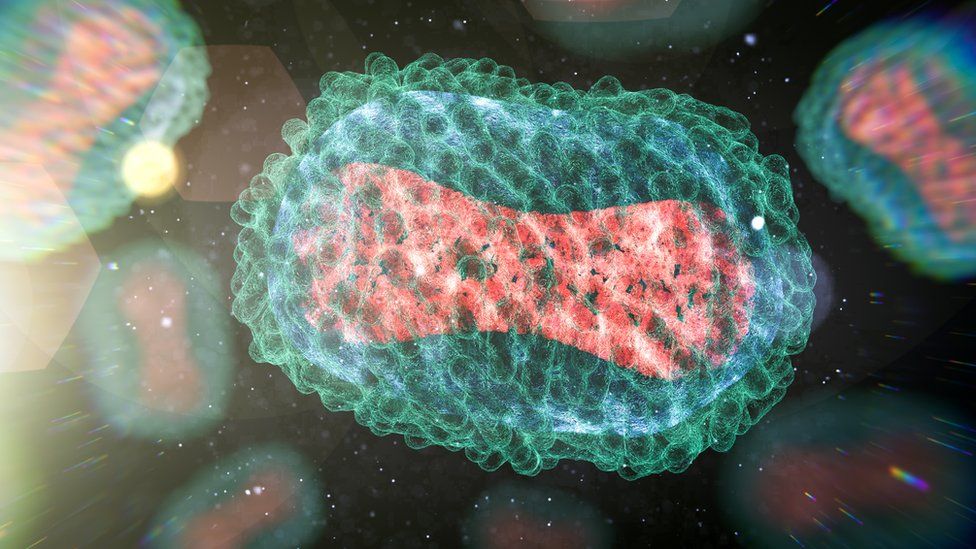
Published1 hour agoSharecloseShare pageCopy linkAbout sharingImage source, Getty ImagesBy Philippa RoxbyHealth reporterMonkeypox will now be known as mpox, the World Health Organization (WHO) has announced, after complaints over racist and stigmatising language linked to the virus’s name.The old term will be used alongside the new one for a year, before being phased out.Mpox was decided on after lengthy discussions between experts, countries and the general public.It can easily be used in English as well as other languages, the WHO said.Human monkeypox was first identified in 1970 and named after the disease caused by the virus was discovered in captive monkeys more than a decade before.Since then, the WHO has introduced advice on naming diseases.It stresses the need to minimise unnecessary negative impact on trade, travel, tourism or animal welfare, and to avoid causing offence to any cultural, social, national or ethnic groups.During the Covid pandemic, it recommended that variants were referred to using letters of the Greek alphabet because they were “non-stigmatising” and easy to pronounce.This year, there has been unusual spread of mpox virus – a member of the same family of viruses as smallpox – in many countries outside central and west Africa, where it is often found.Cases of mpox have been reported in 29 countries in Europe, as well as Canada, Australia and the US, prompting huge demand for a vaccine to protect those most at risk.This video can not be playedTo play this video you need to enable JavaScript in your browser.In July, the WHO declared a global health emergency because of the worldwide surge in people developing symptoms, including a high fever and skin lesions or rash.However, cases of the disease have been declining for several months now around the world.The UK has reported more than 3,500 cases since May, but a rollout of vaccines helped drive down cases following a peak in July.Most people affected were men who have sex with men.More on this storyUK looks to be winning the fight against monkeypox2 OctoberGet tested more, urges sexual health charity5 October’My experience of having monkeypox’ Video, 00:01:25’My experience of having monkeypox’30 June1:25’I’m a different person after having monkeypox’11 AugustWhat is monkeypox and how do you catch it?5 AugustMonkeypox: Handing out health advice without stigma28 MayRelated Internet LinksMonkeypox outbreak 2022 – GlobalWorld Health Organization best practices for the naming of new human infectious diseasesThe BBC is not responsible for the content of external sites.

Read more →

10,500 Toddler Bottles and Cups Recalled Over Lead Poisoning Risk

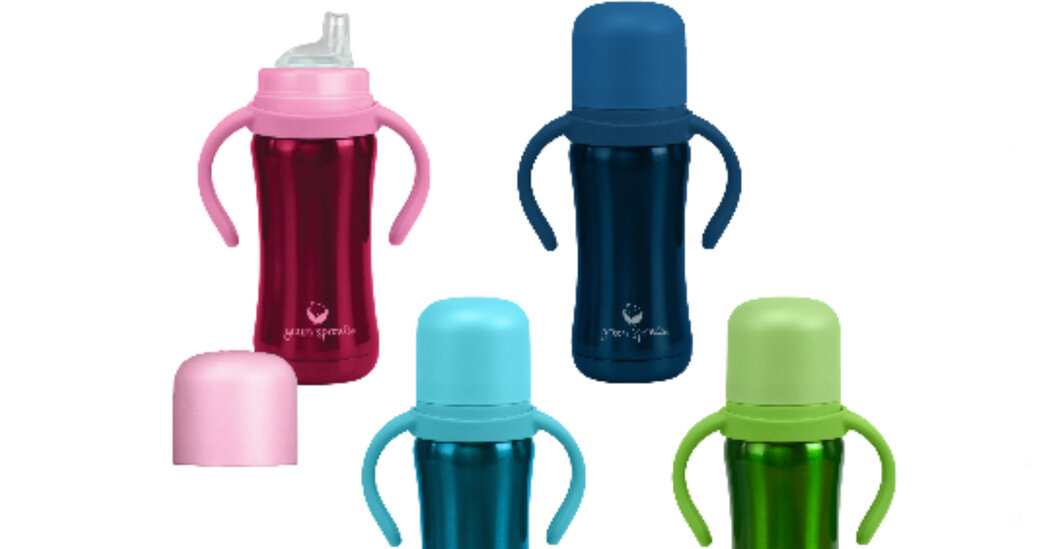
Green Sprouts recalled the cups and bottles because the base can break off and expose a piece that contains lead.A company has recalled about 10,500 bottles and cups for toddlers over lead poisoning concerns to children if a part of the product breaks off, the U.S. Consumer Product Safety Commission said.The base of these bottles and cups, manufactured by Green Sprouts, can come off and expose a solder dot that contains lead, posing a potential poison hazard to children, the commission said in a post dated Wednesday.No injuries have been reported, the commission said, but the company is aware of seven incidents in which the base broke.“Lead is toxic if ingested by young children, and can cause adverse health effects,” the commission said.Consumers should take the bottles and cups away from children immediately and discard them, the commission said.In a statement on its website, Green Sprouts said: “There is negligible risk to the health and safety of users. We are undertaking the costs and challenges of this recall voluntarily because our customers’ health and safety must come first.”The solder dot, which contains lead, is supposed to be inaccessible under normal use, so this portion was not tested by a safety lab, the company said.“As we approach the redesign of these products, whose benefits for keeping drinks cold safely have made them a popular choice for parents, we will ensure that lead is not used as a soldering material, no matter whether it would be accessible,” Green Sprouts said.The plant-plastic and silicone lid and spout can be reused with other Green Sprouts cups and bottles, the company said.The recalled products, which were sold in aqua, green, navy and pink, come in 6- and 8-ounce sizes. They were available at Buy Buy Baby and Whole Foods stores, and online at Amazon, Buy Buy Baby and Bed Bath & Beyond from January 2020 through September 2022, the commission said.The commission said Green Sprouts is “contacting all known purchasers directly.” Those who bought the products can contact the company for refunds.High levels of lead exposure in children can cause comas, convulsions and even death, according to the World Health Organization. Neurological and behavioral effects are believed to be irreversible.“Children who survive severe lead poisoning may be left with intellectual disability and behavioral disorders,” a W.H.O. statement said.

Read more →