Researchers reveal how trauma changes the brain

Exposure to trauma can be life-changing — and researchers are learning more about how traumatic events may physically change our brains. But these changes are not happening because of physical injury, rather our brain appears to rewire itself after these experiences. Understanding the mechanisms involved in these changes and how the brain learns about an environment and predicts threats and safety is a focus of the ZVR Lab at the Del Monte Institute for Neuroscience at the University of Rochester, which is led by assistant professor Benjamin Suarez- Jimenez, Ph.D.
“We are learning more about how people exposed to trauma learn to distinguish between what is safe and what is not. Their brain is giving us insight into what might be going awry in specific mechanisms that are impacted by trauma exposure, especially when emotion is involved,” said Suarez-Jimenez, who began this work as a post-doctoral fellow in the lab of Yuval Neria, Ph.D., professor at Columbia University Irving Medical Center.
Their research, recently published in Communications Biology, identified changes in the salience network — a mechanism in the brain used for learning and survival — in people exposed to trauma (with and without psychopathologies, including PTSD, depression, and anxiety). Using fMRI, the researchers recorded activity in the brains of participants as they looked at different-sized circles — only one size was associated with a small shock (or threat). Along with the changes in the salience network, researchers found another difference — this one within the trauma-exposed resilient group. They found the brains of people exposed to trauma without psychopathologies were compensating for changes in their brain processes by engaging the executive control network — one of the dominate networks of the brain.
“Knowing what to look for in the brain when someone is exposed to trauma could significantly advance treatments,” said Suarez-Jimenez, a co-first author with Xi Zhu, PhD, Assistant Professor of Clinical Neurobiology at Columbia, of this paper. “In this case, we know where a change is happening in the brain and how some people can work around that change. It is a marker of resilience.”
Adding the element of emotion
The possibility of threat can change how someone exposed to trauma reacts — researchers found this is the case in people with post-traumatic stress disorder (PTSD), as described in a recent study in Depression & Anxiety. Suarez-Jimenez, his fellow co-authors, and senior author Neria found patients with PTSD can complete the same task as someone without exposure to trauma when no emotion is involved. However, when emotion invoked by a threat was added to a similar task, those with PTSD had more difficulty distinguishing between the differences.
The team used the same methods as the other experiment — different circle sizes with one size linked to a threat in the form of a shock. Using fMRI, researchers observed people with PTSD had less signaling between the hippocampus — an area of the brain responsible for emotion and memory — and the salience network — a mechanism used for learning and survival. They also detected less signaling between the amygdala (another area linked to emotion) and the default mode network (an area of the brain that activates when someone is not focused on the outside world). These findings reflect a person with PTSD’s inability to effectively distinguish differences between the circles.
“This tells us that patients with PTSD have issues discriminating only when there is an emotional component. In this case, aversive; we still need to confirm if this is true for other emotions like sadness, disgust, happiness, etc.,” said Suarez-Jimenez. “So, it might be that in the real-world emotions overload their cognitive ability to discriminate between safety, danger, or reward. It overgeneralizes towards danger.”
“Taken together, findings from both papers, coming out of a NIMH funded study aiming to uncover neural and behavioral mechanisms of trauma, PTSD and resilience, help to extend our knowledge about the effect of trauma on the brain,” said Neria, lead PI on this study. “PTSD is driven by remarkable dysfunction in brain areas vital to fear processing and response. My lab at Columbia and the Dr. Suarez-Jimenez lab at Rochester are committed to advance neurobiological research that will serve the purpose of development new and better treatments that can effectively target aberrant fear circuits.”
Suarez-Jimenez will continue exploring the brain mechanisms and the different emotions associated with them by using more real-life situations with the help of virtual reality in his lab. He wants to understand if these mechanisms and changes are specific to a threat and if they expand to context-related processes.
Additional authors include co-first authors John Keefe, Ph.D., of Albert Einstein College of Medicine and Xi Zhu, Ph.D., of Columbia University Irving Medical Center, Amit Lazarov, Ph.D., of Columbia University Irving Medical Center, Ariel Durosky of the University of Tulsa, Oklahoma, Sara Such of the University of Pennsylvania, Caroline Marohasy of the University of Washington, Seattle, and Shmuel Lissek of the University of Minnesota, Minneapolis. The research was supported by the National Institute of Mental Health.
Additional authors on the Communications Biology paper include co-first author Xi Zhu, Ph.D., Amit Lazarov, Ph.D., Scott Small, M.D., of Columbia University Irving Medical Center, Ariel Durosky of the University of Tulsa, Oklahoma, Sara Such of the University of Pennsylvania, Caroline Marohasy of the University of Washington, Seattle, Tor Wager, Ph.D., of Dartmouth College, Martin Lindquist, Ph.D. of Johns Hopkins, and Shmuel Lissek, Ph.D., of the University of Minnesota. The research was supported by the National Institute of Mental Health.

Read more →

Heart attack on a chip

Researchers at the University of Southern California Alfred E. Mann Department of Biomedical Engineering have developed a “heart attack on a chip,” a device that could one day serve as a testbed to develop new heart drugs and even personalized medicines.
“Our device replicates some key features of a heart attack in a relatively simple and easy to use system,” said Megan McCain, an associate professor of biomedical engineering and stem cell biology and regenerative medicine, who developed the device with postdoctoral researcher Megan Rexius-Hall.
“This enables us to more clearly understand how the heart is changing after a heart attack. From there, we and others can develop and test drugs that will be most effective for limiting the further degradation of heart tissue that can occur after a heart attack,” added McCain.
McCain, a “cardiac tissue engineer,” whose work previously included co-developing a heart on a chip, and Rexius-Hall detail their findings in a recently released article in the journal Science Advances titled “A Myocardial Infarct Border-Zone-On-A-Chip Demonstrates Distinct Regulation of Cardiac Tissue Function by an Oxygen Gradient.”
America’s No. 1 killer
Coronary heart disease is America’s No. 1 killer. In 2018, 360,900 Americans succumbed to it, making heart disease responsible for 12.6% of all deaths in the United States, according to the AHA. Severe coronary heart disease can cause a heart attack, which accounts for much of that pain and suffering. Heart attacks occur when fat, cholesterol and other substances in the coronary arteries severely reduce the flow of oxygen-rich blood to part of the heart. Between 2005 and 2014, an average of 805,000 Americans per year had heart attacks.

Read more →

New virus discovered in Swiss ticks

The Alongshan virus was discovered in China only five years ago. Now researchers at the University of Zurich have found the novel virus for the first time in Swiss ticks. It appears to be at least as widespread as the tickborne encephalitis virus and causes similar symptoms. The UZH team is working on a diagnostic test to assess the epidemiological situation.
Ticks can transmit many different pathogens such as viruses, bacteria, and parasites. Of particular concern are the tickborne encephalitis virus (TBEV), which can cause inflammation of the brain and of the linings of the brain and spinal cord, and bacteria leading to the infectious Lyme disease (borreliosis). The list of pathogens transmitted by ticks continues to increase, also in Switzerland: researchers from the Institute of Virology at the University of Zurich (UZH) have now detected the Alongshan virus (ALSV) for the first time in ticks in Switzerland.
Alongshan virus found in numerous tick samples
The ALS virus, first discovered in China in 2017, is a member of the flavivirus family along with the TBE virus. After being bitten by ticks, several patients suffered from fever and headaches — the typical symptoms of a TBE infection. And yet, no antibodies against the TBE virus or its genetic material could be detected in the affected individuals. Instead, the researchers found a previously unknown RNA virus, the Alongshan virus.
The complete gene sequence of ALS viruses was found in numerous tick samples collected in several regions of Switzerland in 2021 and 2022. “Surprisingly, ALS viruses were detected in the tick samples far more frequently than TBE viruses,” says Cornel Fraefel, director of the Institute of Virology. Since the symptoms of an infection with ALS viruses are similar to those of an infection with TBE viruses, the Alongshan virus could already pose a public health concern in Switzerland, albeit hitherto unrecognized.
Blood test for diagnosis in development
Unlike for the TBE virus, there are currently no vaccination or serological detection methods for the ALS virus. “Now that we have identified the new virus and published the complete viral genome sequence, our team is developing a serological test to detect ALS virus infections in patients’ blood samples,” Fraefel says. In collaboration with the national reference laboratory for tickborne diseases and the Spiez laboratory, the researchers plan to investigate the epidemiological spread of ALS viruses in Switzerland next year.
Story Source:
Materials provided by University of Zurich. Note: Content may be edited for style and length.

Read more →

Study identifies potential link between oral bacteria and brain abscesses

Bacteria known to cause oral infections may also be a contributory factor in patients developing potentially life-threatening abscesses on the brain, new research has shown.
The study, published in the Journal of Dentistry, investigated brain abscesses and their association with bacteria that occur in the oral cavity. While this type of abscess is relatively uncommon, it can result in significant mortality and morbidity.
Researchers examined the records of 87 patients admitted to hospital with brain abscesses, and used microbiological data obtained from abscess sampling and peripheral cultures.
This allowed them to investigate the presence of oral bacteria in patients’ brain abscesses where a cause of the abscess had either been found, as was the case in just 35 patients, or not found.
Their results showed that the 52 patients where no cause had been found were about three times as likely to have oral bacteria present in their samples.
Those patients also carried significantly higher counts of Streptococcus anginosus, a bacteria that can lead to pharyngitis, bacteremia, and infections in internal organs such as the brain, lung, and liver. This bacteria is often found in dental abscesses.

Read more →

Lasik Patients Should Be Warned of Complications, FDA Draft Says

Draft recommendations by the agency describe dry eyes, visual disturbances and other side effects of the procedure. Surgeons say the benefits are being ignored.Patients considering Lasik surgery should be warned that they may be left with double vision, dry eyes, difficulty driving at night and, in rare cases, persistent eye pain, according to draft guidance by the Food and Drug Administration. After surgery, patients may still need eyeglasses, the document warns.If put into effect, the agency’s warnings are likely to come as a surprise to many Americans, who view the procedure as safe and commonplace. Every year, more than half a million adults undergo Lasik surgery to correct poor vision.The operation involves reshaping the cornea, the clear round dome that covers the front of the eye and focuses light on the retina at the back of the eye. The surgeon cuts a thin flap in the cornea and folds it back, and then uses the laser to sculpt the cornea. Afterward, the surgeon replaces the flap.The operation normally takes less than 15 minutes per eye, and patients usually must pay thousands of dollars out of pocket, since the procedure is not covered by insurance and is considered cosmetic. Lasik surgeons, who point to surveys showing that 90 to 95 percent of customers are satisfied, often promote the procedure by offering free consultations and steep discounts.The F.D.A. document is not final. More than 600 individuals and professional groups have weighed in with comments since the draft of the guidance was made public in July, and the agency is now reviewing the input while preparing the final documents, officials said.Organizations representing surgeons and medical device manufacturers have gone on the offensive, accusing the F.D.A. of meddling in the practice of medicine and saying the information is one-sided and will needlessly frighten patients.Many ophthalmologists say Lasik is the safest procedure done on the eye and that serious, long-lasting complications are rare.“All we’re asking for is balance,” said Dr. Vance Thompson, incoming vice president of the American Society of Cataract and Refractive Surgery. “This document mainly emphasizes the dangers and complications of Lasik, with no mention of the advantages, and the tone is negative enough that it will scare patients.”He noted that over 90 percent of patients in the F.D.A.’s own studies expressed satisfaction with the results because they “are achieving good vision without spectacles, which is the goal of most patients.”But according to the F.D.A.’s draft guidance, a few Lasik patients have become severely depressed, even considering suicide, after experiencing complications from the surgery. Certain chronic conditions, like diabetes, and some medications may put patients at risk for poor outcomes, the document says.The F.D.A. guidance has been in the making for over a decade. The document states briefly that the surgery is done to reduce dependency on eyeglasses, but most of the 29-page draft guidance is about the risks.While surgeons and device manufacturers are calling for the draft to be withdrawn in its entirety, critics of the procedure say the focus on risks is appropriate, since the procedure is performed on healthy eyes, not to treat an illness.“I’ve been waiting 14 years for this to happen,” said Paula Cofer, a Florida woman who testified before the F.D.A. in 2008 and in 2018 that Lasik surgery ruined her eyesight and left her with chronic pain.The new warnings would provide critical information for consumers, she added: “Right now, even if patients do research on the internet and see warnings, they think it’s just one or two unhappy people. Now they see it’s the F.D.A. saying this.”The F.D.A. is proposing a patient “decision checklist” that describes Lasik surgery, noting that corneal tissue is “vaporized” and that corneal nerves “may not fully recover” from the incisions, “resulting in dry eyes and/or chronic pain.”Even after healing, the draft says, the cornea will never be as strong as it was before the surgery.In comments to the agency, some patients said they had life-altering complications and vision loss, while others raved about their results.The professional organization representing optometrists, who perform vision tests and prescribe eyeglasses and contact lenses, praised the draft and recommended adding even more precautions about Lasik surgery for pregnant patients and those with irregular astigmatism.The Medical Device Manufacturers Association, on the other hand, accused the F.D.A. of overstepping its authority and “impermissibly regulating the practice of medicine.”In an emailed statement, agency officials dismissed the criticism, noting that the F.D.A. routinely issued labeling guidance to ensure that both providers and patients understand the benefits and risks of medical devices.Last year, the F.D.A. enforced a so-called black box warning and a new label on breast implants and said health care providers needed to review potential risks, like cancer, with prospective patients.In 2018, the agency restricted the sale of a permanent contraceptive implant called Essure to doctors who would review a list of safety concerns with prospective patients. (The device was removed from the market shortly afterward.)The agency’s draft draws on the 2017 findings of a study on patients’ outcomes with Lasik, a collaboration between the F.D.A. and the National Eye Institute and the Department of Defense. It assessed visual symptoms before and after Lasik. The F.D.A. also performed its own meta-analysis of peer-reviewed studies published between 2013 and 2018.The first study found that three months after Lasik surgery, nearly half of patients who had no visual symptoms before the procedure had developed a new visual aberration for the first time, most commonly halos, which are starburst shapes around lights. Close to one-third reported dry eyes at three months.The study’s authors wrote that “patients undergoing Lasik surgery should be adequately counseled about the possibility of developing new visual symptoms after surgery before undergoing this elective procedure.” Still, more than 90 percent of patients said they were satisfied with the outcome.The agency has conducted its own analysis, finding that six months after surgery, 27 percent of patients experienced dry eyes and 2 percent had difficulties that prevented them from engaging in their usual daily activities.Five years after surgery, according to the F.D.A., 17 percent of patients still relied on eye drops, 2 percent continued to experience visual disturbances and 8 percent still had difficulty driving at night.F.D.A. officials said they did not know when the guidance would be finalized. Critics of Lasik are concerned that many patients will not have a chance to see the warnings because the agency is not making a review mandatory before surgery.The guidance and checklist “should be provided by manufacturers and given to physicians and patients before a procedure” and used to “enhance” the physician-patient discussion of risks and benefits.But reviewing the information with patients is only a recommendation, agency officials acknowledged. That’s problematic, said Diana Zuckerman, who heads the National Center for Health Research, a nonprofit think tank that analyzes research on medical and other consumer products.“The question is, ‘Are they actually doing anything that will make a meaningful difference to patients?’” she said. “And I don’t think they are.”Dr. Zuckerman is concerned that patients will see the checklist for the first time when they come in for their scheduled procedures, after they have already decided to get Lasik surgery “or after they’ve already put down a nonrefundable deposit.”“We think they should review the checklist before they give a deposit, and at least a week before the scheduled procedure,” Dr. Zuckerman said.

Read more →

Ground-breaking new method for multi-cancer early detection

When cancer is detected at an early stage, the rates of survival increase drastically, but today only a few cancer types are screened for. An international study led by researchers from Chalmers University of Technology, Sweden, shows that a new, previously untested method can easily find multiple types of newly formed cancers at the same time — including cancer types that are difficult to detect with comparable methods.
Cancer is one of the deadliest diseases in the world and is more difficult to cure when detected at a late stage.
Finding effective methods for early detection of several types of cancer at the same time, so-called Multi-Cancer Early Detection (MCED), is an emerging research area. Today’s established screening tests are cancer type-specific, which means that patients need to be tested for each cancer type separately. Emerging MCED tests under development are usually based on genetics, for example measuring DNA fragments from tumours circulating in the blood. But DNA-based methods can only detect some types of cancer and have limited ability to find tumours at the earliest stage, so called stage I.
New method based on human metabolism
Now, in an international collaboration, researchers from Chalmers have developed a new method for multi-cancer early detection that is instead based on human metabolism. The results, which have been published in the scientific journal PNAS, uncover new opportunities for cheaper and more effective cancer screening. In a study totalling 1 260 participants, the researchers first discovered that the new method could detect all 14 cancer types that were tested. Next, they showed that twice as many stage I cancers in asymptomatic healthy people can be detected with the new method compared to the emerging DNA-based MCED tests.
“This is a previously unexplored method, and thanks to the fact that we have been able to test it in a large population, we can show that it is effective in finding more stage I cancers and more cancer types. The method makes it possible to find cancer types that are not screened for today and cannot be found with DNA-based MCED tests, such as brain tumours and kidney cancer,” says Francesco Gatto, who is a visiting researcher at the Department of Biology and Biological Engineering at Chalmers and one of the study’s authors.

Read more →

China abandons key parts of zero-Covid strategy after protests

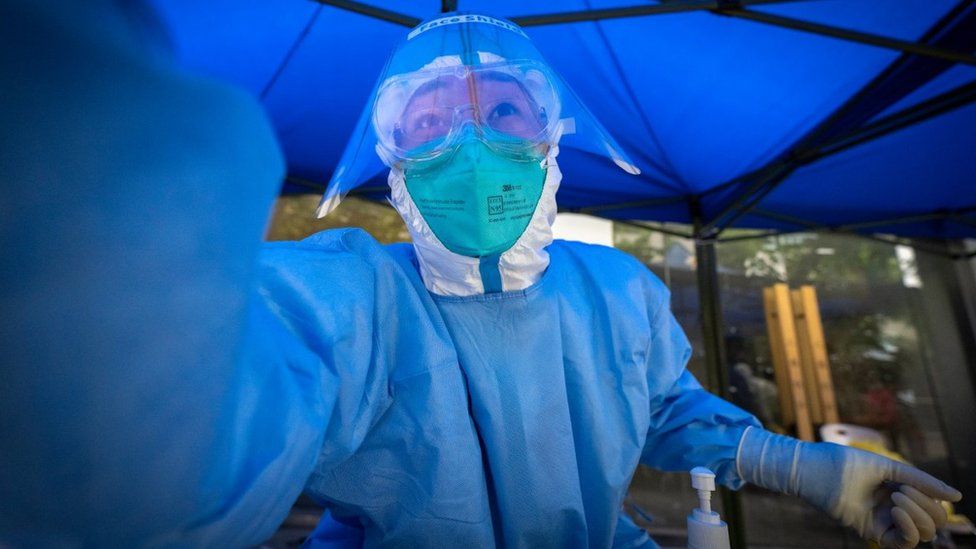
Published5 hours agoSharecloseShare pageCopy linkAbout sharingBy Frances MaoBBC NewsChina is lifting its most severe Covid policies – including forcing people into quarantine camps – just a week after landmark protests against the strict controls.People with Covid can now isolate at home rather than in state facilities if they have mild or no symptoms.They also no longer need to show tests for most venues, and can travel more freely inside the country.Citizens have expressed relief but also concern about the sudden changes.”Finally! I will no longer worry about getting infected or being taken away as a close contact,” one person wrote on Chinese social media.Another said: “Can anyone explain to me what’s happening? Why is the change all of a sudden and so major?”The sweeping changes indicate China is finally moving away from its zero-Covid policy and looking to “live with the virus” like the rest of the world. This comes as the country is grappling with its biggest wave of infections – over 30,000 each day.Pitfalls lie ahead as China exits zero CovidA quick guide to China’s Covid rule changesSome users online have questioned the accelerated opening-up – “The medical system will be overwhelmed and many elderly would be infected. It begins now,” one user wrote.But many others rejoiced at the loosening of a policy that had controlled their lives for nearly three years.Until now, China had forced people with Covid and anyone who was a close contact to go to quarantine camps. This policy had been deeply unpopular because it separated families and removed people from their homes..Some of the centres were also reported to have poor living conditions and inadequate staff. Videos all year have shown guards dragging people out of their homes after they refused to go. Viral footage from Hangzhou last week showed a man fighting off officials.China’s National Health Commissioned announced a swathe of other new freedoms on Wednesday. They said:They aimed to decrease testing. Lateral flow tests would replace PCR tests in most scenarios where a result is needed, although PCRs are still needed for schools, hospitals and nursing homesLockdowns would continue but should only apply to more targeted areas – for example, certain buildings, units or floors as opposed to whole neighbourhoods or cities being shut downAreas identified as “high-risk” should come out of lockdown in five days if no new cases are found. Several cities in China have endured months-long lockdowns this year even when there were only a handful of casesSchools can remain open with student attendance if there’s no wider campus outbreakThe new guidelines also included a strict ban on blocking fire exits and doors and said people had to be able to access emergency medical treatment and escape routes unhindered by pandemic measures.It follows reports of people being locked into their homes during an earthquake, and buildings being sealed under lockdown measures. The recent protests were triggered by a deadly fire in the western Xinjiang region – critics said the victims had been unable to escape the building because of lockdown measures but Beijing denies this. This video can not be playedTo play this video you need to enable JavaScript in your browser.There have also been repeated reports of delays to emergency medical care for people in locked down areas.On Wednesday, authorities also stressed the need to accelerate the vaccination of elderly people.”All localities should adhere to…. focus on improving the vaccination rate of people aged 60-79, accelerating the vaccination rate of people aged 80 and above, and making special arrangements,” the National Health Commission said.The loosening of measures come after the country saw its biggest protests in decades. Last week, crowds took to streets in several cities to criticise lockdowns and pandemic restrictions.Protests in some places also escalated into direct criticism of President Xi Jinping and the Chinese Communist Party – a significant display of defiance given the country’s intolerance for political dissent.Why have so few elderly Chinese been vaccinated?China’s face-saving exit from zero-CovidSince those protests on 24-26 November, Chinese authorities had begun to release some cities from lockdown. Officials had also begun to tone down language around the dangers of Covid.The country’s vice-premier, Sun Chunlan, flagged last week that China was entering “a new situation” in the pandemic and the virus’ ability to cause disease was weakening. Experts have warned any easing of zero-Covid in China would have to be done slowly – as the country of 1.4 billion people could see a huge jump in cases that could overwhelm its healthcare system.Speeding up vaccination of its elderly population is key, health experts say. “The main way for China to exit Covid with the least damage is via vaccination and three doses of vaccination is a must,” Prof Ivan Hung at Hong Kong University told the BBC earlier this week.”Hopefully before Chinese New Year [in January 2023] as there will be a large movement of the population travelling and returning home,” he added.China’s international borders also remain closed to most foreigners, however some analysts say this rapid change shows the country could re-open next year.More on this storyChina eases some Covid restrictions amid protests6 days agoA quick guide to China’s Covid rule changes2 hours agoChina’s fury and fear of Covid puts Xi in a bind28 November

Read more →

Global Partners May End Broad Covid Vaccination Effort in Developing Countries

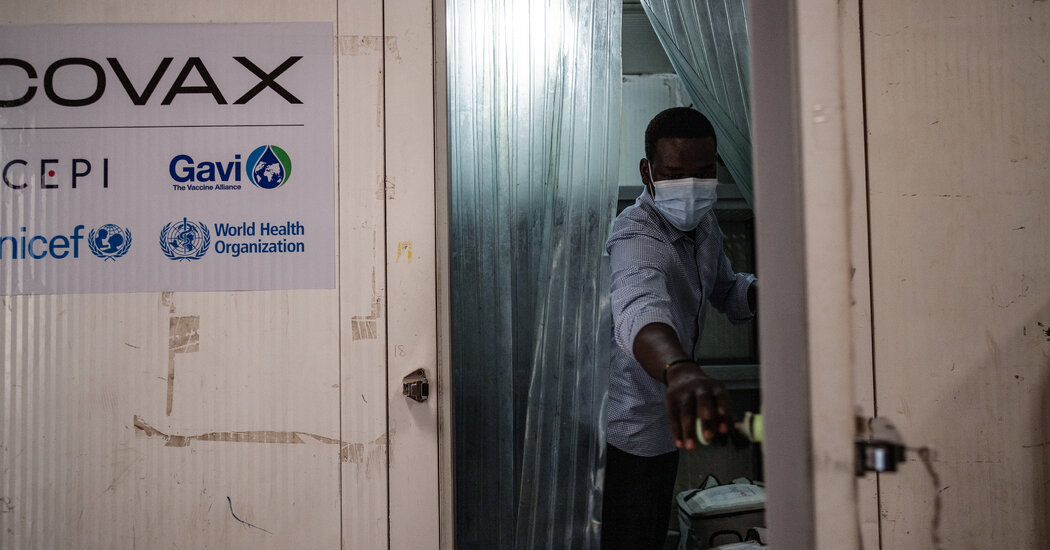
The board of Gavi, the international vaccine agency, meets Wednesday to debate shutting down the program, known as Covax, amid swiftly waning demand for the shots.The organization that has led the global effort to bring Covid vaccines to poor and middle-income countries will decide this week whether to shut down that project, ending a historic attempt to achieve global health equity with a tacit acknowledgment that the effort fell far short of its goal. The deliberations reflect the reality that demand for Covid vaccines is waning quickly throughout the world and is near nonexistent in countries that have some of the lowest rates of coverage. The program, known as Covax, has delivered more than a billion Covid vaccines to developing countries, in hugely challenging circumstances. But it was hobbled by fierce vaccine nationalism in wealthy nations and a series of missteps and misfortunes that undermined demand for the shots.The proposal to end Covax will be voted on by the board of directors of Gavi, a nonprofit, founded in 2000, that manages strategic stockpiles of emergency vaccines and supplies routine childhood shots to developing countries. The proposal would “sunset” Covax sometime in 2023. For 54 poor countries that traditionally receive Gavi support to deliver routine childhood immunizations, Covid shots would still be available for free. However, they would be rolled into Gavi’s standard immunization program, mostly as booster shots for the elderly and others in high-risk groups.Thirty-seven other countries — middle-income nations including Bolivia, Indonesia and Egypt — would receive a one-time cash infusion to “catalyze” the setting up of their own independent Covid vaccination programs.The proposal, which was obtained by The New York Times, comes from Gavi’s planning committee, whose recommendations are usually adopted largely as presented.The fate and performance of the global Covid vaccination program has become a heated issue among Gavi’s donors and the Covax partners ahead of the board meeting in Geneva — a gathering that is normally an unremarkable affair. Few of the players in the decision process were willing to speak about it on the record.Dr. Seth Berkley, the chief executive of Gavi, said the group’s work on Covid vaccination would not be diminished if the plan were adopted. “The plan in 2023 is to continue to work on getting primary coverage up as high as countries want it but also to really focus in on helping countries get those high-risk populations covered,” Dr. Berkley said. “The current proposal is that we integrate the Covax work into the core work of Gavi — not closing it down but integrating it. Because the belief is that, by the end of 2023, it shouldn’t be seen as an emergency program anymore.”Read More on the Coronavirus PandemicLong Covid: People who took the antiviral drug Paxlovid within a few days after being infected with the coronavirus were less likely to experience long Covid months later, a study found.Updated Boosters: New findings show that updated boosters by Pfizer and Moderna are better than their predecessors at increasing antibody levels against the most common version of the virus now circulating.Calls for a New Strategy: Covid boosters can help vulnerable Americans dodge serious illness or death, but some experts believe the shots must be improved to prevent new waves.Future Vaccines: Financial and bureaucratic barriers in the United States mean that the next generation of Covid vaccines may well be designed here, but used elsewhere.Currently, there is an average of 52 percent coverage of primary vaccination in Gavi-supported countries, but in some countries the figure is still below 20 percent.The World Health Organization continues to endorse a target goal of 70 percent Covid vaccination coverage. The W.H.O., a Covax partner, declined to comment on the proposal being considered by the Gavi board.Kate Elder, the senior vaccines policy adviser for Doctors Without Borders’ Access Campaign, said Gavi is moving too quickly to abandon Covax when countries have been led to expect that support would be there for years to come. “They don’t have enough analysis for this kind of huge policy decision,” she said. “But this move is driven by donors. When I speak to donors, they say, ‘We don’t want any more fund-raising for Covid-19 vaccines’.” The low demand for the vaccines means Covax has had to cancel and renegotiate purchase agreements — while high-income nations, with limited interest from their own populations, continue to funnel excess supply into the organization.Recipient countries are refusing and returning vaccine shipments, saying they have more urgent health priorities. One issue before the Gavi board this week is an effort to redouble efforts on catch-up campaigns for routine vaccinations, rates of which have declined sharply through the Covid pandemic.“Most African countries would much rather see increased investment in malaria vaccines,” said a board member not authorized to speak on the record about Gavi activities..css-1v2n82w{max-width:600px;width:calc(100% – 40px);margin-top:20px;margin-bottom:25px;height:auto;margin-left:auto;margin-right:auto;font-family:nyt-franklin;color:var(–color-content-secondary,#363636);}@media only screen and (max-width:480px){.css-1v2n82w{margin-left:20px;margin-right:20px;}}@media only screen and (min-width:1024px){.css-1v2n82w{width:600px;}}.css-161d8zr{width:40px;margin-bottom:18px;text-align:left;margin-left:0;color:var(–color-content-primary,#121212);border:1px solid var(–color-content-primary,#121212);}@media only screen and (max-width:480px){.css-161d8zr{width:30px;margin-bottom:15px;}}.css-tjtq43{line-height:25px;}@media only screen and (max-width:480px){.css-tjtq43{line-height:24px;}}.css-x1k33h{font-family:nyt-cheltenham;font-size:19px;font-weight:700;line-height:25px;}.css-1hvpcve{font-size:17px;font-weight:300;line-height:25px;}.css-1hvpcve em{font-style:italic;}.css-1hvpcve strong{font-weight:bold;}.css-1hvpcve a{font-weight:500;color:var(–color-content-secondary,#363636);}.css-1c013uz{margin-top:18px;margin-bottom:22px;}@media only screen and (max-width:480px){.css-1c013uz{font-size:14px;margin-top:15px;margin-bottom:20px;}}.css-1c013uz a{color:var(–color-signal-editorial,#326891);-webkit-text-decoration:underline;text-decoration:underline;font-weight:500;font-size:16px;}@media only screen and (max-width:480px){.css-1c013uz a{font-size:13px;}}.css-1c013uz a:hover{-webkit-text-decoration:none;text-decoration:none;}What we consider before using anonymous sources. Do the sources know the information? What’s their motivation for telling us? Have they proved reliable in the past? Can we corroborate the information? Even with these questions satisfied, The Times uses anonymous sources as a last resort. The reporter and at least one editor know the identity of the source.Learn more about our process.While Covid infections are rising in much of sub-Saharan Africa, the least-vaccinated region of the world, few countries there are reporting any increase in hospitalization or death rates, one factor in the declining interest in vaccination. The low rates of serious illness and death reflect the fact that the region has a young and thus less vulnerable population, that fewer people have easy access to hospital care, and that causes of death are rarely determined or registered. All those factors may contribute to a perception that Covid is not an urgent problem.A vaccine awareness campaign in Juba, South Sudan, in 2021.Lynsey Addario for The New York TimesBut accepting low Covid vaccination rates globally could allow the virus to evolve in dangerous ways, some public health experts say. “There is still the possibility of more lethal variants emerging, and that could be a disaster,” said Philip Schellekens, a health economist who maintains the data analytics resource pandem-ic.com on pandemic inequalities across countries. “Booster momentum has come to a near halt in the developing world,” he added.Covax was badly hampered from the outset. High-income nations rushed to lock up the supply of vaccines when they were still scarce, and donations were fitful. Covax had intended to rely on a supply of AstraZeneca’s vaccine made by the Serum Institute of India in order to start deliveries in mid-2021, but the Indian government blocked the export of 400 million doses in the face of a crushing Delta variant wave.When Covax finally had vaccines to distribute, it became apparent that plans to use the routine immunization systems to deliver them were inadequate, said a Gavi board member closely involved in the rollout who was not authorized to speak publicly about the organization’s performance. The Covid shots, intended for adults and requiring multiple doses and extreme refrigeration, presented new challenges that weak health systems were ill-equipped to manage.Frustrated by the erratic supply, some public health agencies did little to create demand for the vaccines, while a cresting tide of misinformation discouraged people from seeking them out. By the time supply was adequate, Omicron, which caused less severe illness, was the dominant variant. Motivation, especially for people who would need to travel long distances or invest their own scarce resources to get a shot, had fallen away.A senior official with one of the Covax partner organizations, who was not authorized to speak publicly about the group’s work, said that some who work with the organization are referring to Covax as a “zombie mechanism.”Recipient countries don’t want Covid vaccines, but Gavi needs to move doses, and the W.H.O. has doubled down on its goal of vaccinating 70 percent of the world, the official said. “And there’s interest from many of the donors who are still trying to offload their own doses through donations to Covax,” the official added.Multiple people in senior roles with Covax partners described to The Times a monthslong and souring dispute. They said that major donors, including the Bill & Melinda Gates Foundation, had warned Gavi that it was overcommitting on vaccination orders and Covid efforts, harming its reputation because of the close affiliation with Covax failures and straying too far from its mission.Doses of the Pfizer-BioNTech Covid vaccine in Kathmandu, Nepal.Narendra Shrestha/EPA, via ShutterstockIn a statement, the Gates Foundation said that it supported the work Gavi did with Covax. “As the pandemic evolved and with hundreds of millions of lives still at risk, Gavi’s board and other supporting Covax partners had to make supply and resource mobilization decisions quickly to respond to the unfolding crisis,” a foundation spokesperson said. “These decisions were not easy and involved vigorous dialogue among Gavi and its partners and supporters, including the foundation,” the spokesperson added.Covax has had to renegotiate its contracts with four suppliers of vaccines, to reduce them by between 400 and 600 million doses. Four hundred million doses from Pfizer that were coming as a donation from the United States government have been converted into future options available in 2023.“We did not massively overbuy,” Dr. Berkley said, adding that he expected the demand by countries that continue to try to do primary or booster dose delivery would largely align with the doses Gavi has available. “In a pandemic, I would want to err on the side of buying too many doses, rather than err on the side of not having enough doses, particularly given the fact that countries felt that there weren’t enough doses at the beginning,” he said. “If you want to get doses at the beginning, you’ve got to go ahead and put orders in, even if you don’t know if they’re going to work, and that’s risk. You have to have risk.”The Gavi secretariat is proposing to board members that the organization keep a pool of $1.8 billion that will allow for the acquisition of new doses as required into 2025 and support for the delivery of vaccines.Dr. Berkley said the “pandemic preparedness pool” is meant to act as insurance against another situation where Gavi needs to procure vaccines for developing countries (against a new Covid variant, for example) and is forced to compete with the deep pockets of richer nations. Some board members expressed concern at the idea of the organization sitting on these funds.“We just want to make sure the money is not used until we have a lot more conversations about where we want those funds to go,” one board member said. “We don’t have governance in place right now for how to manage that fund. The important thing is, we don’t want them to use these funds to broaden their mandate.”Dr. Orin Levine, an epidemiologist who until September 2021 represented the Gates Foundation on the Gavi board, said Covax’s fate was sealed by mid- 2021. “The fact that they were zero on the doses delivered in that period, near zero, is a fundamental blemish for us as a global community,” he said. “We couldn’t get any rich countries to slow down their individual vaccination order to help other people get started on their first ones.”

Read more →

Juul Agrees to Settle Thousands of Vaping Lawsuits

The deal is the latest in the company’s efforts to resolve litigation over its marketing of products that some contend fueled the teenage vaping crisis.Juul Labs announced on Tuesday that it had agreed to settle about 5,000 lawsuits in a Northern California court case for an undisclosed sum, resolving one more legal battle over its sale and marketing of e-cigarettes blamed for the teenage vaping crisis.The proposed agreement on the multidistrict litigation would wrap up personal injury, consumer class action, government and Native American tribe cases in a deal that the company said it had secured an investment to fund.“These settlements represent a major step toward strengthening Juul Labs’ operations and securing the company’s path forward to fulfill its mission to transition adult smokers away from combustible cigarettes while combating underage use,” a company spokesman said in a statement.In September, the company settled an investigation by three dozen states for $438.5 million. That investigation focused on the company’s early marketing of its products, including the use of young models and the sale of flavors like mango and crème brûlée that many contended were deliberately aimed at underage youths. That settlement set terms for Juul’s marketing that prohibited the company from targeting young people.Juul has repeatedly denied targeting minors, and in other rounds of settlements the company has not admitted wrongdoing in reaching agreements with the plaintiffs. The latest settlement does not end claims against Altria, which owned a 35 percent stake in Juul, according to lawyers for the plaintiffs. The agreement does not offer funds immediately but will open up a claims process.“The scope of these suits is enormous,” Sarah R. London, a co-lead counsel for the plaintiffs, said in a statement. “These settlements will put meaningful compensation in hands of victims and their families, get real funds to schools for abatement programs, and help government and tribal entities prevent youth use of e-cigarettes across the U.S.”The company is still awaiting a decision by the Food and Drug Administration over permanent authorization for sale of its vaping devices and pods. In June, the agency denied the company’s application to allow its e-cigarettes to remain on the market. Juul received a temporary court reprieve, and then the F.D.A. put its decision on hold for further review, which is continuing.Juul said the agreement reached on Tuesday involved about 10,000 plaintiffs, many of whom claimed they had not been aware that the product could be more addictive than cigarettes. The plaintiffs, which included school districts, also argued that the e-cigarettes were unreasonably dangerous because of their attractiveness to young people. They made a wide range of claims, from racketeering to fraud and unjust enrichment.Meredith Berkman, a co-founder of Parents Against Vaping E-Cigarettes, said she hoped the settlement was large enough “to compensate millions of American families whose lives have been upended by the youth vaping epidemic created by Juul.” The group is not a plaintiff in this multidistrict litigation.She said she was troubled by the lack of details initially released by Juul and hoped the judge overseeing the litigation would require Juul to produce documents showing whether the company had deliberately targeted adolescents.

Read more →

Harvesting light to grow food and clean energy together

People are increasingly trying to grow both food and clean energy on the same land to help meet the challenges of climate change, drought and a growing global population that just topped 8 billion. This effort includes agrivoltaics, in which crops are grown under the shade of solar panels, ideally with less water.
Now scientists from the University of California, Davis, are investigating how to better harvest the sun — and its optimal light spectrum — to make agrivoltaic systems more efficient in arid agricultural regions like California.
Their study, published in Earth’s Future, a journal of the American Geophysical Union, found that the red part of the light spectrum is more efficient for growing plants, while the blue part of the spectrum is better used for solar production.
A door opener
The study’s results could help guide global interest in agrivoltaics and identify potential applications for those systems.
“This paper is a door opener for all sorts of technological advancements,” said corresponding author Majdi Abou Najm, an associate professor at the Department of Land, Air and Water Resources and a fellow at the UC Davis Institute of the Environment. He conducted the study with first author Matteo Camporese of the University of Padova in Italy, who came to UC Davis as a Fulbright visiting scholar. “Today’s solar panels take all the light and try to make the best of it. But what if a new generation of photovoltaics could take the blue light for clean energy and pass the red light onto the crops, where it is most efficient for photosynthesis?”
For the study, the scientists developed a photosynthesis and transpiration model to account for different light spectra. The model reproduced the response of various plants, including lettuce, basil and strawberry, to different light spectra in controlled lab conditions. A sensitivity analysis suggested the blue part of the spectrum is best filtered out to produce solar energy while the red spectrum can be optimized to grow food.
This work was further tested this past summer on tomato plants at UC Davis agricultural research fields in collaboration with UC Davis Assistant Professor Andre Daccache from the Department of Biological and Agricultural Engineering.
Guiding light
In an era of shrinking viable land, understanding how plants respond to different light spectra is a key step toward designing systems that balance sustainable land management with water use and food production, the study noted.
“We cannot feed 2 billion more people in 30 years by being just a little more water-efficient and continuing as we do,” Abou Najm said. “We need something transformative, not incremental. If we treat the sun as a resource, we can work with shade and generate electricity while producing crops underneath. Kilowatt hours become a secondary crop you can harvest.”
The study was funded by a U.S. Department of State Fulbright Research Scholarship, UC Davis and the National Institute of Food and Agriculture.
Story Source:
Materials provided by University of California – Davis. Original written by Kat Kerlin. Note: Content may be edited for style and length.

Read more →