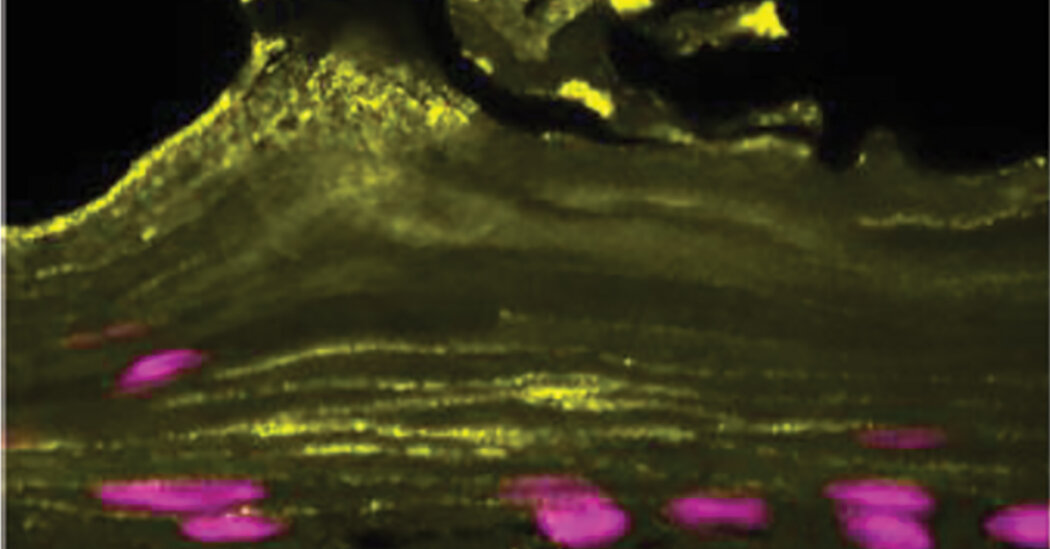
How does a cell move? 'Pull the plug' on the electrical charge on the inner side of its membrane

Scientists at Johns Hopkins Medicine say that a key to cellular movement is to regulate the electrical charge on the interior side of the cell membrane, potentially paving the way for understanding cancer, immune cell and other types of cell motion.
Their experiments in immune cells and amoeba show that an abundance of negative charges lining the interior surface of the membrane can activate pathways of lipids, enzymes and other proteins responsible for nudging a cell in a certain direction.
The findings, described in the October issue of Nature Cell Biology, advance biologists’ understanding of cell movement and potentially can help explain biological processes associated with movement, such as how cancer cells move and spread beyond the original site of a tumor and how immune cells migrate to areas of infection or wound healing.
“Our cells are moving within our body more than we imagine,” says Peter Devreotes, Ph.D., the Isaac Morris and Lucille Elizabeth Hay Professor and Distinguished Service Professor in the Department of Cell Biology at the Johns Hopkins University School of Medicine. “Cells move to perform many functions, including when they engulf nutrients or when they divide.”
Many of the molecules involved in cell movement become activated in the leading edge of the cell, or where it forms a kind of foot, or protrusion, that orients the cell in a particular direction.
Tatsat Banerjee, a graduate student in Cell Biology and Chemical and Biomolecular Engineering Departments at Johns Hopkins and the lead author of the study, began to notice that negatively charged lipid molecules that line the inner layer of cell membranes were not uniform, as scientists previously thought. He noticed that these set of molecules consistently leave the regions where a cell makes a protrusion. Banerjee had a hunch that a general biophysical property, such as electrical charge, rather than a specific molecule, could be stimulating and organizing the activities of enzymes and other proteins related to cell movement.

Read more →

Clues found regarding tumor suppressor gene's breast cancer activity

Researchers at the Johns Hopkins Kimmel Cancer Center have revealed how the gene HOXA5 may work to suppress formation of breast cancers. A new study indicates that it binds to another protein in an inflammatory cell pathway, boosting that protein’s cancer-suppressing properties.
A description of the work was published Oct. 15 in Cancer Research.
HOXA5 is in cells lining the breast, where it normally acts as a tumor suppressor and transcription factor. It helps new cells mature toward performing their ultimate functions, says senior study author Saraswati Sukumar, Ph.D., a professor of oncology and pathology at the Johns Hopkins University School of Medicine who has been studying this protein for 25 years.
Loss of HOXA5 results in cells becoming stuck in their incomplete differentiation stage, during which they begin to divide too much. This can lead to cancer. HOXA5 expression is lost in about 60% to 70% of all breast cancers, often occurring during an early stage of disease. Loss of HOXA5 alone, however, is not always sufficient to start the breast cancer process, and Sukumar’s team focused on understanding other steps involved.
In studies of breast cancer cell lines and in mice, Sukumar’s team discovered that HOXA5 has a partner — it binds to and stabilizes the cellular protein I kappa B alpha (IκB-α), which in turn inhibits NF-kappa B (NF-κB), a protein complex. Typically, NF-κB rushes to the nucleus and starts transcription of many cancer-causing genes, then IκB-α stops it. When HOXA5 is present, it’s able to help IκB-α suppress NF-κB activity more potently, but when HOXA5 is lost, IκB-α’s effect on NF-κB is lessened, and the potential for cancer development is greater.
“Our studies demonstrate that HOXA5 is acting to put brakes on a very important inflammatory pathway, which has been shown to be a promoter of the development of tumors,” Sukumar says. “Understanding precisely how this happens is of great importance, because increasing the amount of HOXA5 in these tumor cells may be a way forward to try to reverse the tumor formation process.”
In laboratory studies, Priya Pai, lead author and postdoctoral fellow, studied a cell line from nonmalignant tissue lining the breast (epithelial cells) that contained mutations in key breast cancer genes. Breast cancer cells sometimes become resistant to endocrine treatment by acquiring mutations in the gene PIK3CA, or resistant to anti-HER2 therapy through mutations in the HER2 gene. In cells that had mutations in the HER2 and PIK3CA genes, loss of HOXA5 induced the start of precancerous activity. When injected into mouse mammary ducts, the cells produced invasive tumor growth. The NF-κB pathway was significantly upregulated in the cells after HOXA5 was silenced. As a result of activation of the NF-κB pathway, multiple NF-κB target genes involved in exacerbating cancerous changes, such as IL-6 and COX2, also were upregulated. Collectively, the data suggest that the presence of HOXA5 suppresses malignancy in breast epithelial cells by blunting NF-κB action through stabilization of its inhibitor, IκB-α.
A new avenue of research is investigation of how lost HOXA5 can be replaced or reinstated so its tumor-suppressing functions can be restored to the cells, Sukumar says.
The work was supported by the Avon Foundation for Women.
Other researchers were Guannan Wang, Wei Wen Teo, Diana Raez-Rodriguez, Kathleen Gabrielson, Bradley Downs and Akanksha Aggarwal of Johns Hopkins, and Balázs Győrffy of Semmelweis University in Budapest, Hungary.
Story Source:
Materials provided by Johns Hopkins Medicine. Note: Content may be edited for style and length.

Read more →

Rheumatoid arthritis drugs lower risk of heart disease, study shows

People with rheumatoid arthritis have a greater than average risk of cardiovascular disease, but a new study suggests that drugs commonly used to reduce joint inflammation in patients also reduce that risk.
“The reassuring message is that as your joints are improving with RA treatments, so too is your risk for cardiovascular disease,” says Joan Bathon, MD, a co-leader of the study and professor of medicine and director of the division of rheumatology at Columbia University Vagelos College of Physicians and Surgeons.
Recent clinical trials have shown that immunomodulators — drugs that decrease inflammation — significantly reduce heart attacks, strokes, and other cardiovascular events in people with cardiovascular disease. But it was not clear if these drugs have a similar effect on people with rheumatoid arthritis, who have a 50% higher risk of heart disease than the average person.
More than 1.3 million adults in the United States have rheumatoid arthritis, a chronic autoimmune and inflammatory disease that causes painful joint swelling. It’s known that inflammation leads to atherosclerosis and contributes to heart disease, which may explain the elevated rates of heart disease in people with rheumatoid arthritis.
Methotrexate is the first treatment choice for patients with moderate to severe rheumatoid arthritis, but most RA patients will go on a tumor necrosis factor inhibitor (TNFi) or triple therapy (methotrexate plus sulfasalazine and hydroxychloroquine) at some point.
In the new study, led by researchers at Columbia University and Brigham and Women’s Hospital, 115 adults with moderate to severe rheumatoid arthritis despite treatment with methotrexate were randomized to add a TNFi — either adalimumab (Humira) or etanercept (Enbrel) — or to go on triple therapy.
After six months, both groups had similar reductions in arterial inflammation, a proxy for heart disease risk, and RA disease activity.
“We were surprised to see that both of these powerful anti-inflammatory treatment strategies reduced heart disease risk in patients with rheumatoid arthritis,” Bathon says. “Doctors still need to pay attention to the usual heart disease risk factors, such as high cholesterol, high blood pressure, and obesity. But since inflammation — a key feature of RA — elevates cardiovascular risk even further, reducing inflammation by treating the arthritis is a novel mechanism to reduce heart disease risk in these patients.”
Story Source:
Materials provided by Columbia University Irving Medical Center. Note: Content may be edited for style and length.

Read more →

Gut microbiomes of mouse pups are permanently altered when moms are fed a low-fiber diet while nursing

The first things that mouse newborns touch and eat establishes their native microbiome, which is often influenced by their mother during birth and throughout nursing. Although diet has been a known contributor to obesity in all stages of life, the effects of nursing mothers’ diets is an ongoing investigation. In a paper publishing December 8th in the journal Cell Host and Microbe, researchers find that when nursing mouse mothers are fed a low-fiber diet, their offspring’s microbiome is permanently altered, leading to gut inflammation and obesity.
“We wanted to see what would happen if we gave a low-fiber diet to the mothers at the time their pup’s microbiome is being wired,” says senior author Andrew Gewirtz, a microbiologist at Georgia State University. “Would we see an increase in obesity in the pups due to an altered gut from their moms’ diets?”
Obesity is often attributed to diet, and the consumption of energy-dense meals, such as “fast foods.” However, so called “junk food” has been around for decades, but obesity rates continue to climb. Gewirtz and his team sought to learn whether the early microbiome could be an underlying factor that changed one’s susceptibility to the ill effects of these diets.
The researchers gave nursing mother mice two different diets, either a fiber-balanced “chow” traditionally used in research mouse studies or a low-fiber food. After three weeks of nursing, the pups were weened, and their microbiome was analyzed through fecal samples.
There was an abundance of Proteobacteria in both the pups and the mothers who were fed low-fiber diets when these were compared to mice fed a traditional diet. Along with altered microbiomes, both mothers and pups had intestinal disruptions, and the pups nearly doubled in weight.
“I was shocked at how quickly the mice gained weight when they were exposed to this diet,” says Gewirtz. “The data was striking, and I didn’t believe it at first. It took many replications to convince me.”
Proteobacteria is a large, well-studied group of bacteria that have surface proteins that can easily activate the innate immune system. This activation alerts the body of an illness and triggers the release of chemicals that cause inflammation. The bacteria also alter the intestines in a way that causes greater uptake of lipids from the diets, contributing to a rise in obesity.
Gewirtz and his team believe that regular levels of fiber help fuel the microbiome in a way that allows diverse bacteria to thrive. It may be that when the fiber is gone, the bacteria that needed it for nourishment die off and Proteobacteria, who don’t eat fiber, can grow unchecked.
The gut disruption in the pups nursed by mothers on low-fiber diets had long-lasting effects. After being on the traditional diet for nine weeks after weening, the guts of the low-fiber mice still had unusually high numbers of Proteobacteria, and the pups continued to gain weight.
“I hope this work can shed light onto how complex our metabolism and microbiome really are and how our early life experiences can shape us for the rest of our lives,” says Gewirtz.
Story Source:
Materials provided by Cell Press. Note: Content may be edited for style and length.

Read more →

Adjuvant Chemotherapy Improves Overall Survival for Pancreatic Cancer Patients

Today, the University of Colorado Cancer Center released new research that showcases chemotherapy treatment before and after surgery for pancreatic cancer as the most effective combination for patients.
The study findings were published in JAMA Oncology and led by Marco Del Chiaro, MD, division chief of surgical oncology in the University of Colorado Department of Surgery and visiting researcher Toshitaka Sugawara, MD, PhD.
“It’s critical to have large scale data that doctors can use to make decisions about chemotherapy plans for patients who qualify for pancreatic cancer surgery,” said author Marco Del Chiaro, MD, division chief of surgical oncology at the CU Cancer Center on the University of Colorado Anschutz Medical Campus.
The study showed overall survival was significantly longer in patients who received adjuvant chemotherapy after neo-adjuvant chemotherapy followed by surgery, compared to the group of patients that did not receive it.
This was the case for all patients independent of their lymph node status and resection margins.
“The success of adjuvant chemotherapy used to be unclear, with varied data available for doctors to consider. Our study suggests that adjuvant chemotherapy after surgery should be implemented no matter the biological stage of the cancer,” adds Del Chiaro.
The researchers conducted a nationwide, retrospective study examining the overall survival of patients who received adjuvant chemotherapy and those who did not. To do so, they used data from the National Cancer Database and included nearly 900 patients with pancreatic adenocarcinoma (PDAC) diagnosed between 2010 to 2018.
They found adjuvant chemotherapy was associated with better survival in patients with any pathological N stage and margin status.
“It’s important to continue to move forward research in pancreatic cancer care to improve the survival rate. By conducting the largest study of its kind and analyzing data using multiple models, we’re able to improve the knowledge in this paper for doctors and patients to inform their plans and help prolong survival in many cases,” said lead researcher Sugawara.
Sugawara and his team investigated the interactions between pathological findings and adjuvant chemotherapy in separate multivariable Cox regression models. Their findings suggest that tumors with aggressive biology benefit from adjuvant chemotherapy even after surgery.
The new findings were made possible by the research team at the CU Cancer Center.
Story Source:
Materials provided by University of Colorado Anschutz Medical Campus. Original written by Julia Milzer. Note: Content may be edited for style and length.

Read more →

Embryonic origins of adult pluripotent stem cells discovered

Stem cells are a biological wonder. They can repair, restore, replace, and regenerate cells. In most animals and humans these cells are limited to regenerating only the cell type they are assigned to. So, hair stem cells will only make hair. Intestine stem cells will only make intestines. But, many distantly-related invertebrates have stem cell populations that are pluripotent in adult animals, which means they can regenerate virtually any missing cell type, a process called whole-body regeneration.
Even though these adult pluripotent stem cells (aPSCs) are found in many different types of animals (such as sponges, hydras, planarian flatworms, acoel worms, and some sea squirts) the mechanism of how they are made is not known in any species.
In a new study in Cell researchers in the Department of Organismic and Evolutionary Biology at Harvard University have identified the cellular mechanism and molecular trajectory for the formation of aPSCs in the acoel worm, Hofstenia miamia.
H. miamia, also known as the three-banded panther worm, is a species that can fully regenerate using aPSCs called “neoblasts.” Chop H. miamia into pieces and each piece will grow a new body including everything from a mouth to the brain. Senior author Professor Mansi Srivastava collected H. miamia in the field many years ago because of its regenerative ability. Once back in the lab, H. miamia began to produce many embryos that could easily be studied.
A previous study by Srivastava and co-author postdoctoral researcher Lorenzo Ricci developed a protocol for transgenesis in H. miamia. Transgenesis is a process that introduces something into the genome of an organism that is not normally part of that genome. This method allowed lead author Julian O. Kimura (PhD ’22) to pursue his question of how these stem cells are made.
“One common characteristic among animals that can regenerate is the presence of pluripotent stem cells in the adult body,” said Kimura. “These cells are responsible for re-making missing body parts when the animal is injured. By understanding how animals like H. miamia make these stem cells, I felt we could better understand what gives certain animals regenerative abilities.”
There are some unifying features of these stem cell populations in adult animals such as the expression of a gene called Piwi. But in no species so far has anyone been able to figure out how these stem cells are made in the first place. “They’ve mostly been studied in the context of adult animals,” said Srivastava, “and in some species we know a little bit about how they might be working, but we don’t know how they are made.”

Read more →

One-minute bursts of activity during daily tasks could prolong your life

In good news for those who don’t like playing sport or going to the gym, new research finds just three to four one-minute bursts of huffing and puffing during daily tasks is associated with large reductions in the risk of premature death, particularly from cardiovascular disease.
Published in Nature Medicine today, the study is led by the University of Sydney’s Charles Perkins Centre in Australia. It is the first to accurately measure the health benefits of what researchers have termed ‘vigorous intermittent lifestyle physical activity’ or VILPA.
VILPA is the very short bouts of vigorous activity (up to one to two minutes) we do with gusto each day, like running for the bus, bursts of power walking while doing errands or playing high-energy games with the kids.
The researchers found that just three to four one-minute bouts of VILPA every day is associated with up to 40 percent reduction in all-cause and cancer-related mortality, and up to a 49 percent reduction in death related to cardiovascular disease.
“Our study shows similar benefits to high-intensity interval training (HIIT) can be achieved through increasing the intensity of incidental activities done as part of daily living, and the more the better,” said lead author Emmanuel Stamatakis, Professor of Physical Activity, Lifestyle and Population Health at the University of Sydney’s Charles Perkins Centre.
“A few very short bouts totalling three to four minutes a day could go a long way, and there are many daily activities that can be tweaked to raise your heart rate for a minute or so.”
The majority of adults aged 40 and over do not take part in regular exercise or sport, but Professor Stamatakis said the study reveals how incidental physical activity can overcome many barriers.

Read more →

Researchers discover how a nano-chamber in the cell directs protein folding

A landmark study by researchers at the Department of Energy’s SLAC National Accelerator Laboratory and Stanford University reveals how a tiny cellular machine called TRiC directs the folding of tubulin, a human protein that is the building block of microtubules that serve as the cell’s scaffolding and transport system.
Until now, scientists thought TRiC and similar machines, known as chaperonins, passively provide an environment conducive to folding, but don’t directly participate in it.
Up to 10% of the proteins in our cells, as well as those in plants and animals, get hands-on help from these little chambers in folding into their final, active shapes, the researchers estimated.
Many of the proteins that fold with the aid of TRiC are intimately linked to human diseases, including certain cancers and neurodegenerative disorders like Parkinson’s, Huntington’s and Alzheimer’s diseases, said Stanford Professor Judith Frydman, one of the study’s lead authors.
In fact, she said, a lot of anti-cancer drugs are designed to disrupt tubulin and the microtubules it forms, which are really important for cell division. So targeting the TRiC-assisted tubulin folding process could provide an attractive anti-cancer strategy.
The team reported the results of their decade-long study in a paper published in Cell today.

Read more →

Fake Covid protection kits: 'How my undercover work helped convict preacher'

Published20 hours agoSharecloseShare pageCopy linkAbout sharingImage source, PA MediaBy Guy LynnBBC NewsA bishop who told his congregation they would “drop dead” from Covid if they did not buy his £91 protection kits has been found guilty of fraud. Bishop Climate Wiseman, 47, of Kingdom Church in Camberwell, south London, sold red yarn and bottles of oil, Inner London Crown Court heard.Evidence against him included secret phone recordings and testimony from a BBC London investigation. Investigative reporter Guy Lynn explains how he exposed the fraud.As I made my way to the stand in one of London’s oldest crown courts, I looked up to see the packed public gallery of Bishop Climate Wiseman’s supporters. I could feel them glaring down at me intensely. And in front of me, the man himself, accused of fraud, whose fate hung in the balance, seemingly staring through me as I moved to speak. Image source, YouTubeAs a journalist working on an undercover investigation, my first priority is to get the story right for the public. We are thorough and diligent, particularly with anything involving secret recording. But journalists aren’t police officers – and the requirements of a TV investigation are not in the same league as law enforcement. I remember feeling my heart racing as I went up to give my oath, and nervous that this was something which was entirely out of my comfort zone. I would be addressing barristers and a jury about how we do journalism of this kind at the BBC and, in the case of Bishop Wiseman, how this work was absolutely critical for the fate of one man, who could potentially go to jail as a result of it. On the stand, I was first asked questions by the prosecuting lawyer Richard Heller about the genesis of this story which, I recounted, came in April 2020. We all remember that period, I said, shortly after the then Prime Minister, Boris Johnson, told the country they must stay at home, while large numbers of people were seriously ill in hospital as the best medical minds raced to better understand Covid-19. At the time, I had heard of many stories of scams targeting vulnerable people desperate for some protection from the virus. But the one that worried me most was about a church in Camberwell, led by a charismatic preacher, Bishop Climate Wiseman, who was seemingly trying to profit by selling very expensive bottles of oil that had first been sold as “plague protection kits”. He and his employees – who were not on trial – claimed that anyone who purchased the kits for about £90 each would be “protected” from the raging virus and would have no need for social distancing, as they were fully protected and could not spread Covid.I knew that I would be asked lots of questions about secret recording which, contrary to what many think or assume, is a highly complex process at the BBC. Such an investigation requires very high levels of evidence to even begin and a very high level of public interest to justify pursuing the story. Defence barrister Charles Burton seemed to suggest that this had been some kind of fishing “exercise”, which had involved a level of deception by the BBC approaching the church- posing as migrant workers who had heard of the oil and were interested in it.I explained the BBC never secretly carried out such an investigation without strong reasons for doing so and needed evidence in advance that can only be tested with undercover recording. I told him that any deception carried out had to be proportionate to the seriousness of what was being looked at, and kept to a bare minimum. To do the secret recording at all, the topic needed to be firmly in the public interest – something I felt very strongly about in this case.I explained to the court that at the time, in April 2020, we had received confidential tip-offs and reports that the church was touting this oil as a cure for Covid, despite having previously been warned by Southwark Council and being under investigation by the Charity Commission. However, these were just reports and we needed to test them.In order not to arouse suspicion, it was essential to engage in a small level of deception and so a decision was made to approach the church by posing as migrant construction workers who were interested in buying the substance, and secretly recording what was said.A Romanian journalist would go in and make a purchase. I would adopt an accent on the phone to conduct further questioning and appear as if I was a migrant worker in order to test and gather the evidence. The scene would then be set for the oil to be bought. As part of the evidence presented in court, the undercover recording we obtained through phone conversations with employees of Bishop Climate Wiseman’s church – who, it was argued, were under his control – was played in open court. It is important to say that the BBC does not hand over its evidence from its stories lightly. It always considers very carefully the implications of doing so to the authorities, and that the bodies involved meet the legal criteria to be able to receive it. The Romanian journalist was the one who went to the church to make the purchase. The oil, which came in a small bottle, labelled “divine cleansing oil” and some red yarn, was sold to him for £91. Although it was suspected the church had fraudulently made hundreds of sales to its flock promising protection from Covid, the sale on which the fraud charge was framed around was the purchase that the BBC made on 21 April 2020. This was the basis of the charges against Bishop Wiseman, who was in charge of the church and overseeing the sale. I was also pushed hard on the various conversations I have had with the church, which were recorded on a phone and also played in open court. I had posed as someone called Javier and had adopted a kind of Italian-Spanish accent.I explained this was required because whenever we do an undercover recording at the BBC, we need to use only the amount of deception that is necessary. All the reports that had come in had repeatedly confirmed that while the church was seemingly selling the oil to its flock, and was openly advertising the product on a website, those who were not members and had been born abroad were the ones to whom the outlandish claims were being made. I needed to test those claims and this was one way, on the phone. In a moment of amusement, which led to a wave of laughter throughout the court, the defence conceded after nearly half an hour of the secret recording that my accent was “pretty convincing”. I was asked to talk about those secretly recorded conversations, undertaken by “Javier” with the church’s employees, and what was the thinking behind my questioning. Secret recording of anyone by the BBC is never for entertainment. The sole reason for it is to gain and test evidence. For me, the most important aspect of all this was to truly check whether the church was genuinely claiming that Covid could be cured. Were they really suggesting to those who might take the £91 “cure” that they were protected and would not have to socially distance? Had they actually done it already?If so, this would be of huge public concern, particularly as the oil had seemingly been sold to a lot of people. Witnesses from the congregation, including nurses, said they were cured or prevented from getting Covid after using the oil by steam inhalation or rubbing it on their skin.Wiseman also offered other products for sale, including an oil to help in court cases.My calls were played loudly in court. One was with an employee who referred to herself as a minister, and there were more with others.All of them explained to Javier how the divine cleansing oil would cure anyone of Covid and how users needed to inhale it through a hot towel after mixing it with some hot water.”You’ve got your cleansing oil,” said the minister who referred to herself as Sharon (and who was not accused in court of any wrongdoing herself). “Inhale. Inhale. You’re going to cough. Give them that product, you’ll see the effect. You’ll see that they’ll recover from the Corona.”‘So many cured’One aspect of Bishop Wiseman’s defence was that he was acting as a religious leader only. However, there was evidence from the BBC’s recording that this was being framed as a commercial operation, which was a key aspect of the fraud case against him.For example, we were told that if we bought a number of bottles, the price for them would fall dramatically – from £90 to £60 – as long as we purchased a few for those who needed them. And when another employee was asked whether people had been genuinely cured of Covid, the response was: “So many. So many have been cured. Make sure they inhale properly and they know they’re cleansed from it, so at least they can work together.” That said, the employees at the church were seemingly not oblivious to the attention of the authorities at the time, with one of them explaining how to act with regard to social distancing, saying that after buying the oil it would be fine to mix and ignore the rules inside, but more care was needed outdoors.”When everyone’s outside, you have to be cautious because the government put down those social-distancing rules,” one said. “You don’t want the police to rock up there because somebody report you.” Image source, PA MediaSouthwark Trading Standards had launched its investigation using the BBC’s evidence, following numerous warnings made to Wiseman. Indeed, in his own evidence at court, the preacher claimed his mixture, made from cedar wood, hyssop oil and olive oil, had cured at least 10 people who had the virus. He also claimed the investigators probing him were the “antichrist”. Judge Nigel Peters KC told the court that Wiseman had carried out the fraud when “there was fear amongst the public in this country”.”This was being touted at a time when the public in this country were under the most intense pressure as to what would happen tomorrow,” he said.Speaking after the trial, Southwark councillor Evelyn Akoto said that there were a lot of vulnerable people at that time who were really scared and didn’t know where to turn.”And this was a potential cure, so a lot of people believed in it, unfortunately, and succumbed to pay high costs for something we know doesn’t work.”Wiseman will be sentenced on 13 January.You can follow Guy on Twitter.Follow BBC London on Facebook, Twitter and Instagram. Send your story ideas to hellobbclondon@bbc.co.ukMore on this storyPreacher denies fraud over ‘Covid protection’ oil13 September 2021Related Internet LinksHM Courts & Tribunals ServiceThe BBC is not responsible for the content of external sites.

Read more →

Scientists Have Designed a ‘Vagina on a Chip’

A silicone chip lined with tissue from human donors could help scientists test drug treatments for bacterial infections in the vagina.Dr. Don Ingber makes organs for a living. Using flexible pieces of silicone carved with tiny channels, he grows tissues that can mimic the complex physical interactions between cells and fluids, creating malleable, three-dimensional models of organs.Over the past decade, Dr. Ingber, a bioengineer at Harvard, has made more than 15 of these organ chips, including those simulating lungs, livers, intestines and skin. And now, as described in a paper published last month, he has added a far less studied organ to the list: the vagina.The “vagina on a chip” was made from vaginal cells donated by two women. The model was grown inside of silicone rubber chips the size of a stick of gum, forming channels that were responsive to fluctuating estrogen levels and bacteria. The chip successfully mimicked key features of the vaginal microbiome, the swarming communities of bacteria that play a crucial role in the organ’s health, the study found.The chip is more realistic than other laboratory models of the organ, Dr. Ingber said: “This walks, talks, quacks like a human vagina.”He and other researchers are optimistic that the tool could offer a better way to test treatments for bacterial vaginosis, an infection of harmful microbes in the vagina which affects an estimated 30 percent of women every year.“This is a great development, this system,” said Dr. Ahinoam Lev-Sagie, a gynecologist at Hadassah Medical Center in Jerusalem who studies the vaginal microbiome and was not involved in the new study. Because of safety concerns, it is difficult for researchers like her to test new treatments for patients with recurring infections, she said.It’s not difficult to find women willing to donate vaginal samples, she said. “But when you want to explore which medications can work, it’s very, very difficult to find women who are willing to participate in these studies.”The study, which was funded by the Gates Foundation, used the vagina chip to mimic how a real vagina responds to good and bad bacterial environments. The researchers showed that the tissue inside the chip reacted positively to a cocktail of Lactobacilli, a type of bacterium that digests sugars and produces lactic acid, creating an acidic environment inside the human vagina that protects it from infections. When a different type of bacterium, one associated with vaginal infections, was cultured on the chip with no Lactobacilli present, inflammation increased and the cells were quickly damaged.The vagina chip mimics the arrangement of cell layers and the flow of bacteria in a human vagina.Wyss Institute at Harvard UniversityThat reaction is similar to what happens when someone contracts bacterial vaginosis, a condition in which harmful bacteria take over the vaginal microbiome, lowering its acidity and sometimes causing itching and increased discharge.Bacterial vaginosis is typically treated with antibiotics, but relapse rates are high. When left untreated, bacterial vaginosis increases the risk of sexually transmitted infections and cervical cancer. In pregnant women, it can raise the risk of preterm birth or low birth weight.Despite these risks, bacterial vaginosis — and the vagina itself — remains understudied.“We don’t really understand how these processes are triggered by bacteria in the vagina or often even which bacteria are responsible,” said Amanda Lewis, a professor at the University of California, San Diego, who studies the vaginal microbiome. “As you might imagine, such a crude understanding of such an important physiological system makes for crude interventions or none at all.”In 2019, Dr. Lev-Sagie and other researchers in Israel published the results of the world’s first vaginal microbiome transplants. They transferred bacteria-rich discharge from donors with healthy vaginas into the vaginas of five women who had struggled with recurring bacterial vaginosis. Screening the samples to make sure that they were safe and finding patients that were willing to participate was extremely difficult and took many years.Other models, in animals or in the lab, are not effective environments in which to test the vaginal microbiome. While the vaginas of healthy humans are made up of around 70 percent Lactobacilli, in other mammals Lactobacilli rarely constitute more than 1 percent of the vaginal microbiome. And when vaginal cells are mixed with bacteria in a flat petri dish, bacteria quickly take over and kill the cells.Similar drawbacks hamper the development of many drugs, which is why the organ chips are so promising, said Dr. Ingber, who holds a patent for the design of the silicone chip and founded a company that makes and tests them.“There’s been a search for better in vitro models that really mimic the physiological complexity, the structural complexity of tissues,” he said. “And so that’s what we’ve done with organ chips.”In another paper published this week, Dr. Ingber’s group showed that an organ chip of the liver was seven to eight times better at predicting human responses to 27 drugs than animal models.But the vagina chip has limitations, scientists said.Dr. Lev-Sagie of Hadassah Medical Center in Jerusalem noted that the vaginal microbiome shifts substantially in response to menstruation, sexual intercourse, hormonal fluctuations and antibiotic use. And other important types of cells in the vagina, such as immune cells, were not included in the study.“Real life is much more complicated than the vagina on a chip,” Dr. Lev-Sagie said.Having a more sophisticated model will require more studies of how exactly the vaginal microbiome works and how it responds to disease, she added. Unlike research on the gut microbiome, which has progressed rapidly over the past decade, work on the vaginal microbiome suffers from a lack of funding.“In the vagina, we knew that bacteria are crucial more than a hundred years ago,” Dr. Lev-Sagie said. “We do the research for many years, but we still lag behind.”

Read more →