Key Partner in Covax Will End Support for Middle-Income Nations
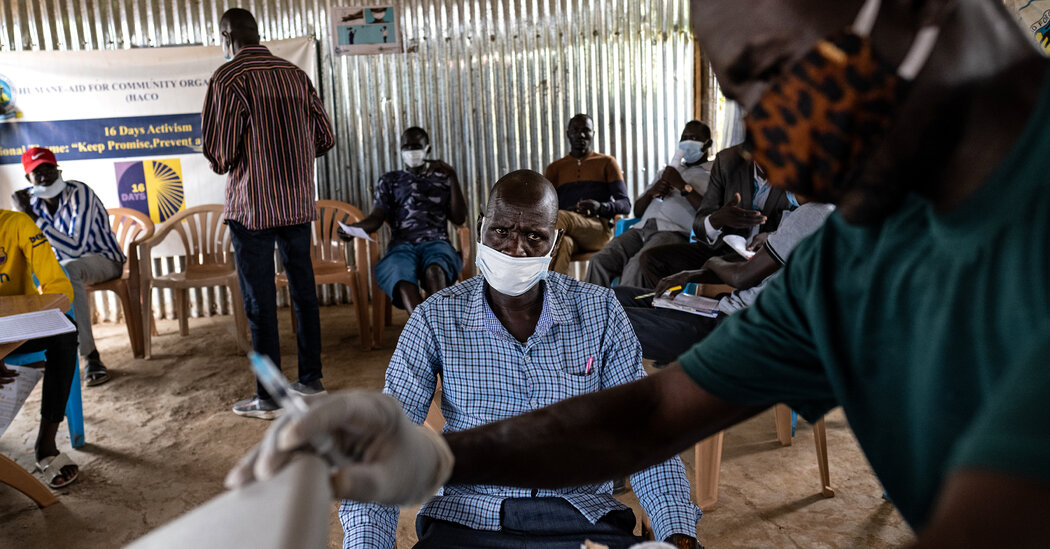
Many of the poorest countries will continue to get free Covid shots, but global demand for them has plummeted, driving a shift away from the goal of broad coverage.A key partner in Covax, the organization that has led the effort to bring Covid vaccines to poor and middle-income countries, will stop supplying the shots to a huge part of the global population in the year ahead, and provide them only to the lowest-income nations.The board of governors of Gavi, the nonprofit that supplies immunizations to developing countries, voted at a meeting in Geneva on Thursday to end Covax support for 37 countries, including Egypt and Indonesia, where hundreds of thousands of people have died from the coronavirus.Fifty-four other nations, including some of the world’s poorest countries, will continue to receive free Covid shots and funds to help deliver them — if they want them — going into 2025.The decision reflects the fact that demand for Covid vaccines has plummeted worldwide, and that Gavi has found itself overcommitted to vaccine purchases when countries don’t want them. The continuing vaccination efforts are expected to focus on high-risk groups, including older and immunocompromised people.Covax has delivered 1.7 billion Covid shots to people in developing nations, in challenging circumstances, but has fallen far short of its goal of ensuring equitable access to the vaccines worldwide. The effort was hobbled at the outset by high-income countries that locked up the initial supply of shots, and later by erratic supply flows and weak delivery systems.Read More on the Coronavirus PandemicCases and Apathy Rise: The United States is once again experiencing an uptick in cases in the weeks after Thanksgiving. But fear — and masks — are missing this time around.A Crisis for the Uninsured: As federal funding for the pandemic response dries up, Americans without health insurance risk being left footing the bill for tests and treatments.Long Covid: People who took the antiviral drug Paxlovid within a few days after being infected with the coronavirus were less likely to experience long Covid months later, a study found.Calls for a New Strategy: Covid boosters can help vulnerable Americans dodge serious illness or death, but some experts believe the shots must be improved to prevent new waves.Today, vaccination rates in the countries served by Covax sit at an average of 52 percent of the population receiving initial Covid inoculation. But the figure for sub-Saharan Africa is just 26 percent. Delivery of booster doses has stalled across developing nations, and Covid cases are rising around the world. “It’s alarming that this decision has been made while the pandemic is still ongoing and without thorough consultation with these countries,” said Kate Elder, the senior vaccines policy adviser for Doctors Without Borders’ access campaign.But Dr. Anthony Mounts, director of the Covid vaccine introduction program at the Task Force for Global Health, a nonprofit organization that has supported Covid vaccination delivery in 37 developing countries, said the decision seemed inevitable in the face of the across-the-board lack of interest in Covid vaccines he had seen. The World Health Organization estimates that 90 percent of the world population now has some immunity to Covid-19, from vaccination or previous infection.“In spite of whatever challenges Covax faced, I think just the fact that there was a coordinating mechanism was extremely useful,” Dr. Mounts said. “But it’s time to change our direction and really focus on high-risk groups and what we can do to protect them.”Palestinian Health Ministry staff members unloading 300,000 doses of Covid-19 vaccines provided by Covax in 2021.Jaafar Ashtiyeh/Agence France-Presse — Getty ImagesThe 37 countries for which support is ending will receive a one-time payment, which the board described as “catalytic,” to set up their own Covid vaccination programs. The other 54 are nations that received support from Gavi for routine immunization before the pandemic. If those countries choose to continue with Covid campaigns, Gavi will move to integrate Covid shots into the regular support it offers, ending the emergency program.“We’re as committed as we were from Day 1 to helping countries reach their national targets and boost the most vulnerable,” Aurelia Nguyen, Gavi’s chief programming and strategy officer, said. “At the same time, we need to plan for any potential worst-case scenario and find ways of gaining efficiencies for countries” by adding Covid-19 shots to regular vaccination programs.The World Health Organization, another partner in Covax, continues to maintain a goal of vaccinating 70 percent of the population in each country. The W.H.O. did not respond to a request for comment on the Gavi board decision.Gavi, using funds from rich nations, negotiates purchases with vaccine makers on behalf of Covax, and also channels money to countries to help administer shots. The agency has also received millions of doses of vaccines as donations, the tide of which has ballooned as high-income nations — which have seen their own vaccine programs falter — seek to offload their oversupply.Budget documents presented to the Gavi board show that the organization has had to renegotiate its vaccine contracts to get out of having to buy hundreds of millions of doses, and that countries have been slow to use the funds they were given to administer the shots.The Gavi board directed the organization’s staff to update donors early in 2023 on how it suggests using the money currently sitting in the pool to buy vaccines. It also gave broad approval to a plan for Gavi to create a $1.5 billion pandemic preparedness pool.At the meeting, Gavi’s governors recommitted the organization to trying to catch up on a critical drop in routine childhood vaccinations that has occurred over the course of the Covid pandemic and led to resurgences of diseases including polio and measles.In addition, the Gavi board voted to restart a vaccination campaign against the human papillomavirus, or HPV, with an investment of $600 million, in an effort to try to reach 86 million girls by 2025 with the vaccine, which aims to prevent cervical cancer.And, going forward, Gavi will invest in efforts to expand the manufacturing of vaccines in Africa, as part of an effort to prevent the kind of disparity seen early in the Covid pandemic when vaccine nationalism left the continent with no access to shots.

Read more →


Selma Blair: 'Multiple sclerosis took my career down'

Published8 minutes agoSharecloseShare pageCopy linkAbout sharingThis video can not be playedTo play this video you need to enable JavaScript in your browser.US actress Selma Blair says speaking publicly about her multiple sclerosis (MS) diagnosis has had a major impact on her career in Hollywood.”When I talked about it, there was so much support, but I never got a job again,” she tells BBC 100 Women.Blair had experienced fatigue and speech disturbances since her youth, but doctors took many years to establish what was wrong.Her unexplained health issues led to years of feeling low but she says she kept them secret.”I was ashamed and concerned I wouldn’t work again.” Doctors often assumed the problem was psychological.”They would say, ‘OK, what kind of trauma have you had?’ ‘We do think this is psychosomatic.’ But without any real neurological tests.”When Blair was finally diagnosed in 2018, she felt “unburdened”.”It was a relief. There was a little bit of panic, like how will I have the energy to ever even deal with this? “I had been down that road for so many years without a diagnosis that I did feel kind of hopeless still, but I was hoping that the diagnosis of MS would give me so many more options.”It was an amazing, comforting feeling to know that there was a whole community of chronic illness or MS patients.”Selma Blair is one of the women featured on the BBC 100 Women list, which each year names 100 inspiring and influential women around the world. This year the list is honouring the progress that has been made since its inception 10 years ago.Image source, Selma Blair / Mean BabyKnown for iconic films such as Cruel Intentions and Legally Blonde, Blair is now focusing on being an ally to the MS community and increasing the visibility of disabled people in film and television.”Hollywood has been a family,” she says.”I made incredible women friends. There isn’t a movie that I was on that I didn’t make friends with the wardrobe, hair, make-up, the stars – Sarah Michelle Gellar especially, and Jaime King.”I thank my lucky stars for that because they’re the people I’ve gone to when I needed allies and they were there.”She thinks Hollywood has made progress with regard to the representation of disabled people, but wants it to do more.”There is a bigger responsibility to create iconic images with people that have disabilities,” she says.”I know that my own MS took my career down. I had to stop working for years, even before I had my son [in 2011], because I wasn’t well.”Disability was affecting me and taking me out of the workforce and it created huge changes in my physical appearance… things that couldn’t be in a movie or a TV show.”Blair says she’s not bitter about a lack of acting offers since her diagnosis: “I don’t know how much I’ve said ‘Oh my God, I’m willing to be on a set all day.'”But she does want to get back to filming: “I hope that my own knowledge of what I can handle can be a strength for me, because the people you work with do want to know what you can handle.”She recently appeared in the US television show Dancing with the Stars, as a way to check her stamina. Earlier than planned, she had to leave the competition because of the impact training was having on her health.”I deserved the chance to try,” she says.”I was so proud of what Dancing with the Stars did by having someone like me on the show. There were so many things they were doing for the disabled community about visibility that are important to me.”Image source, Getty ImagesEarlier this year, Blair published a memoir detailing her experiences of MS, as well as looking back at her life and career.”I wanted to write a book for the little Selmas out there that are afraid,” she says. As a younger actress working in Hollywood, Blair had a long-term problem with alcohol that she kept secret.”I didn’t know how many people felt broken like me,” she says.”Saying ‘I’m fine’ all the time is what made me drink in a bathroom at the age of nine until I’d pass out.”Writing her book has been a form of therapy, Blair says, as has collaborating on an inclusive make-up line with more accessible tools.Due to MS symptoms, Blair says she would often hurt herself when applying cosmetics.Earlier this year she was announced as chief creative officer of Guide Beauty, an ergonomic brand that designs its products for people living with conditions such as rheumatoid arthritis, autism and traumatic brain injuries.Image source, Selma Blair / Mean BabyBut while Blair sees progress being made in Hollywood and in some US business sectors, she also points out areas of life which she says have taken a step back for women in the country – such as reproductive rights.”I was as shocked as many people when Roe v Wade like overnight was overturned,” she says. “I thought there were more safeguards.”Earlier this year a ruling by the US Supreme Court effectively ended the constitutional right to abortion for millions of US women.”I thought it was very frightening that could be undone, that so many people feel the need to control our bodies and our decisions.”Blair remains hopeful for the future, and draws comfort from the fact that it is the support of other women which has allowed her to continue and thrive.”We need to know that we are strong,” she says.”We will have to get our votes in. We have to stand up and be visible, we will not be silenced with our own bodies.”Priyanka Chopra: ‘I’d earn 10% of my male co-actor’s salary’Billie Eilish: Growing up in public has been bruisingAre women getting angrier?BBC 100 Women names 100 inspiring and influential women around the world every year. Follow BBC 100 Women on Instagram, Facebook and Twitter. Join the conversation using #BBC100Women.More on this storyPriyanka Chopra: ‘I’d earn 10% of my male co-actor’s salary’2 days agoBillie Eilish: Growing up in public has been bruising3 days agoAre women getting angrier?2 days ago

Read more →

Inside Honduras’s abortion pill black market

Published9 minutes agoSharecloseShare pageCopy linkAbout sharingImage source, Getty ImagesBy Megha Mohan, Yousef Eldin and Ana Paola AvilaBBC 100 Women, HondurasHonduras’s first woman president, Xiomara Castro, campaigned on a promise to overhaul the country’s super-restrictive policies on female reproductive rights within 100 days in office. A year later it’s been announced that the morning-after pill will be legalised – but in cases of rape only. Laura meets us in the hour after sunset, as the last of the day’s light is quickly fading. She’s 25 years old, two months pregnant, and not ready for a child. “Two months ago, I went out and met someone. I was not careful, I got pregnant,” she says, wincing. “It has been hard for me because I live alone. I am my own support.”She stops to watch a stray dog approach the bench we are sitting on in downtown Tegucigalpa, the capital of Honduras, a Central American country with some of the strictest female reproductive rules in the world. The morning-after pill was banned from 2009 until earlier this week – it is now available to women who have been raped. Abortion remains punishable by up to six years in prison, even in cases of rape or incest. But Laura has heard about a prescription drug for stomach cancer that people are taking to end pregnancies. When inserted vaginally, it causes heavy bleeding of the uterine wall, and ultimately an abortion. She plans to buy these pills through a drug dealer called José, who she says is well-known to people her age in Tegucigalpa.One evening we accompany José to a pharmacy to pick up the drugs for a client. As the smell of his cologne fills the car, he tells us that an ex-girlfriend who works at a hospital has provided the prescription.He says he changes his price according to the customer’s financial situation. The most he has charged is 7,000 lempira (£230), though he may go as low as 1,500. He lists his customers on his fingers.”Students, girls who are just starting their sex life, mature and older mothers, women who became pregnant after an affair… They are mostly women. The men often don’t take responsibility.”José says he also sells the morning-after pill but has far fewer clients for it, as there is a pharmacy in Tegucigalpa well-known for selling it illegally. We confirm this by going there and buying it for 230 lempira (£7.50).A UN working group estimated last year that there are between 51,000 and 82,000 unsafe abortions in Honduras each year, and José says he is always busy.When challenged, he says he knows what he’s doing is illegal and admits he has no medical training. But he says he’s providing a service, and names some high-profile clients. His customers trust him, he adds, and sometimes even ask him to insert the pills.”Since they are inserted two orally and two vaginally, they prefer to have someone who knows how to do it. They ask me for the favour.”He says he also provides rehydration salts to help women recover from the bleeding.This video can not be playedTo play this video you need to enable JavaScript in your browser.At Honduras’s largest public hospital, Hospital Escuela in Tegucigalpa, women often arrive with complications from bleeding caused by the drug that José and other black-market dealers supply.About 60 women are treated there each week after losing a pregnancy, either because of induced abortion or miscarriage – the hospital doesn’t keep separate records.Staff there also see many 15-to-17-year-olds, who arrive for pregnancy tests. Honduras has the highest rate of teen pregnancies in Central America and more than twice the global average, according to the UN’s 2020 World Population report. Doctors say that it is frustrating that they can do nothing to help when the pregnancy is unwanted – or even when a pregnancy endangers the mother’s life.BBC 100 Women 2022: Who is on the list this year?Billie Eilish: Growing up in public has been bruisingAre women getting angrier?Jinna Rosales of Accion Joven, a group that supports young people, says it’s the poor provision of sex education and the prevalence of gender-based violence that lies behind many of these pregnancies, and the risky abortions that sometimes result.”If a woman has an abortion in Honduras, it is not her fault, it is the fault of the state because it does not provide the resources to prevent these situations,” she says.She says it’s understandable that there is opposition to the legalisation of abortion in a country where 43% identify as evangelical Christian and 38% as Roman Catholic. But the morning-after pill, which is accepted by the World Health Organization as a form of contraception, ought to be less controversial, she argues.Young activists from an online collective called Generation Celeste – which describes itself as For Life, For Family, For Freedom of Honduras – disagree. Jorge, whom we meet with fellow activist Alma in a hotel cafe, says the morning-after-pill acts in three ways: two of them are contraceptive, he says, but the third prevents a fertilised egg from becoming implanted in the uterine wall.”That is an early abortion,” he asserts.”Abortion is not a right,” adds Alma. “It goes against the most important fundamental right, the right to life.” In the wake of the US Supreme Court’s decision to overturn Roe v Wade, BBC Gender and Identity correspondent Megha Mohan meets the women buying black-market abortion pills in Honduras, the men profiteering from them and the doctors dealing with the fallout.Watch on the BBC iPlayer (UK only)In November 2021, Honduras held its first democratic elections since a military coup in 2009. The winner was Xiomara Castro, who became the country’s first woman president on a promise to make abortion legal in some cases – including rape and when a mother’s life is at risk – and to make the morning-after pill legally available to all women.She said she would do this within 100 days of taking office in January this year. But women’s rights groups tell the BBC that while they have been invited to discussions with the president, there have been no signs yet of any change to abortion laws. The promised change with regard to the morning-after pill has also failed to materialise. On 6 December the Ministry of Health announced that the pill would be made legal again for the first time since the 2009 coup – but only in cases of rape. It must be administered by a doctor at a hospital. Tess Hewett of Doctors Without Borders in Honduras called the move “a major step in ensuring the availability of vital and urgent care for thousands of women in Honduras”, but said it should not be limited to victims of sexual violence.”The next immediate steps must be to ensure that the emergency contraceptive pill is available to all who need it,” she added.BBCFor those who have irresponsible sex – let them take the consequencesDr José Manuel MatheuHealth ministerPresident Xiomara Castro declined an interview with the BBC, but Health Minister Dr José Manuel Matheu agreed to speak to us as the legalisation of the morning-after pill was being prepared.We asked why he was only making it available for women who had experienced sexual violence.”We are not going to promote the morning-after pill as contraception, so that there is sexual debauchery,” he said. “I use precise words: we are going to use the morning-after pill for rape victims only. For those who have irresponsible sex – let them take the consequences.”Women like Laura, who got pregnant through consensual sex but would struggle to look after a child on her own, would not be eligible.She says she understands the risks of taking José’s pills.”They say that an [illegal] abortion is three times more painful than a normal birth,” she says, shivering.”I can’t be sure that I won’t die, but I have no other way out. I know that abortion is illegal, but if I am given the opportunity I’ll take it.”Laura and José are pseudonymsBBC 100 Women names 100 inspiring and influential women around the world every year. Follow BBC 100 Women on Instagram, Facebook and Twitter. Join the conversation using #BBC100Women.

Read more →

Even early forms of liver disease affect heart health

Investigators from the Smidt Heart Institute at Cedars-Sinai have found that even subtle forms of liver disease directly impact heart health. The findings, recently published in the journal Frontiers in Cardiovascular Medicine, help further clarify the relationship between liver disease and heart disease beyond their shared risk factors.
In the retrospective study, investigators compared patients’ FIB-4 scores — a marker for liver fibrosis that can indicate risk of developing severe liver disease — with heart abnormalities visible through cardiac MRI scans. They found that elevated FIB-4 scores were associated with abnormalities in heart function and vascular dimension.
Alan Kwan, MD, a cardiologist and cardiac imaging researcher in the Smidt Heart Institute as well as lead and corresponding author of the study, said it had been known that nonalcoholic fatty liver disease was associated with cardiovascular death, but the relationship was poorly understood and possibly obscured by risk factors the two have in common, such as diabetes.
Previous similar studies had been limited in scope, looking only at how cirrhosis and nonalcoholic fatty liver disease affect the heart.
Earlier this year, the American Heart Association (AHA) released a statement that nonalcoholic fatty liver disease — an increasingly common liver condition that affects more than one in four adult Americans — is a risk factor for atherosclerotic cardiovascular disease.
And surprisingly, heart disease — not progression of liver disease — is the leading cause of death in people with nonalcoholic fatty liver disease, according to the AHA.

Read more →

New way to produce important molecular entity

Among the most common structures relevant to the function of biologically active molecules, natural products and drugs are so-called vicinal diamines — in particular, unsymmetrically constructed diamines. Vicinal diamines contain two functional atomic groups responsible for the substance properties, each with a nitrogen atom bonded to two neighbouring carbon atoms. A team led by Prof. Frank Glorius of the Institute of Organic Chemistry at the University of Münster (Germany) has now presented a new, direct way to produce vicinal diamines in the journal Nature Catalysis.
In contrast to other, less suitable methods, the process does not require the use of transition metals and iodine reagents as catalysts. Instead, the researchers use light energy to produce the desired diamines from various electron-rich aromatic hydrocarbons (arenes and heteroarenes). “In this way, we obtain a series of vicinal diamines that were previously difficult to produce. In doing so, we can precisely control the sites where the functional groups are located,” explains first author Dr. Guangying Tan.
To this end, the chemists developed a class of special nitrogen radical precursors that simultaneously generate two nitrogen-centered radicals with different reactivities via an energy transfer process. By “regioselectively” adding two of these radicals stepwise via carbon-carbon double bonds, the scientists produce the unsymmetrically constructed vicinal diamines. “Regioselective” means that the reaction occurs at defined sites on the molecules. The functional groups (amino groups) can then be further modified. The fact that the diamines synthesised in this way are not symmetrical, in contrast to a symmetrical structure, opens up a much greater variety of functional groups to be considered.
“The molecules of life consist largely of carbon chains and rings of varying size and complexity. The decoration of these ‘plain’ chains with other elements is crucial for the resulting properties of these compounds,” Frank Glorius explains the background. A key role is played by the elements oxygen and nitrogen. Chemists refer to these non-carbon elements as heteroatoms. “Methods for the efficient and controlled introduction of these heteroatoms into artificially produced, biologically active structures are therefore of great importance,” Frank Glorius emphasizes. “This also applies to the vicinal diamines we are focusing on.”
The chemists perform the diamination reaction under irradiation with blue light-emitting diodes (LEDs) and using an inexpensive and commercially available thioxanthone as an organic photosensitizer.
Story Source:
Materials provided by University of Münster. Note: Content may be edited for style and length.

Read more →

Immune system of modern Papuans shaped by DNA from ancient Denisovans, study finds

Modern Papuans’ immune system likely evolved with a little help from the Denisovans, a mysterious human ancestor who interbred with ancient humans, according to a new study led by Irene Gallego Romero of the University of Melbourne, Australia, publishing December 8, 2022 in the open access journal PLOS Genetics.
Papuans, the indigenous peoples of New Guinea Island, owe up to 5% of their genome to Denisovans, an extinct group closely related to Neanderthals who are known only by their DNA and sparse remains in Siberia and Tibet. To better understand the significance of this genetic contribution, researchers searched the genomes of 56 Papuan individuals to see if they carried Denisovan or Neanderthal DNA sequences, and then predicted how those sequences might affect the functioning of different types of cells.
Based on the location of the non-human sequences, the team found that in Papuans, Denisovan DNA — but not Neanderthal DNA — appears to strongly and consistently affect immune cells and functions. Further testing in cell cultures confirmed that Denisovan DNA sequences successfully regulated nearby genes, turning their expression up or down in ways that could affect how people respond to infections.
The new study suggests that Denisovan DNA sequences altered the immune response in early modern humans living in New Guinea and nearby islands, potentially helping them adapt to their local environment. The researchers conclude that further exploring how DNA from extinct human ancestors affects gene expression may be the key to understanding the consequences of interbreeding between ancient humans and other groups. The results also support the idea that archaic DNA has had a broad impact in shaping the genetic diversity and evolution of modern humans, and has likely affected multiple characteristics in people who inherited Denisovan and Neanderthal DNA.
Dr. Davide Vespasiani, first author, adds, “We show that not only Neanderthal, but also Denisovan DNA is very likely to contribute to gene expression in human populations. Further validations will reveal whether these effects are mostly cell type specific or consistent across cells.”
Dr. Irene Gallego Romero, senior author, concludes, “Some of the Denisovan DNA that has persisted in Papuan individuals until today plays a role in regulating genes involved in the immune system. Our study is the first to comprehensively shed light on the functional legacy of Denisovan DNA in the genomes of present-day humans.”
Story Source:
Materials provided by PLOS. Note: Content may be edited for style and length.

Read more →

Arsenic-contaminated water associated with antibiotic resistance in children, study finds

In rural Bangladesh, areas with high levels of arsenic contamination in drinking water, compared to areas with less contamination, have a higher prevalence of antibiotic-resistant Escherichia coli in both water and child stool samples, according to a new study publishing December 8, 2022 in PLOS Pathogens by Mohammad Aminul Islam of Washington State University, and colleagues.
Antibiotic resistance is one of the leading causes of death and hospitalization worldwide. While the major drivers of antibiotic resistance are the overuse and misuse of antibiotics, natural elements such as heavy metals can also promote antibiotic resistance.
In the new study, researchers collected water and stool samples from both mothers and young children of 100 families in two rural subdistricts in Bangladesh. Families in the Hajiganj subdistrict use drinking water from shallow tube wells, which have a high concentration of arsenic, while Matlab families collect their drinking water from arsenic-free deep tube wells.
The median arsenic concentration in the 50 water samples from Hajiganj was 481 μg/L while the median arsenic concentration in the 50 water samples from Matlab was 0 μg/L. Overall, 84% of all water and stool samples across both sites were found to be positive for E. coli. Prevalence of antibiotic resistant E. coli was significantly higher in water in Hajiganj (48%) compared to water in Matlab (22%, p

Read more →

How selfish genes succeed

New findings from the Stowers Institute for Medical Research uncover critical insights about how a dangerous selfish gene — considered to be a parasitic portion of DNA — functions and survives. Understanding this dynamic is a valuable resource for the broader community studying meiotic drive systems.
A new study, published in PLoS Genetics on Dec. 7, 2022, reveals how a selfish gene in yeast uses a poison-antidote strategy that enables its function and likely has facilitated its long-term evolutionary success. This strategy is an important addition for scientists studying similar systems including teams that are designing synthetic drive systems for pathogenic pest control. Collective and collaborative advancement on understanding drive may one day lead to the eradication of pest populations that harm crops or even humans in the case of vector borne diseases.
“It’s quite dangerous for a genome to encode a protein that has the capacity to kill the organism,” said Stowers Associate Investigator SaraH Zanders, Ph.D. “However, understanding the biology of these selfish elements could help us build synthetic drivers to modify natural populations.”
Drivers are selfish genes that can spread in a population at higher rates than most other genes, without benefiting the organism. Previous research from the Zanders Lab revealed that a driver gene in yeast, wtf4, produces poison protein capable of destroying all offspring. However, for a given parent cell’s chromosome pair, drive is achieved when wtf4 is found only on one chromosome. The effect is a simultaneous rescue of only those offspring that inherit the drive allele, by delivering a dose of a very similar protein that counteracts the poison, the antidote.
Building upon this work, the study, led by former Predoctoral Researcher Nicole Nuckolls, Ph.D., and current Predoctoral Researcher Ananya Nidamangala Srinivasa in the Zanders Lab, discovered that differences in the timing of generating poison and antidote proteins from wtf4 and their unique distribution patterns within developing spores are fundamental to the drive process.
The team has developed a model they are continuing to investigate for how the poison acts to kill the spore — the equivalent of a human egg or sperm in yeast. Their results indicate that poison proteins cluster together, potentially disrupting proper folding of other proteins required for the cell to function. Because the wtf4 gene encodes both poison and antidote, the antidote is very similar in form and groups together with the poison. However, the antidote has an extra part that appears to isolate the poison-antidote clusters by bringing them to the cell’s garbage can, the vacuole.

Read more →

Research links common sweetener with anxiety in mouse study

Florida State University College of Medicine researchers have linked aspartame, an artificial sweetener found in nearly 5,000 diet foods and drinks, to anxiety-like behavior in mice.
Along with producing anxiety in the mice who consumed aspartame, the effects extended up to two generations from the males exposed to the sweetener. The study is published in the Proceedings of the National Academy of Sciences.
“What this study is showing is we need to look back at the environmental factors, because what we see today is not only what’s happening today, but what happened two generations ago and maybe even longer,” said co-author Pradeep Bhide, the Jim and Betty Ann Rodgers Eminent Scholar Chair of Developmental Neuroscience in the Department of Biomedical Sciences.
The study came about, in part, because of previous research from the Bhide Lab on the transgenerational effects of nicotine on mice. The research showed temporary, or epigenetic, changes in mice sperm cells. Unlike genetic changes (mutations), epigenetic changes are reversible and don’t change the DNA sequence; however, they can change how the body reads a DNA sequence.
“We were working on the effects of nicotine on the same type of model,” Bhide said. “The father smokes. What happened to the children?”
The U.S. Food and Drug Administration (FDA) approved aspartame as a sweetener in 1981. Today, nearly 5,000 metric tons are produced each year. When consumed, aspartame becomes aspartic acid, phenylalanine and methanol, all of which can have potent effects on the central nervous system.

Read more →

How AI found the words to kill cancer cells

Using new machine learning techniques, researchers at UC San Francisco (UCSF), in collaboration with a team at IBM Research, have developed a virtual molecular library of thousands of “command sentences” for cells, based on combinations of “words” that guided engineered immune cells to seek out and tirelessly kill cancer cells.
The work, published online Dec. 8, 2022, in Science, represents the first time such sophisticated computational approaches have been applied to a field that, until now, has progressed largely through ad hoc tinkering and engineering cells with existing, rather than synthesized, molecules.
The advance allows scientists to predict which elements — natural or synthesized — they should include in a cell to give it the precise behaviors required to respond effectively to complex diseases.
“This is a vital shift for the field,” said Wendell Lim, PhD, the Byers Distinguished Professor of Cellular and Molecular Pharmacology, who directs the UCSF Cell Design Institute and led the study. “Only by having that power of prediction can we get to a place where we can rapidly design new cellular therapies that carry out the desired activities.”
Meet the Molecular Words That Make Cellular Command Sentences
Much of therapeutic cell engineering involves choosing or creating receptors that, when added to the cell, will enable it to carry out a new function. Receptors are molecules that bridge the cell membrane to sense the outside environment and provide the cell with instructions on how to respond to environmental conditions.

Read more →