China deactivates national Covid tracking app

Published18 hours agoShareclose panelShare pageCopy linkAbout sharingImage source, Getty ImagesBy James GregoryBBC NewsChina has deactivated a phone app that has tracked people’s movements during the pandemic.The national app, which has been operational for three years, went offline at the end of Monday.It is the latest policy change that signals Beijing is abandoning its controversial zero-Covid strategy. The move is highly symbolic but will not have a huge impact on people’s daily lives because of the local apps still in use in cities across China.The state-run Communications Itinerary Card app, which uses phone signals to track whether someone has travelled to an area considered to be high-risk, was seen as a central part of China’s zero-Covid policy. People were required to enter phone numbers in the app in order to produce a green arrow indicating they were able to travel between provinces and enter events.Now travel between provinces has been eased with the removal of Covid-prevention restrictions, the national app has been deemed to be obsolete by officials.Many social media users in China have welcomed the app’s retirement. But it is only one of several tracking apps that have governed everyday life in China, with many people still using scanning systems run by their city or province to access local amenities and public buildings.China eases some Covid restrictions amid protestsThe policy change is symbolic for a nation which is turning away from its controversial zero-Covid strategy following widespread protests in several cities. Recent unrest was triggered by a fire in a high-rise block in the western Xinjiang region that killed 10 people in November, with long-running restrictions blamed for hampering the rescue effort.Image source, Getty ImagesFollowing policy changes, people with Covid can now isolate at home rather than in state facilities, and there has been a broad relaxation of mass testing. China is now experiencing a surge in Covid cases, with authorities in Beijing saying more than 22,000 patients had visited hospitals across the city on Sunday – 16 times the number a week earlier.China reported 8,626 domestic cases on Sunday, but with testing no longer widespread the numbers are believed to be much higher.Despite its loosening of measures, China is still regarded as having some of the most hard-line Covid restrictions in the world. More on this storyChina abandons key parts of zero-Covid strategy5 days agoWhat is China’s Covid policy and how many cases are there?19 hours ago

Read more →

Could insulin come in a pill? How a molecule that mimics insulin may advance diabetes research

WEHI researchers in Melbourne have answered a 100-year-old question in diabetes research: can a molecule different to insulin have the same effect? The findings provide important insights for the future development of an oral insulin pill.
The research team has visualised how a non-insulin molecule can mimic the role of insulin, a key hormone needed to control blood sugar levels.
The WEHI-led study opens new avenues for the development of drugs that could replace daily insulin injections for people with type 1 diabetes.
At a glance Researchers have visualised precisely how an insulin-mimicking molecule reproduces the activity of insulin to regulate blood glucose levels Study answers a century-old question of whether it is possible to replace insulin Findings illuminate new opportunities for the development of oral insulin mimetics that may replace daily injections by type 1 diabeticsPeople with type 1 diabetes cannot produce insulin and require multiple daily insulin injections to keep their blood glucose levels in check.
The new research confirms that alternative molecules can be used to turn on blood glucose uptake, bypassing the need for insulin altogether.

Read more →

Experimental cancer therapy shows success in more than 70% of patients in global clinical trials

A new therapy that makes the immune system kill bone marrow cancer cells was successful in as many as 73 percent of patients in two clinical trials, according to researchers from The Tisch Cancer Institute at the Icahn School of Medicine at Mount Sinai.
The therapy, known as a bispecific antibody, binds to both T cells and multiple myeloma cells and directs the T cells — white blood cells that can be enlisted to fight off diseases — to kill multiple myeloma cells. The researchers described this strategy as “bringing your army right to the enemy.”
The success of the off-the-shelf immunotherapy, called talquetamab, was even seen in patients whose cancer was resistant to all approved multiple myeloma therapies. It uses a different target than other approved therapies: a receptor expressed on the surface of cancer cells known as GPRC5D.
Talquetamab was tested in phase 1 and phase 2 trials. The phase 1 trial, which was reported in The New England Journal of Medicine (NEJM), established two recommended doses that were tested in the Phase 2 trial. The results of the Phase 2 trial were reported at the American Society of Hematology annual meeting on Saturday, December 10. The study participants had all been previously treated with at least three different therapies without achieving lasting remission, suggesting talquetamab could offer new hope for patients with hard-to-treat multiple myeloma.
“This means that almost three-quarters of these patients are looking at a new lease on life,” said Ajai Chari, MD, Director of Clinical Research in the Multiple Myeloma Program at The Tisch Cancer Institute and lead author of both studies. “Talquetamab induced a substantial response among patients with heavily pretreated, relapsed, or refractory multiple myeloma, the second-most-common blood cancer. It is the first bispecific agent targeting the protein GPRC5d in multiple myeloma patients.”
Nearly all patients with myeloma who receive standard therapies continually relapse. Patients who relapse or become resistant to all approved multiple myeloma therapies have a poor prognosis, so additional treatments are urgently needed. This study, while an early-phase trial designed to detect tolerability and find a safe dose, is an important step in meeting that need.

Read more →

Behind New York City’s Shift on Mental Health, a Solitary Quest

The psychiatrist E. Fuller Torrey has been advocating tougher involuntary psychiatric treatment policies for 40 years. Now it’s paying off.BETHESDA, Md. — The psychiatrist E. Fuller Torrey is 85 years old and has Parkinson’s disease, the tremors at times so strong that his hand beats like a drum on the table.Still, every morning when he reads the newspapers, he looks for accounts of violent behavior by people with severe mental illness, to add to an archive he has maintained since the 1980s.His records include reports of people who, in the grip of psychosis, assaulted political figures or pushed strangers into the path of subway trains; parents who, while delusional, killed their children by smothering, drowning or beating them; adult children who, while off medication, killed their parents with swords, axes or hammers.Dr. Torrey, who has done pioneering research into the biological basis of schizophrenia, has used these stories in service of an argument: that it was a mistake for the United States to shut down its public psychiatric hospitals without adequate follow-up care. And that to remedy this, the government should create systems to compel seriously mentally ill people in the community to get treatment.For much of his career, Dr. Torrey was a lonely voice on this issue, disavowed by patient advocacy groups and by organized psychiatry. But his ideas are now animating major policy shifts, including the announcement by Mayor Eric Adams of New York last month that city officials would send people with untreated mental illnesses to hospitals, even if they posed no threat to others.“This is the largest single attempt to change the thing that we said we wanted to change,” Dr. Torrey said.“I think the stakes are large,” he added. “Because if it fails, if you have no improvement at all, I think people give up for another decade, just live with it for another decade before somebody else comes along with a new idea.”Dr. Torrey’s influence on New York City’s policy is profound. The mayor’s adviser on this matter is Brian Stettin, who was thrust into mental health policy in 1999 when, as an assistant attorney general for New York State, he was asked to draft Kendra’s Law, named for a woman who was pushed in front of a subway train by a man with schizophrenia. The law allows a court to order a person with mental illness to comply with an outpatient treatment plan, risking involuntary commitment if the person refuses.At the time, Mr. Stettin turned to Dr. Torrey’s organization, the Treatment Advocacy Center, for guidance and became such a believer that after leaving state government, he spent more than a decade as the group’s policy director. In an interview, Mr. Stettin described Dr. Torrey as “the single greatest influence on my thinking about the role of law and policy in ensuring the medical treatment of severe mental illness.”Ira A. Burnim, the legal director of the Bazelon Center for Mental Health Law, said that in the course of arguing for his ideas, Dr. Torrey had overstated the dangerousness of people with severe mental illness, changing the way they are viewed.“Every time there was a sensational crime involving a person with mental illness, Fuller Torrey would be out there, saying this is what happens when you have our current civil commitment laws,” he said. “Among the outcomes of Fuller’s work is the fear of people with mental illness.”He added that Dr. Torrey had been extraordinarily effective at building a consensus in favor of compulsory outpatient treatment. “That’s where Torrey wants to go — if you need treatment, you can be picked up,” he said. “We’ve lost. You’ve got to understand, we’ve lost.”The education of a skepticDr. Torrey appeared on C-SPAN in 2008 to discuss his book “The Insanity Offense: How America’s Failure to Treat the Seriously Mentally Ill Endangers Its Citizens.”C-SPANIt is, perhaps, no surprise that Dr. Torrey became an outlier in his profession. He was a sophomore at Princeton when his mother called to tell him something was wrong with his sister, Rhoda, who had just turned 18 and was due to start college in the fall. She was lying on the front lawn, shouting, “The British are coming!”He accompanied his mother to meetings with eminent psychiatrists, who lectured them on the possible causes of his sister’s schizophrenia. The chief of psychiatry at Massachusetts General Hospital suggested it was the trauma of his father’s death. The chairman of Columbia’s psychiatry department pointed to “family problems.”“I knew it was nonsense from the beginning,” he said. “It made no sense whatsoever.”Later, when he became a psychiatrist himself, Dr. Torrey fantasized about rounding up all the psychiatrists “who had these nonsense theories” and putting them on trial in a football stadium full of patients’ families. As a researcher, he plunged into the task of searching for biological causes for the disease. But it was too late for his mother, who took the Columbia chairman’s word for it.“This was a very important man,” he said. “I think she died thinking it was true.”In the 1970s, when the country was discharging hundreds of thousands of patients from public psychiatric hospitals, it was the era of “One Flew Over the Cuckoo’s Nest,” and the move was lauded as a forward-thinking reform. But Dr. Torrey warned that many former patients were being left wandering city streets untreated, describing them in his writing as “a legion of the inner-city damned.”He recalled a woman he had encountered while treating patients at a homeless shelter in Washington, D.C. She struck him as familiar, so he pulled out her records: A decade earlier, while psychotic, she had been treated at St. Elizabeths, the public psychiatric hospital where he had worked, after attacking her daughter so brutally that the girl lost her arm. The woman had refused medication once she left the hospital.“I said, ‘There’s something very wrong with this system,’” he said. “How is this woman allowed to be completely psychotic again?”Dr. Torrey and his sister, Rhoda, in the mid-1940s.via E. Fuller TorreyIt was unusual for a psychiatrist to take such a blistering stance against deinstitutionalization, which been celebrated by liberals. Over the years that followed, Dr. Torrey said, his arguments found more support from conservatives, landing on the opinion pages of The Wall Street Journal.He went on to challenge all of the profession’s power centers. He lambasted the National Institutes of Mental Health for funding too little research on treatments for debilitating illnesses like schizophrenia. He fell out with the National Alliance for the Mentally Ill over his advocacy of outpatient commitment. He refused to pay dues to his local chapter of the American Psychiatric Association — an act of protest over its spending on a lobbyist — and was expelled, he said.“I’m a longtime friend and colleague of Fuller’s, but Fuller caused institutional psychiatry a big pain in the butt,” said Dr. John Talbott, 87, a past president of the American Psychiatric Association. He traced the friction to deinstitutionalization. “Fuller was one of the few people who said from the very beginning that it was a big mistake. In part, he said it because of his sister.”After her diagnosis, Dr. Torrey’s sister never lived independently again, moving from a public hospital to a series of group homes. She died at 70. It wasn’t a good life, Dr. Torrey said, but someone was always looking after her.He could not say the same of the former residents of public psychiatric hospitals, who, as a result of deinstitutionalization, dispersed to a more isolated, precarious existence in apartment buildings or nursing homes.“Most of us who would be on the street would say, ‘Oh, we’d love to have our own place,’” he said. “I think a lot of these people don’t want their own place. They do better in a group home.” A few of them, he said, discovered a strategy that would send them right back to the state hospital: They set fire to their rooms.An idea takes holdMayor Eric Adams in City Hall in October. “I think that Adams is brave to try it,” Dr. Torrey said. “It’s going to be difficult. Does it make me nervous that it might fail? Yeah.”Dave Sanders for The New York TimesDr. Torrey’s tiny organization, the Treatment Advocacy Center, or TAC, set about changing laws with a twofold strategy.His team sought out legislators who were sympathetic because they had relatives with schizophrenia or had worked with severely mentally ill people. And they pushed for legislation after acts of violence, using the window of public dismay to put forward bills, like Kendra’s Law, that allowed for mandatory outpatient treatment.The group’s record has been striking. Forty-seven states now have laws on assisted outpatient treatment, 30 of them developed with the involvement of TAC. Federal funds began flowing into outpatient commitment programs in 2016, and TAC has received a federal grant to develop programs around the country.In the course of this campaign, Dr. Torrey has used statistics selectively to send a simplified message that untreated mental illnesses are a major cause of violence, said Jeff W. Swanson, a sociologist at the Duke University School of Medicine who has researched dangerousness.“Unfortunately, that doesn’t comport with what the epidemiological research says,” he said. About 4 percent of violent acts can be directly attributed to mental illness, and many of them are low-level assaults, he said, “things like pushing and shoving and slapping people.” But the fear that followed catastrophic incidents proved powerful, politically.“Fuller is a communicator — he wants to put information out there that moves hearts and minds and policymakers,” Dr. Swanson said. He also worried, like other experts interviewed, that tougher commitment laws could work only if mental health services like psychiatric beds and clinical care were widely available, which they are not.“It’s absolutely correct that we need to get severely mentally ill people off the streets and out of awful conditions and into some sort of care,” said Dr. Talbott, who served as superintendent at Manhattan State Hospital, which is now Manhattan Psychiatric Center. “But we have destroyed the care system in large parts. So I don’t know how to do it overnight.”Dr. Torrey said he shared that worry and had little sense of whether New York was prepared.“I think that Adams is brave to try it,” he said. “This is difficult. It’s going to be difficult.” He added: “Does it make me nervous that it might fail? Yeah. If I was 20 years younger, would I go up to New York and help them? I might.”But policy is not the first thing Dr. Torrey thinks of when he wakes up in the morning. What he wants to know is why his sister got sick.He was exuberant last week about new research that had found that wolves in Yellowstone Park made more risky decisions when they were infected with a parasite, toxoplasma gondii. His own research has found evidence that the same parasite plays a role in schizophrenia. He thinks he knows who passed it to Rhoda: the family cat, Butterball.Dr. Torrey also knows that his time is limited. The tremor in his hand began just after his 77th birthday, and he knew right away that it was Parkinson’s. Since then, he has tracked the progress of the disease with close attention that verges, at times, on enthusiasm.“I’ve tried to learn about the brain my whole life, and now my brain’s gone south,” he said. “I get to observe it! That’s exciting! The brain is fascinating! It is me! I am an N of one!”He is now in his 12th year with the disease. By year 15, he said, 80 percent of people with the disease have develop dementia. This is something he wanted Mr. Adams to know.“They better work fast in New York,” he said. “I want to know what happens. I want to see the results of this experiment before I become demented.”

Read more →

'I want people to ask about my burns'

A mental health therapist who suffered third-degree burns as a toddler wants to use her experience to help others become more body confident. Roxy Rhodes, 37, from Chesterfield in Derbyshire, fell into a bath full of scalding hot water when she was two.Mrs Rhodes said: “When you’re hiding something, the longer you hide it, the harder it is to then show it.”Holding on to shame about anything is what makes you vulnerable. “I like who I am and that’s enough.”Video journalist: Chris WaringFollow BBC East Midlands on Facebook, on Twitter, or on Instagram. Send your story ideas to eastmidsnews@bbc.co.uk.

Read more →

Base editing: Revolutionary therapy clears girl's incurable cancer

Published33 minutes agoSharecloseShare pageCopy linkAbout sharingBy James GallagherHealth and science correspondentA teenage girl’s incurable cancer has been cleared from her body in the first use of a revolutionary new type of medicine. All other treatments for Alyssa’s leukaemia had failed. So doctors at Great Ormond Street Hospital used “base editing” to perform a feat of biological engineering to build her a new living drug.Six months later the cancer is undetectable, but Alyssa is still being monitored in case it comes back. Alyssa, who is 13 and from Leicester, was diagnosed with T-cell acute lymphoblastic leukaemia in May last year. T-cells are supposed to be the body’s guardians – seeking out and destroying threats – but for Alyssa they had become the danger and were growing out of control. Her cancer was aggressive. Chemotherapy, and then a bone-marrow transplant, were unable to rid it from her body. Without the experimental medicine, the only option left would have been merely to make Alyssa as comfortable as possible. “Eventually I would have passed away,” said Alyssa. Her mum, Kiona, said this time last year she had been dreading Christmas, “thinking this is our last with her”. And then she “just cried” through her daughter’s 13th birthday in January. Image source, Family PhotoImage source, Family PhotoWhat happened next would have been unthinkable just a few years ago and has been made possible by incredible advances in genetics. The team at Great Ormond Street used a technology called base editing, which was invented only six years ago. Bases are the language of life. The four types of base – adenine (A), cytosine (C), guanine (G) and thymine (T) – are the building blocks of our genetic code. Just as letters in the alphabet spell out words that carry meaning, the billions of bases in our DNA spell out the instruction manual for our body. Base editing allows scientists to zoom to a precise part of the genetic code and then alter the molecular structure of just one base, converting it into another and changing the genetic instructions. The large team of doctors and scientists used this tool to engineer a new type of T-cell that was capable of hunting down and killing Alyssa’s cancerous T-cells. They started with healthy T-cells that came from a donor and set about modifying them.The first base edit disabled the T-cells targeting mechanism so they would not assault Alyssa’s body The second removed a chemical marking, called CD7, which is on all T-cellsThe third edit was an invisibility cloak that prevented the cells being killed by a chemotherapy drugThe final stage of genetic modification instructed the T-cells to go hunting for anything with the CD7 marking on it so that it would destroy every T-cell in her body – including the cancerous ones. That’s why this marking has to be removed from the therapy – otherwise it would just destroy itself. If the therapy works, Alyssa’s immune system – including T-cells – will be rebuilt with the second bone-marrow transplant.CAR-T: ‘Living drug’ offers hope to terminal blood cancer patientsDesigner cells reverse one-year-olds cancerWhen the idea was explained to the family, mum Kiona was left thinking: “You can do that?” It was Alyssa’s decision to be the first to take the experimental therapy – which contained millions of the modified cells – in May this year.Image source, Great Ormond Street Hospital”She’s the first patient to be treated with this technology,” said Prof Waseem Qasim, from UCL and Great Ormond Street. He said this genetic manipulation was a “very fast-moving area of science” with “enormous potential” across a range of diseases. Alyssa was left vulnerable to infection, as the designer cells attacked both the cancerous T-cells in her body and those that protect her from disease. After a month, Alyssa was in remission and was given a second bone-marrow transplant to regrow her immune system. Alyssa spent 16 weeks in hospital and couldn’t see her brother, who was still going to school, in case he brought germs in. There were worries after the three-month check-up found signs of the cancer again. But her two most recent investigations have been clear. “You just learn to appreciate every little thing. I’m just so grateful that I’m here now,” said Alyssa. “It’s crazy. It’s just amazing I’ve been able to have this opportunity, I’m very thankful for it and it’s going to help other children, as well, in the future.”She’s eyeing-up Christmas, being a bridesmaid at her auntie’s wedding, getting back on her bike, going back to school and “just doing normal people stuff”.The family hope the cancer will never return, but are already grateful for the time it has bought them. “To have this extra year, this last three months when she’s been home, has been a gift in itself,” said Kiona.Dad James said: “I find it quite hard to talk about how proud we are. When you see what she’s gone through and her vitality of life she’s brought to every situation, it’s outstanding.”Most children with a leukaemia respond to the main treatments, but it is thought that up to a dozen a year could benefit from this therapy.Alyssa is just the first of 10 people to be given the drug as part of a clinical trial. Dr Robert Chiesa, from the bone-marrow transplant department at Great Ormond Street Hospital, said: “It is extremely exciting. Obviously, this is a new field in medicine and it’s fascinating that we can redirect the immune system to fight cancer.”The technology, though, only scratches the surface of what base editing could achieve.Dr David Liu, one of the inventors of base editing at the Broad Institute, told me it was “a bit surreal” that people were being treated just six years after the technology was invented. In Alyssa’s therapy, each of the base edits involved breaking a section of genetic code so it no longer worked. But there are more nuanced applications where instead of switching an instruction off you can fix a defective one. Sickle-cell anaemia, for example, is caused by just one base change that could be corrected.So there are already trials of base editing under way in sickle-cell disease, as well as high cholesterol that runs in families and the blood disorder beta-thalassemia.Dr Liu said the “therapeutic applications of base editing are just beginning” and it was “humbling to be part of this era of therapeutic human gene editing”, as science was now taking “key steps towards taking control of our genomes”.Follow James on Twitter.More on this story’Designer cells’ reverse baby’s cancer5 November 2015

Read more →

Vaping Settlement by Juul Is Said to Total $1.7 Billion

The proposed deal would resolve thousands of lawsuits in multidistrict litigation based in Northern California.Juul Labs has agreed to pay $1.7 billion to settle more than 5,000 lawsuits by school districts, local governments and individuals who claimed that its e-cigarettes were more addictive than advertised, according to people with knowledge of the deal.The amount for the deal, which involves a consolidation of cases centered in Northern California, is more than three times the sum reported for other Juul settlements in other state and local cases thus far.The settlement amount was reported earlier by The Wall Street Journal.In September, the company agreed to pay $438.5 million to settle a multistate investigation into whether the company had targeted young people. States investigating the company bristled at ads featuring young models and fruit and dessert flavors that appealed to adolescents. The resulting settlement restricted Juul from aiming marketing of its products at young people.Full terms of the settlement, reached earlier this week, have not been disclosed. But Juul has repeatedly denied targeting minors and has not admitted wrongdoing in reaching other agreements with plaintiffs.Juul continues to sell its products in the United States while awaiting a decision by the Food and Drug Administration, which regulates e-cigarettes. In June, the agency denied the company’s application to allow its vapes and pods to remain on the market. Juul went to court and received a temporary reprieve; the F.D.A. then put its decision on hold for further review, which is continuing.The new settlement does not put an end to claims against Altria, which owned a 35 percent stake in Juul, according to lawyers for the plaintiffs. The agreement does not offer funds immediately, but will open up a claims process for the 10,000 plaintiffs to apply for distribution of the funds.

Read more →

New treatment for moderate to severe atopic dermatitis shows promising long-term results

Patients with moderate to severe atopic dermatitis who participated in a clinical trial of rocatinlimab — a novel, patient-tailored monoclonal antibody therapy — showed promising results both while taking the drug and up to 20 weeks after the therapy was stopped, Mount Sinai researchers reported in The Lancet.
The researchers said the results indicate that rocatinlimab has the potential to change the genetic makeup of a person’s atopic dermatitis for the long term, and possibly help sustain lasting results without continued use. Rocatinlimab inhibits OX40 — an immune molecule involved in activating inflammatory cells that play a key role in the development of atopic dermatitis and other inflammatory diseases.
“Atopic dermatitis, the most common type of eczema, is a debilitating chronic inflammatory skin disease that affects 1 in 10 Americans and millions of people worldwide,” said Emma Guttman, MD, PhD,Waldman Professor and System Chair, The Kimberly and Eric J. Waldman Department of Dermatology; Director, Center of Excellence in Eczema; and Director, Laboratory of Inflammatory Skin Diseases, at the Icahn School of Medicine at Mount Sinai. “It often develops at a very young age, causing the skin to become inflamed, red, extremely itchy, painful, and very dry — all symptoms that greatly affect a patient’s quality of life. We are very optimistic about the results of this trial and the potential for disease modification and long-lasting effects to improve patients’ quality of life.”
In this phase 2b multicenter, double-blind, placebo-controlled study, 274 patients were recruited and (rocatinlimab: n=217; placebo: n=57) randomly assigned 1:1:1:1:1 to rocatinlimab every four weeks (150 mg or 600 mg) or every two weeks (300 mg or 600 mg) or subcutaneous placebo up to week 18, with an 18-week active-treatment extension and 20-week follow-up. This trial was conducted at 65 sites within the United States, Canada, Japan, and Germany.
Percent change from baseline in the Eczema Area and Severity Index (EASI) score was assessed as the primary endpoint at week 16, and significance versus placebo was achieved with all active rocatinlimab doses (-48% to -61%) doses compared to placebo (-15%). All active dose cohorts also continued improving after week 16, and most patients maintained the response for at least 20 weeks off treatment.
The results support rocatinlimab as a safe and effective treatment for moderate to severe atopic dermatitis, with potentially long-lasting efficacy and disease modification. Adverse events reported were generally similar between rocatinlimab groups. Common adverse events during the double-blind period included fever, chills, headache, aphthous ulcers (canker sores), and nausea.
“At week 36, all participants had been on the treatment for at least 18 weeks,” added Dr. Guttman, senior author of the study. “By this time, we saw that while the drug achieved the primary endpoints in all doses versus the placebo, it’s also a drug that improves over time, which is really unusual and unique among currently available treatment options.”
Researchers plan to continue this investigation in a phase 3 program in 2023. Future studies will also include a larger study population, longer follow-up, and exploration of combination therapy (such as rocatinlimab plus topical corticosteroids).
The trial is registered on ClinicalTrials.gov (NCT03703102).

Read more →

Prostate cancer risk prediction algorithm could help target testing at men at greatest risk

Cambridge scientists have created a comprehensive tool for predicting an individual’s risk of developing prostate cancer, which they say could help ensure that those men at greatest risk will receive the appropriate testing while reducing unnecessary — and potentially invasive — testing for those at very low risk.
CanRisk-Prostate, developed by researchers at the University of Cambridge and The Institute of Cancer Research, London, will be incorporated into the group’s CanRisk web tool, which has now recorded almost 1.2 million risk predictions. The free tool is already used by healthcare professionals worldwide to help predict the risk of developing breast and ovarian cancers.
Prostate cancer is the most common type of cancer in men. According to Cancer Research UK, over 52,000 men are diagnosed with the disease each year and there are more than 12,000 deaths. Over three-quarters (78%) of men diagnosed with prostate cancer survive for over ten years, but this proportion has barely changed over the past decade in the UK.
Testing for prostate cancer involves a blood test that looks for a protein known as a prostate-specific antigen (PSA) that is made only by the prostate gland; however, it is not always accurate. According to the NHS website, around three in four men with a raised PSA level will not have cancer. Further tests, such as tissue biopsies or MRI scans, are therefore required to confirm a diagnosis.
Professor Antonis Antoniou from the Department of Public Health and Primary Care at the University of Cambridge said: “Prostate cancer is the most common cancer in men in the UK, but population-wide screening based on PSA isn’t an option: these tests are often falsely positive, which means that many men would then be biopsied unnecessarily. Also, many prostate tumours identified by PSA tests are slow-growing and would not have been life-threatening. The treatment of these tumours may do more harm than good.
“What we need is a way of identifying those men who are at greatest risk, allowing us to target screening and diagnostic tests where they are most needed, while also reducing the harms for those men who have low risk of the disease. This is what CanRisk-Prostate aims to do. For the first time, it combines information on the genetic makeup and prostate cancer family history, the main risk factors for the disease, to provide personalised cancer risks.”
Prostate cancer is one of the most genetically determined of common cancers. Inherited faulty versions of the BRCA2, HOXB13 and possibly BRCA1 genes are associated with moderate-to-high risk of prostate cancer, though such faults are rare in the population. In addition, there are several hundred more common genetic variants that each confer a lower risk, but in aggregate they act like ‘volume control’ that moderate or increase the prostate cancer risk.

Read more →

Canada: Premiers demand to meet Trudeau over health crisis

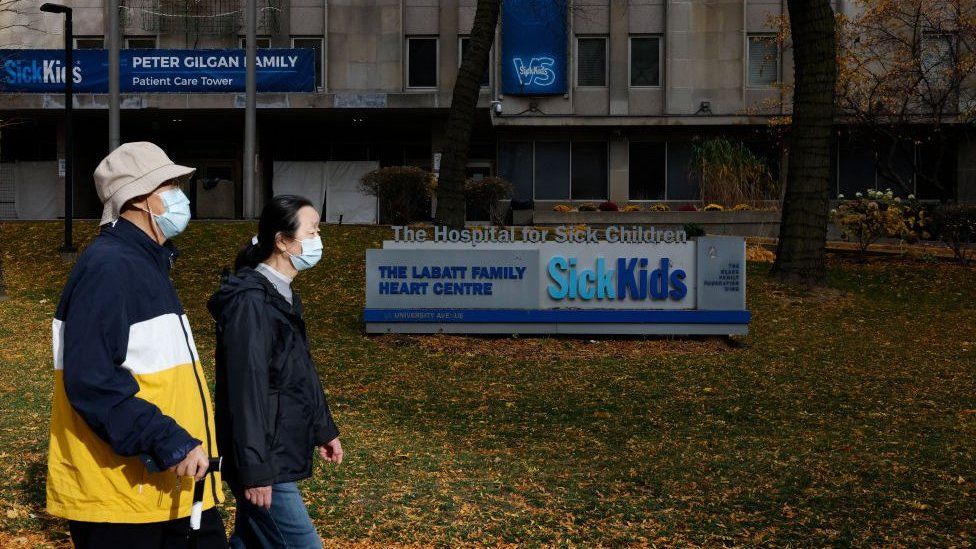
Published4 hours agoSharecloseShare pageCopy linkAbout sharingImage source, Getty ImagesBy Nadine YousifBBC News, TorontoThe leaders of Canada’s provinces have urged PM Justin Trudeau to meet them over the nation’s healthcare crisis.Canada’s hospitals have faced significant strain, with reports of patients dying while waiting for care.Mr Trudeau has previously said he is willing to provide more funding, but with strings attached.Medical treatment in Canada is publicly funded, with private non-profits owning hospitals and employing doctors, but government picking up the tab.While the county’s universal healthcare system uses a mix of federal and provincial money, it is administered provincially. In a joint press conference on Friday, all 13 of Canada’s premiers publicly asked Mr Trudeau to meet them early in the new year.They renewed their request to raise the federal share of healthcare spending in Canada from 22% to 35%, accusing the Trudeau government of not paying its fair share.”The number one issue in this entire country from coast to coast to coast is healthcare, and we can’t do it alone,” said Ontario’s premier Doug Ford. Hospitals across Canada have faced significant pressure this year due to staffing shortages and a rise in the number of sick people requiring care. In smaller communities, the shortages have forced some emergency departments to temporarily close their doors to patients. Why ERs in Canada are struggling to stay openParents ‘panic’ amid Canada shortage of children’s pain medsA surge in viral infections among children has put a strain on paediatric hospitals in recent months. In the province of New Brunswick, protests sprang up after a man in his 70s died in an emergency department’s waiting room on Wednesday.In a September poll, 51% of Canadians said they don’t feel confident they would receive timely care in a medical emergency. Provincial health ministers met their federal counterpart as recently as November in Vancouver to pin down a deal on healthcare funding, but those talks collapsed.Premiers have since accused Mr Trudeau of ignoring the issue and communicating with them via the media. Mr Trudeau has previously said he expects the provinces to deliver better healthcare. “It’s not just about money,” the prime minister said last month. “It’s about creating a stronger, more robust healthcare system across the country.”Canada spends over 10% of its GDP on healthcare, about the same as the UK, compared with more than 16% for the US, according to World Bank data.More on this storyWhy Canada’s ERs are struggling to stay open2 SeptemberCanada to get 1 million bottles of children pain meds18 NovemberSurging viruses stretch US children’s hospitals1 December

Read more →