Combo of bad cholesterol and high blood pressure may increase heart attack or stroke risk

High levels of lipoprotein(a), a type of “bad” cholesterol, may be associated with an 18-20% higher risk of cardiovascular disease among people who have hypertension, however, CVD risk was not higher among those without hypertension, according to new research published today inHypertension, an American Heart Association journal.
“High blood pressure is a known cardiovascular disease risk factor, and lipoprotein(a) is a type of inherited ‘bad’ cholesterol that may also lead to cardiovascular disease,” said lead study author Rishi Rikhi, M.D., M.S., a cardiovascular medicine fellow at Atrium Health Wake Forest Baptist Medical Center in Winston-Salem, North Carolina. “We found that among people with hypertension who have never experienced a stroke or heart attack before, lipoprotein(a) seems to increase the risk of cardiovascular disease and risk of a major cardiovascular event like heart attack or stroke.”
Hypertension is a key risk factor for cardiovascular disease. In this study, hypertension was defined as a top number of 140 mmHg or higher, a bottom number of 90 or mmHg or the use of blood pressure medication. In 2017, the Association updated its definition of hypertension to be a top number of 130 mmHg or higher or a bottom number of 80 mmHg or higher. Previous studies have indicated that when a person has hypertension and lipid imbalance, or dyslipidemia, their cardiovascular disease risk substantially increases. According to the study’s authors, there is less information on how much of an affect lipoprotein(a) may have on cardiovascular disease risk among people with hypertension.
Lipoproteins, which are made up of protein and fat, carry cholesterol through the blood. The subtypes of lipoproteins include low-density lipoprotein (LDL), high-density lipoprotein (HDL) and lipoprotein(a), or Lp(a). Much like LDL cholesterol, lipoprotein(a) cholesterol may deposit and build up in the walls of blood vessels, thus increasing a person’s risk of a heart attack or stroke.
The research used health data from the Multi-Ethnic Study of Atherosclerosis (MESA) study, an ongoing community-based study in the U.S. of subclinical cardiovascular disease — meaning the disease is discovered before there are clinical signs and symptoms. MESA is a research study including nearly 7,000 adults that began in 2000 and is still following participants in six locations across the U.S.: Baltimore; Chicago; New York; Los Angeles County, California; Forsyth County, North Carolina; and St. Paul, Minnesota. At the time of enrollment in the study, all participants were free from cardiovascular disease.
The current study included 6,674 MESA participants who had lipoprotein(a) levels and blood pressure assessed and for whom there was documented cardiovascular disease event data throughout MESA’s follow-up exams in approximately 2001, 2003, 2004, 2006, 2010, 2017 and in telephone interviews every 9 to 12 months to gather interim data on new diagnoses, procedures, hospitalization and deaths. The study’s participants were from diverse racial and ethnic groups: 38.6% self-identified as white adults; 27.5% self-identified as African American adults; 22.1% self-identified as Hispanic adults; and 11.9% self-identified as Chinese American (n=791) adults. Additionally, more than half of the group was female (52.8%).

Read more →

This Is Why NIH Invests in Global Health Research

Caption: Global partnerships fostered by NIH’s Fogarty International Center speed translation of scientific discoveries into lifesaving biomedical products. Credit: Gabe Bienczycki, PATH, Seattle

Efforts over the past few years to end the COVID-19 pandemic clearly reveal how global health impacts individual wellbeing and national security. At NIH, the Fogarty International Center helps the other institutes become engaged with global health research, which investigates the dual burden of infectious disease and non-communicable disease.

Global health research also encompasses data science, economics, genetics, climate change science, and many other disciplines. For more than 50 years, Fogarty has been building partnerships among institutions in the U.S. and abroad, while training the next generation of scientists focused on universal health needs.

America’s investment in Fogarty has paid rich dividends

During the pandemic, in particular, we’ve seen researchers trained by our programs make scientific discoveries that contributed to international security. Take Jessica Manning, a former Fogarty fellow who now conducts malaria research in Phnom Penh, Cambodia. Her team at the Ministry of Health sequenced the viral strain of SARS-CoV-2, the cause of COVID-19, infecting the first Cambodian patient and documented early the spread of this novel coronavirus outside of China.

Similarly, Christian Happi, director of the African Centre of Excellence for the Genomics of Infectious Disease, Ede, Nigeria, sequenced the first SARS-CoV-2 genome in Africa. Happi was able to do it by adapting the sequencing and analytical pipelines that he’d created back when he was a Fogarty grantee studying Ebola.

In Botswana, Sikhulile Moyo leveraged the skills he’d acquired while supported by a Fogarty HIV research training grant with Max Essex, Harvard School of Public Health, Cambridge, MA, to track COVID-19 mutations for his country’s Ministry of Health. Last November, he alerted the world of a new Omicron variant. Within six weeks, Omicron became the dominant global strain, challenging the ability of COVID vaccines to control its spread. In the Dominican Republic, William Duke, a national commission member, used what he’d learned as a Fogarty trainee to help create a national COVID-19 intervention plan to prevent and control the disease.

Fogarty’s fostering of global health leaders is one way we advance scientific expertise while ensuring our nation’s biosecurity. Another is by finding effective ways to study abroad the same health conditions that affect our own population.

Research conducted in Colombia, for example, may provide clues for preventing Alzheimer’s disease in the U.S. Fogarty support brought together neuroscientists Kenneth Kosik, University of California, Santa Barbara, and Francisco Lopera, University of Antioquia, Colombia, to study members of the largest-known family with an early-onset, rapidly progressive form of the disease. Over the years, Kosik and Lopera have trained local scientists, explored gene therapy targets, investigated biomarkers to monitor disease progression, and conducted drug trials in search of a cure for Alzheimer’s.

Researchers in other fields also discover unique opportunities to investigate populations with high rates of disease. Siana Nkya, a Fogarty grantee based in Tanzania, has devoted her career to studying the genetic determinants of sickle cell disease, which affects many people around the world, including in the U.S. We hope that US-African partnerships might develop improved, affordable treatments and a cure for all patients with this devastating disease. Similarly, people in the U.S. have access to state-of-the-art HIV treatment studies in places around the globe where incidence rates are higher.

Fogarty has supported many milestone achievements in HIV research over the years. Among them is a study that took place in nine countries. The research, led by Myron Cohen of the University of North Carolina at Chapel Hill, established that antiretroviral therapy can prevent sexual transmission of HIV-1 among couples in which one person is infected and the other is not. In fact, this research informs current HIV treatment recommendations worldwide, including in the U.S.

Americans will also undoubtedly benefit from projects funded by Fogarty’s Global Brain and Nervous System Disorders Research across the Lifespan program. For example, psychologist Tatiana Balachova, University of Oklahoma, Oklahoma City, has designed an intervention for women in Russia to prevent fetal alcohol spectrum disorders. In another project in South Africa, Sandra and Joseph Jacobson, Wayne State University, Detroit, conducted the first-ever prospective longitudinal study of the syndrome. Findings from both projects are ripe for translation within an American context.

Other examples of Global Brain program investigations with broad implications in our own country include studying early psychosis in China; capacity building for schizophrenia research in Macedonia; exploring family consequences from the Zika virus in Brazil; and studying dementia and related health and social challenges in Lebanon.

These are just a few examples of Fogarty’s work and its unique mission. What is most remarkable about Fogarty is that just under 90 percent of our grants are co-funded by at least one other NIH institute, center, or office. Collaboration, both within borders and across them, is Fogarty’s formula for success.

Links:

Fogarty International Center (NIH)

Overview of Brain Disorders: Research Across the Lifespan (Fogarty)

Former Fogarty Scholar Dr Jessica Manning Helps Cambodia Respond to COVID (Fogarty)

Christian Happi: Former Fogarty Grantee Leads COVID-19 Genomics Work in Africa (Fogarty)

Sikhulile Moyo: Fogarty Fellow Recognized for Omicron Discovery (Fogarty)

William Duke: Former Fogarty HIV Trainee Helps Lead Dominican Republic’s COVID Response (Fogarty)

Kenneth Kosic and Francisco Lopera: NIH Support Spurs Alzheimer’s Research in Colombia (Fogarty)

Former Fogarty fellow Siana Nkya Tackles Sickle Cell Disease in Tanzania (Fogarty)

Tatiana Balachova: Researchers Tackle Fetal Alcohol Syndrome in Russia (Fogarty)

Sandra and Joseph Jacobson: Fetal Alcohol Exposure Research Supported by NIAAA in South Africa, Ukraine and Russia Improves Prevention, Outcomes (Fogarty)

Note: Dr. Lawrence Tabak, who performs the duties of the NIH Director, has asked the heads of NIH’s Institutes and Centers (ICs) to contribute occasional guest posts to the blog to highlight some of the interesting science that they support and conduct. This is the 22nd in the series of NIH IC guest posts that will run until a new permanent NIH director is in place.

Read more →

When Black Psychiatrists Reach Out to Teens of Color

ATLANTA — Dr. Brittany Stallworth was in fifth grade when she received her first suspension. She and four girlfriends had worn lime-green shirts to school to celebrate the birthday of one of the girls, whose favorite color was green.“We were accused of promoting gang activity,” Dr. Stallworth recalled recently. They were among just a handful of Black children in their private school outside Detroit. Later that day, at home, her parents warned her: “You have to understand how people are going to interpret things, how you are going to be perceived.”Two decades later, Dr. Stallworth is a resident in psychiatry at Morehouse School of Medicine, where she is part of a team of mental health specialists, led by Dr. Sarah Vinson, that focuses on the needs of low-income children and teenagers of color, groups often overlooked in the ongoing adolescent mental health crisis.Every Tuesday, the team runs a clinic from the 15th floor of an elegant high-rise in downtown Atlanta. There, they conduct tele-health visits with young patients and then, among themselves, discuss symptoms, diagnoses and the medications, if any, to prescribe.Such dedicated care — with patients seen in depth, over years — is unusual for all but the most fortunate. According to a study published in 2017 in JAMA Psychiatry, one-fourth of communities in the top 25 percent income bracket in the United States have a practicing mental health specialist. In contrast, among the poorest income quartile, only eight percent of the lowest-income communities have such a practice. Across the country, the burden is often shouldered by school counselors and time-strapped primary-care doctors.The shortage of child and adolescent psychiatrists is most acute in low-income communities of color, according to a study published in September in the American Journal of Preventive Medicine, which concluded that “decisive action is urgently needed.” Among Black adolescents, self-reported suicide attempts rose 80 percent from 1991 to 2019, far outpacing increases in other racial groups, according to a 2021 paper that drew from 183,500 high school students in the United States.Dr. Vinson, left, with Dr. Brittany Stallworth during a client review session. “Brittany was a Black girl and a Black woman before she was a Black doctor,” Dr. Vinson said.The lack of specialized and long-term care has contributed to poor teens of color being underdiagnosed or misdiagnosed. Black children and adolescents are more likely to be diagnosed with a disorder involving hostility or aggression than their white counterparts are, even when their symptoms are similar, according to an analysis published in 2019 in the journal Families and Society. And they are less likely to be diagnosed with “internalizing” disorders, such as depression and anxiety.“What you’re seeing is that behavior that looks disruptive may be post-traumatic stress or depression,” said Dr. Warren Ng, president of the American Academy for Child and Adolescent Psychiatry and a psychiatrist at the Columbia University School of Medicine. This misperception may be the result of prejudice but also of the simple fact that, on average, teenagers of color spend less time being seen by the right mental-health professional. Diagnoses are being made by “people with different levels of training and also different levels of cultural training,” Dr. Ng said.For adolescents, such a misdiagnosis can be a fork in the road, leading to the wrong care, improper medication, school detention or misperception by a justice system that is inclined to view adolescents labeled hostile as inherently threatening.Dr. Vinson, the interim chair of psychiatry at Morehouse School of Medicine, assumed leadership of the Tuesday clinic in 2019; their work addresses the inequity. All of the doctors currently on the team are Black, but she emphasized that a psychiatrist does not need to be a person of color to effectively treat adolescents of color. Still, she said, “lived experience” helps. “Brittany was a Black girl and a Black woman before she was a Black doctor,” Dr. Vinson said of Dr. Stallworth. “She brought that experience into the role as a physician.”As important or more, Dr. Vinson added, was the time spent through practice and discussion, learning to take into account the societal forces, including structural racism and bias, that form the emotions and behaviors of children and adolescents.“When you look at all these things, you can see that this is not something inherently wrong with the child but that could be an explainable, understandable response,” Dr. Vinson said. “When you don’t take the time to do this stuff, or learn it, you just end up throwing labels on a kid.”The boy who nearly burnedThe Hurt Building at Morehouse School of Medicine houses the psychiatry department.On a recent Tuesday morning, Dr. Vinson listened as the other doctors described their cases. Dr. Stallworth began: She had just finished a video session with a middle-school boy who has been a clinic patient for almost four years. Several years prior, his mother set fire to the family’s house, with him in it.At the time, a clinician at a different organization diagnosed the boy, then 9, with oppositional defiance disorder, a condition characterized by chronic hostility and lack of cooperation, Dr. Vinson said. The boy’s family subsequently met with her, and she was dubious. Over several exams, she had observed symptoms beyond irritability: The boy slept poorly and, during the day, he sometimes banged his head against the wall.Dr. Vinson suspected the boy was diagnosed with O.D.D. partly because he had reacted testily to the other clinician during examination. She was also concerned that the clinician improperly prescribed him an anti-psychotic medication and a mood stabilizer — medications, she said, “that have really substantial side effects and are used only when absolutely necessary.”Eventually the Morehouse team changed the boy’s diagnosis to anxiety and post-traumatic stress disorder, and prescribed him Zoloft, an antidepressant with anti-anxiety properties, and Clonidine, a sleep aid. He has been in biweekly talk therapy since 2019, interrupted briefly by Covid, with his counselors advised by the Morehouse team.During the recent Tuesday exam, the boy’s grandmother reported to Dr. Stallworth that his teacher said he had been acting out in class, having outbursts and speaking sharply to the teacher. Dr. Stallworth talked with the boy at length, and the grandmother told her that the boy’s “mood is good” at home. The boy sometimes banged his head in his sleep, the grandmother noted, but she felt it was involuntary rather than self-harm and did not wake him.“I think the grandma’s bar is really low,” Dr. Stallworth said to the group, referring to the caregiver’s relatively upbeat assessment.“Yep,” Dr. Vinson said.Dr. Stallworth recommended a slight increase in the Zoloft dosage, and Dr. Vinson agreed, urging close supervision of the boy. “He can change up real fast,” she said. “He can go from being this good kid to getting arrested.”Dr. Darron Lewis, who is completing a fellowship specializing in child and adolescent psychiatry and serves as Dr. Vinson’s aide-de-camp, said, “It’s not that he’s a bad kid.”“His reaction might be a little bigger than someone else’s reaction,” he said. “And some might see that reaction as dangerous and call the cops. He’s not a criminal, nothing like that.”Dr. Darron Lewis during a case review. He is completing a fellowship specializing in child and adolescent psychiatry and serves as Dr. Vinson’s aide-de-camp.‘A harsher diagnosis’Going back a decade, research has highlighted an imbalance in the diagnoses that Black and white patients receive. The 2019 analysis in Families and Society, which found that diagnoses for O.D.D. and A.D.H.D. were unequally distributed between Black and white adolescents, concluded: “There are biases in the way people see Black children that have them receive a harsher diagnosis.”Its conclusion built on prior research. A 2007 study examined the diagnoses of 1,189 children and adolescents, 74 percent of whom lived below the poverty line, and found that “Black and Native Hawaiian youth were more likely than white youth to be diagnosed with disruptive behavioral disorders.”Another study, published in 2006, found that Black children and adolescents in two states, Indiana and New Jersey, were more frequently diagnosed with disruptive disorders than white patients were, and less frequently diagnosed with internalized disorders such anxiety and depression.That study considered several possible reasons for the differences: Black children and teenagers faced more trauma that led to aggressive behavior; Black families or communities considered some behaviors acceptable that teachers or clinicians found threatening; a young Black person might not be acculturated to express sadness, so an unrecognized depression is overshadowed “when they are boisterous and acting out”; clinicians were biased.Of course, the diagnoses can be appropriate. But when misapplied, the consequences can be lasting, said Kess Ballentine, a researcher at Wayne State University and the author of the 2019 analysis Teachers and law enforcement officials may be prone to see such diagnoses as an indication that youngsters are inherently hostile or aggressive — “born bad” — and funnel them into the justice system rather than into counseling. These diagnoses are “a tributary to the school-to-prison pipeline,” Dr. Ballentine said. “We need to do something about this.”She also said such consequences may be lost on many well-meaning but time-strapped counselors whose diagnoses are aimed at getting help for children and teens who are acting out.Quite often what is lacking are mental health professionals with the bandwidth and expertise to get to the bottom of the problem, Dr. Ng said: “Poor kids and kids of color don’t have the luxury of time with us.”Medical schools are increasingly aware of the problem. “People are saying they want to be more equitable in their care,” Dr. Vinson said. “But they often don’t know how or don’t have faculty with expertise.”Dr. Vinson in her office. “She’s an inspirational leader and a champion of health equity,” said Dr. Warren Ng, president of the American Academy for Child and Adolescent Psychiatry.Dr. Vinson joined the faculty at Morehouse Medical School in 2015, after completing her residency at Harvard Medical School, earning fellowships in child and adolescent psychiatry and forensics at Emory School of Medicine and an undergraduate degree at Florida A&M.Like Morehouse College, from which it grew, Morehouse Medical School was founded as a historically Black institution “committed to serving Black youth.” That has taken various forms over the years including regular work by Morehouse doctors at a local adoption agency, a primary care clinic and other settings.In 2019, the opportunity arose to expand the work through cooperation with Fulton County. Dr. Vinson took over leadership of the Tuesday psychiatry clinic, and brought in fellows and residents. The clinic, supported largely by Medicaid and the county, conducts some 400 evaluations and follow-ups a year; as many as two-thirds are repeat visits. Patients are referred by schools, pediatricians or parents.Dr. Vinson measures success by what she calls patients’ increased function — “Are they doing better in school? Getting along with parents, friends, staying out of trouble? Do they say they feel less anxious?” she said.Her broader vision for the place was informed by an influential paper in 2014 that argued that medical education needed to teach not just “cultural competency” but also “structural competency.”This entailed teaching medical professionals to think about the economic and political forces that shaped a patient’s experiences, willingness to trust a diagnosis, and financial ability to follow through on a plan of care.“We hear that low-income African Americans are unable to comply with doctors’ orders to take their medications with food,” the authors wrote, “not because they harbor cultural mistrust of the medical establishment, but because they live in food deserts with no access to grocery stores.” Caregivers needed to be as sensitive to socioeconomics as to cultural heritage.In 2021, Dr. Vinson and Dr. Ruth Shim, a psychiatrist at the University of California, Davis, published “Social (In)justice and Mental Health,” a collection of essays by various scholars, including Dr. Vinson, that helped to crystallize this medical philosophy in the field of mental health. She speaks regularly at conferences, with lawyers and judges interested in the role of systemic racism and bias on the judicial system, and medical students. In addition to her post at Morehouse and a private practice, she runs a mental health forensics company, Lorio Psych Group, that consults on legal cases nationwide involving juvenile sentencing and school discrimination.“She’s an inspirational leader and a champion of health equity,” Dr. Ng said.Dr. Eraka Bath, a child and adolescent psychiatrist at U.C.L.A., characterized the Morehouse team’s work as “anti-racist clinical care.” Dr. Bath was quick to emphasize that she was not suggesting malice on the part of other providers, only that ideas about behavior can become unconsciously hardened.“Despite our best intentions, we can reinforce racism,” she said.Dr. Ng agreed. “You don’t have to be of the same identity to make a therapeutic difference,” he said. But when it comes to the cultural issues: “You just have to be aware of it.”Dismissal time outside a high school in Atlanta. Only eight percent of communities in the poorest quartile in the United States have a practicing mental health specialist.‘Black man to Black man’As midday approached on that recent Tuesday, Dr. Stallworth told the team about her exam with a Black middle-schooler with A.D.H.D. In the spring he had been bullied at school by gangs. This fall he changed schools, and now, Dr. Stallworth said, he reported being happy — playing football, making friends, and, according to his mother, coming home and doing his homework.“He smiled, which was the first time I’ve seen him do that,” Dr. Stallworth said. “There was a pleasant little kid in there today. I saw it. That was so cool.”Dr. Lewis spoke up. “I know you’ve had a lot of tough cases, Dr. Stallworth,” he said. “I want you to remember this.”All of the doctors on the clinic team have faced racism. Dr. Lewis grew up in an upper-middle-class family in Parkland, Fla., among few Black peers, with white friends who called him “Oreo,” he said: “Black on the outside, white on the inside, not really Black.” In his high-school band, it was a tradition for the underclassman to give each graduating senior a gift. Dr. Lewis was given a watermelon, “because that’s what Black people eat,” he recalled.Dr. Vinson described an encounter on her first job, at a major hospital in Atlanta, when an older, white social worker told her in a meeting that he “felt unsafe” with her, she said.“I was like, ‘I’m a five-foot-two woman who has never raised my voice with you, never used inappropriate language, certainly never threatened you,’” Dr. Vinson said she responded. “‘You feel unsafe with me — it’s essentially calling me the angry Black women.’”The fourth member of the team, Dr. Joshua Omade, grew up in a middle-class household in Bowie, Md.; he played rugby and football in high school and was big for his age. Once, at the mall, he was stopped by a police officer who demanded to know, “Why are you here?” he recalled. He was waiting for his mother to finish shopping.But the doctors are still discovering that lower-income patients of color are dealing with additional challenges. “I’ve quickly learned how much medications cost, and how much the parents have been through,” Dr. Omade said. He added that he’d grown cautious about taking prior diagnoses at face value: “You have to give a kid a chance to explain.”Dr. Joshua Omade, a member of the Tuesday clinic team, describes a case to Dr. Vinson. “You have to give a kid a chance to explain,” he said.Late Tuesday afternoon, Dr. Omade conducted an initial diagnostic evaluation on a 17-year-old who had been expelled from school for fighting, then diagnosed with intermittent explosive anger disorder by a behavioral health specialist at a different clinic. The family came to the Tuesday clinic seeking a better understanding of the teenager’s condition and long-term treatment for it.Dr. Omade described the exam to Dr. Vinson and Dr. Lewis. The patient was friendly, struggled in school, took Adderall for A.D.H.D, lived alternately with his grandmother and mother, played for the school’s basketball team and worked in a supermarket. When asked to explain the fighting, the boy said he was defending himself “against people trying to see how weak or tough he really is,” Dr. Omade reported.He related other details: The boy expressed a dislike for the police, describing an encounter a few years earlier when an officer pulled a gun on him while he was “hanging out with his friends,” Dr. Omade said. His father had been arrested multiple times and told his son about being roughed up while in custody. He saw police brutality on Instagram. “You can see it everywhere,” Dr. Omade reported the boy saying.“He does meet the criteria for the A.D.H.D. diagnoses,” Dr. Omade concluded. But, he added, he found the diagnosis of intermittent explosive anger disorder problematic: The boy appeared to be fighting when challenged, not unprovoked or with authority. “In my mind, he is more along the lines of fighting for survival, not someone who is constantly an aggressor looking for activity or action,” Dr. Omade said.The problem isn’t pathological, he said, “given his family history, the geopolitical climate and his ability to see events on TV that have given him a heightened sense of being on edge.”“It would make anyone hypervigilant,” he said.Dr. Vinson nodded in agreement. The team refined the teenager’s medication prescriptions and, later, consulted with his counselor on the updated diagnoses.Dr. Omade’s, in his discussion that day with Dr. Vinson, concluded with what he’d told the patient about being afraid of the police: “I told him, man to man, and Black man to Black man, this is something we all have to deal with.”

Read more →

Brain Implants Have Begun to Restore Functions, but Advances Are Slow

But achieving full-body restoration of movement, as Elon Musk envisions with such devices, is considered far into the future, if at all.Christina Jewett and A jumble of cords and two devices the size of soda cans protrude from Austin Beggin’s head when he undergoes testing with a team of researchers studying brain implants that are meant to restore function to those who are paralyzed.Despite the cumbersome equipment, it is also when Mr. Beggin feels the most free. He was paralyzed from the shoulders down after a diving accident eight years ago, and the brain device picks up the electrical surges that his brain generates as he envisions moving his arm. It converts those signals to cuffs on the major nerves in his arm. They allow him to do things he had not done on his own since the accident, like lift a pretzel to his mouth.“This is like the first time I’ve ever gotten the opportunity or I’ve ever been privileged and blessed enough to think, ‘When I want to open my hand, I open it,’” Mr. Beggin, 30, said. Days like that are always “a special day.”The work at the Cleveland Functional Electrical Stimulation Center represents some of the most cutting-age research in the brain-computer interface field, with the team connecting the brain to the arm to restore motion.It’s a field that Elon Musk wants to advance, announcing in a recent presentation that brain implants from his company Neuralink would someday help restore sight to the blind or return people like Mr. Beggin to “full-body functionality.” Mr. Musk also said the Neuralink device could allow anyone to use phones and other machines with new levels of speed and efficiency.Neuroscientists and Mr. Beggin alike see such giant advances as decades away, though. Scientists who have approval to test such devices in humans are inching toward restoring normal function in typing, speaking and limited movements. Researchers caution that the goal is much harder and more dangerous than it may seem. And they warn that Mr. Musk’s goals may never be possible — if it is even worth doing in the first place.A biomedical engineer working with Mr. Beggin connected the implant that is attached to the cortex of his brain and skull to equipment for a series of tests.Daniel Lozada for The New York TimesElon Musk, a Neuralink co-founder, during an online show-and-tell presentation of the company’s device on Nov. 30.Neuralink“It is fun to think about science fiction scenarios describing how the world might be,” said Paul Nuyujukian, a professor of bioengineering and neurosurgery at Stanford University who has spent years working on similar technology. “But given where we are right now with the science, it is not clear how those scenarios will be realized.”The scientists at the Neuralink event on Nov. 30 and those watching online agreed that the engineering that Mr. Musk showed off was an elegant mash-up of some of the best ideas in the decades-old field. Replacing the soda-can-like protrusion from the head would indeed be a significant advance, they acknowledged.Neuralink’s device prototype would eliminate that problem, but only after patients undergo robotic surgery to cut a hole in the head slightly larger than a quarter. Then the robot knits 1,024 cobweb-thin electrode tendrils into the gray matter of the brain and rests the puck-like device in the hole.With work so delicate, some researchers in the field worry that one high-profile misstep could erase years of progress.“The communications coming out of Neuralink too often sounds like cowboy activity, right?” said Marcus Gerhardt, chief executive of Blackrock Microsystems, a brain-computer interface company that could be a Musk rival.Mr. Gerhardt said the neurosurgeons affiliated with his company “are petrified every day that something terrible could happen there and affect the rest of the space.”Mr. Beggin is one of about three dozen people who have a device called a “Utah array” implanted in the brain for research purposes. The device includes a small grid of electrodes that are dipped barely two millimeters into his brain. That is linked to a portal mounted on his head and, via cables, to another computer.Most of the days Mr. Beggin spends working with the Cleveland research team involve looking at a moving arm or hand on a computer screen and envisioning himself making the same motion. That allows researchers to detect the neuron-firing patterns in his brain that give rise to each movement. Those signals are communicated to a system that manipulates eight nerves in his arm to make it move, said A. Bolu Ajiboye, a professor of biomedical engineering at Case Western Reserve University whose team has been working with patients like Mr. Beggin.The work can be tedious, Mr. Beggin said, but he finds it worthwhile for the days when he can move his hand. His experience builds on work with a prior volunteer, who was also paralyzed in the arms and legs, and managed to lift a forkful of mashed potatoes to his mouth with the system.The equipment that allowed Mr. Beggin to send a thought signal through the cordical electrode array to the nerve cuff electrode in his arm to match what he saw on the screen.Daniel Lozada for The New York TimesMr. Beggin successfully brought a pretzel stick to his mouth for a bite.Daniel Lozada for The New York TimesMr. Beggin did not watch the Neuralink presentation last month. But he said he was dismayed to hear that Mr. Musk raised the notion of “full-body functionality” for people who are paralyzed.It’s an outcome that, given the painstaking work involved in his hand motions, Mr. Beggin expects will take a generation to achieve.His mother, Shelly Beggin, agrees. “As a parent, I would love to hear that,” Ms. Beggin said. “I would have held onto that hope that he would be able to walk.”Realistically, she said, she’s happy to see her son’s hard-won hand motions. Scientists who work on the brain-computer interfaces say that tempering patient expectations is important in a field that has seen stunning progress, but faces daunting challenges.Academic teams across the nation are working on projects aimed at restoring function to those with disabilities or degenerative diseases. Scientists are working to map the visual center of the brain so points of light can be projected in the mind’s eye to help the blind see shapes and letters. Other teams are working on translating neural electricity into speech, cursor control, handwriting and typing applications.Several companies, including Neuralink, are working on fully implantable devices. Paradromics, a start-up in Austin, Texas, is developing a device that sits inside the skull. Another company, Synchron, based in New York City, is taking a different approach, making an incision in the chest and pushing a tube-shaped device into an artery close to the brain. This avoids the dangers of brain surgery, but the signal it captures from the brain is considerably weaker, according to Tom Oxley, chief executive of Synchron.Mr. Beggin, with his mother, Shelly Beggin, answering a FaceTime call in between physical training sessions. Daniel Lozada for The New York TimesMr. Beggin with A. Bolu Ajiboye, center, a professor of biomedical engineering at Case Western Reserve University, and John Krall, a Ph.D. student studying with Dr. Ajiboye. Daniel Lozada for The New York TimesDespite all the promise in the field, scientists say this technology has very little to offer to the typical consumer, as it is merely approaching the speed and precision of able-bodied control.That seems as if it’s about to change, Dr. Ajiboye said. He compared to the field to the computer industry in 1980 when it was on track for a revolution.“I firmly believe that we’re at the same initial ramp curve in terms of understanding brain mechanisms,” he said.During the Neuralink presentation, a video showed a monkey named Pager reportedly using a prototype implant in its brain to move a cursor across a computer screen. Mr. Musk’s team also showed off the inner workings of the device, impressing some of the neuroscientists who watched the event.During the event, Mr. Musk announced that Neuralink was seeking permission from the Food and Drug Administration to test the device in humans, and he guessed that a clinical trial would begin next year.This would be a notable step forward for the field. Others have tested wireless devices in humans, but Neuralink is investing so heavily in the project that it may come forward quickly with a more powerful device than before.“They basically sourced a lot of the best ideas out there in the top of the field and paid to bring them together into a new system. And I think that is exciting,” said Cristin Welle, a University of Colorado neuroscientist and former F.D.A. brain-implant lab director and device consultant. “Now whether they can really surmount all of these technical hurdles to demonstrate that it is in fact safe, it remains to be seen.”It is the F.D.A. that will decide when the trial begins if it grants approval to Neuralink. The agency will pay close attention to device durability, given the risks and feasibility of repeated brain surgeries, Dr. Welle said. That means device makers will have to surmount the challenge of operating electronics for years in the soggy milieu of the brain. They will also need to prove that their supercomputing device does not generate heat or current that unduly injures the delicate brain tissue, she said.A monkey made a polite request during Mr. Musk’s Neuralink video presentation last month.NeuralinkThere are also very real limits to what the device can do. There may be ethical limits too.As Neuralink pursues a human trial, it is fighting complaints over its tests with monkeys. The company filed papers in a California court this month seeking to block the release of photos of primates it tested from 2017 through 2020. The Physicians Committee for Responsible Medicine, an advocacy group, previously obtained hundreds of pages of veterinary records and filed a complaint with the Agriculture Department, claiming primate test subjects developed infections and were treated carelessly.The Agriculture Department said it could not comment on the group’s complaint, citing the pending litigation. Neuralink has denied the claims, but they could affect the progress of its technology.If and when Neuralink begins a human trial, it would be limited to people who have real needs for the technology, most likely those with spinal cord injuries or other forms of paralysis.Although Mr. Musk has said the Neuralink device could be implanted in healthy humans to enhance their abilities, that seems a remote possibility at this stage. He has compared future uses of the implant to those of another medical device that is marketed for reasons that are not purely disease-curing: Lasik surgery lasers, which are used to improve vision.“There is an ethics question that needs to be answered, and they have yet to address it,” Dr. Ajiboye said, referring to Mr. Musk and Neuralink.To Mr. Beggin, implanting such a device in a completely healthy person is a step too far. He would prefer that Mr. Musk and his company focus on people like him who could use this device to restore functions that have been taken away, like shaking someone’s hand or waving to a curious child who approaches his wheelchair.“Using the technology to allow an able-bodied person to start a car?” he said. “It is a hard thing for me to rationalize.”

Read more →

Ketamine for alcoholics trial goes to next stage

Published1 hour agoShareclose panelShare pageCopy linkAbout sharingImage source, PA MediaA programme of therapy involving the drug ketamine will be made available to alcoholics in a research project.The University of Exeter-led trial, with funding of £2.4m, will go ahead at seven NHS sites across the UK.The trial will look into whether a combination of ketamine and therapy could help alcoholics stay sober for longer.Prof Celia Morgan, the academic behind the research, said there was an “urgent need” for new treatments.The research will go ahead after a phase two trial showed ketamine and therapy treatment was safe and tolerable for heavy drinkers.An earlier study found participants who had ketamine combined with therapy stayed completely sober, representing 86% abstinence in their six month follow-up.The Ketamine for Reduction of Alcohol Relapse (KARE) trial will now move to the next step of drug development, with the aim of rolling it out into the NHS if it proves effective.Prof Morgan, from the University of Exeter, said: “More than two million UK adults have serious alcohol problems, yet only one in five of those get treatment.”Three out of four people who quit alcohol will be back drinking heavily after a year.”She said alcohol-related harm was estimated to cost the NHS around £3.5bn every year, and around £40bn to the wider UK society.”Alcohol problems affect not only the individual but families, friends and communities, and related deaths have increased still further since the pandemic,” she added.”We urgently need new treatments.”Ketamine is a licensed medical drug, widely used as an anaesthetic and in pain relief.It is also used as a recreational drug and is classified as a Class B banned substance by the Home Office.Image source, University of ExeterThe trial will recruit 280 people with alcohol problems who will be randomly split into two groups.Half will be given ketamine at the dose used in the first clinical trial with psychological therapy.The other half will be given a very low dose of ketamine and a seven-session education package about the harmful effects of alcohol.Researchers will look at whether the ketamine and therapy package reduces harmful drinking.Money for the trial is coming from the National Institute for Health and Care Research (NIHR), which is funded by the Department of Health and Social Care.Additional funding is coming from Awakn Life Sciences, a biotechnology firm specialising in addiction treatments.The new trial will recruit participants across the country with recruitment due to start mid-way through 2023.Follow BBC News South West on Twitter, Facebook and Instagram. Send your story ideas to spotlight@bbc.co.uk.More on this storyKetamine and psychotherapy ‘helps’ alcoholics11 JanuaryFirst ketamine-assisted psychotherapy clinic opens15 March 2021Anti-depressant spray not recommended on NHS28 January 2020Ketamine may reduce heavy drinkers’ craving26 November 2019Related Internet LinksUniversity of Exeter Medical SchoolThe BBC is not responsible for the content of external sites.

Read more →

100,000 babies to have genetic code mapped

Published6 hours agoShareclose panelShare pageCopy linkAbout sharingBy Fergus WalshMedical editor The entire DNA of 100,000 newborns in England is to be sequenced as part of a research project to improve the diagnosis and treatment of rare genetic conditions. It will be the first time that whole genome sequencing (WGS) has been offered to healthy babies in the NHS.The Newborn Genomes Programme will screen for around 200 disorders, all of them treatable. It is thought to be the biggest study of its kind in the world. The project, which will begin next year, will be led by Genomics England, in partnership with the NHS. If successful, it could be rolled out across the country. Currently, a heel prick blood test offered to newborns screens for nine rare conditions, including cystic fibrosis and sickle cell disease.Dr Rich Scott, Chief Medical Officer for Genomics England, said: “Our goal is… to do more for the thousands of children born every year in the UK with a treatable genetic condition. “We want to be able to offer speedy diagnosis, quicker access to treatment, and better outcomes and quality of life.”What is your genome? It is the blueprint for how our bodies function, written in chemical code called DNAThe segments of DNA are called genesEvery person’s genome contains many errors or mutationsMost errors are of no consequence, but some can trigger diseaseSource: NHS EnglandThere are at least 7,000 single gene disorders, most of which develop during early childhood.Every year, several thousand children in the UK are affected by rare genetic diseases, but families often endure years of tests and uncertainty before they receive a diagnosis.Whole genome sequencing could speed up the process.The NHS in England recently announced that it would offer genome sequencing of all seriously ill children suspected of having a genetic disorder.The Newborn Genomes Programme goes much further, as it will offer the test at birth to healthy infants. It can take months, or even years, for children to display symptoms of some conditions, by which time avoidable damage may have been done.Diagnostic odysseyOwen, 9, has an extremely rare genetic condition which affects his growth and development. Called THRA-related congenital hypothyroidism, it is one of the disorders which will be included in the new genetic test.Owen’s parents, Sarah and Rob Everitt, from West Yorkshire, noticed something was wrong around his first birthday, because he was not crawling or sitting up. But their concerns were repeatedly dismissed by doctors, and it took until Owen was four and a half to be given a diagnosis.Rob Everitt told the BBC: “I think of all the hours we spent in hospital waiting rooms, getting referred around different departments, all the tests – some of which were quite invasive – that drew a blank every time. I lost count of how many doctors and consultants we went to see and how many tests they did on him.”This diagnostic odyssey – often lasting years – is typical for many families of children with a rare genetic disorder.Eventually, Owen’s entire genome was sequenced, which pinpointed his condition. He was only the sixth person in the UK, and the 30th in the world, to be diagnosed with the gene disorder – which is not inherited, but due to a spontaneous mutation in his DNA. Sarah Everitt says getting the diagnosis was life-changing: “It was like winning the lottery….because we knew there was a treatment pathway; we knew we could get him support and he could attend a mainstream school.”Sarah says daily medication has ‘revolutionised’ Owen’s life: “He used not to have any energy to walk or talk and would just fall asleep during the middle of day. Now he’s full of energy and I can’t keep up with him!”Sarah says she would strongly encourage parents of newborns to take up the offer of whole genome sequencing once the project gets under way next year: “It’s going to change the face of medicine….being able to treat all these unknown medical conditions, or at least to have them explained.”Genomics England estimate that the project will identify hundreds of children with genetic disorders that would otherwise have been missed by current newborn screening. Rob says if Owen’s genome had been sequenced at birth it would have made a dramatic difference: “It would have done away with a lot of the stress and uncertainty, because for several years the doctors couldn’t tell us what to expect – whether Owen was going to walk or talk, or whether his condition would get worse.”EthicsThe list of genetic conditions which will be included in the new screening programme has yet to be finalised, but each of them will have a treatment which could alleviate the disorder.Whole genome sequencing may also identify conditions that occur only later in life, such as some cancers.Around 1 in every 400 people inherit a faulty BRCA1 or BRCA2 gene which can increase the risk of cancer of the breast, ovary, prostate and pancreas. Although whole genome sequencing would identify such mutations, they will not be the focus of the Newborn Genomes Programme.Instead, the data will be anonymised and stored until participants are adults and they can decide whether they want to stay in the study.Having access to genetic data later in life could improve treatment for some conditions and avoid harmful drug interactions.Analysis: Undeniable benefits, but questions remainIt was in 2000 that an international consortium of scientists announced they had completed the first draft of a sequence of the human genome. It had taken many years and cost several hundred million pounds. Now a whole human genome can be sequenced in a day for a few hundred pounds.In June 2000 I remember reporting the ceremony to mark the decoding of the human genome. At the time, President Bill Clinton said: “Today we are learning the language in which God created life.” Tony Blair, who joined the ceremony via satellite link from Downing Street, said: “Every so often in the history of human endeavour, there comes a breakthrough that takes mankind across the frontier and into a new era.” Mr Clinton even joked that the life expectancy of the prime minister’s recently born son, Leo, had just risen by 25 years. It is remarkable that two decades later whole genome sequencing for newborns is about to become a reality. In terms of newborn screening, it is like going from analogue to digital, from black-and-white to colour. There will be undeniable benefits for many families of children with genetic disorders: these will be diagnosed faster and treated more quickly. It will spare months, or years, of anguish as parents search for answers to their child’s malady, which often only becomes apparent when babies fail to reach developmental milestones.But it does raise questions about how much health information is held about individuals, and who controls it. Genomics England says that all newborn genomes will be anonymised. The children involved will have the chance to decide what happens to their data when they reach adulthood. By then, genome sequencing may have become commonplace.More on this storyBaby’s life saved by ground-breaking blood test12 OctoberGene test spared baby unnecessary chemotherapy30 SeptemberRelated Internet LinksGenomics EnglandThe BBC is not responsible for the content of external sites.

Read more →

Compound reverses gut inflammation in mice

A drug developed by Salk Institute researchers acts like a master reset switch in the intestines. The compound, called FexD, has previously been found to lower cholesterol, burn fat, and ward off colorectal cancer in mice. Now, the team reports in Proceedings of the National Academy of Sciences on December 12, 2022, that FexD can also prevent and reverse intestinal inflammation in mouse models of inflammatory bowel disease.
“The Salk-developed drug FexD provides a new way to restore balance to the digestive system and treat inflammatory diseases that are currently very difficult to manage,” says senior author and Salk Professor Ronald Evans, director of Salk’s Gene Expression Laboratory and March of Dimes Chair in Molecular and Developmental Biology.
Inflammatory bowel disease (IBD), which includes both Crohn’s disease and ulcerative colitis, is characterized by an excess of immune cells and inflammatory signaling molecules known as cytokines in the gut. Existing treatments, which mostly work by either suppressing the entire immune system or by targeting individual cytokines, are only effective for some patients and carry a host of side effects.
For more than two decades, Evans’ lab has studied Farnesoid X receptor (FXR), a master regulator protein that senses the bile acids delivered to the digestive system to help digest food and absorb nutrients. When FXR detects a shift in bile acids at the beginning of a meal, it prepares the body for an influx of food by flipping on and off dozens of cellular programs related to digestion, blood sugar, and fat metabolism.
In 2015, Evans and his colleagues developed a pill called fexaramine that activates FXR in the gut. The pill, they initially showed, can stop weight gain and control blood sugar in mice. In 2019, they showed that FexD — an updated version of fexaramine — also prevented cancer-associated changes to stem cells in the gut. Their work suggested that FXR also played a role in regulating inflammation.
“Every time you eat, you’re causing small amounts of inflammation in your gut as your intestinal cells encounter new molecules. FXR makes sure inflammation stays under control during normal feeding,” says Senior Staff Scientist Michael Downes, co-corresponding author of the new paper.
In the new work, Evans’ group discovered that activating FXR can be used to ease symptoms in inflammation-driven diseases. When the researchers gave mice with IBD a daily dose of oral FexD, either before or after the onset of intestinal inflammation, the drug prevented or treated the inflammation. By activating FXR, FexD reduced the infiltration of a class of highly inflammatory immune cells called innate lymphoid cells. In turn, levels of cytokines already implicated in IBD decreased to levels normally seen in healthy mice.
“When we activate FXR, we restore appropriate signaling pathways in the gut, bringing things back to a homeostatic level,” says Senior Research Scientist Annette Atkins, co-author of the study.
Since FXR acts more like a reset button than an off switch for the immune system, cytokines are not completely blocked by FexD. This means that the immune system continues functioning in a normal way after a dose of FexD. The compound still must be optimized for use in humans and tested in clinical trials, but the researchers say their findings provide important information about the complex links between gut health and inflammation and could eventually lead to an IBD therapeutic.
“In people with IBD, our strategy could potentially be very effective at preventing flare-ups and as a long-term maintenance drug,” says first author Ting Fu, previously a postdoctoral fellow at Salk and now an assistant professor at the University of Wisconsin-Madison.
Other authors of the paper include Yuwenbin Li, Tae Gyu Oh, Fritz Cayabyab, Nanhai He, Qin Tang, Morgan Truitt, Paul Medina, Mingxiao He, Ruth T. Yu, and Ye Zheng of Salk; and Sally Coulter and Christopher Liddle of the University of Sydney.
The work was supported in part by the National Institutes of Health (DK057978, HL105278 and HL088093), the National Cancer Institute (CA014195), the National Health and Medical Research Council of Australia (grant 1087297) the Leona M. and Harry B. Helmsley Charitable Trust (2017PG-MED001), an SWCRF Investigator Award, a Hewitt Medical Foundation Fellowship, a Salk Alumni Fellowship, a Crohn’s & Colitis Foundation (CCFA) Visiting IBD Research Fellowship, a Stand Up To Cancer-Cancer Research UK-Lustgarten Foundation Pancreatic Cancer Dream Team Research Grant (SU2C-AACR-DT-20-16), the Howard Hughes Medical Institute, the NOMIS Foundation, and the National Institute of Environmental Health Sciences (P42ES010337).

Read more →

Microparticles could help prevent vitamin A deficiency

Vitamin A deficiency is the world’s leading cause of blindness, and in severe cases, it can be fatal. About one-third of the global population of preschool-aged children suffer from this vitamin deficiency, which is most prevalent in sub-Saharan Africa and South Asia.
MIT researchers have now developed a new way to fortify foods with vitamin A, which they hope could help to improve the health of millions of people around the world. In a new study, they showed that encapsulating vitamin A in a protective polymer prevents the nutrient from being broken down during cooking or storage.
“Vitamin A is a very important micronutrient, but it’s an unstable molecule,” says Ana Jaklenec, a research scientist at MIT’s Koch Institute for Integrative Cancer Research. “We wanted to see if our encapsulated vitamin A could fortify a food vehicle like bouillon cubes or flour, throughout storage and cooking, and whether the vitamin A could remain biologically active and be absorbed.”
In a small clinical trial, the researchers showed that when people ate bread fortified with encapsulated vitamin A, the bioavailability of the nutrient was similar to when they consumed vitamin A on its own. The technology has been licensed to two companies that hope to develop it for use in food products.
“This is a study that our team is really excited about because it shows that everything we did in test tubes and animals works safely and effectively in humans,” says Robert Langer, the David H. Koch Institute Professor at MIT and a member of the Koch Institute. “We hope this opens the door for someday helping millions, if not billions, of people in the developing world.”
Jaklenec and Langer are the senior authors of the new study, which appears this week in the Proceedings of the National Academy of Sciences. The paper’s lead author is former MIT postdoc Wen Tang, who is now an associate professor at South China University of Technology.

Read more →

Scientists finds stem cell network in ancient fish

A beating heart. A complicated organ that pumps blood around the body of animals and humans. Not exactly something you associate with a Petri dish in a laboratory.
But that may change in the future, and save the lives of people whose own organs fail. And the research is now one step closer to that.
To design artificial organs you first have to understand stem cells and the genetic instructions that govern their remarkable properties.
Professor Joshua Mark Brickman at the Novo Nordisk Foundation Center for Stem Cell Medicine (reNEW) has unearthed the evolutionary origins of a master gene that acts on a network of genes instructing stem cells.
“The first step in stem cell research is to understand the gene regulatory network that supports so-called pluripotent stem cells. Understanding how their function was perfected in evolution can help provide knowledge about how to construct better stem cells,” says Joshua Mark Brickman.
Pluripotent stem cells are stem cells that can develop into all other cells. For example, heart cells. If we understand how the pluripotent stem cells develop into a heart, then we are one step closer to replicating this process in a laboratory.

Read more →

The Covid Pandemic’s Hidden Casualties: Pregnant Women

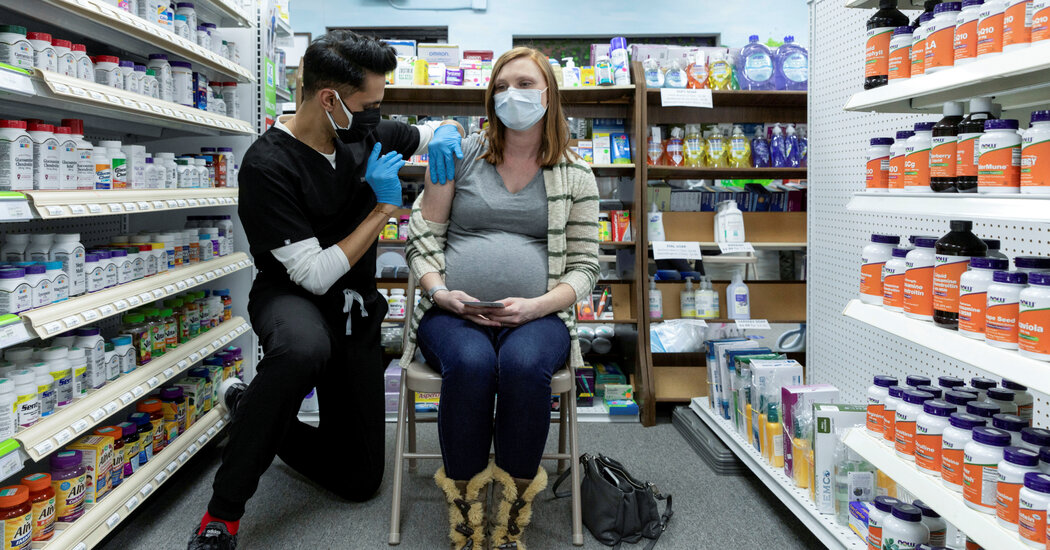
Many expectant women have avoided vaccination, unaware that the virus poses great risks to both fetus and mother. Of all the groups still threatened by Covid-19 — including the elderly and the immunocompromised — it is pregnant women who seem the most unaware of the risks.Covid can kill pregnant women and can result in miscarriage, preterm births and stillbirths even when the women have asymptomatic or mild illness. The infection may also affect the baby’s brain development.Dozens of studies have shown that the Covid vaccine is safe for pregnant women. Immunization of the mother also passes along protective antibodies to her fetus.Yet only 70 percent of women have completed the primary vaccination series for Covid before or during pregnancy, meaning that roughly 30 percent of pregnant women have not had this basic protection. Since early September, only 15 percent have opted for a booster shot.Even the flu vaccine has not proven popular with pregnant women this year: Just 37 percent of pregnant women had been vaccinated for flu as of the end of October, compared with nearly 60 percent at the end of September 2020.The United States is now struggling with a mix of respiratory syncytial virus, the flu and the coronavirus, all of which can cause serious illness in pregnant women. The winter is looking grim.“I’m concerned about it, especially given low vaccination rates,” said Dr. Denise Jamieson, an obstetrician at Emory University in Atlanta and a member of the Covid expert group of the American College of Obstetrics and Gynecologists.Even early in the pandemic, it was obvious that Covid was dangerous in pregnancy. Data from a study in June 2020 showed that among pregnant women infected with Covid, about one in three ended up in the hospital, compared with about 6 percent of women who were not pregnant.Infected pregnant women were 50 percent more likely to be admitted to intensive-care units and 70 percent more likely to need a ventilator.“It’s very clear now that if you’re pregnant, planning to get pregnant or breastfeeding, for you and for your baby, it’s very important to get vaccinated,” said Dr. Neel Shah, an assistant professor at Harvard and chief medical officer of Maven Clinic, a digital health care provider for women and families.Pregnant women, their families and even their doctors may not realize the importance of immunization because of “sluggish and muddled” communication from public health agencies, Dr. Shah said.The Centers for Disease Control and Prevention did not wholeheartedly endorse vaccination for pregnant women until September 2021, about three months before the Omicron variant swept the nation and months after the American College of Obstetricians and Gynecologists Society for Maternal-Fetal Medicine strongly recommended the shots for pregnant women.A pregnant and intubated Covid patient in a hospital in Boise, Idaho, last year. Pregnant women are vulnerable to respiratory viruses for several reasons.Kyle Green/Associated PressBy then, mistrust and misinformation had already been sown, and only about a third of pregnant women were vaccinated. “That was a big part of the failure, honestly,” Dr. Shah said.Scientists used to believe that pregnant women were, in essence, immunocompromised — that the body tolerates a the fetus by responding to it as it would a foreign invader and suppressing its own immune responses. “We now know that that’s not true, that’s an oversimplification,” Dr. Jamieson said.Pregnancy is accompanied by some immune changes, she said, but they don’t compromise the ability to fend off infections, as an organ transplant or certain medical conditions might.Still, pregnant women are vulnerable for other reasons. The growing uterus compresses the lungs, hindering the ability to take in air, for example. Pregnancy can also cause conditions like diabetes and high blood pressure, which themselves put a person at risk for severe Covid.Studies have shown that the placenta of pregnant women who are infected with the coronavirus resembles that of women with pre-eclampsia, a form of dangerously high blood pressure in pregnancy.The placenta is a sponge of blood vessels that enables the exchange of oxygen and nutrients between the mother and fetus. It takes on the role of lungs, liver and kidneys for the fetus, but Covid can ravage it, said Dr. Anne V. Herdman Royal, a pathologist at Tulsa Medical Laboratory who studies placental tissue.“The placenta is essentially the lungs for the fetus, and it’s damaged in the same way that lungs are by Covid,” she said. Most babies turn out to be fine, as long as they have completed at least 30 weeks of gestation, she added.So why have so many pregnant women avoided vaccination? Many have focused on claims of risk for which there is little to no evidence while ignoring the very real dangers of Covid, Dr. Royal said.A makeshift entrance to an area for pregnant women and new mothers with Covid at a hospital in McAllen, Texas, in 2020.Eric Gay/Associated PressThat’s true not just of pregnant women but of friends, family, even their health care providers.In October 2021, Maven Clinic surveyed 500 women in the United States. Nearly 70 percent said at least one person had suggested they avoid the vaccine while pregnant. In about one-third of these cases, the source was a health care provider.Doctors were already wary of taking even the smallest risks with pregnant women, and any ambiguity in the evidence regarding Covid vaccination may have reinforced their fears, said Dr. Anne Lyerly, a bioethicist at the University of North Carolina at Chapel Hill.Dr. Lyerly pointed to one scientific paper in the journal JAMA that was titled “Association of Covid-19 Vaccination in Pregnancy With Adverse Peripartum Outcomes.”The researchers concluded that there was no significant association. But leaving that information out of the title surely did not reassure doctors, she said.“Neutral messaging, like that messaging in the JAMA article, is not neutral against the backdrop of fear,” Dr. Lyerly said.“The better-safe-than-sorry stance that so many people in the public, so many doctors — even so many public health officials — tend to take with regard to pregnancy is not safer in the end,” she added. “In fact, it puts pregnant people in harm’s way.”She also said that public health messages had not sufficiently emphasized the risks of Covid to pregnant women and the benefits of vaccination to the fetus, she said.Many women willingly have the Tdap vaccine — which protects against diphtheria, tetanus and pertussis — in the third trimester because they understand that it is needed to protect the baby.But the message has not gotten through that the flu and Covid vaccines are also necessary in pregnancy, Dr. Jamieson said. In the Maven survey, for example, one in three women said they were planning to get the Covid vaccine only after giving birth.Dr. Jamieson said she had succeeded in convincing some women to be vaccinated by first asking them about their thoughts on the vaccine, then revisiting the topic in a later appointment.The key “is not to push so hard at the first visit,” she said, “and sometimes they will change their mind.”

Read more →