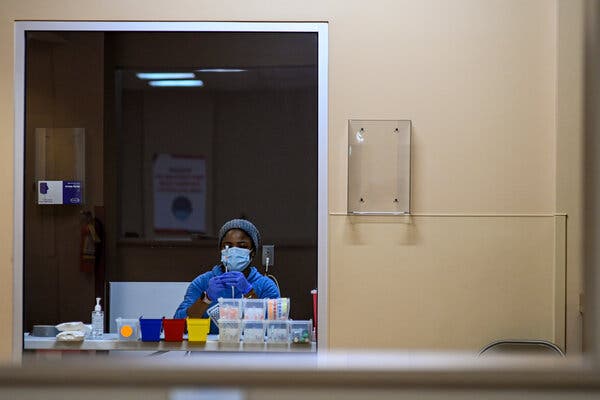
Nurses in U.K. Strike for First Time, Seeking Higher Pay

The walkout is just one of a series of industrial actions across Britain this month as ballooning inflation, rising interest rates and a recession put pressure on workers.LONDON — Nurses across Britain went on strike on Thursday demanding a raise and better working conditions, the first such walkout by nurses in the history of the country’s revered National Health Service.Despite freezing temperatures across much of Britain, nurses picketed outside a number of hospitals as the 12-hour strike began. Wearing hats and gloves and holding signs that read “Staffing shortages cost lives,” they called for higher pay and more workers.Nurses will still be staffing the most vital services, such as intensive care units and chemotherapy, dialysis, and some pediatric services, but nonurgent medical attention will be much less available. Hospitals and other health facilities say that they have tried to manage schedules to ensure the safety of patients during the action.The nursing strike is one of a series of industrial actions taking place across Britain this month as sky-high inflation, rising interest rates and a recession put pressure on workers. Rail employees, airport baggage handlers and ambulance workers are among the others scheduled to stage walkouts over the next several weeks.The strike comes as the N.H.S. is in crisis, with declining working conditions for clinical staff and amid the spillover pressures of the pandemic. There have been record delays for ambulance response times and a major backlog for medical procedures, among many other problems.The nurse’s union, the Royal College of Nursing, has asked for a 19 percent raise, noting that small increases in the past have made it hard to attract and retain workers. Nurses are leaving the profession at high rates, citing low pay and staff shortages that force them to work long hours, according to union representatives.The government has said such a raise is unaffordable and has offered a much smaller increase.Pat Cullen, general secretary of the Royal College of Nursing, said in a video statement ahead of the strike that her members were “committed to our patients and we always will be.”But, she added: “When as a society did we stop valuing the very basics of human care and dignity? This is not who we are. It is not unreasonable to demand better.”The union came to the decision to strike after polling its more than 300,000 members, who make up about a third of the health service’s work force.Nurses and doctors at a clinic in central London last year. The nursing strike is one of a series of industrial actions taking place across Britain this month.Andrew Testa for The New York TimesOn Thursday, nurses were striking across England, Wales and Northern Ireland after negotiations broke down, though nurses in Scotland called off their strike after a new pay offer. An estimated 100,000 nurses are expected to take part in England alone across 53 different N.H.S. organizations. Nurses in all but one area were striking in Wales, and nurses across Northern Ireland all walked out.Representatives for the union met with the British health secretary, Steve Barclay, on Monday, but union representatives said that the meeting had been brief and had failed to achieve any of their stated aims.Prime Minister Rishi Sunak of Britain, speaking on Wednesday in Parliament, said that the nurses had been offered a “fair” pay deal and that the government had “consistently spoken to all the unions involved in all the pay disputes,” referring to the various strikes planned for this month.Mr. Sunak added that he wanted to “put it on record what we’ve done for nurses,” noting that they were given a 3 percent raise last year, even as many other public sector wages were frozen.But amid soaring inflation, that raise does not amount to much, union representatives say, adding that the sector has long been underfunded, leaving nurses struggling to get by.“It’s pay recovery, it’s not asking for additional monies, if you break it down,” said Ms. Cullen, the union head, speaking to the BBC from a picket line early Thursday. She said that the union had been were unable to come to an agreement because the government had refused to consider a further raise.More industrial action in the N.H.S. is expected. Nurses plan to strike again on Dec. 20, while the ambulance service has walkouts scheduled for Dec. 21 and Dec. 28.

Read more →

U.S. Will Offer Free At-Home Covid Tests as Part of Winter Plan

With cases on the rise, the Biden administration said it would restart a program that provided hundreds of millions of tests through the Postal Service.WASHINGTON — The Biden administration announced on Thursday that it would restart a program that provided free coronavirus tests to American households through the Postal Service, part of a new push by the government to head off rises in virus cases and hospitalizations as winter approaches.The program, which was paused in September after distributing over 600 million tests, is restarting after federal officials dipped into what the White House said was “existing, limited funding.” Households will be able to order four tests at covidtests.gov, with shipments beginning next week.The tests are one component of a broader Covid-19 “winter preparedness plan” the White House rolled out on Thursday, reflecting mounting anxiety over a cold-weather surge in virus cases across the country. Cases have risen roughly 55 percent over the past two weeks, while deaths have surged by around 65 percent in the same period. Hospitalizations have risen over 20 percent, adding strain to medical centers already deluged by cases of the flu and respiratory syncytial virus, or R.S.V.The Biden PresidencyHere’s where the president stands after the midterm elections.A New Primary Calendar: President Biden’s push to reorder the early presidential nominating states is likely to reward candidates who connect with the party’s most loyal voters.A Defining Issue: The shape of Russia’s war in Ukraine, and its effects on global markets, in the months and years to come could determine Mr. Biden’s political fate.Beating the Odds: Mr. Biden had the best midterms of any president in 20 years, but he still faces the sobering reality of a Republican-controlled House for the next two years.2024 Questions: Mr. Biden feels buoyant after the better-than-expected midterms, but as he turns 80, he confronts a decision on whether to run again that has some Democrats uncomfortable.Two Omicron subvariants, BQ.1 and BQ.1.1, have largely driven the climb in coronavirus cases. They now make up around two-thirds of cases in the United States and can dodge prior immune defenses more easily than other recent variants.The Biden administration has been urging Americans to update their protection by getting one of the reformulated booster shots introduced in September, but the reaction to the new shots has been tepid. Only about 14 percent of Americans ages 5 and up have received an updated booster. Among those 65 and older, an age group that includes people who are particularly vulnerable to Covid-19, barely a third of people have received one of the new shots.As part of the winter plan, the administration said it would expand those eligible to vaccinate the elderly to include staff members at nursing homes.The at-home test program is reopening as lawmakers on Capitol Hill are working toward finalizing a spending package to keep the government funded through September. The Biden administration has asked for more than $9 billion in additional funding for the pandemic response, but Republicans have resisted calls for more Covid-19 spending, arguing that the administration has demonstrated it can repurpose federal funds for virus-related needs.The new round of at-home tests is being paid for with funds from the $1.9 trillion pandemic relief bill enacted last year, according to a senior administration official who briefed reporters on Wednesday evening on the condition of anonymity. The renewal of the program risks agitating Republicans by suggesting that the federal government still has money it can draw on for the pandemic response, despite its pleas for more.The Biden administration began offering free at-home tests through the Postal Service in January after demand for coronavirus testing skyrocketed with the arrival of the highly contagious Omicron variant. President Biden was sharply criticized for not moving earlier to secure tests for Americans, even as federal officials argued that they had acted aggressively in procuring them, including for schools and long-term care facilities.The government continued operating the at-home test program as the year went on, allowing Americans to order additional rounds of tests. But the White House paused the program in September, citing a lack of funding.Americans with health insurance and on Medicare can still secure eight at-home tests for free each month. As part of its announcement on Thursday, the White House said it would distribute at-home tests to thousands of federally supported senior facilities and at hundreds of food banks.

Read more →

What is an Aortic Aneurysm? Here are Symptoms, Risks and Treatments

They are more common than people may think. We talked to experts about the risks, symptoms and treatmentsThe soccer journalist Grant Wahl collapsed and died suddenly while covering the World Cup in Qatar. He was just 49 years old and was reportedly in good health. His family announced on Wednesday that Mr. Wahl had a burst blood vessel leading from his heart, and that his death resulted from an aneurysm that ruptured.Aortic aneurysms are rare, doctors said, but more common than people may think. Between 1 to 2 percent of the U.S. population is prone to developing them, said Dr. Eric Roselli, a cardiovascular surgeon at the Cleveland Clinic. “A lot of people don’t know anything about it,” Dr. Roselli added. “The aorta has been underappreciated.”Here’s what to know about the condition, the risk factors and the treatment options.What is an aortic aneurysm?Aneurysms, which are enlarged, weakened areas in blood vessels, can occur in any part of the body. An aortic aneurysm is a bulge in the aorta, the main blood vessel that ferries blood from the heart throughout the chest and the rest of the body.There are two primary types of aortic aneurysms: thoracic aortic aneurysms, which occur in the chest, and abdominal aortic aneurysms, which occur in the belly. Doctors tend to think of abdominal aortic aneurysms as a disease that occurs in older people, said Dr. Douglas Johnston, the chief of cardiac surgery for Northwestern Medicine, but thoracic aortic aneurysms can strike younger patients, too. Mr. Wahl had an ascending thoracic aortic aneurysm, according to the autopsy report.What happens after an aortic aneurysm forms?Two main issues can arise from an aortic aneurysm: a hole can form in the dilated aorta, letting blood burst into the body, or the blood that is pumping vigorously through the artery can tear the inner layers of the aorta. The tear in the layers of the aorta is known as a dissection and, when blood builds up and continues to tear the artery wall, it can lead to death.Aortic aneurysms are a major cause of unexpected death in otherwise healthy people, said Dr. James Pirruccello, an assistant professor of medicine and a cardiovascular researcher at the University of California, San Francisco.Many people with an enlarged aorta will not experience these complications, said Dr. Pirruccello. The risk of a dissection or a rupture increases as the aorta enlarges, he added. In some cases, depending on the size of the aneurysm, even patients without symptoms can have surgery to replace the segment of the aorta that is too large.Who is at risk for an aortic aneurysm?People with high blood pressure or high cholesterol, both of which are typically tested for at regular physicals, are more likely to develop the condition, according to the Centers for Disease Control and Prevention. Hardened arteries are also a risk factor.Having a bicuspid aortic valve, meaning that your aortic valve has two flaps, instead of three, puts you at a higher risk of developing an aortic aneurysm. Roughly 2 percent of the population has a bicuspid aortic valve, Dr. Johnston said.Smoking is a huge risk factor for abdominal aortic aneurysms. According to the C.D.C., a history of smoking accounts for roughly 75 percent of all abdominal aortic aneurysms.Men can also be at higher risk for abdominal aortic aneurysms, said Dr. Eric Isselbacher, an associate professor of medicine at Harvard Medical School. The U.S. Preventive Services Task Force has recommended that men between the ages of 65 and 75 who have ever smoked undergo an ultrasound screening.Genetics also play a role, and this makes it critical to know your family health history. If you have a direct family member (a sibling or a parent) who has or had an enlarged aorta, you should talk to your primary care doctor about getting screened, as the condition can run in families. Some inherited disorders, like Marfan syndrome and Ehlers-Danlos syndrome, may increase a person’s chances of developing an aortic aneurysm. It’s crucial to know if a family member died suddenly and unexpectedly, as an aortic aneurysm could be a potential cause.What are the symptoms and how can you detect aortic aneurysms?Abdominal aortic aneurysms can be detected in a physical exam, said Dr. Isselbacher — physicians can feel enlarged aortas by pushing on the abdomen.But the average patient walking around with an aortic aneurysm in the chest will not have any symptoms. Dr. Johnston noted that some people may feel chest tightness or have a cough. Others may have a slight heart murmur, he added. CT scans and M.R.I.s can detect thoracic aortic aneurysms, but doctors generally do not recommend them unless you have a family history or other genetic risk for an enlarged aorta. An echocardiogram, or ultrasound of the heart, can also help detect aortic aneurysms.People with aortic ruptures or dissections may struggle to breathe or swallow and may feel severe chest pain radiating to the back, said Dr. Elizabeth Ratchford, the director of the Johns Hopkins Center for Vascular Medicine.“Anyone who develops sudden chest pain should be in the hospital as soon as possible,” Dr. Johnston said.If a patient has access to emergency care and is properly diagnosed, there is a high chance of survival. Doctors can perform surgery to remove the enlarged part of the aorta and help the patient recover.How can you reduce the risk of complications from an aortic aneurysm?Once doctors detect an aneurysm, they monitor patients closely, typically taking imaging every six months, Dr. Pirruccello said. “It’s not like we find it once and hope it doesn’t grow,” he said. “We’re aggressive about following it,” he added. “If the aneurysm reaches a critical size, a doctor may perform a surgery to replace the segment of the aorta that is too large.”But for some patients, it doesn’t get to that point. “Many people just get monitored and never have to have anything done about it,” Dr. Ratchford said.To help prevent developing an aortic aneurysm, people should be mindful of managing their blood pressure. The basic building blocks of cardiovascular health — diet, exercise, sleep — are critical tools to reduce the risk of developing, or dying from, an aortic aneurysm.“An aneurysm is not a death sentence,” Dr. Johnston said. If it is properly managed, “people have a normal lifestyle and a normal life expectancy,” he explained.Sleep Your Way to Better Heart HealthSleep is now considered an essential factor in good heart health.

Read more →

New robot does 'the worm' when temperature changes

A new gelatinous robot that crawls, powered by nothing more than temperature change and clever design, brings “a kind of intelligence” to the field of soft robotics.
The inchworm-inspired work is detailed today in Science Robotics.
“It seems very simplistic but this is an object moving without batteries, without wiring, without an external power supply of any kind — just on the swelling and shrinking of gel,” said senior author David Gracias, a professor of chemical and biomolecular engineering at Johns Hopkins University. “Our study shows how the manipulation of shape, dimensions and patterning of gels can tune morphology to embody a kind of intelligence for locomotion.”
Robots are made almost exclusively of hard materials like metals and plastics, a fundamental obstacle in the push to create if not more human-like robots, than robots ideal for human biomedical advancements.
Water-based gels, which feel like gummy bears, are one of the most promising materials in the field of soft robotics. Researchers have previously demonstrated that gels that swell or shrink in response to temperature can be used to create smart structures. Here, the Johns Hopkins team demonstrated for the first time, how swelling and shrinking of gels can be strategically manipulated to move robots forward and backward on flat surfaces, or to essentially have them crawl in certain directions with an undulating, wave-like motion.
The gelbots, which were created by 3D printing for this work, would be easy to mass produce. Gracias forsees a range of practical future applications, including moving on surfaces through the human body to deliver targeted medicines. They could also be marine robots, patrolling and monitoring the ocean’s surface.
Gracias hopes to train the gelbots to crawl in response to variations in human biomarkers and biochemicals. He also plans to test other worm and marine organism-inspired shapes and forms and would like to incorporate cameras and sensors on their bodies.
Authors included Aishwarya Pantula, Bibekananda Datta, Yupin Shi, Margaret Wang, Jiayu Liu, Siming Deng, Noah J. Cowan, and Thao D. Nguyen, all of Johns Hopkins.
The work was supported by: National Science Foundation (EFMA-1830893).
Story Source:
Materials provided by Johns Hopkins University. Original written by Jill Rosen. Note: Content may be edited for style and length.

Read more →

Discovery could explain why women are more likely to get Alzheimer's

Scientists at Scripps Research and Massachusetts Institute of Technology (MIT) have found a clue to the molecular cause of Alzheimer’s — a clue that may also explain why women are at greater risk for the disease.
In the study, reported on December 14, 2022, in Science Advances, the researchers found that a particularly harmful, chemically modified form of an inflammatory immune protein called complement C3 was present at much higher levels in the brains of women who had died with the disease, compared to men who had died with the disease. They also showed that estrogen — which drops in production during menopause — normally protects against the creation of this form of complement C3.
“Our new findings suggest that chemical modification of a component of the complement system helps drive Alzheimer’s, and may explain, at least in part, why the disease predominantly affects women,” says study senior author Stuart Lipton, MD, PhD, professor and Step Family Foundation Endowed Chair in the Department of Molecular Medicine at Scripps Research and a clinical neurologist in La Jolla, California.
The study was a collaboration with a team led by Steven Tannenbaum, PhD, Post Tenure Underwood-Prescott Professor of Biological Engineering, Chemistry and Toxicology at MIT.
Alzheimer’s, the most common form of dementia that occurs with aging, currently afflicts about six million people in the U.S. alone. It is always fatal, usually within a decade of onset, and there is no approved treatment that can halt the disease process, let alone reverse it. The shortcomings of treatments reflect the fact that scientists have never fully understood how Alzheimer’s develops. Scientists also don’t know fully why women account for nearly two-thirds of cases.
Lipton’s lab studies biochemical and molecular events that may underlie neurodegenerative diseases, including the chemical reaction that forms a modified type of complement C3 — a process called protein S-nitrosylation. Lipton and his colleagues previously discovered this chemical reaction, which happens when a nitric oxide (NO)-related molecule binds tightly to a sulfur atom (S) on a particular amino acid building-block of proteins to form a modified “SNO-protein.” Protein modifications by small clusters of atoms such as NO are common in cells and typically activate or deactivate a target protein’s functions. For technical reasons, S-nitrosylation has been more difficult to study than other protein modifications, but Lipton suspects that “SNO-storms” of these proteins could be a key contributor to Alzheimer’s and other neurodegenerative disorders.
For the new study, the researchers used novel methods for detecting S-nitrosylation to quantify proteins modified in 40 postmortem human brains. Half of the brains were from people who had died of Alzheimer’s, and half were from people who hadn’t — and each group was divided equally between males and females.
In these brains, the scientists found 1,449 different proteins that had been S-nitrosylated. Among the proteins most often modified in this way, there were several that have already been tied to Alzheimer’s, including complement C3. Strikingly, the levels of S-nitrosylated C3 (SNO-C3) were more than six-fold higher in female Alzheimer’s brains compared to male Alzheimer’s brains.
The complement system is an evolutionarily older part of the human immune system. It consists of a family of proteins, including C3, that can activate one another to drive inflammation in what is called the “complement cascade.” Scientists have known for more than 30 years that Alzheimer’s brains have higher levels of complement proteins and other markers of inflammation, compared to neurologically normal brains. More recent research has shown specifically that complement proteins can trigger brain-resident immune cells called microglia to destroy synapses — the connection points through which neurons send signals to one another. Many researchers now suspect that this synapse-destroying mechanism at least partly underlies the Alzheimer’s disease process, and loss of synapses has been demonstrated to be a significant correlate of cognitive decline in Alzheimer’s brains.
Why would SNO-C3 be more common in female brains with Alzheimer’s? There has long been evidence that the female hormone estrogen can have brain-protective effects under some conditions; thus, the researchers hypothesized that estrogen specifically protects women’s brains from C3 S-nitrosylation — and this protection is lost when estrogen levels fall sharply with menopause. Experiments with cultured human brain cells supported this hypothesis, revealing that SNO-C3 increases as estrogen (?-estradiol) levels fall, due to the activation of an enzyme that makes NO in brain cells. This increase in SNO-C3 activates microglial destruction of synapses.
“Why women are more likely to get Alzheimer’s has long been a mystery, but I think our results represent an important piece of the puzzle that mechanistically explains the increased vulnerability of women as they age,” Lipton says.
He and his colleagues now hope to conduct further experiments with de-nitrosylating compounds — which remove the SNO modification — to see if they can reduce pathology in animal models of Alzheimer’s and eventually in humans.

Read more →

Are people with cluster headaches more likely to have other illnesses?

People with cluster headaches may be more than three times more likely to have other medical conditions such as heart disease, mental disorders and other neurologic diseases, according to a study published in the December 14, 2022, online issue of Neurology®, the medical journal of the American Academy of Neurology.
Cluster headaches are short but extremely painful headaches that can occur many days, or even weeks, in a row. The headaches can last anywhere from 15 minutes to three hours.
“Around the world, headaches have an incredibly negative impact on people’s quality of life, both economically and socially,” said study author Caroline Ran, PhD, of the Karolinska Institutet in Stockholm, Sweden. “Our results show that people with cluster headaches not only have an increased risk of other illnesses, those with at least one additional illness missed four times as many days of work due to sickness and disability than those with just cluster headaches. They also have a higher chance of a long-term absence from work.”
The study involved 3,240 people with cluster headaches from age 16-64 in Sweden who were compared to 16,200 people who were similar in age, sex and other factors. The majority were men, which is common with cluster headache.
Researchers looked at work records and disability benefits to determine how many days during a year people were absent from work due to sickness and disability.
Among those with cluster headaches, 92%, or 2,977 people, had at least one additional illness. Of those without cluster headaches, 78%, or 12,575 people, had two or more illnesses.
Of those with cluster headaches, more women had additional illnesses than men, 96% and 90% respectively.
The average number of days a person was absent due to sickness and disability was nearly twice as high among people with cluster headaches with 63 days compared to those without cluster headaches with 34 days.
People with cluster headaches and at least one additional illness had four times as many absence days compared to people with cluster headaches who did not have an additional illness.
“Increasing our understanding of the other conditions that affect people with cluster headache and how they impact their ability to work is very important,” added Ran. “This information can help us as we make decisions on treatments, prevention and prognoses.”
A limitation of the study was that information on personal data, such as smoking, alcohol consumption and BMI, which could affect the occurrence of diseases, was not available.
The study was supported by Swedish Research Council, Swedish Brain Foundation and Mellby Gård, Region Stockholm, Märta Lundkvist Foundation and Karolinska Institutet Research Funds.
Story Source:
Materials provided by American Academy of Neurology. Note: Content may be edited for style and length.

Read more →

Ebola vaccine regimens safe, immunogenic in adults and children

Two randomized, placebo-controlled trials evaluating three Ebola vaccine administration strategies in adults and children found that all the regimens were safe in both age groups, according to results published today in the New England Journal of Medicine. Antibodies were produced in response to the vaccine regimens beginning at 14 days after the first vaccination and continued to be detectable at varying levels — depending on the vaccine and regimen used — in both children and adults for one year. The study enrolled volunteers at sites in Guinea, Liberia, Sierra Leone and Mali to identify optimal vaccination strategies to curtail outbreaks of Ebola virus disease.
The trials were conducted under the Partnership for Research on Ebola Vaccination (PREVAC) international consortium. PREVAC’s partner organizations include the U.S. National Institutes of Health (NIH), the French National Institute of Health and Medical Research and the London School of Hygiene & Tropical Medicine. The National Institute of Allergy and Infectious Diseases (NIAID), part of NIH, sponsored the trial in Liberia and Mali. In Liberia, the study was done in collaboration with the Liberia Ministry of Health through the Partnership for Research on Ebola Virus in Liberia program. In Mali, it was conducted in collaboration with the University Clinical Research Center and the Center for Vaccine Development-Mali.
The trials began enrollment in 2017, were conducted simultaneously and shared a placebo arm. A total of 1,400 adults and 1,401 children aged 1 year to 17 years old were randomized to receive two injections of either placebo or Ebola vaccine in one of three regimens. The Ebola vaccine regimens were Ad26.ZEBOV (supplied by Johnson & Johnson) followed eight weeks later with a booster dose of MVA-BN-Filo vaccine (supplied by manufacturer Bavarian Nordic); two doses of rVSVΔG-ZEBOV-GP (manufactured by Merck Sharp & Dohme Corp) separated by eight weeks; or one dose of the Merck vaccine followed eight weeks later by a placebo injection.
Antibody responses were observed by day 14 after the first injection of either Ad26.ZEBOV or rVSVΔG-ZEBOV-GP vaccine. The researchers say this finding is notable because vaccines against Ebola virus disease are typically administered during an outbreak and so information about how rapidly a vaccine produces an antibody effect is of potential use in efforts to protect at-risk populations. However, it is not currently known what level of antibody response reliably correlates with vaccine-induced protection against Ebola virus infection or disease. As no participants contracted Ebola virus disease during the trial, the investigators were not able to assess protection from disease.
The researchers cite several strengths of the trials, including outstanding retention of volunteers throughout the course of trial, achieved with continuing community engagement and ongoing trust-building efforts.
Story Source:
Materials provided by NIH/National Institute of Allergy and Infectious Diseases. Note: Content may be edited for style and length.

Read more →

Frequent genetic cause of late-onset ataxia

A new study published on Dec. 14, 2022 in the New England Journal of Medicine reports the identification of a previously unknown genetic cause of a late-onset cerebellar ataxia, a discovery that will improve diagnosis and open new treatment avenues for this progressive condition.
Late-onset cerebellar ataxias (LOCA) are a heterogenous group of neurodegenerative diseases that manifest in adulthood with unsteadiness. One to three in 100,000 people worldwide will develop a late-onset ataxia. Until recently, most patients with late-onset ataxia had remained without a genetic diagnosis.
An international team led by Dr. Bernard Brais, a neurologist and researcher at The Neuro (Montreal Neurological Institute-Hospital) of McGill University and Dr. Stephan Züchner of the University of Miami’s Miller School of Medicine, in collaboration with neurologists from the Universities of Montreal and Sherbrooke, studied a group of 66 Quebec patients from different families who had late-onset ataxia for which an underlying genetic cause had not yet been found. Using the most advanced genetic technologies, the team found that 40 (61 per cent) of the patients carried the same novel disease-causing variant in the gene FGF14, making it the most common genetic cause of late-onset ataxia in Quebec. They found that a small stretch of repetitive DNA underwent a large size increase in patients, a phenomenon known as repeat expansion.
To confirm their initial findings, the team reached out to international collaborators in Tübingen in Germany, Perth in Australia, London in the United Kingdom, and Bengaluru in India. They found that 10-18 per cent of LOCA patients in these independent cohorts also carried the same FGF14 error. These results confirmed that a repeat expansion in FGF14 is one of the most common genetic cause of late-onset ataxia described to date.
Going beyond gene discovery, the team also studied brains from deceased patients and neurons derived from patients and found that the error causes decreased expression of the gene and its protein.
Patients with a FGF14-related late-onset ataxia experience unsteadiness (ataxia) usually beginning in their fifties. The disease may start with short episodes of ataxia that can be precipitated by exercise and alcohol intake. The coordination problems become permanent on average around 59 years old. The disease usually progresses slowly and affects walking, speech and hand coordination. Often with time it requires walking aids. The condition is most often transmitted from an affected parent although it can appear in families with no previous history of ataxia.
The FGF14 GAA repeated sequence of the mutation raises much interest, since it is identical to the one causing Friedreich ataxia in the FXN gene, the most common cause of autosomal recessive ataxia worldwide. Because of this similarity, it is possible that some of the new treatments under development for Friedreich ataxia may be used to treat patients with an expansion in FGF14.
This study also suggests that patients may benefit from a drug called aminopyridine that is already marketed for other neurological conditions. This is especially promising since some patients with an expansion in FGF14 have responded well to this treatment.
“This opens the door to a clinical trial of this drug in these patients,” says Dr. Brais. “It’s great news for patients in Canada and worldwide. It also makes genetic testing possible so people and families can arrive at the end of their long diagnostic journey.”
Published in the New England Journal of Medicine on Dec. 14, 2022, this study was funded with support from many national agencies, including the NIH, the Fondation Groupe Monaco and the Montreal General Hospital Foundation.
Story Source:
Materials provided by McGill University. Note: Content may be edited for style and length.

Read more →

Who Are the ‘Never-Coviders’?

Plus your experiences without Covid.A nurse prepares vaccine boosters at a Covid center in Washington D.C.Kenny Holston for The New York TimesToday’s Virus Briefing is the last one for 2022. The year began as the surge in the Omicron variant in the U.S. was nearing its peak: On Jan. 20, nearly 160,000 Covid patients were hospitalized, the most at any point in the pandemic. On Feb. 2, the seven-day average of new reported deaths peaked at 2,669.As the year comes to a close, an expected seasonal increase in Covid cases has begun. The seven-day average of daily deaths is up 65 percent from two weeks ago. With cases of the flu and respiratory syncytial virus, or R.S.V., also high, several cities and counties, including New York City and Los Angeles, have advised people to mask up.But one of the most confounding mysteries of the pandemic remains: Some people have never had Covid, this season or ever.While many people may have avoided infection through precaution or luck, “never Coviders,” scientists believe, are truly out there: People who are naturally immune and whose genetics could hold clues for treatment.Jonathan Wolfe spoke with Times colleague Apoorva Mandavilli about how scientists are trying to find them, and what we might learn.Does this really happen?It probably is a real thing. There are other viruses for which we know there are people who are naturally resistant. The most striking example I can think of is H.I.V., where there is a mutation that makes some people resistant to getting infected with the virus. That’s actually been the key to curing the very few people that have been cured of H.I.V.What’s going on inside people who have never gotten Covid?We don’t know for sure.One way for the body to be resistant to a virus is through genetic mutations. So, for example, the coronavirus needs what’s called an ACE2 receptor on a cell in order to latch on to it. If you have a mutation in that particular receptor, then the virus can’t get into your cells and can’t infect you. But that kind of mutation is likely to be pretty rare.Genetics also plays a role in how severely people get sick. Some people have mutations in the innate immune system, which is like the first responder part of your immune system and is pretty generic. More specific reactions, like antibodies for a particular virus, appear later in an infection.We know now that people who have mutations in that first responder system tend to have very severe disease. So the flip side is also likely to be true: Some people may have mutations that prevent them from getting infected at all.Couldn’t they just be asymptomatic?People who are asymptomatic are still infected. The virus is in their bodies, but they have no visible symptoms, or really mild symptoms. That’s very different from what we’re talking about here — somebody who doesn’t get infected at all. But it’s been really difficult for researchers to home in on the difference between these two groups, because so many people have been infected by now.What do you mean?There were a lot of people who thought, “Oh, I’m immune to the virus.” I’ve even had friends say that to me: “I haven’t gotten it yet. Scientists should study me.” Some researchers did begin studying people who had not gotten Covid. But then Omicron came along and infected nearly everyone. Some scientists were very frustrated because they basically had to start over. On the other hand, those people were not “never Coviders” anyway. So the studies may take longer, but they’ll be based on people who truly can’t get infected.Some scientists are studying health care workers and caregivers who really should have gotten infected because they had such high exposure, but didn’t. The idea is that knowing what causes somebody to not get infected might help us figure out treatments for infection.How many true “never Coviders” are there?We don’t know because there are so many unknowns. We don’t know if all the people who say they haven’t gotten it yet really haven’t had it, or had it and didn’t know. We also don’t know if they’ve just been incredibly careful and so the virus just hasn’t had a chance to infect them yet.Also, things got complicated after the vaccines were introduced because the vaccines gave some immunity against infection. But the actual number of people who are totally immune to the virus, for whatever reason, is probably pretty small.What if I’ve never been infected?If you haven’t gotten it yet, that’s wonderful and you’re lucky, either because you’re genetically lucky or because you’ve managed to dodge the virus. But I wouldn’t assume that you are naturally resistant and throw all precautions to the wind. The chances you’re naturally immune are fairly low. And as Omicron shows, it may be that you just haven’t met the right variant yet.Your ‘never Covid’ experiencesWe asked you how you think you might have avoided Covid so far, and got over 10,000 responses.“I spent the pandemic taking care of a friend with cancer and avoided everyone just to focus on him and make him feel safe. He passed away in February and I started going out again and seeing new people, but I still haven’t caught it! Either I am immune or I have a Covid guardian angel (him).” — Jessica Choe, Brooklyn, N.Y.“Healthy constitution. Rarely got colds or flu even before the pandemic, plus early precautions, masking, vaccines, boosters, working from home and luck. Two and a half years with nary a sniffle, so we’ve given up our masks, dine indoors, socialize and party regularly now. Probably jinxing myself as I type.” — Katherine Fife, Davis, Calif.“I think neither my husband nor I have caught Covid mostly due to luck. We don’t have kids. We maintain a small, close circle of friends that shared the same views on how best to navigate the pandemic. We also had the benefit of living in Wyoming at the start of the pandemic, a place that isn’t densely populated. We’ve since moved to Okinawa, Japan, and have become embedded in a culture that prioritizes public health and welfare over the individual. Mask-wearing is normal here, making it easier for us to continue the habits that have kept us safe and healthy these past almost three years.” — Jillian, Okinawa, Japan“I have no idea. Stupid luck? Providence? l quarantined in the basement when my husband had it (mildly) in January 2021. He now suffers from PASC, or long Covid, and it has forever changed and devastated our lives.” — Malia Schaefer, Cincinnati“Because I’m immunocompromised, I knew I had to do everything I could to not get infected. In the first year of the pandemic, I almost exclusively lived in quarantine. From then on, I always worked with an FFP2 mask, never took the bus or train, was never in the supermarket without a mask and avoided places with a high risk of infection. I have all vaccinations. Even today, I always wear a mask in public facilities. Those around me tried keeping me safe, always testing themselves before they came to see me. I am very grateful for that.” — Julia Litschke, Essen, Germany“I was sent home to WFH early in the pandemic because I had just finished chemo and radiation. I’ve been working remotely for two years now. I also got the vaccine as soon as it was available. I’ve gotten every booster, including the bivalent vaccine. My mask protocol is: Check your surroundings. Is there a ceiling? Wear a mask. Is there a crowd? Wear a mask. Neither? Take it off. That being said, I suspect I have been infected but was asymptomatic or mistook it for an allergy.” — Kim Haas, PittsburghWhat else we’re followingThe ‘Tripledemic’Do you have the flu, Covid or R.S.V.? This chart will help you figure it out.CoronavirusThe F.D.A. authorized Covid vaccines for children as young as six months.Many pregnant women have avoided vaccination, unaware that the virus poses significant risks to both fetus and mother.Bipartisan legislation to create a Sept. 11-style independent panel to investigate the federal pandemic response is stalled in Congress, and the White House is privately resisting it.Long Covid has caused or contributed to at least 3,500 deaths in the U.S., the C.D.C. found.China has lifted its “zero Covid” restrictions, but Beijing still looks like a city in the throes of lockdown, with cases rising fast. But good data is hard to find.With global demand for Covid shots plummeting, a critical partner in Covax will stop giving free vaccines to middle-income countries.Systemic problems hindered the federal government’s pandemic response, the Democratic staff of the Senate homeland security committee concluded.A study found that Covid vaccines prevented three million deaths in the U.S., Stat News reports.FluThe C.D.C. is recommending that people 65 and older get specially formulated flu shots this year, The Washington Post reports.The coronavirus pandemic taught us new lessons about the flu, NBC News reports.EbolaThe Ugandan authorities hesitated to impose restrictions in the epicenter of the Ebola outbreak because of trauma from the Covid lockdown. That decision haunts the country.Thanks for reading. We’ll be back on Jan. 4.Email your thoughts to virusbriefing@nytimes.com. Did a friend forward you the briefing? Sign up here.

Read more →

Blood-based metabolic signature outperforms standard method for predicting diet, disease risk

When it comes to studying food and diet, it’s difficult to know what people are eating — let alone their risk of disease caused by what they eat.
Doctors and researchers usually ask people to fill out a long-from food frequency questionnaire that estimates caloric intake, food groups and nutrients. That relies on a person’s memory and may not provide the most accurate picture.
However, a research team led by a Michigan Medicine cardiologist have found a method using molecular profiling and machine learning to develop blood-based dietary signatures that more accurately predict both diet and the risk of cardiovascular disease and type 2 diabetes. The results are published in European Heart Journal.
“Diet is not one dimensional; it’s constantly changing, and the ways we traditionally assess it are not perfect,” said senior author Venkatesh Murthy, M.D., Ph.D., a cardiologist at the University of Michigan Health Frankel Cardiovascular Center and an associate professor of cardiology at U-M Medical School.
“We need tools that are more reliable and precise while also being easy to use for everyone. Using metabolite signatures and data science, we can improve our understanding of how much people are actually taking in, as well as what risks they may incur for cardiometabolic disease that affect millions of Americans,” Murthy said.
Researchers followed more than 2,200 white and Black adults in the Coronary Artery Risk Development in Young Adults study, using blood samples and food surveys to determine metabolite signatures of diet and subsequent disease risk over 25 years. Through a machine learning model, investigators were able to create a blood-based dietary signature that more accurately predicts a person’s entire diet over 19 food groups by 10-20%.

Read more →