Drinking 2 or more cups of coffee daily may double risk of heart death in people with severe hypertension

Drinking two or more cups of coffee a day may double the risk of death from cardiovascular disease among people with severe high blood pressure (160/100 mm Hg or higher) but not people with high blood pressure not considered severe, according to research published today in the Journal of the American Heart Association, an open access, peer-reviewed journal of the American Heart Association.
In contrast, the study found that one cup of coffee and daily green tea consumption did not increase the risk of death related to cardiovascular disease at any blood pressure measurement, though both drinks contain caffeine. According to the FDA, an 8-ounce cup of green or black tea has 30-50 milligrams of caffeine, and an 8-ounce cup of coffee has closer to 80 to 100 milligrams.
Previous research found that drinking one cup of coffee a day may help heart attack survivors by lowering their risk of death after a heart attack and may prevent heart attacks or strokes in healthy individuals. In addition, separate studies have suggested drinking coffee regularly may reduce the risk of developing chronic illnesses, such as Type 2 diabetes and some cancers; may help to control appetite; may help to lower the risk of depression or boost alertness, though it is not clear if this effect is from the caffeine or something else in coffee. On the harmful side, too much coffee may raise blood pressure and lead to anxiety, heart palpitations and difficulty sleeping.
“Our study aimed to determine whether the known protective effect of coffee also applies to individuals with different degrees of hypertension; and also examined the effects of green tea in the same population,” explained the study’s senior author Hiroyasu Iso, M.D., Ph.D., M.P.H., director of the Institute for Global Health Policy Research, Bureau of International Health Cooperation, National Center for Global Health and Medicine in Tokyo, Japan, and professor emeritus at Osaka University. “To the best of our knowledge, this is the first study to find an association between drinking 2 or more cups of coffee daily and cardiovascular disease mortality among people with severe hypertension.”
High blood pressure, also known as hypertension, occurs when the force of blood pushing against the walls of blood vessels is consistently too high, making the heart work harder to pump blood. It is measured in millimeters of mercury (mm Hg). The current blood pressure guidelines from the American Heart Association and the American College of Cardiology classifies hypertension as a blood pressure reading of 130/80 mm Hg or higher.
The blood pressure criteria for this study are slightly different from the ACC/AHA guidelines. Researchers classified blood pressure into five categories: optimal and normal (less than 130/85 mm Hg); high normal (130-139/85-89 mm Hg); grade 1 hypertension (140-159/90-99 mm Hg); grade 2 (160-179/100-109 mm Hg); and grade 3 (higher than 180/110 mm Hg). Blood pressure measures in grades 2 and 3 were considered severe hypertension in this study.

Read more →

As Covid Deaths Climb, Even Seniors Skip the Latest Booster

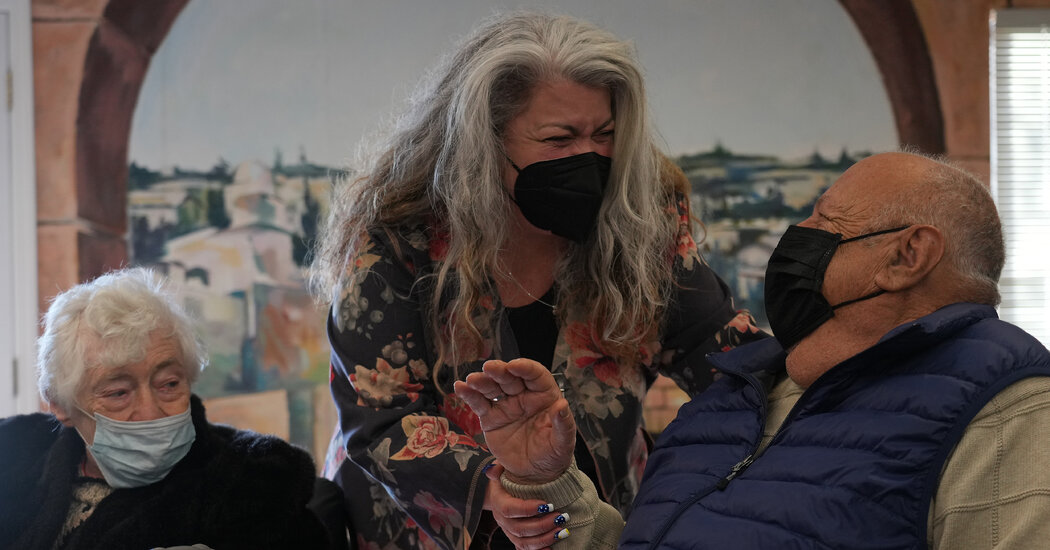
Nearly all Americans over 65 got their initial Covid vaccines. But that immunity is waning, and this time, the government is offering far less support for new shots.PLEASANT HILL, Calif. — Bonnie Ronk is something of a public health matriarch at the Mt. Diablo Center for seniors in this liberal Northern California suburb.When Ms. Ronk, a great-grandmother whose red walker bears a sticker saying “El Jefe” (The Leader), tells her peers to pull their masks over their noses, they oblige. When she received both doses of the Covid vaccine and a booster and told others to do the same, they did.But even Ms. Ronk, 79, has not gotten the latest Covid booster, which was updated to protect against the Omicron variant and has been available since September. She said she didn’t know about it.Across the United States, where about 94 percent of people 65 and older had their initial Covid vaccines, only 36 percent have received the updated shot, known as the bivalent booster, according to data from the Centers for Disease Control and Prevention. Seniors have offered an array of explanations: They were unaware of it, unable to find it or unconvinced of its value.As the pandemic barrels into its third winter, and Covid hospitalizations and deaths climb once again, medical experts worry that there is no effective plan to update the immunizations of the most vulnerable Americans. Two years ago, when Covid shots were first introduced, the federal government sent teams into thousands of nursing homes and community centers to vaccinate seniors, curbing the devastation of the virus.But so far this fall, the White House has only offered grants to community organizations to get shots into the arms of older people, without the clear messaging strategy or logistical support that they need most, many caregivers and nursing home executives said in interviews.“The governmental and philanthropic support feels nonexistent,” said Debbie Toth, the chief executive of the nonprofit Choice in Aging, who helped bring thousands of the initial vaccines to adult care facilities and housing complexes in the East Bay of California in early 2021.The diminishing immunity of seniors has largely transformed the Covid pandemic in the United States from a threat against the unvaccinated to one against the old, many of whom were once well protected. People over 70 are being admitted to a hospital with Covid at a rate four times higher than that of the general population.According to the C.D.C., 95 percent of people 65 and older got their initial Covid vaccines, but only one-third have received the updated booster.Jamie Kelter Davis for The New York Times The most recent available death counts by age showed that almost 90 percent of Covid fatalities were among people over 65.“The evidence is clear: Even if you got the shot two years ago, your immunity has waned. But the people who most need to hear that have not,” said Dr. Michael Wasserman, a geriatrician and the public policy chair of the California Association of Long Term Care Medicine. “When you combine pandemic fatigue with no real plan from the government together, what we have is a perfect storm.”Read More on the Coronavirus PandemicBoosters: Americans who received updated shots for Covid-19 saw their risk of hospitalization reduced by roughly 50 percent this fall compared with certain groups inoculated with the original vaccines, the Centers for Disease Control and Prevention reported.Vaccine Mandates: After the ferocious battles over Covid shots of the past two years, simmering resistance to general school vaccine mandates has grown significantly.Free at-Home Tests: With cases on the rise, the Biden administration restarted a program that has provided hundreds of millions of tests through the Postal Service.Contagion: Like a zombie in a horror film, the coronavirus can persist in the bodies of infected patients well after death, even spreading to others, according to two startling studies.The Biden administration’s Covid plan for the winter includes $125 million in grants to two community organizations, USAging and The National Council on Aging, for programs to vaccinate older Americans — a far less direct approach than when it dispatched CVS and Walgreens workers into care centers after the first shots were authorized. The plan also includes letters to governors encouraging more nursing home shots and a television ad campaign that targets seniors in racial and ethnic minority groups.Mary Wall, the chief of staff of the White House Covid response team, said the administration was doing what it could with the limited resources available, but acknowledged that this time, the administration was relying on states to shoulder more of the burden.“We’re really instead asking them directly, please go and host on-site clinics,” she said.She called the grants “a great start,” but stressed that a more robust financial investment would require cooperation from Congress, which has repeatedly refused President Biden’s request for an additional $10 billion in health funding, a vast majority of it for the coronavirus response.“Realistically,” she said, “this is not something that we have gotten more money for, for a while, despite repeated asks to Congress. We’ve been trying really hard to look with great sobriety at our resources.”Bonnie Ronk, a participant at Choice in Aging, urged others to become vaccinated as the pandemic raged. But she has not received the bivalent Covid booster, saying she didn’t even know about it.Jim Wilson/The New York TimesEpidemiologists agree that among all pillars of a national response, widespread vaccination is among the most valuable. They estimate that Covid shots prevented 650,000 hospitalizations and 300,000 deaths among seniors and Medicare beneficiaries in 2021 alone.But the virus has since evolved, and the original vaccine formula is no longer a good match for circulating variants, a particular danger to seniors with weakened immune systems and underlying conditions like heart disease and diabetes.Even the bivalent shot has limited ability to prevent infections from the latest Omicron variants, but it is very effective at preventing serious illness and death. According to C.D.C. data, people 50 and older who received multiple boosters had half the risk of dying from the virus than those with just one booster.Dr. Sabine von Preyss-Friedman, a geriatric specialist and the chief medical officer of Avalon Health Care Group, said the apathy among some seniors reflected a misconception about the vaccine’s purpose.“People are thinking, ‘I got the shot, and I still got Covid, so what’s the point?’ They aren’t thinking about the fact that they got Covid and lived.”As part of the federal push, the Centers for Medicare and Medicaid Services also added a recording about the vaccine to its 1-800-MEDICARE line and sent emails to newsletter recipients “to share information on these updated vaccines, including when and how to get them.”But a recent survey by the Kaiser Family Foundation, a nonpartisan research organization, found that 40 percent of people 65 and older said they had heard little or nothing about the new booster. About half of homebound Americans 70 and older don’t have a computer, according to surveys, and more than half have not used email or the internet in the past month.Choice in Aging’s mascot encouraged masking. “Not all heroes wear capes,” a sign declared, “but they do wear masks.”Jim Wilson/The New York TimesContra Costa, the East Bay county where the Mt. Diablo Center operates, hasn’t experienced the politicization that has turned many American communities against public health measures. Here, front yards are still dotted with signs praising health workers. A 14-row parking lot has been repurposed for drive-through Covid testing.Posters in every walkway encourage six feet of distance. The center’s mascot is a stuffed pig in a rainbow cape wearing a miniature mask. “Not all heroes wear capes,” a sign declares, “but they do wear masks.”Yet even at this facility, where 100 percent of participants received their initial vaccines, only 40 percent have gotten the bivalent booster. At Pleasant Hill Post Acute, four miles south, every resident received the original shots, but only one in five is now up to date. At Vacaville Convalescent and Rehab, just north, almost 90 percent of residents were vaccinated, but 13 percent are up to date. Seven residents there tested positive for Covid last week.Ms. Ronk has a chronic inflammatory lung condition that puts her at risk of severe Covid. She said she liked to stay “as healthy as I can,” country music blaring as she exercised in the center, using plastic water bottles as dumbbells.She would have been “darn glad to get it,” Ms. Ronk said of the bivalent booster, had she known about it.Alexandr Makedonsky, 84, a former denture technician who considers himself “very pro-science,” said he eagerly sought the initial series of Covid vaccines and two boosters after a friend was hospitalized with the virus. He didn’t know the fifth shot was better suited to Omicron.Part of the problem, according to Alex Stoia, a nurse at the facility, is that the eligibility criteria for the new vaccine was not straightforward.“I can’t tell you the number of people who asked whether they should wait longer for the bivalent, since they’d just gotten a different booster in September, and we didn’t know what to tell them,” she said. “Even the people advising me couldn’t figure out the recommendations.”Ms. Toth, left, with Faina Gutkin, who hasn’t yet gotten the bivalent booster. “I feel fine,” she said. “Why do I need it?”Jim Wilson/The New York TimesLogistics are also a mammoth challenge. Ms. Stoia, who manages care for homebound seniors, said taking them to vaccination clinics can be nearly impossible: They may not hear the phone ringing; there’s nobody to help them get dressed; it’s too cold to wait on the curb for the van and, when it arrives, the electric wheelchair often doesn’t fit.In Los Angeles County, where an estimated 500,000 residents are homebound, the public health department said it sent only eight nurses to provide in-home vaccinations each day.“They need to understand that you can’t just tell people to get the vaccine, you have to bring the vaccine to the arm,” said Ms. Toth. “And trust me, that last mile is the hardest.”To many public health experts, the most difficult-to-teach seniors are those who doubt the new vaccine’s worth. New survey data from the Kaiser Family Foundation showed that about one-third of adults 65 and older who received the original series of Covid vaccines but not the booster said they didn’t think they needed it, and a similar share said that they didn’t think its benefits were worth it.Dr. Noah Marco, chief medical officer of the senior care nonprofit Los Angeles Jewish Health, said he “continues to be amazed” that the federal government has not enlisted marketing experts to “create updated messaging that actually works.”“Coca-Cola spent billions of dollars over decades convincing us that we need to be buying and drinking bubbly water with sugar and caramel in it. Come on, is there really nobody around to lend a hand here?” Dr. Marco said.At Mt. Diablo, the 51 seniors who still haven’t received the updated shot could use a fresh pitch. Two friends, Tsilya Tankover, 95, and Faina Gutkin, 77, got their initial vaccines, but they are among those refusing the booster that fights Omicron.“I feel fine,” Ms. Gutkin said, pushing around the collard greens on her plate as she shared plans to go tango dancing. “Why do I need it? I’m still waiting for someone to tell me that.”

Read more →

India steps up Covid surveillance after China surge

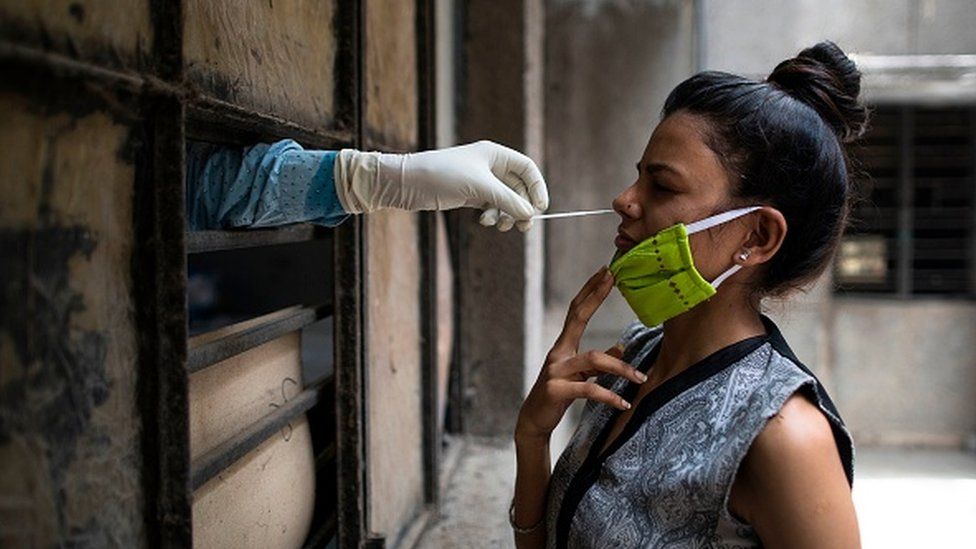
Published9 hours agoShareclose panelShare pageCopy linkAbout sharingImage source, Getty ImagesIndia’s health ministry is on alert following a surge of Covid cases in neighbouring China.The government has instructed states to ensure genome sequencing of all positive cases in the country.It has also asked state governments to step up efforts to curb any possible spread during the Christmas and New Year festivities.India witnessed two deadly waves of Covid in 2020 and 2021, but has seen low infection levels this year.According to government data, the country reports roughly 1,200 Covid cases every week. Over 2.2 billion Covid vaccine doses have been administered so far.On Tuesday, the federal government asked states to send Covid samples of all positive patients to labs runs by INSACOG, a forum under the health ministry which studies and monitors various strains of Covid in India.Indian woman fights to keep alive memories of deadShould India be bracing for a fourth wave?The move came amid growing concerns over the spread of Covid in China following the recent easing of strict lockdown measures.Hospitals and medical facilities in China have come under increasing strain as those who’ve tested positive at home seek medical support.In a letter to all states, federal health secretary Rajesh Bhushan said it was important to track new variants through genome sequencing due to the “sudden spurt of cases being witnessed in Japan, United States of America, Republic of Korea, Brazil and China”.This would help authorities detect newer variants and take measures to contain them, he said.Meanwhile, Health Minister Mansukh Mandaviya met senior officials on Wednesday to review the situation and step up surveillance.India was one of the worst affected countries during the first two waves of Covid. Millions were affected and more than 530,000 people died, according to official figures. But experts believe the real number of Covid deaths was likely to be much higher as many cases people who died were not tested or reported into official figures.The government had also come under heavy criticism for its poor preparation during the second wave in the summer of 2021 as many people died due to lack of oxygen and critical medicines.Read more India stories from the BBC:Gambia panel says India firm culpable for syrup deathsWhat it will mean when Indians outnumber ChineseIndia beefs up military at tense China borderIndian woman asks for £5, gets £54,000 in donationsWHO stands by ‘dangerous’ India cough syrup claimThe rape victim’s mum fighting for India’s daughtersIs India seeing a surge in grisly copycat murders?More on this storyChina’s new Covid death count fuels scepticism22 hours agoHow is China tackling Covid?7 days ago

Read more →

Gambian panel says Indian firm culpable for syrup deaths

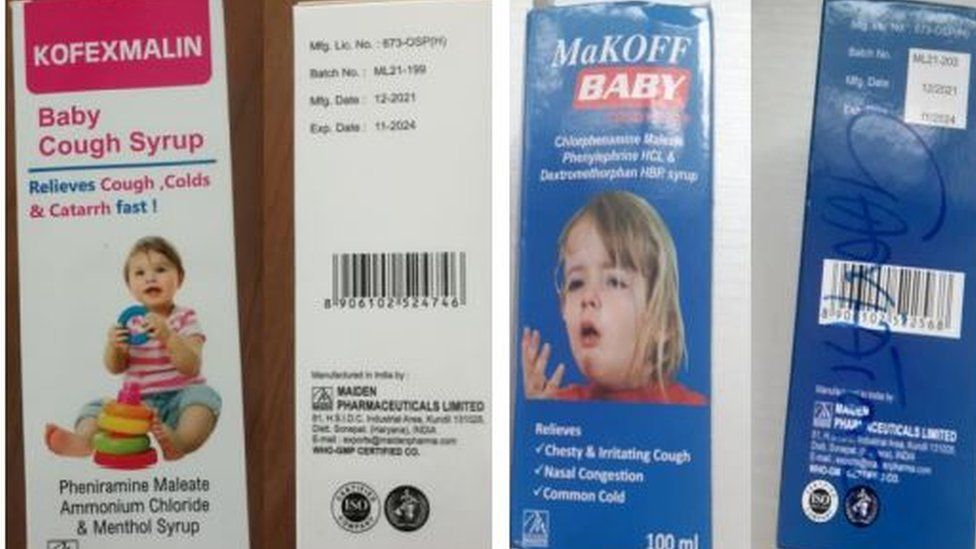
Published1 hour agoShareclose panelShare pageCopy linkAbout sharingImage source, WHOA parliamentary committee in The Gambia has recommended prosecution of the Indian manufacturer of cough syrups suspected of causing the deaths of at least 70 children in the country.It said Maiden Pharmaceuticals should be held accountable for exporting what it called contaminated medicine.The WHO had issued an alert in October advising regulators to stop the sale of the syrups.Maiden Pharmaceuticals had denied the allegations.Government labs in India said their tests on the syrups found that they were “complying with specifications”. An Indian official said last week that the WHO was “presumptuous” in blaming the syrups.But the global health body told the BBC it was only following its mandate and “stands by the action taken”. After weeks of investigation, the Gambian parliamentary committee has now recommended that authorities should take tough measures, including banning all Maiden Pharmaceuticals products in the country and taking legal action against the firm.Gambia cough syrup deaths: ‘She is gone.’Why drugs made in India are sparking safety concernsThe committee said it “is convinced that Maiden Pharmaceuticals [is] culpable and should be held accountable for exporting the contaminated medicines”. “The findings remain the same with the previous reports which indicates that Promethazine Oral Solution, Kofexmalin Baby Cough Syrup, Makoff Baby Cough Syrup and Magrip N Cold Syrup were contaminated with diethylene glycol and ethylene glycol,” the parliamentary committee said in its report.Diethylene glycol and ethylene glycol are toxic to humans and could be fatal if consumed. But the panel added that the exact scientific cause of the children’s deaths was still under investigation.The committee also wanted the country’s Medicine Control Agency to ensure all medicines imported into the country are properly registered and background checks conducted on manufacturers – including visiting their facilities. The report also revealed inadequacies in the country’s healthcare system urging the government to strengthen it and provide better equipment and medicines to the country’s hospitals. This video can not be playedTo play this video you need to enable JavaScript in your browser.What happened?In late July, The Gambia detected an increase in cases of acute kidney injury among children under the age of five. The government later said around 69 children had died from these injuries.The WHO then identified four of the Maiden Pharmaceuticals’ medicines as potentially linked to the deaths of the Gambian children and issued a global alert. After the news broke in October, India said that it was investigating the products and ordered Maiden Pharmaceuticals to stop production at its main factory in the northern state of Haryana.On 13 December, Dr VG Somani, India’s drugs controller general, wrote a letter to the WHO saying that the samples it tested at a government laboratory “were found not to have been contaminated” with the compounds.”As per the test reports received from [the] government laboratory, all the control samples of the four products have been found to be complying with specifications,” he added.The test results are being further examined by a panel of Indian experts.A senior adviser to India’s information and broadcasting ministry told the BBC last week that the WHO had been “presumptuous” in blaming the cough syrups for the deaths of the children.”Subsequent inspections, tests and studies by Government of India’s notified bodies and technical team have shown that WHO’s presumptuous statement was untrue and incorrect,” said Kanchan Gupta, adding that the health body had “[jumped] the gun without valid scientific reasons”.India produces a third of the world’s medicines, mostly in the form of generic drugs.Home to some of the fastest growing pharmaceutical companies, the country is known as the “world’s pharmacy” and meets much of the medical needs of African nations.

Read more →

Enough fentanyl to kill every single American seized in 2022

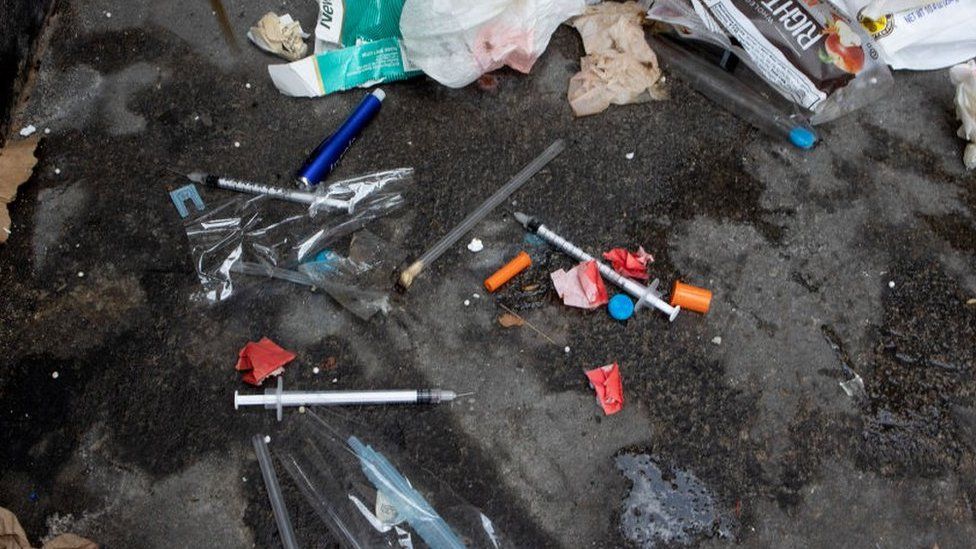
Published1 hour agoShareclose panelShare pageCopy linkAbout sharingImage source, Getty ImagesBy Max MatzaBBC NewsUS federal drug agents say they seized enough fentanyl in 2022 to kill every American. The Drug Enforcement Administration (DEA) says they intercepted 379m potentially deadly fentanyl doses, which is just two milligrams. The DEA described the highly addictive substance, which is 50 times more powerful than heroin, as the deadliest drug threat facing the US. The agency says most of the fentanyl is trafficked into the US from Mexico.The DEA says it seized more than 10,000lb (4,500kg) of fentanyl, as well as over 50.6m fentanyl pills that were made to resemble different prescription painkillers. That is more than double what they seized in 2021.Fewer US teens use drugs – but more are dying Most of the drugs were mass-produced at secret factories in Mexico by the Sinaloa and Jalisco drug cartels, which use chemicals sourced in China, the agency said. The drug is so powerful that a lethal dose is small enough to fit on the tip of a pencil. More than 100,000 Americans died of drug overdoses last year, and two-thirds were attributed to fentanyl. The amount of fentanyl seized this year was enough to kill all 330 million residents of the US, said the drug agency.”DEA’s top operational priority is to defeat the two Mexican drug cartels – the Sinaloa and Jalisco (CJNG) Cartels – that are primarily responsible for the fentanyl that is killing Americans today,” DEA Administrator Anne Milgram said.In addition to the fentanyl, the DEA also seized 131,000lb of methamphetamine, more than 4,300lb of heroin, and over 444,000lb of cocaine.This video can not be playedTo play this video you need to enable JavaScript in your browser.More on this storyFewer US teens use drugs – but more are dying16 OctoberHow Vancouver is saving addicts’ lives8 January 2019The deadly truth of new drugs cocktail. Video, 00:09:55The deadly truth of new drugs cocktail26 November 20189:55

Read more →

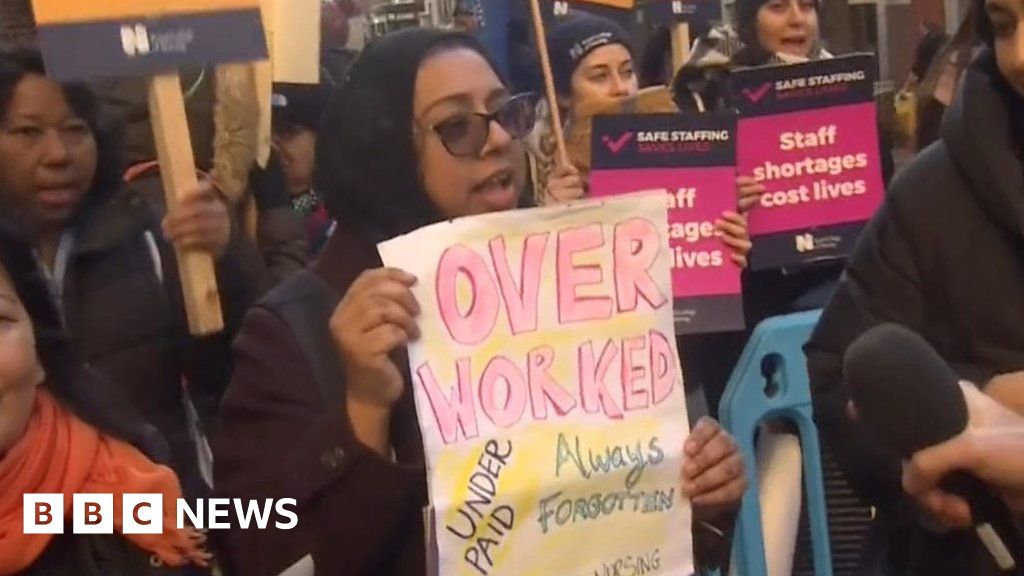
Nurses' strike: 'If we have to, we'll continue to strike'

The nurses’ strike continues in England, Wales and Northern Ireland, with the government refusing to give in to unions’ wage demands.The Royal College of Nursing wants a 19% pay rise and says below-inflation increases are compromising care by making it hard to attract and retain nursesThe prime minister has insisted he will not back down, urging nurses to consider whether strikes are “really necessary”.Rishi Sunak says he is following the recommendations of the independent NHS pay review body.

Read more →

Biodegradable medical gowns produce harmful emissions

Biodegradable medical gowns, designed to be greener than conventional counterparts, actually produce harmful greenhouse gases, according to new research published Dec. 20 in the Journal of Cleaner Production.
The use of disposable plasticized medical gowns — both conventional and biodegradable — has surged since the onset of the COVID-19 pandemic. Landfills now brim with them.
Because the biodegradable version decomposes faster than conventional gowns, popular wisdom held that it offers a greener option by less space use and chronic emissions in landfills.
That wisdom may be wrong.
“There’s no magic bullet to this problem,” said Fengqi You, professor in energy systems engineering at Cornell University.
“Plasticized conventional medical gowns take many years to break down and the biodegradable gowns degrade much faster, but they produce gas emissions faster like added methane and carbon dioxide than regular ones in a landfill,” said You, who is a senior faculty fellow in the Cornell Atkinson Center for Sustainability. “Maybe the conventional gowns is not so bad.”
According to this research led by Cornell doctoral student Xiang Zhao, biodegradable gown production poses an additional 11% higher ecotoxicity rate than conventional alternatives.
Adopting landfill gas capture and utilization processes in biodegradable gown sanitary landfills can reduce 9.79% of greenhouse emissions, life-cycle landfill use by nearly 49%, and save at least 10% fossil resources by employing onsite power co-generation, the researchers found.
Conventional gowns are environmentally and socially sustainable because they can pose 14% less toxicity to humans, cause 10% fewer greenhouse gas emissions, and are nearly 10% less toxic to freshwater when compared to biodegradable gowns in landfills with extra gas emissions.
Improving the gas capture efficiency above 85% can make biodegradable gowns more environmentally sustainable than conventional gowns.
“It’s nice to break down the plastic into smaller things,” Zhao said. “But those small things eventually decompose into gas and if we don’t capture them, they become greenhouse gases that go into the air.”
Funding for this research was provided by the Cornell Center for Materials Research (CCMR) with funding from the NSF and New York State Empire State Development’s Division of Science, Technology, and Innovation.
Story Source:
Materials provided by Cornell University. Original written by Blaine Friedlander, courtesy of the Cornell Chronicle. Note: Content may be edited for style and length.

Read more →

China Covid: Five deaths under country's new counting method

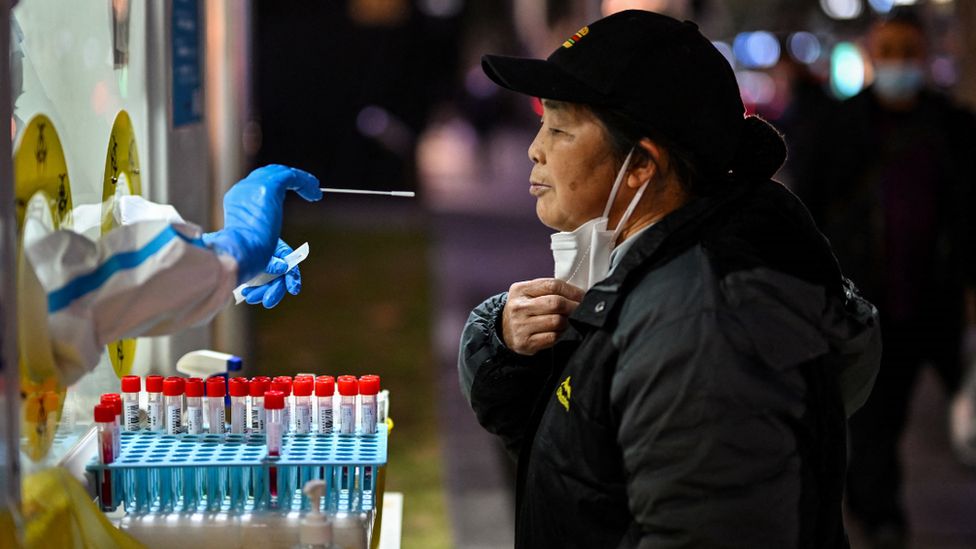
Published4 minutes agoShareclose panelShare pageCopy linkAbout sharingImage source, Getty ImagesBy Thomas MackintoshBBC News, LondonChina has outlined the way it counts Covid-19 deaths amid scepticism about the real impact of the disease.It says the figure includes only those who die from respiratory illnesses, such as pneumonia.Officially, there were only five Covid deaths on Tuesday, two on Monday – and none in the previous two weeks.The counting method goes against World Health Organization (WHO) guidance – resulting in a figure that is way below the death toll in many other countries.The WHO says countries use different processes to test and report Covid-19 deaths making comparisons between nations difficult.It is why many countries record Covid-19 deaths as excess mortality – how many more people died than would normally be expected based on death figures before the pandemic hit.These calculations also take into account deaths which were not directly because of Covid but were caused by its knock-on effects – including people being unable to access hospitals for the care they require.By contrast, China has strict criteria for confirming Covid-19 cases, which include evidence in patients of lung damage caused by the virus. This must be confirmed in a scan.But, the country is currently experiencing a surge in cases since the lifting of its most severe restrictions earlier this month. What is China’s policy and how many cases are there?Official figures show a relatively low number of new daily cases and deaths. This has led to fears the numbers are an underestimate due to a recent reduction in Covid testing.In a bid to address the concerns the State Council held a news conference on Tuesday.Infectious disease expert Prof Wang Gui-qiang clarified that only pneumonia and respiratory failure caused by the coronavirus were counted as Covid deaths. Deaths caused by underlying diseases are not included in the official count, state-owned China News Service reported.Strict lockdowns are said to account for China’s official death toll staying so low since the start of the pandemic – the official figure is just over 5,200.This is equal to only three Covid deaths in every million in China, compared with 3,000 per million in the US and 2,400 per million in the UK.China has faced challenges with vaccines being used and particularly getting them to the most vulnerable people.Overall, China says more than 90% of its population has been fully vaccinated. However, less than half of people aged 80 and over have received three doses of vaccine. Elderly people are more likely to suffer severe Covid symptoms.China has developed and produced its own vaccines, which have been shown to be less effective at protecting people against serious Covid illness and death than the mRNA vaccines used in much of the rest of the world.Prof Wang’s comments come as hospitals in the capital Beijing and in other cities struggle to cope with the latest Covid surge.The latest wave has also hit postal and catering services hard.Meanwhile, China’s largest city, Shanghai, has ordered most of its schools to take classes online as cases soar.More on this storyChina to see three winter Covid waves – official2 days agoChina abandons key parts of zero-Covid strategy7 DecemberHow is China tackling Covid?6 days ago

Read more →

Antidepressant use, infection during pregnancy linked to neurodevelopmental changes in babies, study suggests

Antidepressant use during pregnancy may combine with inflammation to heighten the risk of lifelong neurodevelopmental changes in babies’ brains, such as those linked to autism, new research from the University of Virginia School of Medicine suggests.
A team of UVA neuroscientists found that commonly used antidepressants known as selective serotonin reuptake inhibitors (SSRIs) can interact powerfully with inflammation in the mother’s body from infections or other sources. In lab mice, this interaction caused harmful changes in the placenta and the decidua — the direct connection between mother and child — and affected the developing brain.
“Our findings suggest that [SSRIs] can have deleterious consequences when mixed with infection, inflammation, etc.,” said senior researcher John Lukens, PhD, of the UVA Department of Neuroscience and its Center for Brain Immunology and Glia (BIG), as well as the UVA Brain Institute. “Our results might help to explain the rise in autism prevalence over the last 20 years, as this time coincides with the rollout of widespread SSRI usage in the developing world.”
SSRIs During Pregnancy
SSRIs are commonly used during pregnancy, being prescribed to 80% of pregnant women who need depression medication. The drugs are widely considered a safe option for managing depression in pregnant women, though there has been some evidence that they can increase the chances of premature delivery as well as up the risk of neurological issues and other health problems in children.
Lukens and his collaborators found that SSRIs can interact with the mother’s immune system to produce a strong inflammatory reaction at the “maternal-fetal interface,” the physical connection between mother and offspring during pregnancy.

Read more →