Dentists warn of permanent damage from clear braces ordered online
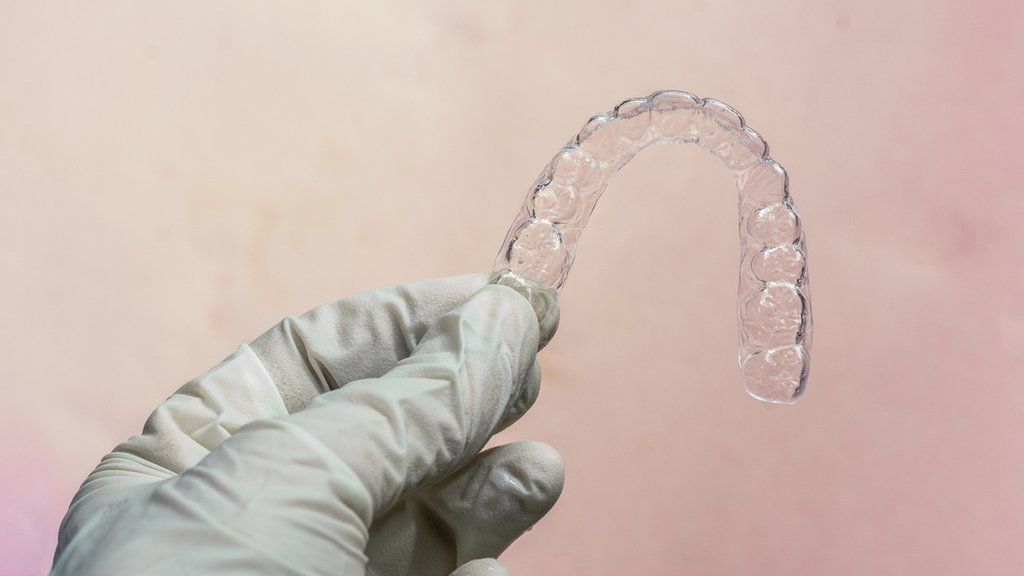
Published5 hours agoShareclose panelShare pageCopy linkAbout sharingImage source, Getty ImagesBy Mattea BubaloBBC NewsDentists have told the BBC that demand for Instagram smiles has left people with damage from wearing clear braces or “aligners” ordered online.One man said aligners weakened his front teeth, leaving him unable to bite into an apple.Smile Direct Club, the largest company selling clear aligners remotely, says they straighten teeth faster and cheaper than traditional braces.Its aligners have been successful for the majority of users, it says.But some dentists and orthodontists believe customers of so-called remote dentistry are unaware of harm that can be caused by aligners if not fitted by a dentist in person.Jamie, a father from Glasgow turned to Smile Direct Club (SDC) after being quoted £4,000-£6,000 for straightening his teeth.The US-based remote orthodontics company was offering clear aligners for about £1,800 without the need to see a dentist in person.According to SDC, its platform has improved access to oral care and “has enabled successful treatment for more than 1.8 million people”. The “overwhelming majority” of users have had an “excellent experience”.Wobbly teethBut Jamie now says he would never do it again.”I can’t bite into an apple because I can’t trust that my front teeth are strong enough anymore,” he says.Before starting treatment he was sent a DIY impression kit to take his own teeth moulds. The other option, a 3D scan of his mouth done in an Smile Direct Club shop, was unavailable because of lockdown. Within weeks he’d received a six-month course of aligners, with the name of the dentist overseeing him labelled on the box. But after six months, he posted on Reddit: “One of my front teeth has become wobbly, my enamel feels all funny, like the aligners have rubbed some of it off, the aligners have made my gum recede making it agony.”In traditional dentistry, train-track braces and clear aligners are fitted by dentists and orthodontists themselves, or a trained orthodontic therapist, after an in-person consultation. The health of the hard and soft tissues of the mouth, the teeth and gums, and whether the roots of the teeth can sustain movement, are some of the factors dentists consider. X-rays are instrumental in this process. Once someone starts wearing braces, regular appointments allow dentists to monitor how teeth are moving and to spot and address complications. SDC’s website says users will “have regular virtual check-ins” with a UK-registered dentist “remotely from beginning to end” – but Jamie says he was not once connected to the dentist overseeing him or told to see a dentist about his issues. Customer service eventually put him in touch with a “dental expert” via web chat, who said the issues were normal and would subside. It’s unclear what qualifications are required for this role. Dental disruptor Jamie was encouraged to continue wearing the aligners. SDC styles itself as a disruptor to the “bricks-and-mortar” dental industry. It argues many dentists and orthodontists offer Invisalign – a popular brand of clear braces – as a product, and therefore compete with SDC.Some positive testimonials by SDC users on YouTube say they were put off by Invisalign’s cost and the longer length of treatment offered. One customer who used SDC to correct minor teeth crowding said that the treatment “worked really well” and improved her appearance and confidence.But, Jamie isn’t alone. Hundreds of SDC users around the world have shared negative experiences on social media and dozens of users and dentists we spoke to detailed issues ranging from aligners fitting poorly to permanent nerve damage and tooth loss.Dentist Dr Victoria Sampson says users may underestimate the force aligners put on teeth. If decay or gum disease is missed in a physical check-up, people risk losing some of their teeth. She says she has treated someone who lost their front tooth after using the aligners because they moved her teeth too quickly, skewing her bite. The roots of the patient’s teeth were too short to withstand the pressure from aligners, which would have been picked up in an X-ray.According to UK dental associations, 3D scans and DIY teeth moulds used in remote orthodontics are not sufficient for approving aligners.”You want to create a beautiful smile, but you also want to create a healthy smile,” says Dr Anjli Patel at the British Orthodontic Society. The results could be “disastrous” if the teeth aren’t monitored properly.The British Dental Association’s Dr Eddie Crouch is concerned SDC customers are being left to decide whether to go ahead with treatment without the right information.The BBC showed Dr Crouch three SDC plans – a 3D interactive image of teeth that maps how they could move during treatment – presented to potential customers. He said two showed visible signs of gum disease, meaning the aligners could “loosen the teeth sufficiently to cause tooth loss”.The third plan, if accepted, he said, could leave that person with an unstable bite. The $8bn braces firm boosted by the selfie trendSDC says it is the user’s “responsibility to see a dentist” and receive a clean bill of health for their teeth and gums within six months of starting treatment. Potential risks for patients, including nerve damage, gum disease and tooth loss are also listed.However, patients don’t have to provide proof they have seen a dentist, and under contracts they sign are fully responsible for damage.SDC says its affiliated dentists and orthodontists are entirely responsible and accountable for the treatment they provide. There is no clinical evidence an office visit is necessary for the same level of care, it adds. However, customers expecting the same level of care as those getting traditional braces “aren’t fully informed of what they’re buying into,” says Dr Anjli Patel. Few orthodontists would provide an assessment for remote treatment they don’t oversee: “You have no control over what’s going to happen next”.Non-disclosure contractsSome of the users we spoke to who experienced damage have been asked to sign non-disclosure agreements to receive full or partial refunds. Patients are requested to sign a confidentiality clause when they seek refunds outside of their refund policy, which is in line with standard industry practices, SDC says. The General Dental Council (GDC), responsible for regulating UK dentists, says for some cases remote dentistry can be “provided safely”. It urges consumers to consult its guidelines. However, Dr Crouch of the BDA believes such guidelines are insufficient compared with “rules and regulation to protect patients”. Otherwise, dentists will be left picking up the pieces when “patients have undergone wholly inappropriate treatment”.The UK’s health watchdog, the Care Quality Commission (CQC) announced last summer any company providing remote orthodontic services will have to register with it.Nearly two years on from his first treatment plan Jamie has stopped wearing his Smile Direct Club aligners. He was persuaded to try a fresh 3D scan for better-fitting new aligners, but that didn’t work for him, he says. After months of negotiation he’s received a full refund, but not without signing a contract that prohibits him from “creating a negative impression” of SDC’s “business reputation”.”It’s my naivety, I should have known that [plan] was far too quick.”More on this storyThe people resorting to DIY dentistry30 May 2020Tooth loss fears over Welsh Covid dental delays29 August 2021

Read more →


Should You Quit Your Job?

Jacinda Ardern stepped away from her role because she no longer has “enough in the tank” to do it. If you relate, here’s what to consider.Even political superstars have their job issues.Jacinda Ardern, New Zealand’s prime minister, who became known for her successful strategy to contain the spread of Covid and her response to the massacre of 51 people at two mosques in Christchurch, unexpectedly announced on Thursday that she would step down after nearly six years on the job.“I’m leaving, because with such a privileged role comes responsibility — the responsibility to know when you are the right person to lead and also when you are not,” said Ms. Ardern, who has been facing mounting political challenges ahead of the country’s October election. “I know what this job takes. And I know that I no longer have enough in the tank to do it justice. It’s that simple.”Ms. Ardern, 42, New Zealand’s youngest prime minister in 150 years, also said she was planning to spend more time with her partner, the television presenter Clarke Gayford, and their 5-year-old daughter, Neve.Making the decision to step away from a job is not always easy or feasible. But when your physical or emotional well-being is suffering and your stress isn’t eased by the occasional mental health day, experts say it’s generally best to start looking elsewhere. Just be sure to give it some thought before rage quitting. Here are some signs it might be time to leave — and what to do if you can’t.You are burned outBurnout is typically characterized by three symptoms: emotional exhaustion, negativity and the feeling that no matter how hard you try you cannot be effective at your job, said Dennis Stolle, the senior director of applied psychology at the American Psychological Association.Everyone feels emotionally exhausted from time to time, but “I’m talking about an extreme level,” Dr. Stolle said, the type of distress where you often feel that you have nothing left to give and “if there’s one more thing, I’m just going to scream or I’m going to cry.”Burnout can also lead people to become more pessimistic or indifferent than they have been in the past.If you’re feeling a little burned out, then taking a break — either over the weekend or during a vacation — should help, said Dr. Jessi Gold, a psychiatrist at Washington University in St. Louis. But “if you’re not feeling restored and you go right back to being angry and hating your job, that’s another warning sign” that you should think about quitting if it is financially feasible or searching for a new job, she added.“There’s a difference between ‘Ugh, work’ and ‘Oh my gosh, I cannot be there for one more day,’” Dr. Gold added.If you are feeling burned out to the degree that it is affecting your physical or emotional well-being and harming your relationships, that’s also a red flag. Take stock of how you feel when you are at work. Are you frequently angry, disconnected, numb or depressed? Is it like the Sunday scaries, but on steroids? If you are having a hard time sleeping or are sleeping too much, if you anger easily or if you feel sad or excessively guilty, seek help.“There is an overlapping Venn diagram between burnout and depression,” said Dr. Lotte Dyrbye, the chief well-being officer at the University of Colorado School of Medicine. “If you have even an inkling of a suspicion that you’re not well, that’s what your primary care doctor is for, to help you figure that out.”You’re experiencing an identity shiftWork is often intertwined with people’s identities. Our job titles, the organization we work for and even the amount of time that we spend working each day can become a big part of who we are. But what happens when your priorities change and you no longer feel the same level of attachment to your job?“When people have a shift in an aspect of their identity, that can absolutely lead to depression and anxiety,” said Stewart Shankman, a professor of psychology at the Northwestern University Feinberg School of Medicine.If work used to be a core aspect of your identity and now it isn’t, then that may be a reason to consider stepping away. Even if you cannot stop working at the moment, try to take time to explore the things that do feel meaningful to you right now. There may be some other part of your life that is filling the role that work used to play, Dr. Shankman said.“Your job doesn’t necessarily have to be the thing that defines you,” he added.You don’t feel valued or supportedStudies have found that a little appreciation goes a long way for employees. Not only do employees tend to be more productive when their manager expresses gratitude, they also perform better when their teammates express appreciation, affirmation and respect.A Pew survey found that low pay, a lack of opportunities for advancement and feeling disrespected at work were the top reasons Americans had quit their jobs in 2021.People who feel valued also tend to experience psychological safety, a term that refers to how safe you feel within the workplace when contributing ideas, asking questions or sharing concerns. In other words, the organization fosters an environment where employees feel comfortable speaking up without fear of punishment or ridicule.If you’re working for an organization that does not promote psychological safety, it may be time to consider leaving, experts say.That is especially the case if your manager or co-workers have been making threats or abusive comments, or if your workplace feels toxic, and there isn’t a resolution in sight.Nearly one in five employees described their workplace as somewhat or very toxic, according to a survey conducted by the American Psychological Association in 2022.Your organization doesn’t prioritize employee wellnessThe organization you work for will ideally try to support its employees in various aspects of wellness, including their physical, emotional, social and financial needs.And it should also attempt to do so in an equitable way, said Laura Putnam, author of the book “Workplace Wellness That Works” and the chief executive of Motion Infusion, a company that works with organizations to promote better health and well-being for their employees.Do some members of your workplace have more opportunities for autonomy than others? For example, is it only certain people who are allowed to take a break or who have control over how they manage their day? Are some people regularly interrupted during meetings?“If we see those kinds of dynamics at play and they’re not being called out and they’re not being addressed, then in my view that’s a good reason to leave,” Ms. Putnam said. “The less control we have over our day-to-day activities at work, the more likely we are to be stressed.”So you’re not able to leave your job. What now?If some of this resonates with you but you aren’t currently able to leave your job, check to see if you are eligible for short-term disability leave, provided that you can obtain a note from a health care provider. This will give you a reprieve from your work environment while also allowing time to reflect on the specific problems that are affecting your mental well-being.If you have a qualifying condition like major depression or post-traumatic stress disorder, you have a legal right to a reasonable accommodation that would help you do your job — for example, the ability to schedule work around therapy appointments or permission to work from home.Even if you don’t have a specific condition, your employer may be open to making changes that will improve your quality of life at work. For example, you might ask to be assigned to a new team or have more flexibility in your work hours. Before approaching your manager, think about what things you would most like in a workplace and whether your current employer can provide any of them.“Sometimes when you’re angry, you skip that reflective piece,” Dr. Gold said. “It’s helpful to look forward.”

Read more →

Covid: Half a million people missed out on heart drugs

Published5 hours agoShareclose panelShare pageCopy linkAbout sharingImage source, Getty ImagesBy Michelle RobertsDigital health editorDuring the pandemic, nearly half a million people in the UK missed out on starting medication to help prevent heart attacks and strokes, a new study suggests.The British Heart Foundation (BHF) team looked at prescribing data for the first 18 months after Covid hit.Some 491,000 people – 27,000 a month – appear to have missed out on blood pressure pills. And 316,000 did not get treatment to lower their cholesterol. The team says more needs to be done to make sure that anyone who needs treatment gets it. During the pandemic, normal NHS services were severely disrupted. For example, there was a reduction in diagnosis, monitoring and treatment of high blood pressure, and other heart and circulation disease risk factors.Although the NHS took action, including providing more than 220,000 blood pressure monitors for people to use at home, data shows two million fewer people in England were recorded as having controlled hypertension in 2021 compared to the previous year.The BHF researchers analysed 1.32 billion records of routinely dispensed prescriptions in England, Scotland and Wales, from April 2018 to July 2021. Lead investigator Prof Reecha Sofat, who is based at the University of Liverpool, said the findings, published in the journal Nature Medicine, highlight the impact Covid has had on other important health conditions: “Despite the incredible work done by NHS staff, our data show that we’re still not identifying people with cardiovascular risk factors at the same rate as we were before the pandemic. “She said it was more than just a blip, and it would take time to catch up. “The NHS has already taken important and positive steps towards identifying people with high blood pressure as early as possible. “However, we need this focus to be sustained in the long term to prevent any increase in heart attacks and strokes which will add to a healthcare system already under extreme pressure.” Dr Sonya Babu-Narayan, Associate Medical Director at the British Heart Foundation and consultant cardiologist, said: “Yet again we’re seeing clear evidence of the major disruption to healthcare people in the UK experienced during the Covid-19 pandemic. “But it’s not too late to limit the damage. These findings demonstrate how getting heart healthcare back on track can curb the additional strain that untreated risk factors – such as high blood pressure – would otherwise place on the NHS.”Heart risk factors Some factors – like older age – are unavoidable, but others can be managed:High blood pressureHigh cholesterolDiabetesObesitySmokingPhysical activityImage source, British Heart FoundationAdam Toms was 47 when he suffered a stroke in 2015. He had undiagnosed and untreated high blood pressure. Now 54 and living in north-west London, Mr Toms said: “You can appear completely healthy, and it can just happen. then you’ve got a whole lot of adaptations to make. I was never ill but then bang, everything changed – my whole world changed.”My father and my brother had high blood pressure. The connection wasn’t made. “I always associated a stroke with somebody who is 70, 75 plus.”Who knows, if I had found out earlier and got it under control, I might not be where I am today.”His stroke has left him with weakness on the left side of his body and he also has difficulty with finding the right words when he speaks.He wants to encourage others to get their blood pressure and health checked. Related Internet LinksNature MedicineThe BBC is not responsible for the content of external sites.

Read more →

A New Report Outlines a Vision for National Wastewater Surveillance

The Covid-19 pandemic demonstrated the promise of tracking pathogens in sewage. Now, the nation needs to act on it, experts say.Wastewater surveillance provided valuable public health information during the Covid-19 pandemic and merits “further development and continued investment,” according to a new report released by the National Academies of Sciences, Engineering and Medicine on Thursday.Although the pandemic spurred the rapid expansion of wastewater surveillance, the current system sprung up in an ad hoc way, fueled by volunteerism and emergency pandemic-related funding, according to the report. It is also concentrated in major metropolitan areas, leaving many communities behind.“The current system is not fully equitable,” Dr. Guy Palmer, a professor of pathology and infectious diseases at Washington State University and chair of the committee that wrote the report, said at a webinar on Thursday.The challenge now, he said, was to move from this kind of grass roots system to a more standardized, “representative” national system.The report was created by a committee of experts appointed by the National Academies at the request of the Centers for Disease Control and Prevention. It was sponsored by the U.S. Department of Health and Human Services.The report outlined what such a system might look like, noting that it should be able to track a variety of potential threats, which could include future coronavirus variants, flu viruses, antibiotic resistant bacteria and entirely new pathogens.Some wastewater surveillance sites have already begun tracking additional pathogens, including the mpox virus and poliovirus, but a national system would require sustained federal funding and would need to be implemented equitably across regions and demographic groups, the report notes.Ideally, the system would combine data collected from communities across the nation with monitoring of sewage at certain “sentinel sites,” such as large international airports and zoos, where new pathogens or variants might be spotted early.People who are infected with the coronavirus shed the virus in their stool. Tracking levels of the virus in sewage provides health officials with a way to keep tabs on how prevalent the virus is in a community, even if people never seek testing or health care. It has become an especially valuable tool as coronavirus testing has shifted to the home, making official case counts less reliable.Wastewater surveillance is not a novel idea; it has been used for decades to track polio, for instance. But it was not a widely used public health tool in the United States until the Covid-19 pandemic hit. Over the last few years, many localities and institutions created their own wastewater surveillance systems.In the fall of 2020, the C.D.C., in partnership with the D.H.H.S., established the National Wastewater Surveillance System to coordinate and centralize some of these efforts.As of October, the N.W.S.S. included more than 1,250 sampling sites across the country, covering more than one-third of the U.S. population. But those sites were primarily near major cities — and they were especially sparse in parts of the South and West.Still, these systems paid real dividends during the pandemic, according to the report. Wastewater data helped local health officials determine whether infection rates were rising or falling in a particular community. In some instances, especially when testing was limited, wastewater proved to be a useful early indicator of a surge, with levels of the virus in wastewater beginning to rise days before the official case numbers did.Wastewater surveillance also helped experts track the arrival and spread of new coronavirus variants. In the Bay Area, for instance, scientists found the Omicron variant in local wastewater before clinicians detected Omicron infections in patients.The data informed policy decisions as well. Universities used wastewater results to strategically test certain student populations, while state health officials used them to determine where to send more resources. Clinicians used data about the spread of new variants to decide when to use or to stop using certain monoclonal antibodies, some of which were only effective against certain versions of the virus.The report lays out recommendations for developing a more comprehensive national system. For example, it advises the C.D.C. to conduct outreach to public health officials in areas that are currently underserved by wastewater surveillance and to help reduce the financial barriers of joining the national system, perhaps by providing funding. The agency should also educate the public about how the information is used and establish an ethics committee to develop guidelines about data sharing and access, according to the report.“It needs to be very clear on how that data is shared,” Dr. Palmer said, “to clearly communicate how the data are used and not used with the public and to maintain a strong firewall that precludes use by law enforcement.”Wastewater surveillance is not a panacea and may be most useful when combined with other kinds of public health data, the committee said. Moreover, there are still a number of scientific unknowns, including whether some pathogens can be reliably detected in wastewater and how changing population immunity, through vaccination or infection, might affect the patterns in the wastewater.And not all public officials are interested in making use of the data, sometimes for political reasons, the committee noted. “There are some pretty entrenched positions at this point about pandemic response that may be difficult to overcome,” Michelle Mello, a professor of law and of health policy at Stanford University, said at the webinar on Thursday.She added, “There’s more political will in some places than others.”

Read more →

Study reveals key aspect of the finely tuned regulation of gene expression

Your skin cells are clearly different from your brain cells even though they both develop in the same person and carry the same genes. They are different because each cell type expresses a particular set of genes that is different from the ones expressed by the other. This is possible thanks to cellular mechanisms that tightly regulate gene expression.
In a study published in the Proceedings of the National Academy of Sciences, researchers at Baylor College of Medicine in Dr. Bert O’Malley’s group unveil a novel key aspect of the mechanism of gene expression regulation. The findings not only contribute to a better understanding of this essential biological process but also open new possibilities to study alterations in gene expression regulation that lead to disease.
“Gene expression is controlled at different levels,” said lead author Dr. Anil K. Panigrahi, assistant professor in the Department of Molecular and Cellular Biology at Baylor. “In this study, we focused on enhancers, one of the critical components that regulate gene expression. Enhancers are segments of DNA that activate gene expression by interacting with the gene’s promoter. Enhancers and promoters form physical contact, which imparts the message to the cell of when to express the gene and how much.”
Although enhancers and promoters appear to coordinate their actions, it is unclear how this happens. In this study, Panigrahi and his colleagues propose a mechanism that explains the tight connection between enhancers and promoters.
Enhancer-mediated regulation of gene expression has been mostly studied in intact living cells. “However, although much has been learned from these systems, it is difficult to control certain components in intact cells, limiting our mechanistic understanding of the process,” Panigrahi said. “For this reason, we designed a cell-free assay that enables us to control the availability of different reaction components and to determine how this affects transcription.”
“In the cell-free system, we saw that the enhancer and the promoter make close physical contact when the gene is transcribing, that is, making mRNA transcripts of the DNA sequence,” Panigrahi said. “But we discovered that not only the gene but also the enhancer is being transcribed in the cell-free system, as happens in live cells.”
Furthermore, they found that the transcription of the enhancer reflects the transcription of the promoter. “If we know the transcription status of the enhancer, we know the transcription status of the promoter and vice versa,” Panigrahi said. “If we omit the promoter, then transcription of the enhancer is markedly reduced and vice versa. Enhancer and promoter transcription are tightly interconnected.”

Previous studies using cell-based assays suggested that enhancer transcription somehow activated promoter transcription.
“What we are saying is that this goes both ways, not just one way,” Panigrahi said. “Enhancer transcription activates promoter transcription and vice versa. Not only that, if the amount of transcription in the enhancer is reduced, then the promoter transcription is also reduced and vice versa. There is transcriptional interdependence between enhancers and promoters, which was not known before.”
The researchers propose that such interdependence and regulatory specificity can be explained if the enhancer and the promoter are entangled within a transcriptional bubble that both provides shared resources for transcription and is regulated by the transcript levels generated.
“We are currently developing additional methodologies to conclusively test this transcriptional bubble model that enables entanglement of the participating enhancer-promoter pairs,” said O’Malley, chancellor in the Department of Molecular and Cellular Biology and associate director of basic research at the Dan L Duncan Comprehensive Cancer Center at Baylor. “Our cell-free assay can be used to study promoter-enhancer interactions for any gene of interest, both in health and in disease.”
David M. Lonard at Baylor also contributed to this work.
This study was supported by National Institutes of Health grants HD007875 and HD08818.

Read more →

'Smart' walking stick could help visually impaired with groceries, finding a seat

Engineers at the University of Colorado Boulder are tapping into advances in artificial intelligence to develop a new kind of walking stick for people who are blind or visually impaired.
Think of it as assistive technology meets Silicon Valley.
The researchers say that their “smart” walking stick could one day help blind people navigate tasks in a world designed for sighted people — from shopping for a box of cereal at the grocery store to picking a private place to sit in a crowded cafeteria.
“I really enjoy grocery shopping and spend a significant amount of time in the store,” said Shivendra Agrawal, a doctoral student in the Department of Computer Science. “A lot of people can’t do that, however, and it can be really restrictive. We think this is a solvable problem.”
In a study published in October, Agrawal and his colleagues in the Collaborative Artificial Intelligence and Robotics Lab got one step closer to solving it.
The team’s walking stick resembles the white-and-red canes that you can buy at Walmart. But it also includes a few add-ons: Using a camera and computer vision technology, the walking stick maps and catalogs the world around it. It then guides users by using vibrations in the handle and with spoken directions, such as “reach a little bit to your right.”
The device isn’t supposed to be a substitute for designing places like grocery stores to be more accessible, Agrawal said. But he hopes his team’s prototype will show that, in some cases, AI can help millions of Americans become more independent.

“AI and computer vision are improving, and people are using them to build self-driving cars and similar inventions,” Agrawal said. “But these technologies also have the potential to improve quality of life for many people.”
Take a seat
Agrawal and his colleagues first explored that potential by tackling a familiar problem: Where do I sit?
“Imagine you’re in a café,” he said. “You don’t want to sit just anywhere. You usually take a seat close to the walls to preserve your privacy, and you usually don’t like to sit face-to-face with a stranger.”
Previous research has suggested that making these kinds of decisions is a priority for people who are blind or visually impaired. To see if their smart walking stick could help, the researchers set up a café of sorts in their lab — complete with several chairs, patrons and a few obstacles.

Study subjects strapped on a backpack with a laptop in it and picked up the smart walking stick. They swiveled to survey the room with a camera attached near the cane handle. Like a self-driving car, algorithms running inside the laptop identified the various features in the room then calculated the route to an ideal seat.
The team reported its findings this fall at the International Conference on Intelligent Robots and Systems in Kyoto, Japan. Researchers on the study included Bradley Hayes, assistant professor of computer science, and doctoral student Mary Etta West.
The study showed promising results: Subjects were able to find the right chair in 10 out of 12 trials with varying levels of difficulty. So far, the subjects have all been sighted people wearing blindfolds. But the researchers plan to evaluate and improve their device by working people who are blind or visually impaired once the technology is more dependable.
“Shivendra’s work is the perfect combination of technical innovation and impactful application, going beyond navigation to bring advancements in underexplored areas, such as assisting people with visual impairment with social convention adherence or finding and grasping objects,” Hayes said.
Let’s go shopping
Next up for the group: grocery shopping.
In new research, which the team hasn’t yet published, Agrawal and his colleagues adapted their device for a task that can be daunting for anyone: finding and grasping products in aisles filled with dozens of similar-looking and similar-feeling choices.
Again, the team set up a makeshift environment in their lab: this time, a grocery shelf stocked with several different kinds of cereal. The researchers created a database of product photos, such as boxes of Honey Nut Cheerios or Apple Jacks, into their software. Study subjects then used the walking stick to scan the shelf, searching for the product they wanted.
“It assigns a score to the objects present, selecting what is the most likely product,” Agrawal said. “Then the system issues commands like ‘move a little bit to your left.'”
He added that it will be a while before the team’s walking stick makes it into the hands of real shoppers. The group, for example, wants to make the system more compact, designing it so that it can run off a standard smartphone attached to a cane.
But the human-robot interaction researchers also hope that their preliminary results will inspire other engineers to rethink what robotics and AI are capable of.
“Our aim is to make this technology mature but also attract other researchers into this field of assistive robotics,” Agrawal said. “We think assistive robotics has the potential to change the world.”

Read more →

Using cancer cells as logic gates to determine what makes them move

Cancer cells migrate through the body for multiple reasons; some are simply following the flow of a fluid, while others are actively following specific chemical trails. So how do you determine which cells are moving and why? Purdue University researchers have reverse-engineered a cellular signal processing system and used it like a logic gate — a simple computer — to better understand what causes specific cells to migrate.
For many years, professor of mechanical engineering Bumsoo Han and his research group have been studying cancer cells. He builds microfluidic structures to simulate their biological environment; he has even used these structures to build a “time machine” to reverse the growth of pancreatic cancer cells.
“In our experiments, we’ve been observing and studying how these cancer cells migrate, because it’s an important aspect of cancer metastasis,” said Hye-ran Moon, postdoctoral researcher on Han’s team. “But this is different. We are trying to address the fundamental mechanisms behind these behaviors. And it’s very challenging because cells are very complex systems of molecules, and they are exposed to multiple cues that cause them to move.”
One of those cues involves chemical trails, which many cells are inherently drawn to (much like ants following a scent trail). Another is fluid flow; if fluids are flowing around cells in a certain direction, many cells will just go along for the ride. So if a cell is moving, how can you tell if it’s motivated by chemicals, fluid motions, or both?
The team adopted a ternary logic gate model to analyze these cues, and predict how cells would move under different environments. Their research has been published in Lab on a Chip, a journal by the Royal Society of Chemistry.
Their experiments took place in a microfluidic platform with a center chamber for the cells, and two side platforms. Using this device, they could replicate fluidic flows in one direction, in the opposite direction, or no flow at all. They could also introduce a chemical known to cause the cells to migrate. Again, they had the option of chemotaxis in one direction, the opposite direction, or none at all. Would these two cues multiply, or cancel each other out?

“With two cues and three choices each, we had enough observable data to build a ternary logic gate model,” said Moon.
Logic gates are a construct from computing, where transistors take a 1 or 0 input and return a 1 or 0 output. Binary logic gates take a combination of two 1s and 0s, and output different results based on what kind of gate it is. Ternary logic gates do the same thing, except with three possible inputs and outputs: 1, 0, and -1.
Moon assigned values to which direction the cells moved under the two different stimuli. “If the cells moved in the direction of the flow, that’s 1,” said Moon. “If they have no directionality, that’s 0. If they move in the opposite direction to the flow, that’s -1.”
When cells encountered either chemicals or fluid flow individually, they moved in the positive direction (the “1”). When both were present in the same direction, the effect was additive (still “1”). However, when the two flowed in opposite directions, the cells moved in the direction of the chemicals (the “-1”), rather than the fluid flow.
Based on these observations, Moon extrapolated a 3×3 grid to simplify the results. The cues of these cancer cells could now be diagrammed much like an electrical engineer would diagram a circuit.

Of course, the real world is never that simple. “In actuality, the chemical stimulus is a gradient, not an on-off switch,” said Moon. “The cells will only move once a certain threshold of flow has been introduced; and if you introduce too much, the cell short-circuits and doesn’t move at all. The accuracy with which we can predict that movement is a non-linear relationship.”
Moon also stressed that this particular experiment is very simple: two stimuli, in strictly opposite directions, in a single dimension. The next step would be to build a similar experiment, but in a 2-dimensional plane; and then another in a 3-dimensional volume. And that’s just for starters; once you add multiple stimuli, and factor in time as the 4th dimension, the calculations become incredibly complex. “Now you understand why biologists need to use supercomputers!” said Moon.
This study was in collaboration with the Purdue Institute for Cancer Research; the Weldon School of Biomedical Engineering; the Purdue Department of Physics and Astronomy; and Andrew Mugler and Soutick Saha of the University of Pittsburgh Department of Physics and Astronomy.
“This is a perfect example of how microfluidic devices can be used in cancer research,” said Moon. “Doing this experiment in a biological environment would be extremely difficult. But with these devices, we can go right down to individual cells and study their behavior in a controlled environment.”
“This model can apply to far more than just physical cancer cells,” Moon continued. “Any cells can be impacted by different cues, and this provides a framework for researchers to study those influences and determine why they happen. Genetic engineers also have embraced the logic gate model, treating genes as processors that give different results when you give them certain instructions. There are many branches we can go with this concept.”

Read more →

US Supreme Court fails to find abortion news leaker

Published8 hours agoShareclose panelShare pageCopy linkAbout sharingImage source, Getty ImagesBy Max MatzaBBC NewsThe US Supreme Court has been unable to determine how a controversial draft decision regarding abortion was leaked before it was formally announced. On Thursday, investigators said that they still do not know whether the leak was deliberate or unintentional after eight months of opening the probe.In May, a draft opinion of the court’s decision to overturn the national right to abortion was published by Politico. The Chief Justice ordered a probe into the “egregious breach of trust”.The court’s chief security officer Gail Curley has found that 82 court employees, as well as the nine court justices, had access to electronic or paper copies of the draft decision. Investigators have so far “conducted 126 formal interviews of 97 employees, all of whom denied disclosing the opinion,” the court said in a 23-page report on its website. Several employees had to amend their initial statements in order to admit that they broke confidentiality protocols by telling their spouses about how the court voted and what the draft opinion said. What happens now Roe v Wade has been overturned?But the report did not make clear whether the justices themselves were interviewed by investigators. When the actual opinion was published, it varied only slightly from the draft.The leak revealed that five justices planned to overturn Roe v Wade, which established the constitutional right to abortion in 1973. The decision in the case that was leaked – Dobbs v Jackson Women’s Health Organization – threw it back to states to decide how to regulate abortion. The unprecedented leak shocked court-watchers, and outraged liberals opposed to the conservative-majority court’s decision. It also led to round-the-clock security outside the homes of Supreme Court justices amid protests against the draft verdict. Image source, Getty ImagesIn June, a man carrying a gun, knife and zip ties was arrested near the home of conservative Justice Brett Kavanaugh. He told police that he was upset about the Dobbs decision. Investigators scoured court computers, networks, printers and call logs for forensic evidence, but found nothing to indicate a possible culprit. “If a court employee disclosed the draft opinion, that person brazenly violated a system that was built fundamentally on trust with limited safeguards to regulate and constrain access to very sensitive information,” the report said.The report also called it “unlikely” that the “public disclosure was caused by a hack of the court’s IT systems”.The report’s findings have been criticised by both liberals and conservatives. The document “reflects the chief justice’s utter failure in the administrative aspect in his role,” said Carrie Servino of the conservative Judicial Crisis Network.The co-founder of the liberal legal group Demand Justice said that investigators must reveal whether the judges were questioned, especially considering that one their spouses could have been the source of the leak. “The idea that the justices themselves may have been excluded from the inquiry undermines the credibility of the whole undertaking,” said Brian Fallon. “Ultimately, it looks like the Supreme Court may be more interested in protecting its own members than actually solving this whodunit.”Michael Chertoff, the former Department of Homeland Security chief, was also tasked with independently assessing whether the investigation was probing every possible source of the leak. The court also released a short statement from him calling the probe “thorough”, and saying that investigators had taken every possible step to find the source. This video can not be playedTo play this video you need to enable JavaScript in your browser.More on this storyAbortion ruling leak is genuine, says top US court4 May 2022Why this is a seismic day in America24 June 2022What happens now Roe v Wade has been overturned?29 June 2022

Read more →

Genes that cause rare hidden cancer revealed

Several genes that cause sarcoma have been identified in the first comprehensive genetic map of sarcomas, generated by research led by Omico, the Garvan Institute of Medical Research and UNSW Sydney. The research has wide implications for people living with sarcoma and their families — allowing detection of the cancer earlier and potentially improving survival for patients.
Sarcomas are rare cancers arising in bone, muscle, fat, or cartilage. Often occurring in children and young adults, sarcomas account for about 20% of the cancers diagnosed in people under the age of 20.
To date, there has been little research into the genetic basis of sarcomas.
The new study, published in the journal Science, has generated a comprehensive map of how the inheritance of genes may impact families affected by sarcoma.
The researchers found that one in 14 individuals diagnosed with sarcoma carries a clinically important gene that explains why the cancer arose. In addition, the research team identified a previously unrecognised genetic pathway specific to sarcomas.
“The findings uncovered by this research are so important, because by understanding how individuals develop sarcomas, we move closer to earlier detection and better treatments,” said lead author of the paper, Dr Mandy Ballinger, Group Leader of the Genetic Cancer Risk Group at Garvan.
Jonathan Granek, who was diagnosed with a sarcoma at 26 years of age, said that these new findings are important to sarcoma patients.
“Receiving a sarcoma diagnosis can be devastating,” Jonathan said. “This research offers hope to sarcoma patients, because it increases the chance of a diagnosis at an early and curable stage.”
The study was co-led by Professor David Thomas, Head of the Genomic Cancer Medicine Laboratory at Garvan and CEO of Omico, a non-profit nationwide network of genomic cancer research and treatment centres.
“Cancer is fundamentally a genetic disease, and genomics is the key to unlocking its secrets. This international collaboration has developed new methods for mapping the genetic basis for cancer and identified new heritable pathways that increase cancer risk. These findings fill important gaps in the missing heritability of cancer,” Professor Thomas said.
The research paves the way for people with a family history of sarcoma to test for their genetic risk of developing the disease.
The researchers used data collected from the International Sarcoma Kindred Study (ISKS) and the Genetic Cancer Risk in the Young (RisC) studies. The ISKS, established in Australia in 2008, is the largest sarcoma genetic study in the world, including more than 3,500 families recruited from 23 cancer centres in seven countries.

Read more →

Omicron caused fewer cases of MIS-C in children than delta and they were milder, says new study based on 2021-22 data

A new University at Buffalo study conducted at John R. Oishei Children’s Hospital is one of the first to reveal that there were fewer cases of multi-system inflammatory syndrome in children (MIS-C) during the omicron wave of the pandemic than the delta wave. MIS-C is a rare but severe complication that occurs in children who’ve previously had COVID-19, and has near 1% mortality. Published in the journal Viruses online on Jan. 7, the study shows that those cases that did occur during omicron were also milder than during delta.
As shown in numerous other studies, during both waves, Black children were disproportionately affected by MIS-C, and were more likely to be admitted to the hospital with COVID-19. The authors attribute this to systemic and structural racial health inequities and note that limited analysis beyond this observation was possible as the study was not directed at contributions to racial health disparities.
The study demonstrates how the landscape of MIS-C keeps changing as new COVID-19 variants evolve. At the same time, the authors note that it is difficult to say what it means for the future.
“That’s the hard question,” says Mark D. Hicar, MD, PhD, senior author, a UBMD Pediatrics infectious disease specialist and associate professor in the Department of Pediatrics in the Jacobs School of Medicine and Biomedical Sciences at UB. “Since we don’t know why the early strains of the virus caused more MIS-C and why omicron causes less, it is hard to say if future strains will be worse or better.”
Likewise, he says, it is difficult to predict what the current strain XBB.1.5 will do, as this variant is beginning to flourish in the national data and it takes weeks before MIS-C cases emerge.
Milder cases
“Some recently published studies have suggested that MIS-C cases are becoming more severe, but those were based on 2021 data, before the omicron wave really took off,” Hicar notes.

“Our study is one of the first to show that during the change to omicron, MIS-C has become milder and increasingly rare,” he says. “This trend has continued and MIS-C is currently quite rare per anecdotal reports from colleagues across the country.”
He added, however, that it is important to remain vigilant, as new strains of the SARS-CoV2 virus could cause an increase in incidence or severity of MIS-C.
Data from Aug. 2021 to Feb. 2022
The retrospective study covered 271 patients admitted to Oishei Children’s Hospital from August 2021 to February 2022, which included the majority of the delta wave and when the omicron wave (BA.1) was strongest.
A key strength of the study is that a panel of three infectious disease specialists made determinations on each case as to whether a child was admitted to the hospital due to COVID-19 or due to some other reason and then happened to test positive for the virus. To avoid potential false positives, the UB study relied only on cases proven to be positive through PCR testing.

The panel was established after Patrick O. Kenney, MD, first author and a UB medical fellow in infectious diseases, found that a number of children who were reported to be admitted to the hospital with only an incidental diagnosis of SARS-CoV2 on PCR actually were experiencing symptoms that were not as common during previous waves. These included croup, which was first described by other groups, but also increased rates of seizures, bleeding events and intra-abdominal inflammation including pancreatitis and hepatitis.
“Reports at the time supported that there was an increase in pediatric omicron hospitalizations, but those reports focused on global admission data,” explains Hicar. “We wanted to take a deep dive and have thorough clinical chart review by three infectious disease physicians to decide if a case was admitted due to COVID-19 or for some other reason and happened to have COVID-19.”
Hicar explains that this detailed approach helps to clarify how MIS-C is changing over time, especially in light of the decrease in severe cases during omicron. The study found that during delta, MIS-C comprised up to 12% of hospital admissions at Oishei while during omicron it comprised just 6% of hospital admissions. Based on their data, the researchers estimate the risk of MIS-C from omicron in Western New York is 32% lower than it was during delta.
The study notes that while there was an increase in pediatric hospitalizations in Buffalo during the omicron wave, which was also the case nationwide, cases of both COVID-19 and MIS-C were generally less severe than they had been during previous waves of the pandemic. In addition, the length of hospital stays at Oishei Children’s Hospital as a result of either MIS-C or COVID-19 was relatively short during this period.
The researchers report that children testing positive for COVID-19 who didn’t have MIS-C during the omicron wave exhibited a broad range of symptoms, especially among younger children, including seizures due to high fevers, as well as croup and related conditions. By contrast, children who had MIS-C during omicron exhibited a narrower spectrum of symptoms: they always had fever along with abdominal or upper respiratory symptoms. The authors note that none of the patients in the study met even incomplete criteria for Kawasaki disease; early in the pandemic, MIS-C was believed to be similar to Kawasaki disease.
Most patients were not vaccinated
The authors point out that the majority of children admitted to Oishei Children’s Hospital during omicron with either COVID-19 or MIS-C had not been vaccinated. Vaccines for children 12 and older became available before the study began and were available for ages 5-11 during the study. Among the 107 children admitted with acute COVID-19 during omicron, vaccine status was recorded for 88 of them; of these, five were fully vaccinated and one had received a single dose. The others were unvaccinated.
Based on local county data that showed that 33% of children under 18 had been vaccinated as the omicron wave began, rising to 42.1% by the end of the study period, the researchers calculated that the vaccines were between 87.8-91.7% effective in preventing hospitalizations for either COVID-19 or MIS-C among children.
“Our data show that even during major changes in the virus, from the delta to omicron variants, vaccines can be highly protective in preventing hospitalizations among children,” said Hicar.
In addition to Kenney and Hicar, co-authors are Arthur J. Chang, MD, of Children’s Hospital and Medical Center in Omaha and Lorna Krabill, a fourth-year medical student in the Jacobs School.

Read more →