
Research illuminates a therapeutic strategy to induce cancer cell death


Orange, starchy sweet potatoes are great mashed, cut into fries or just roasted whole. But you likely haven’t considered grinding them into a flour and baking them into your next batch of cookies — or at least, not yet! Recent research published in ACS Food Science & Technology has reported the best method to turn sweet potatoes into gluten-free flours that are packed with antioxidants and perfect for thickening or baking.
Wheat flour has been used for tens of thousands of years, and likely isn’t going away anytime soon. But for those who face gluten intolerance or have celiac disease, the gluten proteins in wheat flour can lead to stomach pain, nausea and even intestinal damage. Several gluten-free options are either already available or in development, including those made from banana peels, almonds and various grains. But an up-and-coming contender is derived from sweet potatoes, as the hearty tuber is packed with antioxidants and nutrients, along with a slightly sweet flavor and hint of color.
Before it can become a common ingredient in store-bought baked goods, the best practices for processing the flour need to be established. Though previous studies have investigated a variety of parameters, including the way the potatoes are dried and milled, none have yet determined how these different steps could interact with one another to produce flours best suited for certain products. So, Ofelia Rouzaud-Sández and colleagues wanted to investigate how two drying temperatures and grinding processes affected the properties of orange sweet potato flour.
To create their flours, the team prepared samples of orange sweet potatoes (Ipomoea batatas) dried at either 122 or 176 F then ground them once or twice. They investigated many parameters for each sample, comparing them to store-bought sweet potato flour and a traditional wheat one. Regardless of drying temperature, grinding once damaged just enough of the starch to make it ideal for fermented products, such as gluten-free breads. Grinding twice further disrupted the starch’s crystallinity, producing thickening agents ideal for porridges or sauces. When baked into a loaf of bread, the high-temperature-dried, single-ground sample featured higher antioxidant capacity than both the store-bought version and the wheat flour. The researchers say that these findings could help expand the applications for orange sweet potato flour, both for home cooks and the packaged food industry.

Published20 hours agoShareclose panelShare pageCopy linkAbout sharingImage source, Getty ImagesBy Michelle RobertsDigital health editorUK High Street chemists are set to sell customers a controversial weight loss jab used by some famous people, including Twitter owner Elon Musk.Wegovy, or semaglutide, is a prescription drug that blunts appetite. It has the same ingredient as Ozempic – a diabetes medicine said to be Hollywood’s “skinny shot” of choice. Experts warn it is not a quick fix or a replacement for eating well and exercising, and should only be offered under medical supervision.Boots says it will be able to offer the full service – prescribing and dispensing the drug. Superdrug and Lloyds Pharmacy have online pages where people can register their interest in Wegovy. Like any medication, there can be side effects and risks. The most common ones are nausea or an upset stomach, bloating and gas. According to Vogue, users might also get a gaunt “Ozempic face” if rapid weight loss leads to volume loss in the cheeks. Retailers have not said how much the service will cost, but according to draft guidelines for the NHS, the list price for a month’s supply of four pre-filled disposable injection pens is £73.25. An agreed price for the NHS has not been disclosed, however. The guidance also says people should only stay on the medication for a maximum of two years. Weight loss jab recommended on NHSAnti-obesity drugs advised for some US childrenWhat is Wegovy and how effective is it?You need to be overweight or obese to be able to go on it, and it must be prescribed by a doctor. Some High Street chemists will start offering an online service once the drug, made by Novo Nordisk, becomes available in the UK. It mimics the action of a hormone, called GLP-1, that makes people feel fuller and less hungry, so they eat less.People on it inject themselves once a week with pre-filled pens. In trials, used alongside a healthy diet and exercise, semaglutide helped obese people lose a 10th of their body weight – about two stone (12.7kg) on average.But researchers have also found that once users come off it they might regain most of the weight.A spokesperson at Boots said: “It can be an effective medicine to achieve sustained weight loss when used alongside a reduced calorie diet, increased physical activity and healthy lifestyle choices. It will be available from Boots Online Doctor, with an anticipated launch of spring 2023. “The Boots Online Doctor Weight Loss Treatment service is for customers who are worried that their weight is impacting their health. Customers will have access to treatment following their completion of an online consultation form, which will be assessed by a clinician. “Those who are offered treatment will receive follow-up touchpoints and support from the Boots Online Doctor service throughout their weight loss journey, and can access advice and support from our pharmacy teams in stores.”Tom Quinn from the eating disorder charity Beat said: “Wegovy or other weight-loss medications should only be sold under the strictest possible conditions, with stringent physical and mental health checks to ensure patients are well enough. “These medications can be very attractive to people with eating disorders as they seemingly offer a ‘quick fix’ solution, however there is a very high risk of making those affected even more unwell and can further entrench eating disorder thoughts and behaviours. It is vital that people are aware of the dangers of abusing medication in order to lose weight and there should be more education on their effects.”More on this storyWeight-loss jab recommended on NHS8 February 2022Anti-obesity drugs or surgery advised for US children9 JanuaryRelated Internet LinksBootsThe UK’s Eating Disorder Charity – BeatLloydsPharmacy Online Doctor UKWegovy for Weight Loss – SuperdrugNICE guidance: Semaglutide for obesityThe BBC is not responsible for the content of external sites.
Read more →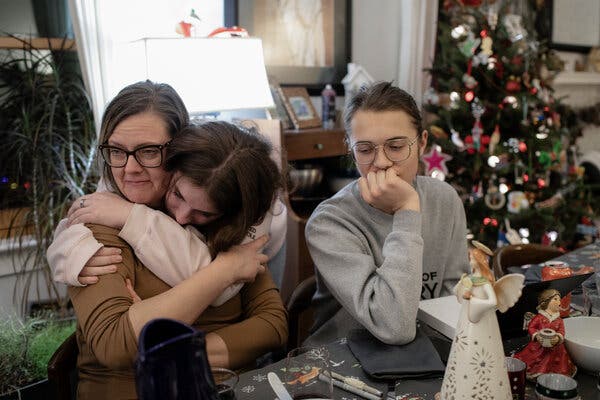
CALGARY, Alberta — Aidan’s tics erupted one day after school in early 2021, about a month after the long pandemic lockdown had ended. The 16-year-old convulsed while walking into the house, head snapping and arms swinging, sometimes letting out high-pitched whistles and whoops.Aidan’s parents looked up from the living room couch with alarm. They had been worried about the teenager’s ratcheting anxiety — related to Covid, gender dysphoria, college applications, even hanging out with friends. But they were not prepared for this dramatic display.“We watched this happen in front of our eyes,” Aidan’s mother, Rhonda, recently recalled. “It looked like Aidan was going crazy.”They rushed Aidan to the emergency room, but doctors found nothing wrong. After calling a neurologist, the family learned that more than a dozen adolescents in Calgary had recently come down with similar spasms.Over the next year, doctors across the world treated thousands of young people for sudden, explosive tics. Many of the patients had watched popular TikTok videos of teenagers claiming to have Tourette’s syndrome. A spate of alarming headlines about “TikTok tics” followed.But similar outbreaks have happened for centuries. Mysterious symptoms can spread rapidly in a close-knit community, especially one that has endured a shared stress. The TikTok tics are one of the largest modern examples of this phenomenon. They arrived at a unique moment in history, when a once-in-a-century pandemic spurred pervasive anxiety and isolation, and social media was at times the only way to connect and commiserate.Now, experts are trying to tease apart the many possible factors — internal and external — that made these teenagers so sensitive to what they watched online.Four out of five of the adolescents were diagnosed with a psychiatric disorder, and one-third reported past traumatic experiences, according to a study from the University of Calgary that analyzed nearly 300 cases from eight countries. In new research that has not yet been published, the Canadian team has also found a link to gender: The adolescents were overwhelmingly girls, or were transgender or nonbinary — though no one knows why.Perhaps as striking as the wave of TikTok tics is how quickly it has receded. As teenagers have resumed their prepandemic social lives, new cases of the tics have petered out. And doctors said that most of their tic patients had now recovered, illustrating the expansive potential for adolescent resilience.“Adolescence is a period of rapid social and emotional development,” said Dr. Tamara Pringsheim, a neurologist who co-led the studies in Calgary. “They are like sponges, grabbing onto new skills to cope.”Curious ClustersRhonda received a hug from Madelyn, Aidan’s cousin, after describing Aidan’s bout with the tics during a family dinner in December.Historians looking back thousands of years have come across stories of patients — most often women — with tremors, seizures, paralysis and even blindness that could not be explained. The ancient Greeks called it “hysteria” and blamed a wandering uterus. Sigmund Freud deemed the condition “conversion” and theorized that it was caused by suppressed traumatic experiences.In more recent decades, scientists have gained a greater understanding of how anxiety, trauma and social stress can spur the brain to produce very real physical symptoms, even if body scans or blood tests show no trace of them. When these illnesses interfere with day-to-day life, they are now called “functional disorders.”“We all recognize that the mind can make the body do things,” said Dr. Isobel Hayman, a child and adolescent psychiatrist at the UCL Great Ormond Street Institute of Child Health in London, who published the first report on the pandemic tics. Most people, after all, have experienced fear that makes their heart race or anxiety that ties their stomach in knots.“But when the symptoms are quite bizarre and quite intense — like a seizure, or not being able to walk, or ticlike movements — we think, ‘How on earth can the brain generate symptoms like this?’” Dr. Hayman said. “It just can.”These sudden symptoms can also spread in clusters, reflecting the shared pressures on a group. In the Middle Ages, a period when many Europeans feared being possessed by the devil, nuns living in a French convent began meowing like cats. In the 2000s, hundreds of children of asylum seekers in Sweden became mute and bedridden for months to years.But ask any neurologist about the TikTok tics and they will bring up Le Roy, a small town in western New York. In 2011, a cheerleader at the local high school erupted in a fit of spasms. A few weeks later, her best friend began snapping her head. The tics spread quickly through the social hierarchy at the school, affecting 18 girls, one boy and one adult woman.Tips for Parents to Help Their Struggling TeensCard 1 of 6Are you concerned for your teen?
Read more →
JACKSON, Miss. — When the coronavirus first scythed through the nation in early 2020, few places needed help fighting it more than Scott County, Miss., a rural patch of chicken processing plants and pine forests an hour east of the state capital, Jackson.The poverty rate for the county’s 28,000 residents was far above the nation’s. So, too, were rates of diabetes and other chronic illnesses that worsen the risk of severe Covid-19. Yet Mississippi’s health department, struggling under huge budget cuts ordered by the state’s Legislature, had deployed just two nurse practitioners to cover a quarter-million residents in Scott and eight other counties.So when the Biden administration gave Mississippi $18.4 million in mid-2021 to hire public health workers — part of $2 billion in grants to bolster the Covid work force at state and local health agencies nationwide — it appeared that help had, at long last, arrived.But as of January, 18 months later, Mississippi had spent just $3.6 million of its grant — less than a fifth. Its attempts to hire epidemiologists, nurses and other soldiers in the war against Covid had largely fallen flat. The state has lost one in 224 residents to Covid-19, one of the nation’s worst death rates, including 122 people in tiny Scott County alone.A pop-up vaccination clinic in Hollandale, Miss. The state has one of the country’s lowest Covid vaccination rates.Spencer Platt/Getty ImagesMississippi’s woes are an acute example of a larger public health failure that is reprised nearly every time a major health threat grabs headlines. The problem, experts say, is that Congress starves state and local health agencies of cash for even basic needs in quiet times. Then, when a crisis hits, it floods them with millions or even billions of dollars earmarked to battle the disease of the moment. And the sluggish machinery of Capitol Hill often ensures that most of the aid arrives only after the worst of the crisis has passed.The $2 billion in Covid hiring grants is the latest example. Nationwide, states and localities had spent only $371 million of the money by December, or about 19 percent, according to the Centers for Disease Control and Prevention, the conduit for the funds.Health departments found it nearly impossible to bulk up their skeletal staffs from a standing start. Seasoned workers, in high demand throughout the health care system, balked at taking jobs that were guaranteed only until the federal funds ran out. Health departments now face a July deadline to use the money, but uptake has been so slow that the C.D.C. is letting them ask for a one-year extension.The record is replete with other such fumbles.Six months after the World Health Organization declared the H1N1 influenza pandemic over in mid-2010, states and localities had used just a third of the $1.4 billion in federal funds they had received to combat it. The outbreaks of the Ebola virus in 2014 and the Zika virus in 2016 also led to funding windfalls, but health experts say most of the money arrived late.In Mississippi, Dr. Thomas E. Dobbs, who ran the state’s health department from 2018 through last July, said some of the agency’s leftover Zika and Ebola money “basically rotted on the shelf” because it could not be shifted to other needs even though the threats had subsided.When the coronavirus began spreading in Mississippi, “it felt like we were the U.S. before World War II, just totally unprepared,” he said. “We couldn’t hire anyone for months.”The nation’s first Covid cases were detected in January 2020, but Congress did not authorize the funding that led to the $2 billion in grants until March 2021. When the C.D.C. pushed the money out the door that July, more than 600,000 people in the United States had already died.“You don’t have anything up front,” Dr. Dobbs said. “You’re basically trying to survive off baling wire and duct tape. And then, once it’s almost over, a big pot of money comes in. It’s not only ridiculous, it’s wasteful and inefficient.”More on the Coronavirus PandemicNew Drug’s Long Odds: A promising new treatment quashes all Covid variants, but regulatory hurdles and a lack of funding make it unlikely to reach the United States market anytime soon.Dangers Remain for Seniors: For older Americans, the Covid pandemic still poses significant threats. But they are increasingly left to protect themselves as the rest of the country abandons precautions.N.Y.C.’s Mandate: New York City will end its aggressive but contentious vaccine mandate for municipal workers, Mayor Eric Adams announced, signaling a key moment in the city’s long battle against the pandemic.End of an Era: The Biden administration plans to let the coronavirus public health emergency expire in May, a sign that federal officials believe the pandemic has moved into a new, less dire phase.It is impossible to measure how much the staffing shortages worsened the pandemic’s toll, said Dr. Judith Monroe, who leads the C.D.C. Foundation, an independent nonprofit organization that tried to plug Covid staffing gaps.But “at the end of the day,” she said, “it cost Americans their loved ones.”Dr. Thomas E. Dobbs, the former head of Mississippi’s health department, said that when the coronavirus began spreading in his state, “it felt like we were the U.S. before World War II, just totally unprepared.”Andrea Morales for The New York TimesInvisible AgenciesAt the root of chronic underfunding of public health, experts say, is a fundamental lack of understanding of its mission.Workers at state and local health departments monitor and strive to limit a host of threats, including preventable injuries, infectious diseases and chronic ailments like diabetes. Those duties come atop a drumbeat of other more routine but essential tasks, such as restaurant inspections.Success produces no headlines. And in lean times, health departments are easy targets for government cutbacks.“Public health at its finest is prevention — it’s invisible to the public,” Dr. Monroe said, adding, “Nobody wakes in the morning saying, ‘I feel so grateful today I don’t have smallpox.’”Public health is so overlooked that no one knows exactly how much money the nation’s roughly 2,800 state and local health departments spend or how many people they employ. Some states like Mississippi centralize their operations, while in others, counties exercise more control.The result is a giant patchwork of services and systems. But experts generally agree on one point: In the run-up to the pandemic, public health agencies took a hit.One study by academic researchers found that state public health spending either stagnated or declined from 2008 to 2018. The de Beaumont Foundation, a nonprofit health advocacy group, estimated that state and local health departments shed about 40,000 jobs between 2008 and 2019.The C.D.C., which helps keep state and local health agencies afloat with billions of dollars annually in grants and other funding, also lost ground before the pandemic. In the decade that ended in 2019, the agency’s budget fell by 10 percent when adjusted for inflation, according to the Trust for America’s Health, a nonprofit advocacy group.Public health experts have long argued that stable federal funding would give state and local health departments a sturdier foundation and would free officials from submitting endless grant applications. The Obama administration tried to answer those pleas by creating a dedicated fund for public health as part of the Affordable Care Act, which became law in 2010.The fund started with $500 million, and its annual allotment was supposed to grow to $2 billion by 2015. But it was raided for other purposes, including during the Obama administration itself to help avert a cut in Medicare payments to physicians. The fund leveled off at about half of its $2 billion target.Medical students from the University of Mississippi have volunteered to try to help increase the state’s Covid vaccination rate. On a recent Saturday, they gave flu shots and checked blood pressure in Jackson.Andrea Morales for The New York TimesLarry Bennett, a long-haul truck driver with hypertension, received a checkup at the G.A. Carmichael Family Health Center in Canton, Miss. High rates of chronic conditions like hypertension worsened the state’s Covid death rate.Andrea Morales for The New York TimesFax Machines, Mold and a SnakeFaced with falling revenues due to income and corporate tax cuts, Mississippi’s Republican-controlled state government put its health department on the chopping block. It reduced the agency’s state financing from $36 million in 2016 to about $19 million in 2018, former state officials said.Republican legislators said fewer patients were seeking care at the more than 80 health clinics the department operates across the state. Dr. Mary Currier, who led the department from 2010 to 2018, said lawmakers were blind to the agency’s mission. “They don’t see it as important,” she said. “And so they don’t really care if it fails.”Public health nurses left in droves. Some counties were forced to share nurse practitioners, and certain programs targeting chronic diseases, like screening for high blood pressure, were curtailed or abandoned, current and former officials said. County clinics cut hours, and infrastructure needs took a back seat.Dr. Dobbs told state lawmakers in December 2021 that fax machines were ubiquitous and some clinics were beyond repair. He displayed a photo of Scott County’s clinic with a gaping hole in an exterior wall. Another photo featured a snake slithering across the floor. Shots of other clinics showed leaking ceilings, moldy doors and dilapidated bathrooms.“Is this where you would want to take your family for health care services?” he asked.The state also kept the wages of public health workers so low that as of 2020, about one-fourth of the health department’s jobs were unfilled, according to Dr. Dobbs, now the dean of the School of Population Health at the University of Mississippi Medical Center. The most highly trained epidemiologist could earn no more than $62,000 a year, he said — roughly $17,000 below the median salary in the profession. The agency employed only a handful of them when he took it over, he said.“That left our foundations really weak coming into Covid,” Dr. Dobbs said.Some states tapped money from a coronavirus relief package enacted in March 2020 to hire more public health workers. The C.D.C. also dispatched its own specialists to the field.And it routed $290 million from that package and another one a year later to the C.D.C. Foundation, which recruited and dispatched 3,900 public health workers to the states, including 27 to Mississippi. That effort sidestepped obstacles like salary caps that hampered hiring by state and local agencies, although most workers only arrived after mid-2021.The Scott County health clinic in Forest, Miss. Dr. Dobbs described some clinics, such as Scott County’s, as beyond repair.Andrea Morales for The New York TimesThe biggest effort — the $2 billion in hiring grants awarded in July 2021 — also came late. But the need was still pressing.Covid vaccination shots had become available less than seven months earlier. The Delta variant was spreading, and Omicron, which would unleash a fresh wave of death and disease, lay ahead.Mississippi’s vaccination rate was then, and still is, one of the country’s worst. Dr. Dobbs said that with more workers, “without a doubt we would have done a better job getting people vaccinated faster” and saved more lives.But Michael S. Sparer, a professor at Columbia University’s Mailman School of Public Health who has been researching the $2 billion program, said that Mississippi, Indiana, Kentucky and other states struggled mightily to use the money, especially because of competition for staff from hospitals that could pay more.By the end of last November, Washington State’s health department had spent less than $3 million of its $45.5 million grant, though like Mississippi, it has earmarked some of the unspent money for future use. “You’re not going to be able to get an epidemiologist just sitting on the side of the street,” said Dr. Umair A. Shah, who leads the agency.Mississippi officials said that the $18.4 million grant allowed the health department to hire 157 new staff members but that the agency still had enough money for 97 new positions that remained vacant.Dr. Daniel P. Edney, who replaced Dr. Dobbs last summer, declined to be interviewed for this article. Former officials say the agency tries to keep a low profile lest state lawmakers further tie its hands.But in a November speech to the Mississippi Public Health Association, Dr. Edney said, “I need to hire 150 nurses today.” He added, “We need nurses and social workers and just about every position you can think of.”Mississippi’s death rate from Covid-19 is among the highest in the country. One in 224 residents has died. Andrea Morales for The New York TimesA Fading Sense of UrgencyMany experts hoped that the loss of 1.1 million people in the United States to Covid would force a reckoning over the nation’s public health system.“We’ve never really stepped back and asked, ‘How do we invest properly in a sustainable manner to make sure our public health system can respond in public health emergencies?’” said Dr. Julie Gerberding, who served as C.D.C. director under President George W. Bush.The pandemic did produce some changes. Excluding one-time infusions of funds, the C.D.C.’s budget has grown at a faster rate during the Biden administration than it did for the previous decade.Importantly, the C.D.C. reserved $3.2 billion in pandemic relief funds for state and local agencies to use in a more flexible fashion. The money, awarded in November, can be used over the next five years for a variety of essential needs, including more staff.But experts say state and local agencies need far more — $4.5 billion more per year just to meet basic public health needs, the Trust for America’s Health says. The de Beaumont Foundation estimates that those agencies need to hire 80,000 more workers.In an interview, Dr. Rochelle P. Walensky, the C.D.C.’s director, said the $3.2 billion program “is a terrific start, but I think the needs are so much greater than that.”At a mobile clinic outside an L.G.B.T.Q. club in Jackson, workers from a federally funded health center offered screenings for infectious diseases and other conditions.Andrea Morales for The New York TimesYet the sense of urgency sparked by the pandemic is fading. The White House asked Congress to increase the C.D.C.’s budget for the 2023 fiscal year by 27 percent, but lawmakers agreed to a rise of only 9 percent.“I’m just worried now, even now, when people are still affected by this pandemic, that they’re forgetting how bad it was, and how it didn’t have to be as bad as it was if we had more capacity,” said Dr. Anne Schuchat, who retired as the C.D.C.’s principal deputy director in mid-2021.Particularly alarming to health experts is the exodus of public health workers. Many toiled to exhaustion during the pandemic. Some resigned after opponents of how the Covid fight was being waged threatened their safety.At the Mississippi health department, 47 percent of positions were unfilled as of December — roughly twice the prepandemic vacancy rate, Dr. Dobbs said.“We’re just way, way, way worse off from a public health preparedness perspective than we were before,” he said.Kitty Bennett
Read more →
Published2 hours agoShareclose panelShare pageCopy linkAbout sharingImage source, AlamyBy Matt PreceyBBC Look EastNitrous oxide levels on Watford General Hospital’s maternity suite far exceeded legal limits during peak periods, a BBC investigation has found.In February 2022, air monitoring showed levels of almost 5,000 parts per million (ppm) – 50 times what is safe.The hospital’s trust said it had since installed machines to remove the gas.It was one of a number of nitrous oxide incidents reported by NHS trusts to the Health and Safety Executive (HSE), Freedom of Information data has shown.The HSE disclosed the details following a request for its notifications under the Reporting of Injuries, Diseases and Dangerous Occurrences Regulations 2013 (RIDDOR).There were 11 notifications to the HSE between August 2018 and December 2022 from seven NHS trusts and one private hospital in relation to nitrous oxide – almost all relating to maternity units.There have been subsequent incidents at Ipswich Hospital and the Princess Alexandra Hospital in Harlow, which fell outside the timescale of the request.Monitoring has led to a string of NHS trusts suspending the use of Entonox – a mixture of nitrous oxide and air used to assist women in labour with pain relief.Another of the seven trusts that notified the HSE, Basildon Hospital in Essex, decided to stop administering the gas for a second time last month because of difficulties keeping levels down. At one point during monitoring, levels reached 30 times what is allowed, but staff were not informed until 16 months later. Ipswich Hospital has recently started using it again, with the Princess Alexandra partially reinstating it.According to the Harlow hospital, the risk to women giving birth and visitors is negligible as the exposure is relatively short-term and its effects pass quickly. But staff working in such units face uncertainty due to prolonged periods of time spent in affected areas, with particular concerns over Vitamin B deficiency due to exposure.NHS bosses acknowledge there is “limited research on the occupational exposure to Entonox, and the long-term health risks this may pose”, though at least one expert has played down the risk. Image source, South Beds News AgencyAt Watford General, monitoring carried out between 21 and 24 February 2022 revealed an average of 350 ppm within its delivery suite, with peak period readings reaching “just below 5,000 ppm”.The legal limit, mandated by the Control of Substances Hazardous to Health (COSHH) regulations, is 100 ppm.West Hertfordshire Teaching Hospitals’ chief nurse, Tracey Carter, said it became aware of issues at Watford in October 2021 – a few months before.She said: “The infrastructure of our estate means we cannot put a mechanical ventilation system in place, but we have installed machines which effectively remove waste anaesthetic gas from delivery rooms to ensure safety for patients and staff.”Trainees exposedImage source, AlamyMeanwhile, the HSE data also showed dozens of midwifery trainees at two hospitals in Kent were potentially exposed to illegal nitrous oxide levels.Canterbury Christ Church University notified the HSE in relation to 36 of its students on placements at the William Harvey Hospital in Ashford and the Queen Elizabeth The Queen Mother Hospital in Margate.East Kent Hospitals Trust informed the university that blood tests had confirmed their staff had been “over-exposed” and the university said it was “reasonable to assume our students will have been over-exposed too”.The university told the BBC it took the health and safety of its students “extremely seriously”.After it was notified, it said it “immediately moved placement students from the labour ward whilst we assessed the information we had been provided”. “On the basis of assurances provided by [East Kent Hospitals], students have now fully returned to their placements,” it added.East Kent Hospitals Trust said it suspended the use of Entonox in the delivery unit at the William Harvey on 24 November 2022. In a statement, it said “by the end of the following week… the temporary solution was in place”, adding “a permanent solution is to be installed during the next two months”.Scrap lorryIn 2018, the Great Western Hospital in Swindon also notified the HSE of an accidental nitrous oxide leak after sampling revealed excessive levels in the delivery rooms. In 2021, air purification equipment, known as scavenger systems, were installed at the Rushey Birthing Unit in Reading, after readings of 120 ppm and 143 ppm were detected. The ward was also closed temporarily. At the Spire Hospital in Southampton, two staff members said they had developed hives, a type of skin rash, and burning sensations after “massive amounts” of nitrous oxide were expelled from a tank in May 2022. And a lorry carrying scrap severed a medical air pipeline as it drove under a bridge at the Northwick Park & St Mark’s Hospital in Harrow, discharging 126,000 litres of the gas into the atmosphere. All have been approached for comment.Find BBC News: East of England on Facebook, Instagram and Twitter. If you have a story suggestion email eastofenglandnews@bbc.co.ukMore on this storyMaternity unit stops gas and air over safety fears27 JanuaryGas and air suspended over nitrous oxide levels22 JanuaryNHS staff exposed to 30 times legal gas limit16 JanuaryGas and air pain relief to be restored at birth unit13 JanuaryRelated Internet LinksHSENHSThe BBC is not responsible for the content of external sites.
Read more →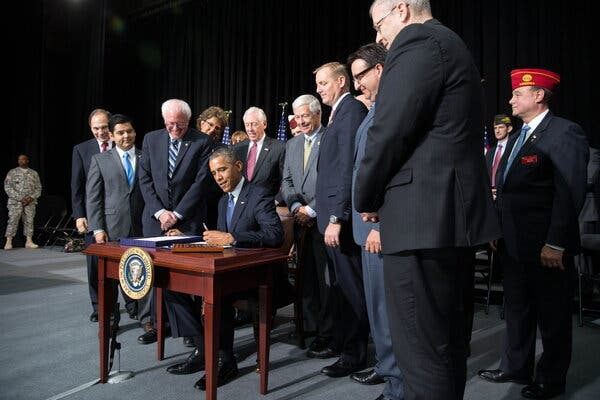
WASHINGTON — In two unsuccessful bids for the White House, Senator Bernie Sanders made no secret of his disdain for billionaires. Now, in what could be his final act in Washington, he has the power to summon them to testify before Congress — and he has a few corporate executives in his sights.One is Stéphane Bancel, the chief executive of Moderna, who Mr. Sanders complains “has become a multibillionaire” by developing a coronavirus vaccine with government money. “I think Mr. Bancel should be talking to his advisers about what he might say to the United States Senate,” Mr. Sanders warned in an interview.Jeff Bezos, the founder of Amazon, and Howard Schultz, the on-and-off chief executive of Starbucks, are also on his list. He views them as union busters whose companies have resorted to “really vicious and illegal” tactics to keep workers from organizing. He has already demanded that Mr. Schultz testify at a hearing in March.Mr. Sanders, independent of Vermont, can put these men on the spot because he is the new chairman of the Senate Committee on Health, Education, Labor and Pensions. The job gives him sweeping jurisdiction over issues that have animated his rise in politics, such as access to health care, the high cost of prescription drugs and workers’ rights.Mr. Sanders, 81, who identifies as a democratic socialist, has said he will not seek the Democratic nomination for president again if President Biden runs for re-election — a position he reiterated in a recent interview in his Senate office. He is himself up for re-election in 2024 and would not say whether he would run again, which raises the prospect that the next two years in Congress could be his last.Mr. Sanders is clearly operating on two tracks. Last week, in a move that might surprise critics who view him as unbending, he partnered with a Republican, Senator Mike Braun of Indiana, to call on rail companies to offer seven days of paid sick leave to their workers — a provision that the Senate defeated last year when it passed legislation to avert a rail strike.But he also sent a curt letter to Mr. Schultz, giving him until Tuesday to respond confirming his attendance at the hearing. That followed an earlier, angry letter in which Mr. Sanders urged the Starbucks chief to “immediately halt your aggressive and illegal union busting campaign.” A Starbucks spokesman said the company was considering the request for Mr. Schultz to testify and was working to “offer clarifying information” about its labor practices.Former Senator Tom Daschle of South Dakota, a Democrat who served as majority leader, said that Mr. Sanders could “bring a balance between the progressive and the pragmatic.”“He will be progressive, he will be aspirational, he will continue to fight the fight,” Mr. Daschle said. “But at the same time, I believe Bernie Sanders wants to get things done.”The chairmanship is the latest turn in Mr. Sanders’s long career in politics, a coda to his rise from a left-wing socialist curiosity to a national figure with respect, power and a devoted fan base. After three decades in Washington, he still manages to cast himself as an outsider. And while he may never ascend to the presidency, there is no question that he has left his mark on national politics, reviving and strengthening the American left.Health Care in the United StatesThe Cost of Miracle Drugs: A wave of innovative medicines promise to cure devastating diseases. But when prices are too high, patients have to hunt for other ways to pay.Medicare: The Biden administration announced a rule targeting Medicare private plans that overcharge the federal government. The change strengthens the ability to audit plans and recover overpayments.‘Hospital at Home’ Movement: In a time of strained capacity, some medical institutions are figuring out how to create an inpatient level of care outside of hospitals.Omnibus Bill: The giant spending bill passed by Congress kept the government open. But it also quietly rewrote huge areas of health policy.But Mr. Sanders’s national following cuts both ways. He is both a darling of the progressive movement and fodder for conservatives, who are already gleefully caricaturing him.“Medicare for all, baby!” crowed Whit Ayres, a Republican strategist, referring to Mr. Sanders’s signature legislative initiative, a government-run health care program for all Americans. “I guarantee you Bernie Sanders will provide a wonderful target for Republicans to shoot at.”He already has. Mr. Sanders’s rise has put him in the ranks of the very wealthy Americans he criticizes, in part thanks to a book he wrote, “Our Revolution,” in the wake of his first bid for the presidency. (“If you write a best-selling book, you can be a millionaire, too,” he said in 2019.)He is about to go on tour to hawk a new book, “It’s OK to Be Angry About Capitalism,” due out later this month and billed by its publisher as “a progressive takedown of the über-capitalist status quo.” Tickets for an upcoming book event at a concert venue in Washington are selling for up to $95 on Ticketmaster — a company that last month was accused of anti-competitive behavior by some of Mr. Sanders’s Senate colleagues. His Republican critics are having a field day with that.“Anyone else see the ‘irony’ in Bernie Sanders selling tickets for his ‘It’s Okay to Be Angry About Capitalism’ book tour on Ticketmaster?” Representative Bill Huizenga, Republican of Michigan, wrote on Twitter. A spokesman for Mr. Sanders declined to comment on the book event.With Republicans running the House and 60 votes needed to pass most bills in the Senate, Mr. Sanders has little hope of pushing major legislation through Congress. He intends to introduce a Medicare for all bill, as he has done in past Congresses, because he feels “it’s important to keep that issue out there,” as he put it. But he is well aware that it is going nowhere on Capitol Hill.“We don’t have the votes,” he said matter-of-factly. “We have no Republican support for it. And I would guess, you know, we have maybe half of Democrats who might support it.”That is Mr. Sanders the realist speaking, in a tone far more practical than the one he has used during his campaign rallies and familiar rants against millionaires and billionaires. But those who watch Mr. Sanders closely know that, while he has never been a master legislator in the mold of former Senator Edward M. Kennedy of Massachusetts, a predecessor of his as the health committee chairman, he is able to work across the aisle.President Barack Obama signing legislation overhauling the veterans’ health care system in 2014. Mr. Sanders worked with Senator John McCain, Republican of Arizona, on the measure.Doug Mills/The New York TimesIn 2014, as the chairman of the Senate Veterans’ Affairs Committee, Mr. Sanders partnered with Senator John McCain, Republican of Arizona, on a major overhaul of the veterans’ health care system — a measure that the Vermont senator described then as “not the bill that I would have written,” but nonetheless “a significant step forward.”A copy of the bill hangs on the wall of his office, alongside a photograph of President Barack Obama signing it, with Mr. Sanders looking over his shoulder and doing something he is not often seen doing in the Capitol: smiling.Mr. Sanders’s activist roots run deep, but after arriving in Washington in 1991 as Vermont’s lone member of the House, he quickly learned that being an outsider would only get him so far; he would have to deal with Democrats if he wanted any power. In the Senate, which he joined in 2007, he has worked his way up the ranks. In addition to leading the Veterans’ Affairs Committee, he has also served as chairman of the Budget Committee.No one — perhaps not even Mr. Sanders himself — could have predicted then that he would wage two credible runs for the Democratic nomination for president. In the interview, Mr. Sanders brushed aside questions of politics. He wanted to talk policy.“We spend twice as much per capita on health care as the people of other industrialized nations, and yet we have 85 million who are uninsured or underinsured,” he said, adding, “So you have a system that is not working.”“It’s propped up by the power of the insurance companies, some drug companies,” he continued, “and I will do my best to change it.”Mr. Sanders wants to hear from Moderna, he said, about the company’s plan to sharply hike the price of its coronavirus vaccine. In a recent letter to Mr. Bancel, he assailed the vaccine maker for “unacceptable corporate greed” and urged the company to reconsider.A spokesman for Moderna said the company had always “been willing to engage in conversation with government stakeholders” and would continue to do so.At the hearing in March, Mr. Sanders wants Mr. Schultz to explain why Starbucks has drawn scrutiny from the National Labor Relations Board. The board has been investigating Starbucks for various allegations of misconduct, including that it had illegally denied raises to union employees and had fired seven workers at a store in Memphis for their union-organizing activity. A court later ordered Starbucks to reinstate those workers.Mr. Sanders at a campaign rally in Salt Lake City in 2016. He developed a national following in his two bids for the Democratic presidential nomination.Kim Raff for The New York TimesThe health committee also has some must-pass legislation on its agenda, including the reauthorization of the Pandemic and All-Hazards Preparedness Act, a 2006 law intended to improve public health and medical preparedness for emergencies, including acts of bioterrorism. The law was reauthorized in 2013 and must again be reauthorized this year.Joel White, a Republican strategist who specializes in health policy, said Mr. Sanders might be more bipartisan than some of his critics expect, adding, “I think Bernie probably wouldn’t have become chair of the health committee just to throw bombs.”Two Republicans on the panel, Mr. Braun and Senator Roger Marshall of Kansas, both said in interviews that they thought they might find common ground with Mr. Sanders on matters like lowering the cost of prescription drugs and supporting community health centers.And Mr. Daschle said Mr. Sanders had a counterpart he could probably work with: Senator Bill Cassidy of Louisiana, the top Republican on the committee. A physician who helped found a community health clinic to treat the uninsured, Mr. Cassidy was one of seven Republicans who voted to convict former President Donald J. Trump at his second impeachment trial.As committee chairman, Mr. Sanders said he intended to “take the show on the road” by having hearings in places other than Washington so he could hear from ordinary Americans, such as older people who have a hard time paying for prescription drugs, working families struggling to pay for child care and students who cannot afford to pay for college.With the recent retirement of Senator Patrick J. Leahy, a Democrat who served for 48 years, Mr. Sanders is finally the senior senator from Vermont. Asked how he felt, he said, “Pretty good.” Then, ever combative, he shot back, “How do you feel?”He said people who wonder about whether he will run again — and by people, he meant reporters — should “keep wondering.”Why? “Because I’ve just told you, and this is very serious,” he said, wearing his trademark scowl. “If you think about my record, I take this job seriously. The purpose of elections is to elect people to do work, not to keep talking about elections.”
Read more →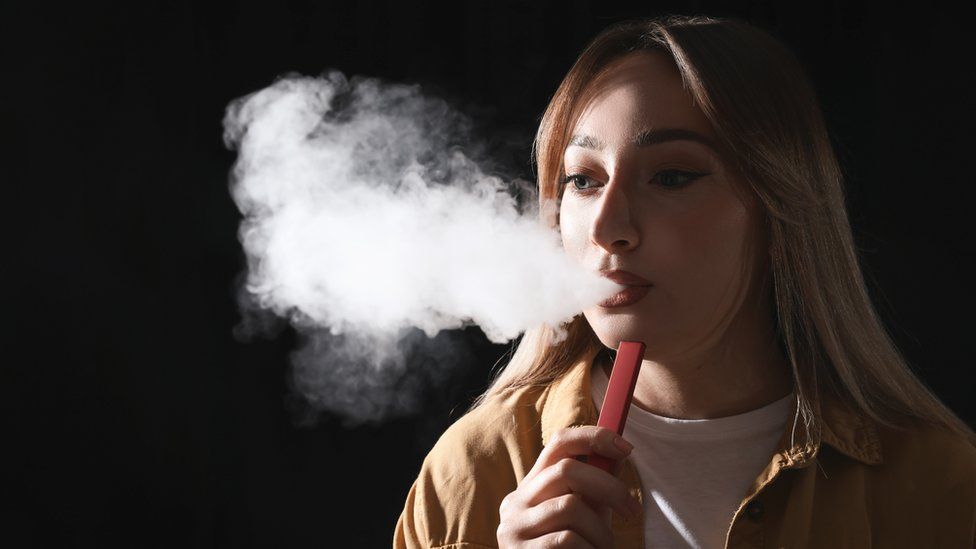
Published1 day agoShareclose panelShare pageCopy linkAbout sharingImage source, Getty ImagesVapes should be kept out of sight of children in shops and the legal minimum age of 18 should be marked clearly on each product, say councils in England.Too many children are being illegally sold vapes with fruity flavours and colourful packaging, they say.Doctors have warned of the potential long-term effects of vaping on the lungs, and are calling for tighter rules on packaging and advertising.Vapes should only be used by smokers who want to give up tobacco.In the UK, only those aged 18 and over can buy vapes or e-cigarettes.But vaping is growing in popularity among teenagers, who often use disposable single-use products like Elf and Geek bars.They come in a variety of flavours and colours, are marketed on social media and can be bought in many High Street shops, such as newsagents or mobile phone outlets. They cost about £5.Young non-smokers told not to take up vapingIllegal vape sales are High Street’s biggest threatVaping – is it a risk-free option?The Local Government Association (LGA), which represents councils in England, is calling for vaping products to be subject to the same rules as cigarettes – sold in plain packaging and kept out of reach and sight of children behind shop counters.Vapes or e-cigarettes are safer than cigarettes because they do not contain harmful tobacco, or produce dangerous tar or carbon monoxide from tobacco smoke.However, they usually contain the addictive substance nicotine and, if the devices used are illegal, they can also contain potentially dangerous levels of that and other ingredients. Health experts say vaping is not risk-free. Image source, Getty ImagesYoung people who vape regularly have reported getting nosebleeds, headaches and sore throats. Others say they feel like they are addicted.”It is not right that stores are able to prominently display vaping paraphernalia for all to see, such as in a shop window, often in bright, colourful packaging that can appeal to children,” said councillor David Fothergill, chairman of the LGA’s Community Wellbeing Board.He also said it was “deeply worrying” that more and more children who had never smoked are starting to vape.Health charity Ash, which has been providing resources for schools, parents and teachers on how to stop children vaping, says the government should introduce a tax on single-use disposable vapes in the Budget in March.”In one simple step this would reduce both child vaping and the vast quantities of single-use vapes being thrown into landfill,” says chief executive Deborah Arnott.The charity also suggests product names resembling sweets or featuring cartoon characters should be banned, and anyone who looks under 25 should be asked for ID in shops.Image source, North East Trading Standards Association Trading Standards recently said that one in three businesses has been found to break the law over under-age sales of vaping products, and it wants to see them face tougher penalties. It is also regularly seizing lorry loads of counterfeit and illegal vapes from shops across the country, as well as at Channel ports.Should disposable vapes be banned?Some 8.6% of 11 to 18-year-olds in England are vaping, latest figures show, up from 4% in 2021. Among adults, it is about 7%.More than half of all current young vapers use disposable vaping products, compared with just 7.8% two years ago.The Scottish government says it will consider a potential ban on disposable vapes as part of a plan to reduce their impact on public health and the environment.In October, the Irish government launched a consultation on banning “wasteful” disposable vape products, citing concerns over littering.A spokesperson for the Department of Health and Social Care in England said tough regulations on advertising vaping products to children, nicotine strength, labelling and safety were already in place.They added: “We are carefully considering the recommendations from the Khan review: making smoking obsolete, including what more can be done to protect children from vaping.”The UK Vaping Industry Association said the solution is to enforce existing laws on retailers rather than focus on packaging.It says it is developing detailed proposals for the government to consider – “including substantial on the spot fines and nationwide retail licensing and test purchasing schemes”.It also maintains that disposable vapes are not just being used by young people – they are also sought after by older adults too.More on this storyIllegal vape sales are High Street’s biggest threat19 JanuaryYoung non-smokers told not to take up vaping29 September 2022Should disposable vapes be banned?24 October 2022Market flooded by unsafe vapes aimed at children13 July 2022Vaping – is it a risk-free option?24 June 2022Related Internet LinksNicotine vaping in England 2022 evidence update main findings – GOV.UKUKVIA – UK Vaping Industry AssociationConsumer Help and Advice – CTSI – Chartered Trading Standards Institute UKThe BBC is not responsible for the content of external sites.
Read more →
It’s not unusual for young children to become fascinated by romance, but sometimes these big feelings can take parents by surprise. Experts share tips on how to navigate a child’s first ‘love.’My 6-year-old daughter loves to dance, but when she saw New York City Ballet’s “Nutcracker” for the first time this winter, the talk afterward wasn’t about the performers, the elaborate staging or the special effects.Instead, she spoke adoringly of the child who happened to be seated next to her, a young fellow of similar age. He was kind, a good conversationalist, and had an appreciation for ballet — or at least his parents did.At the theater, my daughter later explained giddily, they had fallen in love.The next day she took out her crayons and drew a picture of The Boy, as he had come to be known, his smiling face surrounded by red hearts. She taped it to her bedroom wall.“Do you think he’s drawing a picture of me right now, too?” she asked.Starting in kindergarten, it became fashionable among my daughter’s classmates to discuss who had a crush on whom and declare their intention to marry one another. Sometimes the boys and girls would even give each other a quick kiss on the cheek or a peck on the lips. At one point, my daughter began teaching her friend the dance steps that they would perform at their future wedding.I found it curious and — when it came to the kissing — somewhat concerning. Was my 6-year-old really having her first crush? How should parents react when their young children say they have “fallen in love”?To learn more, I spoke with experts in sexual health, elementary school education and psychology, who all reassured me that this type of behavior was perfectly normal. But, they added, children may need guidance from their parents to navigate their newfound feelings — and it is the ideal opportunity to start having conversations about consent, if you haven’t already.For parents of the littlest romantics, here is some advice on how to attend to matters of the (young) heart.What it means when little kids say they have a crush Experts say that what we traditionally think of as a crush — an intense infatuation with someone we idealize — often begins in older children who are undergoing the transition to puberty.Ben Lipford for The New York TimesIt’s “partly driven by emerging sexual attraction, and yet lived out in a fantasy world,” said Jennifer A. Connolly, a professor of psychology at York University in Toronto and an expert in adolescent development and romantic relationships. “I think of it as a safe way for them to start exploring their own passions toward someone.”When elementary school children talk about crushes, however, it’s not quite the same thing. Young kids may express strong feelings for one another that are more akin to admiration, and because they are influenced by societal expectations, television and movies, older siblings and their own peer groups, they can start to view their affection for one another through a romantic lens.“A lot of it is modeling what they’ve seen from media and adults, and wanting to seem older and more sophisticated,” said Mitch Prinstein, a professor of psychology and neuroscience at the University of North Carolina at Chapel Hill who studies peer relationships from early childhood to adolescence. When young children develop a fascination with other children and start using words like “crush,” he added, it is their way of experimenting with more complex relationships.How to respond when your child tells you they are in loveWhile it can be tempting to dismiss a child’s crush as silly or trivial, the feelings they are experiencing are real, and can be powerful.“It seems passionate in a kind of platonic sense,” Dr. Connolly said.When discussing a crush with your child, it is best to focus on their friendships rather than playfully tease them about a budding romance, said Amy Lang, a sexual health educator in Seattle. This teaches them the importance of friendship (it will set the foundation for future healthy romantic relationships, after all) and helps them fixate less on adult rituals like marriage and kissing.For example, if your child confesses to having a crush on a classmate, try to avoid saying things like, “That’s so cute — do you want to get married to each other?” Instead, Ms. Lang suggested saying: “What are the things that you like about Timmy? Do you want to have a play date?”Also, refrain from assigning mature labels to their relationships with questions like: “Is that your new boyfriend?”Ben Lipford for The New York TimesIdealizing a boyfriend-girlfriend dynamic can suggest that “these relationships are critical to being a complete person and to being happy,” said Amanda J. Rose, a professor of psychological sciences at the University of Missouri who has studied peer relationships from childhood through young adulthood. In addition, she added, “it really reinforces traditional gender roles.”Encourage your child to share more of what’s on their mind by asking open-ended questions. Christy Keating, a parent coach in Redmond, Wash., suggested asking, “What does that mean for you to have a crush?” or “What did that feel like?” Or you could use the classic prompt “Tell me more.”You might even consider sharing a similar story from when you were younger, Ms. Keating said.“Make sure you’re not shutting them down,” she added. “If we laugh, downplay or mock it when they’re 5, they’re going to remember that when they’re 15.”Use the opportunity to discuss consentLaura Eagle, who taught kindergartners for more than a decade in Washington State, vividly recalled one class in particular where romantic overtures were “a huge thing.”“I remember thinking, ‘Wow, that’s a little early to be writing love notes,’” she said.Some of the girls enjoyed chasing certain boys — their crushes — at recess. On the surface it all seemed harmless, she said, but she pulled the girls aside and gently asked them to consider how these actions might affect their classmates.“It was a real light conversation,” she said. “We all want to make each other feel safe.”Young elementary school students are still learning how to respect other people’s boundaries, including personal space, so explaining the concept of consent — the need to ask for permission and then respect the answer you receive — is essential, she said.Kim Rieley, who spent 17 years teaching first graders in Montana, would ask her students to pay attention to how their friends were feeling. What did their body language say? What did their faces convey? And, finally, what were they saying verbally?And if a child tried to kiss another child, she said, she would remind them that this type of behavior was for adults.Ben Lipford for The New York TimesAs a parent, Ms. Rieley added, you can say: “It’s great you like that person and that you want to explore that friendship. But that’s not how you show that when you’re 6. Let’s talk about what you can do instead.”There are many children’s books that help explain why it is important to respect another person’s wishes, such as “Don’t Hug Doug (He Doesn’t Like It)” or “C is for Consent.”You may also find teachable moments when you’re watching shows together. For example, in one scene of the movie “Frozen,” Kristoff asks Anna for permission to kiss her, which could start a conversation about how everyone is in charge of their own bodies.Try role-playing One of the best ways to teach your child about consent and healthy boundaries is for them to practice having conversations with their peers.If your child loves to hug other classmates, for example, you could play out a potential scenario, Ms. Lang said.First, instruct your child to say, “Can I give you a hug right now?” Then you can respond with different types of answers: “No, thanks. I don’t feel like getting a hug.” Or, “Maybe another time. I’d rather do a thumbs up.” Or, “Sure! I love hugs!”Then switch roles so that your child is the one responding to the request.If your child is feeling uneasy because of a classmate’s behavior, have them practice asserting themselves, Ms. Lang said.Make sure they understand that it is OK to tell someone not to touch them. For example, they might say, “I don’t like it when people touch my hair.”It’s not only touch that can violate someone’s boundaries; words and actions can, too. Another useful statement: “I don’t want to play this way.” Or, “When you say things like that, it makes me feel uncomfortable.”Be sure to speak with the teacher if the problem doesn’t improve, she added.“A good friend will say OK and stop,” she said.
Read more →
Seniors continue to bear the brunt of deaths and hospitalizations, even as most of the nation abandons precautions: “Americans do not agree about the duty to protect others.”In early December, Aldo Caretti developed a cough and, despite all his precautions, came up positive for Covid on a home test. It took his family a couple of days to persuade Mr. Caretti, never fond of doctors, to go to the emergency room. There, he was sent directly to the intensive care unit.Mr. Caretti and his wife, Consiglia, both 85, lived quietly in a condo in Plano, Texas. “He liked to read and learn, in English and Italian,” said his son Vic Caretti, 49. “He absolutely adored his three grandchildren.”Aldo Caretti had encountered some health setbacks last year, including a mild stroke and a serious bout of shingles, but “he recuperated from all that.”Covid was different. Even on a ventilator, Mr. Caretti struggled to breathe. After 10 days, “he wasn’t getting better,” said Vic Caretti, who flew in from Salt Lake City. “His organs were starting to break down. They said, ‘He’s not going to make it.’”At least, this late in the pandemic, families can be with their loved ones at the end of life. When the family agreed to remove Mr. Caretti from the ventilator and provide comfort care, “he was alert, very aware of what was happening,” his son said. “He was holding everyone’s hand.” He died a few hours later, on Dec. 14.For older Americans, the pandemic still poses significant dangers. About three-quarters of Covid deaths have occurred in people over 65, with the greatest losses concentrated among those over 75.In January, the number of Covid-related deaths fell after a holiday spike but nevertheless numbered about 2,100 among those ages 65 to 74, more than 3,500 among 75- to 84-year-olds and nearly 5,000 among those over 85. Those three groups accounted for about 90 percent of the nation’s Covid deaths last month.Hospital admissions, which have also been dropping, remain more than five times as high for people over 70 than for those in their 50s. Hospitals can endanger older patients even when the conditions that brought them in are successfully treated; the harmful effects of drugs, inactivity, sleep deprivation, delirium and other stresses can take months to recover from — or can land them back in the hospital.“There continue to be very high costs of Covid,” said Julia Raifman, a public health policy specialist at the Boston University School of Public Health and a co-author of a recent editorial in The New England Journal of Medicine.Ms. Bravo of New Mexico and her sister, Desi Bravo, at a family event several years ago. “Our world has gotten much smaller,” Ms. Bravo said.Adria Malcolm for The New York TimesThe demographic divide reflects a debate that continues as the pandemic wears on: What responsibility do those at lower risk from the virus have to those at higher risk — not only older people, but those who are immunosuppressed or who have chronic conditions?More on the Coronavirus PandemicCovid Vaccine Mandate: New York City will end its aggressive but contentious coronavirus vaccine mandate for municipal workers, Mayor Eric Adams announced, signaling a key moment in the city’s long battle against the pandemic.End of an Era: The Biden administration plans to let the coronavirus public health emergency expire in May, a sign that federal officials believe the pandemic has moved into a new, less dire phase.Canceled Doses: As global demand for Covid-19 vaccines dries up, the program responsible for vaccinating the world’s poor has been negotiating to try to get out of its deals with pharmaceutical companies for shots it no longer needs.Mask Rules: Many countries dropped pandemic mask requirements months ago. But in places like South Korea, which only recently got rid of its rule, masks remain common. This is why.Should individuals, institutions, businesses and governments maintain strategies, like masking, that help protect everyone but particularly benefit the more vulnerable?“Do we distribute them among the whole population?” Dr. Raifman asked of those measures. “Or do we forgo that, and let the chips fall where they may?”Nancy Berlinger, a bioethicist and research scholar at the Hastings Center, made a similar point: “The foundational questions about ethics are about what we owe others, not just ourselves, not just our circle of family and friends.”Three years in, the societal answer seems clear: With mask and vaccination mandates mostly ended, testing centers and vaccination clinics closed and the federal public health emergency scheduled to expire in May, older adults are on their own.“Americans do not agree about the duty to protect others, whether it’s from a virus or gun violence,” Dr. Berlinger said.Only 40.8 percent of seniors have received a bivalent booster. Some who have not believe they have strong protection against infection, a C.D.C. survey reported last month (though the data indicated otherwise).Others worry about side effects or feel unsure of the booster’s effectiveness. Seniors may also find it difficult to locate vaccination sites, make appointments (especially online) and travel to the sites.In nursing homes, where the early pandemic proved so devastating, only 52 percent of residents and 23 percent of staff members were up-to-date on vaccinations last month. Early on, a successful, federally funded campaign sent health care workers into nursing homes to administer the original vaccine doses. Medicare also mandated staff vaccinations.But for boosters, nursing homes were permitted to develop their own policies — or not.“It makes absolutely no sense,” said David Grabowski, a health policy professor at Harvard Medical School. “This is the group that should have the highest vaccination rate in the country. Everyone there is very susceptible.”The Covid costs for older people extend beyond the most extreme dangers and include limited activities, diminished lives and continuing isolation and its associated risks.In Hillsboro, Ore., Billie Erwin, 75, feels particularly vulnerable because she has Type 1 diabetes. She and her husband have foregone concerts and theater performances, indoor restaurant meals with friends, moviegoing and volunteering. Her book group fell apart.“We used to spend a lot of time on the Oregon coast,” Ms. Erwin said. But because the trip involves an overnight stay, they’ve gone just twice in three years; annual visits to the Oregon Shakespeare Festival ended for the same reason.The ongoing constraints have exacerbated the depression Ms. Erwin also contends with; some days, she doesn’t bother getting dressed.“I’m disappointed we don’t consider other people as much as we ought to,” she said. “I don’t know that most people even think about it.”Donna Bolls of Charlotte, N.C., though she and her husband got sick with Covid in May, has largely returned to her prepandemic routines. “I feel like I’m living life on my terms, doing the things I want to do,” she said.Travis Dove for The New York TimesEleanor Bravo, 73, who lives in Corrales, N.M., lost her sister to Covid early in the pandemic; two years passed before the family could gather for a memorial. “I had this inordinate fear that if I got Covid, I would die too,” Ms. Bravo said.She did develop Covid in July, and recovered. But she and her partner still avoid most cultural events, travel and restaurants. “Our world has gotten much smaller,” she said. An organizer with Marked by Covid, a national nonprofit organization, she is working to build a memorial to the 9,000 New Mexicans who have died of the virus.Of course, many older Americans, too, have resumed their prepandemic routines. In Charlotte, N.C., Donna and David Bolls, both 67, fell ill with Covid in May — “the sickest I’ve been that I can remember,” Ms. Bolls said.But afterward, they returned to restaurants, concerts, shopping, her part-time retail job and his church choir, without masks. “It’s a risk I’m willing to take,” she said. “I feel like I’m living life on my terms, doing the things I want to do.”Though the political viability of mandates for masks, vaccination or improved indoor air quality appears nil, policymakers and organizations could still take measures to protect older (and immunocompromised) people without forcing them to become hermits.Health care systems, pharmacies and government agencies could start renewed vaccination campaigns in communities and in nursing homes, including mobile clinics and home visits.Remember the “senior hours” some supermarkets instituted early in the pandemic, allowing older customers to shop with smaller crowds and less exposure? Now, “public spaces are not accessible to people concerned about infections,” Dr. Raifman said.They could be. Markets, libraries and museums could adopt some masks-required hours. Many Off Broadway theaters already designate two or three masked performances each week; others could follow suit. Steven Thrasher, author of “The Viral Underclass,” organized a masked book tour last fall with stops in 20 cities.“Between the extremes of closing everything to mitigate transmission and doing nothing, there’s a middle ground,” Dr. Raifman said. “We can mitigate transmissions in smart and inclusive ways.”Yet Vic Caretti, who has found a grief support group helpful, encounters comments from strangers in Salt Lake City because he wears a mask in public.“I don’t think people understand how Covid affects older Americans,” Mr. Caretti said with frustration. “In 2020, there was this all-in-this-together vibe, and it’s been annihilated. People just need to care about other people, man. That’s my soapbox.”
Read more →