How a Consistent Sleep Schedule Benefits Your Health

New research affirms what doctors have long advised: Go to bed and wake up at the same time every day for big health benefits.There are a few tried and true pieces of advice that sleep doctors always give for battling insomnia: Watch those alcoholic drinks at dinner, cut the afternoon coffee, stop scrolling before bed. And please, they beg: Keep your sleep schedule consistent.Flip-flopping between wake-up times — jolting awake at 7:30 on a Friday morning and then dozing until the afternoon on Saturday — wreaks havoc on our internal body clocks. Sleep experts refer to this as “social jet lag,” said Dr. Sabra Abbott, a sleep medicine specialist at the Northwestern Feinberg School of Medicine. Similar to changing time zones, heading to bed at vastly different times from night to night may throw off your circadian rhythm.And still, as anyone who’s worked a night shift, taken care of a toddler or fumbled back home after a party might tell you: Going to bed and waking up at the same times is easier said than done. “It’s a luxury, right?” said Kelsie Full, a behavioral epidemiologist and an assistant professor at Vanderbilt University Medical Center.Dr. Full is the lead author of a new study that tied irregular sleep to an early marker of cardiovascular disease. Researchers examined a week’s worth of sleep data from 2,000 adults over 45 and found that those who slept varying amounts each night and went to bed at different times were more likely to have hardened arteries than those with more regular sleep patterns.People whose overall sleep amounts varied by two or more hours from night to night throughout the week — getting five hours of sleep on Tuesday, say, and then eight hours on Wednesday — were particularly likely to have high levels of calcified fatty plaque built up in their arteries, compared with those who slept the same number of hours each night.The study could not confirm that inconsistent sleep patterns definitively caused the heart issues, Dr. Full said. And the findings don’t necessarily mean that the occasional late night or very early morning should be off the table.“An off day or two is OK,” said Dr. Tianyi Huang, an assistant professor of medicine at Harvard Medical School and a co-author of the study. “It’s more about the long-term pattern.”For most people, if you have a night or two of inconsistent sleep timing, you’re likely not going to throw off your entire circadian rhythm, said Aric Prather, a psychologist and sleep specialist at the University of California, San Francisco. And if you go to bed at 4 a.m. on a Saturday, you’re probably better off sleeping until noon and avoiding some of the acute effects of sleep loss than forcing yourself awake at the time you get up for work, he said.But the new study supports what previous research has theorized: Consistent sleep is crucial for health. A 2020 study found that people ages 45 to 84 with erratic sleep schedules were nearly twice as likely to develop cardiovascular disease as those with more regular sleep patterns. An analysis of over 90,000 people linked circadian rhythm disruptions with a greater risk of mood disorders. Researchers have even tied irregular sleeping patterns to high cholesterol and hypertension.Over the last decade, researchers have strengthened the link between sleep and heart health, specifically. Last summer, the American Heart Association added sleep duration to its checklist for measuring cardiovascular health. One theory for why consistent sleep helps your heart is that maintaining your circadian rhythm — the 24-hour cycle of your body’s internal clock — helps regulate cardiovascular function, Dr. Huang said. And a mounting body of research shows that catching up on your sleep during the weekends can’t compensate for staying up during the week, he added.People often think that sleeping in after several nights of limited sleep or insomnia will make them feel better, said Dr. Marri Horvat, a sleep specialist at the Cleveland Clinic, “but it usually doesn’t help,” she said. “Keeping a regular, set schedule is more likely to put your body in a place where it needs to be to get a full night’s sleep going forward.”So how do you actually get yourself to bed and wake up on a schedule? We asked sleep doctors to share tips.How to build a consistent sleep scheduleTreat yourself.Set a wake-up goal that feels attainable (even if it’s challenging), Dr. Prather said — and then reward yourself for getting out of bed. That could mean heading to your favorite coffee shop or saving the show you’ve been looking forward to for Saturday morning instead of Friday night.Pay attention to your pre-bedtime ritual.A regular bedtime routine — reading a few pages of a novel after you brush your teeth, for example — can help lock in a set sleep schedule. But the hours before you wind down for bed matter too, Dr. Horvat said. In the four hours or so before you head to bed, avoid alcohol, she suggested, and don’t work out (you may want to switch your dedicated exercise time to the morning.) These shifts will help you fall asleep faster and stay asleep longer.Find an accountability partner.Recruit a friend or a family member to get up around the same time you do, Dr. Prather recommended, and hold yourselves accountable by texting each other when you wake up. Even better: Make an early(ish) plan for brunch or a morning walk to give yourself added motivation for getting up.Get some sun.Light helps regulate our circadian rhythm, Dr. Abbott said, signaling to our bodies that it’s time to wake up. Take (even a brief) morning walk, if the weather allows, to expose yourself to sunlight around the same time each day, she recommended.Make your alarm as annoying as possible.If you can’t pry yourself out of bed on the weekends, Dr. Prather said, go for the nuclear option: Opt for an alarm you can’t ignore. Set a grating song as your alarm tone, or try a puzzle alarm — an app that makes you solve a puzzle to shut it off. For extra incentive to wake up, keep your phone across the room at night, instead of by your bed, so you have to force yourself out of your covers to turn off the alarm.Give yourself grace.“How aligned you are with your biological clock and how consistent you keep things does matter,” Dr. Prather said. “But that doesn’t mean every little moment, every week, matters.” Long-term sleep patterns are more important for overall health, he added, rather than worrying about one or two nights’ bad sleep. “It takes the pressure off,” he said.

Read more →

Bristol family face 'race against time' to save blind boy's hearing

Published2 hours agoShareclose panelShare pageCopy linkAbout sharingImage source, Family photoBy Naomi WordleyBBC NewsThe family of a 10-year-old boy who was born blind have said they are facing a “race against time” to save his hearing. Cameron, from Bristol, has a rare genetic condition called Norrie Disease which can cause blindness and progressive hearing loss.He is deaf in one ear and his hearing in the other has deteriorated.His mum Carla said: “His hearing is his access to the world. It’s heartbreaking to think he’s at risk of going deaf.”Image source, Family photoIt is thought that around 40 people have Norrie Disease in the UK, although the Norrie Disease Foundation has said there may be more cases which have not yet been diagnosed.Children with the condition may be born blind or sight-impaired and they may also develop hearing loss and other developmental delays.Cameron is non-verbal and lost his hearing in his right ear suddenly at the age of three.’Ticking time-bomb’His mum said she feared he could slip into a world of “silent darkness” if his hearing loss continued. “Alongside his hands, it’s his access to his family and friends and to the things he loves, like music.”I describe it as a ticking time-bomb in the corner of the room. It’s always in the back of my mind,” she said.Image source, Family photo”I feel it’s a race against time. I don’t want Cameron to be at risk of being very isolated in the world,” Carla added.Cameron’s parents are trying to raise £10,000 to help fund research into the condition.They plan to carry Cameron up Ben Nevis in May to raise money for the Norrie Disease Foundation.Image source, Family photoTwo members of the five-strong team then plan to cycle 517 miles back to Bristol. Carla said: “I’m a strong believer in trying to change perceptions of what disabled people are capable of and want people to believe that there are no limits.”Follow BBC West on Facebook, Twitter and Instagram. Send your story ideas to: bristol@bbc.co.uk More on this storyDad’s charity challenge for baby memorial garden7 FebruaryGirls raise funds after dad dies from tumour2 days agoPhotography helps long Covid sufferer ‘find light’31 JanuaryRelated Internet LinksThe Norrie Disease FoundationThe BBC is not responsible for the content of external sites.

Read more →

How Climate Change Is Spreading Malaria in Africa

The mosquitoes that transmit the disease dramatically increased their range over the last century as temperatures warmed, scientists reported.Warming temperatures are chasing animals and plants to new habitats, sometimes with devastating consequences to ecosystems. But there is little evidence regarding how far and how fast the invaders might be moving.A new study offers a glimpse of the future by looking to the past. Mosquitoes that transmit malaria in sub-Saharan Africa have moved to higher elevations by about 6.5 meters (roughly 21 feet) per year and away from the Equator by 4.7 kilometers (about three miles) per year over the past century, according to the study.That pace is consistent with climate change and may explain why malaria’s range has expanded over the past few decades, the authors said. The results have serious implications for countries that are unprepared to cope with the disease.“If this were random, and if it were unrelated to climate, it wouldn’t look as cleanly climate-linked,” said Colin Carlson, a biologist at Georgetown University’s Center for Global Health Science and Security and the paper’s lead author. The study was published on Tuesday in the journal Biology Letters.Most studies on the impact of climate change on health tend to focus on the spread of disease — which can be tricky to trace to any single cause — and to be predictive. The new study is instead a retrospective look at how mosquitoes have moved.“This really corresponds to where and how transmission is actually happening at those locations,” said Sadie Ryan, a medical geographer at the University of Florida.The rate of displacement confirms experts’ worst fears about the impact of climate change on infectious diseases, Dr. Ryan added.“What we expect is quite dramatic — and it does look pretty dramatic,” she said. “The fact that it’s actually doing what we are anticipating and scared of happening is very compelling.”As the planet warms, plants and animals — particularly invertebrates — are seeking cooler temperatures, either by moving to higher altitudes or by moving closer to the poles. One meta-analysis estimated that, to date, terrestrial species have been moving uphill at a pace of 1.1 meter (3.6 feet) per year and toward the poles at a pace of 1.7 kilometers (1.1 miles) per year.Ticks that transmit Lyme disease, for example, are dramatically expanding their range in the northern United States. Bats are also on the move, and with them diseases that they transmit, such as rabies.In the Northeast, lobsters are dying of a fungal disease linked to warming, and fish are migrating north or into deeper waters in search of cooler temperatures. That leaves seabirds like puffins with a dwindling food supply and forces commercial fisheries to switch to new types of catch.“Often we reduce the impacts of climate change down to the world just generally getting warmer, and we don’t often think about the vastly interconnected world in which we live,” said Morgan Tingley, an ecologist at the University of California, Los Angeles.While species have been redistributed on the planet for millions of years in response to the climate, the changes are now “happening radically fast,” Dr. Tingley said. “That is not going to work well for a lot of species, and it’s not going to go very well in terms of the stability of ecosystems.”In Hawaii, the invasion of new mosquito species threatens two endangered species of birds with avian malaria: the ‘akeke’e and the ‘akikiki. There are fewer than 1,000 ‘akeke’es and fewer than 50 ‘akikikis; the latter have declined precipitously in recent years and are expected to become extinct this decade, Dr. Tingley said.He and other researchers underscored the importance of collecting data to understand exactly how and how fast mosquitoes and other disease carriers are moving across the world. Warmer climates are expected to be advantageous for mosquitoes because they, and the parasites they carry, reproduce faster at higher temperatures.“We live in a world that is 1.2 degrees warmer, and we haven’t really checked if that is starting to happen,” Dr. Carlson said.He and his colleagues relied on a massive database published in 2017 that chronicled the distribution of 22 species of mosquitoes in sub-Saharan Africa between 1898 and 2016. The data set mined information from entomological surveys, peer-reviewed publications, technical reports, theses and archival records.Over that period, different species of Anopheles mosquitoes expanded their range by a cumulative average of 2,300 feet in elevation and to more than 300 miles south of the Equator, the study found.Dr. Tingley said he had full confidence in the trend reported in the study, but “will take that rate with, like, a massive grain of salt.” That’s partly because the study may be underestimating the change by not factoring in the accelerated pace of global warming in more recent years, he said.Some mosquito movement may also be because of changes in land use, the availability of food or a side effect of people migrating to higher elevations because of climate change, experts said. Still, disease-bearing mosquitoes are of serious concern in areas where people and institutions are unprepared.“A heat wave is much deadlier in Detroit than it is in San Antonio at the same temperature,” Dr. Carlson said. “It’s the surprise that kills you.”

Read more →

The UK’s most expensive drug saved one sister, but it is too late for the other

Published8 hours agoShareclose panelShare pageCopy linkAbout sharingImage source, Shaw familyBy Fergus WalshMedical editor A toddler with a rare inherited condition has become the first child to be treated by the NHS with a new life-saving gene therapy.Teddi Shaw was diagnosed in time because her older sister Nala showed symptoms – but it was too late to treat Nala, who is now terminally ill. Both girls have MLD, which severely damages the brain and nervous system.The one-off treatment costs £2.875m and is the most expensive medicine ever approved for the NHS.The BBC was given exclusive access to follow Teddi’s treatment over several months and spoke to other families affected by MLD.Imagine having two daughters with a devastating genetic condition – but only one can be saved. Three-year-old Nala – and Teddi, who is 19 months old – both have MLD, metachromatic leukodystrophy. Children with this fatal genetic disease are born apparently healthy, but MLD gradually attacks the brain and body. Before Nala became ill, she was a completely normal toddler. “She was always singing, dancing and spinning around everywhere, always laughing – just a cheeky little girl,” says her dad, Jake. This video can not be playedTo play this video you need to enable JavaScript in your browser.But just over a year ago, Nala’s walking gradually became uneven and she started falling over more often. She was also showing signs of a tremor.Her parents Ally, 32, and Jake, 29, became increasingly concerned. Ally was convinced Nala had a brain tumour. Initially, doctors reassured them nothing was wrong. But then, in April last year, Jake and Ally took Nala to A&E where she had an MRI scan. Forty-five minutes later they had a likely diagnosis. “When the doctor said ‘It’s not a brain tumour,’ I was doing cartwheels almost, so excited,” Ally says. But her relief evaporated when the doctor mentioned metachromatic leukodystrophy – which they had never heard of before. When she left the room, Jake Googled the term. “I could tell by his face it wasn’t good news,” says Ally. MLD is caused by a faulty gene which means children affected cannot produce an important enzyme called ARSA – a protein that helps the body’s metabolism work. As a result, fatty chemicals called sulfatides build up. These gradually destroy the protective layer around cells in the brain and nervous system, leading to a devastating deterioration. Children lose the ability to walk, talk or eat – and eventually to see or hear.Because both Ally and Jake are carriers of the faulty gene, they were told Nala’s younger sister Teddi had a one-in-four chance of also having MLD.”I thought to myself, it can’t happen again, we can’t be that unlucky,” says Jake. “When we found out, it was just heart-breaking.”Bittersweet MedicineA cutting-edge treatment turning a terminal diagnosis into hope for a healthy life.Watch now on BBC iPlayer(UK Only)But for 10-month-old Teddi, there was hope. The disease had not yet affected her and so she became the first patient treated on the NHS with a new life-saving gene therapy, called Libmeldy, which must be given before the disease has caused irreparable damage.Nala’s MLD was identified too late for her to be treated. She is already unable to walk or talk, and has to be tube-fed. “When they told us there was treatment available for Teddi it was kind of a bitter pill to swallow because Nala can’t be helped,” says Ally. She says they are sad and “extremely grateful” at the same time. “I’ve always said Nala saved Teddi’s life. And that’s how I wanted to think about it,” says Jake. Libmeldy involves altering a patient’s own cells to correct the faulty gene. In June 2022, Teddi was hooked up to a machine at Royal Manchester Children’s Hospital where blood was removed and filtered, so a single bag of stem cells could be collected. The process looks similar to dialysis.The cells were then sent to Milan, where scientists used a harmless virus to insert a working version of Teddi’s faulty gene – the one which should produce her missing enzyme – back into the stem cells. The gene-corrected stem cells were then sent to Manchester to be infused back into Teddi. Teddi and her mum moved into hospital for the duration of the treatment while Jake, a carpenter, was home in Northumberland looking after Nala. Before she could be given the replacement cells, Teddi had to have chemotherapy to kill off the remaining faulty stem cells in her bone marrow. In August, we were back in Manchester to watch Teddi receive Libmeldy.In her hospital room, Teddi, then 14 months old, had chosen that day to attempt her first tentative steps. Mum Ally said her younger daughter was taking it all in her stride. “She’s doing absolutely fine, considering what she’s been through,” Ally told us. “She’s still just her mischievous normal little self.”The infusion of Libmeldy took less than an hour. Over the following days the gene-altered cells migrated to Teddi’s bone marrow and began producing the enzyme she had been missing since birth.What is remarkable is that this is a one-off treatment, with the hope that it provides a permanent fix for MLD.Libmeldy was developed by a British company, Orchard Therapeutics. Its CEO and co-founder, Bobby Gaspar, spent many years as a consultant at Great Ormond Street Hospital, while carrying out research into potential therapies.”Bringing a new medicine to the world that can potentially cure these devastating diseases is incredibly rewarding,” he says, adding that it was “a very long journey to develop a medicine like this”.Libmeldy took nearly 20 years to develop, with the first human trials taking place in 2010. It got EU approval in December 2020 and is now available through the NHS. Doctors who specialise in treating MLD say Libmeldy is a game-changer. “This truly is a breakthrough,” says Prof Simon Jones, one of the consultants involved in Teddi’s treatment. “We have had almost nothing to offer families with this condition for decades. Instead of many years of terrible neurodegenerative disease, we have the potential for a full life, lived healthily.”Now that there is a treatment, it has become even more important to pick up the disease in time. Teddi’s parents, along with other MLD families and the doctors who treat them, are campaigning to have it screened for at birth. In the UK, babies are given a heel-prick blood test which screens for nine genetic conditions, such as cystic fibrosis – but it does not currently include MLD.”We are letting our children down by not screening for these devastating conditions because they are so preventable if you can identify them at birth,” says Dr Gaspar.Is Libmeldy a cure? It is too early to tell, but the signs are good. Several children from the UK were involved in clinical trials of Libmeldy in Milan, before it became a licensed treatment.Joe Elson, who is 12, had his gene therapy in Italy in 2014. Nine years on, he is completely healthy and doing well at school. Watching Joe fly his kite on a beach in Kent, it is hard to imagine that he was born with a devastating disease. It appears that Libmeldy has provided a permanent fix for his MLD. “It’s given him his life back. He makes the most of every moment,” says his mum, Nicola. Joe’s MLD was only picked up when his older sister Connie was diagnosed. She died last summer. Nicola told us 13-year-old Connie had lost the ability to walk, talk, eat and hold her head up. She had also lost her vision and hearing, and the ability to smile. “It’s the most horrific, wicked condition that steals these children away,” she says. Image source, Elson familyIt’s expected that only about seven or eight children a year in the UK will be eligible for Libmeldy. That is because MLD is rare and usually not diagnosed early enough.The health assessment body NICE says Libmeldy is one of the most clinically effective medicines it has ever appraised. And, although it has a list price of £2.875m, NHS England has negotiated a confidential discount. One reason why the price tag is so high is to cover the costs of developing and producing the drug. The price paid by the NHS for this one-off treatment has to be set against the cost of treating children with MLD as they gradually become completely dependent, tube-fed and lose all their senses. And then, there is the suffering endured by patients and their families. The NHS chief executive Amanda Pritchard describes Libmeldy as a revolutionary treatment offering “a huge moment of hope” for parents and children affected by MLD.”It means that children like Teddi can do the things that all children should be able to, like going to school and playing with friends,” she says.Back home in Northumberland, Teddi is going from strength to strength.But seeing her together with her older sister Nala brings home the harsh reality facing Jake and Ally. It is “an absolute blessing”, says Jake, that Teddi has received Libmeldy, but “absolutely heartbreaking” to watch Nala’s rapid decline.”Her body is basically kind of gradually shutting down and she will lose most of her senses. So it will come to a point where there’s nothing left for her to lose,” Jake says.”You feel like you’re grieving from the very start because your child is disappearing almost in front of your eyes,” says Ally. The Shaws know that if Nala had been diagnosed earlier she might have been treated, rather than facing a terminal illness.Jake, who plays guitar, has recorded a song for his daughter entitled “Lay You Down Easy”, which he hopes will raise awareness of the disease, with any money raised going to the MLD Support Association. Although MLD is not currently screened for at birth in the UK, small pilot studies to screen newborns have begun in five countries – including Germany, where testing has identified the first patient with the condition.Later this year, Genomics England will start a pilot project offering whole genome sequencing to 100,000 newborns. This will screen for about 200 treatable conditions, and may include MLD. Could other rare diseases be treated this way?The simple answer is yes. Royal Manchester Children’s Hospital is trialling two other gene therapies for rare disorders, Sanfilippo and Hunter syndromes. The director of the Paediatric Bone Marrow Transplant Programme, Prof Rob Wynn, says many of his young transplant patients have genetic diseases, and he thinks the approach of correcting the conditions using gene-modified stem cells will be “transformative”.Nala’s parents say it would be a fitting testament to her if newborn screening for MLD became the norm. “I would like to think that if another child was born with MLD, it could be picked up quick enough for them to be saved,” says Ally.Additional reporting by Nicki StiastnyFollow Fergus on TwitterMore on this storyGene ‘revolution’ in sick children diagnosis10 June 2019’Most expensive drug ever’ recommended for NHS use4 February 2022

Read more →

A Link Between Hearing Voices and Hearing Your Own Voice

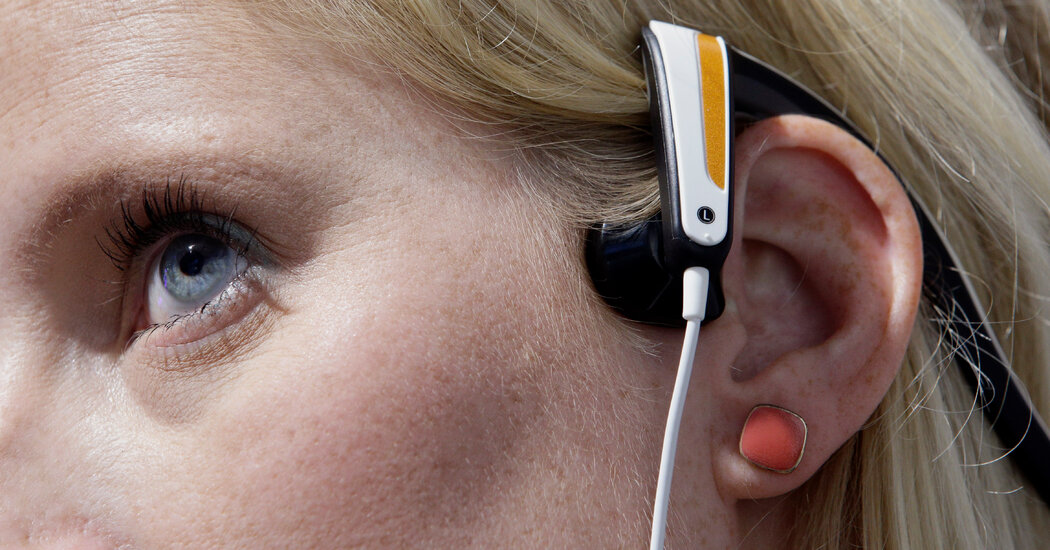
An experiment with bone-conduction headphones suggests a way for neuroscientists to better understand some hallucinations.It is the rare person who likes hearing their own voice on a recording. It sounds fake, somehow — like it belongs to someone else.For neuroscientists, that quality of otherness is more than a curiosity. Many mysteries remain about the origins of hallucinations, but one hypothesis suggests that when people hear voices, they are hearing their own thoughts disguised as another person’s by a quirk of the brain.Scientists would like to understand what parts of the brain allow us to recognize ourselves speaking, but studying this using recordings of people’s own voices has proved tricky. When we talk, we not only hear our voice with our ears, but on some level we feel it as the sound vibrations travel through the bones of the skull.A study published Wednesday in the journal Royal Society Open Science attempted a workaround. A team of researchers investigated whether people could more accurately recognize their voices if they wore bone-conduction headphones, which transmit sound via vibration. They found that sending a recording through the facial bones made it easier for people to tell their voices apart from those of strangers, suggesting that this technology provides a better way to study how we can tell when we are speaking. That is a potentially important step in understanding the origins of hallucinated voices.Recordings of our voices tend to sound higher than we expect, said Pavo Orepic, a postdoctoral researcher at the Swiss Federal Institute of Technology who led the study. The vibration of the skull makes your voice sound deeper to yourself than to a listener. But even adjusting recordings so they sound lower doesn’t recreate the experience of hearing your own voice. As an alternative, the team tried using bone-conduction headphones, which are commercially available and often rest on a listener’s cheekbones just in front of the ear.The team recorded volunteers saying the syllable “ah” and then blended each recording with other voices to produce sounds that were made up of 15 percent of a given person’s voice, then 30 percent, and so on. Then, they had some subjects listen to a series of the sounds with bone-conduction headphones, while others used normal headphones and another group tried laptop computer speakers. The volunteers indicated whether they thought each sound resembled their own voice.People with bone-conduction headphones were more likely to correctly identify their own voices, the team found. When the researchers tried the same experiment using the voices of subjects’ friends — pairs of friends were recruited specifically for the study — they found that the bone-conduction headphones made no difference in helping people identify familiar voices. It was only recognizing their own voices that became easier, suggesting that the devices are recreating some of what we feel and hear as we speak.That opens a door to understanding how one’s brain takes this sensory information and turns it into a recognition of one’s self. In a study published last year, the group recorded the neural activity of people performing these listening tasks and reported the existence of a network of brain regions that are activated as people work to identify themselves.If scientists can understand how the brain builds the concept of self from sound, Dr. Orepic suggests, then perhaps they can unpack what is different in people who hear voices in their heads that are not their own. Perhaps someday listening to recordings of voices, including one’s own, with bone conduction devices could help doctors make diagnoses, if the tool’s performance could be linked to psychiatric disorders.In fact, the team has already begun to study how people who had portions of their brains removed — to treat drug-resistant epilepsy, for instance — perform on the task. The more the brain’s self-recognition network is disturbed by the surgery, the harder the task of self-recognition becomes, Dr. Orepic said, referring to findings in a study that has yet to be peer-reviewed.For one patient, whose personality changed substantially after her surgery and who was eventually diagnosed with borderline personality disorder, the test revealed a surprising pattern.“Every time she heard her voice, she thought it was someone else,” Dr. Orepic said. “And when she hears someone else, she says ‘It’s me.’”

Read more →

Bacteria communicate like us — and we could use this to help address antibiotic resistance

Like the neurons firing in human brains, bacteria use electricity to communicate and respond to environmental cues. Now, researchers have discovered a way to control this electrical signalling in bacteria, to better understand resistance to antibiotics.
This powerful tool will help advance understanding of bacterial infections — including the global threat of antimicrobial resistance. This is because such electric signalling is involved in antibiotic uptake and leads to some bacteria surviving antibiotic exposure.
In the study published in Advanced Science, scientists at the Universities of Warwick and Politecnico di Milano, report a major step forward in regulating bacterial electric signals with light. The team used a molecule, Ziapin2, which binds to bacteria membranes and changes its structure when exposed to light (a so-called “photoswitch”).
Dr Munehiro Asally, Associate Professor of the University of Warwick’s Life Sciences department, said: “We found that upon exposure to blue-green light, bacteria showed an electrical pattern known as hyperpolarisation. We showed that Ziapin2 causes special channels to open, causing electrical changes in bacterial cells.
“Though in its early stages, this technique may help us in the future to better understand microbial phenomena, such as cell-to-cell signalling, efficacy of antibiotics, and antimicrobial resistance,” added Dr Tailise de Souza, postdoctoral researcher at the University of Warwick.
Giuseppe Paternò, assistant professor of Physics at Politecnico di Milano University, says: “The introduction of light-methods in bacteria can potentially open up new exciting research routes. Apart from bringing a new tool for antimicrobial resistance studies, this approach can be exploited to build up bacterial hybrids that can perceive light and perform useful tasks, such as drug delivery in hard-to-reach body locations.”
This study was funded by BBSRC, EPSRC and MRC and Fondazione Cariplo.

Read more →

Pungent ginger compound puts immune cells on heightened alert

Ginger has a reputation for stimulating the immune system. New results from the Leibniz Institute for Food Systems Biology at the Technical University of Munich   now support this thesis. In laboratory tests, small amounts of a pungent ginger constituent put white blood cells on heightened alert. The study also shows that this process involves a type of receptor that plays a role in the perception of painful heat stimuli and the sensation of spiciness in food.
Whether as a medicinal plant or foodstuff, ginger is also becoming increasingly popular in Germany. According to the German Federal Statistical Office, the annual import volume of the fruity-hot root has almost quadrupled over the last ten years to around 31,600 tons. However, even though ginger consumption has increased, the question arises as to whether normal consumption levels are sufficient to achieve health effects. And if so, which compounds and molecular mechanisms play a role in this.
Ginger compound enters the blood
To help clarify these questions, a team led by Veronika Somoza, director of the Leibniz Institute in Freising, Germany, conducted extensive research. The starting point was a result of an earlier pilot study, in which first author Gaby Andersen from the Leibniz-LSB@TUM also played a key role. As the study shows, significant amounts of pungent ginger compounds enter the blood about 30 to 60 minutes after consuming one liter of ginger tea. By far the highest levels were achieved by [6]-gingerol, with plasma concentrations of approximately 7 to 17 micrograms per liter.
The pungent compound is known to exert its “taste” effect via the so-called TRPV1 receptor, an ion channel located on the surface of nerve cells that responds to painful heat stimuli as well as to pungent compounds from chili and ginger. Since some studies suggest that white blood cells also possess this receptor, the research team tested whether [6]-gingerol influences the activity of these immune cells.
Pungent compound stimulates white blood cells
In a first step, the team succeeded in detecting the receptor on neutrophil granulocytes. These cells make up about two-thirds of white blood cells and serve to combat invading bacteria. Further laboratory experiments by the research group also showed that even a very low concentration of almost 15 micrograms of [6]-gingerol per liter is sufficient to put the cells on heightened alert. Thus, compared to control cells, the stimulated cells reacted about 30 percent more strongly to a peptide that simulates a bacterial infection. Addition of a TRPV1 receptor-specific inhibitor reversed the effect induced by [6]-gingerol.
“Thus, at least in experiments, very low [6]-gingerol concentrations are sufficient to affect the activity of immune cells via the TRPV1 receptor. In blood, these concentrations could theoretically be achieved by consuming about one liter of ginger tea,” says Gaby Andersen. “So, our results support the assumption that the intake of common amounts of ginger may be sufficient to modulate cellular responses of the immune system. Nevertheless, there are still many unanswered questions at the molecular, epidemiological and medical levels that need to be addressed with the help of modern food and health research,” concludes Veronika Somoza.

Read more →