Cancer patients who don't respond to immunotherapy lack crucial immune cells

Immunotherapy has transformed cancer care. In advanced melanoma, for example, the most fatal form of skin cancer, the five-year survival rate has risen from less than 10% to more than 50% since immunotherapy was introduced in 2011. Still, only about half of melanoma patients respond to immunotherapy, and those who do not respond face a difficult future.
Researchers at Washington University School of Medicine in St. Louis have discovered that the difference between people who do and do not respond to immunotherapy may have to do with an immune cell known as CD5+ dendritic cells because they bear the protein CD5 on their outer surfaces. Their research showed that people with a variety of kinds of cancers, including melanoma, lived longer if they had more CD5+ dendritic cells in their tumors, and that mice that lacked CD5 on their dendritic cells were unable to respond well to immunotherapy.
The findings, published Feb. 17 in the journal Science, suggest that a supplementary therapy designed to increase the number or activity of CD5+ dendritic cells potentially could extend the lifesaving benefits of immunotherapy to more cancer patients.
“Immunotherapy has revolutionized the field of cancer therapy, but there are a lot of patients with cancer who don’t benefit from it,” said senior author Eynav Klechevsky, PhD, an assistant professor of pathology & immunology and a researcher at Siteman Cancer Center at Barnes-Jewish Hospital and Washington University School of Medicine. “Part of the reason some people do not respond well to some forms of immunotherapy is because this population of dendritic cells is reduced dramatically. We’re developing some novel immune-based approaches to boost the activation of these CD5-expressing dendritic cells with a goal of helping more patients respond to immunotherapy.”
The immune system defends the body against cancer by activating immune cells known as T cells to recognize and kill tumor cells. In response, tumor cells manipulate the immune checkpoint system — a safeguard that prevents T cells from mistakenly attacking healthy cells — to hoodwink T cells into leaving them alone. Immune checkpoint blockade therapy works by thwarting tumor cells’ manipulations, thereby freeing T cells to recognize and destroy tumors. But even with therapy, some people’s T cells are unable to do their job effectively.
Klechevsky and colleagues — including first author Mingyu He, PhD, a staff scientist, and co-author Kate Roussak, MD, a postdoctoral researcher — suspected that people who don’t respond to immunotherapy may have a problem with their dendritic cells. If T cells are the players on a soccer field, dendritic cells are the coaches who get the players pumped up for the game and give them instructions. Without dendritic cells, T cells are subdued and aimless.
By analyzing data in The Cancer Genome Atlas — a public database with information on 20,000 tumors representing 33 cancer types — Klechevsky and colleagues discovered that patients with types of skin, lung, bone and soft tissue, breast and cervical cancers fared better if they had higher levels of CD5+ dendritic cells in their tumors.
Further experiments with human cells and mice showed that CD5+ dendritic cells are required for effective T cell activity against tumors. CD5+ dendritic cells from people powerfully induced T cells to activate and multiply. Mice with tumors responded only weakly to immunotherapy and failed to reject the tumors if they lacked CD5 on their dendritic cells.
The findings suggest that the amount of CD5+ dendritic cells inside tumors could be used to help doctors assess which patients are most likely to benefit from immunotherapy. They also suggest that increasing the numbers or the activity of such dendritic cells potentially could help more people benefit from immunotherapy. As part of this study, the researchers discovered that the immune protein IL-6 increases the amounts of CD5+ dendritic cells.
“We still don’t completely understand how immunotherapies work,” Klechevsky said. “This study indicates that there is more we can do to increase the efficacy of these treatments. I’m confident that if we can find ways to harness these cells or expand these cells in patients, we can help more people.”

Read more →

Spain Allows Legal Gender Change Without a Medical Evaluation

A new law will allow people 16 and older to change their registered gender without undergoing psychological and medical evaluations to show gender dysphoria.The Spanish government on Thursday approved a law allowing people 16 and older to change their legally registered gender without undergoing psychological and medical evaluations to show gender dysphoria, becoming one of the few countries to allow such gender change by self-declaration.Spain’s minister of equality, Irene Montero, said on the Parliament floor on Thursday that the new law recognized transgender people’s right to free determination and prevented being transgender from being treated as a pathology.“Trans people are not ill people,” she said. “They are people, full stop.”Spain is among the first countries to pass such a law, following countries like Denmark and Argentina. Similar proposals have divided public opinion elsewhere. Last month, Britain’s government overruled Scotland’s Parliament for the first time, blocking legislation that would have allowed transgender people to have the gender with which they identify legally recognized by making a declaration. The plan would have removed a requirement for “evidence of a diagnosis of gender dysphoria.”Spanish lawmakers on Thursday also gave final approval to a law that gives women paid time off if they are diagnosed with severe menstrual pain, becoming the first country in Europe to do so. They also extended access to abortion to minors 16 and older without the consent of a parent or guardian.The gender law has created friction between the right and the left but also within the Socialist Party, Spain’s biggest liberal party.Víctor Gutiérrez, the L.G.B.T. secretary of the Socialist Party, praised it, writing on Twitter that it was a “law that improves the life of millions of people.”But Carmen Calvo, a prominent Socialist politician and the former deputy prime minister, abstained from voting on the law, and a Socialist senator said on Twitter that lawmakers should reject it in the name of feminism and socialism.“Laws that are being called off in other countries must not be imposed by the will of a minority,” Feministas Socialistas, an association of socialist feminists, said in a statement.But for transgender rights activists, it was a belated victory.“The Calvary is over,” Mar Cambrollé Jurado, a transgender rights activist, wrote on Twitter. “Today is a historic day for trans people.”Under the new law, children between 14 and 16 will be able to legally change their gender in the civil registry if they are accompanied by their parents or a legal guardian, and those between 12 and 14 will need a judge’s authorization.After the initial request for a legal gender change, the applicant will need to ratify their decision within three months.The law also banned conversion therapies intended to change a person’s sexual orientation or gender identity.

Read more →

Psychological stress impedes performance, even for Olympic athletes

The 2020 Tokyo Olympics were unique not just for taking place during the COVID-19 pandemic but for being the first athletic event to measure and broadcast competitors’ heart rates as world-class archers took a shot at Olympic gold. Analysis of these biometric data by Yunfeng Lu (Nanjing University) and Songfa Zhong (National University of Singapore, New York University Abu Dhabi) in Psychological Science provides empirical support for something sports fans have long suspected: When athletes feel the pressure, their performance suffers.
“We found that high contactless real-time heart rate is associated with poor performance,” said Lu and Zhong in an interview. “This suggests that even the best professional athletes are negatively influenced by psychological stress, even though they are generally well trained to cope with pressure.”
Olympic archery includes several types of individual and team-based competitions, but for this study, Lu and Zhong focused on within-gender individual competitions for which heart-rate data were available. During these competitions, the heart rates of 122 male and female archers were broadcast as they took 2,247 shots. The World Archery Federation, in collaboration with Panasonic, measured athletes’ heart rates using high-frame-rate cameras that are designed to detect skin reflectance and can determine a person’s heart rate 96% as accurately as a pulse oximeter or electrocardiogram.
During each match, individual archers shot a set number of arrows at a target, with a 20-s time limit for each shot. Archers could earn a maximum of 10 points for a perfect bulls-eye shot, with points decreasing the farther an arrow landed from the center of the target.
Lu and Zhong found that athletes whose heart rates were higher before taking a shot consistently scored lower on those shots. While archers’ age and gender were not found to significantly influence the relationship between stress and performance, a number of factors related to the nature of the competition did.
Increased heart rate was more likely to reduce the performance of lower-ranking archers and of all archers who shot second in a match or who had a lower score than their opponent at that point in the match. There was also a stronger relationship between stress and performance closer to the end of each match, possibly due to the increase in pressure as athletes progressed in the competition, the authors wrote.
“Elite athletes usually receive training to manage psychological stress, but our results suggest that they continue to be subject to the influence of psychological stress,” wrote Lu and Zhong.
In addition to offering evidence for the link between stress and performance in a real-life setting, this research demonstrates that heart rate captured by high-frame-rate cameras can serve as a reliable source of biometric data, according to Lu and Zhong, particularly in situations like the COVID-19 pandemic in which researchers and participants may be unable to meet in person.
“This method could become increasingly important in diverse settings, ranging from sports and business to mental health and medicine,” the researchers wrote. “In this regard, our study can be viewed as a proof of concept by showing that contactless real-time heart rates captured psychological stress.”
In future work, this technology could be used to observe how psychological stress influences athletic performance across different sports, Lu and Zhong said. The researchers would also like to further investigate how contactless real-time heart rate can be incorporated into behavioral studies in laboratory and field settings.

Read more →

Fragile X syndrome: Sensory signals from outside world are underrepresented by cortical pyramida, study shows

In Fragile X syndrome (FXS), the most common cause of autism, sensory signals from the outside world are integrated differently, causing them to be underrepresented by cortical pyramidal neurons in the brain. That’s the conclusion of a new study by a team led by Université de Montréal neurosciences professor Roberto Araya, a biophysicist and researcher at the UdeM-affiliated CHU Sainte-Justine Research Centre.
The phenomenon the team observed could provide important clues to the underlying cause of the symptoms of FXS, and not only provides insight into the mechanism at the cellular level, but also opens the door to new targets for therapeutic strategies.
The study was published Jan. 3 in Proceedings of the National Academy of Sciences.
Autism is characterized by a wide range of symptoms that may stem from differences in brain development. With advanced imaging tools and the genetic manipulation of neurons, the team of researchers at CHU Sainte-Justine was able to observe the functioning of individual neurons — specifically, pyramidal neurons of cortical layer 5 — one of the main information output neurons of the cortex, the thin layer of tissue found on the surface of the brain.
The researchers found a difference in how sensory signals are processed in these neurons.
“Previous work has suggested that FXS and autism spectrum disorders are characterized by a hyperexcitable cortex, which is considered to be the main contributor to the hypersensitivity to sensory stimuli observed in autistic individuals,” said Araya.
“To our surprise, our experimental results challenge this generalized view that there is a global hypersensitivity in the neocortex associated with FXS,” added his UdeM colleague Diana E. Michell, first co-author of the study. “They show that the integration of sensory signals in cortical neurons is underrepresented in a murine model of FXS.”
A protein called FMRP that is absent in the brains of people with FXS modulates the activity of a type of potassium channel in the brain. According to the research group’s work, it is the absence of this protein that alters the way sensory inputs are combined, causing them to be underrepresented by the signals coming out of the cortical pyramidal neurons in the brain.
Soledad Miranda-Rottmann, also first co-author of the study, attempted to rectify the situation with genetic and molecular biology techniques.
“Even in the absence of the FMRP protein, which has several functions in the brain, we were able to demonstrate how the representation of sensory signals can be restored in cortical neurons by reducing the expression of a single molecule,” she said.
“This finding opens the door to new strategies to offer support to those with FXS and possibly other autism spectrum disorders to correctly perceive sensory signals from the outside world at the level of pyramidal neurons in the cortex,” concluded Araya.
“Even if the over-representation of internal brain signals causing hyperactivity is not addressed, the correct representation of sensory signals may be sufficient to allow better processing of signals from the outside world and of learning that is better suited to decision making and engagement in action.”

Read more →

Higher Bills Are Leading Americans to Delay Medical Care

Inflation and pressing household expenses are forcing some people to postpone health needs, an emerging trend that has health experts worried that conditions may only worsen.Megan Swanson has warily watched the erosion of her family’s savings as inflation chips away at a reserve for emergencies.She often postpones any regular doctor’s appointments, including her yearly dermatology appointment, even though annual skin checks are typically recommended for residents of sunny Florida, where she lives in Naples with her husband and their three children.“Each month we are seeing our costs go up, but not our bank account,” she said.Ms. Swanson, 37, is a part-time student and has not worked since she was laid off during the pandemic when the local Nordstrom store closed in 2020. Her husband, Brett, 37, is employed as the director of wellness at a retirement community.“I put the priority on the kids,” she said.Last March, the Swansons had to come up with $8,000 to cover their share of hospital bills after their baby daughter was hospitalized with a febrile seizure. “What if something happens again in the future, and how will we afford it?” she asked.Rising out-of-pocket costs are weighing heavily on the scale, pushing aside tests or procedures when troublesome symptoms emerge. And these days, the grocery list (and even the price of eggs) feel more pressing to many families. While some people avoided seeking medical care during the worst of the pandemic, worried about the risk of infection or unable to get an appointment because hospitals and doctors were overwhelmed, now many are finding that inflation and the uncertain economy have thrown up another barrier.“We are starting to see some individuals who are putting off some care, especially preventive care, due to the costs,” said Dr. Tochi Iroku-Malize, the president of the American Academy of Family Physicians and the chair of family medicine for Northwell Health in New York. Choosing between going to the doctor or paying for rent and food, “the health issue is no longer the priority,” she said.The inability to afford medical tests and treatment, a perennial concern in the United States, began emerging as a much more striking issue last year. Nearly four of 10 Americans said they had put off care in 2022 because of cost, the highest number since Gallup started asking people about delaying care more than 20 years ago. The percentage reporting they or a family member delayed health care because of cost rose to 38 percent from 26 percent in 2021.Megan and Brett Swanson playing a board game with their three children, Jojo, Gracie and Cam. Melanie Metz for The New York TimesWith the prices of prescription drugs, hospital stays and other treatments expected to increase significantly this year and next, some doctors expect families to have an even harder time affording medical care. A recent report from the Commonwealth Fund found that 29 percent of people with employer-based coverage were underinsured, because they had such high out-of-pocket costs even with insurance. The coming roll back of health coverage under the state-federal Medicaid program will very likely lead many people to become uninsured.About one-fourth of respondents in Gallup’s poll said they put off care last year for what they considered a “serious” condition. When Margaret Bell, 71, found that her cancer had returned four years ago, she hesitated to resume her chemotherapy because she could not afford it, and higher prices have made it even harder. She would regularly skip appointments near her home in Lancaster, S.C.“It is impacting patients’ access to care,” Ms. Bell’s oncologist, Dr. Kashyap B. Patel, said. As the chief executive of Carolina Blood and Cancer Care Associates in Rock Hill, S.C., he recently set up a nonprofit group, No One Left Alone, to help cancer patients like Ms. Bell and to connect them with local charities. The organization is covering the cost of her treatments, and Dr. Patel has assured her that his office will find the money for her visits.On a limited budget, “it’s been very difficult for me,” Ms. Bell said. Having her family over for dinner can be a strain because of high grocery bills, and she is faced with deciding which of her medical needs is the most urgent. She has postponed receiving a pacemaker.A new federal report suggests fewer Americans’ health bills are being sent to collection, but medical debt still accounts for more than half of all kinds of collection debt, exceeding unpaid credit card or cellphone bills. It remains a serious issue: about a fifth of Californians said they had medical debt of at least $5,000, according to another recent survey. A little over half of those asked said they had skipped some kind of care in the last year, with half of those reporting their condition got worse as a result.“This is about trade-offs that people have to think about that are really hard,” said Dr. Jay Bhatt, the executive director of the Deloitte Center for Health Solutions, a research unit of the consulting firm. He also sees patients at the Family Christian Health Center outside of Chicago. In a survey by Deloitte last year, 28 percent of respondents said they were less able to afford care than in the previous year.Some of the clinic’s patients are losing their jobs and insurance, he said. “We’ve seen this before, and we are going to see it in big numbers now,” Dr. Bhatt said.In Hammond, Ind., Tameaka Smith and her husband, Stevenson Lloyd, are coping with tighter finances and trying to save where they can. She is disabled and covered through Medicare, the federal insurance program, while her husband, who works at an auto parts factory, has private insurance through his employer.Still, they are skimping a bit on medicines they need. Her husband takes his thyroid medication every other day, and she sometimes uses her father’s asthma medicine. “We’re self-medicating, trying to stretch it out and doctor ourselves,” Ms. Smith said.With two children, their family has not recovered from the financial strains of the pandemic. “It’s hard catching up when you’re so pushed back,” Ms. Smith said.Her husband also weighs the merits of going to the doctor, knowing that if he doesn’t have to pay right away during the visit, “then next month we’re getting a big bill,” she said.“I put the priority on the kids,” Ms. Swanson said.Melanie Metz for The New York TimesAny turbulence in the economy has historically resulted in the loss of medical care for an increasing number of people, either because they no longer have health insurance or because they cannot afford their share of medical bills. During the Great Recession, millions of Americans lost their health coverage, and many people are predicting a similar wave in the coming months. Millions of people could lose Medicaid coverage as states begin the process of dropping individuals from the program now that states will no longer have to keep people enrolled and extra federal funds are going to disappear.The cost of treatments is also likely to rise next year as hospitals, many of whom reported losses in 2022, will raise their rates, said Sean Duffy, the co-founder and chief executive of Omada Health, a company in San Francisco that provides virtual care and coaching to people with chronic health conditions like diabetes. The company’s employees were already starting to see an increase in patients wrestling with how to pay for medicine and healthy food.“2024 is the reckoning, unfortunately,” Mr. Duffy said.In addition to medical bills, patients often cannot afford to take off work for a doctor’s visit, let alone find the funds to cover child care or the transportation needed to get there. A colonoscopy to determine why a patient may be bleeding could result in missing a day’s work and a medical bill equal to a week’s work, said Dr. Rajeev Jain, a gastroenterologist at Texas Digestive Disease Consultants. “We’re seeing an uptick in patients canceling for those reasons,” he said.“You have a finite number of dollars to spend on your family,” Dr. Jain said. When you’re worried about having enough food or stable housing, “at that moment, you’re not thinking of preventing something five years from now.”In 2021, a fifth of Americans either delayed or went without medical care because of the pandemic because of a lack of available appointments and fear of infection, according to a recent analysis by KFF, a nonprofit research group. Only 5 percent cited cost alone.The catch-up in visits and procedures by people who are now able to see the doctor and the increased number of people seeking care caused by the winter season’s respiratory illnesses could mask any recent declines in seeking out medical care.“It’s possible that this is the calm before the storm, especially since a lot of people are going to lose Medicaid coverage,” Cynthia Cox, a vice president at K.F.F., said.

Read more →

Wolverhampton teen embracing life after leg amputation

Published3 hours agoShareclose panelShare pageCopy linkAbout sharingBy Joanne WrittleMidlands Today reporterA teenager born with cerebral palsy, who was picked to play football for England, has had his leg amputated.Jude Aston, 18, from Wolverhampton has said he is staying incredibly positive, having made the agonising decision to lose his leg.”I was laughing and joking right up until I went to sleep”, he said.The teenager developed complications following a series of leg procedures that began in childhood. When he was 15, he had surgery to lengthen muscles to help him walk more easily and reduce aches he felt while playing for the West Bromwich Albion cerebral palsy football team.But months after surgery he developed a condition called complex regional pain syndrome. His case was one of the most severe doctors had ever seen, and more complexities meant his leg became stuck for the next three years – folded upwards at the knee towards his chest.He had specialist treatment at a centre in Bath to help control his pain. But later, struggling with the awkward position of his leg, he decided to have his right leg amputated at the knee.He had the operation at Birmingham Children’s Hospital in December, astounding nurses with his positive attitude.”I was so ready for it mentally. I’d prepared for it for a long time. I had built up to that moment,” he said. “I’d wondered how I’d feel when I woke up with half my leg missing, but when I did wake up I didn’t feel any different. “I felt like it had been done for years. I still feel like that now.”Jude spent a month in hospital, supported by specialist clinical teams.Since then he has embraced life.He sat next to his friend on the coach journey to a recent Aston Villa away match. Before the operation he would have had to stay in his wheelchair, clamped to the coach floor.”We used to have to shout across the coach to each other, but now it’s nice to have someone to talk to,” he says.He has also been able go out with his family in his father’s van – his leg position previously meant he could not sit in a car. Jude is even planning to apply for a provisional driving licence.And he can wear clothes normally again. Pre-operation, his jeans had to be adapted so he could get them over his leg. Now he is enjoying wearing new clothes which have been shortened.However, his focus is on physiotherapy, with the hope of having a prosthetic leg in the future.Ed Bache is a consultant paediatric orthopaedic surgeon who led a team to carry out Jude’s amputation – and said the teenager had “far exceeded expectations”. He said surgery was a last resort and not a usual option for patients like him.”It’s not yet clear if he’ll be able to walk with a prosthetic, but at present that is his and my aim. Whether that will be achieved we don’t yet know,” he said.Jude though, remains determined. He’s an aspiring sports journalist with his own social media channels in which he has interviewed famous footballers, including the England star Jack Grealish, and former Villa boss and Liverpool midfielder Steven Gerrard. He also works part time for a council communications team, and is doing an online journalism course while recovering.”I’m like a new man,” Jude says.Follow BBC West Midlands on Facebook, Twitter and Instagram. Send your story ideas to: newsonline.westmidlands@bbc.co.ukMore on this story’I’ll be independent when they take off my leg’9 December 2022

Read more →

Malaria in DR Congo: Anger after former conjoined twin dies

Published3 hours agoShareclose panelShare pageCopy linkAbout sharingImage source, MaFBy Dave GilyeatBBC NewsA student doctor who organised surgery to separate conjoined twins in the Democratic Republic of Congo said he was “furious” when one died of malaria.Anick and Destin were flown from a remote village of Muzombo to the capital, Kinshasa, to be operated on by a team of volunteer surgeons in 2017.But Destin passed away before the twins’ first birthday.Dr Junior Mudji said: “I couldn’t believe how one could die of an easily treatable condition.””I was furious and angry,” he told the BBC. “Every time a kid under five dies because of malaria it is a tragedy, but this one was so sad to me.”Dr Mudji, who is part of a global healthcare leadership programme at the Said Business School in Oxford, discovered the fate of Destin after getting back in touch with the family in their extremely rural village.Image source, MaFHe said: “[It was] a feeling of devastation. It was not acceptable.”It was a shock for me to find out, but at the same time it’s common in my hospital. Almost every day we have a child dying of malaria.”Dr Mudji is also chief of research and director of education at Vanga Evangelical Hospital.”Malaria is still now a huge killer,” he said. “The Democratic Republic of Congo carries about 12% of the overall malaria around the world. It’s clear we have so many things to do.”We need help. It’s difficult to accept a situation where a child has been saved from a very difficult situation and then died from malaria… this shows in the inequality and inequity we have in our global health care.”He called on politicians and pharmaceutical companies to “put their energy, knowledge, skills together” and “find new solutions to innovate what we can do with the local communities”.Image source, Jacklyn Reierson, MAFImage source, Jacklyn Reierson, MAFThe twins were born at 37 weeks joined at the navel, sharing some internal organs.Realising they needed surgery, their parents Claudine Mukhena and Zaiko Munzadi wrapped them in a blanket and set off on an epic journey.The one-week-old girls had to endure an 870-mile (1,400km) round trip across jungle, on treacherous roads, and by air. Dr Mudji believes the operation was the first to separate conjoined twins in the country.Malaria mostly kills babies and infants. Caused by parasites transmitted through mosquito bites, it disproportionately affects Africa.The world’s first, large-scale campaign against malaria began last year, developed by pharmaceutical company GSK.Follow BBC South on Facebook, Twitter, or Instagram. Send your story ideas to south.newsonline@bbc.co.uk.More on this storyMalawi starts landmark malaria vaccination drive29 November 2022Malaria vaccine is world-changing, say scientists8 September 2022Conjoined twins survive epic journey15 October 2017Related Internet LinksMédecins Sans FrontièresWorld Health Organization (WHO)The BBC is not responsible for the content of external sites.

Read more →

Narcan Is Safe to Sell Over the Counter, Advisers to the F.D.A. Conclude

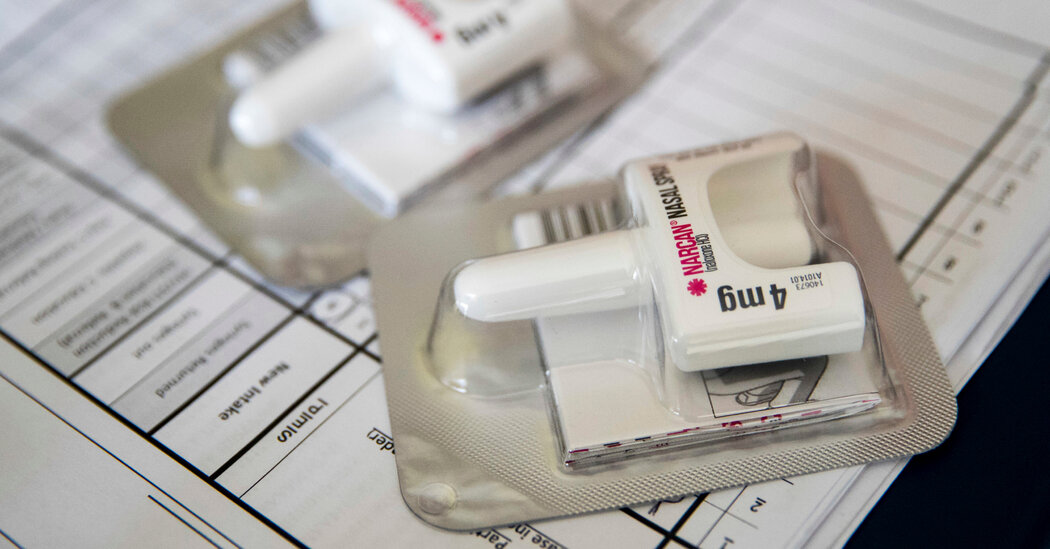
The overdose reversal drug has been administered mostly by emergency responders and outreach workers. If the agency approves a nonprescription version, it could become as easily available as aspirin.Two federal panels of addiction experts on Wednesday unanimously recommended that Narcan, the overdose-reversing nasal spray, be made widely available without a prescription, a significant step in the effort to stem skyrocketing drug fatalities.Making Narcan an over-the-counter drug has been urged by doctors, patient advocacy groups and the Biden administration.The unanimous vote by the committees, which advise the Food and Drug Administration, makes it highly likely that the F.D.A. will approve an over-the-counter version, also known generically as naloxone, next month. It could potentially become available in vending machines, schools, convenience shops, big box stores and supermarkets by summer.As the overdose crisis worsened in recent years, the use of Narcan has become commonplace, but the millions of doses have been administered largely by outreach workers, health care providers and emergency responders. For people who use drugs as well as their friends and relatives, ready access to the prescription medication has been elusive.Many public health experts believe that if more people were to have the spray readily available at home, or in their pockets or knapsacks, many fatalities could be averted.Fentanyl Overdoses: What to KnowCard 1 of 5Devastating losses.

Read more →