Helping Stroke Patients Regain Movement in Their Hands
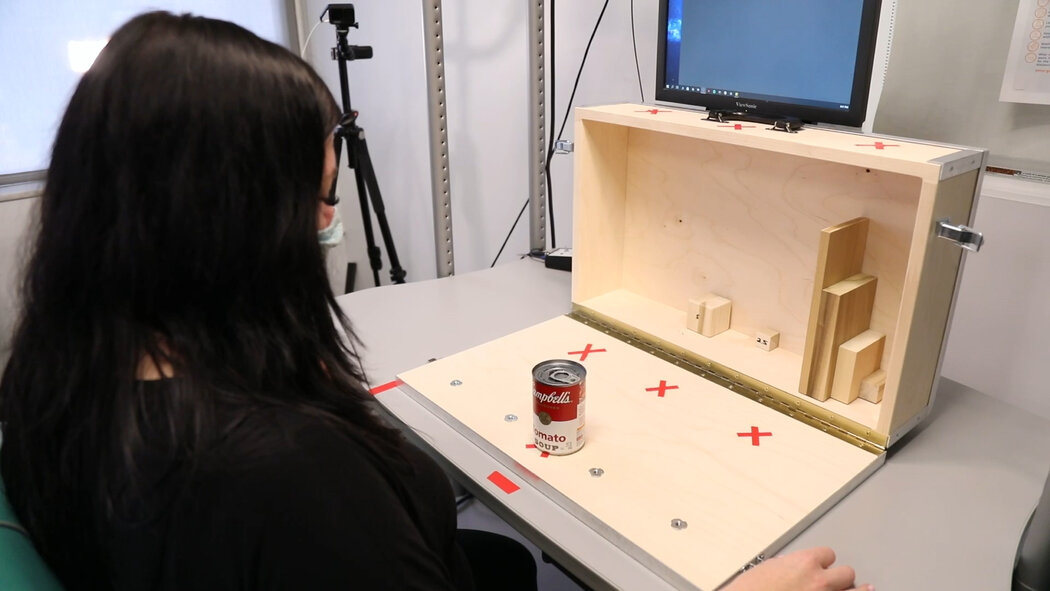
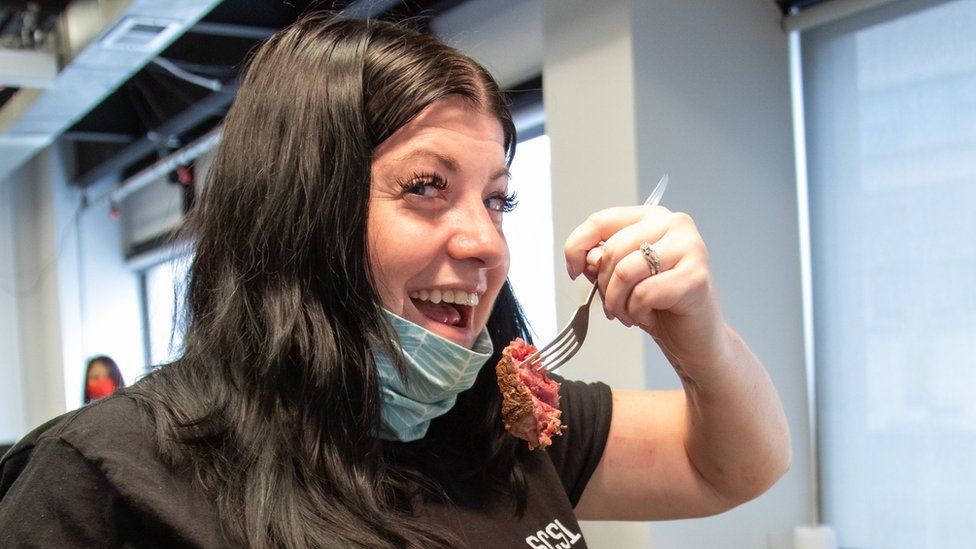
Heather Rendulic was 23 when she suffered a stroke that disabled her left side. Ten years later, her left arm and hand remain so impaired that she cannot tie her shoes, type with two hands or cut her own food.But for an extraordinary month, while participating in an innovative study, she suddenly was able to open a padlock with a key, draw a map of Italy, dip a chicken nugget in sauce and eat it with a fork — all with that left hand.“It was like I actually had two arms, oh my gosh!” Ms. Rendulic said recently.Researchers from the University of Pittsburgh and Carnegie Mellon University implanted electrodes along her spinal cord , delivering electrical stimulation while she tried different activities. With stimulation, her left arm had greater mobility, her fingers had more dexterity, and she could make intentional movements more quickly and fluidly.The study, published Monday in the journal Nature Medicine, represents the first successful demonstration of spinal cord stimulation to address weakness and paralysis in the arms and hands of stroke patients.The study was small and preliminary, involving only Ms. Rendulic and another patient. Several scientists said many questions remain about the technique’s effectiveness and applicability, but that the research suggested spinal cord stimulation could eventually help some of the many people who experience strokes.“I think there’s enormous implications for improving quality of life,” said Dr. Lumy Sawaki-Adams, the program director in the clinical research division of the National Institute of Neurological Disorders and Stroke, who was not involved in the research. Still, she said, “we have to be cautious that we’re not offering hope to many people when I think we’re not there yet.”Spinal cord stimulation has been used for decades to treat chronic pain. More recently, experiments delivering stimulation — either through surgically implanted electrodes or noninvasively through electrodes placed on the skin — have shown promise in helping patients with spinal cord injuries regain mobility in their legs and, in some cases, their arms and hands.But the approach has been mostly unexplored for stroke, partly because of differences in the location and type of damage, neurological experts said.Because strokes occur in the brain, it had been assumed that applying stimulation outside the brain would not provide “the same bang for the buck,” said Arun Jayaraman, the executive director of the technology and innovation hub at Shirley Ryan AbilityLab, a rehabilitation center in Chicago. He said the study, which he was not involved in, countered that assumption, instead suggesting that stimulating the spine, the pathway from the brain to hand and arm muscles, may help impaired limbs.Over four weeks, Ms. Rendulic was given increasingly challenging tasks to perform, like grasping and moving a soup can. “I immediately was opening and closing my hand,” she said. “We all broke down in tears.”Powell et al., University of Pittsburgh and Carnegie Mellon UniversityEach year, more than 12 million people worldwide and nearly 800,000 in the United States experience strokes, said Dr. Karen Furie, the vice chair of the American Stroke Association’s stroke brain health science subcommittee.Initially, patients typically receive about six months of physical, occupational and other therapies, she said, but then progress often plateaus.“We have virtually nothing to offer people who are years out and have longstanding disabilities,” said Dr. Furie, who is also the chair of neurology at Brown University’s Warren Alpert Medical School and was not involved in the study.About three-quarters of stroke patients experience impairment, weakness or paralysis in their arms and hands, said Dr. Elliot Roth, an attending physician at Shirley Ryan AbilityLab’s Brain Innovation Center, who was not involved in the study. “For many people, it’s the toughest part of the stroke recovery process and tends to recover the slowest,” he said.The patients who participated in the study had experienced different types of strokes and had varying degrees of impairment. Ms. Rendulic’s stroke was hemorrhagic, caused by bursting blood vessels. The other, more severely impaired patient, a 47-year-old woman whom researchers did not identify, experienced an ischemic stroke, which is more common and involves blocked blood vessels.Researchers implanted strands of eight electrodes in two locations, corresponding to where neurosensory fibers from the arm and the hand enter the spinal cord.Marco Capogrosso, an assistant professor of neurological surgery at the University of Pittsburgh, said that the approach derived from the fact that with strokes, some neural areas remain undamaged.“So, if we can build this technology to amplify neural signals, maybe we have a chance to restore arm and hand movement,” said Dr. Capogrosso, who led the research with Elvira Pirondini, an assistant professor of physical medicine and rehabilitation at the University of Pittsburgh, and Douglas Weber, a professor of mechanical engineering at Carnegie Mellon’s Neuroscience Institute.Five days a week for four hours each day, researchers activated the stimulation, calibrated it to determine optimal parameters for each patient and asked them to attempt various movements and tasks. Right away, the effect was noticeable.“The very first day in the lab and the first time they turned it on, I was sitting in a chair, and they asked me to open and close my hand, and that’s something that’s really difficult for me,” Ms. Rendulic said. As her husband and mother watched, “I immediately was opening and closing my hand,” she said. “We all broke down in tears.”Ms. Rendulic said she would welcome another opportunity to have spinal cord stimulation. “I did threaten to not show up to the surgery to get it removed,” she said. “I just wanted it all the time.”Kristian Thacker for The New York TimesOver four weeks, she was given increasingly challenging tasks, like gripping and moving a soup can. With stimulation, her left hand moved 14 small blocks over a barrier in a box, compared with six blocks without stimulation.Typically, when Ms. Rendulic, 33, who works at home for a company’s human resources department, tries to make her left hand do something like grasp a pen, her arm feels like “it’s made of rock,” almost disconnected from her brain, she said. With stimulation “it was like my brain was able to find my left arm so much easier.”The other patient, who was given simpler tasks because her left hand was almost completely paralyzed, improved in skills like reaching.Researchers also tested a “sham” stimulation, activating electrodes randomly to see if patients responded to a kind of placebo effect rather than stimulation targeted specifically to their arms and hands. Both performed better with targeted stimulation.The patients sensed the stimulation, but it didn’t cause pain, rigidity or safety problems, researchers reported.The approved study protocol required removing the electrodes after 29 days. But one month later, the patients retained some improved abilities, surprising researchers. “We thought it was not possible” after only four weeks of stimulation, Dr. Pirondini said.It is unclear exactly why the benefit can persist, Dr. Capogrosso said, but he hypothesized that “the same neural processes that allow these people to use this stimulation method also lead to a recovery of movement when the stimulation is off.” He added, “we’re not creating new fibers, but we’re definitely restrengthening what there is.”Several experts noted that this pilot study was not designed to answer the most relevant question for patients: Can the improvements in laboratory tasks translate into skills that matter in daily life?“It’s a first step among hundreds,” said Dr. Daniel Lu, a professor and vice chairman of neurosurgery at the University of California Los Angeles, who co-authored a 2016 study that showed that spinal stimulation from implanted electrodes improved hand strength and control in two spinal cord injury patients.Dr. Lu said he believes stimulation is promising, but that its impact in the new study was difficult to evaluate because there was no comparison group and patients were not given the same regimen of intensive activities before stimulation — activities that might themselves have therapeutic benefit.“Is it possible that you’re just exercising the patient, and the patient without the stimulation would have gotten the same effect?” he asked.While Ms. Rendulic has devised ways to do activities like driving and typing with only her right hand, everyday frustrations rankle. But, “In the trial, I did get to cut up a steak, which was awesome,” she said.Powell et al., University of Pittsburgh and Carnegie Mellon UniversityAnother question neuroscientists raise is whether — or in what circumstances — it is better to surgically implant electrodes or place them on the skin, a less expensive method called transcutaneous stimulation. The new study’s authors consider surgical implantation superior because it is “much more specific,” said Dr. Weber, allowing it to “target the muscles that control the wrist and the hand.”Others, like Chet Moritz, a professor of neurotechnology at the University of Washington, have reported improvements in spinal cord injury patients using electrodes on the skin, including benefits lasting months after stimulation ends. “It’s true we can’t tune the shoulder to this degree and the elbow to this degree and the wrist to that degree, but the nervous system seems to take care of that for us,” he said.Several neurological experts predicted that both methods could eventually be helpful and appropriate for different patients, depending on their health and other factors. All the experts, including the study authors, said stimulation would be more effective if accompanied by rehabilitation therapies.The study’s authors said their continuing research is evaluating patients of varying stroke severity, age and other characteristics to determine who would benefit from their approach. They have formed a company and said they envision that, as with similar technology for chronic pain, patients could adjust their stimulation via app or remote control.If stimulation becomes regularly available to stroke patients, Ms. Rendulic would welcome it. “I did threaten to not show up to the surgery to get it removed,” she said. “I just wanted it all the time.”While she has devised one-handed ways to do activities like driving and typing, everyday frustrations rankle, like needing her husband Mark, whom she calls “my left-hand man,” to slice steak for her.“In the trial, I did get to cut up a steak, which was awesome,” she said. Then, fork in her left hand, she speared a piece and lifted it to her mouth — one previously impossible movement at a time.

Read more →

Tablet-based screening doubles detection of psychosis symptoms in youth

Asking patients to take a short survey on a tablet before their appointments may help mental health providers identify young people at risk of psychosis. A UC Davis Health study found that when patients took a 21-question pre-visit survey, more than twice as many were identified at risk of psychosis compared to those who did not complete the survey.
But despite the improvement in detecting individuals at risk, the technology-based screening did not reduce the time between the participants’ first psychotic symptoms and when they received treatment.
The findings are in a new UC Davis Health study published in JAMA Psychiatry.
Previous studies have shown that the longer the time between the first psychotic incident — such as hallucinations or delusions — and receiving treatment, the more severe the course of the disease. According to the National Institute of Mental Health, psychosis often begins when a person is in his or her late teens to mid-twenties. About 100,000 new cases of psychosis are diagnosed each year in the U.S.
“The addition of a brief screener at the initial evaluation can make a dramatic difference in clinical decision-making, helping you to realize that an individual needs specialized care,” said Tara A. Niendam, first author of the study. Niendam is a professor and executive director of the UC Davis Health Early Psychosis Programs.
Methods
Data came from ten community clinics and four school sites. Sites were divided by those that used tablets for screening (“active screening”) and those that screened using clinical judgment (“treatment as usual”).

For the sites with active screening, individuals between the ages of 12 and 30 completed a questionnaire on a tablet before their visit with a mental health care provider.
Known as the PQ-B (Prodromal Questionnaire, Brief Version), questions included “Do familiar surroundings sometimes seem strange, confusing, threatening or unreal to you?” and “Have you seen things that other people can’t see or don’t seem to see?”
If the questionnaire score was 20 or above, the participant was offered a referral to an early psychosis clinic for further evaluation.
Sites not using active screening relied on clinical judgment for further evaluation and referrals to early psychosis clinics.
Results
The researchers evaluated data from 2,432 individuals at the active-screening sites and 2,455 at the treatment-as-usual sites.

Active-screening sites reported a significantly higher detection rate of psychosis spectrum disorders, with 136 cases (5.6%), compared to 65 (2.6%) in the sites that did not use the tablet screening.
The active-screening sites also referred 13 individuals with first-episode psychosis compared to four in the sites that did not use active screening.
But despite the early detection, the data showed no statistically significant difference in the duration of untreated psychosis. The mean for the active screening group was 239 days. The mean was 262.3 for the treatment-as-usual group.
The researchers noted this was likely due to multiple factors leading to delayed access to the mental health system in the U.S.
“On average, our participants experienced untreated psychosis for approximately six months before presenting at one of our participating clinic sites,” said Mark Savill, assistant professor in the Department of Psychiatry and Behavioral Sciences and a co-author of the study. “A multifaceted approach that focuses on supporting individuals to seek help quicker and improving the pathway to appropriate services once they present for care may be necessary to achieve meaningful reductions in the duration of untreated psychosis.”
Young people at risk are not being identified
Twenty-four sites agreed to participate. However, only ten community clinics and four school sites were able to fully implement the screening. Some study sites, such as primary care clinics, faced challenges implementing the screenings and reporting feedback; schools struggled with staffing issues and parent engagement.
The setbacks highlight some of the challenges that might be faced scaling up programs that offer the active screening. But the results highlight how many young people at risk of psychosis are not being identified with the current system.
“Population-based screening for psychosis has not been addressed systematically in the U.S. prior to this study,” said Cameron S. Carter, senior author of the paper. Carter is a distinguished professor of psychiatry and psychology and director of the UC Davis Health Imaging Research Center and the Behavioral Health Center for Excellence.
“Our increased identification of cases using the PQ-B questionnaire is an important finding. More people in this active group are getting into care,” Carter said. “That’s important because we know from previous research that individuals who are identified and receive treatment at the very early stages in their illness are likely to have the best outcomes.”
If you or a loved one think you may be experiencing symptoms of psychosis, the Early Psychosis Programs at UC Davis Health offer a free online screening survey.
Additional authors on the study includeTyler A. Lesh, Daniel Ragland, Khalima Bolden, Haley Skymba, Sarah Gobrial, Monet Meyer, Katherine Pierce, Adi Rosenthal, Taylor Fedechko, Laura Tully, Valerie Tryon, Rosemary Cress and Richard Kravitz from UC Davis; Rachel Loewy and Kevin Delucchi from UCSF; and Howard Goldman from University of Maryland, Baltimore.

Read more →

Japan aims to raise age of consent from 13 to 16 in sex crime overhaul

Published1 hour agoShareclose panelShare pageCopy linkAbout sharingImage source, AFPBy Imogen JamesBBC News A panel of the Japanese Justice Ministry has proposed raising the age of consent from 13 to 16.It forms part of a wider overhaul of Japan’s laws on sex crimes, after multiple rape acquittals in 2019 caused outcry. The proposal also aims to criminalise the grooming of minors and expand the definition of rape. The statue of limitations for reporting rape will also be increased to 15 from 10 years.Currently, Japan has the lowest age of consent in developed countries, and the lowest in the G7 group. In Germany and Italy the age is 14, in Greece and France it is 15 and in the UK and many US states it is 16. The current law in Japan means victims of rape need to prove that there was “violence and intimidation” used during the rape and that it was “impossible to resist” to secure a conviction. The panel has not changed this wording but instead added other factors including intoxication, drugging, being caught off guard and psychological control into the definition. Justice Ministry official Yusuke Asanuma said that this “isn’t meant to make it easier or harder” for victims to win a rape case but that it should make verdicts “more consistent”. The re-examination of the sex crime laws comes after widespread demonstrations in 2019 following a number of acquittals. One case saw a man go free after being accused of having sex with his teenaged daughter, even though the court agreed that it was against her will. He was later sent to prison after prosecutors appealed. Another saw a man found not guilty of raping a woman who had passed out from drinking because he “misunderstood” that she consented to having sex. The government could pass the law as early as summer. Despite the potential change to the age of consent, an exception will still exist for intercourse between people who are at least 13 and who have an age gap of less than five years. More on this storyWhere an abortion pill will need a partner’s consent31 August 2022Japan was the future but it’s stuck in the past20 JanuaryJournalist wins Japan civil rape case18 December 2019

Read more →

Implant gives hand control nine years after stroke

Published11 minutes agoShareclose panelShare pageCopy linkAbout sharingImage source, Tim Betler, University of PittsburghBy James GallagherHealth and science correspondentElectrically stimulating the spinal cord instantly restores some ability to control the arm and hands in people who have had a stroke, US researchers say.Heather Rendulic, from Pittsburgh, was able to cut and eat a steak by herself for the first time in nine years. She said the technology was “nothing short of amazing”.The University of Pittsburgh team say more research is needed to see who can benefit, as the spinal implants have been tested in only two people.Strokes disrupt the blood supply in the brain and lead to brain cells dying. This often leaves those that survive with long-term health problems.People can retain the desire and intent to move but the instructions from the brain become so weak nothing happens.Never recoveredWhen Heather was in her early 20s, she was diagnosed with a cluster of abnormal blood vessels in her brain – a cavernous angioma. It bled multiple times and led to a large stroke. One morning, she woke up unable to move the left side of her body. In the nine years that followed, Heather learned to walk again but control of her left arm and hand never recovered – “something I struggle with every day”. Even the simplest tasks, such as putting on shoes, became a challenge. Before having the procedure, Heather’s goal was “to be able to cut a piece of steak”, as she relied on her husband to do it. Image source, Tim Betler, University of Pittsburgh Heather had electrodes implanted in her neck so parts of her spinal cord could be stimulated. The nervous system communicates with electricity – but after Heather’s stroke, the electrical signals travelling from her brain were too weak to activate the nerves controlling her arm and hand movements. Stimulation excites the nerves so they are already itching to respond – and now, those weak messages are enough to trigger movement. It worked on the first day and Heather was able to open and close her hand for the first time in nine years.’Started crying'”Nobody was expecting it would work that fast,” Dr Marco Capogrosso, from the University of Pittsburgh, told me.”She started crying, the family was there and they started crying and then all of us started crying, so it was a very, very emotional moment.”Heather was “moving my arm and hand in ways I haven’t for almost a decade”.And she got her steak. Image source, Tim Betler, University of PittsburghImage source, Tim Betler, University of PittsburghThe details, published in the journal Nature Medicine, showed the device worked in Heather and one other volunteer. However, the experiment was designed to last for only a month – after which, the electrodes were removed and the beneficial stimulation was gone. But the researchers say the results give a glimpse into the future, where implants could make meaningful differences to people’s lives. Dr Marco Capogrosso told me: “Our patients recover but they don’t become completely normal.”They can recover a lot of independence and a lot of quality of life, just because they can use their arm and hand now, even though they probably cannot play the piano.”The team believe the field could advance quickly as they are using technologies already approved for managing severe pain. But for now, it will take more clinical trials to work out who benefits and how to move the equipment from the laboratory to the home. Dr Rubina Ahmed from the Stroke Association said: “The research is still in the early stages and surgical implants may not be suitable for everyone. Non-invasive stimulation methods are also being tested which could be used by a wider range of people.” Follow James on Twitter.

Read more →

Nurses Are Burned Out. Can Hospitals Change in Time to Keep Them?

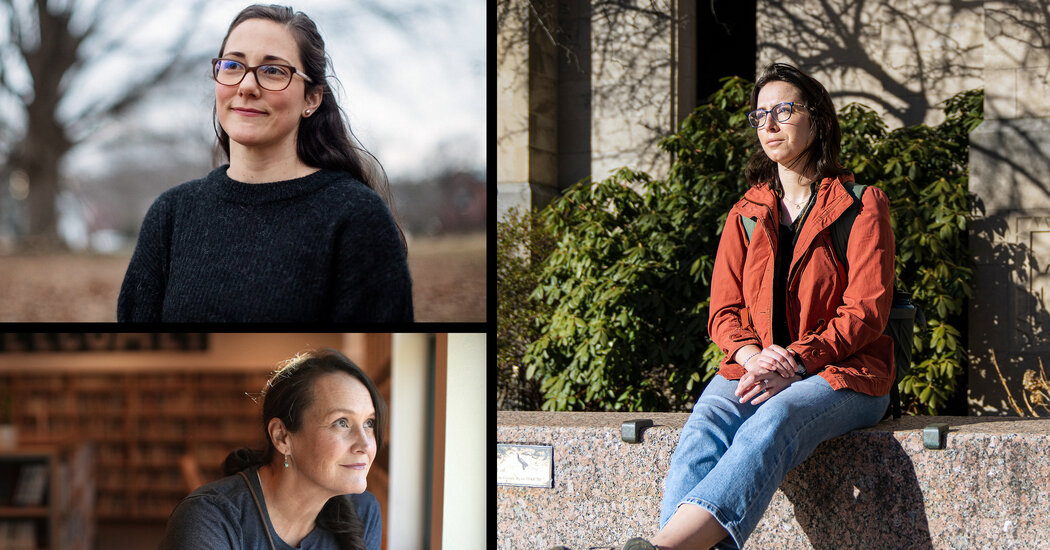
The pandemic has pushed already stressed nurses away from a demanding field. Does the job need to be rethought?Calling It Quits is a series about the current culture of quitting.One morning, in fall 2020, Francesca Camacho drove away from her 12-hour night shift as a critical care nurse at Rush University Medical Center in Chicago and tried to merge onto the highway. The day’s work, in her words, was “just very terrible.” This wasn’t uncommon at the time: The Cook County area was experiencing the highest levels of Covid hospitalization it had ever experienced, surpassed only by the Omicron variant wave the following year.She was on the phone with her parents, a ritual she’d developed as a way to decompress after a shift, when she noticed what appeared to be a teenage driver in front of her.“I remember thinking, What is this girl doing that justifies her not letting me in?” Ms. Camacho, now 27, recalled. “And I just felt this surge of rage.” She hung up the phone and screamed and cried for the rest of the drive home.The next day, she asked her co-workers if anything similar had ever happened to them; they all said yes. Lunchtime therapy sessions with fellow nurses turned into professional therapy sessions. “It really was feelings of anger that I felt, and I think very deep underneath that was just terrible sadness about what I was seeing and what we were all going through,” she said recently.Last August, she quit her job. She is now a first-year law student at Boston University and plans to use her law degree to advocate changes in the medical field.Burnout has always been a part of nursing, an effect of long working hours in physically and often emotionally taxing environments. The Covid pandemic exacerbated those factors and added some of its own: understaffing, a rise in violence and hostility toward health care workers over masking mandates and an increase in deaths, particularly in the early months of the pandemic. In a study from the American Nurses Foundation, released last month, 57 percent of 12,581 surveyed nurses said they had felt “exhausted” over the past two weeks, and 43 percent said they felt “burned out.” Just 20 percent said they felt valued. (Those numbers were largely consistent throughout the pandemic.)“It really was feelings of anger that I felt, and I think very deep underneath that was just terrible sadness about what I was seeing and what we were all going through,” Ms. Camacho said of her time as a nurse during the early days of the pandemic. Vanessa Leroy for The New York Times“Burnout and our current issues have been going on for decades,” said Jennifer Mensik Kennedy, the president of the American Nurses Association. “So what did we learn from the last couple of years? That we need to make sure that we implement programs and processes to decrease the burnout and to improve the work environment. Because Covid is not the last pandemic, or the last major issue to happen.”For some, those well-intentioned changes may not come soon enough: Forty-three percent of those surveyed by the American Nurses Foundation said they were at least thinking about switching jobs. Some, like Ms. Camacho, have left the profession. Others are shifting roles.Kelly Schmidt, 52, spent 25 years working in the newborn I.C.U. at a hospital near her home in San Anselmo, Calif. She was drawn to the job — she credits that to her mother’s work as a midwife and her own “innate sense to want to protect them and heal them” — and found herself doing whatever it took: riding in the back of ambulances, flying in transport planes over the Pacific or in helicopters through the Bay Area fog.More on the Coronavirus PandemicLeaving Millions on the Table: Stop-and-go federal funding floods public health agencies with cash during crises but starves them of funds afterward. In Mississippi, the pandemic showed the pitfalls of that approach.New Drug’s Long Odds: A promising new treatment quashes all Covid variants, but regulatory hurdles and a lack of funding make it unlikely to reach the United States market anytime soon.Dangers Remain for Seniors: For older Americans, the Covid pandemic still poses significant threats. But they are increasingly left to protect themselves as the rest of the country abandons precautions.N.Y.C.’s Mandate: New York City will end its aggressive but contentious vaccine mandate for municipal workers, Mayor Eric Adams announced, signaling a key moment in the city’s long battle against the pandemic.She loved her job, her patients and her co-workers, but over the years other challenges materialized. The transition from physical charts to electronic medical records took her away from her patients’ sides, and, just as the pandemic hit, a transition to a management role tasked her and a co-worker with overseeing more than 90 employees. As nurses themselves began to fall sick and quarantine, the stress grew and the healthy staff ranks thinned, and Ms. Schmidt said she “emotionally started feeling like a robot.”Then, last May, she found herself on the bottom mattress of her daughter’s bunk bed, sick with Covid and quarantined from the rest of her family. She found herself reassessing the two-hour commutes, the emotional labor of the job, the compartmentalization. She saw a job listing for a nearby school nurse position, dusted off and updated her 23-year-old résumé and, on a Sunday night, applied. The district called her on Monday, interviewed her over a video call on Tuesday (“I practically was keeling over by then,” Ms. Schmidt recalled) and offered her the job by the end of the week.“I didn’t want to leave my job hating it,” Ms. Schmidt, now a school nurse, said. “I wanted to leave on a high note. And now I have pictures of the helicopter on my desk and I can chitchat with the little kids and try to figure out if they’re sick or not.”Jim Wilson/The New York Times“I don’t want people to think the job I left was a bad job,” she said. “It was just time for me to go. I’ve had other colleagues say, ‘I don’t want to leave my job hating it,’ so they retire early. I didn’t want to leave my job hating it. I wanted to leave on a high note. And now I have pictures of the helicopter on my desk and I can chitchat with the little kids and try to figure out if they’re sick or not.”Some hospitals recognized there was a problem before the pandemic and tried to fix it. Kathleen Littleton, 35, of Baltimore, not only worked at Johns Hopkins Hospital (and received her master’s degree in nursing science at its university), but served as an instructor in the nursing school as well. The hospital utilized the research of Cynda Hylton Rushton, a clinical ethics professor at the nursing school, specifically “the Mindful Ethical Practice and Resilience Academy,” a program that focuses on mindfulness and meditation to combat burnout, with some success.Then the pandemic hit and, Ms. Littleton recalled, there was, practically speaking, no time to think about mindfulness or meditation.As the Johns Hopkins I.C.U. began to fill in spring 2020, Ms. Littleton’s mental health plummeted. By November she had transferred to the hospital’s labor and delivery wing, thinking it would be less stressful. Instead, she saw a handful of Covid-infected mothers go directly from C-sections to life support.In October 2021, she left Hopkins for a travel-nurse job that paid her three times what she made at her previous role but also put her face-to-face with different tragedies: gunshot wounds, car accidents, stabbings, train crashes. She was regularly disassociating, she said, looking down at her hands and wondering whose they were. In the bath one day she envisioned the light above her falling into the tub and electrocuting her.“Whenever people ask casually — like, ‘How are you doing?’ — nobody really wants to hear the answer,” Ms. Littleton said. “So much of what happens in the hospital, it’s almost impossible to describe to your friends or family members who aren’t involved in health care. And it’s hard to talk about mental health. In nursing, sometimes it’s frowned upon when people say, ‘Oh I feel so burned out.’ It’s almost like a shameful way to approach it.”At her therapist’s suggestion, she checked off the days until her contract ended in May 2022. With the extra money she had saved from the pay bump she took an extended honeymoon through Spain, Portugal and the Netherlands. She now works for an insurance company doing health promotion and engagement.“Now I’m finding myself just randomly making blueberry scones at 9:30 at night, or deciding with my husband to go see our friends play music at this bar spontaneously,” she said. “I’ve become much less … rigid.”That said, she’s also in therapy for post-traumatic stress disorder, and, like every other nurse interviewed for this story, has felt some level of guilt for her decision to leave her job.Ms. Littleton, and her husband, Alex Lacquement, preparing chili for dinner with friends in their Baltimore home. Though things have improved, she is in therapy for post-traumatic stress disorder. Rosem Morton for The New York Times“I feel so guilty that I am not in the hospital still, and I also really mourn the loss of my critical care career,” Ms. Littleton said. “I’m disappointed not in myself — because it’s not fair to blame myself — but I’m really disappointed that I just can’t do it anymore.”One thing that’s not an issue, Dr. Mensik Kennedy of the American Nurses Association said, is interest in the field. Conventional wisdom — and Dr. Mensik Kennedy’s own expectations — would presume that, with these intense levels of stress and burnout, interest in nursing would wane. Yet there were 60,000 qualified nursing applicants turned away from nursing schools this past year, according to the A.N.A.As experienced nurses leave the profession, there are fewer and fewer opportunities for students to get the hands-on, in-hospital training that is necessary for the profession, which in turn leads to nursing schools not producing enough graduates to fill the gap. Fix the burnout and staffing issues, Dr. Mensik Kennedy said, and the infrastructure can once again support the necessary amount of new graduates needed to fill the nursing gap.The most important way to start, she said, is to regularly measure nurses’ stress levels, to take action when they begins to climb and to change the glorification of working without breaks.For Ms. Schmidt, the former N.I.C.U. nurse, that stress has eased with her new role. “It’s still hard work,” she said. “It’s still good work. I still am super busy. But it’s not always life and death.”

Read more →