Elizabeth Koch Knows What You’re Thinking
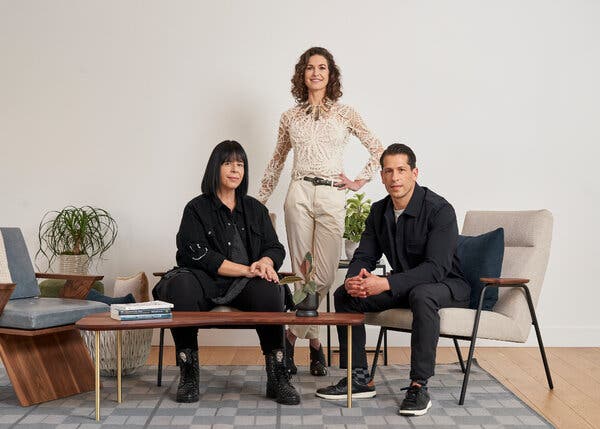
Even as a young girl, Elizabeth R. Koch was keenly aware of her family’s extreme wealth.“My beloved parents, they were paranoid about raising spoiled pieces of — you know — and so I heard about it a lot, and I could see how other people responded to us,” she said. “I sensed it everywhere,” she added. “I didn’t get that it was about the family. I’m just seeing that it’s about me. So I must be bad.”She decided to dedicate her life to one pursuit: “To not be hated,” she said.Ms. Koch, 47, is the daughter of Charles Koch, 87, the billionaire industrialist, climate change boogeyman and far-right political force. His wealth is estimated at roughly $66 billion. Ms. Koch is named after her mother, who goes by Liz. The family is close — everyone spent Christmas together in Las Vegas, staying at the Wynn resort and taking in a mentalist show. But Ms. Koch, at least by her account, has been driven to the brink of insanity by her last name.In a 2007 essay for Smith Magazine, she described her young adulthood as “panic attacks and meltdowns and doctors and pharmaceuticals and terrifying my parents and staring down that dark well of nothing you do will ever be good enough you privileged waste of flesh.” A couple of years later, she lied to classmates at Syracuse University, where she was working on an M.F.A. in fiction, insisting that her name was pronounced “kotch,” no relation to those “cokes,” the ones they may have read sinister things about.Ms. Koch’s anguish may strike you as entirely understandable. Money can be corrosive, especially for the generation that didn’t make it.Or you may have the opposite reaction: It must be really, really hard — eye roll — to be an heiress to one of the biggest fortunes ever accumulated, who graduated from an Ivy League university (Princeton) and is now married to a successful biotech entrepreneur. They recently vacationed in Bali.When Ms. Koch first came on my radar, I was firmly in the second camp.A publicist named Scott Rowe had called to propose an article on Ms. Koch and her nonprofit organization, Unlikely Collaborators, which is all about self-investigation. According to its website, the organization is dedicated to the creation of “provocative experiences that help you face who you think you are.” The site adds, “Our experiences use a process of self-investigation that encompasses principles and practices from eastern and western thought, meditation, psychology, and neuroscience — designed to expand your understanding of self, others, and the whole damned world.”Oh, brother.Mr. Rowe kept pushing, telling me that Ms. Koch started Unlikely Collaborators in 2021 after emerging from years of depression, obsessive-compulsive disorder, an eating disorder and a stint in a mental institution. Serious people have joined Unlikely Collaborators in leadership roles, including Lisa Gregorian, a former president of the Warner Bros. Television Group. So far, Unlikely Collaborators has given millions of dollars to various partners and earmarked at least $100 million for the next few years.“Your perception is wrong,” Mr. Rowe said. “Just come meet her.”Hugs, blankets and perception boxesSerious people have joined Unlikely Collaborators in leadership roles, including Lisa Gregorian, a former president of the Warner Bros. Television Group, and Zach Goren, a former banker and private equity investor.Philip Cheung for The New York TimesUnlikely Collaborators occupies a sunny loft in Santa Monica, Calif., a community once described as “where liberal ideology meets the sea.” On the afternoon I visited, candles flickered here and there. Someone had put out what looked like 20 pounds of charcuterie. Ms. Gregorian, the nonprofit’s president, was tucked into a stylish chair near Zach Goren, a former investment banker and private equity investor who is Ms. Koch’s finance and operations chief.Suddenly, Ms. Koch stood before me with outstretched arms, soliciting a hug. “Before we begin,” she said, “would you like a blanket?”I declined, and we settled into a conference room. I expected her to be guarded, in keeping with her father’s approach to the news media. Instead, she spoke excitedly for nearly two hours — telling me about her circuitous path to middle age, salting her sentences with profanity and referring to herself as a “privileged, pasty, white girl from the Midwest.” She talked about exploring “pain holes” with a therapist and going on two-week silent retreats. She insisted that she was “apolitical.”Mostly, Ms. Koch wanted to explain something called the Perception Box, a term she trademarked in 2021. Unlikely Collaborators is built around the concept, which Ms. Koch wants to use to prompt a global movement of self-investigation.“We all live inside an invisible but ever-present mental box — a Perception Box,” Ms. Koch began. “This box distorts our perceptions of everything and everyone around us. It distorts our ability to understand other people, to see them clearly, to connect with them. And it distorts our ability to really even know ourselves.”She adjusted the blanket on her lap.“Most of the external conflict, messiness and miscommunication in the world — in corporations, in relationships, in families, in every aspect of our lives — is caused by internal conflict,” Ms. Koch continued. “And most of the internal conflict is caused by unconscious beliefs that we have been carrying around since we are very young — like zero to 5 — and that we project on everyone around us.”Unlikely Collaborators intends to help people become aware of their Perception Boxes through workshops, lectures and summits. (In 2021, Ms. Koch led a workshop for the Los Angeles chapter of the Red Cross. More recently, she has been offering a workshop titled “What I Think You Think About Me.”) Unlikely Collaborators also plans to publish books and, eventually, produce films with Perception Box themes.In addition, Unlikely Collaborators invests in companies and nonprofit organizations that are aligned with its mission, Ms. Koch said. She helped fund and develop curriculum for Moral Courage College, which describes its purpose as training people to “lower their emotional defenses so that contentious issues can be turned into constructive conversations.” Millions of dollars have gone to SIY Global, a firm that provides mindfulness and emotional intelligence training. Ms. Koch and Unlikely Collaborators have also donated money to the Multidisciplinary Association for Psychedelic Studies, which, among other things, conducts research into the mental health benefits of MDMA, the club drug popularly known as Ecstasy and Molly.“I know this is a lot to throw at people,” Ms. Koch said, apparently reading my mind. “Let’s go back to Perception Box. That’s where it begins and ends.”She jumped to her feet and started writing on a white board, calling out each word with flourish in a demonstration of one of her workshops.“I don’t matter.”“I’m not good enough.”“I’m bad.”She asked me to envision a person — a writer, perhaps. This person misses deadlines because they are “constantly worrying about making it perfect,” she said. “It has to be better. It has to be better. No, no, no. Not there yet.” That thinking can be painful and ultimately even professionally paralyzing.“That person is running a Perception Box story in their head,” she said, “and it’s an obvious one: I’m not good enough.”I grimaced and told her that I could be that writer.“Who are you still trying to please, and who are you still rebelling against?” she asked me, now firmly in teacher-student mode.I squirmed and thought about how it was really stupid of me to say no to that blanket.“Probably Daddy,” I said, almost in a whisper.She sighed and sat down.“I have that issue too,” she said. “I’ve done a lot of work on it. A lot of love there. But, yeah.”‘She can actually read a science paper.’Ms. Koch is the daughter of Charles Koch, the billionaire industrialist, climate change boogeyman and far-right political force.David Zalubowski/Associated PressIn 2009, Charles Koch was in the hospital. He was getting a shoulder replaced, and his daughter was at his bedside. She had become interested in neuroplasticity — the brain’s ability to change and reorganize thought patterns — and wanted to discuss her early findings.“Are you sure you’re busy enough?” he said.People who prattle on about “wellness” and self-investigation can be exhausting: Oh no, not another trendy product or program or yoga class or brain exercise or therapy or gauzy self-help book. McKinsey & Company estimates that wellness is a $1.5 trillion global industry, with annual growth of up to 10 percent. Sleep consultants. Ketamine clinics. Cleanses, detoxes, neutraceuticals. Meditation apps. Wellness tourism. Instagram influencers peddling holistic everything.Perception Box?“Some of what I hear about in the wellness space makes my eyes roll,” said Lisa Feldman Barrett, a neuroscientist and professor of psychology at Northeastern University. “But I think that Elizabeth is doing very, very admirable work — to get people to be more empathic toward one another and to help people realize the ways in which their own past experience influences who they are in the present. Your brain is making predictions about what’s going to happen next, what you will do next, what you will see next, what you will feel next. And those predictions come from your past experience.”Ms. Barrett added, “I think Perception Box is a good metaphor.”The women got to know each other in 2018, when Ms. Koch invited Ms. Barrett to attend an Unlikely Collaborators retreat. Ms. Barrett had just written the book “How Emotions Are Made,” and Ms. Koch was formulating her Perception Box ideas, in part by funding research into emotions and consciousness. In 2014, Ms. Koch started Tiny Blue Dot, a research foundation, and hired Christof Koch (no relation) to run it; he is also a former president of the Allen Institute for Brain Science, where he continues to serve as a chief scientist, in Seattle.“As far as I can tell, Elizabeth is trying really hard to make sure everything she does is consistent with our best available guess of what’s going on scientifically,” Ms. Barrett said. “She actually can read a science paper. Like, for real. As well as one of my better-trained graduate students.”Ms. Koch is self-conscious about coming across as one of those “hippy dippy woo-woo people,” as she put it. But there is also no way around it: Ms. Koch is a bit woo-woo, even by California standards. She seeks out the occasional shaman. As part of her own mental health journey, she has explored psychedelics as medicine. Psychedelics remain mostly illegal, but regulators are moving toward the approval of MDMA and psilocybin, the psychoactive component in magic mushrooms, as therapist-supervised treatments for post-traumatic stress and depression.“When I did my own MDMA therapy, there were Looney Tunes characters coming out of my body,” Ms. Koch told me matter-of-factly. “The witch, Sylvester, that viking chick who sings the opera. When I was little and forming my Perception Box, I sucked them in somehow.”This is the offspring of Charles Koch?Mr. Koch declined to be interviewed. In an email, he said he was “delighted” and “couldn’t be more proud” that his daughter had “dedicated her life to making the world a better place for everyone.”“We wanted our kids to discover their gifts and where they could passionately apply them to help others improve their lives,” he said. “For most of us, this takes time and involves struggle and trial and error. Our children were no exceptions.”Life with fatherMs. Koch is self-conscious about coming across as one of those “hippy dippy woo-woo people,” as she put it.Philip Cheung for The New York TimesMs. Koch’s fascination — some might say obsession — with self identity and perception started when she was growing up in Wichita, Kan. She attended private school, as did her brother, Chase, who is two years younger. (He runs Koch Disruptive Technologies, a venture capital firm connected to Koch Industries, a constellation of businesses that include oil refineries, medical devices, fertilizer, chemicals, paper products and batteries.)“It’s not like growing up in New York City, where a lot of people are wealthy,” she said. “We were very different in Wichita. I had so much fear that people would hate me.”As an adult, she said, therapists helped her realize that much of what she was telling herself was not real. Most of her anguish, she explained, “had to do with my own stories about never being good enough, the ones I made up in my head — that’s where I got trapped.”As she worked to untangle her knots, she did a lot of searching. She was an editor for a literary humor magazine called Opium. She tried to write a novel. (She’s still trying. “It’s about 1,400 pages with 24 major characters and 30 plot lines.”) She went to Peru to experience ayahuasca, the vomit-inducing hallucinogenic tea. Another time, she found herself at a nudist colony. In 2015, she started a book imprint called Catapult. “Cries for Help, Various” was its first title. (This month, Catapult shut down its online magazine and writing program to “ensure a successful future” for its core book business.)Ms. Koch also dabbled in film finance, serving as an executive producer for “Beasts of No Nation,” starring Idris Elba, and “Harriet,” which was nominated for two Oscars.I found her easygoing and upbeat. She laughed when I asked how much money she had inherited. (I pressed, and, Mr. Rowe, seated nearby, piped up with “no comment.”) One minute Ms. Koch was serious, talking about criminal justice reform, which is a focus of her father’s philanthropy, and the next she was frivolous, telling me about a design studio in Scotland that sells fancy wallpaper.There was one exception to Ms. Koch’s sunny, let-it-all-hang-out demeanor: when I tried to dig into her relationship with her father, whom she calls Pop, and asked what direct role he might have played in her feeling “never good enough” from such a young age. During one of our conversations, she spoke about him pushing her to join the track team in the fourth grade and personally coaching her for a couple of years. “No matter where we went on vacation, he was getting me up at 5 a.m. to run,” she said. In the winter, sometimes while it was snowing, “he would be driving beside me in the car, and, like, usually playing some economics tape, trying to get me to learn while I was running.”Were his expectations too high?“There is no blame there,” she responded, with some steel in her voice. “I was just confused, and I was putting things together in a really distorted way. And then I had so much shame about it that I couldn’t talk about it.”Mr. Koch said in an email, “When the kids were young, I pushed them to work hard and be the best them they could be. That’s the job of a parent — to help their children realize their full potential and live a life of meaning.”No stranger to divisionIt is possible that Ms. Koch will turn Unlikely Collaborators and her Perception Box credo into a success. “This isn’t a three-to-five-year plan,” said Mr. Goren, the financial and operations chief. “She has a multi-decade vision.”But she will never escape the Koch box. Some people will always want something from her that she is either uninterested or unwilling to give — allyship in a fight against her father’s politics, in particular his opposition to climate change laws.“It’s Time to Hold Elizabeth Koch Accountable for Her Family’s Role in the Climate Crisis,” read a headline on a Medium article last year.“She’s never said or done anything to distance herself from her family,” Hilary Plum, an author and academic, wrote in Fence, a nonprofit literary magazine. “Any Koch we want to work with must be a black sheep, an anti-Koch.”Ms. Gregorian, the former Warner Bros. executive and Unlikely Collaborators president, knows that the Kochs are radioactive in certain circles. But because of that very reason, she said Ms. Koch was uniquely suited to lead conversations about bridging divides.“Coming from Hollywood, so much of my world was manufactured authenticity — completely and utterly manufactured,” Ms. Gregorian said. “With Elizabeth, what you see is what you get, which is part of what gives her this incredible ability to connect with people.”“I was skeptical when I met her,” Ms. Gregorian added. “And then I just opened up to her, as if she had hypnotized me.”

Read more →
Nasal decongestant safety review due to rare brain risk

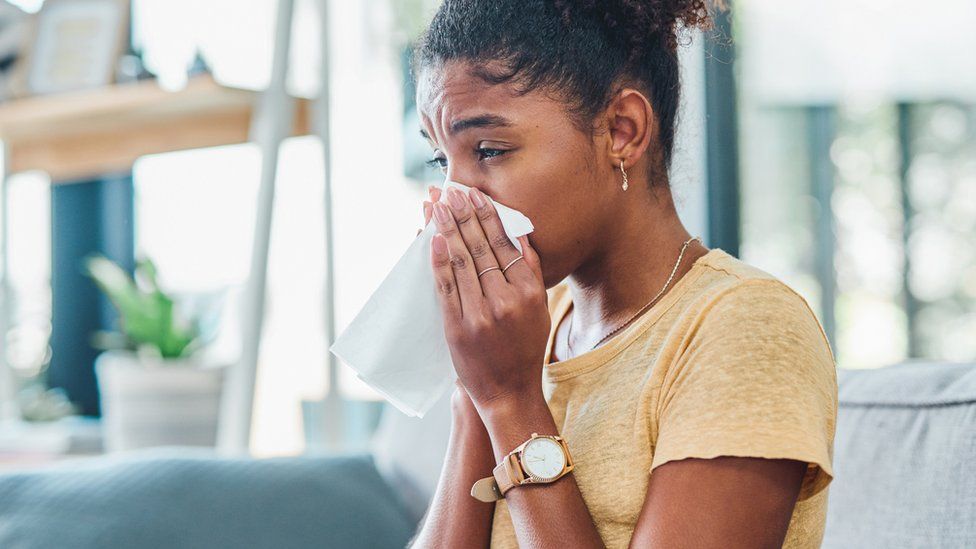
Published2 hours agoShareclose panelShare pageCopy linkAbout sharingImage source, Getty ImagesExperts are assessing a very rare but potentially serious brain side effect of nasal decongestants bought on the High Street. Ones containing pseudoephedrine are being reviewed because they may cause vessels supplying the brain to contract or spasm, reducing blood flow. The concern is this could lead to seizures and even a stroke.However, drug regulators stress the likelihood of this happening is extremely low.Products already include warnings about the rare risks on patient information leaflets that come with the medicines, as well as more common side effects such as headache and dizziness. Experts say anyone with concerns about medication should speak to a doctor or pharmacist. All medicines can have some side effects.People take pseudoephedrine to relieve nasal congestion. It comes in sprays, liquids and tablets, and is sometimes mixed with other medicines for coughs and colds or allergies.The drug can help clear blocked airways and reduce stuffiness through its action on blood vessels in the nose. The UK-wide review for pseudoephedrine was initiated after regulators in France alerted European drugs regulator the EMA, which is also conducting a review, about some recent, rare cases.Experts will look at two brain blood vessel conditions – posterior reversible encephalopathy syndrome (PRES) and reversible cerebral vasoconstriction syndrome (RCVS). RCVS can cause sudden, severe thunderclap headaches that often recur over a span of days to weeks.Symptoms of PRES may include blurred vision, headache, seizures and confusion. In the UK, people can report any suspected side effects from medicines to the Yellow Card scheme, which is run by the Medicines and Healthcare Products Regulatory Agency (MHRA).The MHRA says it has received a very small number of recent reports in this way – one case of PRES where the person recovered and one for RCVS where the outcome was reported as unknown.A spokesman said: “We keep the safety of all medicines under close review to ensure that the benefits outweigh any risks – the safety of the public is our top priority. “We are reviewing the available evidence. We will provide any further advice as appropriate. “If you have any concerns about your medicine, please seek advice from a healthcare professional.”The Royal Pharmaceutical Society (RPS) said pseudoephedrine was widely used and that medicines like this were carefully assessed before being made available to the public. RPS president Prof Claire Anderson said: “When new risks come to light it can be worrying for patients. It’s right that they are investigated by the appropriate authorities and we await the outcome of the EMA and MHRA reviews.”More on this storyBig UK trial to find best drugs to fight flu29 November 2022Related Internet LinksAbout pseudoephedrine – NHSMHRA Yellow Card reporting siteEuropean Medicines AgencyThe BBC is not responsible for the content of external sites.

Read more →

Nitrous oxide: Laughing gas users risk spine damage, say doctors

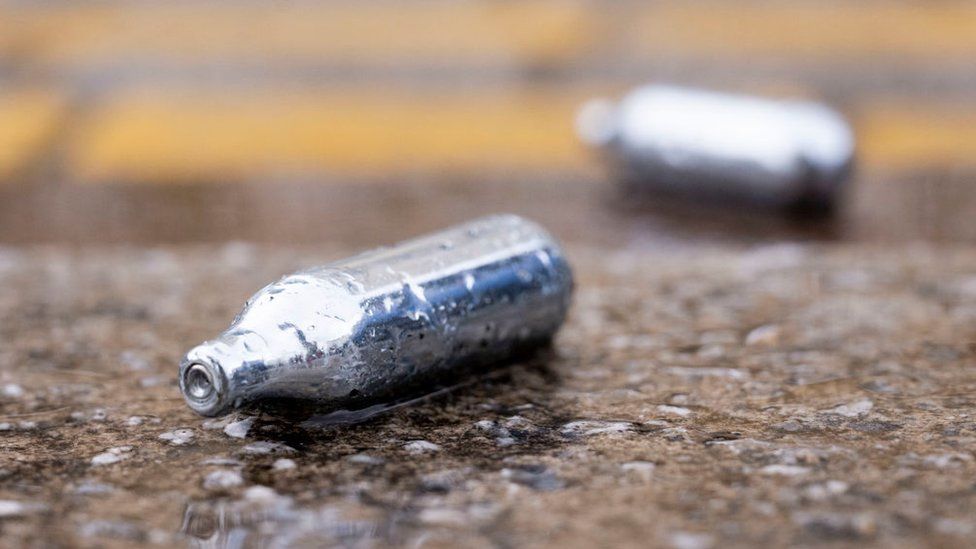
Published3 hours agoShareclose panelShare pageCopy linkAbout sharingImage source, Matthew Horwood/Getty ImagesBy Michelle RobertsDigital health editorDoctors at an east London hospital say they are seeing so many risky cases of laughing gas misuse that they have drawn up treatment guidelines for colleagues in the UK.Nitrous oxide, sold in metal canisters, is one of the most commonly used drugs by 16 to 24-year-olds.Heavy use can lead to a vitamin deficiency that damages nerves in the spinal cord.The Royal London Hospital team say medics need to be on alert.They have been seeing a new case almost every week.Ban on laughing gas considered’I showed son’s ashes to people using laughing gas’These patients come in with nerve-related symptoms – being unable to walk, falling over or experiencing tingling or loss of sensation in their feet and hands.Some have nerve-related bladder or bowel problems or incontinence. Importantly, for NHS workers, few mention nitrous oxide use. Prof Alastair Noyce, a consultant neurologist at Queen Mary University of London, told BBC News: “These are young people we are seeing – teenagers and people in their 20s. “What’s striking now is the severity. We’ve seen that increase over the last 12 months or so.”He said that might be linked to people using large cylinders of the gas which can contain a similar amount to 60 or 70 of the small silver canisters that can be seen scattered on streets and in parks.”If you have been using and you develop symptoms, stop using it immediately and seek medical help as soon as possible,” he said.The drug can damage the nervous system by interfering with the metabolism of vitamin B12. This damages a protective layer on nerves, typically those in the rear of the spine.Correcting the vitamin B12 deficiency quickly, with vitamin injections, can prevent permanent damage. The guidelines, endorsed by the Association of British Neurologists and written with experts from Manchester, Birmingham, Nottingham and the Queen Mary University of London, warn doctors what to look for and how to treat.What are the risks of nitrous oxide? Nitrous oxide slows down your brain and your body’s responsesToo much can make you faint, lose consciousness, or suffocateChronic heavy use can also cause nerve damageInhaling directly from the canister is particularly dangerous – the gas is freezing cold and under high pressure, which can damage the throat and lungs, stop breathing or slow the heartIt can also cause short-lived but intense feelings of paranoiaThe government in England and Wales is considering a ban on use and sales over health concerns. In January, the Netherlands became the first country in the world to make its use illegal.Authorities say the gas can still be used for medical purposes, as an anaesthetic, and in the food industry – as a propellent for making whipped cream. Image source, Emma CainEmma Cain, who lost her son Jon after he used another type of volatile gas called butane, has been warning other young people of the dangers of inhaling substances. Jon died aged 17 from cardiac arrest in 2011 immediately after inhaling the lighter gas.In an interview with the BBC in October, she said: “I’m just one person, trying to stop people from doing it, and if that means I have to stop them on the street, I will do that.”I will tell them it’s dangerous, and that they’re playing with their lives.”Kerry-Anne Donaldson, 26, from London, started taking canisters of laughing gas when she was 18, mostly at parties. The first time Kerry-Anne ended up in hospital, she was seriously ill – but she kept taking it “to chase the first high I felt”.Her legs, hands and feet became increasingly numb and tingly until, last year, she could no longer walk.Image source, Kerry-Anne Donaldson”I was 24 and hadn’t done them since I was 23 – but the damage was still there,” she says.She says she can now get up and get around her flat but cannot walk to the shop. “My message to other people would be ‘don’t do them, it’s not worth it’. “At least educate yourself and know what damage it can cause. I didn’t listen and I hid it from my friends that I was doing it,” she says. The Advisory Council on the Misuse of Drugs is expected to provide a recommendation in 2023 on whether nitrous oxide should be criminalised.Prof Tom Warner, president of the Association of British Neurologists, says using nitrous oxide recreationally carries a significant risk.”These important clinical practice guidelines lay out how to recognise, diagnose and, most importantly, treat those people attending emergency departments… and prevent long-term neurological disability,” he said.This video can not be playedTo play this video you need to enable JavaScript in your browser.More on this storyLaughing gas ban to stop anti-social behaviour26 January’I showed son’s ashes to people using laughing gas’3 October 2022Related Internet LinksPractical Neurology JournalQueen Mary University of LondonThe BBC is not responsible for the content of external sites.

Read more →

Research team creates statistical model to predict COVID-19 resistance

Researchers from Johns Hopkins Medicine and The Johns Hopkins University have created and preliminarily tested what they believe may be one of the first models for predicting who has the highest probability of being resistant to COVID-19 in spite of exposure to SARS-CoV-2, the virus that causes it.
The study is reported online today in the journal PLOS ONE.
“If we can identify which people are naturally able to avoid infection by SARS-CoV-2, we may be able to learn — in addition to societal and behavioral factors — which genetic and environmental differences influence their defense against the virus,” says lead study author Karen (Kai-Wen) Yang, a biomedical engineering graduate student in the Translational Informatics Research and Innovation Lab at The Johns Hopkins University. “That insight could lead to new preventive measures and more highly targeted treatments.”
For its study, the research team set out to determine if a machine-learning statistical model could use health characteristics stored in electronic health records — providing patient data such as comorbidities (other medical conditions) and prescribed medications — as a means to pinpoint people with a natural ability to avoid SARS-CoV-2 infection. Those persons, says Yang, could then be studied to better understand the factors enabling their resistance.
A machine-learning model is a computer program or system that uses mathematical algorithms to find statistical patterns, and then apply the patterns moving forward. This gives such systems the ability to imitate human thinking and reasoning, and similar to the brain, learn over time.
“Using a machine-learning system to recognize complex patterns in large numbers of people with COVID-19 enabled another team of Johns Hopkins Medicine researchers in 2021 to predict the course of an individual patient’s case and determine the likelihood that it would become severe,” says co-senior study author Stuart Ray, M.D., vice chair of medicine for data integrity and analytics, and professor of medicine at the Johns Hopkins University School of Medicine. “Based on their success, our team wondered if the same approach also might be applied to predicting who could be exposed to SARS-CoV-2 in close quarters and still not get infected.”
To demonstrate the model’s ability to predict COVID-19 resistance, the researchers first acquired data from a clinical registry called the Johns Hopkins COVID-19 Precision Medicine Analytics Platform Registry (JH-CROWN). The registry contains information for patients seen within the Johns Hopkins Health System who have been suspected of, or confirmed as, having a SARS-CoV-2 infection.

For their resistance study, the researchers only included individuals who received a COVID-19 test between June 10, 2020, and Dec. 15, 2020, and who reported “potential exposure to the virus” as the reason for testing.
The ending date was the point at which large-scale COVID-19 vaccination efforts started in the United States. Choosing this date, the researchers say, enabled them to avoid the effects on their findings of vaccines preventing infection rather than natural resistance.
The 8,536 study participants who reported exposure as their reason for getting COVID tested were divided into two groups: those who did not share a residence (called a “household” in this study) with any COVID-19 patients or their residence had 10 or more patients; and those who shared a residence with 10 or fewer people, with at least one being a COVID-19 patient. The first group, with 8,476 of the participants, was designated as the Training and Testing Set, while the second group, called the Household Index (HHI) Set, had 60 members, and was used as a separate testing set.
Keeping the household number to 10 or fewer, the researchers say, excluded people living in apartment complexes, dormitories and other higher-density, multi-unit living areas where exposure to a particular person positive for SARS-CoV-2 would be less intense.
To identify patterns and cluster participants so that those naturally resistant to SARS-CoV-2 stand out, both study sets were analyzed using the Maximal-frequent All-confident pattern Selection Pattern-based Clustering (MASPC) algorithm. MASPC is specifically designed for electronic health record data analysis that combines patient demographic information (age, sex and race), the International Statistical Classification of Diseases and Related Health Problems (ICD) medical diagnostic codes relevant to each case, outpatient medication orders and the number of comorbidities (other diseases) present.

“We hypothesized that MASPC would enable us to cluster patients with similar patterns in their data to define them as resistant and non-resistant to SARS-CoV-2, and with the hope that the algorithm would learn with each analysis how to improve the accuracy and reliability of future assignments,” says Ray. “This initial study using JH-CROWN data was conducted to give life to that hypothesis, a proof-of-concept trial of our statistical model to show that resistance to COVID-19 might be predictable based a patient’s clinical and demographic profile.”
“In the Training and Testing Set, we identified 56 patterns of ICD codes split into two groups: associated with resistance or not associated,” Yang says. “Statistical analyses of how well these patterns differentiated between resistance and non-resistance yielded five patterns that did the best job for our small and localized [Baltimore-Washington, D.C., metroplex] study population to define who was most likely exposed to SARS-CoV-2.”
“Looking for these patterns in HHI Set — the individuals most likely to have been exposed to SARS-CoV-2 in close quarters — and then statistically analyzing the results, our model’s best performance was 0.61,” says Ray. “Since a score of 0.5 shows only chance association between the prediction and reality, and 1 is 100% association, this shows the model has promise as a tool for identifying people with COVID-19 resistance who can be further studied,” says Ray.
Limitations to the study, says Ray, include potential bias from self-reporting of COVID-19 exposure by participants, the small number of participants in the HHI group, the possibility that participants tested for SARS-CoV-2 using home kits or at facilities outside the Johns Hopkins system (and therefore, the tests were not recorded in the JH-CROWN database), and the short timeframe of the study itself. He adds that future trails using national patient data are needed to validate the model’s ability.
Along with Yang and Ray, the members of the study team from Johns Hopkins Medicine and Johns Hopkins University are graduate and undergraduate students Yijia Chen, Jacob Desman, Kevin Gorman, Chloé Paris, Ilia Rattsev, Tony Wei and Rebecca Yoo; and faculty co-senior authors Joseph Greenstein and Casey Overby Taylor.
The study authors report no conflicts of interest.

Read more →

Global Declines in Maternal Mortality Have Stalled

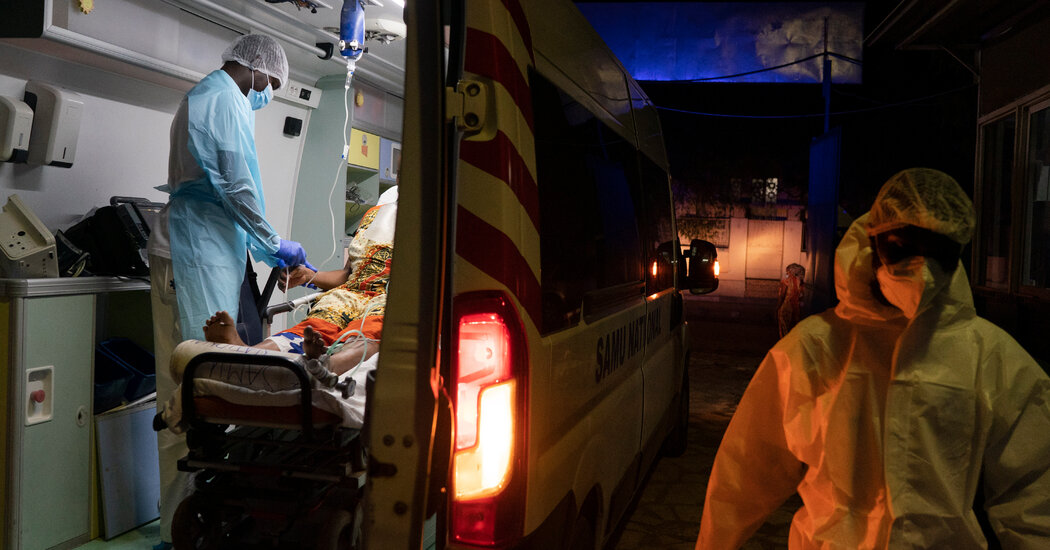
Death rates in the United States have increased in recent years, as they have in Europe, the W.H.O. reported.Although maternal mortality rates declined worldwide from 2000 to 2020, almost 800 women still die of pregnancy-related complications every day, according to a grim report issued Wednesday by the World Health Organization and other agencies of the United Nations.Despite early improvements in maternal health during the 20-year period, progress has stalled in many regions, and in recent years maternal mortality rates have risen sharply in Latin America, the Caribbean and, perhaps surprisingly, in Europe and North America.Most maternal deaths are still concentrated in poor countries and war-torn regions. Girls and women are at greatest risk in sub-Saharan Africa, where 70 percent of global maternal deaths occur. A 15-year-old girl in the region has a 1 in 40 lifetime risk of dying of a cause related to pregnancy.Maternal mortality is also more common in countries experiencing humanitarian crises, such as Yemen, Syria and Afghanistan, where there are 551 maternal deaths for every 100,000 live births — more than double the world average rate of 223 per 100,000.Overall, there were an estimated 287,000 maternal deaths around the globe in 2020, a decrease from the 309,000 deaths in 2016 and the 446,000 deaths in 2000, but one that fell short of expectations. The W.H.O. hopes to reduce the global maternal mortality rate to fewer than 70 deaths per 100,000 live births by 2030.The report defines maternal mortality as deaths that occur during pregnancy or childbirth or up to six weeks after a pregnancy ends. The category also includes deaths caused by unsafe and illegal abortions, which account for up to 10 percent of maternal deaths worldwide.An estimated 270 million women worldwide do not have access to modern family-planning methods, and about half of all pregnancies globally are unplanned, according to Dr. Anshu Banerjee, assistant director general for universal health coverage at the W.H.O.More on the Coronavirus PandemicLeaving Millions on the Table: Stop-and-go federal funding floods public health agencies with cash during crises but starves them of funds afterward. In Mississippi, the pandemic showed the pitfalls of that approach.New Drug’s Long Odds: A promising new treatment quashes all Covid variants, but regulatory hurdles and a lack of funding make it unlikely to reach the United States market anytime soon.Dangers Remain for Seniors: For older Americans, the Covid pandemic still poses significant threats. But they are increasingly left to protect themselves as the rest of the country abandons precautions.N.Y.C.’s Mandate: New York City will end its aggressive but contentious vaccine mandate for municipal workers, Mayor Eric Adams announced, signaling a key moment in the city’s long battle against the pandemic.That leads to 73 million abortions annually, almost half of which are unsafe, he said. “When they’re done under unsafe conditions, bleeding, infections and other adverse incidents will lead to mortality,” Dr. Banerjee said.The pandemic may have also contributed to persistent maternal deaths, since pregnancy puts otherwise young and healthy women at elevated risk for severe disease. But the new report does not fully capture Covid’s impact, as lower-income and developing nations have been slower to tabulate Covid-related maternal deaths.In the United States, maternal deaths rose sharply during the pandemic. In 2021, hundreds of deaths resulted from pregnancy complications exacerbated by Covid infections, according to data from the U.S. Government Accountability Office.But while the pandemic may have contributed to maternal deaths worldwide, it “does not explain the stagnation that we’re seeing,” said Dr. Jenny Cresswell, an epidemiologist at the W.H.O. and one of the new report’s authors.Maternal mortality rates were cut at least by half in 75 nations between 2000 and 2015, but progress has stalled in much of the world since then, she and her colleagues found.The exceptions were Australia and New Zealand, and the W.H.O.’s central and southern Asia regions. There were significant reductions in maternal mortality in those areas, of 35 percent and 16 percent, respectively, between 2016 and 2020.Improvements in India, Pakistan and Bangladesh followed efforts to increase the number of women in remote areas who were giving birth with skilled attendants in primary health care facilities or hospitals close to home, which were able to refer women to more comprehensive care if complications arose.By contrast, maternal mortality increased by 17 percent in Europe and North America between 2016 and 2020, and by 15 percent in Latin American and the Caribbean, the W.H.O. found.The United States and Puerto Rico were among eight countries and territories that experienced significant increases in maternal deaths from 2000 to 2020. (Other countries on that list are Venezuela, Cyprus, Greece, Mauritius, Belize and the Dominican Republic.)Among wealthy industrialized nations, the United States has the highest maternal mortality rate. According to the W.H.O., the rate almost doubled between 2000 and 2020, rising to 21 deaths per 100,000 live births in 2020, or one in 5,000, up from 12 deaths per 100,000 births in 2000, or 1 in 10,000.Stark racial inequities, as well as social and economic disparities, underlie those mortality rates.According to the Centers for Disease Control and Prevention, whose own figures put the U.S. maternal mortality rate for 2020 at 23.8 per 100,000, the risk is almost three times higher for Black women, at 55.3 per 100,000, than for white women, whose mortality rate is 19.1 per 100,000. Native American women also face a much higher risk of dying during and after pregnancy, compared with white women.The leading causes of maternal deaths worldwide are severe bleeding, high blood pressure, infections and complications from unsafe abortions. Underlying conditions like H.I.V./AIDS and malaria can also be aggravated by pregnancy.Most of these deaths are preventable if women have access to quality health care and can plan and space out their pregnancies. But in addition to limited access to contraception, about one-third of women do not have access to good prenatal care throughout gestation, the report found.“In principle, we know what to do,” Dr. Banerjee said. “It’s whether there is political will to allocate funding to it by partners and local governments.”For many women in low-income countries, and especially those in remote regions, access to health care is limited. There are shortages of medical workers, who are unequally distributed between cities and rural areas.In addition, families face high out-of-pocket costs to get care, which may include paying for travel expenses and purchasing medical supplies.“For some people, that means having to sell off their livelihood, livestock or land, and puts them at risk of going into poverty,” Dr. Banerjee said. “That might result in them not actually going to seek care, and that puts the woman at grave risk.”

Read more →