China should be honest on Covid origin, says US envoy

Published7 hours agoShareclose panelShare pageCopy linkAbout sharingImage source, Getty ImagesBy Max MatzaBBC NewsThe US envoy to China has called on the country to be “more honest” about the origins of the Covid-19 virus. His comments come a day after US media reported a federal agency had found the pandemic probably started from a laboratory leak in Wuhan.China’s foreign ministry hit back that the global outbreak’s origin “was about science and should not be politicised”.Washington-Beijing ties have been under strain since the US shot down an alleged Chinese spy balloon this month.Ambassador Nicholas Burns told a US Chamber of Commerce event on Monday that China needs to “be more honest about what happened three years ago in Wuhan with the origin of the Covid-19 crisis”.US media reported on Sunday that a report from the US Department of Energy had concluded in a classified intelligence report with “low confidence” that the virus was accidentally leaked by a laboratory. The energy department had formerly said it was undecided on how the virus began.Other US agencies have drawn differing conclusions, with varying degrees of confidence in their findings. The FBI in 2021 concluded with “moderate confidence” that the virus leaked from a lab. Other studies suggest it made the leap from animals to humans at Wuhan’s Huanan seafood and wildlife market.Covid origin studies say evidence points to marketAn unclassified report released by the US top spy official in October 2021 said that four US intelligence agencies had assessed with “low confidence” that it had originated with an infected animal or a related virus.White House national security spokesman John Kirby said on Monday there was still no firm finding either way.”There has not been a definitive conclusion and consensus in the US government on the origins of the Covid-19 pandemic,” he told reporters when asked about the energy department’s reported determination.A spokeswoman for China’s foreign ministry on Monday again rejected the lab leak theory.Mao Ning called on US investigators to “stop smearing China and stop politicising origins-tracing”.After it was reported that the US energy department had settled on the lab leak theory, Republican Senator Tom Cotton tweeted “being proven right doesn’t matter”. “What matters is holding the Chinese Communist Party accountable so this doesn’t happen again.”Massachusetts Democratic Congressman Seth Moulton told CNN he was “not entirely surprised” by the energy department’s reported conclusion. “The Chinese have mishandled Covid at every step of the way, [and] are trying to sweep it under the rug,” he said.This video can not be playedTo play this video you need to enable JavaScript in your browser.More on this storyWhy the lab-leak theory is being taken seriously27 May 2021

Read more →

Where Did Covid Originate? Here’s What We Know and Don’t Know

Scientists and spy agencies have tried to determine where the coronavirus originated, but conclusive evidence is hard to come by and the nation’s intelligence agencies are split.WASHINGTON — The Energy Department’s conclusion, with “low confidence,” that an accidental laboratory leak in China most likely caused the coronavirus pandemic has renewed questions about what sparked the worst public health crisis in a century — and whether the virus at the heart of it was somehow connected to scientific research.Scientists and spy agencies have tried assiduously to answer that question, but conclusive evidence is hard to come by. The nation’s intelligence agencies are split, and none of them changed their conclusions after seeing the Energy Department’s findings, officials said.Scientists who have studied the genetics of the virus, and the patterns by which it spread, say the most likely cause is that the virus jumped from live mammals to humans — a scientific phenomenon known as “zoonotic spillover” — at the Huanan Seafood Wholesale Market in Wuhan, China, the city in which the first cases of Covid-19 emerged in late 2019.But other scientists say there is evidence, albeit circumstantial, that the virus came from a lab, possibly the Wuhan Institute of Virology, which had deep expertise in researching coronaviruses. Lab accidents do happen; in 2014, after accidents involving bird flu and anthrax, the Centers for Disease Control and Prevention tightened its biosafety practices.The debate is politically fraught. The lab leak theory gained currency among Republicans in the spring of 2020 after President Donald J. Trump, who used inflammatory terms to blame China for the pandemic, latched onto the idea. Many Democrats have not been persuaded by the lab leak hypothesis; some say they believe the explanation of natural causes, and others say there may never be enough intelligence to draw a conclusion.The Energy Department’s findings have given a boost to House Republicans, who are investigating the pandemic’s origins. But apart from the politics, experts say that understanding what caused a public health crisis that has killed nearly seven million people could help researchers understand how to prevent the next one.Here’s what we know, and don’t know, about the origins of the coronavirus.Why is it hard to know for certain how the pandemic started?It is often difficult to find the origins of viruses, but China has compounded that problem by making it very difficult to gather evidence.Covid-19 in ChinaThe decision by the Chinese government to cast aside its restrictive “zero Covid” policy at the end of 2022 set off an explosive Covid outbreak.A Receding Wave: Two months after China abandoned its Covid rules, the worst seems to have passed, and the government is eager to shift attention to economic recovery.Death Toll: While a precise accounting is impossible, rough estimates suggest that between 1 and 1.5 million people died of Covid during China’s wave — far more than the official count.Digital Finger-Pointing: The Communist Party’s efforts to limit discord over its sudden “zero Covid” pivot are being challenged with increasing rancor on the internet.By the time Chinese researchers arrived to collect samples from the Huanan market, the police had shut down and disinfected the market because a number of people linked to it had become sick with what would later be recognized as Covid. No live market animals were left.Some scientists also believe that China has provided an incomplete picture of early Covid cases. And they worry that a directive to hospitals early in the outbreak to report illnesses specifically linked to the market may have led doctors to overlook other cases with no such ties, creating a biased snapshot of the spread.What have scientists done to investigate?Experts have tried to work around the holes in the data.Scientists have examined cases of patients hospitalized before the call went out for doctors to look for ties to the market. They have also mapped the locations of early Covid cases in Wuhan — including both people who were initially linked to the market and those who were not — and found what they say are signs that the virus started spreading at the market.Some of those same scientists have studied maps of where investigators found the virus in the Huanan market, including walls, floors and other surfaces, and found that those samples clustered in an area of the market where live animals were sold.And separate genetic analyses from the very early stages of the pandemic, some scientists have said, suggest that the virus spilled over into people working or shopping at the market on two separate occasions.Other scientists have disputed that studies like those can indicate a market origin with much confidence. They have said, for example, that the evidence for two separate spillovers at the market could also be evidence of the virus evolving as it spread from person to person..css-1v2n82w{max-width:600px;width:calc(100% – 40px);margin-top:20px;margin-bottom:25px;height:auto;margin-left:auto;margin-right:auto;font-family:nyt-franklin;color:var(–color-content-secondary,#363636);}@media only screen and (max-width:480px){.css-1v2n82w{margin-left:20px;margin-right:20px;}}@media only screen and (min-width:1024px){.css-1v2n82w{width:600px;}}.css-161d8zr{width:40px;margin-bottom:18px;text-align:left;margin-left:0;color:var(–color-content-primary,#121212);border:1px solid var(–color-content-primary,#121212);}@media only screen and (max-width:480px){.css-161d8zr{width:30px;margin-bottom:15px;}}.css-tjtq43{line-height:25px;}@media only screen and (max-width:480px){.css-tjtq43{line-height:24px;}}.css-x1k33h{font-family:nyt-cheltenham;font-size:19px;font-weight:700;line-height:25px;}.css-1hvpcve{font-size:17px;font-weight:300;line-height:25px;}.css-1hvpcve em{font-style:italic;}.css-1hvpcve strong{font-weight:bold;}.css-1hvpcve a{font-weight:500;color:var(–color-content-secondary,#363636);}.css-1c013uz{margin-top:18px;margin-bottom:22px;}@media only screen and (max-width:480px){.css-1c013uz{font-size:14px;margin-top:15px;margin-bottom:20px;}}.css-1c013uz a{color:var(–color-signal-editorial,#326891);-webkit-text-decoration:underline;text-decoration:underline;font-weight:500;font-size:16px;}@media only screen and (max-width:480px){.css-1c013uz a{font-size:13px;}}.css-1c013uz a:hover{-webkit-text-decoration:none;text-decoration:none;}How Times reporters cover politics. We rely on our journalists to be independent observers. So while Times staff members may vote, they are not allowed to endorse or campaign for candidates or political causes. This includes participating in marches or rallies in support of a movement or giving money to, or raising money for, any political candidate or election cause.Learn more about our process.Some have also argued that for all the attention being paid to the Wuhan Institute of Virology, not enough has been paid to a different research site in the city, the Wuhan Center for Disease Control and Prevention. That center is much closer to the Huanan market.Why do some people suspect a laboratory leak?In October, Republicans on the Senate health committee published an analysis of the origins of the pandemic that argued it was “most likely the result of a research-related incident,” while acknowledging that the conclusion was “not intended to be dispositive.”The report spotlighted what its authors described as holes in the natural origins theory, as well as “persistent biosafety problems” at the Wuhan Institute of Virology. The report, though, relied largely on existing public evidence, rather than new or classified information, and did not produce evidence to show that the Wuhan institute stored any virus in its collections that could have become the virus causing Covid-19, with or without scientific tinkering.The lab leak hypothesis is bolstered, the report said, by the absence of any published evidence that SARS-CoV-2, the virus that causes Covid-19, was circulating in animals before the pandemic. Samples of virus collected on refrigerators, countertops and other surfaces at the Huanan market were genetically similar to human samples, suggesting the virus was shed by humans, not animals, it said.But some experts said the inability to find an infected animal did not prove anything, because China shut down the market and killed all of its animals before they could be tested.In 2018, before the pandemic, the Wuhan institute and its partners — including EcoHealth Alliance, a research group whose work has been financed by the United States — sought Defense Department funding to collect and experiment on coronaviruses with novel traits that would make them highly transmissible in humans.The group project was never funded. But the report pointed to that proposal, noting that the virus that causes Covid-19 has traits similar to what the researchers were looking for. That has persuaded some scientists that a lab leak was possible. The Senate Republican report surmised that the virus may have escaped — perhaps by infecting a researcher who then carried it outside the lab.The National Institutes of Health paid for some of EcoHealth Alliance’s work in Wuhan, but N.I.H. officials have repeatedly said the viruses being studied with American taxpayer dollars bore no genetic resemblance to the one that causes Covid-19. But Dr. Lawrence A. Tabak, the N.I.H.’s acting director, acknowledged during a recent congressional hearing that he did not know what other work the Wuhan institute was doing.What does the American intelligence community say?In May 2021, several months after he took office, President Biden ordered the nation’s intelligence agencies to conduct a 90-day inquiry into the cause of the pandemic. The findings of that review were released in August 2021 and reaffirmed what the agencies had previously said: Both the natural origins theory and the lab leak theory were plausible.In a statement at the time, Mr. Biden called on China to be more transparent about what had led to the emergence of the virus there in late 2019.The Energy Department’s new conclusion is based on intelligence that is not publicly available, so it is difficult to know what accounted for the change. But the department’s use of the phrase “low confidence” indicates that its level of certainty is not high. The F.B.I., however, has concluded with “moderate confidence” that the virus emerged accidentally from a lab.Four other intelligence agencies and the National Intelligence Council have concluded, with low confidence, that the virus most likely emerged through natural transmission. The C.I.A., the nation’s pre-eminent spy agency, has not taken a position and remains undecided.What is Congress doing to address the question?House Republicans have been trying to investigate the origins of the pandemic and gather evidence that might shed light on what caused it — including whether China concealed facts about the initial outbreak and what research American tax dollars may have financed in Wuhan.Now that Republicans are in charge of the House, that investigative work is escalating in several committees, including the Intelligence Committee, the Energy and Commerce Committee and the Select Subcommittee on the Coronavirus Pandemic. The subcommittee will hold its first hearing on the origins question on March 8, a spokeswoman said.

Read more →

Study identifies four distinct pain trajectories in nursing home residents

Despite awareness that pain is common in nursing home residents, there has been minimal attention focused on how this pain changes over time. A new study from Regenstrief Institute and Indiana University School of Nursing researchers presents compelling evidence of the existence of four distinct pain trajectories in this population.
This new understanding of pain over time can help nursing home staff and clinicians better understand, recognize and respond to risk factors associated with persistent pain in individuals living in nursing homes. Ultimately, consideration of pain trajectories may alter courses of care and illness, prevent adverse outcomes and improve quality of life.
“Identification of pain trajectories can help us improve pain control for nursing home residents,” said Connie Cole, PhD, DNP, APRN, corresponding and lead author of the study. “We can identify risk factors, such as obesity or fracture, and use those to recognize individuals who are at increased risk for pain. For patients who are not able to self-report, such as someone with Alzheimer’s disease, we can use those factors to identify that they might be at increased risk for pain and therefore monitor them more closely.”
Persistent pain is associated with increased likelihood of depression, sleep problems, decreased happiness and diminished life satisfaction resulting in reduced quality of life and poorer health outcomes.
“This work highlights that pain is undertreated among many populations, including older adults in nursing homes. It’s critical that we continue to shine a spotlight on the unmet needs of these vulnerable individuals,” said study senior author Susan Hickman, PhD, director of Indiana University Center for Aging Research at Regenstrief Institute and interim president and CEO of the Institute.
A total of 46,103 pain assessments of 4,864 nursing home residents, nearly two-thirds of whom were female, from 44 facilities were analyzed in the study.
The researchers identified four distinct long-term pain trajectories. persistent pain over time (14 percent) pain initially increasing, holding steady and then decreasing over time (15 percent) pain initially decreasing, holding steady and then increasing over time (22 percent) pain consistently absent (49 percent)Among the study’s numerous findings regarding risk factors associated with various pain trajectories: Obesity and intact cognition were associated with the persistent pain presence trajectory as was living in a rurally located nursing home. Hip fracture was associated with a five-fold increased risk of persistent pain. Residents in the increasing-decreasing pain trajectory were at greater risk of death. Female gender, living in a rurally located nursing home, intact cognition and contracture (a condition of shortening and hardening of muscles) were common factors associated with all three of the trajectories in which pain was present. Nursing home residents with normal body mass index (BMI) or a diagnosis of Alzheimer’s disease or related dementia were less likely to be in any of the three trajectories in which pain was present.”As a clinician, my experience has been that nursing home residents with a diagnosis of Alzheimer’s disease or dementia are less likely to be in any of the three trajectories with pain than those with intact cognition, due to inability to communicate and the difficulty in clinically evaluating pain in cognitively impaired individuals,” said Dr. Cole, who has worked as a nurse practitioner. “Identifying residents likely to be underrepresented in the pain trajectories may provide impetus for nursing home staff to improve pain assessment and evaluation.”
“The idea that there are trajectories of pain has relevance for a broader patient population beyond the nursing home setting,” added Dr. Hickman. “There is pressing need to better understand pain, how it changes over time, and what risk factors are associated, in particular, among older adults and those with cognitive impairment who are unable to express and report their own experiences.”
“Pain trajectories of nursing home residents” is published in the Journal of the American Geriatrics Society. Authors of the study, in addition to Drs. Cole and Hickman, are Janet S. Carpenter, PhD, R.N., IU School of Nursing; Justin Blackburn, PhD, IU Richard Fairbanks School of Public Health; Chen X. Chen, PhD, IU School of Nursing and Bobby L. Jones, PhD, University of Pittsburgh Medical Center.
This work was supported in part by a Luella McWhirter Fellowship, a Lyons Dissertation Award and a Woltman Communication in End-of-Life Fellowship.

Read more →

Immune system drug shows promise in treating alcohol use disorder

A clinical trial carried out at Scripps Research has shown that apremilast, approved by the U.S. Food and Drug Administration (FDA) for the treatment of psoriasis, cuts alcohol intake by more than half in people with severe alcohol use disorder (AUD). Collaborators at Oregon Health and Science University (OHSU) and other institutionsalso showed that, in mice, apremilast boosts activity in an area of the brain known to be involved in AUD.
The research was published online ahead of print by theJournal of Clinical Investigation on January 19, 2023.
“We’re incredibly excited to have found a drug that has such a large effect size on alcohol consumption, and with such good tolerability and safety at the same time,” says co-senior author Barbara Mason, PhD, the Pearson Family Chair and Director of the Pearson Center for Alcohol and Addiction Research at Scripps Research.
About 29.5 million Americans meet the criteria for AUD, which encompasses the conditions known as alcohol abuse, alcohol dependence and alcohol addiction. Fewer than 10% of people with the disorder get any treatment, and an even smaller number are prescribed medication to treat AUD.
Mason is the director of the Translational Opportunities group for the Integrative Neuroscience Initiative on Alcoholism-NeuroImmune (INIA-NeuroImmune), a multidisciplinary, collaborative consortium funded by the National Institute on Alcohol Abuse and Alcoholism (NIAAA) to study the underlying biology of alcohol use disorder. In her role with INIA-NeuroImmune, Mason reviews research conducted by basic scientists in the consortium, and then identifies the most promising drug candidates for clinical trials.
INIA-NeuroImmune collaborators pinpointed apremilast — sold under the brand name Otezla® — as a drug with the potential to treat AUD. The drug was known to block a molecule known as PDE4, which plays important roles in both immune and brain cell function. While its use in treating psoriasis is due to its immune function, basic scientific studies in mice had suggested that blocking PDE4 in the brain could reduce alcohol intake.
Mason launched a phase 2 trial, carried out entirely at the Pearson Center for Alcoholism and Addiction Research at Scripps Research, to study apremilast in humans. Among available PDE4 inhibitor medications, Mason chose apremilast because it had fewer of the gastrointestinal side effects associated with earlier PDE4 inhibitors such as rolipram or ibudalast. The trial enrolled 51 paid adult volunteers with severe AUD, none of whom were actively trying to consume less alcohol. For 14 days, each person took a daily pill of either apremilast or a placebo.
On average, participants consumed about five alcoholic drinks per day at the start of the study. People who received the placebo still drank nearly five drinks each day, while those who took apremilast reduced their alcohol intake to only about two drinks per day. In addition, apremilast decreased the percent of days that participants were classified as “heavy drinkers.” People who took apremilast reported anecdotally that they felt little impulse to drink and lacked the desire for alcohol that they usually had. Moreover, the drug was well tolerated with no participants discontinuing treatment due to gastrointestinal side effects.
“In this study, we saw that apremilast worked in mice. It worked in different labs, and it worked in people. This is incredibly promising for treatment of addiction in general,” says co-senior author Angela Ozburn, PhD, associate professor of behavioral neuroscience in the OHSU School of Medicine and a research biologist with the Portland VA Health Care System.
“Even with drugs currently approved by the FDA for alcohol use disorder, we usually see smaller effect sizes,” says Mason. “It’s very unusual to get results like this, particularly in a severely affected population. This will need to move to larger, broader clinical trials now, but with this study, I think we’ve shown that this is an incredibly promising drug for alcohol use disorder.”
In addition to Mason and Ozburn, authors of the study, “Pre-clinical and clinical evidence for suppression of alcohol intake by apremilast,” are Alan Beneze, Jessica Bess, Jenny Miller, Susan Quello, Amanda J. Roberts, Marisa Roberto, Farhad Shadan and Michael Skinner of Scripps Research; John C. Crabbe, Evan J. Firsick, Kolter B. Grigsby, Pamela Metten and Kayla G. Townsley of Oregon Health & Science University; Heather C. Aziz, Regina A. Mangieri and Richard A. Morrisett of The University of Texas at Austin; Howard C. Becker and Marcelo F. Lopez of Medical University of South Carolina; Toby K. Eisenstein and Joseph J. Meissler of Temple University; and John M. Light of Oregon Research Institute.
This work was supported by funding from the National Institutes of Health (AA016651, AA013519, AA010760, AA07468, and AA027692, U01 AA013498, DA013429, P60AA06420 U01AA025476); the US Department of Veterans Affairs Grants (BX000313, BX004699, and IK2 BX002488), and a gift from the John R. Andrews Family.

Read more →

Shigella: CDC warns of increase in drug-resistant stomach bug

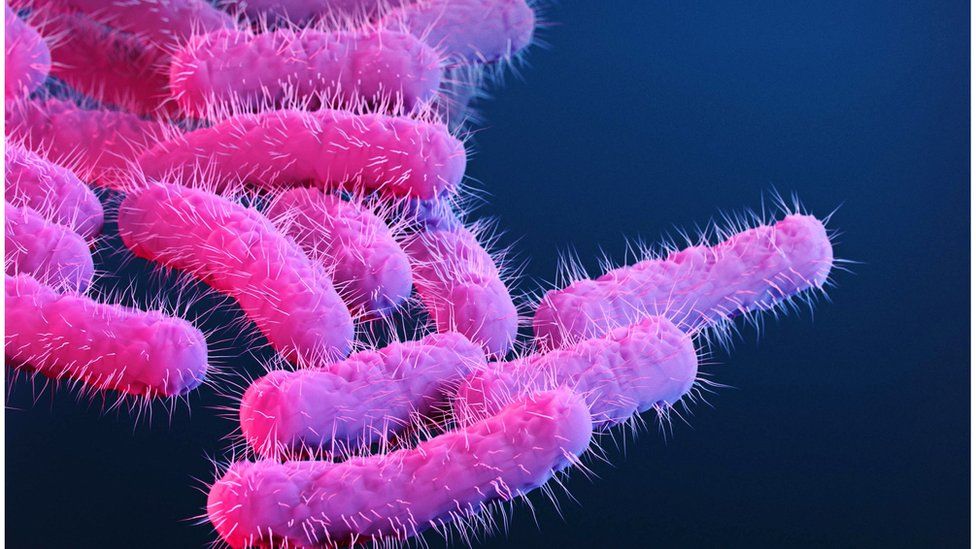
Published7 hours agoShareclose panelShare pageCopy linkAbout sharingImage source, Getty ImagesBy Max MatzaBBC NewsUS health officials are warning of a rise in a strain of a drug-resistant stomach bug that infects thousands of Americans each year.Shigella bacteria causes fever, diarrhoea and stomach pain. Since 2015, officials have noted a rise in cases linked to the drug-resistant strain. The inability to treat infections with medication led health officials to call it a “serious public health threat”.Without effective treatment, it could cause severe illness or even death. In a statement on Friday, the US Centers for Disease Control and Prevention (CDC) said that while none of the infections recorded in 2015 were tied to the Shigella XDR strain, 5% of cases were linked to it in 2022. In 2019, 1% of all US cases were linked to the strain, which is resistant to the five antibiotics that are most commonly used to treat it.Drug-resistant infections killing millions – studyShigella spreads “easily” through direct and surface contact with an infected person’s faeces, the CDC says. It can lead to a form of dysentery named shigellosis, which is considered one of the leading causes of death linked to diarrhoea around the world.Many cases can be managed through proper hydration and rest. Officials say it can be prevented by frequent hand washing. Currently, it causes less than five deaths in the US per year. The increase in the XDR strain has most commonly been seen in homeless people, international travellers, men who have sex with men, and immunocompromised people, the CDC said. “Given these potentially serious public health concerns, CDC asks healthcare professionals to be vigilant about suspecting and reporting cases of XDR Shigella infection to their local or state health department and educating patients and communities at increased risk about prevention and transmission,” the agency said.Officials in the UK also warned last year of a “unusually high number of cases” linked to the XDR strain. More on this storyDrug-resistant infections killing millions – study20 January 2022

Read more →

Early-life stress can disrupt maturation of brain's reward circuits, promoting disorders

A new brain connection discovered by University of California, Irvine researchers can explain how early-life stress and adversity trigger disrupted operation of the brain’s reward circuit, offering a new therapeutic target for treating mental illness. Impaired function of this circuit is thought to underlie several major disorders, such as depression, substance abuse and excessive risk-taking.
In an article recently published online in Nature Communications, Dr. Tallie Z. Baram, senior author and UCI Donald Bren Professor and Distinguished Professor in the Departments of Anatomy & Neurobiology, Pediatrics, Neurology and Physiology & Biophysics, and Matt Birnie, lead author and a postdoctoral researcher, describe the cellular changes in the brain’s circuitry caused by exposure to adversity during childhood.
“We know that early-life stress impacts the brain, but until now, we didn’t know how,” Baram said. “Our team focused on identifying potentially stress-sensitive brain pathways. We discovered a new pathway within the reward circuit that expresses a molecule called corticotropin-releasing hormone that controls our responses to stress. We found that adverse experiences cause this brain pathway to be overactive.”
“These changes to the pathway disrupt reward behaviors, reducing pleasure and motivation for fun, food and sex cues in mice,” she said. “In humans, such behavioral changes, called ‘anhedonia,’ are associated with emotional disorders. Importantly, we discovered that when we silence this pathway using modern technology, we restore the brain’s normal reward behaviors.”
Researchers mapped all the CRH-expressing connections to the nucleus accumbens, a pleasure and motivation hub in the brain, and found a previously unknown projection arising from the basolateral amygdala. In addition to CRH, projection fibers co-expressed gama-aminobutyric acid. They found that this new pathway, when stimulated, suppresses several types of reward behaviors in male mice.
The study involved two groups of male and female mice. One was exposed to adversity early in life by living for a week in cages with limited bedding and nesting material, and the other was reared in typical cages. As adults, the early adversity-experiencing male mice had little interest in sweet foods or sex cues compared to typically reared mice. In contrast, adversity-experiencing females craved rich, sweet food. Inhibiting the pathway restored normal reward behaviors in males, yet it had no effect in females.
“We believe that our findings provide breakthrough insights into the impact of early-life adversity on brain development and specifically on control of reward behaviors that underlie many emotional disorders. Our discovery of the previously unknown circuit function of the basolateral amygdala-nucleus accumbens brain pathway deepens our understanding of this complex mechanism and identifies a significant new therapeutic target.” Baram said. “Future studies are needed to increase our understanding of the different and sex-specific effects of early-life adversity on behavior.”
Team members include Annabel K. Short, postdoctoral researcher, Lara Taniguchi, graduate student, Aidan Pham, lab assistant, and co-corresponding author Yuncai Chen, project scientist, from Department of Pediatrics; Gregory B. de Carvalho, graduate student, Benjamin G. Gunn, assistant project scientist; Christy A. Itoga, researcher; Xiangmin Xu, professor; Lulu Y. Chen, assistant professor; from the Department of Anatomy & Neurobiology; and Stephen V. Mahler, associate professor from the Department of Neurobiology and Behavior.
This work was supported by National Institute of Health grants P50 MH096889, MH73136, U01DA053826 NS108296 P50 DA044118, P50 MH096889 Seed Award FG23670, The Bren Foundation, a George E. Hewitt Foundation for Biomedical Research Fellowship and a British Society for Neuroendocrinology Project Support Grant BSN-5646342.

Read more →

Researchers use artificial intelligence to predict cardiovascular disease

Researchers may be able to predict cardiovascular disease — such as arterial fibrillation and heart failure — in patients by using artificial intelligence (AI) to examine the genes in their DNA, according to a new Rutgers study.
“With the successful execution of our model, we predicted the association of highly significant cardiovascular disease genes tied to demographic variables like race, gender and age.” said Zeeshan Ahmed, a core faculty member at the Rutgers Institute for Health, Health Care Policy and Aging Research (IFH) and lead author of the study, published in Genomics.
According to the World Health Organization, cardiovascular disease is the leading cause of death globally, yet it is estimated that more than 75 percent of premature cardiovascular disease is preventable. Atrial fibrillation and heart failure contribute to about 45 percent of all cardiovascular disease deaths.
Despite significant advancements in cardiovascular disease diagnostics, prevention and treatment, about half of the affected patients reportedly die within five years of receiving a diagnosis because of a variety of reasons. including genetic and environmental factors. Researchers said the use of AI and machine learning can accelerate our ability to identify genes that have important implications for cardiovascular disease, which can lead to improvements in diagnoses and treatment.
Researchers from IFH analyzed healthy patients and patients diagnosed with cardiovascular disease and used AI and machine-learning models to investigate the genes known to be associated with the most common manifestations of cardiovascular disease, including atrial fibrillation and heart failure.
They identified a group of genes that were significantly associated with having cardiovascular disease. Researchers also found significant differences among race, gender and age factors based on the cardiovascular disease. While age and gender factors correlated to heart failure, age and race factors correlated to atrial fibrillation. For example, in the patients examined, the older the patient, the more likely they were to have a cardiovascular disease.
“Timely understanding and precise treatment of cardiovascular disease will ultimately benefit millions of individuals by reducing the high risk for mortality and improving the quality of life,” said Ahmed, who is an assistant professor with the Department of Medicine at Rutgers Robert Wood Johnson Medical School.
Researchers said future research should extend this approach by analyzing the full set of genes in patients with cardiovascular disease which may reveal important biomarkers and risk factors associated with the cardiovascular disease susceptibility.

Read more →