
Parasitic infections common in kids in low-resource US communities

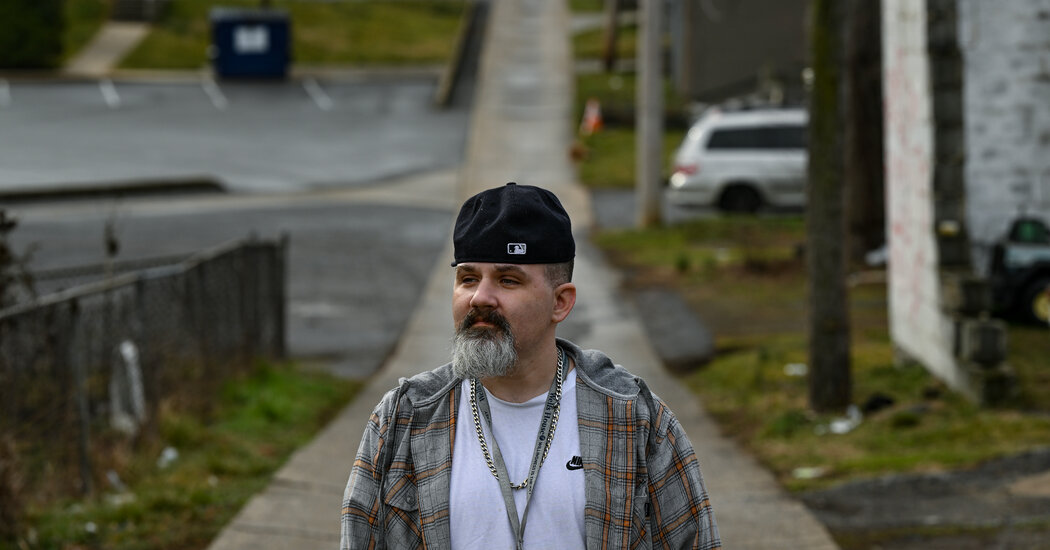
The federal government loosened regulations for buprenorphine, but health experts warn that entrenched problems around training and access could stall efforts to get people the medication.BALTIMORE — Buprenorphine, a medication to treat opioid addiction, has quietly stabilized Randall Lambert’s drug use over the past 15 years, even as chaos surrounded him. He cycled in and out of rehab facilities and jail, but the buprenorphine he took eased his heroin cravings and kept him from withdrawal. He is now sober, living in a rehab facility and nurturing relationships with his three children and his mother.“I’ve had to rebuild so many times,” Mr. Lambert, who works at the rehab site supervising medications for other residents, said on a recent afternoon. But buprenorphine, he said, “got me to a place where I got clean.”Now buprenorphine, once highly restricted, is available to far more doctors to prescribe for patients, the result of a significant change in federal drug policy that scrapped a special licensing requirement known as an “X waiver.” In December, Congress approved the change as part of a government spending package, dramatically expanding the pool of physicians and health workers who could prescribe the medication.Hundreds of thousands of providers have become newly eligible to treat opioid users with it, a move President Biden celebrated in his State of the Union address last month.Mr. Biden spoke at a desperate moment in the nation’s overdose epidemic. While more than 100,000 people die each year from drug overdoses in the United States, many of them from fentanyl, addiction physicians say that only a modest percentage of Americans who regularly use opioids receive treatment.But addiction experts warn that lifting the buprenorphine restrictions may not prove to be a panacea. The health system’s gaps in reaching opioid users remain vast despite a catastrophic surge in overdose deaths in recent years, those experts say.Medical schools tend not to incorporate opioid addiction in their curriculums, leaving younger doctors without specific training in treating drug users. Some health providers with busy medical practices are wary of the psychiatric and social needs of opioid users. Treatment for Black and Hispanic people is often spotty and shorter. And even when someone obtains a prescription for buprenorphine, some pharmacies may not dispense it.“For improving access, it may be that removing the X waiver helps, but it may not be sufficient,” said Dr. David Fiellin, an addiction physician at the Yale School of Medicine who has trained other doctors pursuing X waivers. The risk, he added, was “access without quality.”Across the street from an addiction center in Baltimore is a building with missing and boarded-up windows, next to which people sometimes sell or consume drugs.Kenny Holston/The New York TimesBuprenorphine is an opioid usually taken at home that eases cravings and prevents withdrawal. It is often given under the brand name Suboxone, which is administered in small orange strips under the tongue.Access to buprenorphine could skyrocket this year. Dr. Rahul Gupta, the director of the White House’s Office of National Drug Control Policy, said in an interview that about 130,000 health providers had an X waiver at the end of last year, when the rule was abolished. Now, he said, two million prescribers registered with the Drug Enforcement Administration can give buprenorphine to opioid users.Fentanyl Overdoses: What to KnowCard 1 of 6Devastating losses.
Read more →
Published6 hours agoShareclose panelShare pageCopy linkAbout sharingImage source, Getty ImagesBy Mike WendlingBBC NewsTennessee’s governor has signed laws banning drag performances in front of children and restricting medical treatment for transgender youth. Civil rights and LGBT groups vowed to sue to stop the medical treatment measure from taking effect on 1 July.Violators of the new drag law, meanwhile, face nearly a year in jail and a fine of up to $2,500 (£2,100). Governor Bill Lee enacted the laws as questions were asked about an old photo apparently of him in women’s clothing.When it comes into force next month, the drag law will ban performances “harmful to minors” by “go-go dancers, exotic dancers, strippers, male or female impersonators” in public places or venues where they could be viewed by children.The statute is the first of its type to be enacted in the US after a recent flurry of similar laws proposed in Republican-run states.Governor Lee, a Republican, has rejected allegations he is being hypocritical by signing the law. He has faced questions over a photo posted over the weekend on Reddit labelled “Tennessee Governor Bill Lee in drag”, purportedly from a 1977 school yearbook photo. The person in the picture seems to be wearing a cheerleader’s uniform, curly wig and a pearl necklace. Image source, RedditMr Lee was asked about the photo earlier this week during a press conference. “What a ridiculous, ridiculous question that is,” he responded, without confirming or denying the authenticity of the image. “Conflating something like that to sexualised entertainment in front of children, which is a very serious subject.”His office later issued a statement: “The bill specifically protects children from obscene, sexualised entertainment, and any attempt to conflate this serious issue with light-hearted school traditions is dishonest and disrespectful to Tennessee families.”What exactly the law will prohibit is still unclear. One of its sponsors, state legislator Chris Todd, previously called drag shows “child abuse” no matter what they contain, according to the Tennessean newspaper. But other Republicans say the law would not broadly affect drag shows that are legal under Tennessee’s existing laws on obscenity.Opponents of the law, including the state legislature’s Democrats, argue that this new legislation is redundant because they say sexualised performances in front of children are already illegal under Tennessee law.Image source, Getty ImagesBills to restrict drag events have been introduced in recent months in at least 14 different states, according to Pen America, a free-speech organisation.Drag performances at libraries, which usually involve reading storybooks to children, have been the target of protests by religious organisations, parents’ groups, right-wing activists, and extremists including the Proud Boys. Opponents say such shows aim to groom or sexualise young children. Performers and LGBT groups say the events are age-appropriate and educate children about being different. LGBT groups say they are worried about the potential chilling effect of the law. Chris Sanders, of the Tennessee Equality Project, says drag show organisers in the state are considering cancelling or delaying performances until there is clarity around the legislation.The law restricting medical treatment for transgender youth prohibits doctors from providing hormones or surgical treatment for minors, with a few limited exceptions. Children and teenagers under 18 who are already receiving such treatment can continue to receive it until April 2024.Doctors who violate the law could be fined up to $25,000 (£21,000) per procedure. House Majority Leader William Lamberth, a Republican, said children are not mature enough to make “life-altering” decisions about such operations or medication.”These treatments and procedures have a lifetime of negative consequences that are irreversible,” he said, reports the Tennessean.But the American Civil Liberties Union and Lambda Legal, an LGBT civil rights organisation, said they would sue to stop the legislation from being enforced. “We are dedicated to overturning this unconstitutional law and are confident the state will find itself completely incapable of defending it in court,” the organisations said in a statement. Enforcement of similar laws in other states, including Alabama and Arkansas, has been paused by lawsuits.More on this storyDrag queen story hour in the US Bible Belt20 February 2019Drag queen claims embroil embattled US congressman27 January
Read more →
Published36 minutes agoShareclose panelShare pageCopy linkAbout sharingThis video can not be playedTo play this video you need to enable JavaScript in your browser.By Alys DaviesBBC NewsMore than half the world’s population will be classed as obese or overweight by 2035 if action is not taken, the World Obesity Federation warns.More than four billion people will be affected, with rates rising fastest among children, its report says. Low or middle-income countries in Africa and Asia are expected to see the greatest rises. The report predicts the cost of obesity will amount to more than $4tn (£3.3tn) annually by 2035.The president of the federation, Prof Louise Baur, described the report’s findings as a clear warning to countries to act now or risk repercussions in the future.The report in particular highlights the rising rates of obesity among children and teenagers, with rates expected to double from 2020 levels among both boys and girls.Prof Baur said the trend was “particularly worrying”, adding that “governments and policymakers around the world need to do all they can to avoid passing health, social, and economic costs on to the younger generation” by assessing “the systems and root factors” that contribute to obesity.The effects of obesity’s prevalence on lower-income countries is also highlighted in the report. Nine of the 10 countries with the greatest expected increases in obesity globally are low or lower-middle income states in Africa and Asia.Reasons include trends in dietary preferences towards more highly processed foods, greater levels of sedentary behaviour, weaker policies to control food supply and marketing, and less well-resourced healthcare services to assist in weight management and health education.Lower-income countries are “often the least able to respond to obesity and its consequences”.The findings estimate that rises in obesity rates around the world will have a significant impact on the global economy, equating to 3% of global Gross Domestic Product.The report emphasises that its acknowledgement of the economic impact of obesity “is in no way a reflection of blame on people living with obesity”.The data published in the report will be presented to the UN on Monday.Obese is a medical term used to describe a person with a high excess of body fat.The report uses body mass index (BMI) to make its assessments. BMI is calculated by dividing an adult’s weight by the square of their height.Can we trust BMI to measure obesity?Information and supportInformation about obesity from the UK’s National Health ServiceBullyingEating disordersMental health and self-harm:Image source, AFPMore on this storyUS proposes limits on sugary foods in school meals4 FebruaryThe Brazilian women fighting fatphobia29 December 2022Why toxic fat shaming is so rampant in India23 November 2022Living with obesity: Hard-wired to store fat17 June 2021
Read more →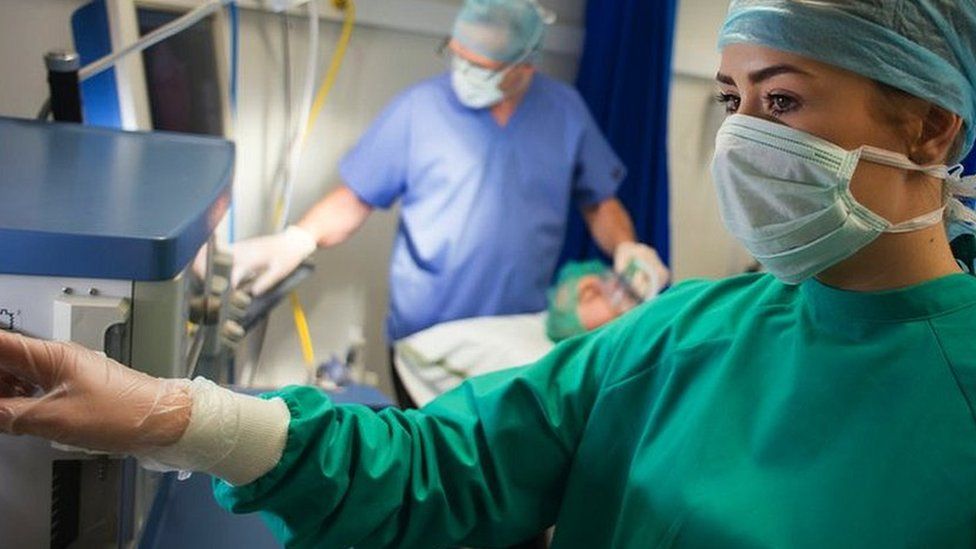
Published4 hours agoShareclose panelShare pageCopy linkAbout sharingImage source, Getty ImagesScotland has become the first country in the world to stop its hospitals using the anaesthetic desflurane because of the threat it poses to the environment. NHS data suggests the gas, used to keep people unconscious during surgery, has a global warming potential 2,500 times greater than carbon dioxide. Banning it in Scotland – from its peak use in 2017 – would cut emissions equal to powering 1,700 homes a year.UK hospitals have already cut down.In the last few years, more than 40 hospital trusts in England and a number of hospitals in Wales have stopped using it.NHS England will introduce a similar ban from 2024, which – like Scotland – prohibits its use for anything but exceptional circumstances.Banning it across NHS hospitals in England would cut harmful emissions equivalent to those caused by powering 11,000 homes every year, according to NHS analysis of desflurane use in 2020.Other countries, including many in Europe, are likely to make similar moves in the next few years. Dr Kenneth Barker, anaesthetist and clinical lead for Scotland’s national green theatres programme, said he was shocked to find the anaesthetic drug he had used for more than a decade for many major and routine operations was so harmful to the environment. “I realised in 2017 that the amount of desflurane we used in a typical day’s work as an anaesthetist resulted in emissions equivalent to me driving 670 miles that day,” he said.”I decided to stop using it straight away and many fellow anaesthetists have got on board.”When you are faced with something as obvious as this and with the significance it has to the environment – I am very glad we have got to this stage.”Many hospitals have switched to safe and effective anaesthetic gases with less warming potential such as sevoflurane, which has a global warming potential 130 times that of carbon dioxide, or to using alternative non-gaseous anaesthetics and more efficient equipment. Greener NHS ‘must help fight climate change’The NHS’s ‘first climate friendly’ operationDr Helgi Johannsson, vice president of the Royal College of Anaesthetists, told the BBC: “More and more anaesthetists across the UK have become aware of the sheer extent of the damage the gas can cause to the environment and have chosen to stop using it – and I am proud of that.”But he warns it is only the start and just “a drop in the ocean of the NHS carbon footprint”.He explained: “The NHS is a really carbon-intensive industry. We need to concentrate on all the other major things that can make a difference too – such as tackling old hospital buildings that are difficult to heat and reducing the journeys patients take.”Overall, anaesthetic gasses make up about 2-5% of the NHS’s carbon footprint, and efforts are under way to tackle other medical gases like nitrous oxide. NHS England’s net-zero strategy includes looking at more environmentally friendly heating and lighting systems, greener vehicles and examining the environmental impact of how medicines and equipment are supplied to the NHS. More on this storyGreener NHS ‘must help fight climate change’6 October 2021The NHS’ ‘first climate friendly’ operation25 May 2022Related Internet LinksNHS ScotlandNHS EnglandThe BBC is not responsible for the content of external sites.
Read more →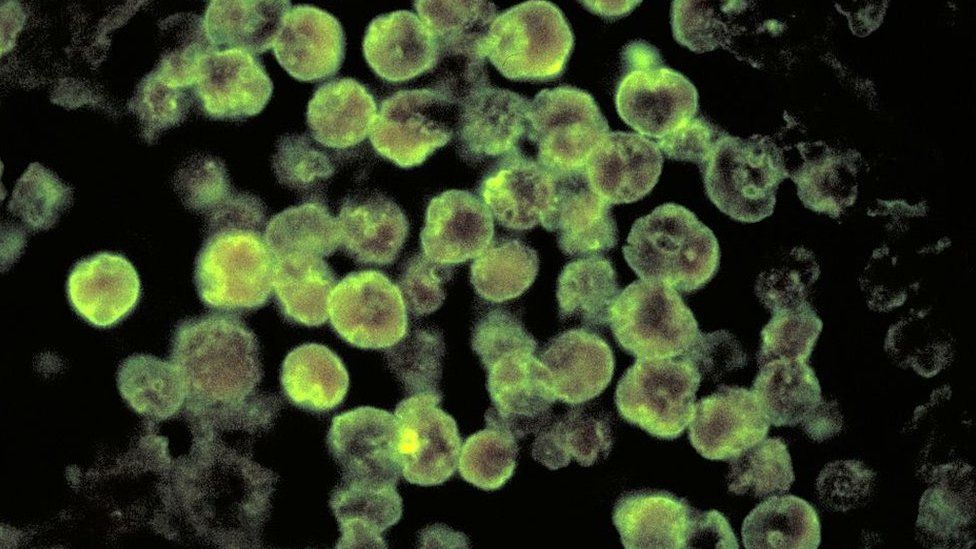
Published2 hours agoShareclose panelShare pageCopy linkAbout sharingImage source, Getty ImagesBy Max MatzaBBC NewsA Florida resident has died after becoming infected with a rare brain-eating amoeba, officials say. Health experts in Charlotte County, in southwest Florida, say the victim was probably infected after rinsing their nasal sinuses with tap water. Naegleria fowleri infects the brain through the nose. Officials say that drinking it is not dangerous. Infections are almost always fatal, according to the Centers for Disease Control and Prevention (CDC).Officials have not identified the victim.On 23 February, the Florida Department of Heath said that a patient had been infected “possibly as a result of sinus rinse practices” utilising tap water.On Thursday, a spokesman for the state health agency confirmed that the patient had died. Officials across multiple government agencies are “continuing to investigate how this infection occurred,” spokesman Jae Williams said.He added that officials are “working with the local public utilities to identify any potential links and make any necessary corrective actions”.The amoeba typically lives in warm fresh water such as swimming pools, lakes and ponds. Image source, Getty ImagesIt can lead to a severe infection if it enters through the nose, but it is normally safe through the mouth because stomach acid kills the single-cell microorganism. People who are infected contract a disease called primary amebic meningoencephalitis. Symptoms include headache, fever, nausea, vomiting, disorientation, a stiff neck, a loss of balance, seizures and/or hallucinations.According to the CDC, around three Americans get infected each year, often with deadly consequences.Between 1962 and 2021, only four of the 154 people infected in the US survived. CDC data suggests infection in winter months is incredibly rare.Officials warn that to avoid infections people should not rinse out their nasal passages with untreated tap water. Sterile or distilled water are preferred options. Tap water can also be used if it is boiled for at least one minute and cooled before use. People are also advised to avoid taking on water in their nose while in swimming pools or bathing or showering.
Read more →
For almost 140 years, the origin and behaviour of an enigmatic cell type inside lymph nodes, called a tingible body macrophage, has remained a mystery. Now, for the first time, scientists at the Garvan Institute of Medical Research have tracked the cell’s lifecycle and function, with implications for our understanding of autoimmune disorders.
Autoimmune disease, which occurs when the immune system attacks the body, affects 5% of Australians and has a high chronic health burden worldwide, yet its causes are poorly understood.
“In living organisms, death happens all the time — and if you don’t clean up, the contents of the dead cells can trigger autoimmune diseases,” says lead author Professor Tri Phan, Head of the Intravital Microscopy and Gene Expression (IMAGE) Lab and Co-Lead of the Precision Immunology Program at Garvan.
Macrophages in many parts of the body are responsible for clearing foreign material like bacteria and viruses, but the researchers discovered that these tingible body macrophages, found inside lymph nodes, specialise in cleaning up the immune system’s own waste: the B cells that proliferate when we fight infection.
During an immune response, a massive number of B cells are made inside the lymph nodes and then tested for their ability to neutralise the infection. B cells that fail the test are destined to die, but on the way out, they can trigger the body to attack itself. The contents of these cells — especially those in the cell’s central nucleus — are inflammatory and can inadvertently activate some B cells to make antibodies against that waste, leading to autoimmunity. Removing this waste is therefore a critical housekeeping function.
The new research is published in the journal Cell.
Insights into a microscopic ecosystem
The scientists used state-of-the-art intravital imaging techniques at the ACRF INCITe Centre to observe how the macrophages form within the lymph nodes and how they behave in real time. Their analysis shows that, unlike other immune cells, tingible body macrophages do not chase their targets, but disperse evenly and lie in wait. When a dead or dying B cell comes close, the macrophage reaches out and wraps around the target, pulling it in to be ingested.
“We know so very little about tingible body macrophages because it was not possible until now, with next-generation two-photon microscopes, to get inside the microstructures inside the lymph nodes of a living animal and watch the cells in action in real time. That’s why it’s taken 140 years — from when tingible body macrophages were first described in 1885 — to get where we are now,” says Professor Phan.
“A lot of what we do is like shooting a David Attenborough documentary but at a microscopic scale — capturing the hidden life of these rare cells ‘in the wild’, to show how these cellular ecosystems work to keep us healthy,” Abigail Grootveld, PhD student at Garvan and co-first author of the study.
“This research is exciting because it helps us to understand causes of autoimmune conditions like lupus. Understanding why somebody gets the disease in the first place and why it keeps coming back, is an important step towards future treatments for these diseases,” says Wunna Kyaw, PhD student at Garvan and co-first author of the study.
In systemic lupus, the immune system struggles to control the production of its fighter T cells and B cells. Their overactivity causes inflammation, autoantibodies and long-term damage throughout the body. This research shows that tingible body macrophages, with their B cell clean-up function, could be responsible for setting the chain of events in motion if they fail.
So far, the study has examined what happens with the macrophages in animal models of a healthy system. The researchers’ next step is to expand the experiment to an autoimmune model, to see if they can rescue the failing system and prevent autoimmunity at its root cause.
The research was carried out in collaboration with Associate Professor Oliver Bannard, Sir Henry Dale Fellow at the University of Oxford.
This research was supported by the Australian Cancer Research Foundation, the Ernest Heine Family Foundation and the National Health and Medical Research Council.