US FDA recalls over 500,000 Covid tests over bacteria risk

Published3 days agoShareclose panelShare pageCopy linkAbout sharingImage source, FDA/SD Biosensor, Inc.By Chloe KimBBC NewsMore than half a million Covid tests have been recalled by the Food and Drug Administration (FDA) over bacteria concerns.The FDA said it “has significant concerns of bacterial contamination” in the test kit solution in some Pilot COVID-19 At-Home Tests.Using the contaminated solution “may pose safety concerns” as well as cause the test to give an inaccurate result.The agency warned tests should be thrown out immediately. Over 500,000 tests were distributed to the CVS drugstore and around 16,000 were distributed to Amazon.None were made available through one of the federal government’s testing programmes.Contaminated tests can be verified by the lot numbers on the FDA’s website. The liquid in the test kits was found to be contaminated “with organisms such as Enterococcus, Enterobacter, Klebsiella and Serratia species” that could cause illness for people with weakened immune systems, the FDA said. It urged people to be vigilant “for signs of bacterial infection”, which could include “fever, discharge, red eyes, or any other concerning symptoms”. Evie Baik, a spokesperson for SD Biosensor, told the BBC’s US partner CBS News that raw materials from one of their suppliers is the likely source of the bacteria. They have cut ties with that supplier and are tightening quality control efforts.The issue “was identified during routine quality assurance testing”, Roche said in a statement, according to CBS News.SD Biosensor and distributor, Roche, have said they are cooperating with the FDA and are working with distributors and retailers to hold back tests while the matter is investigated. More on this storyUS approves world’s first RSV vaccine5 days agoIndia firm linked to US deaths broke safety norms: FDA4 AprilSafety fears see 750,000 Covid test kits recalled8 August 2020

Read more →

Scientist uncovers roots of antibiotic resistance

Bacteria naturally adapt to various environmental stimuli and as they mutate, these changes can make them resistant to drugs that would kill or slow their growth.
In a recent article published in PLoS Genetics, UCF College of Medicine microbiologist Dr. Salvador Almagro-Moreno uncovers the evolutionary origins of antimicrobial resistance (AMR) in bacteria. His studies on the bacterium that causes cholera, Vibrio cholerae, provide insight into deciphering what conditions must occur for infectious agents to become resistant.
“How AMR occurs in bacterial populations and the pathways leading to these new traits are still poorly understood,” he said. “This poses a major public health threat as antimicrobial resistance is on the rise.”
Dr. Almagro-Moreno studied genetic variants of a protein found in bacterial membranes called OmpU. Using computational and molecular approaches, his team found that several OmpU mutations in the cholera bacteria led to resistance to numerous antimicrobial agents. This resistance included antimicrobial peptides that act as defenses in the human gut. The researchers found that other OmpU variants did not provide these properties, making the protein an ideal system for deciphering the specific processes that occur to make some bacteria resistant to antimicrobials.
By comparing resistant and antibiotic sensitive variants, the researchers were able to identify specific parts of OmpU associated with the emergence of antibiotic resistance. They also discovered that the genetic material encoding these variants, along with associated traits, can be passed between bacterial cells, increasing therisk of spreading AMR in populations under antibiotic pressure.
By understanding how mutations occur, researchers can better understand and develop therapeutics to combat resistant infections. Dr. Almagro-Moreno is also looking at environmental factors such as pollution and warming of the oceans, as possible causes of resistant bacteria. “We are studying the genetic diversity ofenvironmental populations, including coastal Florida isolates, to develop a new approach to understandinghow antimicrobial resistance evolves,” he explained.
Understanding the bacteria that causes cholera, an acute diarrheal illness linked to infected water and foods, has global implications. The disease sickens up to 4 million people worldwide and severe cases can cause death within hours.

Read more →

C.D.C. to Scale Back Covid Tracking Efforts

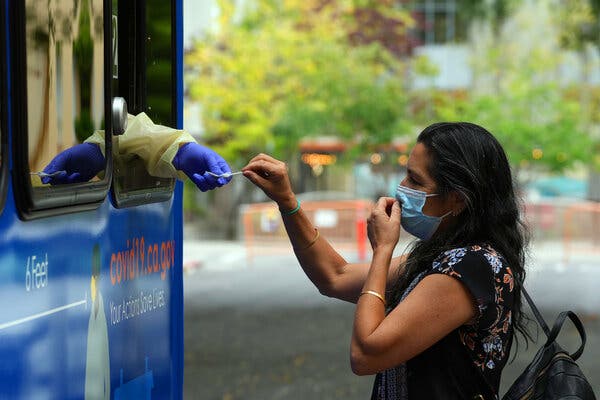
The NewsThe Centers for Disease Control and Prevention will cease tracking community levels of Covid and the percentage of tests that come back positive, a metric used to calculate transmission rates, the agency announced on Friday.The decision is linked to the end of the public health emergency on May 11. The emergency designation, first declared in January 2020, had allowed the C.D.C. to demand certain kinds of data on Covid’s spread from state officials.To track death rates, agency officials now will rely on the National Vital Statistics System, which is highly accurate but tends to lag behind other kinds of surveillance by two to three weeks. The C.D.C. is also scaling back the data that hospitals are required to report, including the number of cases and the race, sex and age of patients. But the agency will continue to track overall Covid hospitalizations and intensive care admissions.The agency will still have a clear picture of Covid trends, Dr. Nirav Shah, the agency’s principal deputy director, told reporters on Thursday. “We will still be able to tell that it’s snowing even though we’re no longer counting every snowflake,” he said.A mobile testing site in Berkeley, Calif., last year.Jim Wilson/The New York TimesWhy It Matters: Covid still claims more than 1,000 lives weeklyEven in a season that usually brings a lull in respiratory illnesses, and even with powerful vaccines available, the coronavirus is infecting many Americans and killing at least 1,000 people each week.The data the C.D.C. still plans to collect will not provide enough actionable information at the state and local level, said Sam Scarpino, a public health expert at Northeastern University.As with other pathogens like influenza and respiratory syncytial virus, state and local health officials will need to make decisions based on limited data, he said.“The C.D.C. is shuffling Covid into the deck of infectious diseases that we’re satisfied living with,” Dr. Scarpino said. “One thousand deaths a week is just unacceptable.”Background: Most of the changes were expectedThe Biden administration signaled in January that it would allow the public health emergency to lapse on May 11, giving health officials time to plan for the change. The emergency designation gave Americans access to free tests, treatments and vaccines, and enabled the C.D.C. to require health data from state agencies.Much of that is expected to change. Collecting and reporting Covid data to the C.D.C. is time-consuming and laborious for many states and local jurisdictions, and some have already stopped doing so, limiting efforts to track the spread of the virus.Some states are forbidden by their own laws from sharing data with the C.D.C. in the absence of an emergency.“The reality is that the C.D.C. doesn’t have a choice” but to narrow its surveillance efforts, said Dr. Megan Ranney, an emergency room physician and deputy dean of Brown’s School of Public Health.The data available after the emergency ends is “certainly not as much as we need,” she said. “This is an example of them doing the best that they can with the data that they can get.”What’s Next: Pared-down surveillanceAlthough the C.D.C. cannot compel states to share data, it can rely on its own sentinel network, Covid-Net, which comprises information on hospitalizations in 13 states, representing roughly 10 percent of the population. A similar network is used to track influenza.Some experts had worried that uninsured Americans would lose access to free coronavirus tests once the emergency ends. But the C.D.C. said it would continue to fund pharmacy-based testing for the uninsured.The agency will continue to monitor pathogens in wastewater and to track coronavirus variants, including those infecting travelers. But officials will scale back the frequency of reporting on variants from weekly to biweekly, and will suspend state-level information on variant spread.

Read more →

A special omega-3 fatty acid lipid will change how we look at the developing and aging brain

Scientists from Singapore have demonstrated the critical role played by a special transporter protein in regulating the brain cells that ensure nerves are protected by coverings called myelin sheaths. The findings, reported by researchers at Duke-NUS Medical School and the National University of Singapore in the Journal of Clinical Investigation, could help to reduce the damaging impacts of ageing on the brain.
An insulating membrane encasing nerves, myelin sheaths facilitate the quick and effective conduction of electrical signals throughout the body’s nervous system. When the myelin sheath gets damaged, nerves may lose their ability to function and cause neurological disorders. With ageing, myelin sheaths may naturally start to degenerate, which is often why the elderly lose their physical and mental abilities.
“Loss of myelin sheaths occurs during the normal ageing process and in neurological diseases, such as multiple sclerosis and Alzheimer’s disease,” said Dr Sengottuvel Vetrivel, Senior Research Fellow with Duke-NUS’ Cardiovascular & Metabolic Disorders (CVMD) Programme and lead investigator of the study. “Developing therapies to improve myelination — the formation of the myelin sheath — in ageing and disease is of great importance to ease any difficulties caused by declining myelination.”
To pave the way for developing such therapies, the researchers sought to understand the role of Mfsd2a, a protein that transports lysophosphatidylcholine (LPC) — a lipid that contains an omega-3 fatty acid — into the brain as part of the myelination process. From what is known, genetic defects in the Mfsd2a gene leads to significantly reduced myelination and a birth defect called microcephaly, which causes the baby’s head to be much smaller than it should be.
In preclinical models, the team showed that removing Mfsd2a from precursor cells that mature into myelin-producing cells — known as oligodendrocytes — in the brain led to deficient myelination after birth. Further investigations, including single-cell RNA sequencing, demonstrated that Mfsd2a’s absence caused the pool of fatty acid molecules — particularly omega-3 fats — to be reduced in the precursor cells, preventing these cells from maturing into oligodendrocytes that produce myelin.
“Our study indicates that LPC omega-3 lipids act as factors within the brain to direct oligodendrocyte development, a process that is critical for brain myelination,” explained Professor David Silver, the senior author of the study and Deputy Director of the CVMD Programme. “This opens up potential avenues to develop therapies and dietary supplements based on LPC omega-3 lipids that might help retain myelin in the ageing brain — and possibly to treat patients with neurological disorders stemming from reduced myelination.”
Previously, Prof Silver and his lab discovered Mfsd2a and worked closely with other teams to determine the function of LPC lipids in the brain and other organs. The current research provides further insights into the importance of lipid transport for oligodendrocyte precursor cell development.
“We’re now aiming to conduct preclinical studies to determine if dietary LPC omega-3 can help to re-myelinate damaged axons in the brain,” added Prof Silver. “Our hope is that supplements containing these fats can help to maintain — or even improve — brain myelination and cognitive function during ageing.”
“Prof Silver has been relentless in investigating the far-reaching role of Msdf2a ever since he discovered this important lipid transport protein, alluding to the many possible ways of treating not only the ageing brain but also other organs in which the protein plays a role,” said Professor Patrick Casey, Senior-Vice Dean for Research. “It’s exciting to watch Prof Silver and his team shape our understanding of the roles that these specialised lipids play through their many discoveries.”

Read more →

Covid global health emergency is over, WHO says

Published7 minutes agoShareclose panelShare pageCopy linkAbout sharingThe World Health Organisation (WHO) has declared that Covid-19 no longer represents a “global health emergency”. The statement represents a major step towards ending the pandemic and comes three years after it first declared its highest level of alert over the virus. Officials said the virus’ death rate had dropped from a peak of more than 100,000 people per week in January 2021 to just over 3,500 on 24 April. The head of the WHO said at least seven million people died in the pandemic. But Dr Tedros Adhanom Ghebreyesus said that the true figure was “likely” closer to 20 million deaths – nearly three times the official estimate – and he warned that the virus remained a significant threat. “Yesterday, the Emergency Committee met for the 15th time and recommended to me that I declare an end to the public health emergency of international concern. I’ve accepted that advice. It’s therefore with great hope that I declare COVID-19 over as a global health emergency,” Dr Tedros said. This breaking news story is being updated and more details will be published shortly. Please refresh the page for the fullest version.You can receive Breaking News on a smartphone or tablet via the BBC News App. You can also follow @BBCBreaking on Twitter to get the latest alerts.

Read more →

W.H.O. Ends Global Health Emergency Designation for Covid

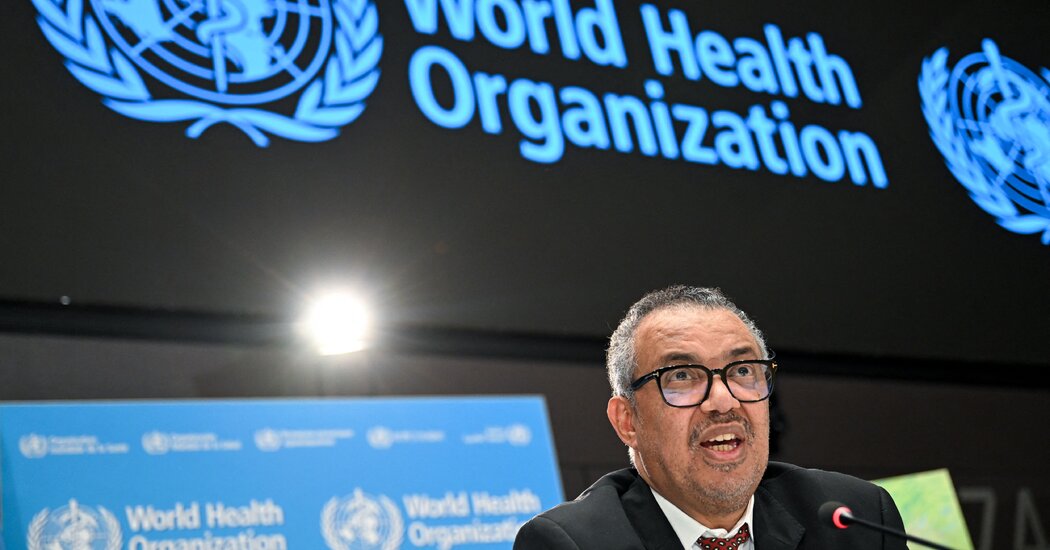
The decision has little practical effect but is a significant moment in the struggle against a virus that has killed millions and upended lives throughout the world.The World Health Organization announced on Friday that it was ending the emergency it declared for Covid-19 more than three years ago, a milestone in the fitful emergence from a pandemic that has killed millions of people around the world and upended daily life in previously unimaginable ways.“With great hope, I declare Covid-19 over as a global health emergency,” said the W.H.O. director general, Dr. Tedros Adhanom Ghebreyesus.In practical terms, the decision changes little: Many countries have already ended their states of emergency for Covid, and have moved away from almost all public health restrictions implemented to control the virus. The United States will lift its Covid emergency on May 11. The virus will continue to have pandemic status according to the W.H.O., much as H.I.V. does.But the lifting of the W.H.O. designation — officially called a “public health emergency of international concern” — is a significant moment in the evolving human relationship with the novel coronavirus.Dr. K. Srinath Reddy, who led India’s Public Health Foundation through the pandemic, said the decision to lift the emergency was appropriate, because of the high levels globally of immunity to Covid, induced by vaccination or infection, or both.“It no longer possesses the same level of danger,” he said, adding that Covid “has achieved a level of equilibrium, a certain type of coexistence with the human host.”Dr. Reddy said the end of the emergency status should also be appreciated as a moment of human achievement and a “celebration of science.”“It’s important to recognize that what made the virus change its character is not only evolutionary biology,” he said, “but also the fact that we have induced it to actually become less virulent, by vaccination, by masks, by a number of public health measures.”Globally, there have been 765,222,932 confirmed cases of Covid, including 6,921,614 deaths, reported to the W.H.O. as of May 3. But these figures are a vast undercount of the pandemic’s true toll. Independent researchers have estimated the real death tally of the virus to be many times higher.A year ago the W.H.O. said that 15 million more people had died in the first two years of the pandemic than would have in normal times, a figure that laid bare how vastly countries had undercounted victims. In Egypt, excess deaths were roughly 12 times as great as the official Covid toll; in Pakistan, the figure was eight times as high. Developing nations bore the brunt of the devastation, with nearly eight million more people than expected dying in lower-middle-income nations by the end of 2021.And Covid continues to spread: The W.H.O. recorded 2.8 million new cases globally, and more than 17,000 deaths, from April 3 to 30, the most recent numbers available. As many countries have reduced their testing for Covid, these numbers also probably represent a significant undercount.The W.H.O.’s emergency declaration was a crucial piece of guidance when it was made on Jan. 30, 2020, when just 213 people were known to have died of the virus. It signaled to the world that this new virus posed a threat outside of China, where it emerged, and gave countries critical buttressing to impose potentially unpopular or disruptive public health measures.The virus that jumped into humans in late 2019 proved to be an unpredictable adversary, mutating swiftly and significantly in ways that allowed it to resurge and devastate countries just as they thought the worst was past. A brutal wave of the Delta variant ravaged India just weeks after Prime Minister Narendra Modi bragged about how well the country had done in its Covid response. The Omicron variant, while less virulent, spread with a deceptive ease that made it the fourth-leading cause of death in the United States in 2022, and a major killer in many other countries.The first large-scale vaccinations began on Dec. 8, 2020, less than a year after the first case of the disease was reported to the W.H.O., an extraordinary triumph of science. But the collaborative process of vaccine development was followed by a grim period of hoarding and nationalism; a full year later, when people in industrialized countries were receiving second and third doses of the vaccine, just five percent of people in sub-Saharan Africa had been vaccinated.Dr. Githinji Gitahi, executive director of Amref Health Africa, said it was time to lift the emergency. “The danger of keeping it forever is diluting the tool — you need it to retain its force,” he said. The declaration helped to mobilize resources for Africa, he said, but did nothing to counter the bleak experience of what he called “vaccine injustice.” Amref continues to work on supporting vaccination in 35 African countries; continent-wide, coverage now stands at 52 percent.The pandemic also has a positive legacy, Dr. Gitahi said, because it spurred the highest level of cooperation ever seen among African countries, including the creation of an African Union task force to coordinate procurement of vaccines.The W.H.O. decision was not welcomed by all health experts. Dr. Margareth Dalcolmo, a respiratory physician and member of Brazil’s National Academy of Medicine who was one of that country’s most prominent experts guiding the public through Covid, said it was too soon to lift the emergency, given that there are still urgent tasks such as research into Covid variants and development of better vaccines. Having the designation of global public health emergency also creates leverage for lower-income nations to access treatments and support, she said.On May 3, the W.H.O. issued an updated Covid management plan, which it said was intended to guide countries on how to manage Covid over the next two years as they transition from emergency response to long-term Covid prevention and control.Opening a meeting of W.H.O. experts in Geneva on Thursday, Dr. Ghebreysus told the committee that for each of the past 10 weeks, the number of weekly reported Covid deaths had been the lowest since March 2020. As a consequence, life has returned to normal in most countries and health systems are rebuilding, he said.“At the same time, some critical uncertainties about the evolution of the virus persist, which make it difficult to predict future transmission dynamics or seasonality,” he said. “Surveillance and genetic sequencing have declined significantly around the world, making it more difficult to track known variants and detect new ones.”And access to lifesaving Covid treatments continues to be sharply unequal globally, he said.Dr. Dalcolmo said the lifting of the global emergency should be viewed not as a milestone, but as a warning. “Take this as an alert, a time to start being prepared for the next pandemic,” she said, “because we know respiratory viruses are going to increase.”

Read more →

Living and Breathing on the Front Line of a Toxic Chemical Zone

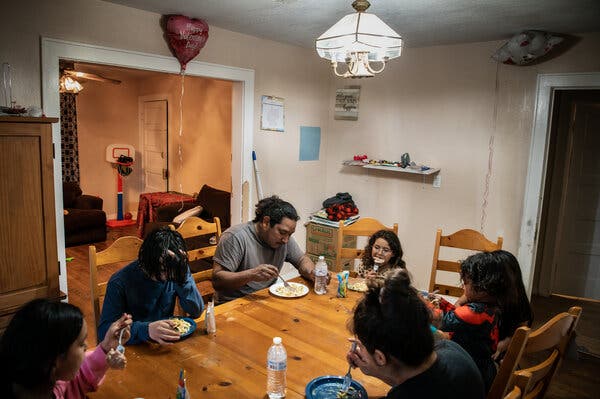
Juan López had just returned home from his job supervising the cleaning of giant tanks that hold toxic chemicals produced along the Houston Ship Channel, one of the largest petrochemical complexes in the world.He was ready to sit down to dinner with his wife, Pamela López, and their four school-age children at their small house across the highway from the plants.But as the family gathered, the facilities were still burning off chemical emissions, sending clouds of leftover toxics toward their two-bedroom home, hitting them on some days with distinct and worrisome smells — and leaving Mr. López concerned about the health of their children.“I make good money where I’m at,” he said. “But I always felt like it was only me that was getting exposed, because I am working in the tanks with the chemicals. When the smell comes, all we can really do is try to keep everyone inside. Is that enough? I just don’t know.”He has reason to worry. Two recent assessments, by the Environmental Protection Agency and city officials in Houston, found that residents were at higher risk of developing leukemia and other cancers than people who lived farther from the chemical plants.These same worries afflict households in Illinois, Louisiana, West Virginia and other spots around the United States where families live near manufacturing facilities that make or use these cancer-causing chemicals.“Sacrifice zones — that’s what we call them,” said Ana Parras, a founder of Texas Environmental Justice Advocacy Services, which sued the E.P.A. starting in 2020 to push for tighter rules on toxics. “These areas here are paying the price for the rest of the nation, really.”The chemical plants were still burning off emissions as the López family ate dinner.Meridith Kohut for The New York TimesPamela López, 32, comforting her 9-year-old daughter, Mahliyah Angelie, who had a headache.Meridith Kohut for The New York TimesWaves of toxic chemicals drift toward the López family home at unpredictable moments, day and night.Meridith Kohut for The New York TimesAfter years of only intermittent action by the federal government and opposition from the industry, the Biden administration is racing to impose restrictions on certain toxic air releases of the sort that plague Deer Park, while also moving to ban or restrict some of the most hazardous chemicals entirely.The proposed measures would significantly cut releases of a number of cancer-causing chemicals from plants in Texas, including four of those across the highway from the López family.Companies from a variety of industries, including those that produce the substances and those that use them, are pressuring the administration to water down some of the rules, saying the repercussions of a ban or new restrictions could be economically crippling.Few communities are at greater risk than Deer Park, and few people experience the trade-offs between economic considerations and health more than Mr. López, for whom the petrochemical industry is both the source of his family income and a threat to their health.Mr. López, 33, did not graduate from high school and is proud of how much he is paid to supervise the cleaning of the chemical tanks, which his crew climbs into and scrubs from the inside, an extremely dangerous job.But he suggested that the job did not blind him to the risks the plants pose to his family, saying that “just because you help me make a paycheck does not mean you are doing everything right.”Waves of toxic chemicals drift toward the family home at unpredictable moments, day and night. Mr. López wears protective gear at work. But there are no such measures at the house, where the children ride bikes in the driveway and play with a puppy named Dharma. From the swing set in their backyard, they can see the flares from the nearby plants.

Read more →

900,000 New Yorkers Lost at Least 3 Loved Ones to Covid

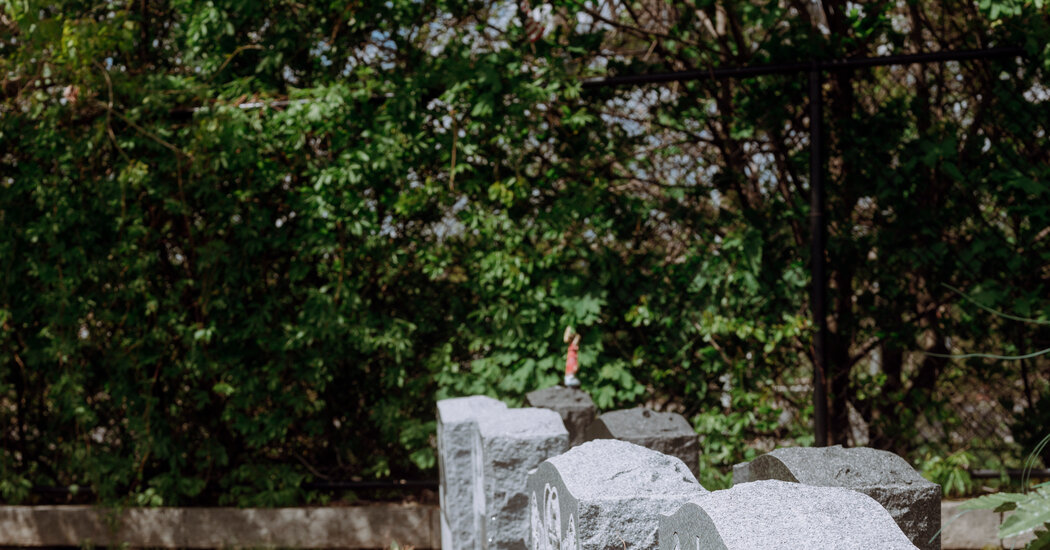
Nearly one in four New Yorkers lost at least one person close to them, according to a newly released survey. The toll was even higher among people of color.Josefa Santana, 96, did not leave her Washington Heights apartment when New York City shut down to slow the spread of the coronavirus in March 2020. But her son, a butcher, had to work. He was the only one to leave the apartment in those weeks, so he probably was the one who brought the virus in.Despite her family’s efforts to protect her, Ms. Santana got sick, and then died. She was one of three relatives whom her granddaughter, Lymarie Francisco, lost to Covid-19 in the first year of the pandemic, Ms. Francisco said last week.The toll was devastating for her. It was also emblematic of the scale of loss and trauma in New York in the early stages of the pandemic, which new city data, released to The New York Times, shows in stark detail.An estimated two million New Yorkers — nearly one in four — lost at least one person close to them to Covid within the first 16 months of the virus’s arrival, according to the data, which was collected in mid-2021 by federal census workers on behalf of the city. Nearly 900,000 New Yorkers lost at least three people they said they were close to, an open-ended category that included relatives and friends, the survey found.Ms. Francisco, 36, lost an uncle about two months after her grandmother, and later, she also lost an aunt. But it was the loss of her grandmother, who raised her, that most affects her to this day.“I’m constantly thinking about my grandma,” she said. “I go every other Sunday to the cemetery and just sit there. And I just speak to her.”The finding about the scale of loss was among several from the survey, known as the New York City Housing and Vacancy Survey, that shed new light on the impact of the pandemic in the city. The survey consisted of in-person interviews with a statistically representative sample of more than 7,000 New York City households. While the primary role of the survey, conducted every three years, is to assess New Yorkers’ housing conditions, questions about Covid were added to the 2021 version.Its findings echoed earlier studies that documented how Black and Hispanic New Yorkers died from Covid at higher rates than white New Yorkers in 2020. In part, this was because of higher poverty levels and less access to high-quality medical care. But another likely reason was that people of color made up the bulk of the essential workers who reported to work during the city’s initial 11-week shutdown, when all schools and nonessential businesses were ordered to close and people urged to stay home, the survey found.Josefa Santana did not leave her apartment when New York City shut down during the early days of the pandemic. But she still contracted the virus and died.Christopher Lee for The New York TimesAbout 1.1 million of the city’s 8.4 million residents kept going to work between March and June 2020, the survey reported. Of those, about 800,000, or 72 percent, were people of color, a broad category that included all New Yorkers who did not identify as non-Hispanic and white. The areas that were hit hardest by Covid, including southeast Brooklyn, the Bronx, Upper Manhattan and the southeast corner of Queens, had high numbers of essential workers. The people who went to work delivered food, staffed restaurants, provided child care and cleaning, or worked in health care and transit.Losing loved ones to the virus was more common among those workers, especially those who were low-income and people of color, the survey found. While about a quarter of all New Yorkers lost at least one person they were close to, about a third of low-income essential workers who were people of color did. Eleven percent of all New Yorkers lost at least three people to Covid, compared with 16 percent of low-income essential workers, the survey found.Janeth Solis, 52, of the Bronx, lost four loved ones during the first year and a half of the pandemic. Her mother, step-grandmother and grandmother, who lived together in a house in Ridgewood, Queens, died one by one in the pandemic’s first weeks. Her mother-in-law died in April 2021.It wasn’t until this year that Ms. Solis was able to visit her grandmother’s ashes, which had been shipped to her native Colombia in June 2020. The visit and therapy have helped her heal.“We didn’t really have closure,” she said.Rates of depression and anxiety in New York rose during the pandemic, particularly among those who had lost loved ones and those under financial strain. Based on research from past disasters, these effects are likely to continue for months or years to come, researchers at the Department of Health have said.“Mental health needs are on the rise everywhere,” said Dr. Ashwin Vasan, the city’s health commissioner. “And it’s very difficult to separate that from the impact of trauma and grief.”By May 2021, about 33,000 New Yorkers had died from Covid-19, according to a New York Times tracker. At least 6,000 New Yorkers have died since then.Many New Yorkers are also connected to people who died elsewhere.“So many of us are close to people outside of the five boroughs, and outside of the country,” said Elyzabeth Gaumer, the chief research officer at the Department of Housing and Development.

Read more →

North Carolina abortion: 12-week ban likely despite governor's veto threat

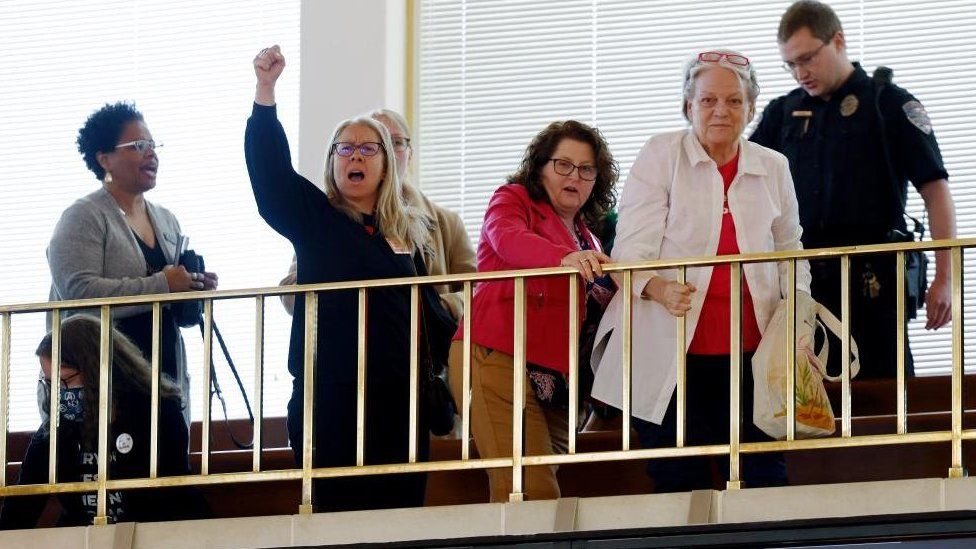
Published7 hours agoShareclose panelShare pageCopy linkAbout sharingImage source, ReutersBy Max MatzaBBC NewsNorth Carolina Republican lawmakers have passed a law that would ban abortion after 12 weeks of pregnancy.Republicans hold supermajorities in both chambers of the statehouse, meaning they can override a veto threat from the state’s Democratic governor. The move comes as conservatives move to strip away abortion rights after the Supreme Court ended the nationwide right to abortion in June.Near-total abortion bans have been passed by 14 states after the ruling. Currently, abortion is banned in North Carolina after 20 weeks of gestation. The Care for Women, Children and Families Act was passed by the state Senate 29 – 20 along party lines on Thursday, one day after the state House of Representatives passed it along similar party lines. Protesters shouting “abortion rights now” were cleared from the Senate chamber by police as the vote was held. The legislation now goes to Governor Roy Cooper, who has vowed to veto “this extreme ban”. “This bill has nothing to do with making women safer, and everything to do with banning their reproductive freedom,” the governor tweeted on Thursday.Republicans gained their veto-proof supermajority of both chambers last month after a Democrat who had previously vowed to protect abortion switched her party affiliation to Republican. Congresswoman Tricia Cotham voted in favour of the bill after promising last year to “continue my strong record of defending the right to choose”.The new ban contains exceptions in the case of rape and incest through 20 weeks of pregnancy, or in the event of a “life-limiting anomaly” through 24 weeks.It also allows doctors to perform an abortion if the pregnancy threatens the life of the mother, and permits medical providers to refuse an abortion “on moral, ethical, or religious grounds”.It also requires a doctor to examine a woman in person before prescribing abortion-inducing medications and bans people from mailing the drugs to a pregnant person. The move comes as the US Supreme Court weighs the future of an abortion-inducing medication known as mifepristone. What comes next for the abortion pill in the US?North Carolina has been a form of safe haven to women in southern states, which have mostly moved to ban the procedure. In the two months after the Supreme Court’s ruling, abortion rose by 37% in North Carolina – more than any other state – according to the Society of Family Planning, a non-profit that advocates for abortion rights and research.The anti-abortion group Susan B. Anthony Pro-Life America has praised the North Carolina bill, saying it will “lessen abortion tourism in the state”.More on this storyFor Supreme Court, the abortion battle is just beginning22 AprilTwo US hospitals broke law by denying abortion3 days agoNorth Dakota bans almost all abortions25 AprilWhat comes next for the abortion pill in the US?22 April

Read more →

KK Shailaja: Revisiting Covid front lines with India's 'Corona' slayer

Published8 hours agoShareclose panelShare pageCopy linkAbout sharingImage source, Juggernaut PublicationBy Zoya MateenBBC News, DelhiEarth has something like a billion species of bacteria, fungi and other microbes, and KK Shailaja was fascinated by each one of them. To her, they were like atoms, the real, tiny things that make up and hold the world together. But little did she imagine that she would one day be responsible for leading the fight against a shape-shifting, life-threatening virus that would ravage the world and threaten to overrun her home Kerala, a picturesque southern Indian state of 35 million people. Fondly known as “teacher”, Ms Shailaja scripted a rare success story in fighting the Covid-19 pandemic as the health minister of Kerala in 2020, which catapulted her to worldwide fame. The Guardian called her a “corona slayer”, the Financial Times named her as one of the 12 most influential women of 2020. She was invited as a panellist at the UN Public Service Day and the UK’s Prospect Magazine named her as the top thinker of the Covid age. Her experiences – of leading a state through the pandemic and of growing up in India’s only Communist state – make the backbone of her new political memoir, My Life As A Comrade, which released on Thursday. As a physics teacher, scientific thinking always remained an integral part – a “default position” – to Ms Shailaja’s decision-making process as the health minister, she told the BBC. “In my mind, Covid-19 reaching India was always inevitable and dealing with it was a matter of when, not if,” she says. But the die-hard Communist in her saw connections in everything. “In our lush, wooded neighbourhood, superstition, religion and socialism were never at odds; you could believe in all those things at once,” she writes. Ms Shailaja, who grew up in a small town in Kannur district, says she was deeply inspired by her Ammamma or grandma, a staunch Communist leader who helped tackle a smallpox outbreak in Kerala. Through her Ammamma, she learnt of the ways the Communist party tackled fear and misinformation and taught people how to deal with the infectious disease. Ms Shailaja said she never imagined that she would one day be in charge of doing the same thing. Image source, Getty ImagesIn January 2020, Kerala reported India’s first Covid-19 case – a medical student who had returned from Wuhan. At the time, coronavirus wasn’t part of the popular lexicon and hardly anyone was discussing it in India, Ms Shailaja says. But in Kerala, the state government had already set up 18 rapid response teams, opened a control room and deployed medical officers at the state’s four airports so that people could voluntarily declare any symptoms. In a pandemic characterised by extreme uncertainty, Ms Shailaja said the government used its Nipah virus protocol – the state had successfully fought an outbreak in 2018 – “and made changes based on what was already understood about Covid”. Ms Shailaja said she had two options – either allow the virus to spread so that people could attain herd immunity. Or, contain its spread by detecting cases early, tracing contacts and quarantining the infected.She knew a virus like this was deadly not only because it was highly transmissible, but because it was capable of exploiting a country’s underlying shortcomings – a chronically underfunded health care system, unequal access, and a dearth of necessary safety nets. Kerala fares better than most states on these indices, but the state is densely populated and 15% of its people are over 60 years of age. It is also majorly exposed to international travel and has some 17% of its working-age population employed outside, leaving the state vulnerable to outbreaks. “Containment was the only way forward,” she said, and the state decided to stick to the playbook of test, trace and isolate. Image source, Getty ImagesFor some months, Kerala seemed primed to contain the virus. There were days when it reported no new cases. Testing was widespread, deaths were low and the health system – the most sophisticated in the country – was not overburdened. “We even managed to save people of 98 years of age,” Ms Shailaja said. But by mid-July, the state began reporting around 800 infections a day and by November, Kerala had recorded more than 500,000 infections.In the summer of 2021 when a deadly second wave claimed thousands of lives, Kerala – a state with barely 3% of India’s population – began accounting for more than half of India’s new cases. Infections surged and showed no signs of abating even as the pandemic waned in other parts of the country – although the death rate remained low.As the state floundered at controlling the virus, criticism against its government mounted.Experts said Kerala’s contact tracing mechanism, which had been its strong point during the first wave, had not shown the same efficacy in the second phase. Many said Kerala had also made the mistake of allowing festivals to go ahead, leading to mass gatherings. Even the policy response, experts said, had been anaemic – and though the state initially had managed to “flatten the curve”, the time they bought was wasted. Image source, Getty ImagesMs Shailaja said some of the criticism was unfair. “Because we did so well in the first phase, every reported Covid case in the state began to carry a whiff of failure.” Also, despite the rising number of cases, hospitals in Kerala were not overwhelmed and our mortality rate remained low throughout, she added.But experts believe that Kerala’s relatively low fatality rate did not tell the whole story. Reports alleged substantial undercounting of deaths in the state, claiming it was not adding suspected cases to the final count, and was attributing deaths to underlying health conditions. In her memoir, Ms Shailaja rejects the allegations. “We did the best job we possibly could,” she told the BBC. Many experts too say that Kerala did an admirable job in controlling the spread of coronavirus when compared to the poor performance of other Indian states. “I think the most important thing we did was also the simplest: we took Covid seriously,” Ms Shailaja said. But it was the state government’s socialist foundation of “putting people at the centre of their policy”, which made the difference, she added.The health sector cannot exist in isolation, Ms Shailaja says. That’s because diseases are not merely a battle between a host and a microscopic enemy, playing out in a person’s body – they exceed the individual and affect the entire society. And the virus cannot be fought only with vaccines. “It requires more systemic reforms for overall social development. After all, everything is interconnected,” she says.BBC News India is now on YouTube. Click here to subscribe and watch our documentaries, explainers and features.Read more India stories from the BBC:Protesting India wrestlers say police assaulted themWill Pakistan minister’s rare visit thaw ties with India?The ‘dancing on the grave’ murder that shook IndiaIndia’s Go First cancels flights after bankruptcyMore on this storyHow India volunteers ‘exposed’ hidden Covid deaths20 November 2020The Indian state which is a Covid mystery3 August 2021

Read more →