Red-wine headache explained – and it is not about volume

Published10 minutes agoShareclose panelShare pageCopy linkAbout sharingImage source, ThinkstockBy Michelle RobertsDigital health editorUS researchers say they may have discovered why some people get a headache after just one small glass of red wine, even though they are fine drinking other types of alcohol. The University of California team say it is due to a compound in red grapes that can mess with how the body metabolises alcohol. The compound is an antioxidant or flavanol called quercetin. Cabernets from the sunny Napa Valley contain high levels of it, they say. High-quality grapesRed grapes make more quercetin when they are exposed to sunshine.And that meant more expensive red wines, rather than cheap reds, would be worse for headache-prone people, one of the researchers, Prof Andrew Waterhouse, told BBC News. “The cheap grape varieties are grown on vines with very large canopies and lots of leaves, so they don’t get as much sun,” he said. “Whereas the high-quality grapes are from smaller crops with fewer leaves. “The amount of sunshine is carefully managed to improve the quality of the wine.”Others are sceptical though. Prof Roger Corder, an expert in experimental therapeutics, at Queen Mary University of London, told BBC News anecdotal evidence suggested cheaper wines were worse for headache, so understanding some of the additives used in making lower-end mass-market red wines might be more informative.Possible culpritSeveral theories have been put forward to explain red-wine headaches, which can strike within 30 minutes of drinking even small amounts. Some have suggested the cause might be sulphites – preservatives to prolong shelf-life and keep wine fresh.Generally though, the sulphite content is higher in sweet white wines rather than reds. And while some people can be allergic to sulphites and should avoid them, there is little evidence they are to blame for headaches.Another possible culprit is histamine – an ingredient more common in red wine than white or rose. Histamine can dilate blood vessels in the body, which might trigger headache. But again, absolute proof is lacking.Toxic compoundExperts do know more than one in three people with East Asian heritage are intolerant of any type of alcohol – beer, wine and spirits – and will experience facial flushing, headaches and nausea when they drink.This is because of a gene affecting how well an alcohol-metabolising enzyme called ALDH2 or aldehyde dehydrogenase works.Alcohol is broken down in the body in two steps – it is converted into a toxic compound called acetaldehyde, which ALDH2 then changes into harmless acetate, basically vinegar. If this cannot happen, harmful acetaldehyde builds up, causing the symptoms. And the researchers say a similar pathway is involved in red-wine headache. They showed in the lab quercetin could indirectly block the action of ALDH2, through one of its own metabolites. ‘Stay tuned’Quercetin only becomes problematic when mixed with alcohol, according to the researchers, who crowd-funded for their work and have now published the findings in Scientific Reports journal. Quercetin is also found in many other fruits and vegetables – and is even available as a health supplement because of its beneficial anti-inflammatory properties – and does not appear to cause headaches on its own.The researchers still need to prove their theory in people and say a simple experiment could be to give volunteers prone to red-wine headaches a quercetin supplement or a dummy pill, along with a standard drink of vodka. Co-author Prof Morris Levin, an expert in neurology and director of the Headache Center at the University of California, San Francisco, said: “We are finally on the right track toward explaining this millennia-old mystery. The next step is to test it scientifically on people who develop these headaches, so stay tuned.”They hope to start those studies in a few months.But Prof Corder, who has studied the possible health benefits of wine, suspects other ingredients are worth exploring as headache triggers:Pectinases accelerate the release of anthocyanins, which speeds up winemaking by releasing the colour, without the slow maceration processes of traditional winemaking, but are methylhydrolases and a side product of their activity is methanol productionDimethyl dicarbonate is used as a preservative for cheaper wines, particularly those being shipped in large containers for bottling in the UK but also breaks down to create methanolDrinking a lot, quickly, or drinking to get drunk can have serious consequences for short- and long-term health. Regularly drinking more than 14 units a week – about six pints of average-strength beer or 10 small glasses of lower-strength wine, the type of alcohol does not matter – can damage the liver and cause other health issues, including strokes and heart diseaseAlcohol causes seven different types of cancer – the risk rises with every drinkAbout one in 10 breast-cancer cases is caused by drinking alcohol – about 4,400 a year in the UKSource: Cancer Research UK and NHSMore on this storyGlobal wine production falls to 62-year lowPublished7 November’You have to protect the grapes from getting sunburn’Published10 September 2020Why red wine could be good for your gutPublished28 August 2019Related Internet LinksScientific ReportsThe BBC is not responsible for the content of external sites.

Read more →

‘I was addicted to social media – now I'm suing Big Tech’

Published9 hours agoShareclose panelShare pageCopy linkAbout sharingBy Angus Crawford and Tony SmithBBC NewsHundreds of families are suing some of the world’s biggest technology companies – who, they say, knowingly expose children to harmful products. One plaintiff explains why they are taking on the might of Silicon Valley.”I literally was trapped by addiction at age 12. And I did not get my life back for all of my teenage years.”Taylor Little’s addiction was social media, an addiction that led to suicide attempts and years of depression.Taylor, who’s now 21 and uses the pronoun “they”, describes the tech companies as “big, bad monsters”.The companies, Taylor believes, knowingly put into children’s hands highly addictive and damaging products.Which is why Taylor and hundreds of other American families are suing four of the biggest tech companies in the world.Harmful by designThe lawsuit against Meta – the owner of Facebook and Instagram – plus TikTok, Google and Snap Inc, the owner of Snapchat, is one of the largest ever mounted in Silicon Valley.The plaintiffs include ordinary families and school districts from across the US.They claim that the platforms are harmful by design.Lawyers for the families believe the case of 14-year-old British schoolgirl Molly Russell is an important example of the potential harms faced by teenagers. Image source, Russell familyLast year they monitored the inquest into her death via video link from Washington, looking for any evidence which they could use in the US lawsuit. Molly’s name is mentioned a dozen times in the master complaint submitted to the court in California. Last week, the families in the case received a powerful boost when a federal judge ruled that the companies could not use the First Amendment of the US constitution, which protects freedom of speech, to block the action.US states sue Instagram over mental health harmMother sues Meta and Snap over daughter’s suicideIn her own words – Molly Russell’s secret Twitter accountJudge Gonzalez Rogers also ruled that S230 of the Communications Decency Act, which states that platforms are not publishers, did not give the companies blanket protection.The judge ruled that, for example, a lack of “robust” age verification and poor parental controls, as the families argue, are not issues of freedom of expression.Lawyers for the families called it a “significant victory”.The companies say the claims are not true and they intend to defend themselves robustly.’Like withdrawals’Taylor, who lives in Colorado, tells us that before getting their first smartphone, they were sporty and outgoing, taking part in dance and theatre.”If I had my phone taken away, it felt like having withdrawals. It was unbearable. Literally, when I say it was addictive, I don’t mean it was habit-forming. I mean, my body and mind craved that.”Taylor remembers the very first social media notification they clicked on.It was someone’s personal self-harm page, showing graphic images of wounds and cuts.”As an 11-year-old, I clicked on a page and was shown that with no warning. No, I didn’t look for it. I didn’t ask for it. I can still see it. I’m 21 years old, I can still see it.”Taylor also struggled with content around body image and eating disorders.”That was – is – like a cult. It felt like a cult. You’re constantly bombarded with photographs of a body that you can’t have without dying.”You can’t escape that.”If you have been affected by any of the issues raised in this story you can visit BBC Action Line.Lawyers for Taylor and the other plaintiffs have taken a novel approach to the litigation, focusing on the design of the platforms and not individual posts, comments or images.They claim the apps contain design features which cause addiction and harm.’Simply not true’Meta released a statement saying: “Our thoughts are with the families represented in these complaints.”We want to reassure every parent that we have their interests at heart in the work we are doing to provide teens with safe, supportive experiences online.”TikTok declined to comment.Google told us: “The allegations in these complaints are simply not true. Protecting kids across our platforms has always been core to our work.”And Snapchat said its platform “was designed to remove the pressure to be perfect. We vet all content before it can reach a large audience to prevent the spread of anything that could be harmful.”Molly RussellTaylor knows all about the story of Molly Russell, from north-west London, who took her own life after being exposed to a stream of negative, depressing content on Instagram.An inquest into her death found she died “while suffering from depression and the negative effects of online content”.Taylor says their stories are very similar.”I feel incredibly lucky to have survived. And my heart breaks in ways I can’t put into words for people like Molly.”I’m happy. I really love my life. I’m in a place I didn’t think I would live to.” It makes Taylor determined to see the legal action through.”They know we’re dying. They don’t care. They make money off us dying.”All hope I have for better social media is entirely dependent on us winning and forcing them to make it – because they will never, ever, ever choose to.”

Read more →

Extra Fees Drive Assisted Living Profits

Assisted-living centers have become an appealing retirement option for hundreds of thousands of boomers who can no longer live independently, promising a cheerful alternative to the institutional feel of a nursing home.But their cost is so crushingly high that most Americans can’t afford them.These highly profitable facilities often charge $5,000 a month or more and then layer on extra fees at every step. Residents’ bills and price lists from a dozen facilities offer a glimpse of the charges: $12 for a blood pressure check; $50 per injection (more for insulin); $93 a month to order medications from a pharmacy not used by the facility; $315 a month for daily help with an inhaler.The facilities charge extra to help residents get to the shower, bathroom or dining room; to deliver meals to their rooms; to have staff check-ins for daily “reassurance” or simply to remind residents when it’s time to eat or take their medication. Some even charge for routine billing to a resident’s insurance for care.“They say, ‘Your mother forgot one time to take her medications and so now you’ve got to add this on and we’re billing you for it,’” said Lori Smetanka, executive director of the National Consumer Voice for Quality Long-Term Care, a nonprofit.About 850,000 older Americans reside in assisted-living facilities, which have become one of the most lucrative branches of the long-term care industry catering to people 65 and older. Investors, regional companies and international real estate trusts have jumped in: Half of operators in the business of assisted living earn returns of 20 percent or more than it costs to run the sites, an industry survey shows. That is far higher than the money made in most other health sectors.Rents are often rivaled or exceeded by charges for services, which are either packaged in a bundle or levied à la carte. Overall prices have been rising faster than inflation, and rent increases since the start of last year have been higher than at any previous time since at least 2007, according to the National Investment Center for Seniors Housing & Care, which provides data and other information to companies.There are now 31,000 assisted-living facilities nationwide — twice the number of skilled nursing homes. Four of every five facilities are run as for-profits. Members of racial or ethnic groups account for only a tenth of residents, even though they make up a quarter of the population of people 65 or older in the United States.A public opinion survey conducted by KFF, the organization formerly known as the Kaiser Family Foundation, found that 83 percent of adults said it would be impossible or very difficult to pay $60,000 a year for an assisted-living facility. Almost half of those surveyed who either lived in a long-term care residence or had a loved one who did encountered unexpected add-on fees for things they assumed were included in the price.Poll shows about half dissatisfied with the cost of a long-term care facility for themselves or a loved oneMost were satisfied with the quality of care, but about half were not satisfied with the cost. Almost half reported unexpected charges.

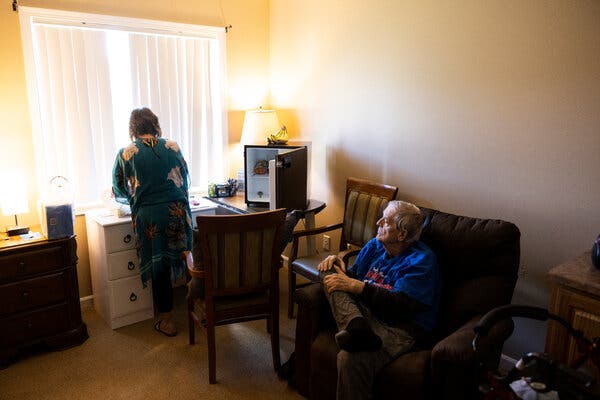
Note: Responses are from U.S. adults who had direct experience as a resident in a nursing home, assisted living or other long-term care facility in the last two years or had a family member with such experience.Source: 2022 KFF survey on affordability of long-term care in the U.S.By Albert SunAssisted living is part of a broader affordability crisis in long-term care for the swelling population of older Americans. Over the past decade, the market for long-term care insurance has virtually collapsed, covering just a tiny portion of older people. Home health workers who can help people stay safely in their homes are generally poorly paid and hard to find.Jon Guckenberg with his legal guardian, Nancy Pilger, in his room at New Perspective Cloquet, in Minnesota.Tim Gruber for The New York TimesMr. Guckenberg’s rent for a single room was $4,140 a month before adding in a raft of other charges.Tim Gruber for The New York TimesAnd even older people who can afford an assisted-living facility often find their life savings rapidly drained.Unlike most residents of nursing homes where care is generally paid for by Medicaid, the federal-state program for the poor and disabled, assisted-living residents or their families usually must shoulder the full costs. Most centers require those who can no longer pay to move out.The industry says its pricing structures pay for increased staffing that helps more infirm residents and avoids saddling others with costs of services they don’t need.Prices escalate greatly when a resident develops dementia or other serious illnesses. At one facility in California, the monthly cost of packages for people with dementia or other cognitive issues increased from $1,325 for those requiring the least amount of help to $4,625 as residents’ needs grew.“It’s profiteering at its worst,” said Mark Bonitz, who explored multiple places in Minnesota for his mother, Elizabeth. “They have a fixed amount of rooms,” he said. “The way you make the most money is you get so many add-ons.” Last year, he moved his mother to a nonprofit center, where she lived until her death in July at age 96.LaShuan Bethea, executive director of the National Center for Assisted Living, a trade association of owners and operators, said the industry would require financial support from the government and private lenders to bring prices down.“Assisted-living providers are ready and willing to provide more affordable options, especially for a growing elderly population,” Ms. Bethea said. “But we need the support of policymakers and other industries.” She said offering affordable assisted living “requires an entirely different business model.”Others defend the extras as a way to appeal to the waves of boomers who are retiring. “People want choice,” said Beth Burnham Mace, a special adviser for the National Investment Center for Seniors Housing & Care. “If you price it more à la carte, you’re paying for what you actually desire and need.”Yet residents don’t always get the heightened attention they paid for. Class-action lawsuits have accused several assisted-living chains of failing to raise staffing levels to accommodate residents’ needs or of failing to fulfill billed services.“We still receive many complaints about staffing shortages and services not being provided as promised,” said Aisha A. Elmquist, until recently the deputy ombudsman for long-term care in Minnesota, a state-funded advocate. “Some residents have reported to us they called 911 for things like getting in and out of bed.”‘Can You Find Me a Money Tree?’Mr. Reiners with his daughter and a nursing aide at his room at the Waters in March, before he had to move to a less expensive facility.Tim Gruber for The New York TimesFlorence Reiners, 94, adores living at the Waters of Excelsior, an upscale assisted-living facility in the Minneapolis suburb of Excelsior. The 115-unit building has a theater, a library, a hair salon and a spacious dining room.“The windows, the brightness and the people overall are very cheerful and very friendly,” Mrs. Reiners, a retired nursing assistant, said. Most important, she was just a floor away from her husband, Donald, 95, a retired water department worker who served in the military after World War II and has severe dementia.She resisted her children’s pleas to move him to a less expensive facility available to veterans.Mrs. Reiners is healthy enough to be on a floor for people who can live independently, so her rent is $3,330 plus $275 for a pendant alarm. When she needs help, she’s billed an exact amount, like a $26.67 charge for the 31 minutes an aide spent helping her to the bathroom one night.Her husband’s specialty care at the facility cost much more, at $6,150 a month on top of $3,825 in rent.Month by month, their savings, mainly from the sale of their home, and monthly retirement income of $6,600 from Social Security and his municipal pension, dwindled. In three years, their assets and savings dropped to about $300,000 from around $550,000.Her children warned her that she would run out of money if her health worsened. “She about cried because she doesn’t want to leave her community,” Anne Palm, one of her daughters, said.In June, Mrs. Reiners relented and they moved her husband to the V.A. home across the city. His care costs $3,900 a month, 60 percent less than at the Waters. But Mrs. Reiners is not allowed to live at the veterans’ home.After nearly 60 years together, she was devastated. When an admissions worker asked her if she had any questions, she answered, “Can you find me a money tree so I don’t have to move him?”Heidi Elliott, vice president for operations at the Waters, said employees carefully reviewed potential residents’ financial assets with them, and explained how costs can increase over time.“Oftentimes, our senior living consultants will ask, ‘After you’ve reviewed this, Mr. Smith, how many years do you think Mom is going to be able to, to afford this?’” she said. “And sometimes we lose prospects because they’ve realized: ‘You know, what? Nope, we don’t have it.’”Florence and Donald Reiners used to live a floor apart, but with the cost of his specialty care, Mr. Reiners had to move to a separate facility.Tim Gruber for The New York TimesMr. Reiners moved to a V.A. home across the city, but his wife is not allowed to live at the veterans’ facility. Tim Gruber for The New York TimesPotential Buyers From the BahamasFor residents, the median annual price of assisted living has increased 31 percent faster than inflation, nearly doubling from 2004 to 2021, to $54,000, according to surveys by the insurance firm Genworth. Monthly fees at memory care centers, which specialize in people with dementia and other cognitive issues, can exceed $10,000 in areas where real estate is expensive or the residents’ needs are high.Diane Lepsig, president of CarePatrol of Bellevue-Eastside, in the Seattle suburbs, which helps place people, said that she warned those seeking advice that they should expect to pay at least $7,000 a month. “A million dollars in assets really doesn’t last that long,” she said.Prices rose even faster during the pandemic as wages and supply costs grew. Brookdale Senior Living, one of the nation’s largest assisted-living owners and operators, reported to stockholders rate increases that were higher than usual for this year. In its assisted-living and memory care division, Brookdale’s revenue per occupied unit rose 9.4 percent in 2023 from 2022, primarily because of rent increases, financial disclosures show.In a statement, Brookdale said it worked with prospective residents and their families to explain the pricing and care options available: “These discussions begin in the initial stages of moving in but also continue throughout the span that one lives at a community, especially as their needs change.”Many assisted-living facilities are owned by international real estate investment trusts. Their shareholders expect the high returns that are typically gained from housing investments rather than the more marginal profits of the heavily regulated health care sector. Even during the pandemic, earnings remained robust, financial filings show.Ventas, a publicly traded real estate investment trust, reported earning revenues in the third-quarter of this year that were 24 percent above operating costs from its investments in 576 senior housing properties, which include those run by Atria Senior Living and Sunrise Senior Living.Ventas said the prices for its services were affordable. “In markets where we operate, on average it costs residents a comparable amount to live in our communities as it does to stay in their own homes and replicate services,” said Molly McEvily, a spokeswoman.In the same period, Welltower, another large real estate investment trust, reported a 24 percent operating margin from its 883 senior housing properties, which include ones operated by Sunrise, Atria, Oakmont Management Group and Belmont Village. Welltower did not respond to requests for comment.The median operating margin for assisted-living facilities in 2021 was 23 percent if they offered memory care and 20 percent if they didn’t, according to David Schless, chief executive of the American Seniors Housing Association, a trade group that surveys the industry each year.Ms. Bethea said those returns could be invested back into facilities’ services, technology and building updates. “This is partly why assisted living also enjoys high customer satisfaction rates,” she said.Brandon Barnes, an administrator at a family business that owns three small residences in Esko, Minn., said he and other small operators had been approached by brokers for companies, including one based in the Bahamas. “I don’t even know how you’d run them from that far away,” he said.Rating the Cost of a Shower, on a Point ScaleCharles Barker with his daughter, Celenie Singley. Ms. Singley moved her father from one memory care unit to another after she had safety concerns about the facility. Ariana Drehsler for The New York TimesTo consistently get such impressive returns, some assisted-living facilities have devised sophisticated pricing methods. Each service is assigned points based on an estimate of how much it costs in extra labor, to the minute. When residents arrive, they are evaluated to see what services they need, and the facility adds up the points. The number of points determines which tier of services you require; facilities often have four or five levels of care, each with its own price.Charles Barker, an 81-year-old retired psychiatrist with Alzheimer’s, moved into Oakmont of Pacific Beach, a memory care facility in San Diego, in November 2020. In the initial estimate, he was assigned 135 points: 5 for mealtime reminders; 12 for shaving and grooming reminders; 18 for help with clothes selection twice a day; 36 to manage medications; and 30 for the attention, prompting and redirection he would need because of his dementia, according to a copy of his assessment provided by his daughter, Celenie Singley.Mr. Barker’s points fell into the second-lowest of five service levels, with a charge of $2,340 on top of his $7,895 monthly rent.Ms. Singley became distraught over safety issues that she said did not seem as important to Oakmont as its point system. She complained in a May 2021 letter to Courtney Siegel, the company’s chief executive, that she repeatedly found the doors to the facility, located on a busy street, unlocked — a lapse at memory care centers, where secured exits keep people with dementia from wandering away. “Even when it’s expensive you really don’t know what you’re getting,” she said in an interview.Ms. Singley, 50, moved her father to another memory care residence. Oakmont did not respond to requests for comment.Other residents and their families brought a class-action lawsuit against Oakmont in 2017 that said the company, an assisted-living and memory care provider based in Irvine, Calif., had not provided enough staffing to meet the needs of residents identified by its own assessments.Jane Burton-Whitaker, a plaintiff who moved into Oakmont of Mariner Point in Alameda, Calif., in 2016, paid $5,795 monthly rent and $270 a month for assistance with her urinary catheter, but sometimes the staff would empty the bag just once a day when it required multiple changes, the lawsuit said.She paid another $153 a month for checks of her “fragile” skin “up to three times a day, but most days staff did not provide any skin checks,” according to the lawsuit. (Skin breakdown is a hazard for older people that can lead to bedsores and infections.) Sometimes it took the staff 45 minutes to respond to her call button, so she left the facility in 2017 out of concern she would not get attention should she have a medical emergency, the lawsuit said.Oakmont paid $9 million in 2020 to settle the class-action suit and agreed to provide enough staffing, without admitting fault.Similar cases have been brought against other assisted-living companies. In 2021, Aegis Living, a company based in Bellevue, Wash., agreed to a $16 million settlement, in a case claiming that its point system — which charged 64 cents per point per day — was “based solely on budget considerations and desired profit margins.” Aegis did not admit fault in the settlement or respond to requests for comment.When the Money Is GoneMr. Guckenberg ran through his life savings a year after moving into his assisted-living facility.Tim Gruber for The New York TimesJon Guckenberg’s rent for a single room in an assisted-living cottage in rural Minnesota was $4,140 a month before adding in a raft of other charges.The facility, New Perspective Cloquet, charged him $500 to reserve a spot and a $2,000 “entrance fee” before he set foot inside two years ago. Each month, he also paid $1,080 for a care plan that helped him cope with bipolar disorder and kidney problems, $750 for meals and another $750 to make sure he took his daily medications. Cable service in his room was an extra $50 a month.A year after moving in, Mr. Guckenberg, 83, a retired pizza parlor owner, had run through his life’s savings and was put on a state health plan for the poor.Doug Anderson, a senior vice president at New Perspective, said in a statement that “the cost and complexity of providing care and housing to seniors has increased exponentially due to the pandemic and record-high inflation.”In one way, Mr. Guckenberg has been luckier than most people who run out of money to pay for their care. His residential center accepts Medicaid to cover his health services.Most states have similar programs, though a resident must be frail enough to qualify for a nursing home before Medicaid will cover the health care costs in an assisted-living facility. But enrollment is restricted. In 37 states, people are on waiting lists for months or years.“We recognize the current system of having residents spend down their assets and then qualify for Medicaid in order to stay in their assisted-living home is broken,” Ms. Bethea, with the trade association, said. “Residents shouldn’t have to impoverish themselves in order to continue receiving assisted-living care.”Only 18 percent of residential care centers agree to take Medicaid payments, which tend to be lower than what they charge self-paying clients, according to a federal survey of facilities. And even places that accept Medicaid often limit coverage to a minority of their beds.For those with some retirement income, Medicaid isn’t free. Nancy Pilger, Mr. Guckenberg’s guardian, said that he was able to keep only about $200 of his $2,831 monthly retirement income, with the rest going to paying rent and a portion of his costs covered by the government.In September, Mr. Guckenberg moved to a nearby assisted-living building run by a nonprofit. Ms. Pilger said his costs were the same. But for other residents who have not yet exhausted their assets, Mr. Guckenberg’s new home charges $12 a tray for meal delivery to the room; $50 a month to bill a person’s long-term care insurance plan; and $55 for a set of bed rails.Even after Mr. Guckenberg had left New Perspective, however, the company had one more charge for him: a $200 late payment fee for money it said he still owed.Jordan Rau is a senior reporter for KFF Health News, which is part of the organization formerly known as Kaiser Family Foundation.

Read more →

A Guide to Assisted Living

The facilities can look like luxury apartments or modest group homes, and can vary in pricing structures. Here’s a guide.Are you confused about what an assisted-living facility is, and how it differs from a nursing home? And what you can expect to pay? Here’s a guide to this type of housing for older people.What is assisted living?Assisted-living facilities occupy the middle ground of housing for people who can no longer live independently but don’t need the full-time medical supervision provided at a nursing home. They might be right for those who have trouble moving about, bathing, eating or dressing, or who have Alzheimer’s disease or other forms of dementia.Assisted-living facilities can look like luxury apartments or modest group homes, but they are staffed with aides who can help residents take a shower, get out of bed, get to the dining room, take medications, or help with other daily tasks and needs. Meals, activities and housekeeping are usually provided. Some facilities have trained nurses on-site, but in many states the facilities are not required to have them at the ready, or at all. Popular buildings — or specialized units within them, such as ones for dementia — have waiting lists.“The key is to start early,” said Eilon Caspi, an assistant research professor at the University of Connecticut. “You don’t want to wait for the crisis and then have 24 hours to make a decision.”We are having trouble retrieving the article content.Please enable JavaScript in your browser settings.We are confirming your access to this article, this will take just a moment. However, if you are using Reader mode please log in, subscribe, or exit Reader mode since we are unable to verify access in that state.Confirming article access.If you are a subscriber, please 

Read more →

Potential glaucoma treatment strategy to guide stem cells to the retina

Glaucoma is one of the leading causes of blindness worldwide, and vision loss, due to the loss of retinal ganglion cells (RGCs), cannot currently be reversed with any treatment. Some studies have looked at replacing RGCs through cell transplants, but this process is still in the research and development stage and fraught with limitations that highlight a need for a more precise manner of effectively repopulating these cells in the retina. Now, a multidisciplinary team led by researchers at the Schepens Eye Research Institute of Mass Eye and Ear has identified a promising new strategy for glaucoma cell replacement therapy.
In their new study, researchers changed the microenvironment in the eye in a way that enabled them to take stem cells from blood and turn them into retinal ganglion cells that were capable of migrating and surviving into the eye’s retina. They conducted their study on the adult mouse retina, but the work’s implications could one day be applied to human retina, according to the researchers who published their findings November 6th in Proceedings of the National Academy of Sciences.
One limitation that prevents the success of current stem cell transplantation strategies in retina studies is that the majority of donor cells remain at the site of injection and do not migrate where they are most needed. To identify an improved solution, the researchers created RGCs out of stem cells, then tested the ability of various signaling molecules known as chemokines to guide these new neurons to their correct positions within the retina. The research team utilized a “big data” approach and examined hundreds of such molecules and receptors to find 12 unique to RGCs. They found stromal derived factor 1 was the best performing molecule for both migration and transplantation.
“This method of using chemokines to guide donor cell movement and integration represents a promising approach to restoring vision in glaucoma patients,” said senior author Petr Baranov, MD, PhD, of Mass Eye and Ear, who is also an assistant professor of Ophthalmology at Harvard Medical School. “It was an exciting journey to work with a team of talented scientists with unique expertise to develop novel techniques in this study to modify the local environment to guide cell behavior — techniques that potentially be applied to treat other neurodegenerative conditions.”
The study was co-led by members of Baranov’s lab at Mass Eye and Ear including bioengineer and lead study author Jonathan R Soucy, PhD, and lead bioinformatician Emil Kriukov, MD.
In addition to Baranov, Soucy and Kriukov, co-authors of the study include Levi Todd, Monichan Phay, Volha V. Malechka, John Dayron Rivera and Thomas A Reh.
The study was funded by several National Eye Institute (NEI) of the National Institutes of Health (NIH) grants — a complete list can be found in the paper — and grants from the Bright Focus Foundation and Gilbert Family Foundation.
The University of Washington discloses a patent incorporating the endogenous reprogramming technology described in this report with inventors LT and TAR.

Read more →

Nanoplastics promote conditions for Parkinson's across various lab models

Nanoplastics interact with a particular protein that is naturally found in the brain, creating changes linked to Parkinson’s disease and some types of dementia.
In a Duke-led study appearing Nov. 17 in Science Advances, the researchers report that the findings create a foundation for a new area of investigation, fueled by the timely impact of environmental factors on human biology.
“Parkinson’s disease has been called the fastest growing neurological disorder in the world,” said principal investigator, Andrew West, Ph.D., professor in the Department of Pharmacology and Cancer Biology at Duke University School of Medicine. “Numerous lines of data suggest environmental factors might play a prominent role in Parkinson’s disease, but such factors have for the most part not been identified.”
Improperly disposed plastics have been shown to break into very small pieces and accumulate in water and food supplies, and were found in the blood of most adults in a recent study.
“Our study suggests that the emergence of micro and nanoplastics in the environment might represent a new toxin challenge with respect to Parkinson’s disease risk and progression,” West said. “This is especially concerning given the predicted increase in concentrations of these contaminants in our water and food supplies.”
West and colleagues in Duke’s Nicholas School of the Environment and the Department of Chemistry at Trinity College of Arts and Sciences found that nanoparticles of the plastic polystyrene — typically found in single use items such as disposable drinking cups and cutlery — attract the accumulation of the protein known as alpha-synuclein. West said the study’s most surprising findings are the tight bonds formed between the plastic and the protein within the area of the neuron where these accumulations are congregating, the lysosome.
Researchers said the plastic-protein accumulations happened across three different models performed in the study — in test tubes, cultured neurons, and mouse models of Parkinson’s disease. West said questions remain about how such interactions might be happening within humans and whether the type of plastic might play a role.

“While microplastic and nanoplastic contaminants are being closely evaluated for their potential impact in cancer and autoimmune diseases, the striking nature of the interactions we could observe in our models suggest a need for evaluating increasing nanoplastic contaminants on Parkinson’s disease and dementia risk and progression,” West said.
“The technology needed to monitor nanoplastics is still at the earliest possible stages and not ready yet to answer all the questions we have,” he said. “But hopefully efforts in this area will increase rapidly, as we see what these particles can do in our models. If we know what to look out for, we can take the necessary steps to protect ourselves, without compromising all the benefits we reap every day from plastics.”
The study was funded by in part by The Michael J. Fox Foundation for Parkinson’s Research and the Aligning Science Across Parkinson’s initiative (ASAP-020527).
In addition to West, study authors include Zhiyong Liu, Arpine Sokratian, Addison M. Duda, Enquan Xu, Christina Stanhope, Amber Fu, Samuel Strader, Huizhong Li, Yuan Yuan, Benjamin G. Bobay, Joana Sipe, Ketty Bai, Iben Lundgaard, Na Liu, Belinda Hernandez, Catherine Bowes Rickman, and Sara E. Miller.

Read more →

In the fight against malaria-carrying mosquitoes, just add soap

Could the solution to the decades-long battle against malaria be as simple as soap? In a new study published in PLOS Neglected Tropical Diseases, scientists at The University of Texas at El Paso have made a compelling case for it.
The team has found that adding small quantities of liquid soap to some classes of pesticides can boost their potency by more than ten-fold.
The discovery is promising news as malaria-carrying mosquitoes display an increasing resistance to current insecticides, said Colince Kamdem, Ph.D., lead author of the study and assistant professor in UTEP’s Department of Biological Sciences.
“Over the past two decades, mosquitoes have become strongly resistant to most insecticides,” Kamdem said. “It’s a race now to develop alternative compounds with new modes of action.”
Both laboratory tests and field trials have shown that neonicotinoids, a special class of insecticide, are a promising alternative to target populations showing resistance to existing insecticides, said UTEP Research Assistant Professor Caroline Fouet, Ph.D., second author of the study. Neonicotinoids, however, do not kill some mosquito species unless their potency is boosted. In this case, Fouet said, soap is the boosting substance.
Malaria is a devastating mosquito-borne disease that is prevalent in sub-Saharan Africa, Asia and Latin America, causing fever, fatigue, headaches and chills; the disease can be fatal. In 2020, there were an estimated 241 million cases of malaria worldwide, according to the Centers for Disease Control, resulting in 627,000 deaths.
Prior to joining UTEP, Kamdem worked at Cameroon’s Centre for Research in Infectious Diseases (CRID); it was there that he first caught on to soap’s potency while conducting routine insecticide testing.

Current protocols from the World Health Organization (WHO) for testing mosquitoes’ susceptibility to some insecticides recommend adding a seed oil-based product to insecticide concoctions. Kamdem noticed when the compound was added, mosquito mortality increased from when the insecticide was used on its own.
“That compound belongs to the same class of substances as kitchen soap,” Kamdem said. “We thought, ‘Why don’t we test products that have same properties?’
He and his team selected three low-cost, linseed-oil based soaps that are prevalent in sub-Saharan Africa — Maître Savon de Marseille, Carolin Savon Noir and La Perdrix Savon — and added them to four different neonicotinoids, acetamiprid, clothianidin, imidacloprid and thiamethoxam.
The hunch paid off. In all cases, the insecticides drastically enhanced potency, the team wrote in the study. “All three brands of soap increase mortality from 30 percent to 100 percent compared to when the insecticides were used on their own,” said Ashu Fred, first author of the study and Ph.D. student at Cameroon’s University of Yaoundé 1.
The team also tested the addition of soap to a class of insecticides known as pyrethroids. In those cases, however, they saw no benefits.
The team hopes to conduct additional testing to establish exactly how much soap is needed to enhance insecticides.
“We would love to make a soap-insecticide formulation that can be used indoors in Africa and be healthy for users,” Kamdem said. “There are unknowns as to whether such a formulation will stick to materials like mosquito nets, but the challenge is both promising and very exciting.”
Additional authors on the study are doctoral student Marilene M. Ambadiang of CRID and the University of Yaoundé 1; and Professor Veronique Penlap-Beng, Ph.D., of the University of Yaoundé 1.
The project was supported by a grant from the National Institutes of Health.

Read more →

Lung cancer cells' 'memories' suggest new strategy for improving treatment

A new understanding of lung cancer cells’ “memories” suggests a new strategy for improving treatment, Memorial Sloan Kettering Cancer Center (MSK) researchers have found.
Research from the lab of cancer biologist Tuomas Tammela, MD, PhD shows that some lung cancer cells retain a “memory” of the healthy cell where they came from — one that might be exploited to make an emerging type of lung cancer treatment called KRAS inhibition more effective.
The study looked specifically at lung adenocarcinoma, a type of non-small cell lung cancer that is the most common type of lung cancer in the U.S. and responsible for 7% of all cancer deaths. This cancer is frequently driven by mutations in the KRAS gene.
“For a long time, cancer-driving KRAS proteins were considered ‘undruggable,'” says study co-first author Zhuxuan “Zoe” Li, a doctoral student in the Tammela Lab at MSK’s Sloan Kettering Institute. “Within the last few years, however, the U.S. Food and Drug Administration approved the first KRAS inhibitors, with quite a few more in clinical trials. But they don’t work for everyone, and most patients’ cancers eventually acquire resistance to the drugs and come back.”
The team’s findings — co-led by postdoctoral fellow Xueqian Zhuang, PhD — shed important light on lung cancer cells that linger after treatment with a KRAS inhibitor. Importantly, they suggest that separately targeting these cells alongside treatment with a KRAS inhibitor could help prevent recurrence. The study was recently published in Cancer Discovery, a leading journal for biological insights that have important implications for clinical care.
Stem Cells With a Day Job’
To understand the MSK discovery and its implications, it’s helpful to know a little lung biology.

Within the lungs, oxygen is absorbed and carbon dioxide released via air sacs called alveoli. The lining of the alveoli is made of two distinct types of cells — alveolar type 1 (AT1) and alveolar type 2 (AT2).
And while they’re similarly named, these two cells couldn’t be more different.
AT1 cells are long and thin, with a large surface to facilitate gas exchange between the lungs and the bloodstream.
AT2 cells, meanwhile, play a caretaking role, secreting compounds that are important for the health and function of the lungs, as well as helping maintain and repair the lungs by dividing to create replacement AT1 cells.
“You can think of them as stem cells with a day job,” Dr. Tammela says.
The big problem comes when lung cancer cells — which typically develop from AT2 cells — take on some “remembered” properties of the AT1 cells that AT2 cells differentiate into when they’re playing their stem cell role. Scientists call these cancer cells “AT1-like” cells.

Eliminating AT1-Like Cells Improves Response to KRAS Inhibition
In healthy cells, KRAS plays a key role in regulating cell growth and division. But when the gene becomes mutated, it can lead to runaway cell proliferation.
KRAS inhibitors can switch off this explosive growth, greatly diminishing tumors, but they still leave behind pockets of cancer cells that aren’t sensitive to the drug, and that also give the cancer a chance to develop new mutations to resist the drugs’ effects.
The research team painstakingly studied these residual cancer cells to uncover the mechanisms of this resistance using genetically engineered mouse models, mice implanted with patient-derived tumors, and tumor samples from patients.
They discovered that the cancer cells that remained after treatment were these AT1-like cells. They also found these cells have the capacity to reignite the cancer’s runaway growth.
“Importantly, we found that if you get rid of these AT1-like cells, it greatly improves the treatment response to KRAS inhibitors,” Dr. Tammela says.
Eliminating those cells in experimental models is relatively easy, but doing so in the clinic will require further research.
“We actually live in a very exciting time with fantastic pharmacology,” Dr. Tammela says. “We can engineer molecules to bind to a certain cell type and kill them — this is how CAR T cell therapy and antibody drug conjugates work.
“Now that we’ve done these proof-of-concept experiments, the next step would be to find surface proteins that are unique to these AT1-like cells and then develop a therapeutic that can bind to them and kill them,” he adds.

Read more →

Scientists produce human norepinephrine neurons from stem cells, with significant implications for researching diseases like Alzheimer's and Parkinson's

Researchers at the University of Wisconsin-Madison have identified a protein key to the development of a type of brain cell believed to play a role in disorders like Alzheimer’s and Parkinson’s diseases and used the discovery to grow the neurons from stem cells for the first time.
The stem-cell-derived norepinephrine neurons of the type found in a part of the human brain called the locus coeruleus may enable research into many psychiatric and neurodegenerative diseases and provide a tool for developing new ways to treat them.
Yunlong Tao, an investigator at Nanjing University in China who was a research professor at UW-Madison’s Waisman Center when the study was performed, and Su-Chun Zhang, a UW-Madison professor of neuroscience and neurology, published their work on the cells, which they call LC-NE neurons, today in the journal Nature Biotechnology.
Norepinephrine neurons in the locus coeruleus regulate heartbeat, blood pressure, arousal, memory, attention and “fight or flight” reactions. Humans have approximately 50,000 LC-NE neurons in the hindbrain, where the locus coeruleus is. From there, the LC-NE neurons reach into all parts of the brain and the spinal cord.
“The norepinephrine neurons in the locus coeruleus are essential for our life. We call it the life center,” Zhang says. “Without these nerve cells, we would probably be extinct from Earth.”
These neurons also play a role, albeit unknown, in various neurodegenerative and neuropsychiatric diseases. In many neurodegenerative diseases such as Alzheimer’s and Parkinson’s, the neurons start degenerating at a very early stage — sometimes years before other brain regions begin to falter.
“People have noticed this for a long time, but they don’t know what the function of the locus coeruleus is in this process. And partly because we don’t have a good model to mimic the human LC-NE neurons,” says Tao, first author of the study.

Previous attempts at creating these neurons from human stem cells followed a protocol based on the development of LC-NE neurons in mouse models. For two years, Tao explored why these attempts were failing and how development of the neurons from stem cells was different in humans.
In the new study, he identified ACTIVIN-A, a protein that belongs to a family of growth factors, as important in regulating neurogenesis in human NE neurons.
“We have some new understanding about locus coeruleus development,” Tao says. “That’s the major finding in this paper, and based on that finding, we are able to generate locus coeruleus norepinephrine neurons.”
To create LC-NE neurons, the researchers converted human pluripotent stem cells into cells from the hindbrain. Then, using ACTIVIN-A and a series of additional signals, they steered cell development toward their fate as LC-NE neurons.
Once converted, the cells showed typical characteristics of functioning LC-NE neurons in the human brain, releasing the neurotransmitter norepinephrine. They also showed axonal arborization — extension of the long, branching arms of neurons that enable the connections between brain cells — and reacted to the presence of carbon dioxide, which is crucial for breathing control.
The new cells may serve as models for disease in humans, allowing scientists to screen drugs for potential treatments and answer questions such as why the cells in the locus coeruleus die so early in neurodegenerative diseases.

“If this is somewhat causative, then we could potentially do something to prevent or delay the neurodegeneration process,” Zhang says.
The LC-NE cells may someday serve as stem-cell therapy themselves.
“The application of these cells is quite broad in its significance,” Zhang says.
Next, the researchers plan to examine the detailed mechanisms through which ACTIVIN-A regulates LC-NE neuron development. The group will also use the cells for the translational work of drug screening and disease modeling.
This research was supported by grants from the National Institutes of Health (NS096282, NS076352, NS086604, U54 HD090256, HD106197 and 1S100OD018202-01), Aligning Science Across Parkinson’s, National Medical Research Council of Singapore, Ministry of Education of Singapore, Bleser Family Foundation and Busta Foundation.

Read more →

Cheap medicines prevented migraine as well as expensive ones

Migraine is more than just a headache. Often the pain is accompanied by nausea, vomiting, light sensitivity, and sound sensitivity. Chronic migraine can be disabling and may prevent many, especially women, from contributing to working life.
Still, it often takes a long time for migraine patients to find a treatment that works well for them. Researchers at the Norwegian Center for Headache Research (NorHead) have used data from the Norwegian Prescription Register to look at which medicines best prevent migraine in people in Norway:
“There has now been done a lot of research on this subject before. This may weaken the quality of the treatment and increase the cost of treatment for this patient group,” says the leader of the study, Professor Marte-Helen Bjørk at the Department of Clinical Medicine, University of Bergen.
Three medicines had better effect than the first choice of medicines
The researchers used national register data from 2010 to 2020 to estimate treatment effect. They measured this by looking at the consumption of acute migraine medicines before and after starting preventive treatment, and investigated how long the people with migraine used the different preventive treatments. A total of over one hundred thousand migraine patients were in the study.
“When the withdrawal of acute migraine medicines changed little after starting preventive medicines, or people stopped quickly on the preventive medicines, the preventive medicine was interpreted as having little effect. If the preventive medicine was used on long, uninterrupted periods, and we saw a decrease in the consumption of acute medicines, we interpreted the preventive medicine as having good effect,” Bjørk explains.
As a rule, so-called beta blockers are used as the first choice to prevent migraine attacks, but the researchers found that especially three medicines had better preventive effect than these: CGRP inhibitors, amitriptyline and simvastatin.

“The latter two medicines are also established medicines used for depression, chronic pain and high cholesterol, respectively, while CGRP inhibitors are developed and used specifically for chronic migraine,” says the professor.
Can have great significance for the cost of health care
CGRP inhibitors are more expensive than the other medicines. In 2021 their reimbursement amounted to 500 million NOK (not including discounts given by pharma companies).
“Our analysis shows that some established and cheaper medicines can have a similar treatment effect as the more expensive ones. This may be of great significance both for the patient group and Norwegian health care” says Bjørk.
The researchers at NorHead have already started work on a large clinical study to measure the effect of established cholesterol-lowering medicines as a preventive measure against chronic and episodic migraine.
Facts:
The study was done in collaboration with Aud Nome Dueland (Headache Norway, Sandvika Neurocenter), Frank Sørgaard (former medical advisor at Novartis) and Solveig Borkenhagen with several from Oslo Economics. The results are published in the  journal European Journal of Neurology.

Read more →