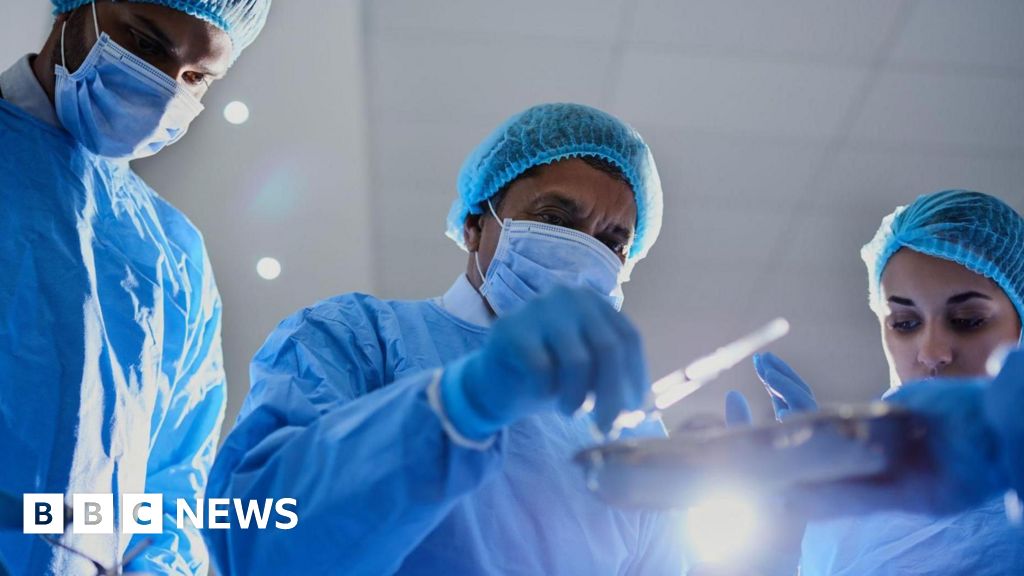
Turkey dental work leaves woman in constant pain

15 hours agoShareSaveMaisie OlahShropshire andClare AshfordBBC Radio ShropshireShareSaveA woman has said she is living in constant pain and is unable to breathe through her nose after having dental work in Turkey.Leanne Abeyance, 41, from Telford, said she had been left with a painful, infected face and the implants could not be removed due to the infections.Her dental work also caused a collapsed septum which she said the NHS would not fix as it was deemed a cosmetic procedure.She spent £3,000 on the initial treatment, she said, and has since spent another £2,000 on private work at home to relieve the pain. The government has warned people about the risks of travelling abroad for cosmetic procedures. “Every day I wake up and I can’t breathe through my nose,” Ms Abeyance, a DJ and producer, said.She decided to travel to Antalya in April 2024 to get four dental implants after previously having veneers fitted in the country.She said she had been quoted about £50,000 to get the work done in the UK but found a dental practice in Antalya which took £3,000 in cash up front.Before undergoing the treatment, performed under local anaesthetic, she said her surgeon told her she would have a sinus lift and a bone graft, along with removing her veneers and having implants put in.Sometimes a sinus lift is needed for a dental implant if there is not enough bone in the upper jaw, particularly in the back area, to support the implant.Despite the local anaesthetic, she said she could “feel everything”.”With the bone graft, I could feel a hammer smashing into the side of my face.”The sinus lift, I could feel my whole face being lifted up. My face was black and blue”.After two days of not being able to “eat or sleep” due to the pain and swelling, she had temporary teeth put over the implants.She was supposed to return four months later to get her permanent teeth, but she said she was too afraid to.Leanne AbeyanceWhen she returned to the UK, things began to deteriorate fast, she said.She was unable to breathe through her nose and was treated for sinusitis.When antibiotics did not help, she said she asked her NHS dentist to see her but they said they could not help as she had been warned not to go for the treatment.She then saw a private dentist where the X-ray showed the implants were piercing her nose. The temporary teeth were removed and dentures put over the top.The infection continued, however, and she eventually ended up at the Ear, Nose and Throat unit at the Princess Royal Hospital in Telford, where medics said they could not take the implants out as her face was too infected. Nearly 18 months on, Ms Abeyance said she suffered from constant infections in her nose and had to be on daily prescription drugs. She is looking for a surgeon who can help.”The implants are holding my face together, but it is all infected,” she said.The NHS guidance is that while being treated abroad might be cheaper than the UK, the risks need to be weighed against the savings. It adds that patients should consult their NHS dentist first as standards vary in different countries.More on this storyRelated internet links

Read more →

AI can forecast your future health – just like the weather

30 minutes agoShareSaveJames GallagherHealth and science correspondentShareSaveJeff Dowling/EMBL-EBIArtificial intelligence can predict people’s health problems over a decade into the future, say scientists.The technology has learned to spot patterns in people’s medical records to calculate their risk of more than 1,000 diseases.The researchers say it is like a weather forecast that anticipates a 70% chance of rain – but for human health.Their vision is to use the AI model to spot high-risk patients to prevent disease and to help hospitals understand demand in their area, years ahead of time.The model – called Delphi-2M – uses similar technology to well-known AI chatbots like ChatGPT.AI chatbots are trained to understand patterns of language so they can predict the sequence of words in a sentence.Delphi-2M has been trained to find patterns in anonymous medical records so it can predict what comes next and when.It doesn’t predict exact dates, like a heart attack on October 1, but instead estimates the likelihood of 1,231 diseases.”So, just like weather, where we could have a 70% chance of rain, we can do that for healthcare,” Prof Ewan Birney, the interim executive director of the European Molecular Biology Laboratory, told me.”And we can do that not just for one disease, but all diseases at the same time – we’ve never been able to do that before. I’m excited,” he said.Jeff Dowling/EMBL-EBIThe AI model was initially developed using anonymous UK data – including hospital admissions, GP records and lifestyle habits such as smoking – collected from more than 400,000 people as part of the UK Biobank research project.The model was then tested to see if its predictions stacked up using data from other Biobank participants, and then with 1.9 million people’s medical records in Denmark.”It’s good, it’s really good in Denmark,” says Prof Birney.”If our model says it’s a one-in-10 risk for the next year, it really does seem like it turns out to be one in 10.”The model is best at predicting diseases like type 2 diabetes, heart attacks and sepsis that have a clear disease progression, rather than more random events like infections. What can you do with the results?People are already offered a cholesterol-lowering statin based on a calculation of their risk of a heart attack or stroke.The AI tool is not ready for clinical use, but the plan is to use it in a similar way, to spot high-risk patients while there is an opportunity to intervene early and prevent disease. This could include medicines or specific lifestyle advice – such as people likely to develop some liver disorders benefitting from cutting back their alcohol intake more than the general population. The artificial intelligence could also help inform disease-screening programmes and analyse all the healthcare records in an area to anticipate demand – such as how many heart attacks a year there will be in Norwich in 2030, to help plan resources.”This is the beginning of a new way to understand human health and disease progression,” said Prof Moritz Gerstung, head of the division of AI in oncology at DKFZ, the German Cancer Research Centre.He added: “Generative models such as ours could one day help personalise care and anticipate healthcare needs at scale.”The AI model, described in the scientific journal Nature, needs refining and testing before it is used clinically. There are also potential biases as it was built from UK Biobank data which is drawn mostly from people aged 40 to 70, rather than the whole population. The model is now being upgraded to account for more medical data such as imaging, genetics and blood analysis.But Prof Birney says: “Just to stress, this is research – everything needs to be tested and well-regulated and thought about before it’s used, but the technology is here to make these kinds of predictions.”He anticipates it will follow a similar path to the use of genomics in healthcare where it took a decade to go from scientists being confident in the technology to healthcare being able to use it routinely. The study was a collaboration between the European Molecular Biology Laboratory, the German Cancer Research Centre (DKFZ) and the University of Copenhagen.Prof Gustavo Sudre, a neuroimaging and AI researcher at King’s College London, commented: “This research looks to be a significant step towards scalable, interpretable, and – most importantly – ethically responsible form of predictive modelling in medicine.”

Read more →

IT issues expected to continue for second day at hospitals

43 minutes agoShareSaveJessica LawrenceBBC News NIShareSaveBBC”Significant” IT issues at services across the Southern Health Trust will continue into Thursday with the majority of planned surgery and out-patient hospital appointments being cancelled.A major incident is still ongoing at sites, including Craigavon and Daisy Hill hospitals, as ambulances are being diverted while work continues to resolve the problems, the trust said.Patients were warned not to come to appointments at any hospital or community service in the trust’s area on Wednesday. One patient at Daisy Hill hospital said she is “devastated” that she can not get an operation she has been waiting nearly a year for.Priority is being given to emergency and critically ill patients.In a statement the trust said planned surgery and out-patient hospital appointments will be rescheduled as soon as possible.’Disappointing’Nicola Burns was taking her son Lorcán to Daisy Hill to get a cast removed after falling off his bike.”We had an appointment for an x-ray in the fracture clinic, turned up here and told it’s been cancelled, bit disappointing to get him out of school, now we have to home again,” she said.Ms Burns said they had “no idea of the problem” until they were there.She said: “We kind of knew straight away, the waiting room was empty. It’s a hassle he’s got out of school, and I’ve left work.”Lorcán said “I don’t mind”.His cast has been on for four weeks, Ms Burns said: “We were hoping he was going to get word of getting it off, now we don’t know. We’ve to come back next week.”Elaine Agnew’s operation was planned for Wednesday and she has been waiting since November.She told BBC News NI she has no idea when it will be rescheduled. Mrs Agnew said she’s “devastated” but “what can I do,” despite the disruption she said staff at the hospital have been “brilliant”.Gerard Lennon was told he cannot leave Daisy Hill until he gets the results of a blood test, which have been delayed by the IT issues.He said he has not been told how long he will have to wait.”I know I’m probably in for a long wait but I don’t mind. It was either here or Dundonald and there were 140 people waiting when I was there this morning.”The trust covers a number of hospitals and care centres across counties Tyrone, Armagh and Down.It includes South Tyrone Hospital in Dungannon, Craigavon Area Hospital, Lurgan Hospital, St Luke’s Hospital in Armagh and Daisy Hill Hospital in Newry.The trust have told BBC News NI the issue will run into Thursday, while the vast majority of community services and mental health domiciliary care will operate as normal.However acute sites will be impacted with outpatient and planned surgery having to be cancelled and rescheduled.People have also been asked to avoid coming to its hospitals and other sites, but patient visiting is still possible.’Impact waiting lists’The British Medical Association’s Northern Ireland Council deputy chair, Dr Clodagh Corrigan said: “Today’s events will inevitably impact waiting lists and is yet another clear indication of the dire need for investment.”She said staff are “trying their best” to deliver safe and effective care in “circumstances entirely outside of their control”.SDLP MLA Justin McNulty said there was “real worry and distress” for a large number of patients.”It’s important that we work to understand how this has happened and ensure systems are put in place to prevent a repeat in future,” he said.Sinn Féin MLA Linda Dillon said the IT problem is causing “significant disruption” to health services.”I urge local people to monitor the Southern Trust’s social media and the news for updates as this situation unfolds,” she added. The deputy leader of the Alliance Party, Eóin Tennyson said his thoughts are with “patients, families, and staff who are under enormous pressure”.He claimed: “Alliance will be seeking assurances that everything possible is being done to restore systems quickly, protect patient safety, and prevent similar failures in future.”PA MediaColin McGrath, who sits on Stormont’s health committee, said that “clear and consistent communication” with the public was essential.”Patients should not be left feeling frightened or uncertain about their care,” he said.”Patients and families rely on our health service in times of greatest need, and they must be able to trust that it will be there for them when required.”

Read more →

Scientists reverse stroke damage with stem cells

Stem cell transplantation can reverse stroke damage, researchers at the University of Zurich report. Its beneficial effects include regeneration of neurons and restoration of motor functions, marking a milestone in the treatment of brain disorders.
One in four adults suffer a stroke in their lifetime, leaving around half of them with residual damage such as paralysis or speech impairment because internal bleeding or a lack of oxygen supply kill brain cells irreversibly. No therapies currently exist to repair this kind of damage. “That’s why it is essential to pursue new therapeutic approaches to potential brain regeneration after diseases or accidents,” says Christian Tackenberg, the Scientific Head of Division in the Neurodegeneration Group at the University of Zurich (UZH) Institute for Regenerative Medicine.
Neural stem cells have the potential to regenerate brain tissue, as a team led by Tackenberg and postdoctoral researcher Rebecca Weber has now compellingly shown in two studies that were conducted in collaboration with a group headed by Ruslan Rust from the University of Southern California. “Our findings show that neural stem cells not only form new neurons, but also induce other regeneration processes,” Tackenberg says.
New neurons from stem cells
The studies employed human neural stem cells, from which different cell types of the nervous system can form. The stem cells were derived from induced pluripotent stem cells, which in turn can be manufactured from normal human somatic cells. For their investigation, the researchers induced a permanent stroke in mice, the characteristics of which closely resemble manifestation of stroke in humans. The animals were genetically modified so that they would not reject the human stem cells.
One week after stroke induction, the research team transplanted neural stem cells into the injured brain region and observed subsequent developments using a variety of imaging and biochemical methods. “We found that the stem cells survived for the full analysis period of five weeks and that most of them transformed into neurons, which actually even communicated with the already existing brain cells,” Tackenberg says.
Brain regenerates itself
The researchers also found other markers of regeneration: new formation of blood vessels, an attenuation of inflammatory response processes and improved blood-brain barrier integrity. “Our analysis goes far beyond the scope of other studies, which focused on the immediate effects right after transplantation,” Tackenberg explains. Fortunately, stem cell transplantation in mice also reversed motor impairments caused by stroke. Proof of that was delivered in part by an AI-assisted mouse gait analysis.

Clinical application moving closer to reality
When he was designing the studies, Tackenberg already had his sights set on clinical applications in humans. That’s why, for example, the stem cells were manufactured without the use of reagents derived from animals. The Zurich-based research team developed a defined protocol for that purpose in collaboration with the Center for iPS Cell Research and Application (CiRA) at Kyoto University. This is important for potential therapeutic applications in humans. Another new insight discovered was that stem cell transplantation works better when it is performed not immediately after a stroke but a week later, as the second study verified. In the clinical setting, that time window could greatly facilitate therapy preparation and implementation.
Despite the encouraging results of the studies, Tackenberg warns that there is still work to be done. “We need to minimize risks and simplify a potential application in humans,” he says. Tackenberg’s group, again in collaboration with Ruslan Rust, is currently working on a kind of safety switch system that prevents uncontrolled growth of stem cells in the brain. Delivery of stem cells through endovascular injection, which would be much more practicable than a brain graft, is also under development. Initial clinical trials using induced stem cells to treat Parkinson’s disease in humans are already underway in Japan, Tackenberg reports. “Stroke could be one of the next diseases for which a clinical trial becomes possible.”

Read more →

Stanford scientists reveal simple shift that could prevent strokes and obesity nationwide

Every spring, Americans dutifully adjust their clocks forward to daylight saving time, and every fall, back to standard time — but no one seems very happy about it. The biannual time shift is not only inconvenient, it’s also known to be acutely bad for our health. The collective loss of an hour of sleep on the second Sunday in March has been linked to more heart attacks and fatal traffic accidents in the ensuing days.
Now, a study by Stanford Medicine researchers finds there are longer-term hazards as well — and better alternatives.
The researchers compared how three different time policies — permanent standard time, permanent daylight saving time and biannual shifting — could affect people’s circadian rhythms, and, in turn, their health throughout the country. Circadian rhythm is the body’s innate, roughly 24-hour clock, which regulates many physiological processes.
The team found that, from a circadian perspective, we’ve made the worst choice. Either permanent standard time or permanent daylight saving time would be healthier than our seasonal waffling, with permanent standard time benefitting the most people.
Indeed, by modeling light exposure, circadian impacts and health characteristics county by county, the researchers estimate that permanent standard time would prevent some 300,000 cases of stroke per year and result in 2.6 million fewer people having obesity. Permanent daylight saving time would achieve about two-thirds of the same effect.
“We found that staying in standard time or staying in daylight saving time is definitely better than switching twice a year,” said Jamie Zeitzer, PhD, professor of psychiatry and behavioral sciences and senior author of the study to publish Sept. 15 in the Proceedings of the National Academy of Sciences. The lead author is Lara Weed, a graduate student in bioengineering.
A theory lacking data
Even among people who want to end seasonal time shifts, there’s disagreement over which time policy to adopt.

“You have people who are passionate on both sides of this, and they have very different arguments,” Zeitzer said.
Supporters of permanent daylight saving time say more evening light could save energy, deter crime and give people more leisure time after work. Golf courses and open-air malls are big proponents, Zeitzer said. A trial of permanent daylight saving time begun in 1974, however, was so unpopular it was abandoned after less than a year. Among the objectors were parents worried about their children going to school in the dark.
Nevertheless, the duration of daylight saving time was later increased from six months to seven months. And since 2018, a bill proposing permanent daylight saving time has been introduced in Congress nearly every year, though it has never passed.
In the other camp, proponents of permanent standard time contend that more morning light is optimal for health. Organizations such as the American Academy of Sleep Medicine, the National Sleep Foundation and the American Medical Association have endorsed year-round standard time.
“It’s based on the theory that early morning light is better for our overall health,” Zeitzer said of these endorsements. “The problem is that it’s a theory without any data. And finally, we have data.”
Syncing to 24 hours
The human circadian cycle is not exactly 24 hours — for most people, it’s about 12 minutes longer — but it can be modulated by light.

“When you get light in the morning, it speeds up the circadian cycle. When you get light in the evening, it slows things down,” Zeitzer said. “You generally need more morning light and less evening light to keep well synchronized to a 24-hour day.”
An out-of-sync circadian cycle has been associated with a range of poor health outcomes.
“The more light exposure you get at the wrong times, the weaker the circadian clock. All of these things that are downstream — for example, your immune system, your energy — don’t match up quite as well,” Zeitzer said.
The researchers used a mathematical model to translate light exposure under each time policy, based on local sunrise and sunset times, to circadian burden — essentially, how much a person’s innate clock has to shift to keep up with the 24-hour day.
They found that over a year, most people would experience the least circadian burden under permanent standard time, which prioritizes morning light. The benefits vary somewhat by a person’s location within a time zone and their chronotype — whether they prefer early mornings, late nights or something in between.
Counterintuitively, people who are morning larks, who make up about 15% of the population and tend to have circadian cycles shorter than 24 hours, would experience the least circadian burden under permanent daylight savings time, as more evening light would extend their circadian cycles closer to 24 hours.
Health implications
To link circadian burden to specific health outcomes, the researchers analyzed county-level data from the Centers for Disease Control and Prevention on the prevalence of arthritis, cancer, chronic obstructive pulmonary disease, coronary heart disease, depression, diabetes, obesity and stroke.
Their models show that permanent standard time would lower the nationwide prevalence of obesity by 0.78% and the prevalence of stroke by 0.09%, conditions influenced by circadian health. These seemingly small percentage changes in common conditions would amount to 2.6 million fewer people with obesity and 300,000 fewer cases of stroke. Under permanent daylight time, the nationwide prevalence of obesity would decrease by 0.51%, or 1.7 million people, and stroke by 0.04%, or 220,000 cases.
As expected, the models predicted no significant difference in conditions such as arthritis that have no direct link to circadian rhythms.
Not the last word
The study might be the most evidence-based analysis of the long-term health implications of different time policies, but it’s far from the last word, Zeitzer said.
For one thing, the researchers didn’t account for many factors that could influence real-life light exposure, including weather, geography and human behavior.
In their calculations, the researchers assumed consistent and relatively circadian-friendly light habits, including a 10 p.m. to 7 a.m. sleep schedule, sunlight exposure before and after work and on weekends, and indoor light exposure from 9 a.m. to 5 p.m. and after sunset. But in reality, many people have erratic sleep schedules and spend more time indoors.
“People’s light habits are probably much worse than what we assume in the models,” Zeitzer said. “Even in California, where the weather is great, people spend less than 5% of their day outside.”
Moreover, though circadian health seems to favor permanent standard time, the results are not conclusive enough to overshadow other considerations. Zeitzer hopes the study will encourage similar evidence-based analyses from other fields, such as economics and sociology.
He also points out that time policy is simply choosing which clock hours represent sunrise and sunset, not altering the total amount of light there is. No policy will add light to the dark winter months.
“That’s the sun and the position of Earth,” he said. “We can’t do anything about that.”
The study received funding from the National Institutes of Health (grant F31HL170715).

Read more →

Ozempic, Wegovy and Mounjaro makes food taste sweeter and saltier, and that may quiet cravings

New research being presented at the Annual Meeting of the European Association for the Study of Diabetes (EASD) in Vienna, Austria (September 15-19) shows that some individuals who are taking Ozempic, Wegovy or Mounjaro find that foods taste sweeter or saltier than before.
About one in five of those participating in the real-word study, published in the journal Diabetes, Obesity and Metabolism, perceived sweetness more intensely and a similar number were more sensitive to salt – and these changes were linked to a reduction in appetite.
“Incretin-based therapies such as Ozempic, Wegovy and Mounjaro are widely used for weight management but their effect on taste perception has been unclear,” says Othmar Moser, of University of Bayreuth, Bayreuth, Germany, who led the research.
“If changes in taste are linked to greater appetite control and weight loss, this could help clinicians better select therapies, provide more tailored dietary advice and improve long-term treatment outcomes for patients.”
To find out more, Professor Moser and colleagues from the Medical University of Vienna surveyed hundreds of individuals with overweight and obesity who were taking Ozempic, Wegovy or Mounjaro for weight loss about their sense of taste and appetite.
Of the 411 participants (69.6% female), 148 were on Ozempic, 217 were on Wegovy and 46 were taking Mounjaro.
Median duration of treatment was similar for the three groups (Ozempic: 43 weeks; Wegovy: 40 weeks; and Mounjaro: 47 weeks), with all of the participants receiving treatment for at least three consecutive months. The average BMI before starting treatment was 34.7 kg/m2 (Ozempic), 35.6 kg/m2 (Wegovy) and 36.2 kg/m2 (Mounjaro).

The participants, who were recruited online, were asked if their sense of taste (perception of sweetness, saltiness, sourness and bitterness) had changed since starting treatment.
They were also asked about changes to appetite, satiety and food cravings, as well changes to lifestyle factors, such as smoking, and for self-reported data on height and weight before and during treatment.
Reductions in BMI, adjusted for duration of treatment, dose, baseline BMI, age and sex, were 17.4% with Ozempic, 17.6% with Wegovy and 15.5% with Mounjaro.
Around a fifth of the participants said that food tasted sweeter (21.3%) or saltier (22.6%) than before. Their perception of bitterness and sourness did not change.
Some 26.7% of participants in the Wegovy group reported that food tasted saltier than before, compared with 16.2% in the Ozempic group and 15.2% in the Mounjaro group. Increases in sweetness were reported at similar frequencies in all groups (Wegovy 19.4%, Ozempic 21.6%, Mounjaro 21.7%).
More than half of the participants (58.4%) reported they were less hungry in general, i.e. their appetite had decreased (Ozempic: 62.1%, Wegovy: 54.4%, Mounjaro: 56.5%).

Almost two-thirds of the participants (63.5%) reported increased satiety i.e. they felt full sooner Ozempic: 58.8%, Wegovy: 66.8%, Mounjaro: 63.1%). Food cravings were also reduced, with 41.3% of Mounjaro users reporting a strong reduction in cravings, i.e. their cravings were much less intense that before, compared with 34.1% of those taking Wegovy and 29.7% of those taking Ozempic.
Further analysis revealed links between changes to sense of taste and appetite and satiety.
Participants who reported that food tasted sweeter since starting incretin-based therapy were twice as likely to report increased satiety, compared with participants who said their perception of sweetness had not changed.
Those with an increase in the perception of sweetness were also 67% more likely to report a reduction in appetite and 85% more likely to report a reduction in cravings, compared with those whose perception of sweetness was unchanged.
Similarly, participants who said food tasted saltier than before were about twice as likely (2.17 times) to also reported increased satiety, compared with those whose perception of saltiness was unchanged.
Professor Moser says: “These drugs act not only in the gut and brain areas that control hunger but also on taste bud cells and brain regions that process taste and reward. This means they can subtly change how strong flavours, like sweetness or saltiness, are perceived. This, in turn, may affect appetite.”
However, there was no link between changes in taste perception and reduction in BMI. The researchers speculate this is because sense of taste is just one of many factors involved in weight loss.
Professor Moser explains: “Shifts in taste may affect how satisfying or appealing food feels in the moment, which influences appetite control. However, weight loss depends on many other factors – like metabolism, long-term eating patterns, and activity – so changes to taste alone may not be enough to directly drive body weight reduction.”
The study’s limitations include inability to prove causation, the self-reporting of data and the possibility that the participants weren’t representative of the patient group as a whole.
Professor Moser concludes: “Drugs like Wegovy, Ozempic and Mounjaro may alter sense of taste, making foods seem sweeter or saltier and helping people feel full sooner and less hungry. For clinical practice, this suggests that monitoring patients’ taste changes could provide useful clues about treatment response, even though taste alone does not directly drive weight loss.
“For example, tracking changes in taste could help gauge whether the treatment is working beyond weight loss.
“It could also perhaps be used to tailor dietary advice, for example by helping patients find alternatives to foods with flavours that have become overwhelming or less appealing.”

Read more →

Semaglutide may silence the food noise in your head

New research being presented at the Annual Meeting of the European Association for the Study of Diabetes (EASD) in Vienna, Austria (September 15-19) shows that individuals who are taking semaglutide for weight loss experience less food noise than before.
Food noise refers to obsessive and intrusive thoughts about food and eating. This preoccupation with food can hinder healthy lifestyle implementation and lead to overeating, making weight loss difficult.
Previous research has found that 57% of people who have living with overweight or obesity have experienced food noise, although few are familiar with the term. Many of those affected said that food noise made it more difficult to make healthy food choices or stick to an exercise plan.
Some people also report that food noise affects their quality of life and their well-being.
Glucagon-like peptide-1 (GLP-1) receptor agonists such as semaglutide (brand names Wegovy and Ozempic) are highly effective at helping people who are living with obesity lose weight. By mimicking the action of a hormone called GLP-1, they reduce appetite and feelings of hunger, slow the release of food from the stomach and increase feelings of fullness after eating.
However, little is known about how semaglutide, which was developed by Danish pharmaceutical company Novo Nordisk A/S, affects food noise.
To find out more, researchers from Novo Nordisk and Market Track LLC, a market research company, conducted a survey of 550 people in the US (average age 53 years, 86% female) who were taking semaglutide for weight loss.

Some 81% (447) of the participants said they had been taking semaglutide for at least four months and 86% of the participants reported weighing at least 92kg (14st 7lb) before starting treatment.
The participants were asked how food noise was currently affecting them and to recall how it had affected them before starting treatment.
Analysis of the results showed that the participants were experiencing less food noise than before.
The proportion of participants experiencing constant thoughts about food throughout the day fell almost four-fold from 62% before starting treatment to 16%. The proportion who said they spent too much time thinking about food fell by a similar amount, from 63% to 15%.
The proportion who said they had uncontrollable thoughts about food fell more than three-fold from 53% to 15%; the proportion who said their thoughts about food had negative effects on them or their life fell from 60% to 20%; and the proportion who said their thoughts about food distracted them from completing everyday activities fell from 47% to 15%.
The survey also contained questions that covered several areas of mental well-being.
Here, 352 (64%), 417 (76%) and 438 (80%) of the respondents reported an improvement in mental health, self-confidence and the development of healthier habits, respectively.
It is not known if these improvements were related to the drop in food noise or to the participants’ weight loss.
The study’s authors conclude that semaglutide may reduce the amount of food noise that is experienced by individuals who are living with obesity.

Read more →