Could assisted dying be coming to Scotland?
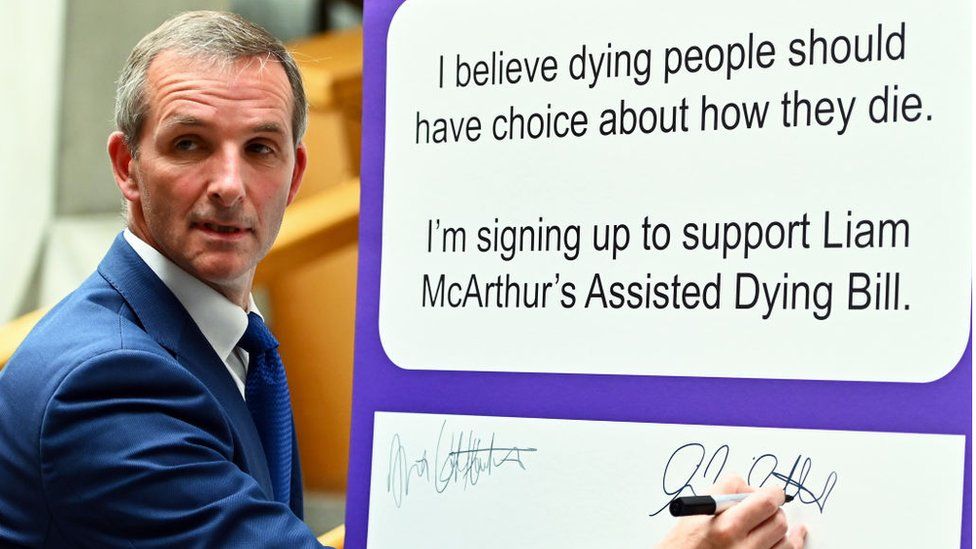
Published1 hour agoShareclose panelShare pageCopy linkAbout sharingImage source, Getty ImagesBy James CookScotland editorScotland could become the first UK nation to provide terminally-ill people with assistance to end their lives if a bill that has been introduced at Holyrood is approved.Supporters of the legislation say it would ease suffering.Opponents worry that some terminally-ill people could feel under pressure to end their lives.The Assisted Dying Bill is drafted by the Lib Dem MSP, Liam McArthur, who expects it to be debated this autumn.The bill was published on Thursday and will potentially be voted on next year.What are assisted dying, assisted suicide and euthanasia?’Political mood has changed’ on assisted dying – MSPStarmer supports assisted dying law change The Scottish government says ministers and SNP backbenchers will not be instructed how to vote, as the matter is an issue of individual conscience.First Minister Humza Yousaf, who is a Muslim, has indicated that he is likely to vote against the bill, which is also opposed by the Church of Scotland, the Catholic Church in Scotland, and the Scottish Association of Mosques. Under the proposals, a patient could only request medical assistance to end their life if they had a terminal illness and had been ruled mentally fit to make the decision by two doctors.Mr McArthur says “the terminal illness would need to be advanced and progressive” and the medics would have to ensure there was “no coercion.”In addition, the patient must be aged 16 or over, a resident of Scotland for at least 12 months, and must administer the life-ending medication themselves.In Scotland, it is not illegal to attempt suicide but helping someone take their own life could lead to prosecution for crimes such as murder, culpable homicide or offences under the Misuse of Drugs Act 1971.In England and Wales, the Suicide Act 1961 makes it an offence to encourage or assist the suicide or attempted suicide of another person. In 2015, the House of Commons decided against changing the law by 330 votes to 118.In Northern Ireland, a similar offence is set out in the Criminal Justice Act 1966.A number of countries have legalised some form of assisted dying – Dignity in Dying says more than 200 million people around the world have access.This includes Switzerland, perhaps best known for its Dignitas facility, Australia, Canada, Spain, Colombia and 11 states in the US where it is known as “physician-assisted dying”. Laws vary by country.This will be the third time that the Scottish Parliament has considered the issue.In 2010, MSPs rejected Margo MacDonald’s End of Life Assistance Bill by 85 votes to 16.The independent MSP, who had Parkinson’s Disease, died in 2014 and the cause was taken up by Patrick Harvie of the Scottish Greens.The following year, his Assisted Suicide Bill was rejected by 82 votes to 36. The title of Mr McArthur’s bill — Assisted Dying rather than Assisted Suicide — reflects a change in approach from campaigners.Critics such as Dr Fiona MacCormick of the Association for Palliative Medicine (APM) say the new terminology is “harmful and unhelpful,” adding, “they’ve used very euphemistic language to talk about suicide.”Mr McArthur says he would “strongly disagree,” because “we’re talking about people with a terminal illness, and the fact they are going to die has already been established.”The MSP for Orkney Islands believes there has been a significant “mood shift” among his fellow parliamentarians since the issue was last debated and is hopeful that his proposal will be approved.A new poll, carried out by Opinium Research for the campaign group Dignity in Dying, suggests clear public support for the proposal, with 78% of respondents in Scotland saying they supported “making it legal for someone to seek ‘assisted dying’ in the UK.”Gillie Davison is among those supporters – her husband Steve died of throat cancer last April, at the age of 56.Ms Davison, from Hawick in the Scottish Borders, says even high-quality palliative care did not ease his suffering in the final days and hours.”It wasn’t a good death because he was distressed and he was upset,” she explains.”It wasn’t what he wanted. He wanted that choice.”She believes an assisted dying bill would have allowed her husband to “go to sleep” peacefully at home and could prevent other families from enduring a similarly “devastating” experience in future.Changing the law, she says, would be “compassionate and kind.”But Dr MacCormick says she is concerned about the potential for inaccurate diagnosis and prognosis, undetected coercion, and fluctuating mental capacity in seriously-ill patients.”As a palliative care doctor, when I see patients who are suffering, I don’t see the answer to their suffering as being to end the life of the sufferer,” she says.But some terminally-ill patients say they would find the option reassuring even if they did not use it.In 2015, at the age of 26, Mandie Malcolm from Falkirk was diagnosed with breast cancer which had spread to other parts of her body.She was told that her life expectancy was two to five years.Now 34, Ms Malcolm is still alive thanks to advances in cancer treatment but, she says, she lies awake at night worrying about how her life will end.Until starting a new drug, she says, she was “bedridden for weeks and in huge amounts of pain.”I really worry about my death. I worry that I’m going to suffer, horrifically, basically, and it does scare me,” she explains.Ms Malcolm is strongly in favour of the assisted dying law, which she says would mean she could stop worrying about “dying a brutal death” and “enjoy the good times.””It would mean everything to me and my family,” she adds.But campaigners against the measure point to laws enacted in Belgium and Canada where qualifying criteria have been loosened over time, leading to a sharp rise in the number of “assisted” deaths. Mr McArthur says his proposed law is not modelled on those “permissive and expansive models” but on places such as the US state of Oregon where “the eligibility criteria has not changed at all” since becoming law in 1997.He is supported by the broadcaster and campaigner, Dame Esther Rantzen, who recently revealed that she was considering travelling to Switzerland – where assisted suicide has been legal since 1942 – to die after being diagnosed with incurable lung cancer.She says: “I want to congratulate the Scottish Parliament for prioritising this debate so that they can carefully consider this crucial issue and scrutinise this historic Assisted Dying Bill.”Audrey Birt from Edinburgh also has terminal cancer, the latest of five breast cancer diagnoses over 30 years, and has spent the past 12 years “in and out of hospital.”But she does not want assistance to end her life and has concerns that, if the law is changed, some patients might feel that they must do so to help their families.”In Scotland,” she says, “we don’t like to be a burden.”That’s the aspect I worry about — that there may be pressure,” she explains.Instead Ms Birt, who is 68 years old, says there should be increased investment in palliative care, which she receives at St Columba’s Hospice in Edinburgh.”After coming here and being more aware of what’s on offer, I do wonder if it was available to everyone, would that take away some of the fear that is behind the bill?” she asks.Helen Malo of the charity Hospice UK says her organisation is neutral on the bill but wants better funding of palliative care.Hospices support more than 21,000 people in Scotland each year, she says. But they are struggling, with only a third of their funding coming from the state, the rest from charitable donations, and rising costs.”One in four people do not get access to specialist palliative care,” adds Ms Malo, who says that, as the nation ages, demand is expected to increase by a fifth by 2040.”There are fewer specialist palliative care doctors in Scotland than there are MSPs,” says Dr MacCormick of the APM.Without adequate palliative care, she says, the worry is that assisted suicide “is not just a choice. It becomes a suggestion, which then becomes an expectation and that our vulnerable patients are at risk.”Supporters of the bill say they too want more funding for hospices and are prepared for a debate about how and if such a commitment could be woven into the bill.They also know that moral, religious and practical objections must be overcome if the momentous change they propose is to become law.More on this story’Political mood has changed’ on assisted dying – MSPPublished3 days agoWe need assisted dying vote after report – RantzenPublished29 FebruaryCould Scotland legalise assisted dying?Published8 September 2022Assisted dying bill is focus of Holyrood eventPublished18 May 2023Doctors criticise assisted dying bill in ScotlandPublished5 July 2021

Read more →
Biden Administration Finalizes Rule Curbing Use of Short-Term Health Plans

The new regulation reverses a Trump-era policy that expanded access to health plans with fewer benefits than those sold on the Affordable Care Act’s marketplaces.The Biden administration announced on Thursday that it had finalized a new regulation that curbs the use of short-term health insurance plans that do not comply with the Affordable Care Act, reversing a move by the Trump administration to give consumers more access to cheaper but skimpier plans.Under the new rule, the short-term plans will be able to last for only 90 days, with an option for consumers to make a one-month extension.In 2018, the Trump administration issued a rule allowing the plans to last for just under a year, with the option of renewing them for a total duration of up to three years. Previously, under an Obama-era policy, the plans could last no longer than three months.The plans, often with lower premiums than those found on the Affordable Care Act’s marketplaces, do not have to cover people with pre-existing conditions. They are also free from the health law’s requirement that plans offer a minimum set of benefits, like prescription drug coverage and maternity care.Democrats deride the so-called short-term, limited-duration plans as “junk” insurance, and the Obama-era policy was meant to ensure that healthy consumers could not use that option to sidestep the Affordable Care Act’s marketplaces, leaving a sicker pool of customers enrolling in the comprehensive plans offered under the health law.The White House cast the new rule as a way to fortify the marketplaces. In a briefing with reporters on Wednesday, Neera Tanden, President Biden’s domestic policy adviser, said that 45 million Americans were now covered through the marketplaces or the expansion of Medicaid under the Affordable Care Act. More than 20 million people signed up for plans on the marketplaces during the most recent open enrollment period.We are having trouble retrieving the article content.Please enable JavaScript in your browser settings.Thank you for your patience while we verify access. If you are in Reader mode please exit and log into your Times account, or subscribe for all of The Times.Thank you for your patience while we verify access.Already a subscriber? Log in.Want all of The Times? Subscribe.

Read more →

Wrong patient fitted with coil after Caesarean

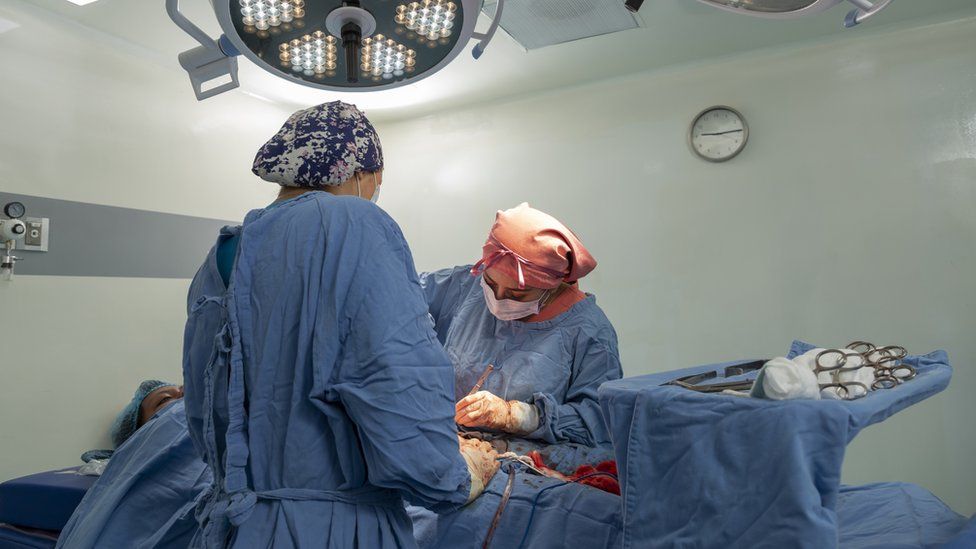
Published2 hours agoShareclose panelShare pageCopy linkAbout sharingImage source, Getty ImagesA new mum was confused for another patient and mistakenly fitted with a contraceptive coil after a C-section.Another patient in north Wales almost had the wrong toe removed during surgery to amputate two others.A third incident happened when a patient, unable to swallow oral medication, had it crushed, mixed with water and administered with a syringe. These so-called “never events” happened at hospitals in the Betsi Cadwaladr health board area in February. While details of hospitals and patients involved have not been released, these incidents will be discussed at a health board meeting later.NHS Wales describes a never event as a “serious, largely preventable patient safety incident” that should not have occurred if preventative measures had been implemented.Never events include silicone left in patientHealth board still faces challenges – reportIn the latest available annual figures, there were 37 never events at hospitals in Wales between April 2021 and March 2022. Betsi Cadwaldr health board, which covers all of north Wales, accounted for 12 of the 37 never events, while 10 happened in Aneurin Bevan health board’s hospitals in south-east Wales.There were none in the Powys or Hywel Dda health board areas in mid and west Wales.In a report into the three incidents in February, Betsi Cadwaladr health board outlined how a patient had a coil – an intrauterine device which prevents pregnancy – inserted after undergoing a Caesarean section. Described in the report as “wrong procedure”, it had been planned for a different patient but a mistake had been made after the “list order was changed due to the increase in category for this patient”.Image source, Getty ImagesAnother incident, described in the report as “wrong site surgery”, described a patient who was due to have their second and third toes amputated. However, an incision was made in their fourth toe by accident. Luckily, the error was spotted and the correct toes were amputated.In the third never event, described as “wrong route”, the report details the case of a patient who was unable to swallow oral medication. To administer it, a member of staff crushed it, mixed it with water and “inadvertently” gave it intravenously, according to the report. The Welsh government’s deputy chief medical officer, Chris Jones, said never events may highlight “potential weaknesses” in how an organisation manages fundamental safety processes. He said it was important they were identified and investigated fully. The three never events that happened will be discussed at a Betsi Cadwaladr health board meeting at Venue Cymru, Llandudno, Conwy, on Thursday. The health board has been approached for comment. More on this storySilicone left in patient after surgeryPublished18 July 2016Troubled health board’s challenges remain – reportPublished15 February

Read more →

The families borrowing to pay for care

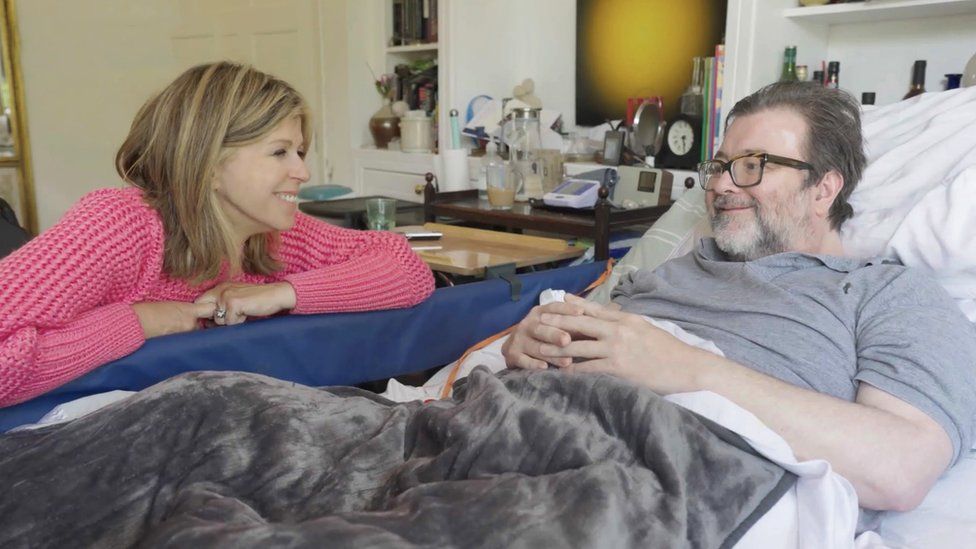
Published14 minutes agoShareclose panelShare pageCopy linkAbout sharingImage source, ITVBy Eleanor Lawrie and Alison HoltBBC NewsTelevision presenter Kate Garraway has spoken of her huge debts from her husband Derek Draper’s care bills.He died from the long-term effects of Covid, in January, but she has now told an ITV documentary she had been told he “wasn’t sick enough” for funded care. Other families have told BBC News how they too struggle to pay the bills after failing to meet the criteria for comprehensive support. The government says more people can now receive continuing healthcare funding.’I hate having to beg people for things’Image source, Family handoutSam Bell’s son William, 10, has a severe and life-limiting form of muscular dystrophy, which causes respiratory problems and is taking away his ability to walk. He now uses an electric wheelchair.The family received the maximum £30,000 disabled facilities grant, to make their home accessible to him, but say total costs have spiralled to £86,000.To help meet the shortfall, they raised nearly £20,000 through online fundraising, charity donations and help from relatives.”I hate having to beg people for the things that my son should have,” Sam says. “It’s awful.””We’ve had to put up with a lot and then having to ask people for money when we’re both working, I feel ashamed.” NHS home care gaps leave families feeling strandedMum awake for 60 hours as son’s care breaks downImage source, Family handoutThe Lincolnshire family have also taken a £20,000 loan from the council, paying back £150 a month.And when her energy bills tripled, Sam asked for the monthly repayments to be temporarily reduced by £50 but says this was refused. “My husband desperately needs a new car for work but we can’t afford that because we are paying the council back,” she says.”There’s no money left for anything.”The £30,000 maximum disabled facilities grant – for disabled people in England to adapt their homes – has not increased since 2008, meaning in real terms it is now worth about a third less than when introduced.And the government has now dropped a commitment to increase it.’Not having the money is very stressful’Image source, Family handoutJason Mitchell, paralysed from the neck down by a holiday swimming pool accident in 1999, has borrowed hundreds of pounds from his mother, to pay for carers.For more than 20 years, the NHS funded the 24-hour care he says he needsBut three years ago, a continuing-healthcare assessment stopped this – a decision Jason has been trying to appeal against ever since.Now, the council gives him £4,700 every four weeks, on the understanding this will pay for carers costing £175 a day.But Jason also has to cover their travel, with some coming up from London to his West Midlands home, while emergency back-up carers cost him £250 a day.Image source, Family handoutLast month, Jason’s mother lent him £670 to meet the shortfall.And this month, she has agreed to look after him herself for four days, to help save on costs.”It’s not a situation that should have to happen really,” Jason says.”Due to my spinal cord injury, I need that care.”It’s not a choice for me. “To live independently, that is the only way my life can functionOne social worker suggested he should consider moving into a residential care home, now his care has become more expensive. “I was furious,” he says. “Everybody has a right to live their life and shouldn’t be pushed into something like that.”Jason used to be a keen Birmingham City Football Club season-ticket holder – but poor health and anxiety over the situation have taken their toll.”Money is relatively tight to be honest,” he says.”I have to be careful what I do with it. “It’s just constantly on your mind and there’s no way of alleviating that”It’s just constantly a worry.”Jason’s mother, Ann Walton, says if the situation continues, it will bankrupt her.”We’re devastated,” she says.”Whatever savings I’ve got, that’s where it comes from. “My money doesn’t get replaced as I’m not working.”I’ve just got my pensions.”Jason not having the money, it’s very, very stressful. “Ever since he had his accident, your life changes anyway because you’ve always got to be there for them.”Garraway told the documentary, which is available on ITVX, that she was “well paid” as a presenter but her salary had failed to cover the £4,000 a week needed to fund her husband’s treatment.”Time and time again the system tell us that Derek isn’t sick enough, doesn’t have enough of a health need to qualify for funded care,” she said.”I’ve appealed but that still hasn’t been processed two-and-a-half, three years later. “If this is what it’s like for me, what on Earth is it like for everybody else?”Image source, ITVContinuing healthcare is free NHS social healthcare given to adults in England and Wales who live outside of a hospital setting, with long-term complex health needs.But of the 38,726 people in England assessed in October-December 2023, just over one in four were found to be ineligible.And in the same timeframe, just over 29,000 people were defined as no longer eligible – for example, because they did not meet the criteria or had died.A Department of Health and Social Care official said the number of people eligible for continuing healthcare in England had increased since 2017-18 and £600m was awarded annually through the disabled facilities grant.”These packages of care provide vital support to individuals and their families and there is clear guidance to determine who is eligible to receive them, regardless of their age, condition or financial means,” the spokesperson added.

Read more →

Researchers introduce enhanced brain signal analysis technique

University of Minnesota Medical School researchers have introduced a new, refined method for analyzing brain signals, enhancing our understanding of brain functionality. This research has the potential to improve treatments for neurological conditions such as Parkinson’s disease, pain, epilepsy and depression. The findings were recently published in NeuroImage.
“This breakthrough provides a more detailed understanding of the brain’s complex activity, akin to upgrading from a basic telescope to a sophisticated space observatory,” said David Darrow, MD, MPH, an assistant professor at the U of M Medical School, a neurosurgeon with M Health Fairview and senior author. “This innovation could impact various aspects of everyday life — from education and mental health to artificial intelligence, paving the way for future technological advancements and a deeper understanding of human cognition.”
One of the key findings of this research is the enhanced ability to analyze direct brain recordings — meaning scientists can now better understand how brain activity correlates to different tasks and behaviors. Additionally, this method allows researchers to directly extract patterns of brain activity over time, revealing how different brain areas process stimuli during tasks such as image identification.
“This research represents a significant advance in our ability to analyze neural signals. It opens up new possibilities for understanding the complex dynamics of the human brain, paving the way for future discoveries in neuroscience,” said Alexander Herman, MD, PhD, an assistant professor of psychiatry at the University of Minnesota Medical School, attending psychiatrist with M Health Fairview and co-senior author.
The research team is working on the next iteration of the platform, which will allow them to decode brain signals and apply strategies for integrating them into medical devices and new treatments.
Funding was provided by the National Institute of Drug Addiction [5K23DA050909] and the Brain & Behavior Research Foundation. This research was also supported by the University of Minnesota’s MnDRIVE (Minnesota’s Discovery, Research and Innovation Economy) initiative.

Read more →

Could AI play a role in locating damage to the brain after stroke?

Artificial intelligence (AI) may serve as a future tool for neurologists to help locate where in the brain a stroke occurred. In a new study, AI processed text from health histories and neurologic examinations to locate lesions in the brain. The study, which looked specifically at the large language model called generative pre-trained transformer 4 (GPT-4), is published in the March 27, 2024, online issue of Neurology® Clinical Practice, an official journal of the American Academy of Neurology.
A stroke can cause long-term disability or even death. Knowing where a stroke has occurred in the brain helps predict long-term effects such as problems with speech and language or a person’s ability to move part of their body. It can also help determine the best treatment and a person’s overall prognosis.
Damage to the brain tissue from a stroke is called a lesion. A neurologic exam can help locate lesions, when paired with a review of a person’s health history. The exam involves symptom evaluation and thinking and memory tests. People with stroke often have brain scans to locate lesions.
“Not everyone with stroke has access to brain scans or neurologists, so we wanted to determine whether GPT-4 could accurately locate brain lesions after stroke based on a person’s health history and a neurologic exam,” said study author Jung-Hyun Lee, MD, of State University of New York (SUNY) Downstate Health Sciences University in Brooklyn and a member of the American Academy of Neurology.
The study used 46 published cases of people who had stroke. Researchers gathered text from participants’ health histories and neurologic exams. The raw text was fed into GPT-4. Researchers asked it to answer three questions: whether a participant had one or more lesions; on which side of the brain lesions were located; and in which region of the brain the lesions were found. They repeated these questions for each participant three times. Results from GPT-4 were then compared to brain scans for each participant.
Researchers found that GPT-4 processed the text from the health histories and neurologic exams to locate lesions in many participants’ brains, identifying which side of the brain the lesion was on, as well as the specific brain region, with the exception of lesions in the cerebellum and spinal cord.
For the majority of people, GPT-4 was able to identify on which side of the brain lesions were found with a sensitivity of 74% and a specificity of 87%. Sensitivity is the percentage of actual positives that are correctly identified as positive. Specificity is the percentage of negatives that are correctly identified. It also identified the brain region with a sensitivity of 85% and a specificity of 94%.

When looking at how often the three tests had the same result for each participant, GPT-4 was consistent for 76% of participants regarding the number of brain lesions. It was consistent for 83% of participants for the side of the brain, and for 87% of participants regarding the brain regions.
However, when combining its responses to all three questions across all three times, GPT-4 provided accurate answers for 41% of participants.
“While not yet ready for use in the clinic, large language models such as generative pre-trained transformers have the potential not only to assist in locating lesions after stroke, they may also reduce health care disparities because they can function across different languages,” said Lee. “The potential for use is encouraging, especially due to the great need for improved health care in underserved areas across multiple countries where access to neurologic care is limited.”
A limitation of the study is that the accuracy of GPT-4 depends on the quality of the information it is provided. While researchers had detailed health histories and neurologic exam information for each participant, such information is not always available for everyone who has a stroke.

Read more →

New tool provides researchers with improved understanding of stem cell aging in the brain

Researchers can use the light naturally thrown off by biological specimens to better study the different states of stem cells in the nervous system, thanks to a tool developed at the University of Wisconsin-Madison, brightening their chances for studying the way stem cells age.
The UW-Madison team combined autofluorescence — that natural light emission — and sequencing genetic material in single cells to study the behavior of neural stem cells. Autofluorescence is often considered a hindrance, as it can obscure the glowing labels researchers use to track specific signals within a cell. In their new technique, however, the researchers found the signatures of autofluorescence can be used to study stem cells’ dormant state, known as quiescence.
They published their findings recently in the journal Cell Stem Cell.
“The quiescent state is very important, because the exit from quiescence is the rate-limiting step in making newborn neurons in the adult brain. Aging and neurological diseases limit this exit from quiescence, so we have a great need to study adult neural stem cells in their different cell states,” says Darcie Moore, the senior author on the study, a professor of neuroscience and member of UW-Madison’s Stem Cell and Regenerative Medicine Center. “Our goal was to create a new tool that could identify if an adult neural stem cell was quiescent and its different substates (dormant or resting quiescence), or if the cell is activated, entering into the cell cycle.”
Moore partnered with Melissa Skala, a UW-Madison biomedical engineering professor, Morgridge Institute for Research investigator and member of the Stem Cell and Regenerative Medicine Center whose lab has been developing fluorescence lifetime imaging to study the autofluorescent signatures associated with single cells.
When cells shift from active to quiescent states, the presence and abundance of certain proteins important to metabolism change. These molecules alter the way light is absorbed and emitted back out of the cell. By focusing on light emitted by parts of the cell that change in key ways with quiescence, the researchers identified the light “signature” that matches a target cell state.
“These natural signals within the cell can reliably identify cell function and identity,” Skala says. “It’s like nature is trying to tell us all the secrets of life.”
By sequencing RNA — a kind of working copy of DNA used to produce the proteins that make things happen in cells — in the mouse neural stem cells they studied, the researchers confirmed matches between cell state and light signatures.

By identifying and decoding these autofluorescence signatures, Moore and Skala have developed a tool that can aid in studying adult neurological diseases and aging, but potentially also expand beyond neuroscience. They’ve already begun working with Colin Crist, a professor of human genetics at McGill University, to investigate the unique autofluorescent signatures present in muscle stem cells.
“Now that we’ve discovered that this research created not only a tool but gave us unique insight to cellular processes that are different between quiescent and activated neural stem cells, I feel even more strongly that identifying a cell based on how they act versus how they express one protein will shift studies from studying static systems to dynamic systems,” says Moore. “That we can study these cells as they change throughout time without destroying them — while also seeing how these functional measures change — is very exciting.”
This research was supported in part by grants from the National Institutes of Health (P30 CA014520, 1S10RR025483-01, T32GM008688 and 1DP2OD025783) as well as the Vallee Foundation, Morgridge Institute for Research and Retina Research Foundation.

Read more →

Ninja, Twitch’s Top Streamer, Reveals Skin Cancer Diagnosis

The gamer, Tyler Blevins, said a mole removed from his foot during a recent checkup with a dermatologist was found to be a melanoma.Tyler Blevins, the video game superstar known as Ninja, revealed this week that he had been diagnosed with melanoma, a form of skin cancer.Mr. Blevins, 32, said on social media on Tuesday that a mole was removed from his foot during an annual checkup with a dermatologist a few weeks ago.“It came back as melanoma, but they are optimistic that we caught it in the early stages,” he said.In the post, Mr. Blevins said a second dark spot was found on his foot that had also been removed and was being checked, “with the hopes that under the microscope they will see clear non-melanoma edges and we will know we got it.”Mr. Blevins is the closest video gaming has come to producing a mainstream star. He became the multimillionaire face of the popular battle royale video game Fortnite, and has about 19 million followers on Twitch, the Amazon-owned platform that has dominated the video game livestreaming industry. He also has more than 12 million followers on Instagram, and 6 million followers on X.His huge online following led to a crossover appearance in 2019, in disguise as a character called the “Ice Cream,” on the Fox competition show “The Masked Singer.” In 2018, he played Fortnite with Ellen DeGeneres on “The Ellen DeGeneres Show.”Skin cancer is common, and often survivable. Basal and squamous cell carcinomas, which are the most common types of skin cancer, can cause disfigurement but are rarely fatal.Melanoma accounts for just about 1 percent of all diagnosed skin cancers, but causes a vast majority of skin cancer deaths. The American Cancer Society estimated that doctors would diagnose about 100,640 new melanomas — about 59,170 in men and 41,470 in women — in the United States this year, and that about 8,290 people would die as a result.The risk increases with age, and lighter skin color is also a major risk factor for melanoma. Early detection can lead to effective treatment.The average age of those receiving a diagnosis is 66. But melanoma is among the most common cancers in young adults, especially young women, between the ages of 20 and 39, according to the American Cancer Society.William Dahut, the American Cancer Society’s chief scientific officer, said on Wednesday that a melanoma found on the palms of the hands, the soles of the feet or beneath the fingernails “is a rare type.” He suggested that people use sunscreen and frequently check their skin, and consult a dermatologist if anything suspicious is found.“It’s good to have a partner to look over your back and the soles of your feet in a well-lit room, or with a hand light,” he said.Mr. Blevins said he would use his diagnosis to raise awareness about skin cancer.“I’m grateful to have hope in finding this early,” he said in his post, “but please take this as a PSA to get skin checkups.”

Read more →

Tyler Blevins, Video Gaming Star, Reveals Skin Cancer Diagnosis

Mr. Blevins, known as Ninja, said a mole removed from his foot during a recent checkup with a dermatologist was found to be a melanoma.Tyler Blevins, the video game superstar known as Ninja, revealed this week that he had been diagnosed with melanoma, a form of skin cancer.Mr. Blevins, 32, said on social media on Tuesday that a mole was removed from his foot during an annual checkup with a dermatologist a few weeks ago.“It came back as melanoma, but they are optimistic that we caught it in the early stages,” he said.In the post, Mr. Blevins said a second dark spot was found on his foot that had also been removed and was being checked, “with the hopes that under the microscope they will see clear non-melanoma edges and we will know we got it.”Mr. Blevins is the closest video gaming has come to producing a mainstream star. He became the multimillionaire face of the popular battle royale video game Fortnite, and has about 19 million followers on Twitch, the Amazon-owned platform that has dominated the video game livestreaming industry. He also has more than 12 million followers on Instagram, and 6 million followers on X.His huge online following led to a crossover appearance in 2019, in disguise as a character called the “Ice Cream,” on the Fox competition show “The Masked Singer.” In 2018, he played Fortnite with Ellen DeGeneres on “The Ellen DeGeneres Show.”Skin cancer is common, and often survivable. Basal and squamous cell carcinomas, which are the most common types of skin cancer, can cause disfigurement but are rarely fatal.Melanoma accounts for just about 1 percent of all diagnosed skin cancers, but causes a vast majority of skin cancer deaths. The American Cancer Society estimated that doctors would diagnose about 100,640 new melanomas — about 59,170 in men and 41,470 in women — in the United States this year, and that about 8,290 people would die as a result.The risk increases with age, and lighter skin color is also a major risk factor for melanoma. Early detection can lead to effective treatment.The average age of those receiving a diagnosis is 66. But melanoma is among the most common cancers in young adults, especially young women, between the ages of 20 and 39, according to the American Cancer Society.William Dahut, the American Cancer Society’s chief scientific officer, said on Wednesday that a melanoma found on the palms of the hands, the soles of the feet or beneath the fingernails “is a rare type.” He suggested that people use sunscreen and frequently check their skin, and consult a dermatologist if anything suspicious is found.“It’s good to have a partner to look over your back and the soles of your feet in a well-lit room, or with a hand light,” he said.Mr. Blevins said he would use his diagnosis to raise awareness about skin cancer.“I’m grateful to have hope in finding this early,” he said in his post, “but please take this as a PSA to get skin checkups.”

Read more →

A combination of approved drugs enhances the delivery of anti-bacterial medications to treat tuberculosis

Tuberculosis (TB) is often overlooked in developed countries such as the United States, but this bacterial infection remains one of the deadliest diseases globally and results in millions of deaths annually.
Deaths can occur even with treatment, sometimes because of drug resistance in TB bacteria and other times due to poor delivery of TB-targeting drugs to patients’ infected lung tissue.
To address the latter challenge, a team led by researchers at Massachusetts General Hospital (MGH) in collaboration with scientists at the National Institute of Allergy and Infectious Disease (NIAID), the University of Notre Dame, and Hackensack Meridian School of Medicine, repurposed approved drugs that they originally tested to normalize blood vessels surrounding tumors to improve drug delivery to cancer cells.
In this latest research, which is published in the Proceedings of the National Academy of Sciences, these drugs effectively enhanced the delivery of anti-microbial medications to kill TB bacteria.
“Our team is interested in understanding and overcoming physiological barriers to drug delivery in pulmonary granulomas, the site of TB disease that manifests as abnormal lung masses. Even the most potent anti-bacterial drug will fail if it cannot reach the bacteria fueling the disease,” says senior and co-corresponding author Rakesh K. Jain, PhD, director of the E.L. Steele Laboratories for Tumor Biology at MGH and the Andrew Werk Cook Professor of Radiation Oncology at Harvard Medical School.
Poorly functioning blood vessels and an overabundant extracellular matrix (a network of proteins and other molecules that surround and give structure to tissues in the body) both reduce blood flow and drug delivery throughout granulomas, where TB bacteria reside and hide, evading attack by the body’s immune system.
“Our multidisciplinary team of engineers, cancer biologists, immunologists, microbiologists, and data analysts used a lab model of TB, which recapitulates human disease, to test what are called host-directed therapies — or HDTs — that ‘normalize’ the abnormal blood vessels and extracellular matrix in granulomas,” says Jain. These HDTs are bevacizumab, which acts on blood vessels, and losartan, which targets the extracellular matrix.

Jain and his colleagues previously showed that bevacizumab could improve drug delivery to TB granulomas. Now they’ve shown that combining bevacizumab and losartan in rabbits with TB enhances TB drug delivery, promotes anti-bacterial host responses, and improves health outcomes. Surprisingly, the HDTs themselves (without anti-bacterial agents) were able to reduce bacteria numbers in TB granulomas.
To identify the mechanisms involved, the investigators analyzed granuloma and lung tissues and found that the HDTs promoted inflammatory responses against TB bacteria, both in immune and non-immune cells in the lung.
“Because bevacizumab and losartan are approved, safe, and affordable, our preclinical study lays the groundwork for direct clinical translation to test these HDTs in patients with TB for the drugs’ ability to improve outcomes of anti-bacterial therapy,” says Jain.
Study co-authors include Meenal Datta (co-corresponding author), Laura E. Via (co-first author), Ve?ronique Dartois (co-first author), Danielle M. Weiner, Matthew Zimmerman, Firat Kaya, April M. Walker, Joel D. Fleegle, Isaac D. Raplee, Colton McNinch, Maksym Zarodniuk1, Walid S. Kamoun, Changli Yue, Ashwin S. Kumar, Sonu Subudhi, Lei Xu, and Clifton E. Barry III (co-corresponding author).
This work was supported in part by grants from the Bill & Melinda Gates Foundation and the National Institutes of Health.

Read more →