Let Them Eat … Everything

The sheet-pan chicken and roasted broccoli are out of the oven, and white rice is steaming on the stove. Virginia Sole-Smith, who has spent a decade writing about how women think and feel about their bodies — and how they pass along those feelings to their children through food — is about to serve dinner to her daughters, Violet, 10, and Beatrix, 6.Sole-Smith tries not to be a short-order cook. “Respect the labor,” is how she puts it, reminding her children that if they don’t like what she has prepared, there’s other stuff to eat in the house. A pullout shelf in the pantry holds Tate’s chocolate chip cookies, Goldfish crackers, pea snaps, and chocolate kisses. There are raspberries and grape tomatoes in the fridge.What Sole-Smith hopes to model, she said in a five-hour interview at her home in Cold Spring, N.Y., is “that you can be a mom who doesn’t live solely in service of other people.” That “you deserve time to yourself and that you’re a person with needs, that those needs matter.”She ferries the girls’ plastic plates to the front-porch table, evading the miniature Bernedoodle, Penelope. A year ago, Sole-Smith published “Fat Talk: Parenting in the Age of Diet Culture,” a guide to helping parents grapple with their discomfort and anxiety about weight and food. At the moment when Ozempic-like drugs are enabling people to become thin, Sole-Smith has become one of the country’s most visible fat activists, calling out the bias and discrimination faced by people in bigger bodies, especially from doctors and research scientists.She asserts her own right to be “fat,” the preferred adjective in her corner of the internet. In Sole-Smith’s house there are neither “good” or “bad” foods nor “healthy” or “unhealthy” ones; doughnuts and kale hold equivalent moral value and no one polices portion size. By relieving herself and her family of rules about eating, Sole-Smith believes she will have a better chance of raising children who are proud of their bodies, trust themselves to enjoy their food and leave the table when they’re full. She serves dessert and snacks, like Cheez-Its, along with the dinner entree; her kids can eat their meal in any order.“Fat Talk” is, in a way, Sole-Smith’s manifesto of liberation from what nutritionists call “diet culture”: the enormous pressure American women, in particular, feel to be thin and to raise thin children. For many years, she covered health (including for The New York Times), and her reporting on the pursuit of thinness prompted her rejection of it.We are having trouble retrieving the article content.Please enable JavaScript in your browser settings.Thank you for your patience while we verify access. If you are in Reader mode please exit and log into your Times account, or subscribe for all of The Times.Thank you for your patience while we verify access.Already a subscriber? Log in.Want all of The Times? Subscribe.

Read more →

Why are we so ill? The working-age health crisis

Published9 minutes agoShareclose panelShare pageCopy linkAbout sharingImage source, Getty ImagesBy Nick TriggleHealth correspondent@nicktriggleThere is, it seems, an epidemic of illness among the working-age population. This week the Office for National Statistics once again warned about the number of people being driven out of the jobs market because of ill-health.And on Friday the government in England said it wanted to change the way they are supported alongside a crackdown on what it calls the “sick note” culture.But it is not just those who are out of work who are affected. Research by the Health Foundation shows there are as many people aged 16 to 64 in work whose health limits what they can do as there are out of work because of ill-health.Overall, it estimates nearly a fifth of the working-age population in the UK has what it calls a work-limiting condition.In fact, the think tank believes the problem has become so bad that it is threatening the economic potential of the country.Long time brewingSo why are working-age people so ill? Christopher Rocks, who heads up the Health Foundation’s work in this area, says it is a “complicated” picture.He says while there has been a lot of focus on the issue since the pandemic, the trend has actually been developing for the past decade at least.”The 2008 financial crisis had a major impact on society – we saw an economic downturn and public spending cuts. That had an impact on people’s health in many different ways. The pandemic and subsequent cost of living crisis exacerbated trends, but the signs were there before Covid hit. “Access to health care has become more difficult, while those fundamental building blocks of health – such as good housing and adequate incomes – are under strain.” How that has affected people varies depending on their age and where they live. Research published this week warned the numbers with major illness was set to increase significantly. with the people in the most deprived areas suffering the most – many with multiple conditions. The work, also published by the Health Foundation, found there were three main conditions causing a significant burden of ill-health: chronic pain, type 2 diabetes and mental health problems. Each is a reflection of the different challenges facing the country.Suffering in painChronic pain is known as the invisible condition, says the charity Versus Arthritis, because it so often goes unseen. But it can have a devastating impact, stopping people from working and socialising and even robbing them of their independence. Caused by underlying inflammation or damage to the body’s tissues, chronic pain usually refers to persistent or recurrent pain that has gone on for more than three months. It is most commonly associated with conditions such as arthritis, osteoporosis or joint problems, related to the back, shoulder or neck.The fact that the population is ageing – a greater proportion of the working age population is in their 50s and 60s – is a major cause of the numbers going up.But the situation has been made worse by the increasing difficulty people face getting treatment, says Tracey Loftis, head of policy at Versus Arthritis. The hospital waiting list has been rising pretty consistently for the past decade as spending on the health service has been squeezed.And Ms Loftis points out joint treatment, such as knee and hip replacements, has some of the longest waiting times of any speciality. “Behind every statistic is a person living with unimaginable pain, many of whom are struggling,” she adds.‘Unbearable’ – the condition affecting one in four The struggle of the youngThen there are mental health conditions, such as anxiety and depression. These are increasing in all age groups, but particularly so among the young. A report by the Resolution Foundation in February found young people were now more likely to experience a mental health problem than any other age group – a complete reversal of the situation two decades ago when they were least likely to.It found more than a third of 18- to 24-year-olds are reporting symptoms of mental illness.The finding prompted some to question how real the trend was. Were young people just more open to talking about their mental health struggles?Dr Shari McDaid, of the Mental Health Foundation, says: “No doubt that is a factor in the figures that are being reported, but we cannot underestimate the impact the past few years have had. The young people of today were the toddlers and infants of the 2008 financial crash.”They have lived through the turbulence and conflict of Brexit and then there was the pandemic – what happened with lockdown and schooling affected a generation of young people during their most formative years. “They have then had the cost of living crisis to deal with with young people starting their working lives with huge financial stress and working in poor quality and insecure jobs. We know adverse events are cumulative – the more you experience the more likely you are to struggle.”But she also says you cannot ignore the impact of social media, citing the bullying many have experienced and the way it induces body image worries because of the “highly idealised” way they are presented.Social deprivation and diseaseThe fact type 2 diabetes features in the top three causes is another consequence of the changing nature of society – our diets and increasingly sedentary lifestyles.The risk factors of type 2 diabetes are multiple and complex. They include age, family history and ethnicity, but being overweight is a major cause. Nearly three quarters of adults are overweight or obese – and that, according to Diabetes UK, is translating into an increase in cases of type 2. While less common, rises in the under 40s are particularly sharp.Image source, Getty ImagesSocial deprivation is a crucial risk factor, with rates of type 2 diabetes more than twice as high in the most deprived areas than they are in the least deprived. Income, education, housing and access to healthy food are all strongly linked to developing the disease, says the charity. Tackling all of this is a huge challenge, particularly with public finances so tight. The Health Foundation’s report this week said it would require a cross-government approach to address the underlying causes of ill-health, as well as extra investment in the NHS, councils and voluntary sector.”You need a healthy workforce if you want a healthy economy,” adds Mr Rocks.Employers also needed to do more, the report said, including improving working conditions, supporting the wellbeing of their staff and making reasonable adjustments for those whose health limits what they can do.The experience Lee Vaughan, 50, who works as a leisure centre manager in Sheffield, illustrates how those with health problems can be supported. He has struggled with chronic pain for decades. In his early 20s he had to have a hip replacement because of arthritis.His pain is made worse by emotional triggers when he is stressed, tired, frustrated or worried.”Over the years I have learnt to live and manage the pain, but it can be really debilitating. I’ve had to take time off work. Fortunately my employer has been very understanding. They’ve made adjustments and I now work part-time.”That’s really important – without that support I would have had to have left my job.”More on this storySunak sets out plans to tackle ‘sick note culture’Published1 day agoAround the BBCBBC 5 Minutes On – Sick Leave – What’s behind the rise?

Read more →

Martin Wygod, a Winner on Wall Street and the Racetrack, Dies at 84

After he made a fortune selling prescription drugs and providing medical information online, he and his wife became leading breeders of thoroughbred horses.Martin J. Wygod, a Wall Street whiz who graduated from walking horses after races to owning and breeding championship thoroughbreds when he made millions from investing in online companies that sold pharmaceuticals by mail and pruned medical paperwork, died on April 12 in San Diego. He was 84.His daughter, Emily Bushnell, said he died in a hospital from complications of lung disease.Raised near two racetracks in suburban New York and mentored by a software pioneer, an investor and a gambler, Mr. Wygod was said to have been the youngest managing partner of a New York Stock Exchange brokerage in the 1960s. He became a millionaire before he was 30, and in 1993 he sold Medco Containment Services to Merck for $6 billion after building it into the nation’s largest mail-order prescription drug company and benefit manager in less than a decade. The sale netted Mr. Wygod $250 million.“The name of the game in the future is going to be information,” Jan Buck, chairman of Princeton Group International, a pharmaceutical industry consulting firm, commented on the sale to The New York Times in 1994. “Marty Wygod made $6 billion for himself because he developed a data base.”Mr. Wygod, who at the time was the chairman WebMD, outside his office in Rancho Santa Fe, Calif., in 2007. Ten years later he would sell the company for a reported $2.8 billion.Sandy Huffaker for The New York TimesMr. Wygod then became the chairman of WebMD, a leader in online health information services, which he sold in 2017 for a reported $2.8 billion.He married Pamela Yellin in 1980, and in 1995 they moved from New Jersey to River Edge Farm, a 110-acre spread in Buellton, Calif., where they raised fillies and colts to become top racehorses.We are having trouble retrieving the article content.Please enable JavaScript in your browser settings.Thank you for your patience while we verify access. If you are in Reader mode please exit and log into your Times account, or subscribe for all of The Times.Thank you for your patience while we verify access.Already a subscriber? Log in.Want all of The Times? Subscribe.

Read more →

What do GPs think of Sunak’s sick note plans?

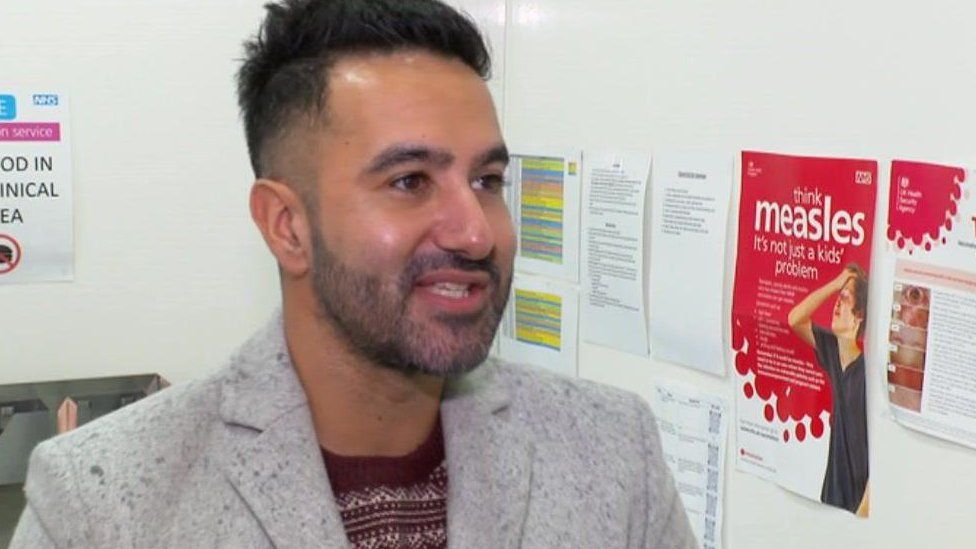
Published34 minutes agoShareclose panelShare pageCopy linkAbout sharingBy Andre Rhoden-Paul & Doug FaulknerBBC NewsRishi Sunak has announced plans to trial stripping GPs of their power to sign people off work, as he attacked the UK’s “sick note culture” in a speech about welfare. Instead he wants specialist work and health professionals to issue fit notes as part of a broader aim to make sick notes harder to obtain.Doctors’ union the British Medical Association (BMA) said fit notes were carefully considered before they are written and criticised Mr Sunak’s “hostile rhetoric” on the issue.Meanwhile Professor Kamila Hawthorne, chair of the Royal College of GPs, told BBC Radio 4’s Today programme that “as a profession we are not against the idea” because of high workloads but pointed out that issuing fit notes often formed part of a wider consultation with a patient. BBC News spoke to some GPs to see what they thought. ‘It would reduce our workload’Halesowen-based GP Dr Mohit Mandiratta said he sees people in his clinic every day who need fit notes for medical reasons, and for the majority it’s “wholly appropriate”. But he says he would support other professionals taking on fit notes as it would reduce their workload.”It’s no secret that general practice is under huge pressure at the moment. I would support other people doing fit notes as long as they are trained,” he says. “It’s important they are supportive to patients, understand their needs and take a personalised approach.”The reason people are off work… often has many factors. I would hope it’s a personalised process.”The partner at Feldon Practice explained any plans to get people back into work would need to be based on general practice and required conversations with employers. Work is “good for health”, with people who work generally being happier and feeling more fulfilled, he added. This video can not be playedTo play this video you need to enable JavaScript in your browser.’Not the best way to spend our time’Dr Chris Jacobs says sick notes are a lot of work for GPs and have become a daily task. It is common for people to see him asking for a fit note at the request of their employer. “We are not trained occupational health doctors, so it is an added workload that we take on,” he said.The Swindon GP does not think passing the job on to other professionals is a bad idea, as long as they are trained to deal with physical and mental health. “It could benefit primary care in my view, but primary care should still be involved in the discussion,” he says, explaining it would allow GPs to spend more time focusing on patients’ health needs.”We are a diminishing workforce on a full-time equivalent basis so I don’t think our time is best spent [filling in fit notes].”Anecdotally, he says, he has seen a rise in people suffering from bad mental health in the last five years. One in four adults and one in 10 children experience mental illness, according to NHS England.Image source, Getty Images’There are risks removing sick notes from GPs’ County Durham GP Dr Kas Hawes thinks sick notes can be a difficult part of the job. “We are too busy as GPs,” she says. In particular, repetitive requests with little evidence of sickness or efforts to accept help and get better can be difficult to challenge she says, without impacting the relationship with the patient. But the Day In The Life of a GP author says the risks of removing sick notes from GPs include issues with access to patient records, and whether the adoption of a one-size-fits-all approach to ill health and recovery penalises people already struggling with financial hardship. “There is a role for more scrutiny earlier with repeat sick notes, but removing them all together for the financial benefit of the government purse is very worrying in how it could affect some of the most vulnerable people in our society,” she says. What is a sick note?Sick notes are officially known as fitness-to-work notes. They are written evidence that your ill health is affecting your fitness for work. A “fit note” certifies a patient is sick, confirming a valid reason for staying off work and eligibility for sick pay.Why would somebody need a sick note? Employees can self-certify absence due to illness for seven days and in most cases, qualify for sick pay. But if their illness means they need to be absent for longer, they need a fit note to continue to receive sick pay and also to qualify for some welfare payments. Who can sign-off a sick note? GPs used to be the only healthcare professionals able to sign a sick note. In 2022, this was widened to include nurses, occupational therapists, pharmacists, and physiotherapists.More on this storySunak sets out plans to tackle ‘sick note culture’Published21 hours ago

Read more →

Gender care review author attacks ‘misinformation’

Published3 minutes agoShareclose panelShare pageCopy linkAbout sharingImage source, PA MediaBy Thomas MackintoshBBC NewsThe author of the landmark Cass review into gender identity services for young people says she is “very angry” about “misinformation” spread about her work. Dr Hilary Cass’s review this month found “remarkably weak” evidence for treatments such as puberty blockers. The physician told the BBC some claims spread online about her evidence were “completely incorrect”.She said adults who “deliberately spread misinformation” put young people at risk, which was “unforgivable”. The Cass report, published on 10 April, looked at gender identity services for under-18s in NHS England. It found gender medicine to be operating on “shaky foundations” when it came to the evidence for medical treatment like prescribing hormones to pause puberty or to transition to the opposite sex.It said: “The reality is that we have no good evidence on the long-term outcomes of interventions to manage gender-related distress”.This video can not be playedTo play this video you need to enable JavaScript in your browser.Speaking to BBC Radio 4’s More or Less: Behind the Stats podcast, Dr Cass was asked about particular claims spread online about her review – one that “98% of the evidence” was ignored or dismissed by her, and one that she would only include gold-standard “double-blind

Read more →

‘Aging in Place, or Stuck in Place?’

Homeownership is not the boon to older Americans that it once was.When it came to housing, Susan Apel and Keith Irwin thought they had planned adroitly for later life. They bought a four-bedroom house on two acres in Lebanon, N.H., 24 years ago, and “we made sure to pay off the mortgage before we retired,” said Ms. Apel, 71.That way, the home equity they had built up — they estimate their house is now worth about $700,000 — would allow them to sell and downsize into smaller, more manageable quarters when they needed them.That time has arrived. Ms. Apel, a retired law professor, is having trouble climbing stairs. Mr. Irwin, 71, previously an account manager for a local business, is wearying of yard work and snow shoveling, and finding workers to do those chores instead has become difficult.“We’re seeing the writing on the wall,” Ms. Apel said. They have started shopping for “a nice two-bedroom condo with a little den, all on one floor.”But they can’t find one. Local developers are putting up four-level townhouses with even more stairs. The few suitable one-floor homes available get instantly snapped up. City dwellers fleeing Covid helped pump up housing prices: One unit the couple saw recently cost $950,000 and needed work, Ms. Apel reported. Even “tiny shoeboxes” are selling for $600,000.“We were very grateful to live in this lovely place and to have paid off our house,” Ms. Apel said. “It never occurred to us that it didn’t give us the ability to move out of it.”We are having trouble retrieving the article content.Please enable JavaScript in your browser settings.Thank you for your patience while we verify access. If you are in Reader mode please exit and log into your Times account, or subscribe for all of The Times.Thank you for your patience while we verify access.Already a subscriber? Log in.Want all of The Times? Subscribe.

Read more →

Inside Novo Nordisk, the Company Behind Ozempic and Wegovy

Lars Fruergaard Jorgensen has a problem: Too many people want what he’s selling.Mr. Jorgensen is the chief executive of Novo Nordisk, the Danish drugmaker. Even if the company isn’t quite a household name, the TV jingle for its best-selling drug — “Oh-oh-ohhh, Ozempic!” — might ring in your ears. Across the United States, Novo Nordisk’s diabetes and weight-loss drugs, Ozempic and Wegovy, have soared to celebrity status and helped make the company Europe’s most valuable public firm. It can’t make enough of the drugs.Mr. Jorgensen’s problem is one many top executives wouldn’t mind, but the success caught him off guard. Last year, when the company was celebrating its centenary, Novo Nordisk’s revenue jumped by a third, to 232 billion Danish kroner, or $33 billion.“Nobody had forecast this growth — no analyst, nobody in the company,” Mr. Jorgensen said in a recent interview at the company’s headquarters in a suburb of Copenhagen. “Nobody forecast a 100-year-old company would grow more than 30 percent,” he said, seemingly torn between pride and amazement.For most of its 100 years Novo Nordisk has been focused on the steady business of treating diabetes, one of the world’s most prevalent chronic diseases. Even today, it produces half the world’s insulin. But the development of Ozempic and Wegovy has led to a bigger and bolder ambition to “defeat serious chronic diseases.” That includes treating, and even preventing, obesity, which is linked to other health issues like heart and kidney diseases.By pursuing a much larger target than diabetes, the company expects to unlock the door to a multibillion-dollar market with nearly a billion potential patients. In the United States alone, more than 40 percent of adults are obese.And so the Danish drugmaker is undergoing vast changes — it’s getting bigger, more international and closer to the heat of the spotlight. Mr. Jorgensen is trying to ramp up production to meet the huge demand for its weight-loss drugs, stay ahead of competition from Eli Lilly and others and ensure the company’s future so it can meet its lofty goal.We are having trouble retrieving the article content.Please enable JavaScript in your browser settings.Thank you for your patience while we verify access. If you are in Reader mode please exit and log into your Times account, or subscribe for all of The Times.Thank you for your patience while we verify access.Already a subscriber? Log in.Want all of The Times? Subscribe.

Read more →

Scientists Fault Federal Response to Bird Flu Outbreaks on Dairy Farms

Testing for H5N1 infection has been limited, and the outbreak was thought to be confined. But asymptomatic cows in North Carolina may have changed all that.In the month since federal authorities announced an outbreak of bird flu on dairy farms, they have repeatedly reassured the public that the spate of infections does not impact the nation’s food or milk supply, and poses little risk to the public.Yet the outbreak among cows may be more serious than originally believed. In an obscure online update this week, the Department of Agriculture said there is now evidence that the virus is spreading among cows, and from cows to poultry.Officials in North Carolina have detected bird flu infections in a cattle herd with no symptoms, The New York Times has learned — information the U.S.D.A. has not shared publicly. The finding suggests that the infection may be more widespread than thought.Whether there are asymptomatic animals elsewhere remains unclear, because the U.S.D.A. is not requiring farms to test cattle for infection. It has been reimbursing farmers for testing, but only for 20 cows per farm that were visibly ill. This week, the department said it would begin reimbursing farms for testing cows without symptoms.Federal officials have shared limited genetic information about the virus with scientists and with officials in other countries, which is important for learning how the virus might be evolving as it spreads.They are not actively monitoring infections in pigs, which are famously effective hosts for evolving flu viruses, and which are often kept in proximity to cattle. And officials have said they have “no concern” about the safety of milk, despite a lack of hard data.We are having trouble retrieving the article content.Please enable JavaScript in your browser settings.Thank you for your patience while we verify access. If you are in Reader mode please exit and log into your Times account, or subscribe for all of The Times.Thank you for your patience while we verify access.Already a subscriber? Log in.Want all of The Times? Subscribe.

Read more →

Shoe technology reduces risk of diabetic foot ulcers

Researchers have developed a new shoe insole technology that helps reduce the risk of diabetic foot ulcers, a dangerous open sore that can lead to hospitalization and leg, foot or toe amputations.
“The goal of this innovative insole technology is to mitigate the risk of diabetic foot ulcers by addressing one of their most significant causes: skin and soft tissue breakdown due to repetitive stress on the foot during walking,” said Muthu B.J. Wijesundara, principal research scientist at The University of Texas at Arlington Research Institute (UTARI).
Affecting about 39 million people in the U.S., diabetes can damage the small blood vessels that supply blood to the nerves, leading to poor circulation and foot sores, also called ulcers. About one-third of people with diabetes develop foot ulcers during their lifetime. In the U.S., more than 160,000 lower extremity amputations are performed annually due to complications from diabetic foot ulcers, costing the American health system about $30 billion a year. Those who have foot ulcers often die at younger ages than those without ulcers.
“Although many shoe insoles have been created over the years to try to alleviate the problem of foot ulcers, studies have shown that their success in preventing them is marginal,” Wijesundara said. “We took the research a step further by creating a pressure-alternating shoe insole that works by cyclically relieving pressure from different areas of the foot, thereby providing periods of rest to the soft tissues and improving blood flow. This approach aims to maintain the health of the skin and tissues, thereby reducing the risk of diabetic foot ulcers.”
In an article in the peer-reviewed International Journal of Lower Extremity Wounds, Wijesundara and UTA colleagues Veysel Erel, Aida Nasirian and Yixin Gu, along with Larry Lavery of UT Southwestern Medical Center, described their innovative insole technology. After this successful pilot project, the next step for the research team will be refining the technology to make it more accessible for users with varying weights and shoe sizes.
“Considering the impact of foot ulcers, it’s exciting that we may be able to make a real difference in the lives of so many people,” Wijesundara said.
This work was supported by a $229,480 grant from the National Institute of Aging of the National Institutes of Health, grant number 7R21AG061471.

Read more →

Researchers develop a new way to safely boost immune cells to fight cancer

Cancer is the monster of our society. Last year alone, more than 600,000 people in the United States died from cancer, according to the American Cancer Society. The relentless pursuit of understanding this complex disease has shaped medical progress on developing treatment procedures that are less invasive while still highly effective.
Immunotherapy is on the rise as a possible solution. Immunotherapy involves harnessing the power of the body’s immune system to fight against cancer cells. Researchers in the College of Engineering have found a way to revamp a treatment procedure into a groundbreaking practice.
Rong Tong, associate professor in chemical engineering, has teamed up with Wenjun “Rebecca” Cai, associate professor in materials science and engineering, to explore a cancer immunotherapy treatment that has long been of interest to researchers. In their newly published article in the journal Science Advances, Tong and Cai detailed their approach, which involves activating the immune cells in the body and reprogramming them to attack and destroy the cancer cells. This therapeutic method is frequently implemented with the protein cytokine. Cytokines are small protein molecules that act as intercellular biochemical messengers and are released by the body’s immune cells to coordinate their response.
“Cytokines are potent and highly effective at stimulating the immune cells to eliminate cancer cells,” Tong said. “The problem is they’re so potent that if they roam freely throughout the body, they’ll activate every immune cell they encounter, which can cause an overactive immune response and potentially fatal side effects.”
Tong and Cai, in collaboration with chemical engineering and materials science and engineering graduate students, have developed an innovative approach to employ cytokine proteins as a potential immunotherapy treatment. Unlike previous methods, their technique ensures that the immune cell stimulating cytokines effectively localize within the tumors for weeks while preserving the cytokine’s structure and reactivity levels.
Combining forces to take down cancer cells
Current cancer treatments, such as chemotherapy, cannot distinguish between healthy cells and cancer cells. When someone with cancer is treated with chemotherapy, the treatment attacks all of the cells in their body, which can lead to side effects such as hair loss and fatigue. Stimulating the body’s immune system to attack tumors is a promising alternative to treat cancer. The delivery of cytokines can jump-start immune cells in the tumor, but overstimulating healthy cells can cause severe side effects.

“Scientists determined a while ago that cytokines can be used to activate and fight against tumors, but they didn’t know how to localize them inside the tumor while not exposing toxicity to the rest of the body,” said Tong. “Chemical engineers can look at this from an engineering approach and use their knowledge to help refine and elevate the effectiveness of the cytokines so they can work inside the body effectively.”
The research team’s goal is to find a balance between killing cancer cells in the body while sparing healthy cells.
To accomplish this goal, Tong and his students used their expertise to create specialized particles with distinctive sizes that help determine where the drug is going. These microparticles are designed to stay within the tumor environment after being injected into the body. Cai and her students worked on measuring these particles’ surface properties.
“In the field of materials science and engineering, we study the surface chemistry and mechanical behavior of materials, such as the specialized particle created for this project,” Cai said. “Surface engineering and characterization, along with particle size, play important roles in controlled drug delivery, ensuring prolonged drug presence and sustained therapeutic effectiveness.”
To ensure successful drug delivery, Tong and his chemical engineering students designed a novel strategy that: Anchors cytokines to these new microparticles, limiting the harm of cytokines to healthy cells Allows the newly particle-anchored cytokines to jump-start immune systems and recruit immune cells to attack cancer cells”Our strategy not only minimizes cytokine-induced harm to healthy cells, but also prolongs cytokine retention within the tumor,” Tong said. “This helps facilitate the recruitment of immune cells for targeted tumor attack.”
The next step in the process involves combining the new, localized cytokine therapy method with commercially available, Food and Drug Administration (FDA)-approved checkpoint blockade antibodies, which reactivate the tumor immune cells that have been silenced so they can fight back the cancer cells.

“When there is a tumor inside the body, the body’s immune cells are being deactivated by the cancer cells,” Tong explained. “The FDA-approved checkpoint blocking antibody helps “take off the brakes” that tumors put on immune cells, while the cytokine molecules “step on the gas” to jump-start the immune system and get an immune cell army to fight cancer cells. These two approaches work together to activate immune cells.”
Combining the checkpoint antibodies with the particle-anchored cytokine proved to successfully eliminate many tumors in their study.
Engineering an impact on cancer treatment
Team members hope their impact on immunotherapy treatment is part of a greater movement toward cancer treatment approaches that are harmless to healthy cells. The new approach of attaching cytokines to particles also could be used in the future to deliver other types of immunostimulatory drugs, according to the team.
“Researchers are still looking for safer and more effective cancer treatments,” said Tong. “This motivation is what drives us to develop new technologies in the field. The whole class of drugs that are employed to jump-start the immune system to fight cancer cells has largely not yet succeeded. Our goal is to create novel solutions that allow researchers to test these drugs with existing FDA-approved therapeutics, ensuring both safety and enhanced efficacy.”
Cai said the nature of cancer treatment research requires expertise across engineering disciplines.
“I view this project as a perfect marriage between chemical engineering and materials science,” Cai said. “The former focuses on the synthesis and drug delivery part, the latter on applying advanced materials characterization. This collaboration not only accelerates immunotherapy research, but also has the ability to transform cancer treatment.”

Read more →