Observing mammalian cells with superfast soft X-rays

Researchers have developed a new technique to view living mammalian cells. The team used a powerful laser, called a soft X-ray free electron laser, to emit ultrafast pulses of illumination at the speed of femtoseconds, or quadrillionths of a second. With this they could capture images of carbon-based structures in living cells for the first time, before the soft X-ray radiation damaged them. Refined Wolter mirrors, a type of ultraprecise mirror, were created to enable the microscope to capture images with high spatial resolution and a wide field of view. In the future, the team hopes to use this microscope to better understand the dynamic nature of cellular biology.
Did you know there are soft X-rays and hard X-rays? Hard X-rays are what you’ll most likely have encountered, if you’ve been through airport security or suffered a broken limb. Soft X-rays are more typically restricted to research, from studying biology and chemistry to minerals and meteorites. Soft X-rays are able to provide chemical information about samples and detailed images at the subcellular level, but their use has been limited due to the very specialized equipment required and, in biology, the damage they cause to living cells.
However, a team of researchers has constructed a new soft X-ray microscope through which they could view live mammalian cells for the first time. They were able to take images of carbon structures within the cells, which had not been seen before through other instruments. Carbon is one of the main elements for life, so this provides a new window into a vital part of ourselves.
The microscope has two key components: a soft X-ray free electron laser; and highly precise Wolter mirrors, a type of mirror widely used in X-ray telescopes for observing space. The mirrors were made using technology created by lead author Satoru Egawa, assistant professor of the Research Center for Advanced Science and Technology at the University of Tokyo.
“A soft X-ray free electron laser provided pulse illumination at the speed of tens of femtoseconds (with one femtosecond being one-millionth of one-billionth of a second). The ultrashort duration of the radiation pulses enabled us to take an image before the structure of the living cell was altered by radiation damage,” explained Egawa. “We used Wolter mirrors for illumination and imaging. These mirrors provide a wide field of view, can withstand irradiation from the powerful lasers and exhibit no color distortion, making them ideal for observing samples at various wavelengths.”
Although soft X-ray free electron lasers have previously been used to study smaller viruses and bacteria, mammalian cells were too big to be studied this way. However, by using Wolter mirrors, the team could achieve a wider field of view and use a thicker sample holder which could hold larger cells. The resulting images showed details about carbon content in the cells that had not been seen through other methods, such as electron microscopy and fluorescence microscopy.
“It was surprising for us to find a carbon pathway between the nucleolus (a structure in the cell’s nucleus, involved in cell function and survival) and the nuclear membrane (which envelops the nucleus), which had not been observed with visible light microscopes,” said Egawa.
Brighter soft X-ray free electron lasers are available which would enable even clearer images with less grainy “noise.” By adding brighter lasers and more precise Wolter mirrors, the team hopes to upgrade the microscope so that it can observe more biochemical elements. With this it could also help to illuminate some of the vital reactions and interactions which take place within living cells.

Read more →

Imperceptible sensors made from ‘electronic spider silk’ can be printed directly on human skin

Researchers have developed a method to make adaptive and eco-friendly sensors that can be directly and imperceptibly printed onto a wide range of biological surfaces, whether that’s a finger or a flower petal.
The method, developed by researchers from the University of Cambridge, takes its inspiration from spider silk, which can conform and stick to a range of surfaces. These ‘spider silks’ also incorporate bioelectronics, so that different sensing capabilities can be added to the ‘web’.
The fibres, at least 50 times smaller than a human hair, are so lightweight that the researchers printed them directly onto the fluffy seedhead of a dandelion without collapsing its structure. When printed on human skin, the fibre sensors conform to the skin and expose the sweat pores, so the wearer doesn’t detect their presence. Tests of the fibres printed onto a human finger suggest they could be used as continuous health monitors.
This low-waste and low-emission method for augmenting living structures could be used in a range of fields, from healthcare and virtual reality, to electronic textiles and environmental monitoring. The results are reported in the journal Nature Electronics.
Although human skin is remarkably sensitive, augmenting it with electronic sensors could fundamentally change how we interact with the world around us. For example, sensors printed directly onto the skin could be used for continuous health monitoring, for understanding skin sensations, or could improve the sensation of ‘reality’ in gaming or virtual reality application.
While wearable technologies with embedded sensors, such as smartwatches, are widely available, these devices can be uncomfortable, obtrusive and can inhibit the skin’s intrinsic sensations.
“If you want to accurately sense anything on a biological surface like skin or a leaf, the interface between the device and the surface is vital,” said Professor Yan Yan Shery Huang from Cambridge’s Department of Engineering, who led the research. “We also want bioelectronics that are completely imperceptible to the user, so they don’t in any way interfere with how the user interacts with the world, and we want them to be sustainable and low waste.”
There are multiple methods for making wearable sensors, but these all have drawbacks. Flexible electronics, for example, are normally printed on plastic films that don’t allow gas or moisture to pass through, so it would be like wrapping your skin in cling film. Other researchers have recently developed flexible electronics that are gas-permeable, like artificial skins, but these still interfere with normal sensation, and rely on energy- and waste-intensive manufacturing techniques.

3D printing is another potential route for bioelectronics since it is less wasteful than other production methods, but leads to thicker devices that can interfere with normal behaviour. Spinning electronic fibres results in devices that are imperceptible to the user, but without a high degree of sensitivity or sophistication, and they’re difficult to transfer onto the object in question.
Now, the Cambridge-led team has developed a new way of making high-performance bioelectronics that can be customised to a wide range of biological surfaces, from a fingertip to the fluffy seedhead of a dandelion, by printing them directly onto that surface. Their technique takes its inspiration in part from spiders, who create sophisticated and strong web structures adapted to their environment, using minimal material.
The researchers spun their bioelectronic ‘spider silk’ from PEDOT:PSS (a biocompatible conducting polymer), hyaluronic acid and polyethylene oxide. The high-performance fibres were produced from water-based solution at room temperature, which enabled the researchers to control the ‘spinnability’ of the fibres. The researchers then designed an orbital spinning approach to allow the fibres to morph to living surfaces, even down to microstructures such as fingerprints.
Tests of the bioelectronic fibres, on surfaces including human fingers and dandelion seedheads, showed that they provided high-quality sensor performance while remaining imperceptible to the host.
“Our spinning approach allows the bioelectronic fibres to follow the anatomy of different shapes, at both the micro and macro scale, without the need for any image recognition,” said Andy Wang, the first author of the paper. “It opens up a whole different angle in terms of how sustainable electronics and sensors can be made. It’s a much easier way to produce large area sensors.”
Most high-resolution sensors are made in an industrial cleanroom and require toxic chemicals in a multi-step and energy-intensive fabrication process. The Cambridge-developed sensors can be made anywhere and use a tiny fraction of the energy that regular sensors require.

The bioelectronic fibres, which are repairable, can be simply washed away when they have reached the end of their useful lifetime, and generate less than a single milligram of waste: by comparison, a typical single load of laundry produces between 600 and 1500 milligrams of fibre waste.
“Using our simple fabrication technique, we can put sensors almost anywhere and repair them where and when they need it, without needing a big printing machine or a centralised manufacturing facility,” said Huang. “These sensors can be made on-demand, right where they’re needed, and produce minimal waste and emissions.”
The researchers say their devices could be used in applications from health monitoring and virtual reality, to precision agriculture and environmental monitoring. In future, other functional materials could be incorporated into this fibre printing method, to build integrated fibre sensors for augmenting the living systems with display, computation, and energy conversion functions. The research is being commercialised with the support of Cambridge Enterprise, the University’s commercialisation arm.
The research was supported in part by the European Research Council, Wellcome, the Royal Society, and the Biotechnology and Biological Sciences Research Council (BBSRC), part of UK Research and Innovation (UKRI).

Read more →

Lght-controlled ‘off switch’ for brain cells

Researchers from Duke-NUS Medical School have found that a new class of light-sensitive proteins are capable of turning off brain cells with light, offering scientists an unprecedentedly effective tool to investigate brain function. The study, recently published in Nature Communications, opens exciting new opportunities to apply optogenetics to investigate the brain activity underlying neurodegenerative and psychiatric disorders such as Parkinson’s disease and depression.
Optogenetics is a technique where specific cells are bioengineered to include light-sensitive proteins that act as switches, allowing researchers to precisely control the electrical activity of these cells. Neurons and nerve cells with optogenetic switches can be used to study how different cells participate in various brain circuits and behaviours.
The team showed that specific potassium channels, known as kalium channelrhodopsins, can serve as effective instruments for regulating brain-cell activity in three critical experimental animals: fish, worms, and flies.
Dr Stanislav Ott, Senior Research Fellow with Duke-NUS’ Neuroscience and Behavioural Disorders Programme and first author of the study, said: “These potassium channels act like tiny gates on cell membranes. When exposed to light, these gates open and let potassium ions flow through, helping to quiet the activity in the brain cells. This offers us new insights into how brain activities are regulated.”
Potassium ions are essential to normal electrical function in all human cells. Potassium channels are specialised proteins present in cell membranes that allow the flow of potassium ions. They regulate the flow of potassium ions across the cell membrane to maintain various cellular processes, and are critical to nerve-impulse transmission, muscle contraction, and cellular-fluid balance maintenance.
Associate Professor Adam Claridge-Chang from Duke-NUS’ Neuroscience and Behavioural Disorders Programme and the senior author of this study, said: “We’ve developed other remote-control switches previously, but we’ve found these potassium channels to be even more versatile, providing a very useful way to study how the brain works.”
When triggered by light, the new kalium channelrhodopsins let potassium ions leave a neuron, changing the electrical gradient across the membrane. This change, known as hyperpolarisation, makes it difficult for the neuron to generate the electrical signal known as an action potential. Without action potentials, a neuron’s communication with other cells is greatly suppressed or even silenced.
The ability to silence brain cells using light-triggered potassium channels opens exciting avenues for studying the intricate interactions between different brain regions. It also offers a promising approach for exploring the pathological mechanisms underlying neurodegenerative, neurodevelopmental, and psychiatric disorders. These tools will help scientists form a deeper understanding of the brain and build paths to more effective treatments for brain disorders.
Professor Patrick Tan, Senior Vice-Dean for Research at Duke-NUS, said: “Unlocking the mysteries of the brain remains one of science’s greatest challenges. Research like this by Adam Claridge-Chang and team equips scientists with better tools to study the intricate communication that goes on in the human brain and is essential to advancing our understanding of both healthy brains and neurological disorders, understanding that will enable us to develop effective new treatments for these conditions.”
Duke-NUS is a leader in medical research and innovation, with a commitment to improving patient care through scientific discovery. This study is part of its ongoing efforts to advance understanding of neurological and psychiatric conditions.

Read more →

Younger Adults Are Missing Early Warning Signs of Colon Cancer

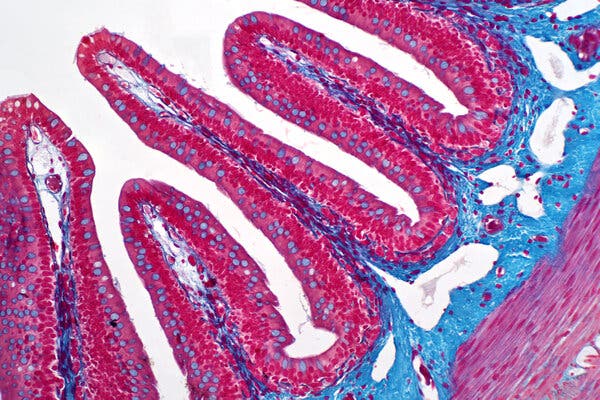
The LatestColorectal cancer rates are rapidly rising among adults in their 20s, 30s and 40s, and the most common warning sign for the disease is passing blood in the stool, according to a new scientific review.Rectal bleeding is associated with a fivefold increased risk of colorectal cancer, according to the new analysis, which looked at 81 studies that included nearly 25 million adults under 50 from around the world.Abdominal pain, changes in bowel habits and anemia are other common warning signs of the disease and should not be ignored, said the researchers, who published the paper on Thursday in the journal JAMA Network Open.A light micrograph of a colon biopsy from a colonoscopy.Choksawatdikorn/Science SourceWhy It MattersColon and rectal cancer rates have risen among younger adults as rates have declined among older people, who are far more likely to get colonoscopies that can catch cancers and precancerous lesions called polyps.But though millennials born around 1990 are at almost twice the risk of colon cancer compared with people born in the 1950s, and have a risk of rectal cancer that is four times as high, young people without a strong family history of colon cancer aren’t eligible for colonoscopies until the age of 45.Doctors may also miss the warning signs. Anecdotal evidence suggests that because physicians are less likely to suspect malignancies in younger people, they may attribute a symptom like rectal bleeding to a benign condition like hemorrhoids, rather than cancer, said Joshua Demb, a cancer epidemiologist at the University of California, San Diego, and one of the paper’s lead authors.From the time younger adults first go to a caregiver with a complaint about a symptom until they receive a diagnosis can take four to six months on average, the analysis found. Because the diagnosis is often delayed, younger adults tend to have more advanced disease that is harder to treat.“We need to facilitate early detection, and one way is identifying these red flags,” Dr. Demb said.What We Don’t KnowThe causal factors driving the rise in colon and rectal cancers in younger adults were not addressed in the new analysis, and are not well understood.Colorectal cancer has long been associated with obesity, smoking, a sedentary lifestyle, high alcohol intake and diets that are rich in red meat, processed food and sugary drinks.New research exploring the rapid rise in colorectal cancer in younger adults is examining other possible causes, including environmental exposures, changes in gut bacteria and the use of some medications, such as antibiotics.

Read more →

Milk Containing Bird-Flu Virus Can Sicken Mice, Study Finds

The results bolster evidence that virus-laden raw milk may be unsafe for humans.Unpasteurized milk contaminated with H5N1, the bird-flu virus that has turned up in dairy herds in nine states, has been found to rapidly make mice sick, affecting multiple organs, according to a study published on Friday.The findings are not entirely surprising: At least a half-dozen cats have died after consuming raw milk containing the virus. But the new data add to evidence that virus-laden raw milk may be unsafe for other mammals, including humans.“Don’t drink raw milk — that’s the message,” said Yoshihiro Kawaoka, a virologist at the University of Wisconsin, Madison, who led the study.Most commercial milk in the United States is pasteurized. The Food and Drug Administration has found traces of the virus in 20 percent of dairy products sampled from grocery shelves nationwide. Officials have not found signs of infectious virus in those samples and have said that pasteurized milk is safe to consume.But the findings have global implications, said Dr. Nahid Bhadelia, director of the Boston University Center on Emerging Infectious Diseases, who was not involved in the work.“If this becomes a more widespread outbreak in cows, there are other places where there isn’t central pasteurization,” she cautioned, “and there are a lot more rural communities that drink milk.”We are having trouble retrieving the article content.Please enable JavaScript in your browser settings.Thank you for your patience while we verify access. If you are in Reader mode please exit and log into your Times account, or subscribe for all of The Times.Thank you for your patience while we verify access.Already a subscriber? Log in.Want all of The Times? Subscribe.

Read more →

Most young women treated for breast cancer can have children

New research by Dana-Farber Cancer Institute investigators has encouraging news for young women who have survived breast cancer and want to have children.
The study, which tracked nearly 200 young women treated for breast cancer, found that the majority of those who tried to conceive during a median of 11 years after treatment were able to become pregnant and give birth to a child.
The findings, to be presented at the 2024 Annual Meeting of the American Society of Clinical Oncology (ASCO), are particularly noteworthy because they answer several questions left open by previous studies of pregnancy and live-birth rates among breast cancer survivors, the study authors say.
“Earlier studies were limited because they included select subgroups of patients, followed patients for a relatively short period of time, and didn’t ask participants, during the study period, if they had attempted pregnancy,” says the study’s senior author, Ann Partridge, MD, MPH, the founder and director of the Program for Young Adults with Breast Cancer at Dana-Farber. “This study was designed to address those gaps by tracking pregnancy and live birth rates among a group of breast cancer survivors and patients who indicated they’d attempted to conceive following their cancer diagnosis.”
The patients in the study were participants in the Young Women’s Breast Cancer Study, which is tracking the health of a group of women diagnosed with breast cancer at or under age 40. Of 1,213 eligible participants, 197 reported an attempt of pregnancy over a median follow-up period of 11 years. Within this latter group, the median age at the time of diagnosis was 32 years, and most were diagnosed with hormone receptor-positive breast cancer. Participants were periodically surveyed about whether they had tried to become pregnant and whether they had conceived and given birth.
Over the course of the study, 73% of women attempting to conceive achieved a pregnancy and 65% had a live birth, researchers found. Those who opted for fertility preservation by egg/embryo freezing before cancer treatment tended to have a higher live birth rate, while older participants tended to have lower pregnancy and live birth rates.
Participants in the study had breast cancers ranging from stage 0, which are non-invasive and confined to the inside of the milk duct, to stage III, in which the cancer has spread to the lymph nodes. Researchers found that the stage of the disease at diagnosis wasn’t statistically associated with achieving a pregnancy or live birth.
“For many young women with breast cancer, the ability to have children following treatment is a major concern,” says the study’s first author, Kimia Sorouri, MD, MPH, of Dana-Farber. “The findings of our study can be helpful when counseling patients about fertility issues. The finding that egg/embryo freezing before treatment was associated with a higher live birth rate underscores the need for accessibility to fertility preservation services for this population.”
This study was funded by Susan G. Komen and the Breast Cancer Research Foundation.

Read more →

Groundbreaking study connects genetic risk for autism to changes observed in the brain

A groundbreaking study led by UCLA Health has unveiled the most detailed view of the complex biological mechanisms underlying autism, showing the first link between genetic risk of the disorder to observed cellular and genetic activity across different layers of the brain.
The study is part of the second package of studies from the National Institutes of Health consortium, PsychENCODE. Launched in 2015, the initiative, chaired by UCLA neurogeneticist Dr. Daniel Geschwind, is working to create maps of gene regulation across different regions of the brain and different stages of brain development. The consortium aims to bridge the gap between studies on the genetic risk for various psychiatric disorders and the potential causal mechanisms at the molecular level.
“This collection of manuscripts from PsychENCODE, both individually and as a package, provides an unprecedented resource for understanding the relationship of disease risk to genetic mechanisms in the brain,” Geschwind said.
Geschwind’s study on autism, one of nine published in the May 24 issue of Science, builds on decades of his group’s research profiling the genes that increase the susceptibility to autism spectrum disorder and defining the convergent molecular changes observed in the brains of individuals with autism. However, what drives these molecular changes and how they relate to genetic susceptibility in this complex condition at the cellular and circuit level are not well understood.
Gene profiling for autism spectrum disorder, with a few exceptions in smaller studies, has long been limited to using bulk tissue from brains from autistic individuals after death. These tissue studies are unable to provide detailed information such as the differences in brain layer, circuit level and cell type-specific pathways associated with autism as well as mechanisms for gene regulation.
To address this, Geschwind used advances in single-cell assays, a technique that makes it possible to extract and identify the genetic information in the nuclei of individual cells. This technique provides researchers the ability to navigate the brain’s complex network of different cell types.
More than 800,000 nuclei were isolated from post-mortem brain tissue of 66 individuals from ages 2 to 60, including 33 individuals with autism spectrum disorder and 30 neurotypical individuals who acted as controls. The individuals with autism included five with a defined genetic form called 15q duplication syndrome. Each sample was matched by age, sex, and cause of death balanced across cases and controls.

Through this, Geschwind and his team were able to identify the major cortical cell types affected in autism spectrum disorder, which included both neurons and their support cells, known as glial cells. In particular, the study found the most profound changes in the neurons that connect the two hemispheres and provide long range connectivity between different brain regions and a group of interneurons, called somatostatin interneurons that are important for maturation and refinement of brain circuits.
A critical aspect of this study was the identification of specific transcription factor networks — the web of interactions whereby proteins control when a gene is expressed or inhibited — that drive these changes that were observed. Remarkably, these drivers were enriched in known high-confidence autism spectrum disorder risk genes and influenced large changes in differential expression across specific cell subtypes. This is the first time that a potential mechanism connects changes occurring in brain in ASD directly to the underlying genetic causes.
Identifying these complex molecular mechanisms underlying autism and other psychiatric disorders studied could work to develop new therapeutics to treat these disorders.
“These findings provide a robust and refined framework for understanding the molecular changes that occur in brains in people with ASD — which cell types they occur in and how they relate to brain circuits,” Geschwind said. “They suggest that the changes observed are downstream of known genetic causes of autism, providing insight into potential causal mechanisms of the disease.”

Read more →