Caffeine affects brain dopamine function in patients with Parkinson’s disease

Regular high caffeine consumption affects dopamine function in patients with Parkinson’s disease, shows a new international study led by the University of Turku and Turku University Hospital in Finland. Caffeine consumption before undergoing diagnostic brain dopamine imaging may also affect the imaging results.
Previous research has shown that regular caffeine intake is associated with a reduced risk of developing Parkinson’s disease. However, there is limited research on the effects of caffeine on disease progression in patients who have already been diagnosed.
A follow-up study led by the University of Turku and Turku University Hospital (Tyks) in Finland examined how caffeine consumption affects brain dopamine function over an extended period in patients diagnosed with Parkinson’s disease. The dopamine function of the brain was assessed with single photon emission computed tomography (SPECT) to measure dopamine transporter (DAT) binding.
“The association between high caffeine consumption and a reduced risk for Parkinson’s disease has been observed in epidemiological studies. However, our study is the first to focus on the effects of caffeine on disease progression and symptoms in relation to dopamine function in Parkinson’s disease,” says Valtteri Kaasinen, Professor of Neurology at the University of Turku and principal investigator of the study.
Caffeine consumption had no effect on Parkinson’s symptoms
A clinical study compared 163 patients with early-stage Parkinson’s disease to 40 healthy controls. The examinations and imaging were conducted on two occasions for a subsample, with an average interval of six years between the first and second imaging session. Changes in brain dopamine transporter binding were compared with patients’ caffeine consumption, which was assessed both by a validated questionnaire and by determining concentrations of caffeine and its metabolites in blood samples.
The findings revealed that patients with a high caffeine consumption exhibited a 8.3-15.4% greater decrease in dopamine transporter binding compared to those with a low caffeine consumption. However, the observed decline in dopamine function is unlikely to be due to a greater reduction in dopamine neurons following caffeine consumption. Rather, it is more likely to be a downregulatory compensatory mechanism in the brain that has also been observed in healthy individuals following caffeine and other stimulant use.
“While caffeine may offer certain benefits in reducing risk of Parkinson’s disease, our study suggests that high caffeine intake has no benefit on the dopamine systems in already diagnosed patients. A high caffeine intake did not result in reduced symptoms of the disease, such as improved motor function,” says Kaasinen.
Another significant finding of the study was the observation that a recent dose of caffeine, for example in the morning of the imaging session, temporarily increases the person’s DAT binding values. This could potentially complicate the interpretation of clinically commonly used brain DAT imaging results. The research results suggest that patients should refrain from consuming coffee and caffeine for 24 hours before undergoing diagnostic DAT imaging.

Read more →

Finnish Vole fever spreading further south

Researchers have discovered that bank voles in southern Sweden (Skåne) carry a virus that can cause hemorrhagic fever in humans. This finding was made more than 500 km south of the previously known range. The virus strain discovered in Skåne appears to be more closely related to strains from Finland and Karelia than to the variants found in northern Sweden and Denmark. This is revealed in a new study from Uppsala University, conducted in collaboration with infectious diseases doctors in Kristianstad and published in the scientific journal Emerging Infectious Diseases.
“We were surprised that such high proportion of the relatively few voles that we caught were actually carrying a hantavirus that makes people ill. And this was in an area more than 500 km south of the previously known range of the virus,” says Elin Economou Lundeberg, infectious diseases doctor at Kristianstad Central Hospital, who is one of the study’s first authors.
Hantaviruses are a family of viruses naturally found mainly in rodents such as mice, rats and voles. Certain hantaviruses are able to infect people and cause two main groups of diseases: hemorrhagic fever with renal syndrome (HFRS) and hantavirus pulmonary syndrome (HPS). Both types of disease are notifiable under the Communicable Diseases Act, as they can cause serious problems and even death. In northern and central Europe, a variant of the virus, Puumala hantavirus, causes a relatively mild form of HRFS popularly known as ‘vole fever’ (nephropathia epidemica). However, studies have shown that this hantavirus can also cause very severe HRFS, which in the worst case can be fatal. In Sweden 100-450 cases of vole fever require hospital care each year, exclusively in the northern part of the country.
In 2018, a locally contracted case of vole fever was reported in Skåne, more than 500 km south of the previously known southernmost incidence of the disease in Sweden, which was north of Uppsala. Another case was discovered in 2020, also in Skåne. In both cases, the patients concerned had not been away travelling and were infected in their home area. In an attempt to understand how this was possible, bank voles were caught in the vicinity of the patients’ homes and analysed for any occurrence of hantavirus. It turned out that 9 of the 74 bank voles caught carried hantavirus genes. Genetic studies have now showned that the virus differs markedly from the virus variants that circulate in northern Sweden and Denmark, and that it is most closely related to viruses from Finland and Karelia.
The next step in the research is to find out where the virus comes from and map its distribution in the southern parts of Sweden.
“If the virus has existed in the area for a long time and has simply not been discovered, why haven’t more people become ill? Or, has it become established in Skåne recently and only just begun to spread? And how did it get there?” wonders Professor Åke Lundkvist of Uppsala University, a co-author of the study. “Unfortunately the COVID-19 pandemic intervened, which considerably delayed the completion of this study. These findings are very interesting and show how important it is to investigate the causes as quickly as possible when we see an infectious disease in a new geographical area.”

Read more →

Altering cellular interactions around amyloid plaques may offer novel Alzheimer’s treatment strategies

Researchers at the Icahn School of Medicine at Mount Sinai have made a significant breakthrough in Alzheimer’s disease research by identifying a novel way to potentially slow down or even halt disease progression. The study, which focuses on the role of reactive astrocytes and the plexin-B1 protein in Alzheimer’s pathophysiology, provides crucial insights into brain cell communication and opens the door to innovative treatment strategies. It was published in Nature Neuroscience (DOI 10.1038/s41593-024-01664-w) on May 27.
This groundbreaking work is centered on the manipulation of the plexin-B1 protein to enhance the brain’s ability to clear amyloid plaques, a hallmark of Alzheimer’s disease. Reactive astrocytes, a type of brain cell that becomes activated in response to injury or disease, were found to play a crucial role in this process. They help control the spacing around amyloid plaques, affecting how other brain cells can access and clear these harmful deposits. “Our findings offer a promising path for developing new treatments by improving how cells interact with these harmful plaques,” said Roland Friedel, PhD, Associate Professor of Neuroscience, and Neurosurgery, at Icahn Mount Sinai and a senior author of the study. The research was driven by the analysis of complex data comparing healthy individuals to those with Alzheimer’s, aiming to understand the disease’s molecular and cellular foundations.
Hongyan Zou, PhD, Professor of Neurosurgery, and Neuroscience, at Icahn Mount Sinai and one of the study’s lead authors, highlighted the broader implications of their findings: “Our study opens new pathways for Alzheimer’s research, emphasizing the importance of cellular interactions in developing neurodegenerative disease treatments.”
One of the study’s most significant achievements is its validation of multiscale gene network models of Alzheimer’s disease. “This study not only confirms one of the most important predictions from our gene network models but also significantly advances our understanding of Alzheimer’s. It lays a solid foundation for developing novel therapeutics targeting such highly predictive network models,” said Bin Zhang, PhD, Willard T.C. Johnson Research Professor of Neurogenetics at Icahn Mount Sinai and one of the study’s lead authors. By demonstrating the critical role of plexin-B1 in Alzheimer’s disease, the research underscores the potential of targeted therapies to disrupt the disease’s progression.
The research team emphasizes that while their findings mark a significant advance in the fight against Alzheimer’s, more research is needed to translate these discoveries into treatments for human patients.
“Our ultimate goal is to develop treatments that can prevent or slow down Alzheimer’s progression,” Dr. Zhang added, outlining the team’s commitment to further exploring the therapeutic potential of plexin-B1.
This study is supported by the NIH National Institute on Aging (NIA) grants U01AG046170 and RF1AG057440 and is part of the NIA-led Accelerating Medicines Partnership — Alzheimer’s Disease (AMP-AD) Target Discovery and Preclinical Validation program. This public private partnership aims to shorten the time between the discovery of potential drug targets and the development of new drugs for Alzheimer’s disease treatment and prevention.

Read more →

Brain damage reveals part of the brain necessary for helping others

Our willingness to help others is governed by a specific brain region pinpointed by researchers in a study of patients with brain damage to that region.
Learning about where in the brain ‘helping’ decisions are made is important for understanding how people might be motivated to tackle large global challenges, such as climate change, infectious disease and international conflict. It is also essential for finding new approaches to treating disorders of social interactions.
The study, published in Nature Human Behaviour, was carried out by researchers at the University of Birmingham and the University of Oxford, and shows for the first time how a region called the ventromedial prefrontal cortex (vmPFC) has a critical role in helping, or ‘prosocial’ behaviours.
Lead author Professor Patricia Lockwood said: “Prosocial behaviours are essential for addressing global challenges. Yet helping others is often effortful and humans are averse to effort. Understanding how effortful helping decisions are processed in the brain is extremely important.”
In the study, the researchers focused on the vmPFC, a region located right at the front of the brain, which is known to be important for decision-making and other executive functions. Previous studies using magnetic resonance imaging (MRI scanning) have linked the vmPFC to choices that involve a trade-off between the rewards available and the effort required to obtain rewards. However, these techniques cannot show whether a part of the brain is essential for these functions.
Three groups of participants were recruited for the study. 25 patients had vmPFC damage, 15 patients had damage elsewhere in the brain, and 40 people were healthy age and gender-matched control participants. These groups allowed the researchers to test the impact of damage to vmPFC specifically.
Each participant attended an experiment where they met another person anonymously. They then completed a decision-making task that measured how willing they were to exert physical effort (squeezing a grip force device) to earn rewards (bonus money) for themselves and for the other person.

By enabling participants to meet — but not see — the person they were ‘working’ for in advance, researchers were able to convey the sense that participants’ efforts would have real consequences, but hide any information about the other person that could affect decision-making.
Each choice the participants made varied in how much bonus money for them or the other person was available, and how much force they would have to exert to obtain the reward. This allowed the researchers to measure the impact of reward and effort separately, and to use advanced mathematical modelling to precisely quantify people’s motivation.
The results of the study clearly showed that the vmPFC was necessary for motivation to help others. Patients with vmPFC damage were less willing to choose to help others, exerted less force on even after they did decide to help, and earned less money to help others compared to the control groups.
In a further step, the researchers used a technique called lesion symptom mapping which enabled them to identify even more specific subregions of the vmPFC where damage made people particularly antisocial and unwilling to exert effort for the other person. Surprisingly, damage to a nearby but different subregion made people relatively more willing to help.
Co-lead author Dr Jo Cutler said: “As well as better understanding prosocial motivation, this study could also help us to develop new treatments for clinical disorders such as psychopathy, where understanding the underlying neural mechanisms can give us new insights into how to treat these conditions.”
“This region of the brain is particularly interesting because we know that it undergoes late development in teenagers, and also changes as we get older,” added Professor Lockwood. “It will be really interesting to see whether this area of the brain can also be influenced by education — can we learn to be better at helping others?”

Read more →

Feeding infants peanut products protects against allergy into adolescence, study suggests

Feeding children peanuts regularly from infancy to age five reduced the rate of peanut allergy in adolescence by 71%, even after many years when the children ate or avoided peanut as desired.
The new findings provide conclusive evidence that introducing peanuts into babies’ diets early will increase the probability of long-term prevention of peanut allergy.
Lead investigator Professor Gideon Lack from King’s College London said: “Decades of advice to avoid peanuts has made parents fearful of introducing peanuts at an early age. The evidence is clear that early introduction of peanut in infancy induces long term tolerance and protects children from allergy well into adolescence. This simple intervention will make a remarkable difference to future generations and see peanut allergies plummet.”
Results from the LEAP-Trio trial are published today in the NEJM Evidence by researchers from King’s College London and sponsored and co-funded by the US National Institutes of Health’s National Institute of Allergy and Infectious Diseases (NIAID).
Peanut allergy is rising in Western countries. The prevalence of peanut allergy is about 2% in young children in North America, UK, Western Europe, and Australia. For some, even small amounts of peanuts can lead to a life-threatening allergic reaction. This, as well as conflicting advice, has made parents and caregivers fearful of introducing peanuts into diets.
The new research findings come from the LEAP-Trio study, building on the results of the Learning Early About Peanut Allergy (LEAP) clinical trial. In the first trial, half of the participants were asked to regularly consume peanut from infancy until age 5 years, while the other half were asked to avoid peanuts during that period. Researchers found that early introduction of peanut reduced the risk of peanut allergy at age 5 by 81%.
The investigators followed up both groups from age 6 to age 12 or older. In that period, children could choose to eat peanut in whatever amount and frequency they wanted. They found that 15.4% of participants from the early childhood peanut-avoidance group and 4.4% from the early childhood peanut-consumption group had peanut allergy at age 12 or older. These results show that regular, early peanut consumption reduce the risk of peanut allergy in adolescence by 71% compared to early peanut avoidance.

Professor George Du Toit, Co-Lead Investigator from King’s College London said: “This is a safe and highly effective intervention which can be implemented as early as 4 months of age. The infant needs to be developmentally ready to start weaning and peanut should be introduced as a soft pureed paste or as peanut puffs.”
The researchers also found that although participants in the LEAP peanut-consumption group ate more peanut throughout childhood than the other participants overall, the frequency and amount of peanut consumed varied widely in both groups and included periods of not eating peanut. This shows that the protective effect of early peanut consumption lasts without the need to consistently eat peanut products throughout childhood and early adolescence.
The LEAP-Trio study team tested the adolescents for peanut allergy primarily through an oral food challenge. This involved giving participants gradually increasing amounts of peanut in a carefully controlled setting to determine if they could safely consume at least 5 grams of peanut, the equivalent of more than 20 peanuts. The study team also surveyed participants about their recent patterns of peanut consumption and verified the self-reports through measurements of peanut in dust from participants’ beds, a technique previously validated by LEAP investigators.
Professor Lack, who is the Head of the Children’s Allergy Service at Guy’s and St Thomas’ NHS Foundation Trust, added: “Early consumption of peanut will prevent more than 100,000 new cases of peanut allergy every year worldwide.”

Read more →

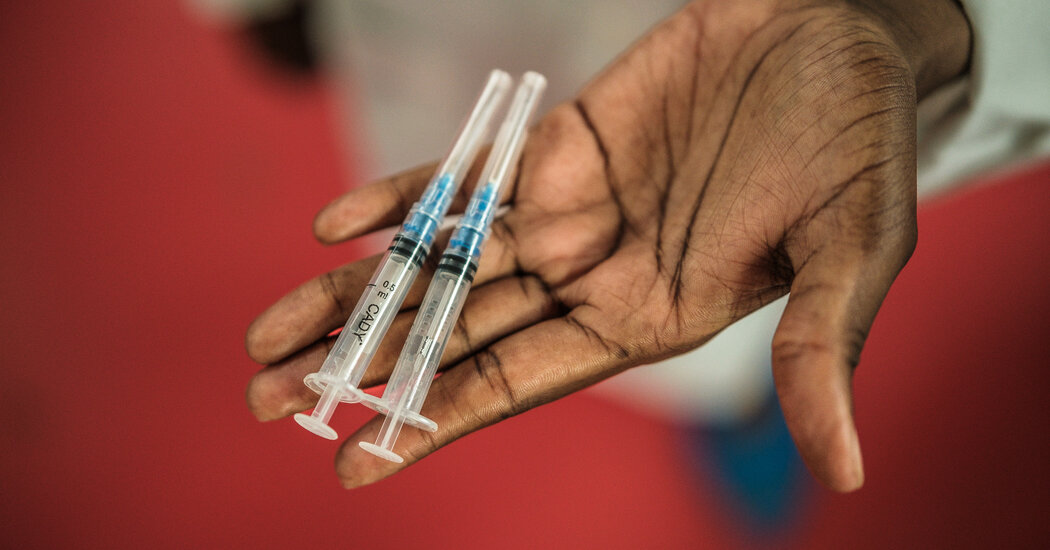
Inside the Factory Supplying Half of Africa’s Syringes

On the stunning Kenyan coast, about halfway between 15th-century ruins and the vibrant city of Mombasa, a small factory is helping to achieve one of Africa’s biggest health care goals: self-reliance.With fewer than 700 employees, Revital Healthcare makes 300 million syringes a year, enough to meet more than half of Africa’s routine immunization needs.In the throes of the coronavirus pandemic, when governments were faced with vaccinating millions of people amid severe shortages, Revital shipped syringes to Sri Lanka, Sweden, the United Arab Emirates and Uzbekistan — and even sent 15 million syringes to India, said Roneek Vora, the company’s director of sales and marketing.“This is the first time ever in the life of Africa that a medical industry is exporting syringes to India, when we know India is a powerhouse of syringe manufacturing,” Mr. Vora said. “This was a very big deal for us — it broke a lot of barriers,” he added.Revital is richly funded through grants and contracts from many donor organizations, including the U.S. Agency for International Development, the Save the Children Foundation and multiple arms of the United Nations, and the company has lofty ambitions.Many of Africa’s attempts at medical self-reliance have been hampered by limited funds, the lack of a robust regulatory system and the challenges in transporting drugs and vaccines. Against that backdrop, Revital’s success offers hope that an African company can manufacture essential products — not just for the continent, but also for export to other countries.We are having trouble retrieving the article content.Please enable JavaScript in your browser settings.Thank you for your patience while we verify access. If you are in Reader mode please exit and log into your Times account, or subscribe for all of The Times.Thank you for your patience while we verify access.Already a subscriber? Log in.Want all of The Times? Subscribe.

Read more →

An Editor Whose Business Is Fitness

Molly Mirhashem, an editor on the Well desk, wants to motivate readers of all ages and experience levels.Times Insider explains who we are and what we do and delivers behind-the-scenes insights into how our journalism comes together.Molly Mirhashem is used to running around in circles — literally.Six days a week, Ms. Mirhashem runs near her home in Crown Heights, Brooklyn. Much of her weekly mileage takes place on the same, roughly 3.5-mile loop of a nearby park. Her training will come in handy: This weekend, she is running the Buffalo Marathon in upstate New York. It will be her ninth time gutting out 26.2 miles since she first caught the marathon bug in 2017.Ms. Mirhashem, an editor on the Well desk covering fitness, came to The New York Times last month from Outside Magazine, where she spent eight years assigning and editing health and wellness articles, among other responsibilities.One of her goals at The Times is to reach readers who are dabbling in fitness, but want a little extra guidance.“There are beginners, who we often speak to, and then there are experts looking for the tiniest, marginal gain in their marathon time,” she said in a recent interview. “I think there is room to serve those readers in the middle ground.”Here, Ms. Mirhashem shares what motivates her to hit the ground running — in her new job, that is — and the biggest challenges of the fitness beat. These are edited excerpts.Were you always interested in fitness?I am a lifelong runner. I started running in youth track and field, and stuck with it through high school. I ran track and cross-country in college, and then tried marathons after that.We are having trouble retrieving the article content.Please enable JavaScript in your browser settings.Thank you for your patience while we verify access. If you are in Reader mode please exit and log into your Times account, or subscribe for all of The Times.Thank you for your patience while we verify access.Already a subscriber? Log in.Want all of The Times? Subscribe.

Read more →