Extended maternal care central factor to human other animal, longevity

The relationship between mother and child may offer clues to the mystery of why humans live longer than expected for their size — and shed new light on what it means to be human — according to a new Cornell University study.
“It’s one of the really mysterious things about humans, the fact that we live these super long lives as compared to so many other mammals,” said Matthew Zipple, a Klarman Postdoctoral Fellow in neurobiology and behavior at Cornell University. “What we’re putting forward is that a part of the explanation for our long lifespan is this other foundational aspect of our lives, which is the relationship between the mother and her child.”
The paper, “Maternal Care Leads to the Evolution of Long, Slow Lives,” published in the Proceedings of the National Academy of Science.
In their models, Zipple and co-authors found consistently that in species where offspring survival depends on the longer-term presence of the mother, the species tends to evolve longer lives and a slower life pace, which is characterized by how long an animal lives and how often it reproduces.
“As we see these links between maternal survival and offspring fitness grow stronger, we see the evolution of animals having longer lives and reproducing less often — the same pattern we see in humans,” Zipple said. “And what’s nice about this model is that it’s general to mammals overall, because we know these links exist in other species outside of primates, like hyenas, whales and elephants.”
The work builds off the Mother and Grandmother hypothesis, based on observations in 18th- and 19th-century human populations, that offspring are more likely to survive if their mothers and grandmothers are in their lives. This theory has been used primarily as an explanation for menopause in humans, Zipple said — as ceasing reproduction decreases risk of death and allows older females to focus on grand-offspring care.
Zipple’s models are both broader and more specific, incorporating more of the ways that a mother’s presence or absence in her offspring’s life impacts its fitness. The team makes predictions, based on results from Zipple’s doctoral research on baboons and other primates, about how offspring fare if a mother dies after weaning but before the offspring’s sexual maturation, which Zipple found leads to short-term and long-term, even intergenerational, negative effects on primate offspring and grand-offspring.

Read more →

How A.I. Is Revolutionizing Drug Development

In high-tech labs, workers are generating data to train A.I. algorithms to design better medicine, faster. But the transformation is just getting underway.Chips in a container at Terray Therapeutics in Monrovia, Calif. Each of the custom-made chips has millions of minuscule wells for measuring drug screening reactions quickly and accurately.The laboratory at Terray Therapeutics is a symphony of miniaturized automation. Robots whir, shuttling tiny tubes of fluids to their stations. Scientists in blue coats, sterile gloves and protective glasses monitor the machines.But the real action is happening at nanoscale: Proteins in solution combine with chemical molecules held in minuscule wells in custom silicon chips that are like microscopic muffin tins. Every interaction is recorded, millions and millions each day, generating 50 terabytes of raw data daily — the equivalent of more than 12,000 movies.The lab, about two-thirds the size of a football field, is a data factory for artificial-intelligence-assisted drug discovery and development in Monrovia, Calif. It’s part of a wave of young companies and start-ups trying to harness A.I. to produce more effective drugs, faster.Scientists and technicians guide the work and monitor the machines in Terray’s highly automated labs.A Terray chip, with 32 million micro-wells, each well serving as a reaction site for high-speed biochemical screening.A research and development lab where Terray scientists create the recipes for the chemical molecules to be tested and refined. We are having trouble retrieving the article content.Please enable JavaScript in your browser settings.Thank you for your patience while we verify access. If you are in Reader mode please exit and log into your Times account, or subscribe for all of The Times.Thank you for your patience while we verify access.Already a subscriber? Log in.Want all of The Times? Subscribe.

Read more →

How Long Does Rice Last in the Fridge? And Other Rice Questions, Answered

If the social media rumors are true, your leftover rice may be trying to kill you. Experts on the matter, however, tell a somewhat different story.It’s true that cooked rice left at room temperature too long can become a happy home to intruders, notably Bacillus cereus, a common type of bacteria that lives in soil and, therefore, in much of the food we eat. “B. cereus loves to grow in the warm and moist environment provided by cooked rice,” said Si Ming Man, a professor in the division of immunology and infectious diseases at the Australian National University.What has made B. cereus more TikTok-famous than other food-borne bugs is that its spores are hardy enough to survive the cooking process, and then — when food isn’t kept cool in the refrigerator — can grow and produce toxins that even vigorous reheating won’t destroy, Dr. Man said. And yes, while the illness is sometimes referred to as “reheated rice syndrome,” since leftover rice is a common pathway, other foods (steak, pasta salad, milkshakes) have prompted B. cereus outbreaks. (The case that recently went viral on TikTok was caused by spaghetti left at room temperature for five days in 2008 — definitely don’t do that.)So what about the countless batches of leftovers you’ve zapped (or even eaten cold) over the years, without a trip to the hospital? Martin Wiedmann, a food safety professor at Cornell University, said the reason we hear relatively little about those cases was because “the disease is typically very mild, unlike other food-borne diseases.” Symptoms show up in one of two unpleasant ways — primarily vomiting or diarrhea — but both usually resolve on their own within 24 hours.“The illness is likely to be over by the time you are inspired to do something about it,” said Linda J. Harris, a professor at the University of California, Davis, who researches microbial food safety. “The exception,” she added, “is for those people who might have weakened immune systems” — children younger than 5, adults 65 and older, and pregnant and other immunocompromised people. But experts agree that even healthy people have good reason to follow the simple, common-sense guidelines below.We are having trouble retrieving the article content.Please enable JavaScript in your browser settings.Thank you for your patience while we verify access. If you are in Reader mode please exit and log into your Times account, or subscribe for all of The Times.Thank you for your patience while we verify access.Already a subscriber? Log in.Want all of The Times? Subscribe.

Read more →

Bird Flu Is Infecting Cats (and the Occasional Dog). Here’s What to Know.

A few “reasonable precautions” can help people keep their pets safe from the H5N1 virus, experts say.Over the past few months, a bird flu outbreak has spread swiftly through dairy cows in the United States, infecting more than 90 herds in 12 states. Along the way, the virus has caused collateral damage in several other species, spreading from dairies to poultry farms and from cows into at least three farm workers, who developed symptoms of mild illness.It has also caused mounting casualties in cats. On some dairy farms, sick or dead cats have provided an early signal that something was amiss. “They’re a bit of a canary in a coal mine,” Dr. Kammy Johnson, a veterinary epidemiologist for the Agriculture Department, said at a news briefing on Thursday.Since the dairy outbreak was first detected in late March, at least 21 cats in nine states have caught the virus, according to the department, which recently began tracking the feline cases.Scientists have long known that cats are vulnerable to being infected by avian influenza, a group of flu viruses typically found in birds. In 2020, a new version of a bird flu virus, known as H5N1, emerged. It has spread rapidly around the world, infecting many wild birds and repeatedly spilling over into mammals, including cats.“Domestic cats are actually highly susceptible to avian influenza, and especially H5N1,” said Kristen Coleman, an infectious disease researcher at the University of Maryland. “But there has been a recent uptick in domestic cat infections, a drastic uptick.”There have been sporadic reports of infected dogs, too.While bird flu infections of pets remain rare overall, they can be severe, especially in cats. “It results in very severe illness and oftentimes death,” Dr. Coleman said. “So it’s very serious, and it should be taken seriously.”We are having trouble retrieving the article content.Please enable JavaScript in your browser settings.Thank you for your patience while we verify access. If you are in Reader mode please exit and log into your Times account, or subscribe for all of The Times.Thank you for your patience while we verify access.Already a subscriber? Log in.Want all of The Times? Subscribe.

Read more →

A Bird-Flu Pandemic in People? Here’s What It Might Look Like.

There is no guarantee that a person-to-person virus would be benign, scientists say, and vaccines and treatments at hand may not be sufficient.The bird flu outbreak in dairy cattle has so far spilled over to just three farmworkers in the United States, as far as public health authorities know. All of them have had mostly mild symptoms.But that does not guarantee that the virus, called H5N1, will remain benign if it begins to spread among people. Accumulating evidence from the animal world and data from other parts of the globe, in fact, suggest the opposite.Some dairy cows never recovered from H5N1, and died or were slaughtered because of it. Infected terns seemed disoriented and unable to fly. Elephant seal pups had trouble breathing and developed tremors after catching the virus. Infected cats went blind, walking in circles; two-thirds of them died.“I definitely don’t think there is room for complacency here,” said Anice Lowen, a virologist at Emory University.“H5N1 is a highly pathogenic type of influenza virus, and we need to have a high degree of concern around it if it’s spilling over into humans,” she said.In ferrets experimentally inoculated with the virus through their eyes — the presumed route of infection in the U.S. farmworkers — the virus rapidly spread to their airways, lungs, stomach and brain, according to a report published on Wednesday.We are having trouble retrieving the article content.Please enable JavaScript in your browser settings.Thank you for your patience while we verify access. If you are in Reader mode please exit and log into your Times account, or subscribe for all of The Times.Thank you for your patience while we verify access.Already a subscriber? Log in.Want all of The Times? Subscribe.

Read more →

Surgeon General Calls for Warning Labels on Social Media Platforms

Dr. Vivek Murthy said he would urge Congress to require a warning that social media use can harm teenagers’ mental health.The United States Surgeon General, Dr. Vivek Murthy, announced on Monday that he would push for a warning label on social media platforms advising parents that using the platforms might damage adolescents’ mental health.Warning labels — like those that appear on tobacco and alcohol products — are one of the most powerful tools available to the nation’s top health official, but Dr. Murthy cannot unilaterally require them; the action requires approval by Congress. No such legislation has yet been introduced in either chamber.A warning label would send a powerful message to parents “that social media has not been proved safe,” Dr. Murthy wrote in an essay published in The New York Times opinion section on Monday.In his essay, he cast the effects of social media on children and teenagers as a public health risk on par with road fatalities or contaminated food.“Why is it that we have failed to respond to the harms of social media when they are no less urgent or widespread than those posed by unsafe cars, planes or food?” Dr. Murthy wrote. “These harms are not a failure of willpower and parenting; they are the consequence of unleashing powerful technology without adequate safety measures, transparency or accountability.”Dr. Murthy pointed to research that showed that teens who spent more than three hours a day on social media faced a significantly higher risk of mental health problems, and that 46 percent of adolescents said social media made them feel worse about their bodies.We are having trouble retrieving the article content.Please enable JavaScript in your browser settings.Thank you for your patience while we verify access. If you are in Reader mode please exit and log into your Times account, or subscribe for all of The Times.Thank you for your patience while we verify access.Already a subscriber? Log in.Want all of The Times? Subscribe.

Read more →

More Women in Africa Are Using Long-Acting Contraception, Changing Lives

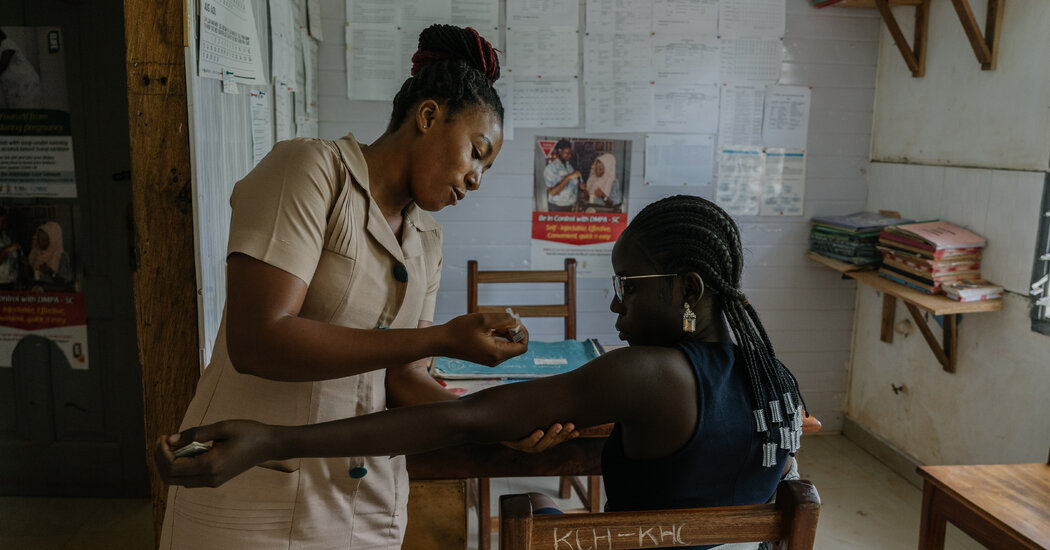
Methods such as hormonal implants and injections are reaching remote areas, providing more discretion and autonomy.On a busy day at the Kwapong Health Centre in rural Ghana, Beatrice Nyamekye put contraceptive implants into the arms of a half-dozen women, and gave eight or nine more a three-month hormonal injection to prevent pregnancy. A few sought condoms or birth control pills, but most wanted something longer lasting.“They like the implants and injections best of all,” said Ms. Nyamekye, a community health nurse. “It frees them from worry, and it is private. They don’t have to even discuss it with a husband or a partner.”The bustle at the Kwapong clinic is echoed all over Ghana, and across much of sub-Saharan Africa, where women have the world’s lowest rate of access to contraception: Just 26 percent of women of reproductive age in the region are using a modern contraceptive method — something other than the rhythm or withdrawal methods — according to the United Nations Population Fund, known as UNFPA, which works on reproductive and maternal health.But that is changing as more women have been able to get methods that give them a fast, affordable and discreet boost of reproductive autonomy. Over the past decade, the number of women in the region using modern contraception has nearly doubled to 66 million.“We’ve made progress, and it’s growing: You’re going to see huge numbers of women gaining access in the near future,” said Esi Asare Prah, who manages advocacy for the Ghana office of MSI, a reproductive health nonprofit.The Kwapong Health Center in Asunafo South.We are having trouble retrieving the article content.Please enable JavaScript in your browser settings.Thank you for your patience while we verify access. If you are in Reader mode please exit and log into your Times account, or subscribe for all of The Times.Thank you for your patience while we verify access.Already a subscriber? Log in.Want all of The Times? Subscribe.

Read more →

Pregnant, Addicted and Fighting the Pull of Drugs

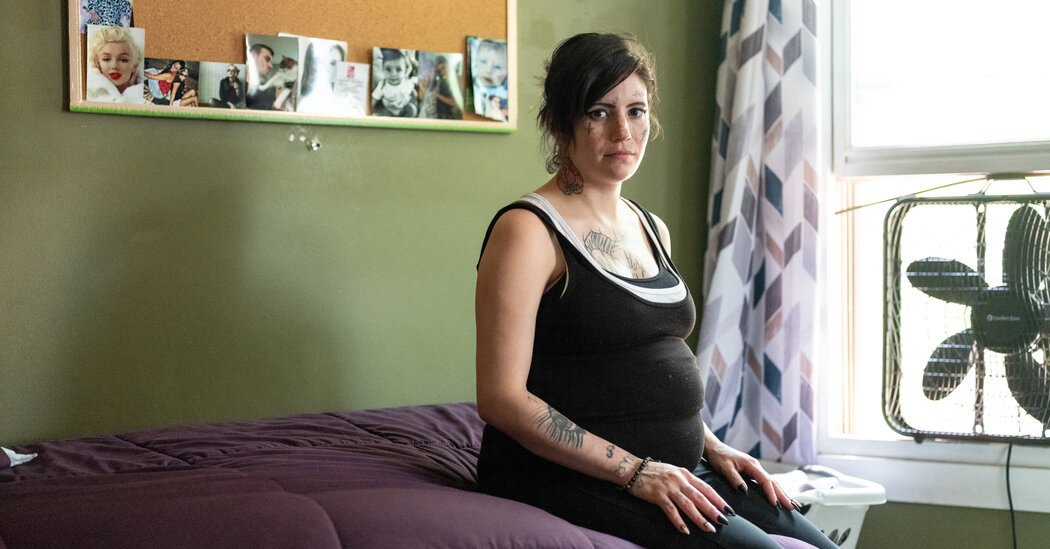
Kim Short waited in the doctor’s exam room on an icy day in February, exhausted from the first trimester of pregnancy and trembling in withdrawal from methamphetamine, alcohol, Xanax and Klonopin.She stared at the floor, her black hair curtaining face tattoos of a dagger and stitches, memorials to friends dead from overdose. Inky wings of eyeliner rimmed her eyes.This was Kim’s second pregnancy with the Great Moms clinic at the Corewell Health Medical Center in Grand Rapids, Mich., one of the rare programs for a population of patients who are among the most reviled in society: pregnant women and new mothers who are addicted to drugs and alcohol.Kim, 32, had first come to the clinic in the fall of 2022 and, in April 2023, gave birth to a healthy, drug-free boy. But within months she relapsed, and child protective services placed the baby in foster care. Her despair drove her further into addiction.Now, pregnant again, she had returned to the one place she believed was her best shot at staying sober and raising this new baby.Dr. Cara Poland walked into the exam room.“I’m so thankful that you made your way back to us,” she said to Kim.We are having trouble retrieving the article content.Please enable JavaScript in your browser settings.Thank you for your patience while we verify access. If you are in Reader mode please exit and log into your Times account, or subscribe for all of The Times.Thank you for your patience while we verify access.Already a subscriber? Log in.Want all of The Times? Subscribe.

Read more →