How to make aging a ‘fairer game’ for all wormkind

Why do some people live for longer than others? The genes in our DNA sequence are important, helping avoid disease or maintain general health, but differences in our genome sequence alone explain less than 30% of the natural variance of human life expectancy.
Exploring how ageing is influenced at the molecular level could shed light on lifespan variation, but generating data at the speed, scale and quality necessary to study this in humans is unfeasible. Instead, researchers turn to worms (Caenorhabditis elegans). Humans share a lot of biology with these small creatures, who also have a large, natural variation in lifespan.
Researchers at the Centre for Genomic Regulation (CRG) observed thousands of genetically identical worms living in a controlled environment. Even when diet, temperature and exposure to predators and pathogens are the same for all worms, many individuals continue to live for a longer or shorter period of time than the average.
The study traced the primary source of this variation to changes in the mRNA content in germline cells (those involved in reproduction) and somatic cells (the cells forming the body). The mRNA balance between the two types of cells is disrupted, or ‘decouples’, over time, causing ageing to run faster in some individuals than others. The findings are published today in the journal Cell.
The study also found that the magnitude and speed of the decoupling process is influenced by a group of at least 40 different genes. These genes play many different roles in the body ranging from metabolism to the neuroendocrine system. However, the study is first to show they all interact to make some individuals live longer than others.
Knocking down some of the genes extended a worm’s lifespan, while knocking down others shortened it. The findings suggest a surprising possibility: the natural differences seen in ageing worms might reflect randomness in the activity of many different genes, making it look as if individuals have been exposed to knockdowns of many different genes.
“Whether a worm lives to day 8 or day 20 is down to seemingly random differences in the activity of these genes. Some worms appear to be simply lucky, in that they have the right mix of genes activated at the right time,” says Dr. Matthias Eder, first author of the paper and researcher at the Centre for Genomic Regulation.

Knocking down three genes — aexr-1, nlp-28, and mak-1 – had a particularly dramatic effect on lifespan variance, reducing the range from around 8 days to just 4. Rather than prolonging the lives of all individuals uniformly, removing any one of these genes drastically increased the life expectancy of worms on the low end of the spectrum, while the life expectancies of the longest-lived worms remained more or less unchanged.
The researchers observed the same effects on healthspan, the period of life spent healthy, rather than simply how long an individual is physically alive. The researchers measured this by studying how long the worms maintain vigorous movement. Knocking down just one of the genes was enough to disproportionately improving healthy ageing in worms on the low end of the healthspan spectrum.
“This isn’t about creating immortal worms, but rather making ageing a more equitable process than it currently is — a fairer game for all. In a way we’ve doing what doctors do, which is take worms that would die sooner than their peers and make them healthier, helping them live closer to their maximum potential life expectancy. But we’re doing it by targeting basic biological mechanisms of aging, not just treating sick individuals. It’s essentially making a population more homogeneous and more long lived to boot,” says Dr. Nick Stroustrup, senior author of the study and Group Leader at the Centre for Genomic Regulation.
The study doesn’t address why knocking down the genes doesn’t seem to negatively affect the worm’s health. “Several genes could interact to provide built-in redundancy after a certain age. It could also be that the genes aren’t needed for individuals living in benign, safe conditions where the worms are kept in the lab. In the harsh environment of the wild, these genes might be more critical for survival. These are just some of the working theories,” says Dr. Eder.
The researchers made their findings by developing a method which measures RNA molecules in different cells and tissues, combining it with the ‘Lifespan Machine’, a device which follows the entire lives of thousands of nematodes at once. The worms live in a petri dish housed inside the machine under the watchful eye of a scanner. The device images nematodes once per hour, gathering lots of data about their behaviour. The researchers have plans to build a similar machine to study the molecular causes of ageing in mice, which have a biology that more closely resembles that of humans.

Read more →

How PBMs Are Driving Up Prescription Drug Costs

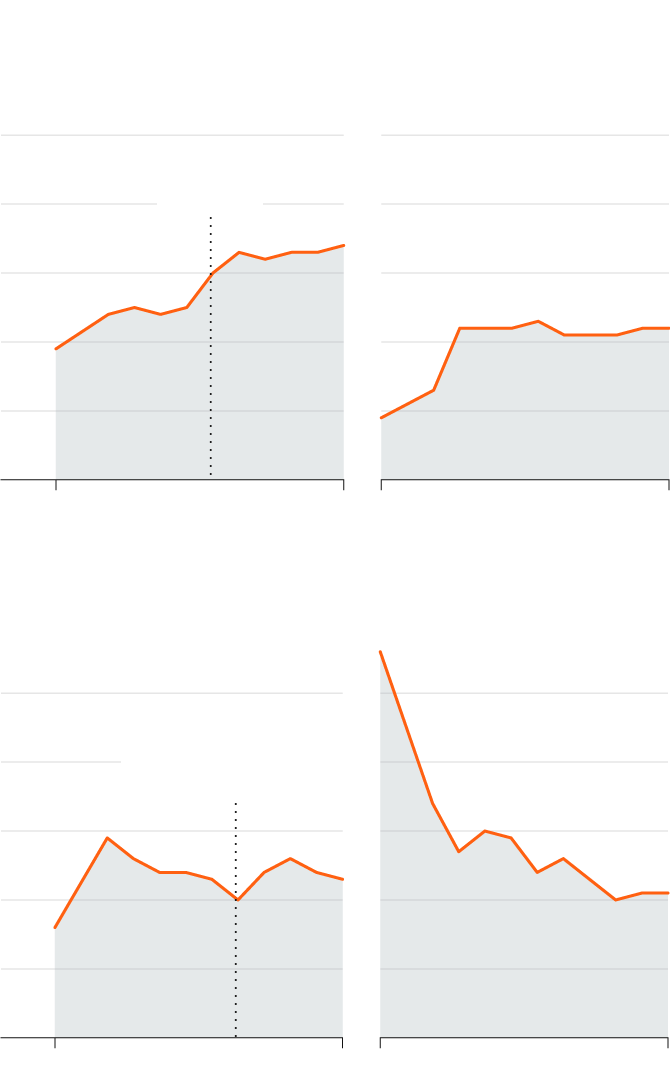
Americans are paying too much for prescription drugs.It is a common, longstanding complaint. And the culprits seem obvious: Drug companies. Insurers. A dysfunctional federal government.But there is another collection of powerful forces that often escape attention, because they operate in the bowels of the health care system and cloak themselves in such opacity and complexity that many people don’t even realize they exist.They are called pharmacy benefit managers. And they are driving up drug costs for millions of people, employers and the government.The three largest pharmacy benefit managers, or P.B.M.s, act as middlemen overseeing prescriptions for more than 200 million Americans. They are owned by huge health care conglomerates — CVS Health, Cigna and UnitedHealth Group — and are hired by employers and governments.The job of the P.B.M.s is to reduce drug costs. Instead, they frequently do the opposite. They steer patients toward pricier drugs, charge steep markups on what would otherwise be inexpensive medicines and extract billions of dollars in hidden fees, a New York Times investigation found.Most Americans get their health insurance through a government program like Medicare or through an employer, which pay for two different types of insurance for each person. One type covers visits to doctors and hospitals, and it is handled by an insurance company. The other pays for prescriptions. That is overseen by a P.B.M.Biggest P.B.M.s DominateEach P.B.M.’s estimated share of prescriptions filled in the United States.

Read more →

What to Do if You’re Overpaying for Prescriptions

Here’s what to know about your pharmacy benefit manager and how to find out if you are being overcharged for medications.If you’ve ever had trouble getting a prescription drug, chances are you’ve run into a pharmacy benefit manager.These companies, known as P.B.M.s, play a crucial but often hidden role in deciding which drugs you can get and how much you will personally have to pay. They are middlemen in the maddeningly complex American health care system, working on behalf of your employer or government insurance programs like Medicare, which cover most of the costs of prescription drugs.The job of the P.B.M. is to save money on your medications. But The New York Times found that the three biggest P.B.M.s are often making you pay more than you should.Here’s what to know about your P.B.M. and how to find out if you are being overcharged.How do I know which P.B.M. I have?Most Americans rely on one of the big three P.B.M.s: CVS Caremark, Express Scripts or Optum Rx. Even if you have a smaller P.B.M. like Prime Therapeutics, you may be affected by the business practices of the three giants. (That’s because many smaller P.B.M.s delegate some of their dealings with drug companies and pharmacies to their larger competitors.)This is different from the health insurance that covers your doctors’ visits or a hospital stay. While you can typically pick your health plan during your employer’s open enrollment period every year, your P.B.M. is picked for you.We are having trouble retrieving the article content.Please enable JavaScript in your browser settings.Thank you for your patience while we verify access. If you are in Reader mode please exit and log into your Times account, or subscribe for all of The Times.Thank you for your patience while we verify access.Already a subscriber? Log in.Want all of The Times? Subscribe.

Read more →

Cancer Kills Millions of Dogs. Will Immunotherapy Prolong Their Lives?

Dr. Hans Klingemann, pioneering immunotherapy scientist, has studied whether the innovative treatment could save his two pets.Immunotherapy has transformed cancer treatment. It tinkers with the immune system to attack malignancies that have evaded the body’s natural defenses. This advance offers an alternative to treating cancer with surgery or chemotherapy and radiation, which can attack healthy tissue and cause extreme side effects.The treatment is not only scientifically complex but also expensive. The investment of money and time makes sense when it comes to saving humans. But what about when it comes to dogs?Dr. Hans Klingemann has worked on and researched cancer immunotherapy for decades, leading departments at Rush University Medical Center in Chicago and Tufts Medical Center in Boston. Now, he’s the chief science officer for cellular products at ImmunityBio, which develops immunotherapy drugs for people. But he has also written two papers exploring whether the new treatments might someday prolong canine lives.The interview below has been condensed and edited for clarity.What interests you about immunotherapy and dogs?I love dogs. I have dogs: Sophie and Maximilian. They are each around 18 pounds, a mix of a bichon and a Cavalier spaniel.Did they develop cancer?Fortunately, they haven’t gotten cancer…. yet. But when dogs get older, many get cancer. Are there some benefits from immunotherapy? Could we make life easier, the remaining life, for the dog and the owner?We are having trouble retrieving the article content.Please enable JavaScript in your browser settings.Thank you for your patience while we verify access. If you are in Reader mode please exit and log into your Times account, or subscribe for all of The Times.Thank you for your patience while we verify access.Already a subscriber? Log in.Want all of The Times? Subscribe.

Read more →

Guiding humanity beyond the moon

What actually happens to the human body in space? While scientists and researchers have heavily researched how various factors impact the human body here on Earth, the amount of information available about changes that occur in the body in space is not as well-known. Scientists, including OHIO’s Nate Szewczyk and several of his trainees, have been studying for years how the body, specifically on the molecular side, changes in space. Recently, a new package of papers has been published in “Nature” journals depicting how the modern tools of molecular biology and precision medicine can help guide humanity into more challenging missions beyond where we’ve already been.
The package of papers, titled “Space Omics and Medical Atlas across orbits,” includes manuscripts, data, protocols, and code, representing the largest-ever compendium of data for aerospace medicine and space biology. Over 100 institutions from more than 25 countries worked together to coordinate the release of this molecular, cellular, physiological, phenotypic, and spaceflight data.
Szewczyk, a professor in the Department of Biomedical Sciences and a principle investigator in the Ohio Musculoskeletal and Neurologic Institute, coauthored seven different articles including: “Spaceflight induces changes in gene expression profiles linked to insulin and estrogen,” “Astronaut omics and the impact of space on the human body at scale,” “Understanding how space travel affects the female reproductive system,” “Transcriptomics analysis reveals molecular alterations underpinning spaceflight dermatology,” “Aging and putative frailty biomarkers are altered by spaceflight,” and “Ethical considerations for the age of non-governmental space exploration.”
In addition to coauthoring several papers, Szewczyk also involved his trainees on six of the papers. The trainees include OHIO medical students Anthony Carano and Caroline Coffey; Alexia Tasoula, a Ph.D. student in the translational biomedical sciences program; post-doctoral research Craig Willis, an OHIO alum and current assistant professor at the University of Bradford in the United Kingdom; as well as Dr. Henry Cope, researcher with the National Health Service in the United Kingdom.
Their articles highlight research from how spaceflight induced changes in insulin and estrogen signaling in rodents and humans, to ethical considerations for commercial spaceflight, and known and potential impacts of spaceflight on reproduction.
“We’ve studied worms for years but now have the ability to study people,” Szewczyk said. “We are at a place, particularly with NASA and the commercial sector, where we can focus on using more modern omics techniques to try and better understand changes in astronauts themselves, which can revolutionize their health.”
Szewczyk, known for his work researching worms in space, highlights the significance of these creatures as the first multicellular animals to have their genome sequenced. Leveraging genomics tools and techniques developed through worm studies, researchers have been able to delve into the molecular changes experienced by organisms in space. He notes that for over two decades, worms have been sent into space to observe gene expression alterations, paving the way for these similar studies in humans.

But as space flight becomes more commercialized and more people outside of just NASA’s astronauts pursue orbit, the need to understand the molecular level of humans in space becomes more important in ensuring their health and safety.
According to Szewczyk, the U.S. is growing in its space-based economy and as a result of that, there is now increased interest in commercial space flight. Even in Ohio there is a new space park in Columbus set up by the commercial company Voyager Space.
“The more commercial space flight grows, the more important understanding people’s omics is,” Szewczyk explained. “Space medicine is evolving from something that really only NASA was responsible for since they were the only organization sending people into space, to something more common as commercial space flight grows. We are seeing an increase in this type of flight from SpaceX and other companies and it is crucial that those entering space are prepared. Flight providers must provide medical coverage for their participants. When people go to the International Space Station (ISS), it is governed by certain rules and regulations, whereas with commercial space flight, these same guidelines don’t necessarily apply. There is interest to grow space medicine and advance techniques for looking at health in space, especially as more people are able to go into orbit.”
Szewczyk’s impact extends far beyond the laboratory as he actively advocates for open science and international collaboration, particularly in the field of space research. As co-chair of the NASA GeneLab Animal Analysis Working Group, he promotes the sharing of scientific knowledge among international space agencies, exemplified by initiatives like integrating the European Space Agency and the Japanese Aerospace Exploration Agency (JAXA) into NASA working groups. Moreover, his involvement in a JAXA Flagship Project includes leading efforts to harmonize ethical concerns and research methodologies for precision health in astronauts across multiple space agencies, including NASA, ESA, and JAXA.
“Humans are humans regardless of where they are from or currently live and the way space impacts them is ultimately the same,” Szewczyk said. “So the more we can all work together to compare how astronauts and those visiting space react in space, the better we can work to ensure safety and determine what guidelines need put in place for their health while in space and returning.”

Read more →