Biden Officials Pressed Trans Medical Group to Change Guidelines for Minors, Court Filings Show

Newly released emails from an influential group issuing transgender medical guidelines indicate that U.S. health officials lobbied to remove age minimums for surgery in minors because of concerns over political fallout.Health officials in the Biden administration pressed an international group of medical experts to remove age limits for adolescent surgeries from guidelines for care of transgender minors, according to newly unsealed court documents.Age minimums, officials feared, could fuel growing political opposition to such treatments.Email excerpts from members of the World Professional Association for Transgender Health recount how staff for Adm. Rachel Levine, assistant secretary for health at the Department of Health and Human Services and herself a transgender woman, urged them to drop the proposed limits from the group’s guidelines and apparently succeeded.If and when teenagers should be allowed to undergo transgender treatments and surgeries has become a raging debate within the political world. Opponents say teenagers are too young to make such decisions, but supporters including an array of medical experts posit that young people with gender dysphoria face depression and worsening distress if their issues go unaddressed.In the United States, setting age limits was controversial from the start.The draft guidelines, released in late 2021, recommended lowering the age minimums to 14 for hormonal treatments, 15 for mastectomies, 16 for breast augmentation or facial surgeries, and 17 for genital surgeries or hysterectomies.The proposed age limits were eliminated in the final guidelines outlining standards of care, spurring concerns within the international group and with outside experts as to why the age proposals had vanished.The email excerpts released this week shed light on possible reasons for those guideline changes, and highlight Admiral Levine’s role as a top point person on transgender issues in the Biden administration. The excerpts are legal filings in a federal lawsuit challenging Alabama’s ban on gender-affirming care.We are having trouble retrieving the article content.Please enable JavaScript in your browser settings.Thank you for your patience while we verify access. If you are in Reader mode please exit and log into your Times account, or subscribe for all of The Times.Thank you for your patience while we verify access.Already a subscriber? Log in.Want all of The Times? Subscribe.

Read more →

Some States Say They Can’t Afford Ozempic and Other Weight Loss Drugs

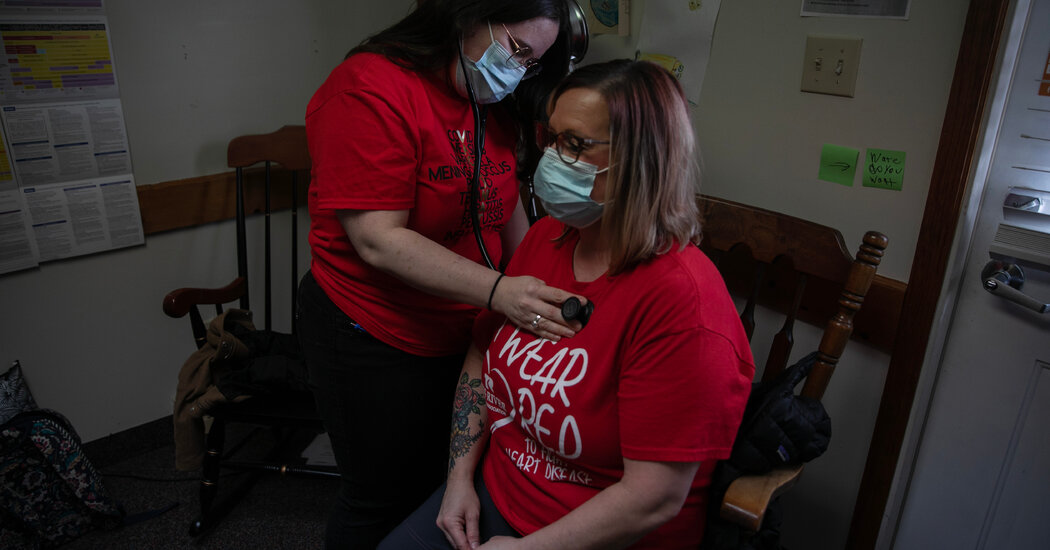
Public employees in West Virginia who took the drugs lost weight and were healthier, and some are despondent that the state is canceling a program to help pay for them.Joanna Bailey, a family physician and obesity specialist, doesn’t want to tell her patients that they can’t take Wegovy, but she has gotten used to it.Around a quarter of the people she sees in her small clinic in Wyoming County would benefit from the weight-loss medications known as GLP-1s, which also include Ozempic, Zepbound and Mounjaro, she says. The drugs have helped some of them lose 15 to 20 percent of their weight. But most people in the area she serves don’t have insurance that covers the cost, and virtually no one can afford sticker prices of $1,000 to $1,400 a month.“Even my richest patients can’t afford it,” Dr. Bailey said. She then mentioned something that many doctors in West Virginia — among the poorest states in the country, with the highest prevalence of obesity, at 41 percent — say: “We’ve separated between the haves and the have-nots.”Such disparities sharpened in March when West Virginia’s Public Employees Insurance Agency, which pays most of the cost of prescription drugs for more than 75,000 teachers, municipal workers and other public employees and their families, canceled a pilot program to cover weight-loss drugs.Some private insurers help pay for medications to treat obesity, but most Medicaid programs do so only to manage diabetes, and Medicare covers Wegovy and Zepbound only when they are prescribed for heart problems.Over the past year, states have been trying, amid rising demand, to determine how far to extend coverage for public employees. Connecticut is on track to spend more than $35 million this year through a limited weight-loss coverage initiative. In January, North Carolina announced that it would stop paying for weight-loss medications after forking out $100 million for them in 2023 — 10 percent of its spending on prescription drugs.We are having trouble retrieving the article content.Please enable JavaScript in your browser settings.Thank you for your patience while we verify access. If you are in Reader mode please exit and log into your Times account, or subscribe for all of The Times.Thank you for your patience while we verify access.Already a subscriber? Log in.Want all of The Times? Subscribe.

Read more →

Turning 26 and Struggling to Find Health Insurance? Tell Us About It.

The New York Times and KFF Health News are looking into a dreaded “adulting” milestone: finding your own medical insurance at 26.A hard-won provision of the Affordable Care Act allows young adults to stay on their family’s insurance until age 26. But after that, those without employer-based insurance face an array of complicated choices, including whether to shop on the insurance plan exchanges, apply for Medicaid or roll the dice and go uninsured.Are you a young adult confused about navigating the exchanges used to pick plans? Have you bought a plan on an A.C.A. exchange and found that it didn’t cover care? Have you married or taken a job just to get insurance? Did you decide to go without coverage?Whatever your story, my team of reporters and I want to hear it. I’m a longtime health journalist who has worked at both The New York Times and KFF Health News, an independent news organization covering health policy.We’ll read every response to this questionnaire, and we’ll reach out to you if we’d like to learn more about your story. We won’t publish any part of your response without following up with you first, verifying your information and hearing back from you. And I won’t use your contact information for any reason other than to get in touch with you.Finding Health InsuranceRequired fields are marked with an asterisk.

Read more →

Surgeon General Declares Gun Violence a Public Health Crisis

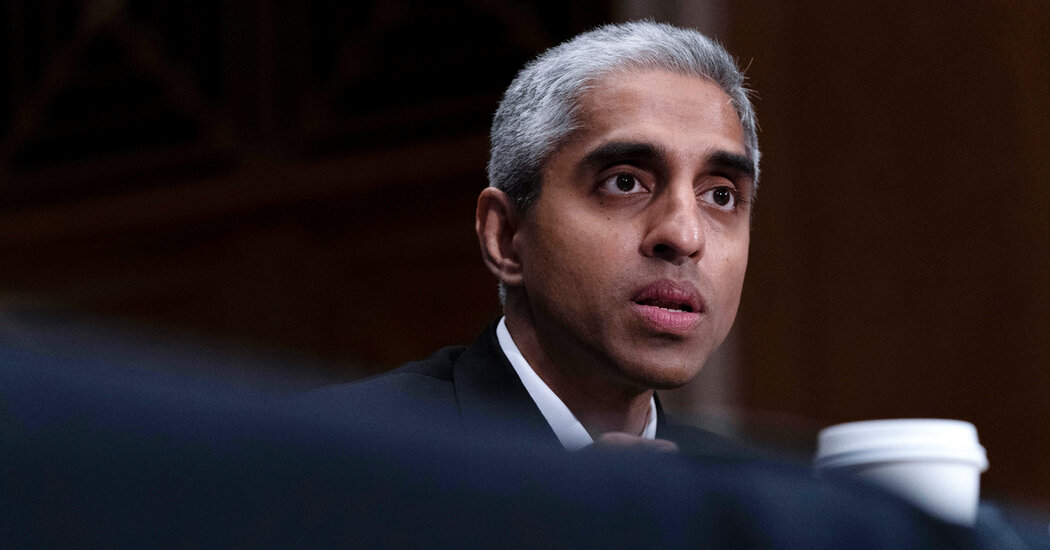
Dr. Vivek Murthy is calling for a multipronged effort to reduce gun deaths, modeled on campaigns against smoking and traffic fatalities.The U.S. surgeon general, Dr. Vivek Murthy, on Tuesday declared gun violence in America a public health crisis, recommending an array of preventive measures that he compared to past campaigns against smoking and traffic safety.The step follows years of calls by health officials to view firearm deaths through the lens of health rather than politics.The National Rifle Association has vigorously opposed this framing and promoted legislation that effectively quashed federal funding for research into gun violence for a quarter-century. The N.R.A. also unsuccessfully lobbied against Dr. Murthy’s nomination as surgeon general by Barack Obama in 2014, calling him “a serious threat to the rights of gun owners.”Dr. Murthy’s 32-page advisory calls for an increase in funding for firearm violence prevention research; advises health workers to discuss firearm storage with patients during routine medical visits; and recommends safe storage laws, universal background checks, “red flag” laws and an assault weapons ban, among other measures.“I’ve long believed this is a public health issue,” he said in an interview. “This issue has been politicized, has been polarized over time. But I think when we understand that this is a public health issue, we have the opportunity to take it out of the realm of politics and put it into the realm of public health.”But public-health-based gun reform has been an uphill battle in the United States, whose political parties are lodged in a stalemate over many of the measures the report recommends, including assault weapons bans and background checks for gun buyers. Experts estimate that 400 million guns are circulating in private hands, making it nearly impossible for the government to meaningfully restrict access to them.We are having trouble retrieving the article content.Please enable JavaScript in your browser settings.Thank you for your patience while we verify access. If you are in Reader mode please exit and log into your Times account, or subscribe for all of The Times.Thank you for your patience while we verify access.Already a subscriber? Log in.Want all of The Times? Subscribe.

Read more →
When Sick Pets Need Blood, Animal ‘Superheroes’ Come to the Rescue

At first, it was hard to tell whether something was really wrong with Rover. The 10-year-old yellow Lab had always been a bit of a loafer, so when he refused to get up from the rug last February, it was not entirely out of character. But then he declined a treat.“That was when we were like, ‘We have a very sick dog on our hands,’” said Hilary O’Hollaren of Portland, Ore.Ms. O’Hollaren’s husband rushed Rover to DoveLewis Veterinary Emergency and Specialty Hospital, where doctors had grave news: The dog had a tumor on his spleen. Worse, it had ruptured, causing massive internal bleeding. Without a blood transfusion, Rover had just hours to live.The couple quickly gave their consent, and the transfusion bought enough time for further diagnostic testing. The veterinarians discovered that although Rover had an aggressive form of cancer, which would eventually recur, it had not yet metastasized. So they removed Rover’s spleen and sent him home to live out his final months with his family.“We’re just really so grateful that there was even the option of having that transfusion,” Ms. O’Hollaren said. “We’re just trying to make every day the best day ever for him.”All kinds of ailments — including injuries, infectious diseases, immune conditions and cancer — can leave a pet in desperate need of blood, and transfusion has become an increasingly routine part of veterinary care.We are having trouble retrieving the article content.Please enable JavaScript in your browser settings.Thank you for your patience while we verify access. If you are in Reader mode please exit and log into your Times account, or subscribe for all of The Times.Thank you for your patience while we verify access.Already a subscriber? Log in.Want all of The Times? Subscribe.

Read more →