AI model finds the cancer clues at lightning speed

Researchers at the University of Gothenburg have developed an AI model that increases the potential for detecting cancer through sugar analyses. The AI model is faster and better at finding abnormalities than the current semi-manual method.
Glycans, or structures of sugar molecules in our cells, can be measured by mass spectrometry. One important use is that the structures can indicate different forms of cancer in the cells.
However, the data from the mass spectrometer measurement must be carefully analysed by humans to work out the structure from the glycan fragmentation. This process can take anywhere from hours to days for each sample and can only be carried out with high confidence by a small number of experts in the world, as it is essentially detective work learnt over many years.
Automating the detective work
The process is thus a bottleneck in the use of glycan analyses, for example for cancer detection, when there are many samples to be analysed.
Researchers at the University of Gothenburg have developed an AI model to automate this detective work. The AI model, named Candycrunch, solves the task in just a few seconds per test. The results are reported in a scientific article in the journal Nature Methods.
The AI model was trained using a database of over 500,000 examples of different fragmentations and associated structures of sugar molecules.

“The training has enabled Candycrunch to calculate the exact sugar structure in a sample in 90 per cent of cases,” says Daniel Bojar, Associate Senior Lecturer in Bioinformatics at the University of Gothenburg.
Can find new biomarkers
This means that the AI model could soon reach the same levels of accuracy as the sequencing of other biological sequences, such as DNA, RNA or proteins.
Because the AI model is so fast and accurate in its answers, it can accelerate the discovery of glycan-based biomarkers for both diagnosis and prognosis of the cancer.
“We believe that glycan analyses will become a bigger part of biological and clinical research now that we have automated the biggest bottleneck,” says Daniel Bojar.
The AI model Candycrunch is also able to identify structures that are often missed by human analyses due to their low concentrations. The model can therefore help researchers to find new glycan-based biomarkers.

Read more →

Palliative care beneficial to manage symptoms, improve quality of life for people with CVD

Implementing patient-centered palliative care therapies, including prescribing, adjusting or discontinuing medications as needed, may help control symptoms and improve quality of life for people with heart disease, according to “Palliative Pharmacotherapy for Cardiovascular Disease,” a new scientific statement from the American Heart Association, published in the Association’s journal, Circulation: Cardiovascular Quality and Outcomes.
The new scientific statement reviews current evidence on the benefits and risks of cardiovascular and essential palliative medications. The statement provides guidance for health care professionals to incorporate palliative methods as part of holistic medication management at all stages of a patient’s health conditions, emphasizing the importance of shared decision-making and goal-oriented care.
Palliative care is specialized medical care that aims to relieve symptoms and enhance quality of life for people experiencing health-related issues due to serious illnesses. This approach may benefit patients with cardiovascular disease, including coronary heart disease, valvular heart disease, pulmonary arterial hypertension and heart failure. These conditions significantly reduce quality of life, require ongoing treatment, are usually progressive and are associated with high mortality rates. The progression of many conditions, from chronic to advanced and end-stage, may be unpredictable and marked by worsening symptoms that result in recurrent hospitalization.
Palliative care complements standard cardiovascular care by reducing physical symptoms, managing emotional distress and assisting patients in making decisions that coincide with their goals of care. A palliative approach can be integrated into the medication management of patients at any stage of heart disease, from chronic, stable heart disease to advanced and end-stage cardiovascular disease. And, importantly, palliative care supports a more goal-oriented, patient-centered approach to treatment.
Previous studies have found that adding palliative care interventions to evidence-based care improved patients’ quality of life, functional status, depression, anxiety and spiritual well-being and reduced the risk of hospital readmission for patients with advanced heart disease compared to clinical care alone. Despite these benefits, fewer than 20% of people with end-stage heart disease receive palliative care.
In addition, despite significant progress in cardiovascular care, disparities in care and outcomes related to race, ethnicity, gender and social determinants of health persist. People with heart failure who are referred to palliative care are predominantly white, have higher socioeconomic status and are more likely to receive care at academic medical centers. Patients from underrepresented racial and ethnic groups are less likely to receive palliative care, which contributes to poorer outcomes and increased risk of early mortality.
“It is critical for patients to be fully informed about their diagnosis and how medication management may change throughout the disease progression so they have ample time to set and share their goals,” said Chair of the statement writing group Katherine E. Di Palo, Pharm.D., M.B.A., M.S., FAHA, senior director of Transitional Care Excellence at Montefiore Medical Center and assistant professor of medicine at Albert Einstein College of Medicine in New York City. “These goals often include reducing symptoms such as shortness of breath, fatigue, and pain as well as improving sleep, mood and appetite.”
To achieve these goals, cardiovascular medications that provide symptom relief, such as diuretics to manage fluid retention in heart failure, should be prioritized in patients with advanced heart disease. Adding palliative medicines to evidence-based cardiovascular therapies can be complementary to manage symptoms and optimize quality of life. Examples of common palliative medicines include antidepressants, opioids for pain relief and difficulty breathing, and anti-nausea medications.

“Given the complexities of medication management in people with heart disease, a team-based approach is urged. Collaboration between multidisciplinary clinicians across primary care, cardiology and palliative care is needed to deliver effective, person-centered care,” said Di Palo.
Because the health status of patients can change rapidly, it is crucial to have ongoing discussions to ensure that treatment plans align with the patient’s preferences and priorities. Clinicians should routinely evaluate — and clearly communicate — to patients and their families about the potential risks, benefits and expected time to benefit of each medication.
Deprescribing and de-escalating medications are also essential components of palliative medication management for people with heart disease. Deprescribing involves tapering, withdrawing or discontinuing a medication to improve outcomes. De-escalating medications focuses on reducing the dose or switching to another medication based on the patient’s response to the medicine.
“Deprescribing that targets medications with limited benefit or increased risk of adverse events can be done safely with patient permission,” Di Palo said.
The statement provides several examples where deprescribing medications may be appropriate to consider, such as when the time to benefit from the medication may be longer than the patient’s life-expectancy. Anti-clotting medications (also known as anticoagulants) may be prescribed to reduce the risk of blood clots. However, some of these medicines may increase the risk of bleeding, especially in older patients over the age of 75 who are at increased risk of falls. Discontinuing non-steroidal anti-inflammatories (NSAIDs) may also be considered in patients with end-stage heart disease due to increased risk of bleeding and fluid retention. Although beta-blockers are commonly prescribed for high blood pressure and heart failure, they may contribute to fatigue and functional decline in end-stage heart disease. A slow-tapering schedule can help to reduce the risk of rebound high blood pressure or withdrawal when large doses are abruptly stopped.
Other reasons to consider deprescribing medications include polypharmacy, defined as taking five medications or more daily. This increases the risk of adverse reactions or side effects, not taking medications as prescribed, hospital readmission and mortality. Excessive out-of-pocket medication costs may also prompt the need to deprescribe certain medications.
Future research is needed to determine the best ways to provide timely and targeted access to palliative medication management, particularly for patients with advanced heart disease from under-represented racial and ethnic groups who are less likely to receive palliative care or may face barriers to care.

Read more →

Novel blood test helps improve cancer treatments

The earlier a cancer is detected, the better the chances that treatment will be effective. This applies to almost all types of cancer. Another crucial element in successfully treating patients is to individually assess the benefits and risks of individual forms of therapy and to regularly monitor treatment success. To do this, oncologists have a range of methods at their disposal, most notably imaging technology and invasive measures such as tissue biopsies, punctures and endoscopic procedures.
Analyzing gene fragments in the bloodstream
Researchers at the University of Zurich (UZH) and the University Hospital Zurich (USZ) have now further developed an advanced method, a type of liquid biopsy that analyzes blood samples rather than organs or tissues. The method sequences and analyzes DNA fragments circulating in the blood of patients. “Our method can be used in the future for risk assessments, treatment monitoring during follow-up care and early detection of cancer recurrence, in principle for all types of tumors,” says Zsolt Balázs, co-first author of the study at the UZH Department of Quantitative Biomedicine.
Since the method is based on blood samples, it is less invasive than performing tissue biopsies, for example. Moreover, taking blood samples is fast and more practical in day-to-day hospital operations, as fewer appointments for diagnostic interventions are needed, sparing those affected lengthy waits.
Tailor-made treatment approach
The new method for analyzing liquid biopsies can help oncologists to more accurately determine tumor activity and spread. This will enable them to develop therapies that are tailored to individual patients. “We can see earlier and more quickly how much the cancer has spread in the body and how well a patient is responding to a specific treatment, or whether there will be a relapse,” says Zsolt Balázs.
In the lab, the researchers analyzed the gene fragments circulating in the blood for changes in the DNA that are characteristic of the specific type of cancer. The method analyzed alterations in the number and length distribution of the fragments. “The liquid biopsy technique enables us to discriminate between biologically less and more aggressive metastatic cancer disease — perhaps even earlier than using imaging technology,” says co-first author Panagiotis Balermpas, a professor at the Department of Radiation Oncology at USZ.
Increased focus on patients’ quality of life
The researchers tested their method on patients undergoing radiotherapy, including several HPV-positive patients. HPV stands for human papillomavirus, which can also cause cancer. The number of HPV DNA fragments found in the blood allowed the researchers to observe the development of tumors. For head and neck cancer, they found that a higher concentration of HPV DNA might be an early indication of cancer recurrence, which could be combated using immunotherapy.
“The more a tumor metastasizes, the poorer the patient’s quality of life. This also applies to local recurrences that aren’t detected early. It is key that we individualize treatment as far as possible, taking into account the potential benefits of all therapies as well as their influence on the patient’s quality of life,” concludes Balermpas, who oversaw the treatment of patients with head and neck tumors in the study.

Read more →

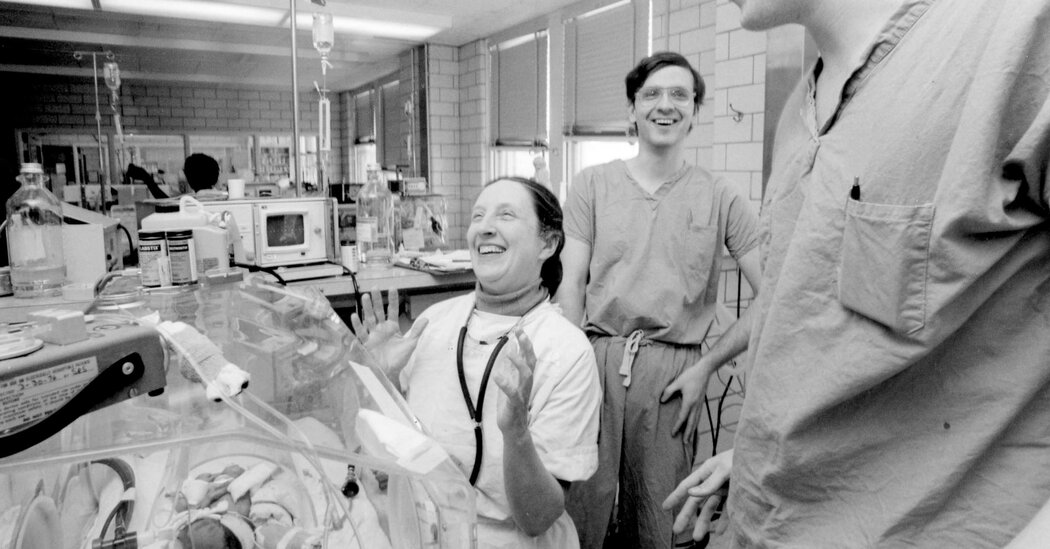
Mildred Thornton Stahlman, Pioneer in Neonatal Care, Dies at 101

She developed one of the first modern intensive care units for premature babies, helping newborns to breathe with lifesaving new treatments.Dr. Mildred Thornton Stahlman, a Vanderbilt University pediatrician whose research on fatal lung disease in newborns led to lifesaving treatments and to the creation, in 1961, of one of the first neonatal intensive care units, died on Saturday at her home in Brentwood, Tenn. She was 101.Her death was confirmed by Eva Hill, the wife of Dr. Stahlman’s nephew George Hill.On Oct. 31, 1961, Dr. Stahlman fitted a premature baby who was gasping for breath into a miniature iron lung machine, also known as a negative pressure ventilator, the kind used for children with polio. The machine worked by pulling the baby’s frail chest muscles open to help draw in air. The baby survived.That initial success, along with findings from Dr. Stahlman’s studies on newborn lambs, helped launch a new era of treating respiratory lung disease, a leading killer of premature babies. Immature lungs lack surfactant, a soapy chemical that coats air sacs. Without surfactant, the tiny sacs collapse. Shortly after her first success, Dr. Stahlman reported that she used the iron lung machine to save 11 of 26 babies. By the 1970s, negative pressure tanks were jettisoned for positive pressure machines that worked by inflating the lungs. In the 1990s, the use of surfactants extracted from animal lungs dramatically improved the survival of babies with severe disease who required mechanical ventilation. “Milly was one of the first to push the limits of viability of premature infants in a careful and scientific way,” said Dr. Linda Mayes, a Yale professor of child psychiatry, pediatrics and psychology and chair of the Yale Child Study Center who trained under Dr. Stahlman. “She was a physician-scientist long before that phrase was popular.”In the early days of neonatology, Dr. Stahlman was one of the few doctors in the world who knew how to thread tiny catheters into the umbilical vessels of newborns to monitor blood oxygen, wrote Sarah DiGregorio in her book, “Early: An Intimate History of Premature Birth and What It Teaches Us about Being Human.” The procedure was vital to ensuring enough oxygen to keep the babies alive but not so much that it might trigger blindness.We are having trouble retrieving the article content.Please enable JavaScript in your browser settings.Thank you for your patience while we verify access. If you are in Reader mode please exit and log into your Times account, or subscribe for all of The Times.Thank you for your patience while we verify access.Already a subscriber? Log in.Want all of The Times? Subscribe.

Read more →

Racing to Retake a Beloved Trip, Before Dementia Takes Everything

Before we begin, would you repeat these three words? Apple, penny, table. I had my dad do something like this, too.The evening before he was supposed to catch a cross-country flight to me, in Providence, R.I., my 72-year-old father said he didn’t need to set an alarm because he always wakes up at 6 or 7, a statement I knew to be untrue — or, at the very least, unreliable. He lives near Half Moon Bay, Calif., and now that he is retired, he usually rests in bed until 10:30 or 11. I suspected he no longer remembered how to set an alarm, and I couldn’t stop myself from asking him.“I don’t need an alarm!” he bellowed. And so I set mine for 10:30 a.m. my time, 7:30 a.m. his, to allow him a fat hour and a half to get ready. When the bells startled the silence of my office the next day, I called him, and he sent me to voice mail. I dialed again.“I’m up!” he snapped, panicked. Then he hung up. Ten minutes later, he phoned: “Why didn’t you give me any information? I don’t know the flight number or anything. I’m flying blind here.”I had texted and emailed him his itinerary several times and discovered, with surprise, that he had lost the ability to open emails and text messages on the phone he’d had for years. He lives alone. His wife, my mom, was diagnosed with breast cancer when I was 7 and died when I was 10, and he never remarried. I have no siblings. He has no nearby friends on whom I felt comfortable imposing to help him. I decided that I should just instruct him to check in at the ticket counter. The only thing he really needed was his passport and a credit card.“We have a problem,” he said, calling me again. “My passport is expired.”“We only applied for your passport in 2018,” I said. It would be good until 2028, I told him.We are having trouble retrieving the article content.Please enable JavaScript in your browser settings.Thank you for your patience while we verify access. If you are in Reader mode please exit and log into your Times account, or subscribe for all of The Times.Thank you for your patience while we verify access.Already a subscriber? Log in.Want all of The Times? Subscribe.

Read more →

How Science Went to the Dogs (and Cats)

This article is part of our Pets special section on scientists’ growing interest in our animal companions.Every dog has its day, and July 14, 2004, belonged to a boxer named Tasha. On that date, the National Institutes of Health announced that the barrel-chested, generously jowled canine had become the first dog to have her complete genome sequenced. “And everything has kind of exploded since then,” said Elaine Ostrander, a canine genomics expert at the National Human Genome Research Institute, who was part of the research team.In the 20 years since, geneticists have fallen hard for our canine companions, sequencing thousands upon thousands of dogs, including pedigreed purebreds, mysterious mutts, highly trained working dogs, free-ranging village dogs and even ancient canine remains.Research on canine cognition and behavior has taken off, too. “Now dog posters are taking up half of an animal behavior conference,” said Monique Udell, who directs the human-animal interaction lab at Oregon State University. “And we’re starting to see cat research following that same trend.”Just a few decades ago, many researchers considered pets to be deeply unserious subjects. (“I didn’t want to study dogs,” said Alexandra Horowitz, who has since become a prominent researcher in the field of canine cognition.) Today, companion animals are absolutely in vogue. Scientists around the world are peering deep into the bodies and minds of cats and dogs, hoping to learn more about how they wriggled their way into our lives, how they experience the world and how to keep them living in it longer. It’s a shift that some experts say is long overdue.“We have a responsibility to deeply understand these animals if we’re going to live with them,” Dr. Udell said. “We also have this great potential to learn a lot about them and a lot about ourselves in the process.”Pet projectsFor geneticists, dogs and cats are both rich subjects, given their long, close history with humans and their susceptibility to many of the same diseases, from cancer to diabetes.We are having trouble retrieving the article content.Please enable JavaScript in your browser settings.Thank you for your patience while we verify access. If you are in Reader mode please exit and log into your Times account, or subscribe for all of The Times.Thank you for your patience while we verify access.Already a subscriber? Log in.Want all of The Times? Subscribe.

Read more →

Ann Lurie, Nurse Who Became a Prominent Philanthropist, Is Dead at 79

A former hippie who chafed at wealth, she married a Chicago real estate titan and, after his death, donated hundreds of millions in her adopted city and beyond.Ann Lurie, a self-described hippie who went on to become one of Chicago’s most celebrated philanthropists, in one instance giving more than $100 million to a hospital where she had once worked as a pediatric nurse, died on Monday. She was 79.Her death was announced in a statement by Northwestern University, to which Ms. Lurie, a trustee, had donated more than $60 million. The statement did not say where she died or specify a cause.An only child raised in Miami by a single mother, Ms. Lurie protested the Vietnam War while in college and planned to join the Peace Corps after she graduated. In interviews, she said she chafed at the trappings of wealth even after marrying Robert H. Lurie.Mr. Lurie had built a real estate and investment empire as a partner in Equity Group Investments, teaming up with a former fraternity brother from the University of Michigan, Sam Zell, whose portfolio came to include The Chicago Tribune, The Los Angeles Times and the Chicago Cubs. Mr. Lurie held stakes in the Chicago Bulls and the Chicago White Sox.He died of colon cancer in 1990 at 48, leaving an estate worth $425 million. By 2007, Ms. Lurie had donated $277 million, according to The Chicago Sun-Times.In recognition of the care Mr. Lurie received at Northwestern University’s cancer center, the couple endowed the Robert H. Lurie Comprehensive Cancer Center of Northwestern University to expand its treatment and research capabilities.We are having trouble retrieving the article content.Please enable JavaScript in your browser settings.Thank you for your patience while we verify access. If you are in Reader mode please exit and log into your Times account, or subscribe for all of The Times.Thank you for your patience while we verify access.Already a subscriber? Log in.Want all of The Times? Subscribe.

Read more →