
Your Voice, Your Vote: Mental health crisis in young

1 hour agoBy
Read more →
22 minutes agoBy
Read more →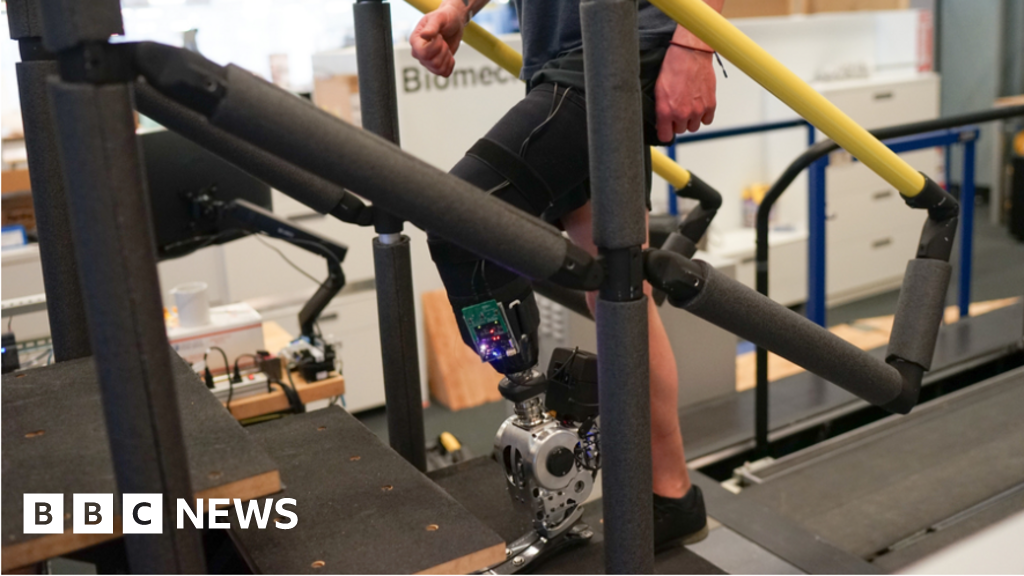
A high-tech prosthetic leg enables amputees to walk naturally and at normal speeds without consciously thinking about it, a study suggests.
Read more →
A new method of precisely targeting troublesome cells for death using light could unlock new understanding of and treatments for cancer and inflammatory diseases, University of Illinois Urbana-Champaign researchers report.
Inflammatory cell death, knows as necroptosis, is an important regulatory tool in the body’s arsenal against disease. However, in some diseases, the process can go haywire; for example, cancer cells are able to suppress inflammatory signals and thus escape death.
“Usually treatments for cancer use pharmacological induction to kill the cells, but those chemicals tend to diffuse throughout the tissues and it’s hard to contain to a precise location. You get a lot of unwanted effects,” said study leader Kai Zhang, a professor of biochemistry at the U. of I. “We can make the cells responsive to light, and we can focus the light beam to be smaller than one cell. That is how we can use light to very precisely target a cell and turn on its death pathway.”
The researchers use a method called optogenetics to make the cells respond to light. They borrowed a light-activated gene from plants and inserted it into intestinal cell cultures, attaching it to the gene for RIPK3, a protein that regulates necroptosis.
“When activated, RIPK3 undergoes oligomerization — it forms clusters of protein complexes. Our light-sensitive proteins cluster together when exposed to blue light. So by triggering the light-sensitive proteins to come together, the RIPK3 comes together and oligomerizes, and that’s how we mimic the activation pathway,” said graduate student Teak-Jung Oh, the first author of the paper published in the Journal of Molecular Biology.
However, killing the cell itself is not the only goal. Inducing the inflammatory cell death pathway, rather than outright killing the cell mechanically or chemically, triggers the immune system to respond. The ruptured cells release chemicals called cytokines that irritate nearby cells and attract T cells, white blood cells that play an important role in how the immune system identifies and attacks threats, Zhang said.
“Certain cancer cell types create a local immunosuppressive environment, where T cells are either not recruited or, if they do come, they do not recognize it as a threat and do not infiltrate the cancerous area. But by opening up some cancer cells through necroptosis, we hope to modulate this immune suppressive environment and help train the T cells to recognize and attack the cancer,” said Zhang, who is a member of the Cancer Center at Illinois.
Since the optogenetic system requires light delivery directly to tissues, human clinical applications in tissues deeper than skin are currently limited. However, the Illinois group plans to implement their system in mice next to further study necroptosis and immune response in cancer and other inflammatory diseases. They also will further investigate the in vitro platform’s potential for training T cells for immune therapies.
“Understanding the cell signaling pathway for necroptosis is especially important because it has been known to be involved with diseases like neurodegenerative disease and inflammatory bowel disease. Knowing how necroptosis affects progression in these diseases is important. And if you don’t know the molecular mechanisms, you don’t really know what to target to slow the progression,” Oh said.
The National Institute of General Medical Sciences and National Institute of Mental Health of the National Institutes of Health, the National Science Foundation and the Cancer Center at Illinois supported this work. Zhang also is affiliated with the Beckman Institute for Advanced Science and Technology at Illinois.
The National Institutes of Health supported this work through grants R01GM132438 and R01MH124827.
New evidence comparing weight gain under eight different first-line antidepressants finds that bupropion users are 15-20% less likely to gain a clinically significant amount of weight than users of sertraline, the most common medication.
The findings are published July 2 in Annals of Internal Medicine.
Antidepressants are among the most commonly prescribed medications in the U.S., with 14% of U.S. adults reporting using an antidepressant. Weight gain is a common side effect, which could affect patients’ long-term metabolic health and cause some to stop taking their prescribed treatment, leading to poor clinical outcomes. Although antidepressants overall are associated with weight gain, specific antidepressant medications may affect weight differently.
The new findings, led by investigators from the Harvard Pilgrim Health Care Institute reveal which common antidepressants are associated with the most and least weight gain following medication initiation.
“Patients and their clinicians often have several options when starting an antidepressant for the first time. This study provides important real-world evidence regarding the amount of weight gain that should be expected after starting some of the most common antidepressants,” said lead author Joshua Petimar, Harvard Medical School assistant professor of population medicine at the Harvard Pilgrim Health Care Institute. “Clinicians and patients can use this information, among other factors, to help decide on the right choice for them.”
Researchers used electronic health record prescription data from eight health systems in the U.S. participating in PCORnet, the National Patient-Centered Clinical Research Network, to conduct the study using data from 183,118 adults ages 18-80 years who were new users of antidepressants. While randomized control trials are considered the most rigorous method for comparing the effects of different medications, they are prohibitively costly and time consuming. In this case, the study team emulated a randomized trial by designing their ideal, hypothetical trial and aligning the data to match that trial as closely as possible.
Study investigators compared weight at 6, 12, and 24 months after initiation of eight common antidepressants: sertraline, citalopram, escitalopram, fluoxetine, paroxetine, bupropion, duloxetine, and venlafaxine.
Results showed that bupropion users gained the least amount of weight compared to users of other antidepressants. Bupropion users were approximately 15-20% less likely to gain a clinically significant amount of weight than those taking the most common medication, sertraline. The researchers considered weight gain of 5% or more as clinically significant. Results also showed a large percentage of patients were taking a medication that led to greater weight gain than alternatives that are commonly available in the same class or subclass. For example, sertraline, escitalopram, and paroxetine are all selective serotonin reuptake inhibitors (SSRI), the most common type of antidepressant, but escitalopram and paroxetine were each associated with an approximate 15% higher risk of gaining a clinically significant amount of weight than sertraline in the first 6 months.
“Although there are several reasons why patients and their clinicians might choose one antidepressant over another, weight gain is an important side effect that often leads to patients stopping their medication,” said senior author Jason Block, a general internal medicine physician and Harvard Medical School associate professor of population medicine at the Harvard Pilgrim Health Care Institute. “Our study found that some antidepressants, like bupropion, are associated with less weight gain than others. Patients and their clinicians could consider weight gain as one reason for choosing a medication that best fits their needs.”
Taxing certain antibiotics could help efforts to tackle the escalating threat of antibiotic resistance in humans, according to a new study by the University of East Anglia’s Centre for Competition Policy, Loughborough University and E.CA Economics.
Antimicrobial resistance (AMR) poses a significant global risk, causing an estimated 700,000 deaths annually. A key AMR report previously warned that if unchecked, it could endanger 10 million lives a year and result in $100 trillion in lost economic output by 2050.
Human use of antibiotics is the primary driver of AMR, with the majority in the UK prescribed via GPs. Classified as narrow or broad-spectrum, narrow-spectrum drugs target specific bacteria, helping slow AMR but require knowing the organism causing the infection. Broad-spectrum antibiotics are used more generally when the organism is unknown, exacerbating AMR.
The UK government report, published in 2016, recommended testing for pathogens before prescribing and using narrow-spectrum drugs when appropriate, with costly or time-consuming testing leading to overprescribing of broad-spectrum antibiotics and contributing to AMR levels.
In this new study, economists examined the feasibility of ‘taxing’ GP surgeries for using particular broad-spectrum drugs — the idea being that when they prescribe them, the amount charged to their drug budget would be higher by the amount of the tax.
Writing in the International Journal of Industrial Organization, they argue that because GPs can choose which drug to prescribe this could encourage greater use of narrow-spectrum drugs as well as aim to reduce testing time and costs. It could also potentially help manage the demand for antibiotics by adjusting the relative pricing of the drugs.
Co-author Prof Farasat Bokhari, previously of UEA’s School of Economics and now at Loughborough University, said: “Antibiotic resistance is an important issue and a priority for UK health policy. It’s possibly the next ticking time bomb in the healthcare system.
“In our analysis, the financial burden of the tax is not on the patients but rather on the GP practices who may be overprescribing in some cases. Our findings show that switching from broad to narrow-spectrum is possible via changes in relative prices brought about via taxation, but it has implications — in terms of the total cost to society.
“While the alternative tax regimes we consider differ in how much demand will shift, our estimates suggest that these policies can be highly effective in managing that demand.”
The researchers stress that such tax policies should not be implemented without allowing for exemptions based on the severity of the disease, which the physicians could certify. They also acknowledge that if decisions are time-critical and it is not an option to wait for a precise diagnostic test to know which narrow-spectrum antibiotic to prescribe, this may slow the switch from broad to narrow-spectrum.
The study draws on 10 years of monthly sales data for antibiotics dispensed in UK pharmacies and uses economic models to assess substitution patterns between different antibiotics, together with the impact of prices, seasonality, spectrum, and other characteristics of a drug on its demand.
It looked at the impact of two types of taxes on different groups of drugs. Firstly, a percentage tax (5% or 20%) on all antibiotics, all broad-spectrum antibiotics, and specific broad-spectrum antibiotics known to contribute most to antibiotic resistance (co-amoxiclav, quinolones, and cephalosporins). Secondly, a fixed amount of tax per unit of the drug.
A 20% tax on all antibiotics reduces total antibiotic use by 12.7%. However, it only reduces the use of the most problematic broad-spectrum antibiotics by 29.4%. This tax results in a consumer welfare loss, that is, the difference between what an individual is willing to pay and what they actually pay, of £322 per 1000 people, which amounts to about £19.9 million a year in the UK.
However, if the same 20% tax is applied only to the broad-spectrum antibiotics that contribute most to antibiotic resistance, their use drops by 37.7%, and the overall antibiotic use drops by only 2.38% because most patients switch to narrow-spectrum drugs. This more targeted tax results in a smaller consumer welfare loss of £78.2 per 1000 people, or £4.8 million a year.
Lead author Dr Weijie Yan, at E.CA Economics, said: “The consumer welfare loss and overall welfare loss from taxing these antibiotics are significant, however they are relatively small compared to the predicted societal costs of antibiotic resistance in terms of deaths and economic losses.
“While our simulations show how much demand is shifted from broad to narrow-spectrum, and at what cost, it does not calculate the long-term benefits of switching to drugs with a lower AMR footprint.
“It is also clear that the estimated loss in welfare is much smaller than previous estimates of worldwide costs, and so it may be well worth considering such remedies to shift demand to narrow-spectrum drugs.”
A research team of Professor Yoontae Lee and Jiho Park, a PhD candidate, from the Department of Life Sciences at Pohang University of Science and Technology (POSTECH) recently discovered that a particular protein promotes the development of systemic lupus erythematosus (SLE). The study was published in the Proceedings of the National Academy of Sciences of the United States of America (PNAS), one of the world’s most-cited multidisciplinary scientific journal.
B cells, components of the body’s immune system, produce antibodies to combat pathogens such as viruses that enter the body from the outside. T follicular helper (TFH) cells assist B cells in generating these antibodies. However, an overabundance of TFHs can cause B cells to become overly active, resulting in autoimmune diseases. In such cases, B cells mistakenly recognize the body’s own tissues and cells as pathogens and produce autoantibodies even when no external pathogens are present.
SLE, one of the most prevalent autoimmune diseases, is marked by a butterfly-shaped red rash and arthritis that primarily affects the nose and cheeks. The symptoms and affected immune cells vary from patient to patient, and the cause and the underlying mechanisms are not clearly understood, complicating the provision of personalized treatment.
Previous research by Professor Yoontae Lee’s team suggested that ETV5, a specific transcription factor expressed in T cells, promotes the differentiation of T cells into TFH cells, potentially leading to SLE. In this study, the team conducted experiments in both mice and humans to confirm this hypothesis.
As a result, autoimmune symptoms such as autoantibody concentrations, immune cell infiltration into body tissues, and renal glomerulonephritis, and the development of TFH cells were reduced in the ETV5-deficient SLE mouse model. The team discovered that ETV5 enhances the expression of its target protein, osteopontin (OPN) which in turn activates the AKT protein, leading to the differentiation into TFH cells.
The researchers further confirmed that in human T cells, the differentiation into TFH cells is also regulated by the levels of ETV5 and OPN expression. Aligning with the findings from the animal models, ETV5 and OPN were expressed at higher levels in SLE patient models compared to the general population. Additionally, disease activity and blood autoantibody concentrations were generally proportional to the levels of ETV5 and OPN expression.
Professor Yoontae Lee, who led the study, expressed his aspiration by saying, “We have identified a mechanism of SLE pathogenesis involving ETV5 and OPN in real-world experiments.” He added, “We hope that further research will lead to the development of ETV5 inhibitors that regulate TFH cell development to help treat SLE patients.”
The research was conducted with support from the Mid-Career Research Program of the Ministry of Science and ICT.
State-of-the-art prosthetic limbs can help people with amputations achieve a natural walking gait, but they don’t give the user full neural control over the limb. Instead, they rely on robotic sensors and controllers that move the limb using predefined gait algorithms.
Using a new type of surgical intervention and neuroprosthetic interface, MIT researchers, in collaboration with colleagues from Brigham and Women’s Hospital, have shown that a natural walking gait is achievable using a prosthetic leg fully driven by the body’s own nervous system. The surgical amputation procedure reconnects muscles in the residual limb, which allows patients to receive “proprioceptive” feedback about where their prosthetic limb is in space.
In a study of seven patients who had this surgery, the MIT team found that they were able to walk faster, avoid obstacles, and climb stairs much more naturally than people with a traditional amputation.
“This is the first prosthetic study in history that shows a leg prosthesis under full neural modulation, where a biomimetic gait emerges. No one has been able to show this level of brain control that produces a natural gait, where the human’s nervous system is controlling the movement, not a robotic control algorithm,” says Hugh Herr, a professor of media arts and sciences, co-director of the K. Lisa Yang Center for Bionics at MIT, an associate member of MIT’s McGovern Institute for Brain Research, and the senior author of the new study.
Patients also experienced less pain and less muscle atrophy following this surgery, which is known as the agonist-antagonist myoneural interface (AMI). So far, about 60 patients around the world have received this type of surgery, which can also be done for people with arm amputations.
Hyungeun Song, a postdoc in MIT’s Media Lab, is the lead author of the paper, which will appear in Nature Medicine.
Sensory feedback
Most limb movement is controlled by pairs of muscles that take turns stretching and contracting. During a traditional below-the-knee amputation, the interactions of these paired muscles are disrupted. This makes it very difficult for the nervous system to sense the position of a muscle and how fast it’s contracting — sensory information that is critical for the brain to decide how to move the limb.
People with this kind of amputation may have trouble controlling their prosthetic limb because they can’t accurately sense where the limb is in space. Instead, they rely on robotic controllers built into the prosthetic limb. These limbs also include sensors that can detect and adjust to slopes and obstacles.
To try to help people achieve a natural gait under full nervous system control, Herr and his colleagues began developing the AMI surgery several years ago. Instead of severing natural agonist-antagonist muscle interactions, they connect the two ends of the muscles so that they still dynamically communicate with each other within the residual limb. This surgery can be done during a primary amputation, or the muscles can be reconnected after the initial amputation as part of a revision procedure.
“With the AMI amputation procedure, to the greatest extent possible, we attempt to connect native agonists to native antagonists in a physiological way so that after amputation, a person can move their full phantom limb with physiologic levels of proprioception and range of movement,” Herr says.
In a 2021 study, Herr’s lab found that patients who had this surgery were able to more precisely control the muscles of their amputated limb, and that those muscles produced electrical signals similar to those from their intact limb.
After those encouraging results, the researchers set out to explore whether those electrical signals could generate commands for a prosthetic limb and at the same time give the user feedback about the limb’s position in space. The person wearing the prosthetic limb could then use that proprioceptive feedback to volitionally adjust their gait as needed.
In the new Nature Medicine study, the MIT team found this sensory feedback did indeed translate into a smooth, near-natural ability to walk and navigate obstacles.
“Because of the AMI neuroprosthetic interface, we were able to boost that neural signaling, preserving as much as we could. This was able to restore a person’s neural capability to continuously and directly control the full gait, across different walking speeds, stairs, slopes, even going over obstacles,” Song says.
A natural gait
For this study, the researchers compared seven people who had the AMI surgery with seven who had traditional below-the-knee amputations. All of the subjects used the same type of bionic limb: a prosthesis with a powered ankle as well as electrodes that can sense electromyography (EMG) signals from the tibialis anterior the gastrocnemius muscles. These signals are fed into a robotic controller that helps the prosthesis calculate how much to bend the ankle, how much torque to apply, or how much power to deliver.
The researchers tested the subjects in several different situations: level-ground walking across a 10-meter pathway, walking up a slope, walking down a ramp, walking up and down stairs, and walking on a level surface while avoiding obstacles.
In all of these tasks, the people with the AMI neuroprosthetic interface were able to walk faster — at about the same rate as people without amputations — and navigate around obstacles more easily. They also showed more natural movements, such as pointing the toes of the prosthesis upward while going up stairs or stepping over an obstacle, and they were better able to coordinate the movements of their prosthetic limb and their intact limb. They were also able to push off the ground with the same amount of force as someone without an amputation.
“With the AMI cohort, we saw natural biomimetic behaviors emerge,” Herr says. “The cohort that didn’t have the AMI, they were able to walk, but the prosthetic movements weren’t natural, and their movements were generally slower.”
These natural behaviors emerged even though the amount of sensory feedback provided by the AMI was less than 20 percent of what would normally be received in people without an amputation.
“One of the main findings here is that a small increase in neural feedback from your amputated limb can restore significant bionic neural controllability, to a point where you allow people to directly neurally control the speed of walking, adapt to different terrain, and avoid obstacles,” Song says.
“This work represents yet another step in us demonstrating what is possible in terms of restoring function in patients who suffer from severe limb injury. It is through collaborative efforts such as this that we are able to make transformational progress in patient care,” says Matthew Carty, a surgeon at Brigham and Women’s Hospital and associate professor at Harvard Medical School, who is also an author of the paper.
Enabling neural control by the person using the limb is a step toward Herr’s lab’s goal of “rebuilding human bodies,” rather than having people rely on ever more sophisticated robotic controllers and sensors — tools that are powerful but do not feel like part of the user’s body.
“The problem with that long-term approach is that the user would never feel embodied with their prosthesis. They would never view the prosthesis as part of their body, part of self,” Herr says. “The approach we’re taking is trying to comprehensively connect the brain of the human to the electromechanics.”
The research was funded by the MIT K. Lisa Yang Center for Bionics, the National Institute of Neurological Disorders and Stroke, a Neurosurgery Research Education Foundation Medical Research Fellowship, and the Eunice Kennedy Shriver National Institute of Child Health and Human Development.
University of Cincinnati researchers have pioneered an animal model that sheds light on the role an understudied organ in the brain has in repairing damage caused by stroke.
The research, published July 5 in the Proceedings of the National Academy of Sciences, sought to learn more about how the adult brain generates new neurons to repair damaged tissue.
The research team focused on the choroid plexus, a small organ within brain ventricles that produces the brain’s cerebrospinal fluid (CSF). CSF circulates throughout the brain, carrying signaling molecules and other factors thought to be important for maintaining brain function. However, prior to this study, little was known about the roles the choroid plexus and CSF play in brain repair after injury due to a lack of available adult animal models.
“We have discovered a new use of an animal model to be able to allow us to manipulate the adult choroid plexus and CSF for the first time,” said Agnes (Yu) Luo, PhD, corresponding author on the study, and professor and vice chair in the Department of Molecular and Cellular Biosciences in UC’s College of Medicine. “Now that we’ve discovered it, this will be vitally applicable to allow researchers to manipulate the adult choroid plexus and CSF to study different disease models and biological processes.”
UC graduate student and study coauthor Aleksandr Taranov explained that in a process called adult neurogenesis, the adult brain maintains a certain capacity to repair damage by regenerating newly born neurons.
“However, we still don’t know what actually regulates adult neurogenesis and how to redirect the neurons into the lesion site following a stroke,” Taranov said.
Using this new model, the researchers found that removing the choroid plexus — and the resulting loss of CSF in brain ventricles — led to a reduction of newly born immature neurons called neuroblasts. In a model of ischemic stroke, the team found the loss of the choroid plexus and CSF led to fewer neuroblasts migrating to the lesion site and repairing damage caused by a stroke.
“This suggests that the choroid plexus may be needed to retain these neuroblasts in the area where they usually reside,” Taranov said. “And the choroid plexus might actually be required to retain the neuroblasts so they can readily migrate into the stroke site whenever a stroke or other injury occurs.”
Essentially, Luo said, it appears the choroid plexus keeps a garrison of regenerative cells that are ready to be deployed to injured areas in the brain in animal models of stroke. Further research is needed to confirm whether this also occurs in human brains.
Moving forward, Taranov is studying how the loss of the choroid plexus and CSF affects the clearing of toxic proteins in a model of Alzheimer’s disease, and fellow graduate student Elliot Wegman is studying the same effects in a model of Parkinson’s disease.

Ala. Alabama Banned — Abortion is banned in almost all circumstances. Ark. Arkansas Banned — Abortion is banned in almost all circumstances. Idaho Idaho Banned — Abortion is banned in almost all circumstances, and the Idaho Supreme Court ruled in 2023 that there is no constitutional right to an abortion in the state. A U.S. Supreme Court ruling will allow access to emergency abortions while lower courts decide if the state’s ban violates a federal law requiring emergency care for any patient. Ind. Indiana Banned — Abortion is banned in almost all circumstances. In 2023, the Indiana Supreme Court ruled that the state Constitution does not include a right to abortion except in dire situations. A separate challenge to the ban by residents who argue that it violates their religious rights is ongoing. Ky. Kentucky Banned — Abortion is banned in almost all circumstances. In 2022, voters rejected a ballot measure that would have amended the state Constitution to say it did not contain the right to an abortion. La. Louisiana Banned — Abortion is banned in almost all circumstances. Miss. Mississippi Banned — Abortion is banned in almost all circumstances. Mo. Missouri Banned — Abortion is banned in almost all circumstances. N.D. North Dakota Banned — Abortion is banned in almost all circumstances. Okla. Oklahoma Banned — Abortion is banned in almost all circumstances. S.D. South Dakota Banned — Abortion is banned in almost all circumstances. Voters will decide in November whether to enact a constitutional amendment that prohibits regulation of abortion in the first trimester. Tenn. Tennessee Banned — Abortion is banned in almost all circumstances. Texas Texas Banned — Abortion is banned in almost all circumstances. Private citizens can sue abortion providers and those who assist patients who are seeking an abortion after about six weeks of pregnancy. W.Va. West Virginia Banned — Abortion is banned in almost all circumstances. Fla. Florida Gestational limit 6 weeks Abortion is banned after about six weeks of pregnancy. The Florida Supreme Court ruled in 2024 that the state Constitution’s privacy protections do not extend to abortion. Voters will decide in November whether to enshrine a right to abortion in the state Constitution. Ga. Georgia Gestational limit 6 weeks Abortion is banned after about six weeks of pregnancy. In 2023, the State Supreme Court reversed a lower court’s ruling that the ban was void. The lower court must still weigh whether the ban violates the state’s Constitution. S.C. South Carolina Gestational limit 6 weeks Abortion is banned after about six weeks of pregnancy. The South Carolina Supreme Court upheld the ban in 2023, finding that the state Constitution’s privacy protections do not extend to abortion. Neb. Nebraska Gestational limit 12 weeks Abortion is banned after 12 weeks of pregnancy. N.C. North Carolina Gestational limit 12 weeks Abortion is banned after 12 weeks of pregnancy. Ariz. Arizona Gestational limit 15 weeks Abortion is banned after 15 weeks of pregnancy. The legislature repealed a law from 1864 that would have placed a near-total ban on abortions. Utah Utah Gestational limit 18 weeks Abortion is banned after 18 weeks of pregnancy. A judge has temporarily blocked a law that would have halted most abortions by requiring the procedure to be performed in hospitals. Another ban on most abortions was indefinitely blocked, and the State Supreme Court is expected to rule on it in 2024. Iowa Iowa Ban blocked 22 weeks The Iowa Supreme Court ruled in June that the state’s six-week abortion ban can soon be enforced while a lawsuit against it proceeds. It will take at least 21 days for the case to go back to the district court, during which time abortion will remain legal. Mont. Montana Ban blocked Viability The Montana Supreme Court has ruled that the state Constitution protects the right to an abortion. A ban on the most commonly used procedure in the second trimester and several other restrictions have been blocked by a court. Wyo. Wyoming Ban blocked Viability A judge has temporarily blocked a ban on most abortions and another law that explicitly bans the use of abortion pills. A separate ban on most abortions remains indefinitely blocked. Alaska Alaska Legal No limit The State Supreme Court has recognized a right to “reproductive choice” under the state Constitution. Kan. Kansas Legal 22 weeks The State Supreme Court ruled in 2019 that a pregnant woman’s right to personal autonomy is protected in the state Constitution, and in 2022, Kansans rejected a ballot measure that would have removed the right to abortion from the state Constitution. N.H. New Hampshire Legal 24 weeks Abortion is not expressly protected by state law. Ohio Ohio Legal 22 weeks Voters enshrined abortion protections in the state Constitution in 2023. Courts are still deciding how the amendment affects existing abortion restrictions, such as waiting periods and consent requirements. Va. Virginia Legal Viability Abortion is not expressly protected by state law. Wis. Wisconsin Legal 22 weeks In late 2023, a Wisconsin judge ruled that an 1849 law widely interpreted as a ban did not apply to abortion. The case may come before the State Supreme Court, which has a liberal majority. D.C. Washington, D.C. Legal with new protections No limit Local law protects abortion throughout pregnancy and shields providers and patients from laws in other jurisdictions. Calif. California Legal with new protections Viability The California Supreme Court has recognized a right to abortion and voters explicitly enshrined abortion protections in the state Constitution in 2022. State law protects abortion and shields patients and providers from laws in other states. Colo. Colorado Legal with new protections No limit State law protects abortion and shields those seeking or providing the procedure in Colorado from laws in other states. Voters will decide in November if the state Constitution should provide a right to an abortion. Conn. Connecticut Legal with new protections Viability State law protects abortion and shields those seeking or providing abortions in Connecticut from laws in other states. Del. Delaware Legal with new protections Viability State law protects abortion and shields those seeking or providing abortions in Delaware from laws in other states. Hawaii Hawaii Legal with new protections Viability State law protects abortion and shields those seeking or providing abortions in Hawaii from laws in other states. Ill. Illinois Legal with new protections Viability The State Supreme Court has recognized abortion protections under the state Constitution. State law protects the procedure and shields those seeking or providing abortions in Illinois from laws in other states. Maine Maine Legal with new protections Viability State law protects abortion and shields those seeking or providing abortions in Maine from laws in other states. A 2023 law allows an abortion past the point of fetal viability if a doctor decides it is medically necessary. Md. Maryland Legal with new protections Viability State law protects abortion and shields those seeking or providing abortions in Maryland from laws in other states. Voters will decide in November whether the state Constitution should establish a right to reproductive freedom. Mass. Massachusetts Legal with new protections 24 weeks The Massachusetts Supreme Judicial Court has recognized the right to abortion under the state Constitution. A law shields those seeking or providing abortions in Massachusetts from laws in other states, regardless of the patient’s location. Mich. Michigan Legal with new protections Viability Voters enshrined abortion protections in the state Constitution in 2022. State law protects abortion and an executive order shields those seeking or providing abortions in Michigan from laws in other states. Minn. Minnesota Legal with new protections No limit The State Supreme Court has recognized the right to abortion under the state Constitution. State law protects a right to reproductive care and shields those seeking or providing abortions in Minnesota from laws in other states. Nev. Nevada Legal with new protections 24 weeks State law protects abortion and shields those seeking or providing abortions in Nevada from laws in other states. Voters will decide in November if the state Constitution should provide a right to an abortion. N.J. New Jersey Legal with new protections No limit The New Jersey Supreme Court has recognized the right to abortion under the state Constitution. State law protects abortion throughout pregnancy and shields those seeking or providing abortions in New Jersey from laws in other states. N.M. New Mexico Legal with new protections No limit State law shields those seeking or providing abortions in New Mexico from laws in other states. N.Y. New York Legal with new protections Viability State law protects abortion and shields patients and providers from laws in other states. Voters will decide in November whether there should be equal protection for reproductive health care and autonomy under the state’s bill of rights. Ore. Oregon Legal with new protections No limit State law protects abortion throughout pregnancy and shields those seeking or providing abortions in Oregon from laws in other states. Pa. Pennsylvania Legal with new protections 24 weeks An executive order shields those seeking or providing abortions in Pennsylvania from laws in other states. R.I. Rhode Island Legal with new protections Viability State law protects abortion and an executive order shields those seeking or providing abortions in Rhode Island from laws in other states. Vt. Vermont Legal with new protections No limit Voters enshrined abortion protections in the state Constitution in 2022. State law protects abortion throughout pregnancy and shields those seeking or providing abortions in Vermont from laws in other states, including those using medication abortion. Wash. Washington Legal with new protections Viability State law protects abortion and shields those seeking or providing abortions in Washington from laws in other states.
Read more →