Covid-19: Evidence does not suggest AstraZeneca jab linked to clots, MHRA says
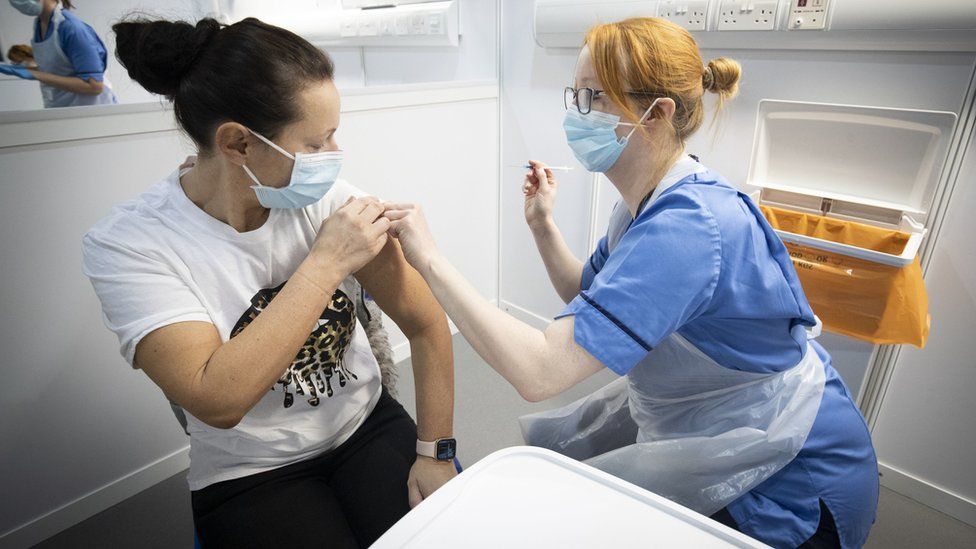
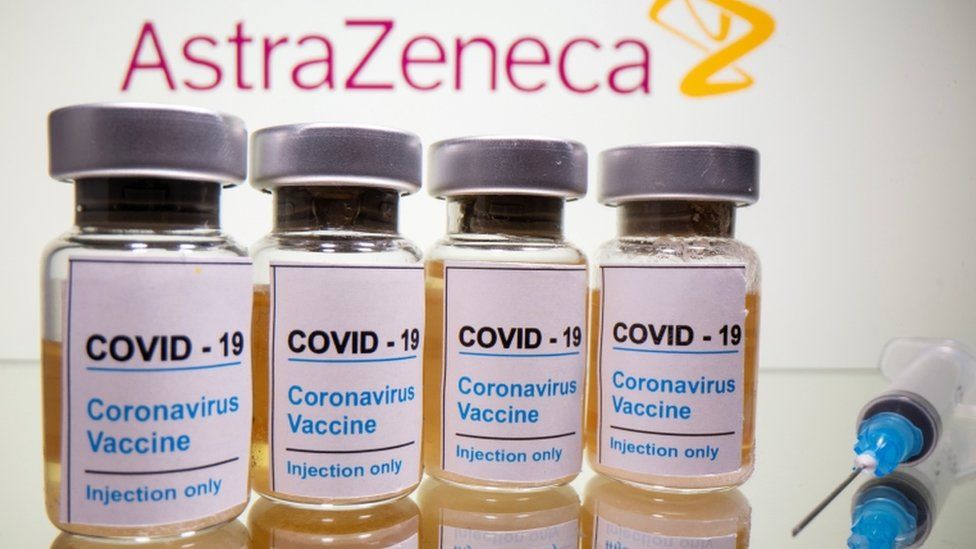
SharecloseShare pageCopy linkAbout sharingimage copyrightPA MediaPeople should still get their Covid vaccine despite several EU countries pausing use of the Oxford-AstraZeneca jab amid concern about blood clots, the UK medicines regulator has said.The Medicines and Healthcare products Regulatory Agency said evidence “does not suggest” the jab causes clots.The Netherlands has become the latest country to suspend use of the jab following reports of serious clotting.But the World Health Organization says there is no reason to stop using it.Dutch officials said the move was precautionary following reports from Denmark and Norway about side effects including blood clots.Manufacturer AstraZeneca has said there is no evidence of a link between the two.Netherlands suspends use of AstraZeneca vaccineNI to still use AstraZeneca amid Irish suspensionNo reason to stop using AstraZeneca jab – WHO Dr Phil Bryan, vaccines safety lead at the Medicines and Healthcare products Regulatory Agency (MHRA), said people “should still go and get their Covid-19 vaccine when asked to do so.””We are closely reviewing reports but given the large number of doses administered, and the frequency at which blood clots can occur naturally, the evidence available does not suggest the vaccine is the cause.”Prof Andrew Pollard, director of the Oxford vaccine group, said there were “huge risks” from Covid and vaccination saved lives.”It’s absolutely critical that we don’t have a problem of not vaccinating people and have the balance of a huge risk – a known risk of Covid – against what appears so far from the data that we’ve got from the regulators – no signal of a problem.”He added there was “very reassuring evidence that there is no increase in a blood clot phenomenon here in the UK, where most of the doses in Europe been given so far”The European Medicines Agency (EMA), which is carrying out a review into incidents of blood clots, said the vaccine’s benefits continue to outweigh its risks.The EMA said that, as of 10 March, there were just 30 reports of clots among almost five million people given the vaccine across Europe.What you need to know about vaccine safetyThe Republic of Ireland, Bulgaria, Denmark, Norway and Iceland have paused its use, as has Thailand.Italy and Austria have stopped using certain batches of the drug as a precautionary measure.Health officials in Northern Ireland have said they will continue to use the vaccine.AstraZeneca’s chief medical officer Ann Taylor said the number of cases of blood clots reported is lower than the hundreds of cases that would be expected among the general population.About 17 million people in the EU and the UK have received a dose of the Oxford-AstraZeneca vaccine, manufacturers said.AstraZeneca said its review had found no evidence of an increased risk of pulmonary embolism, deep vein thrombosis or thrombocytopenia, in any defined age group, gender, batch or in any particular country.Dr Taylor said: “The nature of the pandemic has led to increased attention in individual cases and we are going beyond the standard practices for safety monitoring of licensed medicines in reporting vaccine events, to ensure public safety.”More than 24 million people in the UK have received the first dose of a coronavirus vaccine, according to government figures.LOCKDOWN LIFTING: Four back to school worries and how to ease themFESTIVAL OF FUNNY: Liven up lockdown with some much-needed laughs. A celebration of comedy – from brand new stand-up specials to profiles of British icons

Read more →


Covid-19 pandemic: Trump urged to encourage supporters to get jabs

SharecloseShare pageCopy linkAbout sharingimage copyrightReutersThe top US infectious disease expert says it would be “a game-changer” if ex-President Donald Trump encouraged Republicans to get the Covid vaccine.”It will make all the difference in the world,” Dr Anthony Fauci told Fox News Sunday. “He’s a very widely popular person among Republicans.” A recent US opinion poll showed as many as 49% of Republican male supporters did not want to get vaccinated.Mr Trump last month said “everybody, go get your shot” at a conservative forum.It was the first time he publicly encouraged Americans to do so. He has not commented on the issue since then. Mr Trump, who was privately vaccinated in January, was absent when four other ex-presidents – Barack Obama, George W Bush, Bill Clinton and Jimmy Carter – appeared last week in a public service announcement for the vaccination.He remains a major force in the Republican party, getting a warm reception at the Conservative Political Action Conference (CPAC) at the end of last month. Imagining what 500,000 lost lives look likeWill vaccines work against the new variants?The US is by far the world’s worst-hit country by the pandemic, with more than 530,000 Covid-related deaths and nearly 29.5 million infections, according to Johns Hopkins University.What did Dr Fauci say?Dr Fauci, the chief medical adviser to President Joe Biden, told Fox News Sunday: “If he [Trump] came out and said ‘Go and get vaccinated, it’s really important for your health, the health of your family, and the health of the country’, it seems absolutely inevitable that the vast majority of people who are his followers would listen to him.”He’s such a strongly popular person. I cannot imagine that if he comes out that they would not get vaccinated.”Dr Fauci said the Trump administration was “very successful in getting us the vaccines we have right now”.”It seems like an intrinsic contradiction, the fact that you have a programme that was started during his presidency, and he’s not out telling people to get vaccinated.”I wish he would. He has such incredible influence over people in the Republican party – it would really be a game-changer if he did,” Dr Fauci said.The number of vaccine doses administered each day has been steadily rising in the US, and on Saturday alone about three million people got the jab – an achievement hailed by Dr Fauci.About one in five Americans have received at least one dose, with about one in nine fully vaccinated, the Associated Press news agency is quoting as saying America’s Centers for Disease Control and Prevention.Last week, Mr Biden said in his first primetime address as president that he was hopeful America could “mark independence” from Covid-19 on 4 July if people got vaccinated.Mr Biden previously set a target of 100 million vaccinations by his 100th day in office. But in his speech, he said this target would now be reached on day 60, which is 20 March.

Read more →

Psychedelic therapy could 'reset' depressed brain

SharecloseShare pageCopy linkAbout sharingimage copyrightGetty ImagesA powerful hallucinogenic drug known for its part in shamanic rituals is being trialled as a potential cure for depression for the first time.Participants will be given the drug DMT, followed by talking therapy. It is hoped this could offer an alternative for the significant number of people who don’t respond to conventional pills for depression.Psychedelic-assisted therapy might offer longer-term relief from symptoms, some researchers believe. A growing body of evidence indicates other psychedelic drugs, particularly alongside talking therapy, are safe and can be effective for treating a range of mental illnesses. This will be the first time DMT is given to people with moderate to severe depression in a clinical trial. Carol Routledge, the chief scientific officer of Small Pharma, the company running the trial said: “We believe the impact will be almost immediate, and longer lasting than conventional antidepressants.”‘Spirit molecule’The drug is known as the “spirit molecule” because of the way it alters the human consciousness and produces hallucinations that have been likened to a near-death experience. It is also the active ingredient in ayahuasca, a traditional Amazonian plant medicine used to bring spiritual enlightenment.Researchers believe the drug might help loosen the brain’s fixed pathways, which can then be “reset” with talking therapy afterwards.Ms Routledge likened the drug to “shaking a snow globe” – throwing entrenched negative thought patterns up in the air which the therapy allows to be resettled into a more functional form.But this hypothesis still needs to be proven.The team is consulting Imperial College London, which runs the pioneering Centre for Psychedelic Research.As part of the study, they hope to investigate whether the drug can be administered as a one-off or as part of a course.Subjects will be followed up for at least six months to see how long the effects of the treatment last. Ketamine clinicMeanwhile, a ketamine-assisted therapy clinic is set to open in Bristol next week.While the drug is already used for depression in clinics like the ketamine treatment service in Oxford, it is not accompanied by psychotherapy. Rather, it is used to provide temporary relief from symptoms for people who have very serious, treatment-resistant depression. So-far unpublished researched presented at a conference by professor of psychopharmacology at the University of Exeter, Celia Morgan, suggests ketamine accompanied by therapy has much longer-lasting effects. Prof Morgan said there was mounting evidence that drugs, including psilocybin, LSD, ketamine and MDMA (Ecstasy), were safe and could play a role in the treatment of mental health disorders.And there was some early evidence they could have longer-term effects than the medicines conventionally prescribed as antidepressants, known as SSRIs, but more research was needed.They also worked using a completely different mechanism, Prof Morgan explained. ‘Long-lasting change’While conventional drugs may numb negative feelings, “these drugs seem to allow you to approach difficult experiences in your life, sit with that distress and process them,” she said. “It might be getting at something more fundamental” that was the root cause of the problem, Prof Morgan said. “Through that we think you can get much more long-lasting change.”Prof Michael Bloomfield, a consultant psychiatrist at University College London, said although it was a “really exciting” area of research, caution was needed in overpromising the drugs’ potential. It was also a field of therapy that could be open to abuse and misuse, he said. Prof Morgan also stressed the importance the drugs being used within the context of therapy as there were concerns that “people might think they can give it a go with some recreational drugs”. “But it’s really not how it works” she said.

Read more →

A New Study Suggests Students Can Be Just 3 Feet Apart Safely

#masthead-section-label, #masthead-bar-one { display: none }The Coronavirus OutbreakliveLatest UpdatesMaps and CasesRisk Near YouVaccine RolloutGuidelines After VaccinationAdvertisementContinue reading the main storyCovid-19 News: Study Suggests 3 Feet of Distancing Is Enough in SchoolsA new study suggests 3 feet, not 6 feet, is sufficient distance for school students, with mask-wearing and other safety measures kept in place.March 14, 2021, 4:44 p.m. ETMarch 14, 2021, 4:44 p.m. ETAnna Artist, 6, working on her classwork at St. Mary’s School, a Catholic school in Lee, Mass., last month.Credit…Ben Garver/The Berkshire Eagle, via Associated PressSchool shutdowns have been a divisive topic during since the pandemic erupted, and a new study has ignited debate over the six-foot rule of social distancing and whether it can be relaxed in classroom settings, which would ease the way for children to return to schools.The new study, published last week in the journal Clinical Infectious Diseases, suggests public schools may be able to reopen safely for in-person instruction as long as children maintain three feet of distance between them, and with other mitigation measures maintained, such as wearing masks.Dr. Jill Biden and members of her husband’s administration have been traveling in a concerted campaign for reopening schools safely while parents and educators have grown increasingly frustrated by the off-again, on-again policies from district to district.Asked about the new report by Jake Tapper on CNN’s “State of the Union” program on Sunday, Dr. Anthony S. Fauci, the nation’s leading infectious disease expert, agreed the study appeared to indicate three feet would be sufficient distance to curb transmission of the virus.No official guidance on shortening the recommended six-foot rule has yet been issued by the Centers for Disease Control and Prevention, although Dr. Fauci said the agency is studying the data.“What the C.D.C. wants to do is accumulate data, and when data shows ability to be three feet, they will act accordingly,” Dr. Fauci said. He added that the agency’s director, Dr. Rochelle Walensky, was aware of the new research, and that the C.D.C. was also conducting its own studies. “I don’t want to get ahead of official guidelines,” he said.The Coronavirus Outbreak

Read more →

Covid-19: Ireland suspends use of Oxford-AstraZeneca vaccine

SharecloseShare pageCopy linkAbout sharingimage copyrightReutersThe use of the Oxford-AstraZeneca vaccine has been suspended in the Republic of Ireland.The National Immunisation Advisory Committee (NIAC) recommended the move following reports of serious blood clotting events in adults in Norway. In a tweet, the Irish Minister for Health Stephen Donnelly said it was a “precautionary step”.The World Health Organisation has said there was no link between the jab and an increased risk of developing a clot.Last week, Denmark and Norway suspended the use of vaccine.On Friday, the World Health Organisation said countries should not stop using the vaccine over fears it causes blood clots as there is no indication this is true.More than 110,000 doses of the AstraZeneca vaccine have been administered in Ireland, which is about 20% of all doses given to date.The decision to temporarily suspend use of the AstraZeneca Covid-19 vaccine was based on new information from Norway that emerged late last night. This is a precautionary step. The National Immunisation Advisory Comm meets again this morning and we’ll provide an update after that— Stephen Donnelly (@DonnellyStephen) March 14, 2021
The BBC is not responsible for the content of external sites.View original tweet on TwitterEarlier on Sunday, Ireland’s Deputy Chief Medical Officer Dr Ronan Glynn said new information was received from the Norwegian Medicines Agency on Saturday night.”It has not been concluded that there is any link between the Covid-19 vaccine AstraZeneca and these cases,” he said.”However, acting on the precautionary principle, and pending receipt of further information, the National Immunisation Advisory Committee has recommended the temporary deferral of the Covid-19 vaccine AstraZeneca vaccination programme in Ireland.”No reason to stop using AstraZeneca jab – WHO AstraZeneca defends EU vaccine rollout planIn a statement to RTÉ, AstraZeneca said that an analysis of safety data covering more than 17 million doses of the vaccine administered has shown no evidence of an increased risk of the conditions concerned, and that no trends or patterns were observed in clinical trials.”In fact, the reported numbers of these types of events for Covid-19 Vaccine AstraZeneca are not greater than the number that would have occurred naturally in the unvaccinated population,” said a spokesperson.”A careful review of all available safety data including these events is ongoing and AstraZeneca is committed to sharing information without delay.”In Northern Ireland, Deputy First Minister Michelle O’Neill tweeted that she had sought clarification from the health minister, Robin Swann, about the suspensions in Ireland and elsewhere.Have sought clarification from the Health Minister about the temporary suspension of use of the Astra Zeneca vaccine elsewhere, and what these developments may mean for the North. Be assured we will keep the public informed.— Michelle O’Neill (@moneillsf) March 14, 2021
The BBC is not responsible for the content of external sites.View original tweet on TwitterLast week, the Medicines and Healthcare products Regulatory Agency (MHRA) in the UK said people should continue to get vaccinated.”Blood clots can occur naturally and are not uncommon. More than 11 million doses of the Covid-19 AstraZeneca vaccine have now been administered across the UK,” said Phil Bryan of the MHRA.

Read more →

New tool to dissect 'undruggable' proteins through the sugars they depend on

Researchers have developed a new tool to study ‘undruggable’ proteins through the sugars they depend on. Almost 85 percent of proteins, including those associated with Alzheimer’s, Parkinson’s, inflammation, and certain cancers, are beyond the reach of current drugs. Now, with a new pencil/eraser tool, researchers can start to study how sugar molecules affect these proteins, insights that could lead to new treatments for the ‘undruggable.’
Sugar has been called “evil,” “toxic,” and “poison.” But the body needs sugars, too. Sugar molecules help cells recognize and fight viruses and bacteria, shuttle proteins from cell to cell, and make sure those proteins function. Too much or too little can contribute to a range of maladies, including neurodegenerative diseases like Alzheimer’s, inflammation, diabetes, and even cancer.
About 85 percent of proteins, including those associated with Alzheimer’s and Parkinson’s, are beyond the reach of current drugs. One critical and abundant sugar (O-GlcNAc, pronounced o-glick-nack) is found on over 5,000 proteins, often those considered “undruggable.” But now, researchers at Harvard University have designed a new highly-selective O-GlcNAc pencil and eraser — tools that can add or remove the sugar from a protein with no off-target effects — to examine exactly what these sugars are doing and, eventually, engineer them into new treatments for the “undruggable.”
“We can now start studying particular proteins and see what happens when you add or remove the sugar,” said Daniel Ramirez, a co-author on the paper published in Nature Chemical Biology and a Ph.D. candidate in biological and biomedical sciences in the Graduate School of Arts and Sciences. “This is turning out to be very important for a lot of chronic diseases like cancer and diabetes and Alzheimer’s.”
Ramirez designed the original O-GlcNAc pencil, which was reported in ACS Chemical Biology.
All cells carry a multitude of sugars (called glycans), but they’re notoriously hard to study. Current tools either provide a wide-lens view (turning on or off all the O-GlcNAc in a cell) or an ultra-zoomed in view (turning on or off a single sugar on one amino acid on one protein). Neither of these perspectives can show what O-GlcNAc molecules are doing to a protein as a whole, the crucial insight that would enable researchers to connect the dots from O-GlcNAc to disease.

advertisement

“With the protein-level approach, we’re filling in an important piece that was missing,” said Christina Woo, an associate professor of chemistry and chemical biology, who led the study. Her lab’s tool is like Goldilocks’ lukewarm bowl of porridge: Not too broad, not too specific. Just right.
“Once you have any protein of interest,” said first-author and postdoctoral scholar Yun Ge, “you can apply this tool on that protein and look at the outcomes directly.” Ge engineered the O-GlcNAc eraser, which, like the pencil, uses a nanobody as a protein homing device. The tool is adaptable, too; as long as a nanobody exists for a protein of choice, the tool can be modified to target any protein for which a homing nanobody exists.
The nanobody is a crucial component, but it has limitations: Whether or not it remains stuck to the target protein is still in question, and the molecule could alter the function or structure of the protein once stuck. If cellular changes can’t be definitively linked to the sugar on the protein, that muddies the data.
To skirt these potential limitations, the team engineered their pencils and erasers to be “catalytically dead,” said Woo. The neutered enzymes won’t make unwanted changes along the way to their target protein. And, they can both add and remove sugars, unlike previous tools, which cause permanent changes. Of course, once they connect a specific protein function to O-GlcNAc, they can then use those tools to zoom in and locate exactly where those sugars are latching onto and modifying the protein.
Already, a few of the Woo lab’s collaborators are using the pencil/eraser combo to study O-GlcNAc in live animals. One, for example, is using fruit flies to study how the sugar impacts a protein associated with Alzheimer’s disease. The sugar is also associated with Parkinson’s disease progression: “If you’re taking in less glucose,” said co-author Ramirez, “then you’re not able to produce this sugar inside the cells.” That means the body can’t attach the sugars to the proteins, which causes wide-reaching changes to the cells, aggravating the disease. In diabetes, excess sugars cause similar global disruption; and cancer cells tend to eat lots of sugars. Now, with the Woo lab’s pencil/eraser pair, researchers can identify exactly how these sugars impact various proteins and start to design drugs to reverse negative effects.
Next, the team plans to tweak their tool to achieve even greater control. With optogenetics, for example, they could switch sugars on or off with just a flash of light. Swapping out nanobodies for small molecules (used in traditional drug design), they could edge closer to new treatments. They’re also designing an eraser for the eraser — a tool with a kill switch — and plan to incorporate nanobodies that can target a naturally-occurring protein (for this study, they tagged proteins so the nanobody could find them). “We’re basically trying to make the system more natural and function the way the cell does,” said Ramirez.
Woo also plans to investigate how O-GlcNAc may influence traditionally “undruggable” proteins called transcription factors, which turn genes on and off. If O-GlcNAc plays a role in that process, the sugars could be engineered to study and regulate gene function, too.
“We really don’t know what people are going to find once we give them these tools,” said Ramirez. The tool may be new, but the potential is great: “We’re on the iPhone one, basically,” he continued, “but we’re already working on the next couple generations.”

Read more →

Exhaustion linked with increased risk of heart attack in men

Men experiencing vital exhaustion are more likely to have a heart attack, according to research presented today at ESC Acute CardioVascular Care 2021, an online scientific congress of the European Society of Cardiology (ESC).1 The risk of a myocardial infarction linked with exhaustion was particularly pronounced in never married, divorced and widowed men.
“Vital exhaustion refers to excessive fatigue, feelings of demoralisation and increased irritability,” said study author Dr. Dmitriy Panov of the Institute of Cytology and Genetics, Novosibirsk, Russian Federation. “It is thought to be a response to intractable problems in people’s lives, particularly when they are unable to adapt to prolonged exposure to psychological stressors.”
This study examined the relationship between vital exhaustion and the risk of myocardial infarction in men with no history of cardiovascular disease. The study used data from the World Health Organization (WHO) MONICA Project.2 A representative sample of 657 men aged 25 to 64 years in Novosibirsk was enrolled in 1994.
Symptoms of vital exhaustion were assessed at baseline using the Maastricht Vital Exhaustion Questionnaire adopted by the MONICA protocol. Participants were classified according to their level of vital exhaustion: none, moderate, or high. Participants were followed-up for 14 years for the incidence of heart attack.
Overall, two-thirds (67%) of the men had vital exhaustion (15% had a high level and 52% had a moderate level) while 33% were unaffected. Nearly three-quarters (74%) of men with high blood pressure had vital exhaustion — high in 58% and moderate in 16%.
In the overall group of men, the researchers analysed the association between vital exhaustion at baseline and the risk of having a heart attack. Compared to those without vital exhaustion, men with moderate or high levels had a 2.7-fold greater risk of a heart attack within five years, a 2.25 higher risk within 10 years, and a 2.1 raised risk within 14 years (p for all

Read more →

Alabama Could Allow Yoga in Public Schools After a 28-Year Ban

AdvertisementContinue reading the main storySupported byContinue reading the main storyAfter a 28-Year Ban, Alabama Could Allow Yoga in Public Schools“It’s just exercise,” said Jeremy Gray, a state lawmaker whose bill is making its way through the Legislature. But some people still say the practice has no place in the classroom.A yoga class in Birmingham, Ala. In 1993, parents in the state were raising concerns not only about yoga but also about hypnotism and “psychotherapeutic techniques.”Credit…Audra Melton for The New York TimesMarch 13, 2021, 9:57 a.m. ETFor nearly three decades, teaching yoga in Alabama’s public schools has been forbidden by the state’s school board.One lawmaker, Jeremy Gray, has been trying to change that since 2019. He made progress on Thursday, when the state’s House of Representatives passed a bill that would override the ban. The bill, which was approved by a vote of 73 to 25, will soon be taken up by the Senate.Mr. Gray, a Democrat representing Opelika, has taught and practiced yoga for years. He said that while some conservative legislators in the state might have opposed yoga because of its associations with Hinduism, officials on both sides of the aisle had been slowly warming to the idea.“Most of the senators that I’ve talked to are OK with it,” Mr. Gray said. “A lot of people in their districts have reached out to them, and a lot of their wives actually do yoga. So I think it has a good chance of passing.”His legislation would override a 1993 school board regulation that says that “school personnel shall be prohibited from using any techniques that involve the induction of hypnotic states, guided imagery, meditation or yoga.”The yoga bill is far from the only issue on the docket for Alabama lawmakers. Mr. Gray also has other legislative priorities, such as providing clean water for schools and improving the state’s policies on expunging criminal records.But because it hits at the intersection of some combustible issues — religion, culture and children’s education — the yoga bill has captured outsize news media attention. This year and last year, it was covered by multiple local, state and national news outlets, including The New York Times.Eric Johnston, a legal adviser for the Alabama Citizens Action Program, or ALCAP, a church-supported group that holds substantial influence in the Legislature, said the group intended to fight the bill when it reaches the Senate.Yoga is “a very important part of the Hindu religion,” he said. “As such, it does not need to be taught to small children in public schools.”Mr. Gray pointed out that his bill would allow schools and students to make their own decisions about whether to offer or participate in yoga classes. It also says that public schoolteachers cannot say “namaste,” a greeting often used in yoga, or any kind of chant.“You have to compromise in order to get that bipartisan support,” he said.Mr. Gray came across the issue largely by chance. In a speech at a public high school in Auburn, Ala., in 2019, he mentioned that yoga had helped him stay grounded while juggling responsibilities.After his remarks, teachers told him that they had been unable to arrange exercises for their students. “That’s how I learned it was banned,” Mr. Gray said.Around the time of the ban in 1993, parents in the state were raising concerns not only about yoga but also about hypnotism and “psychotherapeutic techniques.” According to an April 1993 article in The Anniston Star, one mother in Birmingham said her child had brought a relaxation tape home from school that made a boy “visibly high,” The Montgomery Advertiser reported.But for Mr. Gray, a former football player, yoga has long been a useful part of his exercise regimen. The gentle stretches helped him cool down after practices, he said, while the breathing exercises strengthened his lungs. (That, he added, may have helped him recover quickly from a bout of Covid-19 last year.)He introduced his first bill to challenge the yoga ban in 2019, but it quickly failed. His second attempt passed the House in 2020 but was put on the back burner because of the pandemic.This time, Mr. Gray is optimistic about the bill’s prospects. He said a Republican senator, Tom Whatley, had agreed to carry the legislation forward in the Senate, where, like the House, Republicans have a majority. (Mr. Whatley did not immediately respond to an email seeking comment on Friday.)Mr. Johnston, the adviser for ALCAP, which opposes the yoga bill, said he did not oppose the practice of yoga. “I think yoga is widely accepted, and even some Christian churches have yoga classes,” he added.But he framed the practice as inseparable from Hinduism, and therefore subject to the constitutional separation of religion and state. “You cannot have any kind of religious activities in elementary schools,” he said.Mr. Gray disagreed. “It’s just exercise,” he said. “We do it all the time in the gym. It’s not a big deal.”AdvertisementContinue reading the main story

Read more →

Covid: Jordan's health minister quits over hospital oxygen deaths

SharecloseShare pageCopy linkAbout sharingimage copyrightReutersJordan’s health minister has resigned after six people died due to a lack of oxygen at a hospital ward treating Covid-19 patients, state media report. The deaths were reported early on Saturday at a new government facility in the town of Salt, about 14 miles (23km) west of the capital, Amman.Prime Minister Bisher al-Khasawneh had asked Health Minister Nathir Obeidat to step down over the incident. Police were sent to the hospital after dozens of relatives turned up.The oxygen shortage, which lasted for about an hour, reportedly also affected intensive care and maternity units at the facility, although there were no reports of fatalities on those wards. It is not yet clear why there was an oxygen shortage and an investigation is under way, Mr Obeidat said. The health minister had earlier said he felt a “moral responsibility” for what had happened. A forensic doctor at Jordan’s health ministry, Dr Adnan Abbas, told Petra news agency that all six patients who died on Saturday were being treated for coronavirus. image copyrightReutersDozens of relatives whose family members were receiving treatment at the Salt hospital turned up at the facility following the news, but were prevented from entering by police and security personnel. One relative, Fares Kharabsha, said he was inside the hospital when the incident occurred and saw staff carrying portable oxygen devices to patients, AP news agency reported.”They resuscitated a large number of people, including my father and mother,” he said, adding: “I saw people who died.”Jordan’s King Abdullah II has visited the hospital since the incident, Reuters news agency reported. The country has so far reported more than 460,000 cases of Covid-19 and 5,224 coronavirus-related deaths since the start of the pandemic.Jordan has stepped up measures to reduce the spread of the virus in recent weeks as cases have steadily increased since late January. Restrictions include overnight curfews at weekends, which prevent prayers inside mosques and masses in churches. The country, which has a population of about 10 million, began its vaccination programme in January. You might also be interested in:Covid-19: Tracking the global pandemic in maps and chartsHow will I know if I have coronavirus?

Read more →

Ebola Survivor Infected Years Ago May Have Started New Outbreak

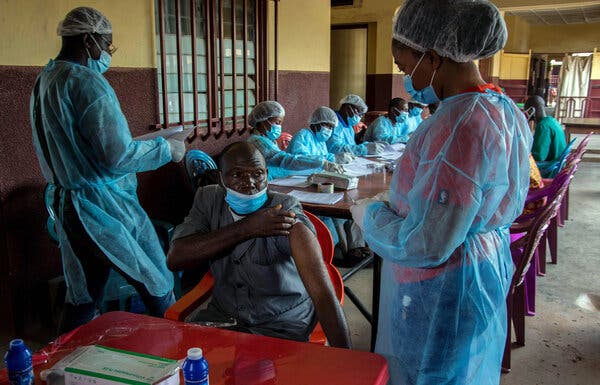
AdvertisementContinue reading the main storySupported byContinue reading the main storyEbola Survivor Infected Years Ago May Have Started New OutbreakGenetic sequencing of virus samples from patients in Guinea suggest that the new outbreak is a continuation of the 2014-16 epidemic.Researchers were shocked to discover that an Ebola outbreak in Guinea was most likely started by a man infected at least five years ago. Here a hospital worker in Guinea is given an Ebola vaccine.Credit…Carol Valade/Agence France-Presse — Getty ImagesMarch 12, 2021, 10:31 p.m. ETAn Ebola outbreak now occurring in Guinea was almost certainly started by someone who survived West Africa’s historic 2014-16 epidemic, harbored the virus for at least five years and then transmitted it via semen to a sex partner, researchers reported on Friday.The finding, based on genetic sequencing of virus samples taken from patients in the current outbreak, shocked researchers. Until now, the longest the virus had been known to persist in a survivor was 500 days.“It’s a stunner,” Dr. William Schaffner, an infectious-disease expert at Vanderbilt University who was not involved in the research, said in an interview. “This is an extraordinary phenomenon.”The current outbreak in Guinea was first recognized in January and has infected at least 18 people and killed nine.The discovery that a survivor most likely started the outbreak has profound implications. West Africa’s previous epidemic infected more than 28,000 people, killed more than 11,000 and left thousands of survivors, some of whom were already being shunned because of fears about the disease. The prospect that those who survived might be infectious for years is likely to worsen their plight.The new finding also raises the possibility that other outbreaks in the region, assumed to have begun with transmission from animals, may actually have been started by survivors with unrecognized, lingering infections.One possible solution, Dr. Schaffner said, would be “to vaccinate much of equatorial Africa” against Ebola even where there is no current outbreak. Effective vaccines are available, one made by Merck and another by Johnson & Johnson, but so far they have generally been used only in response to outbreaks.People recover from Ebola when their immune systems wipe out the virus. But certain parts of the body, including the eye, the central nervous system and the testes are so-called privileged sites, beyond the reach of the immune system. The virus can sometimes hide in those spots. But no one knew it could hide out for so long.“We have no idea how often this may be happening,” Dr. Schaffner said. “Some studies are underway. As you can imagine, it’s not easy to study hiding viruses in immunologically privileged sites, like the testicles, the eye and, rarely, the central nervous system. Those are not accessible places for easy study.”Genetic sequences of virus samples from the current patients were compared to those from the 2014-16 outbreak and were found to be so similar that they had to be closely related, researchers said. The report, posted online on Friday, involved researchers from the Guinea Ministry of Health, other labs in that country, Senegal’s Pasteur Institute, the University of Edinburgh, the University of Nebraska Medical Center and the company PraesensBio.The findings were reported earlier on Friday by Science and Stat.“There are very few genomic changes, and for those to occur, the virus has to multiply,” Dr. Schaffner said. “I think the virus is in hibernation for the most part.”“Among other things, it shows you what brilliant insights molecular whole-genome sequencing can provide,” he said. “Till this moment, all of us thought the current outbreak was a consequence of transmission from nature, from bats. But it likely came from a human reservoir.”Michael Wiley, a virologist at the University of Nebraska Medical Center and the chief executive of PraesensBio, which provided materials used to study the samples, described the current outbreak as a “continuation” of the previous one.He said persistent infections and sexual transmission had already been recognized during the West African outbreak and during one in the Democratic Republic of Congo. Each new milestone for viral persistence has come as a shock, he said: first 180 days, then 500 days, and now more than five years after the initial infection.The U.S. Centers for Disease Control and Prevention said in a statement provided by its spokesman, Thomas Skinner: “CDC has reviewed the sequencing data from samples taken during the current outbreak in Guinea. While we can’t be 100 percent certain, CDC agrees that data supports the conclusion that cases in the current outbreak are likely linked to cases in the area during the 2014-2016 West Africa Ebola outbreak.”He added: “This suggests the outbreak was likely started from a persistent infection, a survivor, and not a new introduction of the virus from the animal reservoir. While we have seen outbreaks in the Democratic Republic of Congo linked to survivors, the length of time between the end of the 2014-2016 outbreak and the emergence of this outbreak is surprising and highlights the need for further research to better understand the complex epidemiology and ecology of Ebola.”Dr. Ian Lipkin, a virologist at Columbia University, said that after male patients had several semen samples that tested negative for Ebola, they were generally assumed to have cleared the virus, but that that was not always a correct assumption.“Somebody who had Ebola should probably be monitored on a regular basis to make sure they’re negative and remain negative,” he said.AdvertisementContinue reading the main story

Read more →