A Rift in Trump World Over How to Make America Healthier

Statements by Robert F. Kennedy Jr. and Elon Musk tap into a dispute over whether lifestyle changes or drugs are a better way to treat obesity.For Robert F. Kennedy Jr., the activist whom President-elect Donald J. Trump will nominate to serve as the secretary of health and human services, the solution to obesity in America — now at 40 percent of adults — is straightforward: “The first line of response should be lifestyle,” he told Jim Cramer in a Dec. 12 interview on CNBC.Elon Musk, the technology billionaire who advises the president-elect, sees things differently: “Nothing would do more to improve the health, lifespan and quality of life for Americans than making GLP inhibitors super low cost to the public,” he wrote on X, referring to the new class of drugs that cause weight loss, including Ozempic. “Nothing else is even close.”And there, with the contrasting views of two men in Mr. Trump’s ear, lie two sides of an issue that is plaguing health and nutrition researchers. Is it even possible to change lifestyles and the food environment enough to solve America’s obesity problem? And, if not, do we really want to solve it by putting millions of people on powerful drugs? What is the right balance between the two approaches?Many people find that eating well is easier said than done. Food companies have saturated the United States and other nations with seductively cheap and tasty things to eat, available seemingly everywhere and around the clock. Obesity researchers suspect that the current food environment has allowed many Americans to be as overweight as they possibly can be.But for the first time, there is an effective countervailing force — powerful new obesity drugs like Wegovy and Zepbound that allow people to ignore the siren call of high-calorie foods and large portion sizes.Those with views like Mr. Kennedy’s believe it is wrong to use pharmaceuticals to manage obesity and related issues that are tied to unhealthy lifestyle and to a ruinous food environment. The makers of obesity drugs, Mr. Kennedy told Greg Gutfeld on Fox News before the election, are “counting on selling it to Americans because we’re so stupid and so addicted to drugs.”We are having trouble retrieving the article content.Please enable JavaScript in your browser settings.Thank you for your patience while we verify access. If you are in Reader mode please exit and log into your Times account, or subscribe for all of The Times.Thank you for your patience while we verify access.Already a subscriber? Log in.Want all of The Times? Subscribe.

Read more →


Tiny Coffins: Measles Is Killing Thousands of Children in Congo

Werra Maulu Botey could not bear to close his daughter’s coffin. Waiting to bury her, he slid the rough wooden lid back, again and again, to adjust her small head and smooth the cloth that cradled it away from her cheeks.Olive died of measles, at the age of 5, the evening before. She was the first child to die that weekend in an emergency measles treatment center in the town of Bikoro, in the northwest Democratic Republic of Congo. The second was her cousin, a 1-year-old girl.Measles is sweeping through the children of Bikoro, as it does every couple of years, creeping, then flaring, across this vast country.It is on the rise in other parts of the world, too — including in some communities in the United States — though the measles vaccine has been in use since 1963 and is believed to have saved more lives than any other childhood immunization.There were more than 311,000 reported cases of measles in Congo last year. Some 6,000 of them ended as Olive’s did: with a child buried in a small coffin days after first running a fever and breaking out in a red rash. This year, cases have been fewer — about 97,000 — but the virus has become more lethal, killing more than 2,100. It’s not clear why.Globally, there were 20 percent more measles cases in 2023 than in the year before, according to the World Health Organization, for a total of 10.3 million, and more than 107,000 people died. Fifty-seven countries had “large or disruptive” outbreaks, the W.H.O. said, nearly 60 percent more than in 2022.We are having trouble retrieving the article content.Please enable JavaScript in your browser settings.Thank you for your patience while we verify access. If you are in Reader mode please exit and log into your Times account, or subscribe for all of The Times.Thank you for your patience while we verify access.Already a subscriber? Log in.Want all of The Times? Subscribe.

Read more →

What RFK Jr. Has Said About the Polio Vaccine in Recent Years

Robert F. Kennedy Jr. began a tour of Capitol Hill this week to pay courtesy calls on senators who will vote on his nomination to be health secretary and to calm concerns that he would limit access to vaccines, especially for polio. “I’m all for the polio vaccine,” Mr. Kennedy said to a throng of reporters on Monday.President-elect Donald J. Trump also sought to head off inevitable questions.“You’re not going to lose the polio vaccine,” Mr. Trump declared during a news conference on Monday. “That’s not going to happen.”But a New York Times review of Mr. Kennedy’s public comments over the past several years shows that he has consistently expressed views about the polio vaccine that are at odds with the medical consensus. For example, he has suggested that after the vaccine was first introduced, it might have caused a wave of cancers “that killed many, many, many, many, many more people than polio ever did.” And he has said the idea that the vaccine resulted in a drastic decline in polio cases is “a mythology” that is “just not true.”His opinions on the polio vaccine have come under scrutiny since an article in The New York Times reported on Friday that Aaron Siri, a lawyer who is advising Mr. Kennedy during the transition, had filed petitions on behalf of a nonprofit to revoke federal approval of the standalone polio vaccine, known as IPOL, and to pause distribution of 13 other shots, some of which include polio immunization.Mr. Kennedy’s spokeswoman, Katie Miller, also weighed in Monday in an email message: “Mr. Kennedy believes the polio vaccine should be available to the public and thoroughly and properly studied.”Here is an analysis of some of Mr. Kennedy’s statements about the polio vaccine.On the polio vaccine’s effectivenessOn a podcast posted on July 6, 2023, with the computer scientist Lex Fridman, Mr. Kennedy said that “there’s no vaccine that is, you know, safe and effective,” a statement he later walked back. Mr. Fridman challenged him: “Those are big words. What about polio?”We are having trouble retrieving the article content.Please enable JavaScript in your browser settings.Thank you for your patience while we verify access. If you are in Reader mode please exit and log into your Times account, or subscribe for all of The Times.Thank you for your patience while we verify access.Already a subscriber? Log in.Want all of The Times? Subscribe.

Read more →

Alabama Woman Receives Nation’s Third Pig Kidney Transplant

A 53-year-old Alabama woman with kidney failure who waited eight years for an organ transplant has received a kidney harvested from a genetically modified pig, NYU Langone Health surgeons announced on Tuesday.The patient, Towana Looney, went into surgery just before Thanksgiving. She was in better health than others who have received porcine organs to date and left the hospital 11 days after the procedure.But Ms. Looney returned on Friday for a series of intravenous infusion treatments. Even before the transplant, she had high levels of antibodies that made it difficult to find a compatible human donor kidney.The case will be closely watched by the transplant community, as success could speed initiation of a clinical trial, bringing pig transplants closer to reality and helping to solve the organ-supply shortage.Since the transplant, Ms. Looney has been off dialysis, doctors said, and her blood pressure, stubbornly high for decades despite a cocktail of medications, is now controlled.The kidney she received started making urine even before she woke from surgery, and blood tests show it is clearing creatinine, a waste product, from her body. We are having trouble retrieving the article content.Please enable JavaScript in your browser settings.Thank you for your patience while we verify access. If you are in Reader mode please exit and log into your Times account, or subscribe for all of The Times.Thank you for your patience while we verify access.Already a subscriber? Log in.Want all of The Times? Subscribe.

Read more →

People Are Putting Beef on Their Faces. What Could Go Wrong?

Natural, tallow-based cosmetics can be made at home or bought from artisans. Doctors aren’t thrilled, but they’re all the rage on TikTok.Beauty content creators on TikTok have found an audience hungry for products made from beef fat.Sascha Green, Savanna DiMuccioWhen Sascha Green goes to Costco, she buys ground pork, turkey and chicken breasts for a week of dinners. And then she gets steak for her face.It may seem gross, but beef tallow — rendered fat from around a cow’s organs — has become a popular ingredient in cosmetic products. Customers swear by its natural moisturizing properties while businesses have begun selling tallow-based creams to meet the demand. But dermatologists warn that just because something’s natural doesn’t mean you should put it on your face.“I give it a thumbs down from the scientific and dermatologic perspective,” said Dr. Zakia Rahman, a clinical professor of dermatology at Stanford University School of Medicine. “It could potentially cause acne flares or cause irritation.”Still, many people swear by its benefits. Last year, Ms. Green, 28, stopped spending a fortune on a litany of skin care products when she started seeing TikToks from people promoting what they described as a natural miracle ingredient that’s cheaper than Sephora products.“I made my own to start, just by getting meat from Costco and stripping the fat off the meat and rendering it,” said Ms. Green, who lives in Hillsdale, Ind., about 70 miles west of Indianapolis. In a video documenting her process, she cooked the fat repeatedly with water and salt, removing brown-colored impurities until she was left with a white, waxy disk. She then whipped it up with essential oils and declared it ready.We are having trouble retrieving the article content.Please enable JavaScript in your browser settings.Thank you for your patience while we verify access. If you are in Reader mode please exit and log into your Times account, or subscribe for all of The Times.Thank you for your patience while we verify access.Already a subscriber? Log in.Want all of The Times? Subscribe.

Read more →

Drugmakers Paid PBMs Not to Restrict Opioid Prescriptions

In 2017, the drug industry middleman Express Scripts announced that it was taking decisive steps to curb abuse of the prescription painkillers that had fueled America’s overdose crisis. The company said it was “putting the brakes on the opioid epidemic” by making it harder to get potentially dangerous amounts of the drugs.The announcement, which came after pressure from federal health regulators, was followed by similar declarations from the other two companies that control access to prescription drugs for most Americans.The self-congratulatory statements, however, didn’t address an important question: Why hadn’t the middlemen, known as pharmacy benefit managers, acted sooner to address a crisis that had been building for decades?One reason, a New York Times investigation found: Drugmakers had been paying them not to.For years, the benefit managers, or P.B.M.s, took payments from opioid manufacturers, including Purdue Pharma, in return for not restricting the flow of pills. As tens of thousands of Americans overdosed and died from prescription painkillers, the middlemen collected billions of dollars in payments.The details of these backroom deals — laid out in hundreds of documents, some previously confidential, reviewed by The Times — expose a mostly untold chapter of the opioid epidemic and provide a rare look at the modus operandi of the companies at the heart of the prescription drug supply chain.The P.B.M.s exert extraordinary control over what drugs people can receive and at what price. The three dominant companies — Express Scripts, CVS Caremark and Optum Rx — oversee prescriptions for more than 200 million people and are part of health care conglomerates that sit near the top of the Fortune 500 list.We are having trouble retrieving the article content.Please enable JavaScript in your browser settings.Thank you for your patience while we verify access. If you are in Reader mode please exit and log into your Times account, or subscribe for all of The Times.Thank you for your patience while we verify access.Already a subscriber? Log in.Want all of The Times? Subscribe.

Read more →
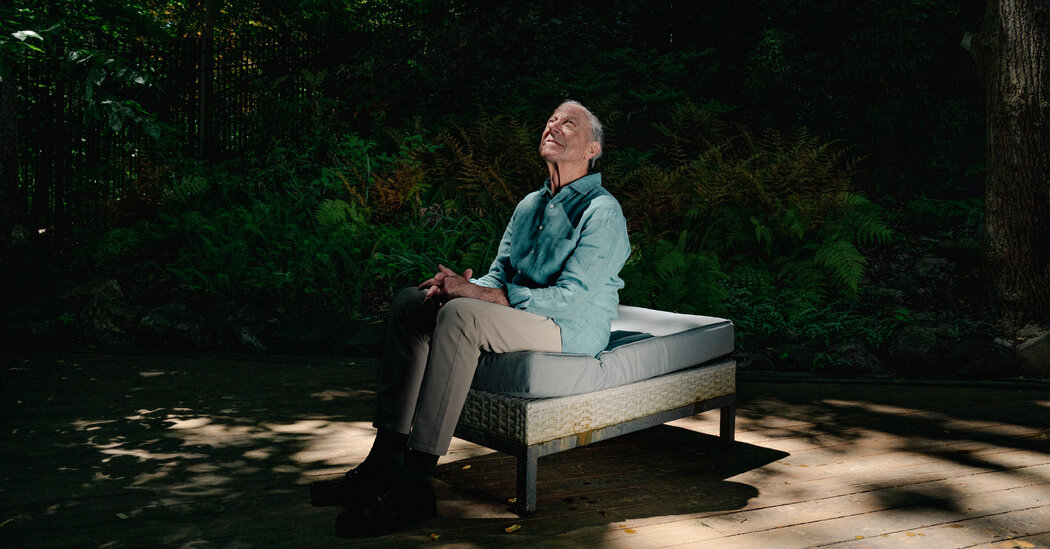
‘LIfe-Changing’ Psychedelic, for When Life Is Ending

Barry Blechman, 81, an international relations analyst with metastatic bladder cancer, traveled last winter from his home in Washington, D.C., to a clinic in Bend, Ore., where he drank a tea containing psilocybin, the psychoactive component of magic mushrooms. He then stretched out on the floor and closed his eyes.When he phoned his wife, Kitty, 10 hours later, she was startled by the levity in his voice. “He sounded 20 years younger, like a weight had been lifted off him,” she said.In the months since, the angst and depression triggered by his cancer diagnosis no longer hound him, Mr. Blechman said, and he has gained profound insights into aspects of his personality he believes negatively affected his relationships.“Psilocybin therapy has been a life-changing experience,” he said.Mr. Blechman is among the thousands of Americans with serious medical conditions who have turned to psychedelic medicine to address the anxiety and existential distress that often accompany a potentially terminal diagnosis.Those who can afford the $2,000 treatments have been flocking to psilocybin clinics in Oregon, the only state besides Colorado where they can legally operate. (Colorado’s psilocybin program begins in 2025.) Many more have been trying ketamine in their therapist’s office or at home.Although not a classic psychedelic like LSD and psilocybin, ketamine, a powerful anesthetic, is widely considered a psychedelic therapy because of its effects. It can be legally prescribed “off label” for psychiatric conditions, and it is far less expensive than psilocybin therapy.We are having trouble retrieving the article content.Please enable JavaScript in your browser settings.Thank you for your patience while we verify access. If you are in Reader mode please exit and log into your Times account, or subscribe for all of The Times.Thank you for your patience while we verify access.Already a subscriber? Log in.Want all of The Times? Subscribe.

Read more →