Genetic and cellular mechanisms of Crohn's disease

Mount Sinai researchers have identified genetic and cellular mechanisms of Crohn’s disease, providing new insights for future treatments that could offer a tailored approach to patients with the chronic inflammatory disease, according to a study published in Nature on March 31.
The researchers found that blocking the common cytokine receptor subunit gp130 may benefit some patients with Crohn’s disease and could complement a standard treatment for moderate to severe Crohn’s disease known as anti-tumor necrosis factor (TNF) treatment. This treatment uses medications known as TNF inhibitors to block white blood cells producing the protein TNF, which causes the inflammation.
Crohn’s disease is a chronic inflammatory intestinal disease with frequent abnormal healing and complications that narrow or constrict passage through the digestive tract. Complications associated with Crohn’s disease are driven by communication between cells called macrophages that detect and destroy harmful bacteria or organisms, and cells known as fibroblasts that aid with wound healing. Mount Sinai researchers analyzed inflamed and normal tissues of the small intestine in humans, and zebrafish models of intestinal injury, and showed that a dysregulated macrophage-fibroblast niche can be driven by Crohn’s disease-associated mutations in the gene NOD2.
These findings are reported on the 20th anniversary of the discovery by Judy H. Cho, MD, Dean of Translational Genetics and Director of The Charles Bronfman Institute for Personalized Medicine at the Icahn School of Medicine at Mount Sinai, her colleagues, and others that genetic variants that cause the protein produced by NOD2 to lose function are associated with increased risk for Crohn’s disease. NOD2 recognizes bacterial components, and the intestinal immune system is exposed to high bacterial concentrations in both healthy and diseased states. However, the reasons why mutations in NOD2 cause increased risk for Crohn’s disease and why some patients do not respond to anti-TNF medications remained incompletely defined until now. Patients carrying NOD2 mutations have increased activated fibroblast and macrophage gene expression, and in particular, elevated gp130-related gene expression. Given this finding, the researchers believe that blocking the protein gp130 may help patients who are nonresponsive to the treatment of anti-TNF medications.
“Our work defines a completely new mechanism whereby NOD2 mutations confer risk, namely through altered differentiation of newly recruited blood monocytes over time,” says Dr. Cho. “It sharpens current research efforts involved in serial tissue and blood analyses to define how non-response or loss-of-response to anti-TNF therapies may be improved.”
Shikha Nayar, the study’s first author and a PhD candidate in Dr. Cho’s lab at Icahn Mount Sinai, said the findings could provide a more custom-made approach to future patient care. “We’ve developed novel in vivo and in vitro models to define mechanisms and timing of disease progression,” she says. “These studies may help tailor treatments more effectively for Crohn’s disease patients carrying NOD2 mutations and elevated signatures we have described.”
The Department of Pediatric Gastroenterology at Emory University contributed to the study. This work was also supported by National Institutes of Health (NIH) grants R01 DK106593, R01 DK123758-01, U01 DK062422 (to J.H.C.).
Story Source:
Materials provided by The Mount Sinai Hospital / Mount Sinai School of Medicine. Note: Content may be edited for style and length.
Read more →

Regenerating hair follicle stem cells

Harvard University researchers have identified the biological mechanism of how chronic stress impairs hair follicle stem cells, confirming long-standing observations that stress might lead to hair loss.
In a mouse study published in the journal Nature, the researchers found that a major stress hormone causes hair follicle stem cells to stay in an extended resting phase, without regenerating the hair follicle and hair. The researchers identified the specific cell type and molecule responsible for relaying the stress signal to the stem cells, and showed that this pathway can be potentially targeted to restore hair growth.
“My lab is interested in understanding how stress affects stem cell biology and tissue biology, spurred in part by the fact that everyone has a story to share about what happens to their skin and hair when they are stressed. I realized that as a skin stem cell biologist, I could not provide a satisfying answer regarding if stress indeed has an impact — and more importantly, if yes, what are the mechanisms,” said Ya-Chieh Hsu, Ph.D., the Alvin and Esta Star Associate Professor of Stem Cell and Regenerative Biology at Harvard and senior author of the study. “The skin offers a tractable and accessible system to study this important problem in depth, and in this work, we found that stress does actually delay stem cell activation and fundamentally changes how frequently hair follicle stem cells regenerate tissues.”
The hair follicle is one of the few mammalian tissues that can undergo rounds of regeneration throughout life, and has become a paradigm that informs much of our fundamental understanding of mammalian stem cell biology. The hair follicle naturally cycles between growth and rest, a process fueled by hair follicle stem cells. During the growth phase, hair follicle stem cells become activated to regenerate the hair follicle and hair, and hairs grow longer each day. During the resting phase, the stem cells are quiescent and hairs can shed more easily. Hair loss can occur if the hairs shed and the stem cells remain quiescent without regenerating new tissue.
The researchers studied a mouse model of chronic stress and found that hair follicle stem cells stayed in a resting phase for a very long time without regenerating tissues. A major stress hormone produced by the adrenal glands, corticosterone, was upregulated by chronic stress; providing corticosterone to mice was able to reproduce the stress effect on the stem cells. The equivalent hormone in humans is cortisol, which is also upregulated under stress and is often referred to as the “stress hormone.”
“This result suggests that elevated stress hormones indeed have a negative effect on hair follicle stem cells,” Hsu said. “But the real surprise came when we took out the source of the stress hormones.”
Under normal conditions, hair follicle regeneration slows over time — the resting phase becomes longer as the animals age. But when the researchers removed the stress hormones, the stem cells’ resting phase became extremely short and the mice constantly entered the growth phase to regenerate hair follicles throughout their life, even when they were old.

Read more →

Covid: Children 'well protected by Pfizer vaccine'

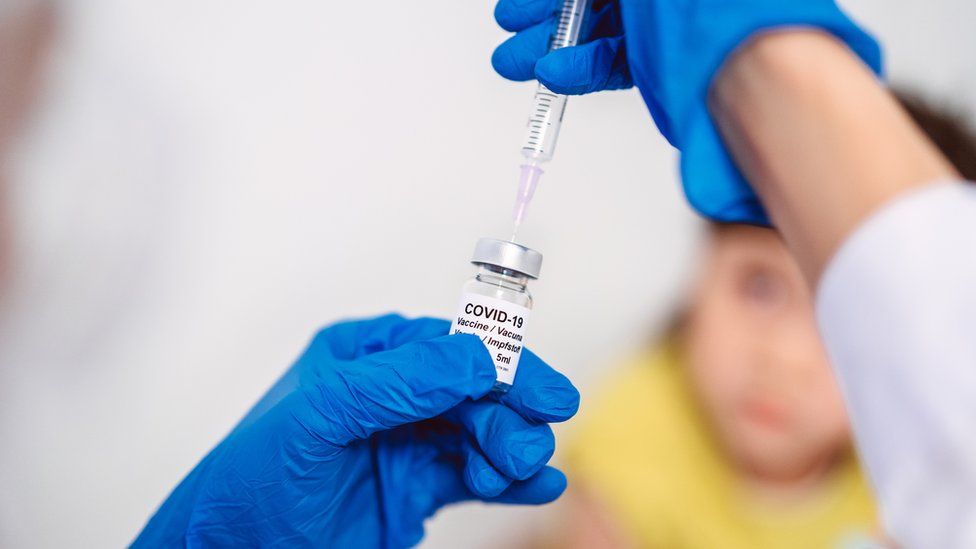
SharecloseShare pageCopy linkAbout sharingimage copyrightGetty ImagesPfizer says trials of its Covid vaccine in children aged 12 to 15 show 100% efficacy and a strong immune response.Initial results from trials in 2,260 adolescents in the US also suggest the vaccine is safe with no unusual side-effects.The drug company says it will submit its data to the US and European authorities for emergency use in 12- to 15-year-olds.There are currently no plans for children to be vaccinated in the UK.Children’s risk of becoming very ill or even dying with Covid-19 is tiny, and throughout the pandemic they have very rarely needed hospital treatment.Adults – particularly those over 50 and people with serious underlying health conditions – have a much higher risk, which is why they have been vaccinated as a priority in the UK. How will we know Covid vaccines are safe?What is the risk of schools spreading coronavirus?Slight Covid uptick in secondary school children’No evidence’ schools spread lots of Covid Pfizer is one of a number of drug companies testing their Covid vaccines on children. The aim of vaccinating them – particularly older children – would be to keep schools open, reduce the spread of coronavirus in the community and protect vulnerable children with conditions which put them at increased risk.AstraZeneca announced trials of its vaccine in UK children aged six to 17 some time ago, and the first of 300 volunteers were due to be jabbed last month. The vaccine is currently only authorised for people aged 18 and over in the UK.Alongside trials in teenagers, the Pfizer-BioNTech vaccine, which is authorised for use in those aged over 16, is also being tested in children under 12, with the aim of involving babies from just six months old. The company started dosing the first healthy, young children in this trial last week.UnknownsIn the Pfizer trial in 12- to 15-year-olds, 18 cases of Covid-19 were seen in the group given a dummy vaccine and none in group given the Covid vaccine which protects against it.All participants received two doses 21 days apart, and the 18 cases were all children with symptoms. There were no tests for asymptomatic infection – children displaying no symptoms.The figures are preliminary and full data has not been released, peer-reviewed or published in a journal.Dr Peter English, former consultant in communicable disease control and past chair of the BMA public health medicine committee, said more detail was needed to properly evaluate the company’s claims.”It would be useful to know how effective the vaccine is at preventing asymptomatic infection. Young people are less likely to have severe disease; and when they are infected, they are more likely to have asymptomatic infection, allowing them to transmit the disease to others,” he said.The company’s press release also doesn’t mention the impact of variants on the trials, how cases were identified in children and whether a longer gap between doses was tested.image copyrightGetty Images’Next school year’Albert Bourla, chairman and chief executive officer of Pfizer, said the company was “encouraged” by the clinical trial data.”We plan to submit these data to FDA [US Federal Drugs Administration] as a proposed amendment to our Emergency Use Authorization in the coming weeks, and to other regulators around the world, with the hope of starting to vaccinate this age group before the start of the next school year.”Ugur Sahin, CEO and co-founder of BioNTech, said the initial results in adolescents suggested children “are particularly well protected by vaccination”.He added: “It is very important to enable them to get back to everyday school life and to meet friends and family while protecting them and their loved ones.” Moderna, the US company behind another Covid vaccine ordered by the UK, has also started testing its jab on children under 11.Related Internet LinksOxford’s Covid-19 Vaccine TrialsPfizer-BioNTech Announce Positive Topline Results of Pivotal COVID-19 Vaccine Study in Adolescents – pfpfizeruscomThe BBC is not responsible for the content of external sites.

Read more →

Virus Variants Can Infect Mice, Scientists Report

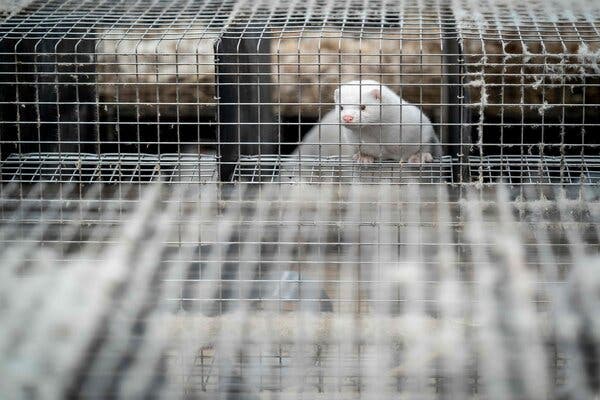
Infected rodents pose no immediate danger to humans, but the research suggests that mutations are helping the coronavirus expand its range of potential hosts.Bats, humans, monkeys, minks, big cats and big apes — the coronavirus can make a home in many different animals. But now the list of potential hosts has expanded to include mice, according to an unnerving new study.Infected rodents pose no immediate risk to people, even in cities like London and New York, where they are ubiquitous and unwelcome occupants of subway stations, basements and backyards.Still, the finding is worrying. Along with previous work, it suggests that new mutations are giving the virus the ability to replicate in a wider array of animal species, experts said.“The virus is changing, and unfortunately it’s changing pretty fast,” said Timothy Sheahan, a virologist at the University of North Carolina at Chapel Hill, who was not involved in the new study.In the study, the researchers introduced the virus into the nasal passages of laboratory mice. The form of the virus first identified in Wuhan, China, cannot infect laboratory mice, nor can B.1.1.7, a variant that has been spreading across much of Europe, the researchers found.But B.1.351 and P1, the variants discovered in South Africa and Brazil, can replicate in rodents, said Dr. Xavier Montagutelli, a veterinarian and mouse geneticist at the Pasteur Institute in Paris, who led the study. The research, posted online earlier this month, has not yet been reviewed for publication in a scientific journal.The results indicate only that infection in mice is possible, Dr. Montagutelli said. Mice caught in the wild have not been found to be infected with the coronavirus, and so far, the virus does not seem to be able to jump from humans to mice, from mice to humans, or from mice to mice.“What our results emphasize is that it is necessary to regularly assess the range of species that the virus can infect, especially with the emergence of new variants,” Dr. Montagutelli said.The coronavirus is thought to have emerged from bats, with perhaps another animal acting as an intermediate host, and scientists worry that the virus may return to what they describe as an animal “reservoir.”Apart from potentially devastating those animal populations, a coronavirus spreading in another species may then acquire dangerous mutations, returning to humans in a form the current vaccines weren’t designed to fend off.A mink looks out from its cage at a farm in Denmark, where mink populations were hit hard by the coronavirus.Mads Claus Rasmussen/Agence France-Presse — Getty ImagesMinks are the only animals known to be able to catch the coronavirus from humans and pass it back. In early November, Denmark culled 17 million farmed mink to prevent the virus from evolving into dangerous new variants in the animals.More recently, researchers found that B.1.1.7 infections in domesticated cats and dogs can cause the pets to develop heart problems similar to those seen in people with Covid-19.To establish a successful infection, the coronavirus must bind to a protein on the surface of animal cells, gain entry into the cells, and exploit their machinery to make copies of itself. The virus must also evade the immune system’s early attempts at thwarting the infection.Given all those requirements, it is “quite extraordinary” that the coronavirus can infect so many species, said Vincent Munster, a virologist at the National Institute of Allergy and Infectious Diseases. “Typically, viruses have a more curtailed host range.”Mice are a known reservoir for hantavirus, which causes a rare and deadly disease in people. Even though the coronavirus variants don’t seem to be able to jump from mice to people, there is potential for them to spread among rodents, evolve into new variants, and then infect people again, Dr. Munster said.The variants may also threaten endangered species like black-footed ferrets. “This virus seems to be able to surprise us more than anything else, or any other previous virus,” Dr. Munster said. “We have to err on the side of caution.”Dr. Sheahan said he was more concerned about transmission to people from farm animals and pets than from mice.“You’re not catching wild mice in your house and snuggling — getting all up in their face and sharing the same airspace, like maybe with your cat or your dog,” he said. “I’d be more worried about wild or domestic animals with which we have a more intimate relationship.”But he and other experts said the results emphasized the need to closely monitor the rapid changes in the virus.“It’s like a moving target — it’s crazy,” he added. “There’s nothing we can do about it, other than try and get people vaccinated really fast.”

Read more →

Estimating lifetime microplastic exposure

Every day, people are exposed to microplastics from food, water, beverages and air. But it’s unclear just how many of these particles accumulate in the human body, and whether they pose health risks. Now, researchers reporting in ACS’ Environmental Science & Technology have developed a lifetime microplastic exposure model that accounts for variable levels from different sources and in different populations. The new model indicates a lower average mass of microplastic accumulation than previous estimates.
Microplastics, which are tiny pieces of plastic ranging in size from 1 µm to 5 mm (about the width of a pencil eraser), are ingested from a variety of sources, such as bottled water, salt and seafood. Their fate and transport in the human body are largely unknown, although the particles have been detected in human stool. In addition to possibly causing tissue damage and inflammation, microplastics could be a source of carcinogens and other harmful compounds that leach from plastic into the body. Previous studies have tried to estimate human exposure to the particles and their leached chemicals, but they have limitations, including discrepancies in the databases used, a failure to consider the entire microplastic size range and the use of average exposure rates that do not reflect global intakes. Nur Hazimah Mohamed Nor, Albert Koelmans and colleagues wanted to develop a comprehensive model to estimate the lifetime exposure of adults and children to microplastics and their associated chemicals.
To make their model, the researchers identified 134 studies that reported microplastic concentrations in fish, mollusks, crustaceans, tap or bottled water, beer, milk, salt and air. They performed corrections to the data so that they could be accurately compared among the different studies. Then, the team used data on food consumption in different countries for various age groups to estimate ranges of microplastic ingestion. This information, combined with rates of microplastic absorption from the gastrointestinal tract and excretion by the liver, was used to estimate microplastic distribution in the gut and tissues. The model predicted that, by the age of 18, children could accumulate an average of 8,300 particles (6.4 ng) of microplastics in their tissues, whereas by the age of 70, adults could accrue an average of 50,100 microplastic particles (40.7 ng). The estimated amounts of four chemicals leaching from the plastics were small compared with a person’s total intake of these compounds, the researchers concluded. These data suggest that prior studies might have overestimated microplastic exposure and possible health risks, but it will be important to assess the contributions of other food types to ingestion and accumulation, the researchers say.
Story Source:
Materials provided by American Chemical Society. Note: Content may be edited for style and length.

Read more →

Vitamin A for nerve cells

Neuroscientists agree that a person’s brain is constantly changing, rewiring itself and adapting to environmental stimuli. This is how humans learn new things and create memories. This adaptability and malleability is called plasticity. “Physicians have long suspected that remodeling processes also take place in humans at the contact points between nerve cells, i.e. directly at the synapses. Until now, however, such a coordinated adaptation of structure and function could only be demonstrated in animal experiments,” says Prof. Dr. Andreas Vlachos from the Institute of Anatomy and Cell Biology at the University of Freiburg. But now Vlachos, together with Prof. Dr. Jürgen Beck, head of the Department of Neurosurgery at the University Medical Center Freiburg, has provided experimental evidence for synaptic plasticity in humans. In addition to Vlachos and Beck, the research team consists of Dr. Maximilian Lenz, Pia Kruse and Amelie Eichler from the University of Freiburg, Dr. Jakob Strähle from the University Medical Center Freiburg and colleagues from Goethe University Frankfurt. The results were presented in the scientific journal eLife.

advertisement

Read more →

Sugar not so nice for your child's brain development

Sugar practically screams from the shelves of your grocery store, especially those products marketed to kids.
Children are the highest consumers of added sugar, even as high-sugar diets have been linked to health effects like obesity and heart disease and even impaired memory function.
However, less is known about how high sugar consumption during childhood affects the development of the brain, specifically a region known to be critically important for learning and memory called the hippocampus.
New research led by a University of Georgia faculty member in collaboration with a University of Southern California research group has shown in a rodent model that daily consumption of sugar-sweetened beverages during adolescence impairs performance on a learning and memory task during adulthood. The group further showed that changes in the bacteria in the gut may be the key to the sugar-induced memory impairment.
Supporting this possibility, they found that similar memory deficits were observed even when the bacteria, called Parabacteroides, were experimentally enriched in the guts of animals that had never consumed sugar.
“Early life sugar increased Parabacteroides levels, and the higher the levels of Parabacteroides, the worse the animals did in the task,” said Emily Noble, assistant professor in the UGA College of Family and Consumer Sciences who served as first author on the paper. “We found that the bacteria alone was sufficient to impair memory in the same way as sugar, but it also impaired other types of memory functions as well.”
Guidelines recommend limiting sugar

Read more →

Masks make little difference to facial identification

But the study also shows for the first time that performance may be improved by using super recognisers — people who are very skilled at recognising faces. It also reveals that masks do make recognising someone’s emotions more difficult.
There are many questions surrounding face masks and the impact that masks will have on face identification. Can we recognise the faces of people who we know well if they are wearing a mask? And, relevant to policing and security scenarios or a supermarket ID check, can an unfamiliar face be recognized across images if it is masked? And how do masks impact our ability to recognize a person’s emotions?
Dr Noyes is Senior Lecturer in Cognitive Psychology and conducted the study, published by the Royal Society, in collaboration with researchers at the University of Greenwich, University of Reading, and University of Lincoln. A leading expert in the field, Dr Noyes was intrigued what the enforced wearing of masks due to COVID-19 would have on facial recognition.
The study consisted of three experiments which tested recognition of familiar faces, recognition of an unfamiliar face (comparing images, aka face matching), and emotion recognition. The researchers compared face recognition and emotion recognition for faces with no concealment, faces in masks, and faces in sunglasses — something far more commonplace than masks and often a matter of choice rather than necessity.
In the first experiment, participants were presented with pairs of famous faces, and were asked to decide if the images were of the same person or two different people.
“People are typically very good at identifying the faces of people they know well,” says Dr Noyes. “However, we found that face masks reduced accuracy on this task. There was no difference in accuracy for faces in masks compared to faces in sunglasses. Accuracy on the familiar face recognition task remained high — around 90% — even for faces in masks.
“Face comparisons are much more difficult if the faces are unknown to the identifier, but it is this task which mimics what can happen in many security scenarios. In the unfamiliar face comparison task, both masks and sunglasses reduced identification accuracy. Masks impaired performance the most, but only a little more than sunglasses.” This difference in recognition was at only around 3%.
A group of people who were known to be ‘super recognisers’ also took part in the task. Super recognisers have an exceptional natural ability for recognising a face, an ability that only 2% of the population have.
Super recognisers outperformed typical observers for unconcealed faces, faces in masks, and faces in sunglasses, showing that they still outperform typical observers even when looking at concealed faces. This study is the first to test the performance of super recognisers for faces in masks.
What about the recognition of a person’s emotional expressions? Participants in the study viewed face images and were asked to decide which emotion had been displayed (see Fig 2).
“The effect of masks on emotion categorization was more complex than the results for the recognition task,” Dr Noyes explains. “The emotions ‘happiness’, ‘disgust’ and ‘surprise’ were particularly difficult to recognise when the faces were in masks, but the recognition of the emotions ‘anger’ and ‘fear’ were impaired by both masks and sunglasses.”
Dr Noyes continues, “The results of the study show that the lower half of the face is important for face identification and emotion recognition. It’s not all in the eyes!”
Story Source:
Materials provided by University of Huddersfield. Note: Content may be edited for style and length.

Read more →

Why SARS-CoV-2 replicates better in the upper respiratory tract

A team of researchers from the Institute for Infectious Diseases (IFIK) at the University of Bern and the Federal Institute of Virology and Immunology (IVI) have assessed virus growth and activation of the cellular defense mechanisms in the respiratory tract. They have shown that natural temperature differences that exist in the upper and lower respiratory tract have a profound influence on SARS-CoV-2 replication and subsequent innate immune activation in human cells. The findings can help to develop antiviral drugs and preventive measures.
“SARS-CoV-2 and SARS-CoV are highly similar genetically, generate a homologous repertoire of viral proteins, and use the same receptor to infect human cells. However, despite these similarities, there are also important differences between the two viruses,” says Ronald Dijkman from the Institute for Infectious Diseases (IFIK) at the University of Bern. For example, SARS-CoV infection is characterized by severe disease and inflammation in the lower respiratory tract and infected individuals are only contagious after the onset of symptoms, making it easier to identify and interrupt infection chains.
In contrast, SARS-CoV-2 preferentially replicates in the upper airways (nasal cavity, pharynx, trachea) and can be efficiently transmitted from one individual to another before the appearance of disease symptoms. Moreover, the outcome of SARS-CoV-2 infection varies widely from person to person, and can manifest as asymptomatic, mild, or severe disease. Older people as well as individuals with certain underlying medical conditions (heart conditions, diabetes, cancer) are at greater risk of developing severe illness, which is often associated with infection of lower respiratory tissues, high levels of inflammation, and lung failure.
Temperature is key
To better understand why infections with SARS-CoV and SARS-CoV-2 result in such different clinical outcomes, researchers from the University of Bern used specialized human airway cell cultures to investigate the impact of respiratory tract temperatures on SARS-CoV and SARS-CoV-2 replication. The cells originate from human samples and mimic the complexity of the cells found in the respiratory tract. They grow in special containers, are nourished from the bottom side and are exposed to air on the top side, just like the cells in the human trachea. The cultures also make mucus and have cilia that beat very quickly. “Because the organization of these cells greatly resembles the cells found in human tissues, they are a relevant system that can be used in a laboratory to study respiratory viruses,” Dijkman explains.
The researchers have now used this existing model for the first time to study the effects of respiratory temperatures on SARS-CoV and SARS-CoV-2 replication. They found that temperature plays an important role as SARS-CoV-2 preferred to replicate at temperatures typically found in the upper airways (33°C). Colder incubation temperatures allowed the virus to replicate faster and to a higher extent than when infections were carried out at 37°C to mimic the lower lung environment. Unlike SARS-CoV-2, replication of SARS-CoV was not impacted by different incubation temperatures. The experiments were conducted both in the high security laboratory of the IVI in Mittelhäusern and in the biosafety laboratory of the Institute for Infectious Diseases (IFIK) at the University of Bern in the building of sitem-insel, the Swiss Institute for Translational Medicine and Entrepreneurship.

Read more →

Temperature sensor could help safeguard mRNA vaccines

Scientists have developed vaccines for COVID-19 with record speed. The first two vaccines widely distributed in the U.S. are mRNA-based and require ultracold storage (-70 C for one and -20 C for the other). Now, researchers reporting in ACS Omega have developed a tamper-proof temperature indicator that can alert health care workers when a vial of vaccine reaches an unsafe temperature for a certain period, which could help ensure distribution of effective mRNA vaccines.
The two COVID mRNA vaccines contain instructions for building harmless pieces of the SARS-CoV-2 spike protein. Once the vaccine is injected into the body, human cells use the mRNA instructions to make the spike protein, which they temporarily display on their surface, triggering an immune response. But mRNA is highly unstable, requiring ultracold storage and transport conditions for the vaccines to remain effective. Sung Yeon Hwang, Dongyeop Oh, Jeyoung Park and colleagues wanted to develop a time-temperature indicator (TTI) to identify mRNA vaccines that are exposed to undesirable temperatures during storage or transport, so that they could be discarded.
To make their TTI, the researchers added a mixture of ethylene glycol (antifreeze), water and blue dye to a small tube and froze it in liquid nitrogen. Then, they added a white cellulose absorbent to the top of the frozen coolant, turned the tube upside down, and adhered it to a larger glass vial containing simulated vaccine at -70 C. At temperatures above -60 C, the antifreeze mixture melted, and the dye diffused into the white absorbent, turning it light blue. The color change happened about 2 minutes after the simulated vaccine was exposed to a higher temperature. Importantly, exposures of less than 2 minutes — which are unlikely to impair vaccine efficacy — did not turn the TTI blue. The color change persisted if the tube was refrozen at -70 C, making the system tamper-proof. By changing the coolants or their mixing ratio, or by using different absorbents, the TTI could be tailored to monitor the ideal storage conditions of different mRNA vaccines, the researchers say.
The authors acknowledge funding from the Korea Research Institute of Chemical Technology.
Story Source:
Materials provided by American Chemical Society. Note: Content may be edited for style and length.

Read more →