Cervical cancer testing tech could replace pap smears, save lives

Emerging technologies can screen for cervical cancer better than Pap smears and, if widely used, could save lives both in developing nations and parts of countries, like the United States, where access to health care may be limited.
In Biophysics Reviews, by AIP Publishing, scientists at Massachusetts General Hospital write advances in nanotechnology and computer learning are among the technologies helping develop HPV screening that take the guesswork out of the precancer tests. That could mean better screening in places that lack highly trained doctors and advanced laboratories.
Cervical cancer is the world’s fourth-most common cancer, with more than 500,000 cases diagnosed every year. Almost all cases of cervical cancer are caused by HPV, or human papillomavirus. Detecting precancer changes in the body gives doctors a chance to cure what could otherwise become a deadly cancer.
Pap smears, which were introduced in the 1940s, are subjective and not always reliable. The tests, which can detect about 80% of developing cervical cancer if given regularly, require high-quality laboratories, properly trained clinical doctors, and repeated screenings. These test conditions are not widely available in many countries or even in low-income and remote parts of wealthier nations.
“The Pap smear has done wonders in terms of reducing mortality from a cancer that is very treatable when caught early and almost invariably fatal when it is caught late,” said author Cesar Castro, an oncologist at Massachusetts General Hospital and associate professor at Harvard Medical School. “And it is not even a great test. Part of its imperfection is that there is subjectivity to it. The trained eye is the limiting step in the process. The untrained eye, or relatively untrained eye, can miss cancers.”
The subjectivity of the test has led to a much higher death rate from cervical cancer in lower-income countries. The authors highlight a list of existing and emerging technologies that can be used to close the testing gap in those areas. They range from existing DNA testing and other Pap smear alternatives to next-generation technologies that use recent advances in nanotechnology and artificial intelligence.
One technique involves screening with tiny beads made of biological material that form a diamond shape when they contact HPV. Those shapes can be detected with powerful microscopes. When those microscopes are not available, a mobile phone app, built through machine learning, can be used to read them.
“Similar to COVID-19 testing, we have great technology in places like the United States that does not work well enough in other countries,” said author Hyungsoon Im, a biomedical engineer at Massachusetts General Hospital and assistant professor at Harvard Medical School. “This is why there is great motivation to find next-generation, affordable technology to address this problem.”
Story Source:
Materials provided by American Institute of Physics. Note: Content may be edited for style and length.

Read more →

Mothers bear the cost of the pandemic shift to remote work

For many parents, the COVID-19 pandemic has made life’s everyday juggling act — managing work, school, extracurricular, and household responsibilities — much, much harder. And according to a new study led by Penn sociologists, those extra burdens have fallen disproportionately on mothers.
The research, shared in the April issue of the journal Gender and Society, investigated how shifts in work and school that arose due to the pandemic triggered changes in the division of labor in families. Using data on two-parent households from a nationwide survey conducted in April 2020, the researchers found that gender disparities in unpaid labor were most apparent when a mother was the only parent working from home, or when neither parent was able to work remotely.
“It turns out that when the mother is working remotely and her partner isn’t, she ends up taking on a ton more responsibilities,” says Jerry Jacobs, a sociology professor in Penn’s School of Arts & Sciences and one of the paper’s authors. “When a father is working remotely and his partner isn’t, somehow he doesn’t take on as much extra work. This seems to be a deeply gendered issue.”
As the pandemic has worn on, the toll on women has been hard to ignore. Each month, hundreds of thousands of women lost their jobs or dropped out of the workforce to meet new demands at home.
Yet remote work also seemed to open the possibility of greater equity between the genders in domestic responsibility, as two parents would be at home and accessible.
To tease out the effects of a shift to remote work on domestic labor during the pandemic, Jacobs, Penn doctoral student Allison Dunatchik, and colleagues turned to data from a New York Times survey, conducted by marketing research firm Morning Consult. Of 2,200 respondents, 478 were partnered parents, and 151 were single parents.

Read more →

The C.D.C. and N.I.H. launch a rapid, at-home testing initiative in Tennessee and North Carolina.

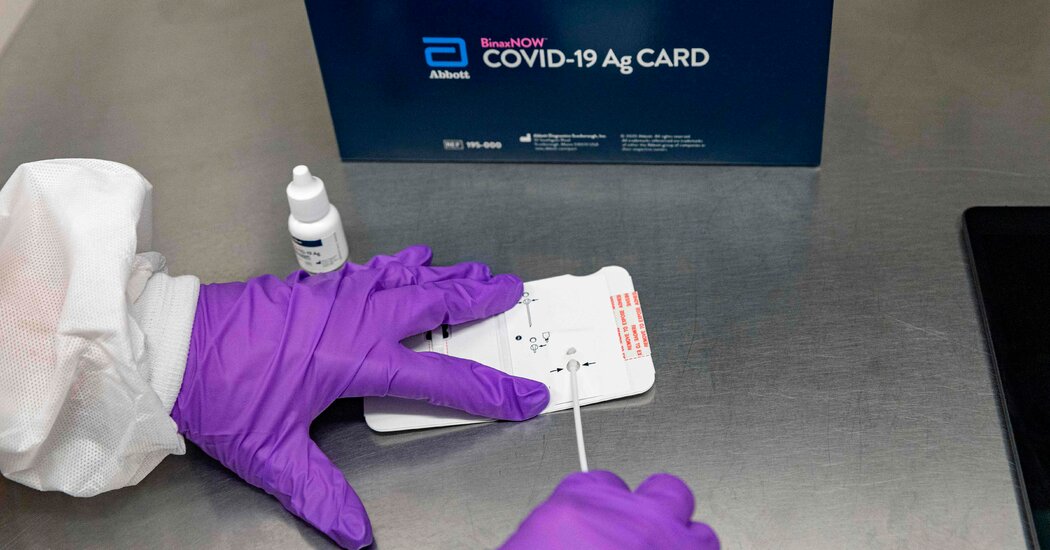
The Centers for Disease Control and Prevention and the National Institutes of Health announced a new initiative on Wednesday to help determine whether frequent, widespread use of rapid coronavirus tests slows the spread of the virus.The program will make rapid at-home antigen tests freely available to every resident of two communities, Pitt County, N.C., and Hamilton County, Tenn., enough for a total of 160,000 people to test themselves for the coronavirus three times a week for a month.“This effort is precisely what I and others have been calling for nearly a year — widespread, accessible rapid tests to help curb transmission,” said Michael Mina, an epidemiologist at Harvard University who has been a vocal proponent of rapid, at-home testing programs.He added, “Taking 30 seconds out of your day three times a week to perform the test is something any person can do.”Antigen tests are cheaper and faster than P.C.R. tests, which are the gold standard for diagnosing Covid-19, the disease caused by the virus, but they are less sensitive and more prone to false negatives. Mathematical models have suggested that if these tests are used frequently, they can still reduce transmission of the virus.The tests can help identify people who may not realize that they are infectious, prompting them to self-isolate before they are able to transmit the virus to others. But real world data has been limited, and with virus case numbers still high across the country, testing remains essential, public health experts say.“We have all hypothesized that testing at home, at scale could stop the chain of transmission of the virus and allow communities to discover many more cases,” said Bruce Tromberg, who directs the National Institute of Biomedical Imaging and Bioengineering and leads its rapid acceleration of diagnostics program, which is supplying the tests for the initiative. “All the mathematical models predict that. But this is a real world, real life example.”Residents who decide to participate in the program can have the tests delivered to their homes or pick them up at local distribution sites. An online tool will guide participants through the testing process and help them interpret their results. Residents can also volunteer to complete surveys that will assess whether frequent testing has changed their behavior, knowledge about Covid-19, or opinions on vaccination.Researchers at the University of North Carolina and Duke University will compare the test positivity, case and hospitalization rates in these two communities to those in other similar communities that are not participating in the program.A. David Paltiel, a professor of health policy and management at Yale School of Public Health, called the launching of a real-world study of the effectiveness of rapid, at-home screening “just great news.” But he cautioned that the results will need to be interpreted carefully, especially if the residents who choose to participate in the initiative are not representative of the community at large.“We know that self-selection tends to bring out the worried well and a disproportionate number of people who are already Covid-conscious or Covid-conscientious,” he said.“It’ll be great to see how it works when in the hands of people who really care,” he added. But, he said, the results may not be widely generally applicable to screening programs in which participation is mandatory, as may be the case with some workplace and school programs.

Read more →

Covid 19: Inside the BioNTech vaccine factory in Germany

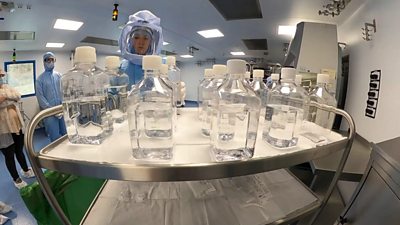
Germany has suspended the use of the AstraZeneca vaccine for under-60s, after the German medicines regulator found 31 cases of a type of rare blood clot out of 2.7 million people who had received the jab. The European Medicines Agency and the UK’s regulatory body, MHRA, have said there is no indication that the vaccine is linked to blood clots.Despite this, Angela Merkel has insisted that Germany will still offer every adult a vaccine by the end of the summer. They’re largely relying on the Pfizer/BioNTech vaccine, with a new factory in the town of Marburg aiming to produce one billion doses a year. Jenny Hill went to see how the vaccine was made.

Read more →

Italy Pushes Back as Health Care Workers Shun Covid Vaccines

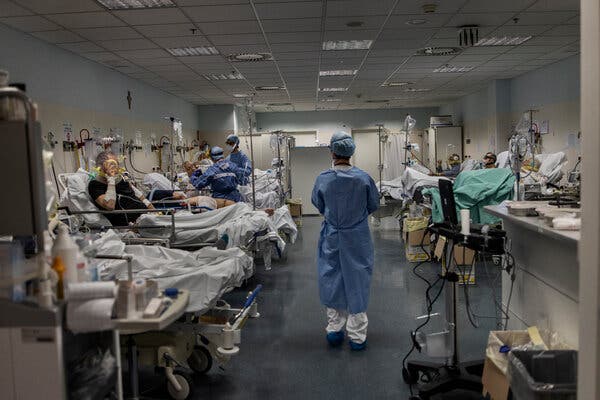
Prime Minister Mario Draghi issued a decree requiring that workers in health care facilities be vaccinated, a move that will test the legal limits of his government’s efforts to stem coronavirus outbreaks.ROME — Giulio Macciò tested negative for the coronavirus and spent weeks receiving treatment for emphysema in a sealed-off hospital under the care of doctors and lung specialists — and a nurse who had refused to be vaccinated. On March 11, he unexpectedly died. A post-mortem swab found that he had contracted the virus, as had 14 other patients and the unvaccinated nurse who spent her shifts in his midst.“It makes no sense that a person whose job is to heal the sick gives them Covid and kills them,” said Mr. Macciò’s son, Massimiliano Macciò, who filed a complaint against the San Martino hospital in the northern Italian city of Genoa. He believes that the nurse, one of an estimated 400 who have refused vaccination against Covid-19 at the hospital, infected his father, who died unvaccinated at 79.As vaccination rollouts build momentum, businesses everywhere are grappling with whether they can require the inoculation of their employees, raising thorny ethical, constitutional and privacy issues around Europe and the United States. But that quandary becomes all the more urgent when the person is your health care worker.In Italy, the original Western front in the war against Covid, a rash of outbreaks in hospitals where medical workers have chosen not to be inoculated has raised fears that their stance is endangering public health. It has also prompted a forceful response from an Italian government that is struggling to get vaccinations on track.On Wednesday, Prime Minister Mario Draghi tested the legal limits of his government’s ability to address the problem by issuing a decree requiring that workers in health care facilities be vaccinated. It also allowed hospital employers to suspend without pay any health care workers who refuse to do so.Some legal analysts have said that requiring Covid-19 inoculation for health workers could violate Italy’s privacy laws, and that firing or forcing any who decline it to take unpaid leave could be unconstitutional because of a specific article that protects people who refuse health treatments.A coronavirus ward at the Papa Giovanni XXIII hospital in Bergamo in March last year.Fabio Bucciarelli for The New York TimesBut recent court rulings have interpreted the law differently, and Mr. Draghi has made clear that for a country that has suffered more than 100,000 Covid deaths, the breach of safety cannot be tolerated.“It is absolutely not OK that unvaccinated workers are in contact with the sick,” he said at a news conference last week while announcing his government’s intention to “intervene” when asked about the reports of unvaccinated health care workers.For much of the pandemic, nurses and doctors stood as national heroes who sacrificed their waking hours, safety and sometimes lives to protect their compatriots. It has shocked Italians that in some major hospitals up to 15 percent of those medical professionals — who were given preference in the vaccination rollout ahead of older people — have shunned inoculation.“It’s really humiliating for the medical and health worker class that you have to force people to vaccinate themselves,” said Roberto Burioni, a virologist at San Raffaele University in Milan.He added that while firing workers is exceedingly difficult in Italy, he hoped the decree will bite into the salaries of any vaccine skeptics, especially considering the large amount of data demonstrating that the vaccines’ efficacy is worth the risk. He also worried that the high number of health professionals refusing to get vaccinated had troubling implications.“Unfortunately there is huge part of doctors who are deeply ignorant,” said Mr. Burioni, who suggested that perhaps “the selection process for bringing people to gain a medical degree and then the medical license is not effective enough.”Transporting coffins in Bergamo last year. Italy has had more than 100,000 Covid-19 deaths.Fabio Bucciarelli for The New York TimesWhile Italy’s populists, including the Five Star Movement and League parties, exploited vaccine skepticism for political gain in recent years, the country is not even considered the most vaccine-skeptic in Europe, a dubious distinction that usually falls to France. Italy also had a fast start in vaccinations at the beginning of the year precisely because the previous government prioritized medical workers.In January, the health minister, Roberto Speranza, said on television that Italy, like its European partners, believed it was better to persuade people to get vaccinated than to require them to. “Those who had to deal with the virus, our health care workers, are even more aware than the others,” he said. “I think willingness will be enough.”But Italy’s vaccination program has hit speed bumps. First, the pharmaceutical company AstraZeneca failed to make good on millions of promised doses. The previous government, led by the Five Star Movement, fell, and Mr. Draghi came in promising to help accelerate vaccinations and the country’s economic recovery.He has pushed for bans on vaccine exports from the European Union to contend with the shortages. He has sought to mobilize new categories of vaccinators and centralize Italy’s response to make up for the failure of some of the country’s hardest-hit regions to inoculate the most vulnerable, older citizens. On Tuesday, Mr. Draghi himself received an AstraZeneca dose after joining a temporary Europe-wide suspension of the vaccine amid concerns about its safety.“It is absolutely not OK that unvaccinated workers are in contact with the sick,” said Prime Minister Mario Draghi, center.Angelo Carconi/EPA, via ShutterstockBut the anti-vax health workers have struck a deep nerve.In a nursing home outside Rome, nearly all of the health care workers chose not to be vaccinated, and a cluster erupted around three workers and 27 out of the 36 older guests. Roberto Agresti, the home’s owner, feared the worst for them. “If we had a law forcing everyone to get vaccinated, the virus would have passed without us even noticing it,” he said.In the southern city of Brindisi, the local health authority has opened disciplinary proceedings against 12 health care workers who expressly refused vaccination. It is also investigating why about 140 health care workers, including doctors, nurses, pediatricians and specialists, declined shots of the Pfizer vaccine.“We don’t want to punish workers — we need them,” said Giuseppe Pasqualone, who leads the local health authority. “But the risk of contagion not only for them but for fragile patients is very high.”Officials at the San Martino hospital, where Mr. Macciò died, said it was not clear whether the unvaccinated nurse was the source of the cluster, but they acknowledged that it was a problem.Salvatore Giuffrida, the director of the hospital, Europe’s fourth largest, said he favored a vaccination requirement because it would also keep medical workers healthy and would strengthen defensive lines as a brutal third wave spreads through northern Italy.“We cannot afford not having them on the job,” he said. “The objective is not to lose soldiers during a war in a nation that complains about not having health care workers.”He estimated that 15 percent of his nursing staff, about 400 nurses, was unvaccinated. Simply removing those nurses from the wards, or redirecting them to switchboards as some have proposed, would be “a cure worse than the disease,” he said, because it would result in the reduction of 250 beds.He and other directors said that Italy’s strict privacy laws kept the hospitals from knowing which doctors and nurses were unvaccinated.Paolo Petralia, the director general of the Lavagna hospital in Chiavari, the site of another outbreak this month, said 90 percent of his doctors were vaccinated, along with about 80 percent of nurses and aides.“They are protected by privacy laws,” he said, citing a recent pronouncement by Italy’s data protection authority that the vaccination status of health workers should be unknown. “But this right exists until it does not limit another person’s right,” Mr. Petralia said.Lining up at a drive-through vaccination center in Milan this month.Alessandro Grassani for The New York TimesSome Italian courts have agreed. In 2017, Italy made some vaccinations compulsory for children, including for measles, and barred the unvaccinated from attending school — a decision backed by Italy’s constitutional court because it also safeguarded public health. In the northern city of Belluno, a court ruled in mid-March that a nursing home that employed several health care workers who chose not to get vaccinated could force them to take paid leave.Mr. Macciò, whose father died in Genoa, said it made no sense that the people entrusted to care for his father were allowed to potentially harm him. He said he had complained to the doctors, who told him their hands were tied because the nurses were protected by privacy rules.But amid Italy’s frustration, and the new decree, something appears to be changing. Mr. Macciò said the police had asked for his help in identifying the nurses he saw when going to pick up his father’s belongings.“I hope some good comes of it,” he said of his father’s death. “These people should change their job.”Emma Bubola

Read more →

Newly discovered node in brain could expand understanding of dysfunctional social behavior

What’s the difference between a giggle and a belly laugh? Or a yelp and an all-out scream? In many species, including humans, the volume and duration of a verbal sound conveys as much information as the noise itself.
A group of scientists, led by Scripps Research, has discovered a node in the brains of male mice that modulates the sounds they make in social situations. This discovery, published in Nature, could help identify similar locations in the human brain, and potentially lead to a better understanding of social disorders such as autism or depression.
“Identifying this node gives us signatures of what to look for when human behavior goes awry,” says Lisa Stowers, PhD, a neuroscientist and professor at Scripps Research who led the study. “It’s giving us clues to how information is organized in the brain, and how different features of information can be separated out in different brain regions.”
As part of their courtship behavior, male mice produce “songs.” These complicated whistles, which are too high for the human ear to detect, are louder and longer when the female mouse is nearby or when her scent is stronger. The researchers identified a specific type of neuron in a part of the hypothalamus called the lateral preoptic area that controls the emotional regulation of these sounds.
“The hypothalamus and the rest of the limbic system control body functions such as hunger, thirst and temperature regulation, as well as the basic features of emotional behavior like sex and fear,” Stowers says. “It is fitting that the emotional aspect of these social noises are generated in this region of the brain.”
By directly stimulating the right nodes from these neurons, the scientists could trigger the whole array of noises that go into a mouse song. Varying the level of stimulation allowed them to control how enthusiastic those sounds were.
When the researchers blocked these nodes, male mice encountering a female would attempt to court her in silence. (Female mice responded by kicking the males and running away.) If the researchers bypassed these nodes and activated the next node downstream, the male mice only made long, loud noises.
“They’re basically just shouting,” Stowers says. “By finding these neurons, it’s telling us that this part of the brain is doing this emotional scaling and persistence. If you take that away, then you lose all of that affect, all of that emotional range, and the ability to have effective social communication.”
Most research on noise production in the brain has focused on language development, Stowers says. But the sounds that even an infant can make — a giggle, a cry, a scream — don’t have to be learned and are just as vital for communication. Identifying how the brain decides on these responses is the first step to understanding where things can go wrong in social behavioral disorders such as autism and depression.
“We are starting to get a detailed look at where in the brain different types of computations are being made,” Stowers says. “Now that we know that this simple behavior is regulated in the hypothalamus, we can study whether others behaviors are also using similar circuits and if so, perhaps find a common mechanism — and drug target — for when emotions are not generated appropriately.”
Funding was provided by the Dorris Neuroscience and Skaggs Scholarships, the Anandamahidol Foundation Fellowship, Career Award at the Scientific Interface from BWF and the National Institutes of Health (R01NS097772, R01DA049787, R01NS108439).

Read more →

How Streptococcus pyogenes can survive on skin and cause skin infections

Streptococcus pyogenes is one of the most important bacterial causes of human skin infections. If S. pyogenes invades deep into the tissue, it can cause life-threatening illnesses, such as sepsis and toxic shock. With its limited supply of carbohydrates, the skin is generally an effective barrier against infection and not a good surface for the survival of S. pyogenes. To survive successfully and invade deep into the tissue, bacteria must be able to find a source of nutrients and also evade the skin’s immune defenses.
Now, an international team led by Osaka University, Japan, in collaboration with Keio University, Japan, and University of California San Diego, USA, has discovered a way this disease organism obtains nutrition from the skin surface. This knowledge could lead to new therapeutic approaches to tackle infections. The team recently published the work in Cell Reports.
It was already known that some bacteria break down arginine (an amino acid — one of the building blocks of proteins) via a biochemical pathway named the arginine deaminase (ADI) pathway. The team confirmed that S. pyogenes can survive using arginine even when starved of glucose. When they deleted the bacterial gene (named arcA) encoding the first enzyme in the ADI pathway, the S. pyogenes lost that ability and also became less toxic towards human skin cells grown in culture.
When arginine is supplied, the ADI pathway of S. pyogenes is activated but there are also widespread changes in gene expression. Some genes are down-regulated but large numbers of genes are up-regulated, including genes associated with virulence of S. pyogenes, such as those that produce bacterial toxins.
Using mouse skin as a model system for human skin, the team showed for the first time that S. pyogenes can use arginine to survive on the skin surface. S. pyogenes lacking the arcA gene survived poorly and were less virulent on mouse skin, confirming the importance of this pathway in the disease process. In contrast, in blood (containing plentiful glucose), the altered S. pyogenes appeared no different to normal S. pyogenes since the ADI pathway was not needed.
“We showed that arginine from stratum corneum-derived filaggrin was a key substrate for the ADI pathway of S. pyogenes,” says lead researcher Dr. Yujiro Hirose. “In mice that do not produce filaggrin, less arginine is available and the S. pyogenes bacteria do not utilize ADI pathway to cause the skin lesion.”
“This represents a significant step forward in understanding how S. pyogenes survives on the skin,” explains Dr. Hirose. “We expect our study will lead to novel treatment strategies: if we can block arginine metabolism in S. pyogenes it should restrict the pathogen’s survival and virulence.”
Story Source:
Materials provided by Osaka University. Note: Content may be edited for style and length.

Read more →

'Agricomb' measures multiple gas emissions from … cows

After the optical frequency comb made its debut as a ruler for light, spinoffs followed, including the astrocomb to measure starlight and a radar-like comb system to detect natural gas leaks. And now, researchers have unveiled the “agricomb” to measure, ahem, cow burps.
The agricomb could help optimize agricultural processes to reduce production of heat-trapping greenhouse gases.
Researchers from the National Institute of Standards and Technology (NIST) and Kansas State University (KSU) used NIST’s agricomb to simultaneously measure emissions of methane, ammonia, carbon dioxide and water vapor from the atmosphere around a beef cattle feedlot in Kansas. The NIST apparatus — a two-comb system — identifies trace gases based on the exact shades and amounts of infrared light absorbed by the atmosphere when the comb light is sent back and forth across open-air paths.
Described in Science Advances, the demonstration was the first use of frequency combs in an agricultural setting. The portable system was set up inside a trailer parked next to the feedlot. The laser light was specially amplified and filtered to target specific gases.
Researchers measured gases along two 100-meter paths both upwind and downwind from pens containing about 300 cows. The experiment focused on methane and ammonia because emissions from livestock, mainly cattle, are the largest U.S. source of anthropogenic methane, a major greenhouse gas, and ammonia is an important atmospheric pollutant.
The measurements captured emissions from both the cattle’s digestive processes and manure on the ground. The agricomb measured both methane and ammonia concentrations at parts-per-million levels with a precision of 25 parts per billion. The agricomb results for methane were comparable to those from a commercial sensor that sampled the air at multiple inlets along the edges of the feedlot. The comb system was particularly useful for ammonia because this gas is sticky and difficult to measure with inlet-based systems. In addition, the agricomb can measure many gases simultaneously, which is challenging for conventional systems.
Finally, while the commercial sensors measured precise background levels faster, the agricomb more precisely captured downwind plumes and could then better characterize the gas sources, according to the paper. The increased precision will be critical for planned future measurements of methane from sparsely distributed cows in a pasture, which is a much more challenging problem.
The agreement of the old and new techniques inspires confidence that the agricomb can be used to accurately quantify gases in agricultural contexts, the paper suggests. Advantages of the agricomb include sensitivity to a broad range of infrared light, high precision, calibration-free detection of multiple gases at once, and flexibility of the measurement setup. Pairing two combs with different spacings of “teeth” for identifying exact colors of light makes the analysis more precise.
Estimating methane emissions from livestock is challenging because of variations in management practices and cattle characteristics in commercial farms. In addition, what the cattle eat affects emissions but is unaccounted for in national inventories, leading to large uncertainties in greenhouse gas emission models, according to the paper. The cattle at the Kansas feedlot ate a mix of hay and corn silage.
“For the future our plan is to work with KSU to do a pasture measurement, where the cattle eat native grasses,” NIST physicist Brian Washburn said. “The different feed, plus microbial activity in grassland soils that consumes methane, may mean less atmospheric methane production in the pasture than in the feedlot. The cattle spend about 75% of their life in the pasture, so this measurement would be more representative of the net methane production. This would also be a harder measurement, since it would take place over a larger area, about 500 meters by 500 meters, with fewer animals, about 40 head.”
The researchers suggest the agricomb can support precision agriculture — the use of new technology to boost yields — by measuring many gases simultaneously over large spatial scales, making it possible to design cleaner and more productive farms.
This work was funded in part by the National Science Foundation, the ARPA-E MONITOR program, the William and Joan Porter Endowment, and the Habiger Heritage Fund.

Read more →

'Sweat sticker' diagnoses cystic fibrosis on the skin in real time

A Northwestern University-led research team has developed a novel skin-mounted sticker that absorbs sweat and then changes color to provide an accurate, easy-to-read diagnosis of cystic fibrosis within minutes.
While measuring chloride levels in sweat to diagnose cystic fibrosis is standard, the soft, flexible, skin-like “sweat sticker” offers a stark contrast to current diagnostic technologies, which require a rigid, bulky, wrist-strapped device to collect sweat.
After developing the sweat sticker at Northwestern, the researchers validated it in clinical pilot studies involving cystic fibrosis patients and healthy volunteers at the Cystic Fibrosis Center at the Ann & Robert H. Lurie Children’s Hospital of Chicago. The sticker showed enhanced performance in collected sweat volume and equivalent accuracy to traditional platforms.
The research and study findings will be published on March 31 as the cover feature article in the journal Science Translational Medicine.
By softly adhering to the body, the millimeter-thick sticker makes direct but gentle contact with the skin without harsh adhesives. Not only does this make the sticker more comfortable and imperceptible to the wearer, this intimate coupling also enables the sticker to collect 33% more sweat than current clinical methods. The high collection rate ensures that one test will consistently collect a large enough sample to provide an accurate result.
The sticker also has built-in colorimetric sensors that detect, measure and analyze chloride concentration in real time using a smartphone camera, bypassing the need for expensive laboratory equipment and excruciating wait times. This opens possibilities for testing outside of hospitals in the home setting, which could provide relief to parents in rural or low-resource areas without access to clinical centers with specialized diagnostic tools.

Read more →

How comorbidities increase risks for COVID patients

Comorbidities such as heart disease, respiratory disease, renal disease and cancer lead to an increased risk of death from Covid-19 according to new research from the University of East Anglia (UEA) and the Norfolk and Norwich University Hospital (NNUH).
At the start of the pandemic, there was concern that specific medications for high blood pressure could be linked with worse outcomes for Covid-19 patients.
Previous research from the UEA team showed this wasn’t the case and that medications for high blood pressure could, in fact, improve Covid-19 survival rates and reduce the severity of infection.
New findings, published today in the Journal of the American Medical Association (JAMA) Network Open, additionally show that it is comorbidities such as heart disease, respiratory disease, renal disease, cancer, obesity and increasing age — and having more than one disease or chronic condition at the same time — that lead to increased mortality and severity of disease.
The team reviewed 52 separate studies involving over 100,000 patients in this, the most comprehensive study of its kind to date.
They studied the outcomes for patients taking antihypertensives — looking particularly at ‘critical’ outcomes such as being admitted to intensive care or being put on a ventilator, and death.
Their meta analysis showed a significantly lower risk of hospitalisation or death for people taking blood pressure medications Angiotensin-Converting Enzyme inhibitors (ACEi) or Angiotensin Receptor Blockers (ARB).
But they also found that risks for hospitalisation and death were much higher for people with comorbidities.
Lead researcher Dr Vassilios Vassiliou, from UEA’s Norwich Medical School and Honorary Consultant Cardiologist at NNUH, said: “What a meta analysis gives us is the really big picture. We looked at the combined findings of 52 separate studies involving over 100,000 patients. It is the most comprehensive study of its kind to date.
“With these increased numbers, what we can see very clearly now, is that it is the comorbidities such as cardiac disease or respiratory disease, cancer or obesity amongst others that lead to an increased mortality.
“And we can confirm that the blood pressure medications themselves are protective — not only for people who have high blood pressure, but for people with a range of other comorbidities as well,” he added.
Story Source:
Materials provided by University of East Anglia. Note: Content may be edited for style and length.

Read more →