Cool and COVID-safe: How radiant cooling could keep our cities comfortable and healthy

A novel system of chilled panels that can replace air conditioning can also help reduce the risk of indoor disease transmission, suggests new analysis from the University of British Columbia, University of Pennsylvania and Princeton University.
The researchers computed air conditioning requirements in 60 of the world’s most populous cities — with the additional ventilation required due to COVID-19. Then, they compared the energy costs with their cooling method, using the chilled panels and natural ventilation.
The results, published in the COVID-19 edition of Applied Energy, showed that the alternative solution can save up to 45 per cent of the required energy, while ensuring building occupants are comfortable and rooms are adequately refreshed.
Dr. Adam Rysanek, a professor in the school of architecture and landscape architecture at UBC and co-author of the paper, notes that many public health guidelines, as well as building industry bodies, recommend increasing the flow of fresh, outdoor air into buildings in order to reduce the risk of spreading COVID-19 and other diseases.
“However, if we continue to rely on conventional HVAC systems to increase indoor fresh air rates, we may actually double energy consumption. That’s the nature of conventional HVAC.”
“Alternatively, we can encourage people to install new types of radiant cooling systems, which allow them to keep their windows open even when it’s hot outside. These alternative systems can provide a sufficient level of thermal comfort, increase protection against disease while lessening the impact on the environment,” noted Rysanek, director of the Building Decisions Research Group at UBC’s faculty of applied science.
Rysanek and his colleagues earlier demonstrated their cooling system in the hot and humid climate of Singapore. They built a public pavilion featuring a system of chilled tubes enclosed within a condensation-preventing membrane. This allowed occupants to feel comfortable, and even cold, without changing the air temperature surrounding the human body.
“You can think of it as lean A/C — or, even better, as a green alternative to energy-guzzling air conditioning,” said Rysanek.
Toronto is one of the cities included in the latest analysis, as are Beijing, Miami, Mumbai, New York and Paris. In all these regions, peak summer temperatures can soar past 35 degrees Celsius (95 degrees Fahrenheit).
“A key impact of climate change is the accelerating rise in average and peak temperatures, particularly in urban areas. We are expecting the appetite for indoor cooling will ramp up in the years ahead. Yet, if we want to mitigate urban heat and ensure people are healthy and comfortable while reducing our energy use, we need to seriously consider revolutionising our historical approach to air-conditioning,” adds Rysanek.
Rysanek notes that, though chilled panel systems have been around for decades, adding the special membrane devised by the research team could be the key to making it a commercially viable alternative to traditional HVAC systems in all climates.
Story Source:
Materials provided by University of British Columbia. Note: Content may be edited for style and length.

Read more →

Flushing a public toilet? Don't linger, because aerosolized droplets do

Flushing a toilet can generate large quantities of microbe-containing aerosols depending on the design, water pressure or flushing power of the toilet. A variety of pathogens are usually found in stagnant water as well as in urine, feces and vomit. When dispersed widely through aerosolization, these pathogens can cause Ebola, norovirus that results in violent food poisoning, as well as COVID-19 caused by SARS-CoV-2.
Respiratory droplets are the most prominent source of transmission for COVID-19, however, alternative routes may exist given the discovery of small numbers of viable viruses in urine and stool samples. Public restrooms are especially cause for concern for transmitting COVID-19 because they are relatively confined, experience heavy foot traffic and may not have adequate ventilation.
A team of scientists from Florida Atlantic University’s College of Engineering and Computer Science once again put physics of fluids to the test to investigate droplets generated from flushing a toilet and a urinal in a public restroom under normal ventilation conditions. To measure the droplets, they used a particle counter placed at various heights of the toilet and urinal to capture the size and number of droplets generated upon flushing.
Results of the study, published in the journal Physics of Fluids, demonstrate how public restrooms could serve as hotbeds for airborne disease transmission, especially if they do not have adequate ventilation or if toilets do not have a lid or cover. Most public restrooms in the United States often are not equipped with toilet seat lids and urinals are not covered.
For the study, researchers obtained data from three different scenarios: toilet flushing; covered toilet flushing and urinal flushing. They examined the data to determine the increase in aerosol concentration, the behavior of droplets of different sizes, how high the droplets rose, and the impact of covering the toilet. Ambient aerosol levels were measured before and after conducting the experiments.
“After about three hours of tests involving more than 100 flushes, we found a substantial increase in the measured aerosol levels in the ambient environment with the total number of droplets generated in each flushing test ranging up to the tens of thousands,” said Siddhartha Verma, Ph.D., co-author and an assistant professor in FAU’s Department of Ocean and Mechanical Engineering. “Both the toilet and urinal generated large quantities of droplets smaller than 3 micrometers in size, posing a significant transmission risk if they contain infectious microorganisms. Due to their small size, these droplets can remain suspended for a long time.”
The droplets were detected at heights of up to 5 feet for 20 seconds or longer after initiating the flush. Researchers detected a smaller number of droplets in the air when the toilet was flushed with a closed lid, although not by much, suggesting that aerosolized droplets escaped through small gaps between the cover and the seat.

Read more →

Finland Is Again the World's Happiest Country, Report Finds

Finland, for the fourth consecutive year, topped a list of countries evaluated on the well-being of their inhabitants. “Really?” Finns ask.When governments around the world introduced coronavirus restrictions requiring people to stand two meters apart, jokes in Finland started circulating: “Why can’t we stick to the usual four meters?”Finns embrace depictions of themselves as melancholic and reserved — a people who mastered social distancing long before the pandemic. A popular local saying goes, “Happiness will always end in tears.”But for four consecutive years, Finland has been named the happiest country in the world by the United Nations Sustainable Development Solutions Network, which publishes an annual report evaluating the happiness of people around the world.The latest report, published last month, has led some Finns to ask: Really?“Four times in a row is too much,” said Jukka Lindstrom, a writer and standup comedian. The weather is “like the worst day in London, every day,” he said. “There’s definitely something in our history that makes us have this kind of low self-esteem as a nation, always feeling like an underdog.”The World Happiness Report uses data from interviews of more than 350,000 people in 95 countries, conducted by the polling company Gallup. The rankings are not based on factors like income or life expectancy, but on how people rate their own happiness on a 10-point scale.“We believe that these subjective, or self-perceived evaluations are a more reliable way to tell how good life is,” said Shun Wang, professor of the KDI School of Public Policy and Management in South Korea and one of the authors of the report.Questions included, “Did you smile or laugh a lot yesterday?”, “Did you learn or do something interesting yesterday?” and “Were you treated with respect all day yesterday?”Other questions relate to trust. Someone who thought the police or strangers were “very likely” to return his or her lost wallet had, on average, a much higher life evaluation score than someone who thought the opposite, researchers found. .The authors came up with six categories to explain most of the difference in happiness between countries: gross domestic product per capita, social support, life expectancy, freedom to make life choices, generosity and perception of corruption levels. Dr. Wang said some results were surprising: Parts of Eastern Europe ranked relatively low on the list, despite having relatively good income levels, while in South America, the reverse was true: Happiness levels tended to be high, given relatively low income levels.In Finland, a relatively egalitarian society, people tend not to be fixated on “keeping up with the Joneses.” “People often do pretty well in social comparison,” said Antti Kauppinen, a philosophy professor at the University of Helsinki. “This starts from education; everybody has access to good education. Income and wealth differences are relatively small.”David Pfister, an architect from Austria who lives in Oulunkyla, a suburb of Helsinki, said that he would describe Finns as content, but that it was hard to say if they were happy. “The baby has increased our happiness,” said his wife, Veera Yliniemi, a teacher. Another man in the same suburb, Janne Berliini, 49, said he was happy enough. “I have work,” he said. “The basic things are in order.”People in Finland also tend to have realistic expectations for their lives. But when something in life does exceed expectations, people will often act with humility, preferring a self-deprecating joke over bragging, said Sari Poyhonen, a linguistics professor at the University of Jyvaskyla. Finns, she said, are pros at keeping their happiness a secret.The report this year received little attention in the Finnish news media. “Finland is still the happiest country in the world,” began a short article that ran on Page 19 in Ilta-Sanomat, a daily newspaper.All of the countries that ranked in the top 10 — including the four other Nordic countries — have different political philosophies than in the United States, No. 14 on the list, behind Ireland and ahead of Canada. Lower levels of happiness in the United States could be driven by social conflict, drug addiction, lack of access to health care and income inequality, Dr. Wang said.Things in Finland are far from perfect. Like other parts of the continent, far-right nationalism is on the rise, and unemployment is 8.1 percent, higher than the average unemployment rate of 7.5 percent in the European Union.But there is a lot about Finland that is, indeed, great. Aside from the country’s public school system, which rarely tests children and is among the best in the world. College is free. There is a good universal health care system and child care is affordable. And Finland has been one of the least affected European countries by the pandemic, which experts attribute to the high trust in government and little resistance to following restrictions.Heikki Aittokoski, an international affairs correspondent at Helsingin Sanomat, the biggest daily Finnish newspaper, said that what struck him, after traveling to countries including Britain, Bhutan, Costa Rica, Botswana, Denmark and the United States to research happiness for a book, was the ordinary aspects of Finnish life that he had taken for granted.For example, people trust each other, he said. Each morning, it is common in Helsinki to see children as young as 7 walking by themselves with their backpacks to school, feeling completely secure.“That epitomizes the Finnish happiness,” Mr. Aittokoski said. “There’s something we’ve done right.”

Read more →

What Should Museums Do With the Bones of the Enslaved?

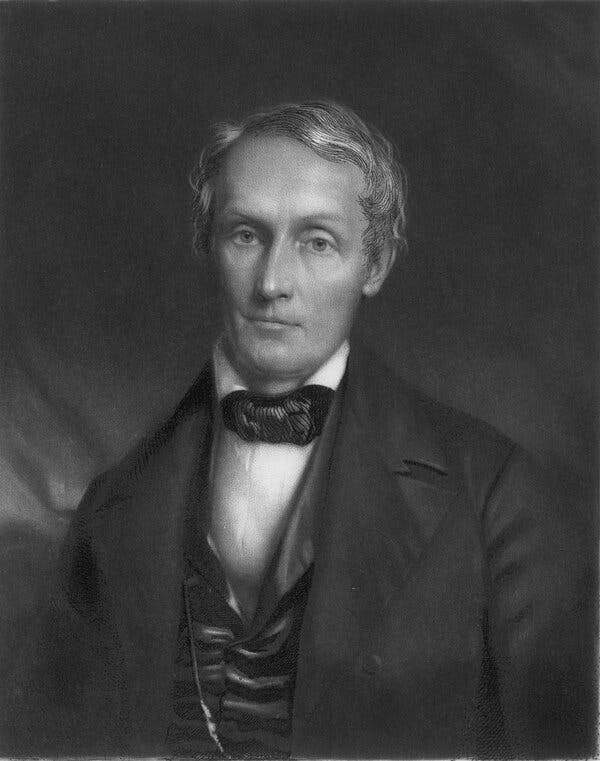
As one museum has pledged to return skulls held in an infamous collection, others, including the Smithsonian, are reckoning with their own holdings of African-American remains.The Morton Cranial Collection, assembled by the 19th-century physician and anatomist Samuel George Morton, is one of the more complicated holdings of the University of Pennsylvania Museum of Archaeology and Anthropology.Consisting of some 1,300 skulls gathered around the world, it provided the foundation for Morton’s influential racist theories of differences in intelligence among races, which helped establish the now-discredited “race science” that contributed to 20th century eugenics. In recent years, part of the collection was prominently displayed in a museum classroom, a ghoulish object lesson in an infamous chapter of scientific history.Last summer, after student activists highlighted the fact that some 50 skulls had come from enslaved Africans in Cuba, the museum moved the displayed skulls into storage with the rest of the collection. And last week, shortly after the release of outside research indicating roughly 14 other skulls had come from Black Philadelphians taken from pauper’s graves, the museum announced that the entire collection would be opened up for potential “repatriation or reburial of ancestors,” as a step toward “atonement and repair” for past racist and colonialist practices.The announcement was the latest development in a highly charged conversation about African-American remains in museum collections, especially those of the enslaved. In January, the president of Harvard University issued a letter to alumni and affiliates acknowledging that the 22,000 human remains in its collections included 15 from people of African descent who may have been enslaved in the United States, and pledging to review its policies of “ethical stewardship.”And now, that conversation may be set to explode. In recent weeks, the Smithsonian Institution, whose National Museum of Natural History houses the nation’s largest collection of human remains, has been debating a proposed statement on its own African-American remains.Those discussions, according to portions of an internal summary obtained by The New York Times, have involved people who have long prioritized repatriation efforts as well as those who take a more traditional view of the museum’s mission to collect, preserve and study artifacts, and who view repatriations as potential losses to science.In an interview last week, Lonnie G. Bunch III, the secretary of the Smithsonian, declined to characterize the deliberations but confirmed the museum was developing new guidance, which he said would be undergirded by a clear imperative: “to honor and remember.”“Slavery is in many ways the last great unmentionable in American discourse,” he said. “Anything we can do to both help the public understand the impact of slavery, and find ways to honor the enslaved, is at the top of my list.”The anthropologist Samuel George Morton began collecting the skulls in the 1830s, as part of an effort to prove differences in intelligence across races.Hulton Archive/Getty ImagesAny new policy, Dr. Bunch said, would build on existing programs for Native American remains. It could involve not just the return of remains to direct descendants, but possibly to communities, or even reburial in a national African-American burial ground. And the museum, he said, would also strive to tell fuller stories of individuals whose remains stay in the collection.“It used to be that scholarship trumped community,” he said. “Now, it’s about finding the right tension between community and scholarship.”The quantity of enslaved and other African-American remains in museums may be modest compared with the estimated 500,000 Native American remains in U.S. collections, which were scooped up from burial grounds and 19th-century battlefields on what Samuel J. Redman, an associate professor of history at the University of Massachusetts at Amherst, termed “an industrial scale.”But Dr. Redman, the author of “Bone Rooms,” a history of remains collecting by museums, said the moves by Harvard, Penn and especially the Smithsonian could represent a “historical tipping point.”“It puts into shocking relief our need to address the problem of the historical exploitation of people of color in the collecting of their objects, their stories and their bodies,” he said.The complexities around African-American remains — who might claim them? how do you determine enslaved status? — are enormous. Even just counting them is a challenge. According to an internal Smithsonian survey that has not previously been made public, the 33,000 remains in its storerooms include those from roughly 1,700 African-Americans, including an estimated several hundred who were born before 1865, and so may have been enslaved.A page from from Morton’s “Crania Americana,” one of a series of works outlining a supposed hierarchy of intelligence based on skull size, with Europeans on top.via National Library of MedicineMorton’s work helped establish the dubious “race science” that flourished in the 19th century and went on to contribute to 20th century eugenics.via National Library of MedicineSome remains come from archaeological excavations. But the majority are from individuals who died in state-funded institutions for the poor, whose unclaimed bodies ended up in anatomical collections that were later acquired by the Smithsonian.In addition to the 1990 Native American Graves Protection and Repatriation Act, which requires museums to return remains to tribes or lineal descendants that request them, the Smithsonian allows remains from named individuals of any race to be claimed by descendants. While many African-American individuals in the anatomical collections are named, none have ever been reclaimed, according to the natural history museum.Kirk Johnson, the museum’s director, said that the anatomical collections, while disproportionately gathered from the poor and marginalized, included a cross-section of society in terms of age, sex, race, ethnicity and cause of death, which had made them extremely useful for forensic anthropologists and other researchers.But when it comes to African-American remains, a broader approach to repatriation — including a more expansive notion of “ancestor” and “descendant” — may be justified.“We’ve all had a season of becoming more enlightened about structural racism and anti-Black racism,” he said. “At the end of the day,” he added, “it’s a matter of respect.”Dr. Bunch, the Smithsonian’s first Black secretary, said he hoped its actions would provide a model for institutions across the country. Some who have studied the history of the trade in Black bodies say such guidance is sorely needed.In early April, new research claiming that the collection included roughly 14 skulls of Black Philadelphians taken from pauper’s graves in the 1830s and 1840s prompted renewed protests.Sukhmani Kaur“It would be wonderful to have an African-American Graves Protection and Repatriation Act,” said Daina Ramey Berry, a professor of history at the University of Texas and author of “The Price for Their Pound of Flesh,” a study of the commodification of enslaved bodies from birth to death.“We’re finding evidence of enslaved bodies used at medical schools throughout the nation,” she said. “Some are still on display at universities. They need to be returned.”Penn’s Morton collection vividly embodies both the sordid side of the enterprise, and the way the meanings of collections change.Morton, a successful doctor who was an active member of the Academy of Natural Sciences of Philadelphia, has sometimes been called the founder of American physical anthropology. He was a proponent of the theory of polygenesis, which held that some races were separate species, with separate origins. In books like the lavishly illustrated “Crania Americana,” from 1839, he drew on skull measurements to outline a proposed hierarchy of human intelligence, with Europeans on top and Africans in the United States at the bottom.Morton’s skull collection was said to be the first scholarly anatomical collection in the United States and, at the time, the largest. But after his death in 1851, it fell into obscurity, even as his racist ideas about differences in intelligence remained influential.In 1966, the collection was relocated to the Penn Museum, from the Academy of Natural Sciences in Philadelphia. And it quickly became a useful tool for all sorts of scientific research — including studies aimed at debunking the racist ideas it had helped create.In a famous 1978 paper (later adapted for his book “The Mismeasure of Man”), the paleontologist Stephen Jay Gould argued that Morton’s racist assumptions had led him to make incorrect measurements — thus turning Morton into a symbol not just of racist ideas, but of how bias can affect the seemingly objective procedures of science.The Smithsonian’s National Museum of Natural History, which has the country’s largest collection of human remains, is debating a statement on potential repatriation of African-American remains.Robert Alexander/Getty ImagesGould’s analysis of Morton’s measurements has itself been hotly disputed. But in recent years, the appropriateness of possessing the skulls at all has been sharply questioned by campus and local activists, particularly after student researchers connected with the Penn & Slavery Project drew attention to the remains of the enslaved Cubans.Christopher Woods, who became the museum’s director earlier this month, said the new repatriation policy (which was recommended by a committee) would not change the collection’s status as an active research source.Although there has been no access to the actual skulls since last summer, legitimate researchers can examine 3-D scans of the entire collection, including those of 126 Native Americans that have already been repatriated.“The collection was put together for nefarious purpose in the 19th century, to reinforce white supremacist racial views, but there’s still been good research done on that collection,” Dr. Woods said.When it comes to repatriation, he said, the moral imperative is clear, even if the specific course of action may not be. For the skulls of Black Philadelphians taken from pauper’s graves (a major source for cadavers of all races at the time), he said the hope is they can be reburied in a local African-American cemetery.The enslaved remains from Cuba, however, would require future research and possibly testing, as well as a search for an appropriate repatriation site, possibly in Cuba or West Africa, where most of the individuals were likely born.The Black remains may have become a particularly urgent issue, he said. But repatriation requests for any skulls would be considered.“This is an ethical question,” he said. “We need to consider the wishes of the communities from whence these people came.”

Read more →

India to start vaccinating all adults over 18 amid surge in infections

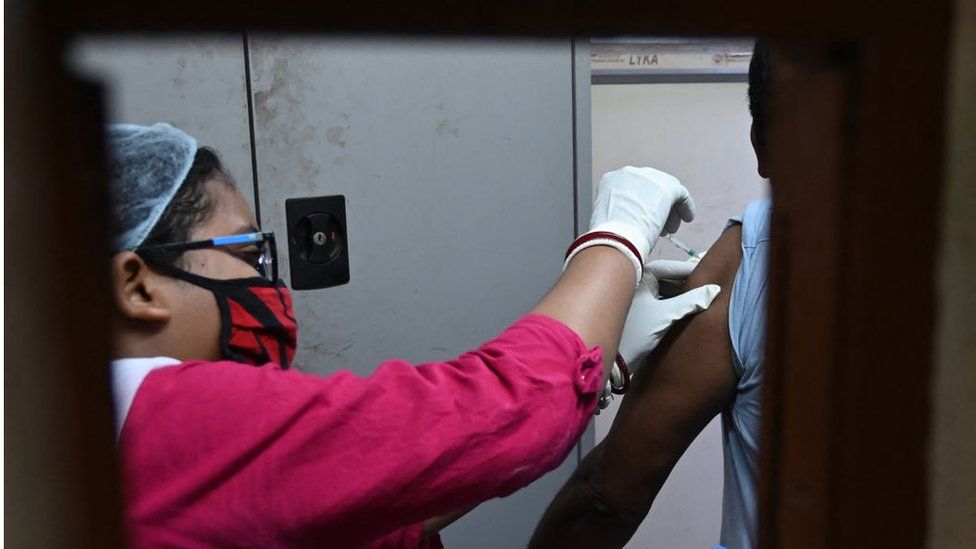
SharecloseShare pageCopy linkAbout sharingimage copyrightGetty ImagesIndia has widened its vaccination programme as infections surge and the capital goes into lockdown.All adults over the age of 18 will be offered a coronavirus jab starting from 1 May, the government said on Monday.However, with vaccines in short supply in many states, it is unclear where the additional doses will come from. The government said last week that it only had 27 million doses – or enough jabs for nine days at current rates of vaccination. India is currently vaccinating health workers, front line workers and people over 45 but a number of states – including the worst affected Maharashtra state – have reported insufficient supply. There have been reports of people being turned away from vaccination centres in many areas.How India failed to prevent a deadly second waveVaccine suppliers such as the serum institute have been unable to meet international requirements and have also warned of raw material shortages affecting production, which it attributed to US export bans on specific items needed to make vaccines. image copyrightGetty ImagesSo how will vaccines be ramped up?The process so far has been controlled by the federal government, but the government is changing the rules, a move it says will increase production and availability and attract more domestic and foreign players.Vaccine manufacturers will now have to supply 50% of the doses to the central government and the rest to state governments and the open market at a pre-determined price. Three vaccines were initially approved for use in India – two manufactured by Indian companies Serum Institute and Bharat Biotech, and the third Russia’s Sputnik V. Since then, it has said that vaccines approved for use in other countries could also be used in India. image copyrightGetty ImagesThe government has also approved a $600 million grant for Serum Institute and Bharat Biotech. How bad is the situation in India?India has been reporting around 200,000 cases daily since 15 April – this is well past its peak last year, when it was averaging around 93,000 cases a day. Deaths too have been rising. The government confirmed 1,619 deaths from the virus on Monday. The capital Delhi ordered a six-day lockdown from Monday with city hospitals reporting shortages of beds, oxygen and key medicine.Health officials in UK investigate Indian variantDelhi announces lockdown as Covid cases surgeOver the weekend, Delhi’s Chief Minister Arvind Kejriwal tweeted saying that oxygen has become an emergency in Delhi.”In view of sharply increasing cases, Delhi needs much more than normal supply,” he said. Several major cities have made similar complaints. This has prompted officials to start using the country’s behemoth rail network to start ferrying oxygen around the country in special trains. The first train with seven tankers left from Mumbai in the western state of Maharashtra and is expected to reach Vizag in the southern state of Andhra Pradesh.Many states have diverted industrial oxygen to be used for medical purposes.

Read more →

Multivitamins, omega-3, probiotics, vitamin D may lessen risk of positive COVID-19 test

Taking multivitamins, omega-3, probiotics or vitamin D supplements may lessen the risk of testing positive for SARS-CoV-2, the virus responsible for COVID-19 infection — at least among women — indicates a large population study, published online in the journal BMJ Nutrition Prevention & Health.
But taking any of vitamin C, zinc, or garlic supplements wasn’t associated with a lower risk of testing positive for the virus, the findings show.
There has been plenty of celebrity endorsement of the use of dietary supplements to both ward off and treat COVID-19 infection since the start of the pandemic, note the researchers.
In the UK alone, market share rose by 19.5% in the period leading up to the first national ‘lockdown’ on March 23 last year, with sales of vitamin C rising by 110% and those of multivits by 93%.
Similarly, zinc supplement sales rose by 415% in the first week of March, at the height of COVID-19 fears in the USA.
Dietary supplements can help to support a healthy immune system, but whether specific supplements might be associated with a lower risk of catching SARS-CoV-2 isn’t known.

Read more →

Cellular impact of 'Heat not Burn' products may be no less harmful than cigarettes

The impact on lung cells of Heat not Burn products — a hybrid between traditional cigarettes and electronic vaping devices — may be no less harmful than that of conventional cigarettes, suggest the findings of a small comparative study, published online in the journal Thorax.
Heat not burn products contain nicotine and tobacco, but have been marketed by the tobacco industry as a less harmful alternative to conventional cigarettes on the grounds that they don’t produce specific harmful chemicals that are released when tobacco burns.
Smoking still kills 6 million people every year worldwide. It heightens the risk of coronary heart disease, stroke, peripheral artery disease, and abdominal aortic aneurysm, because it has a role in all stages of artery hardening and blockage.
And it causes emphysema and pulmonary hypertension, because it contributes to the damage of blood vessels in the lungs.
Specifically, it contributes to endothelial dysfunction — whereby the lining of small and large blood vessels becomes abnormal, causing arteries to constrict instead of dilating, or blood vessels to become more inflamed; oxidative stress — an excess of harmful cellular by-products; platelet activation — creation of ‘sticky’ blood; and plaque development that can block arteries.
The researchers wanted to find out if these effects could also be observed in people who used heat not burn products.

Read more →

Disrupted sleep is linked to increased risk of early death, particularly in women

For the first time, a study has shown a clear link between the frequency and duration of unconscious wakefulness during night-time sleep and an increased risk of dying from diseases of the heart and blood vessels, and death from any cause, particularly in women.
The study of 8001 men and women, which is published today (Tuesday) in the European Heart Journal, found that women who experienced unconscious wakefulness most often and for longer periods of time had nearly double the risk of dying from cardiovascular disease during an average of between 6 and 11 years’ follow-up, when compared to the risk in general female population. The association was less clear in men, and their risk of cardiovascular death increased by just over a quarter compared to the general male population.
Unconscious wakefulness, also known as cortical arousal, is a normal part of sleep. It occurs spontaneously and is part of the body’s ability to respond to potentially dangerous situations, such as noise or breathing becoming obstructed. Pain, limb movements, trauma, temperature and light can also be triggers.
Dominik Linz, associate professor in the cardiology department at Maastricht University Medical Center (The Netherlands), explained: “A common trigger for nocturnal arousals is obstructive sleep apnoea when breathing stops and the arousal system ensures the activation of our body to change our sleep position and to reopen the upper airway. Another cause of arousals can be ‘noise pollution’ during the night by, for example, night-time aircraft noise. Depending on the strength of the arousal, a person might become consciously aware of the environment, but often that is not the case. Typically, people will feel exhausted and tired in the morning because of their sleep fragmentation but will not be aware of the individual arousals.”
Previous research has shown that sleep duration, either too short or too long, is associated with increased risks of death from cardiovascular or other causes. However, until now, it was unknown whether there was also a link with the arousal burden (a combination of the number of arousals and their duration) during a night’s sleep and the risk of death.
In a collaboration between a team led by associate professor Mathias Baumert from the School of Electrical and Electronic Engineering at the University of Adelaide (Australia) and Prof. Linz, researchers looked at data from sleep monitors worn overnight by men and women taking part in one of three studies: 2782 men in the Osteoporotic Fractures in Men Sleep Study (MrOS), 424 women in the Study of Osteoporotic Fractures (SOF), and 2221 men and 2574 women in the Sleep Heart Health Study (SHHS). The average ages in the studies were 77, 83 or 64 years, respectively. The participants were followed up over a period of several years, which ranged from an average of six years (SOF) to 11 years (MrOS).

Read more →

Are black women getting enough support for mental health?

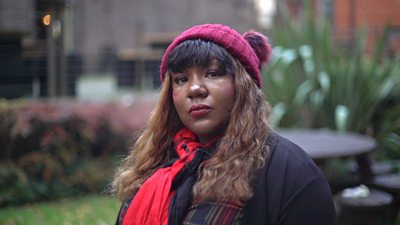
Black women are more likely than white women to experience common mental health problems, such as anxiety and depression, according to government figures. Sectioning powers under the Mental Health Act also disproportionately affect black people.BBC journalist Abdirahim Saeed reflects on the case of a close relative and speaks to black women about their experiences.If you’ve been affected by issues raised in this story, sources of support are available at the BBC Action Line.Video Journalist: Tobias ChappleSenior Producer: Tammi WalkerAdditional Filming: Abdirahim Saeed

Read more →

B cell activating factor possible key to hemophilia immune tolerance

A group of scientists have just made a key discovery that could prevent and eradicate immune responses that lead to treatment failure in about one-third of people with severe hemophilia A.
Hemophilia is the most common severe inherited bleeding disorder in men. The disease affects 1 in 10,000 males worldwide and results from deficiency of blood clotting factor VIII (FVIII). Both children and adults with hemophilia A (80 percent of all hemophilia) receive treatment that involves infusing FVIII protein into the bloodstream. However, about 30 percent of them develop an immune response in the form of antibodies to FVIII (inhibitors), rendering treatment ineffective and increasing risk of mortality.
For inhibitor-positive patients, immune tolerance induction (ITI) options are scarce, costly and invasive. Investigators at Indiana University School of Medicine, Children’s Hospital of Philadelphia and University of Pennsylvania joined efforts to explore immune responses to FVIII under an NIH-funded U54 initiative.
The study, led by IU School of Medicine’s Moanaro Biswas, PhD, and Valder R. Arruda, MD, PhD, from Children’s Hospital of Philadelphia and the University of Pennsylvania, is titled “B cell activating factor modulates the factor VIII immune response in hemophilia,” and was published in the Journal of Clinical Investigation earlier this month. Bhavya Doshi, MD, from Children’s Hospital of Philadelphia, as is the first author.
In it, the group used plasma samples from pediatric and adult hemophilia A patients and animal models to determine whether BAFF plays a role in the generation and maintenance of FVIII inhibitors.
They also looked at combining antibody to BAFF in an ITI approach with a CD20 antibody (rituximab). Rituximab alone has shown mixed results in eradicating inhibitors when used alone in previous studies for hemophilia A.
Major findings from the study include: BAFF levels in plasma are higher in both pediatric and adult hemophilia A patients with persistent FVIII inhibitors, and correlate with FVIII antibody titers, suggesting that BAFF could be a potential harbinger for an ongoing humoral immune response to FVIII An increase in BAFF levels after rituximab-based therapy precludes tolerance to FVIII. Blocking BAFF is effective in the prevention of FVIII inhibitors in an animal model of hemophilia A. Combination CD20/BAFF monoclonal antibody therapy induces tolerance in a hemophilia A animal model with established FVIII inhibitors. This is due to a concerted effect of the combination therapy on memory B cells and plasma cells.Next, the group will perform in-depth mechanistic studies to identify additional BAFF modifiers, which may provide additional insight into the pathways that lead to BAFF elevation and inhibitor formation.
These data also have important translational potential for inhibitor in hemophilia A, since there is an FDA-approved anti-BAFF antibody currently used as part of immunosuppressive regimens for autoimmune diseases.
Story Source:
Materials provided by Indiana University School of Medicine. Note: Content may be edited for style and length.

Read more →